These North Carolina Stadiums Make Game Day Feel Larger Than Life
Game day in North Carolina does not simply arrive.
It storms in wearing team colors and starts yelling before the parking lot has fully woken up.
Stadium seats become confession booths for bad predictions, overpriced snacks suddenly feel emotionally necessary, and strangers turn into best friends the second the home team does something useful.
These North Carolina venues turn regular games into full-volume memories, where the crowd has main-character energy and nobody leaves with their voice operating at normal volume.
1. Bank Of America Stadium
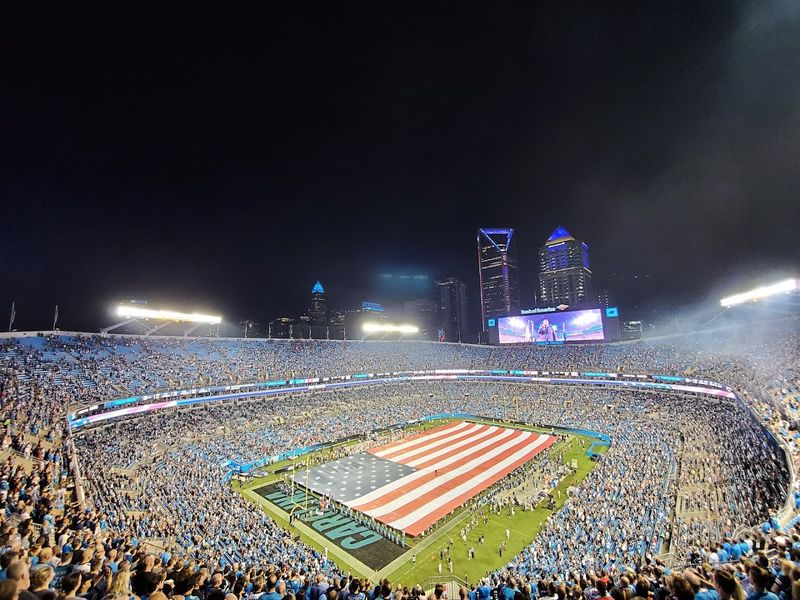
Uptown Charlotte turns into a full-scale sports machine when Bank of America Stadium fills with Panthers fans, Charlotte FC supporters, and major-event crowds. Set at 800 S Mint St, Charlotte, NC 28202, the stadium remains one of North Carolina’s largest and most recognizable sports venues, with official stadium information listing a capacity of 75,525 and confirming it as the home of both the Carolina Panthers and Charlotte FC.
Football Sundays bring a wave of black, blue, tailgate smoke, and nervous optimism, while soccer matchdays give the same building a different rhythm through chants, scarves, and supporters’ section energy. Charlotte’s skyline adds an enormous visual bonus, especially when fans approach from surrounding Uptown streets and the stadium rises between office towers, restaurants, hotels, and transit stops.
Arriving early makes sense here because the venue is built for more than a quick seat-and-scoreboard experience. Concourse options, fan areas, big screens, and city views all help stretch the day into something larger than the game itself.
Few North Carolina venues can match this mix of professional scale, downtown drama, and year-round sports energy.
2. Carter-Finley Stadium
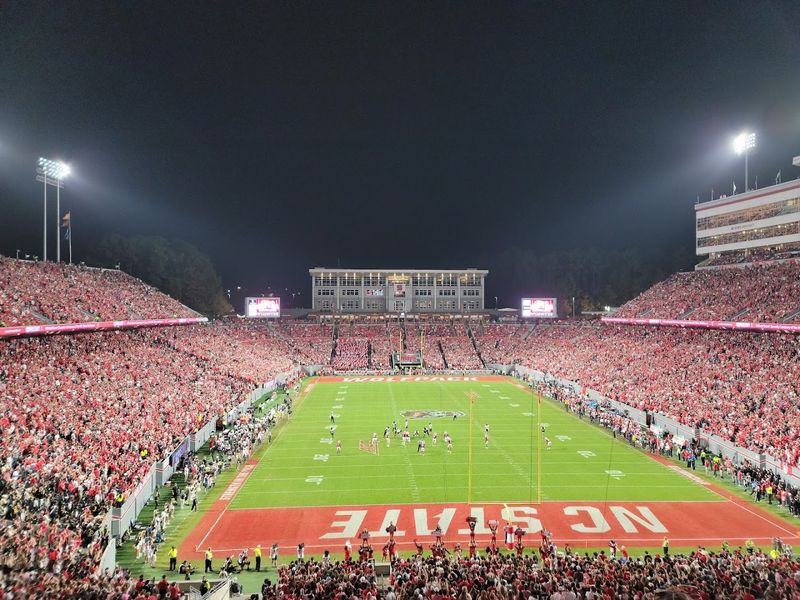
Red-and-white tailgates give Carter-Finley Stadium its heartbeat long before kickoff ever arrives. Set at 4600 Trinity Rd. in Raleigh, the NC State football venue seats 56,919 fans, according to the Wolfpack’s official facility information.
That capacity matters, but the parking-lot culture matters just as much. Wolfpack fans know how to turn a Saturday into an all-day event, with tents, grills, music, family traditions, and enough pregame confidence to make every opponent feel personally invited into trouble.
Inside, the stadium bowl can get loud quickly, especially when NC State’s defense forces a third down or the offense starts moving with purpose. Carter-Finley sits near the state fairgrounds and other major Raleigh event spaces, which gives the surrounding area a big-weekend feel whenever the schedule lines up.
Nothing about this venue feels overly precious. It is passionate, practical, noisy, and proudly red.
For fans who want college football with a strong tailgate identity and a crowd that treats home games like a civic assignment, Carter-Finley delivers one of North Carolina’s most reliable game-day experiences.
3. Kenan Memorial Stadium
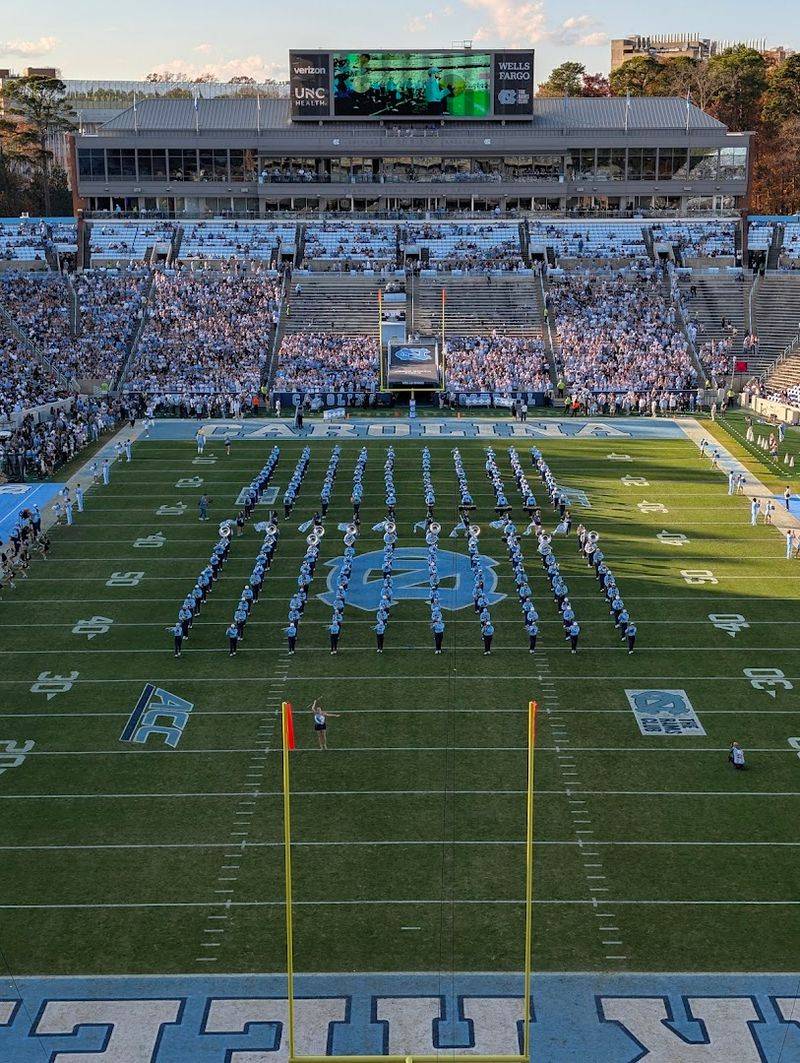
Carolina blue looks especially good when it fills Kenan Stadium under a canopy of Chapel Hill trees. UNC’s official facility page lists the stadium at 104 Stadium Drive and notes a current capacity of 50,500 after seating updates that converted many bleachers to Carolina Blue chairbacks.
That setting is a major part of the appeal. Instead of feeling dropped into a parking desert, Kenan sits inside a campus landscape where brick walkways, leafy approaches, and old university architecture shape the entire day.
Autumn games can feel especially scenic, with the surrounding trees adding color and texture behind the bowl. Fans often build the experience around more than football, folding in Franklin Street food, campus strolls, alumni gatherings, and the kind of pregame wandering that makes Chapel Hill feel like part of the ticket.
Inside the stadium, history and modern upgrades share space without losing the venue’s natural beauty. Kenan may not be the biggest college stadium in North Carolina, but it has one of the most graceful settings.
A game here feels less like entering a concrete fortress and more like being absorbed into a campus tradition that still knows how to look good.
4. Dowdy-Ficklen Stadium
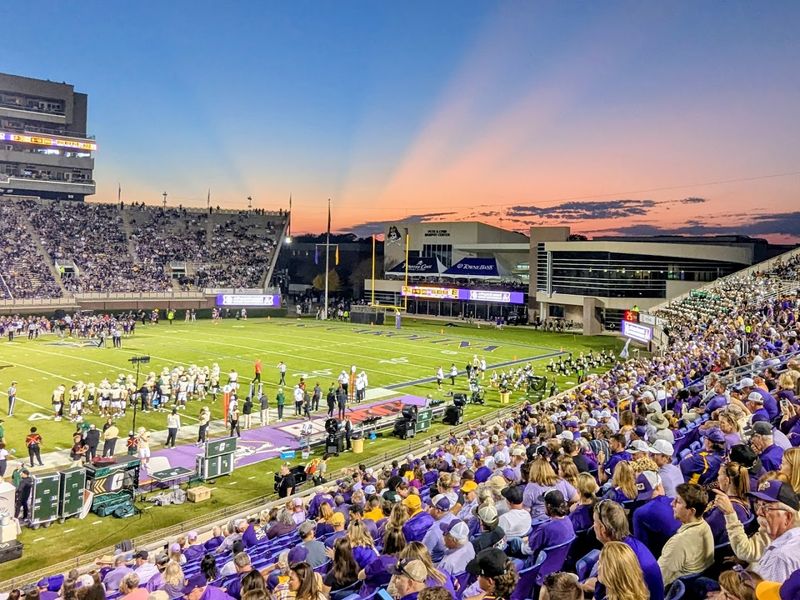
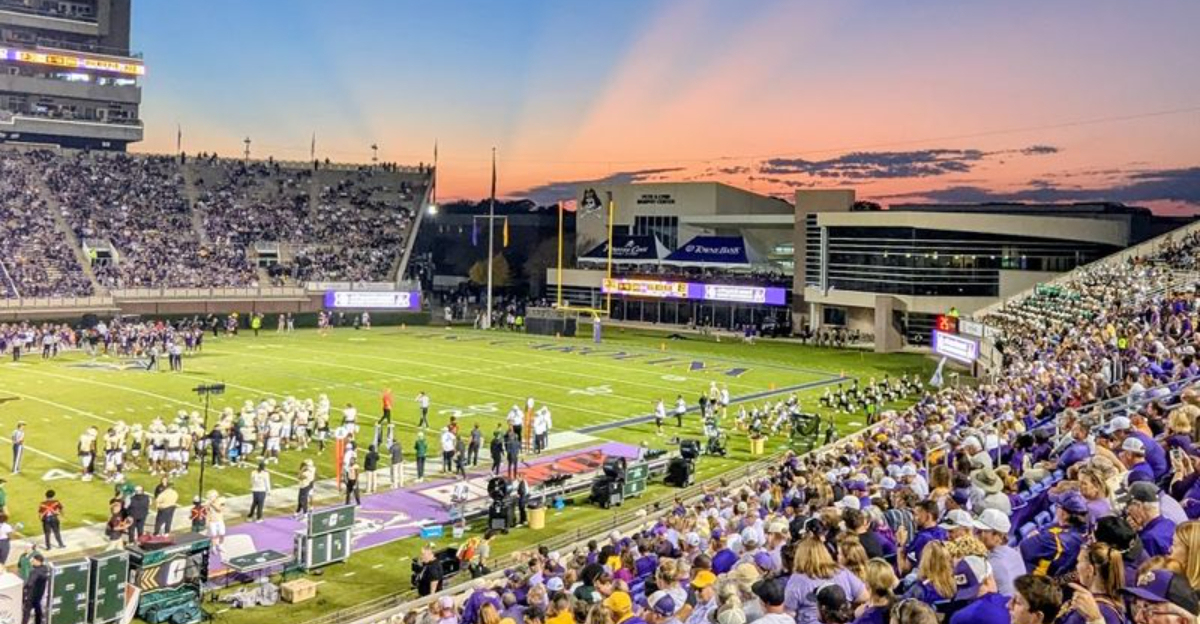
East Carolina football has a reputation that punches well above its weight class, and Dowdy-Ficklen Stadium is where that reputation was built. Purple and gold flood every corner of the venue on game nights, and the noise level reaches a pitch that surprises even seasoned college football travelers.
Pirates fans treat every home game like it is the biggest of the season.
The stadium at 100 Ficklen Drive, Greenville, NC 27858-4353 holds 50,000 fans and has recorded attendance above 51,700 on memorable occasions. That energy is especially intense for rivalry matchups and nationally televised games, when Greenville transforms into a football town buzzing with anticipation.
Visiting fans consistently leave impressed by the passion they encounter.
What makes Dowdy-Ficklen special is the sense of community pride woven into every game day. Greenville rallies around its Pirates with a loyalty that feels personal and deeply rooted.
For anyone curious about experiencing authentic college football culture outside the major conferences, this stadium in eastern North Carolina delivers an experience that is genuinely hard to forget.
5. Kidd Brewer Stadium
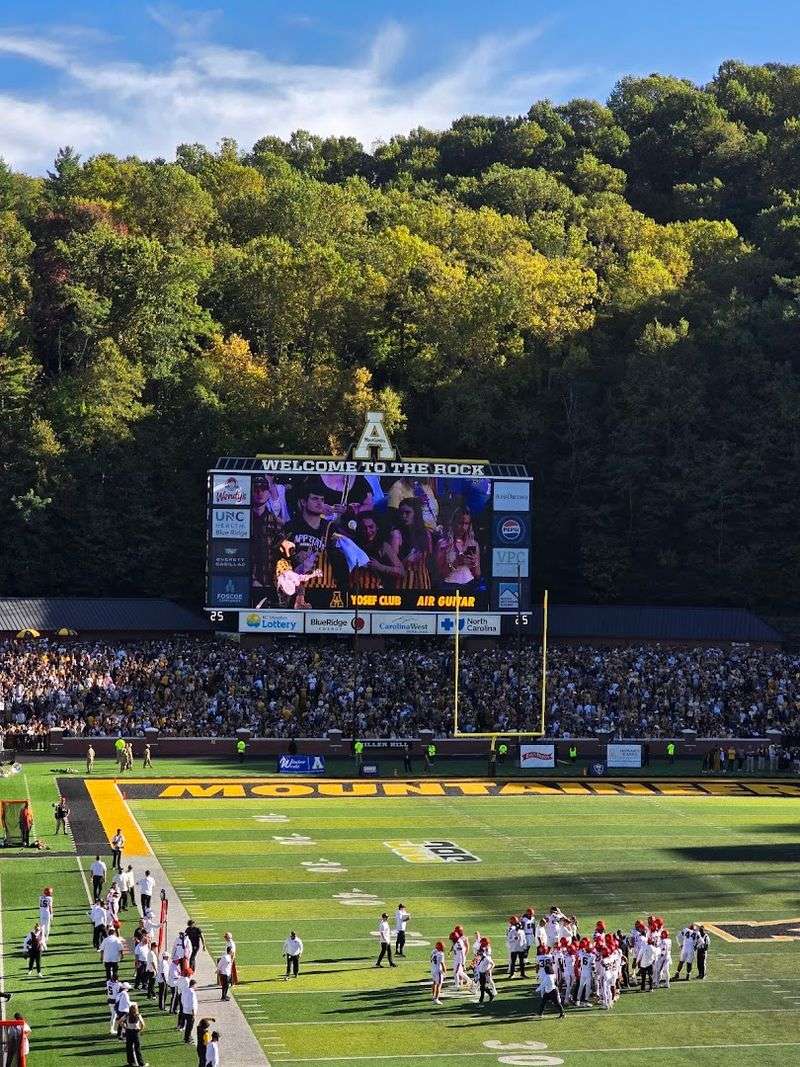
Mountain air changes everything at Kidd Brewer Stadium, where App State football gets one of the most dramatic natural backdrops in North Carolina. App State’s official facility information describes multiple expansion projects that nearly doubled the stadium from its 16,650-seat capacity in 2007, while recent attendance records have pushed well beyond 40,000 for major games.
Set in Boone, the venue feels different before the first snap because the Blue Ridge Mountains sit right there, turning a football afternoon into something scenic, chilly, loud, and slightly wild. Fall games bring crisp air, layered clothing, mountain views, and a student section that acts as if the entire season depends on every single possession.
App State’s rise as a nationally respected program has only sharpened the atmosphere, making Kidd Brewer feel ambitious without losing its mountain-town personality. Boone adds even more to the trip, with restaurants, shops, and outdoor scenery giving fans plenty to do before and after kickoff.
Few stadiums in the state can match this combination of setting and intensity. Kidd Brewer does not just host football games.
It makes them feel like mountain events with a scoreboard.
6. Allegacy Federal Credit Union Stadium
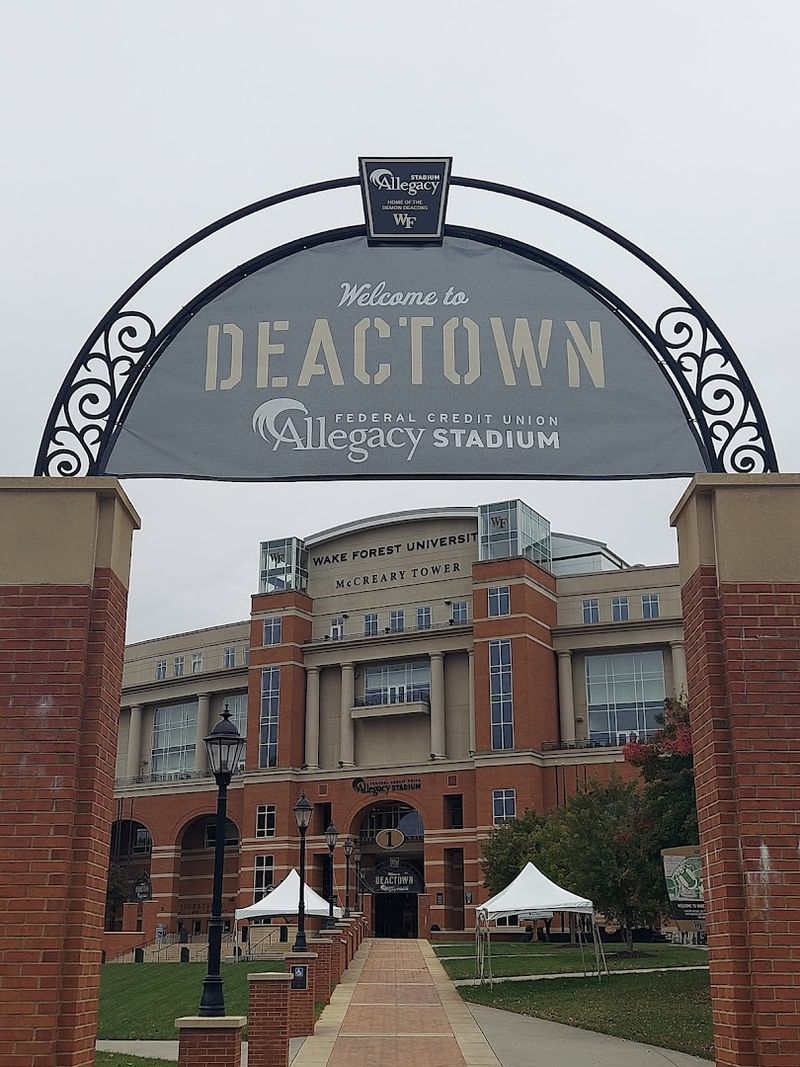
Smaller capacity becomes an advantage at Allegacy Federal Credit Union Stadium because fans sit close enough for the game to feel immediate. Wake Forest’s official facility page lists the Winston-Salem venue at 31,500 seats and places it between Reynolds and Deacon Boulevards as part of the school’s larger athletics hub.
That intimacy gives Demon Deacons games a different texture from the larger stadiums across the state. Crowd noise feels concentrated, sightlines stay friendly, and the whole venue can feel polished without becoming overwhelming.
Wake Forest brings Power Conference football into a stadium that still feels manageable for families, alumni, students, and fans who prefer comfort over chaos. Nearby Lawrence Joel Veterans Memorial Coliseum and David F.
Couch Ballpark help make the area feel like a true sports district, while Winston-Salem’s restaurants and neighborhoods add easy pregame and postgame options. Big games can still carry plenty of voltage, especially when the Deacs are playing well and the old gold and black crowd leans into the moment.
Allegacy Stadium proves that larger is not always better. Sometimes the best game-day view comes from a venue that knows its scale and uses it well.
7. Brooks Field At Wallace Wade Stadium
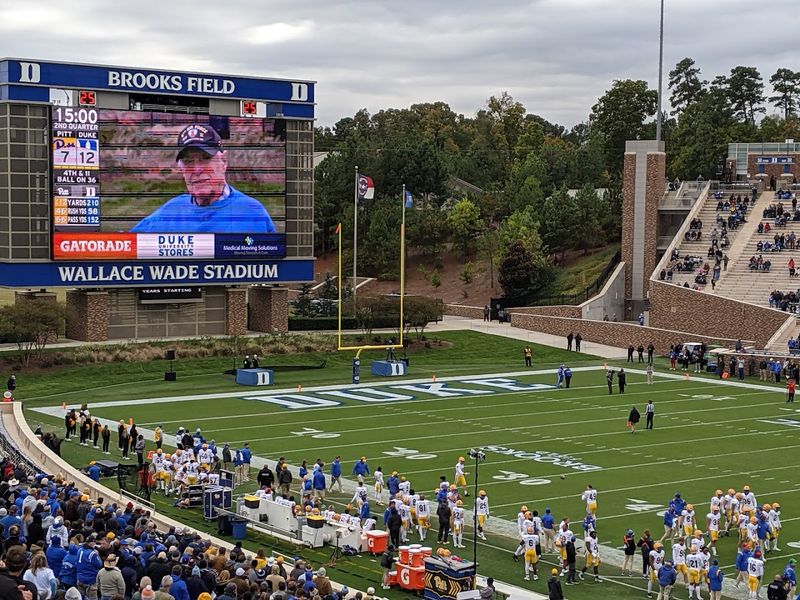
Campus tradition gives Brooks Field at Wallace Wade Stadium a quieter kind of weight before the crowd even settles in. Duke’s official facility information describes a natural Bermuda grass surface anchoring a 35,000-seat bowl, while current stadium data lists the post-renovation capacity at 35,018.
Set on Duke’s Durham campus, the venue blends football with collegiate architecture, shaded walks, and a setting that feels different from standalone stadiums surrounded only by parking lots. Recent fan-experience additions, including the Devils Deck concept, have pushed the atmosphere in a more social and modern direction while keeping the stadium’s classic bowl identity intact.
Durham adds another layer because a game here can easily become a full-day outing with campus exploring, nearby restaurants, and downtown stops before or after kickoff. Wallace Wade also carries serious history, including its role in hosting the 1942 Rose Bowl after the game was moved from Pasadena during World War II.
That past gives the venue more depth than its size alone suggests. For fans who have not visited recently, Duke’s football setting may feel more energetic, more comfortable, and more thoughtfully updated than expected.
8. First Horizon Stadium At WakeMed Soccer Park
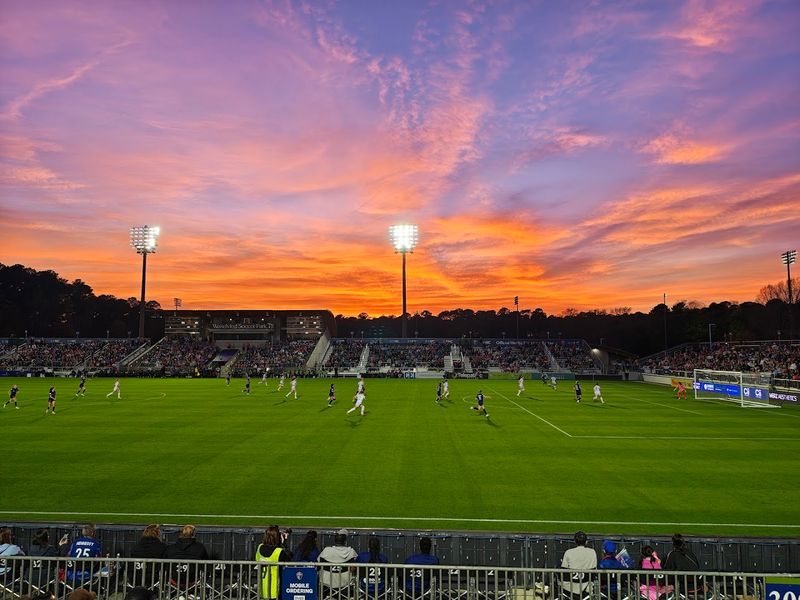
Soccer feels like the main event at First Horizon Stadium at WakeMed Soccer Park because the venue was designed around the sport instead of borrowed from another one. North Carolina Courage lists its stadium as First Horizon Stadium at WakeMed Soccer Park at 101 Soccer Park Drive in Cary, while broader venue information describes the main stadium as a soccer-specific field with seating around 10,000.
That purpose-built feel matters once the match begins. Sightlines stay clean, the field feels close, and supporter energy carries across the stands without getting lost in an oversized bowl.
The North Carolina Courage give the venue a strong professional women’s soccer identity, while major college, youth, and tournament events have also helped make WakeMed Soccer Park one of the state’s central soccer hubs. Cary’s location makes the stadium easy to fold into a Triangle outing, and nearby trails, restaurants, and family-friendly neighborhoods keep the experience approachable.
Match nights here feel focused, lively, and community-driven. For fans who want North Carolina soccer without the cavernous scale of an NFL stadium, First Horizon Stadium offers atmosphere that feels close to the grass.
9. American Legion Memorial Stadium
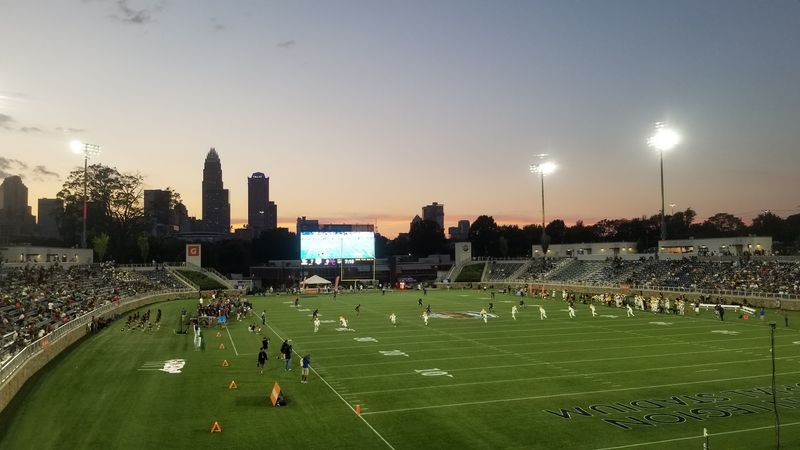
Charlotte’s old stadium bones still show at American Legion Memorial Stadium, but the renovated venue now feels bright, useful, and very much alive. Current venue information lists the address as 310 North Kings Drive, while other event listings often reference the Armory Drive side of the property; the modern post-renovation capacity is 10,500.
Opened in 1936 and renovated for a new era, the stadium has become a home for Charlotte Independence soccer, Carolina Ascent, rugby, lacrosse, and other community events. That multi-sport identity gives it a busy calendar and a personality beyond one team.
Skyline views and the Elizabeth-area setting help make evening events feel especially sharp, with city lights giving the venue a dramatic edge. Because the bowl is compact, chants, goal celebrations, and crowd reactions feel close rather than swallowed by empty space.
American Legion Memorial Stadium works best when fans appreciate the contrast: historic foundation, modern upgrades, and a crowd experience that feels much bigger than the seating number suggests. Charlotte has larger venues, but this one brings a neighborhood-scale intensity that can make a regular match feel personal.
10. Durham Bulls Athletic Park
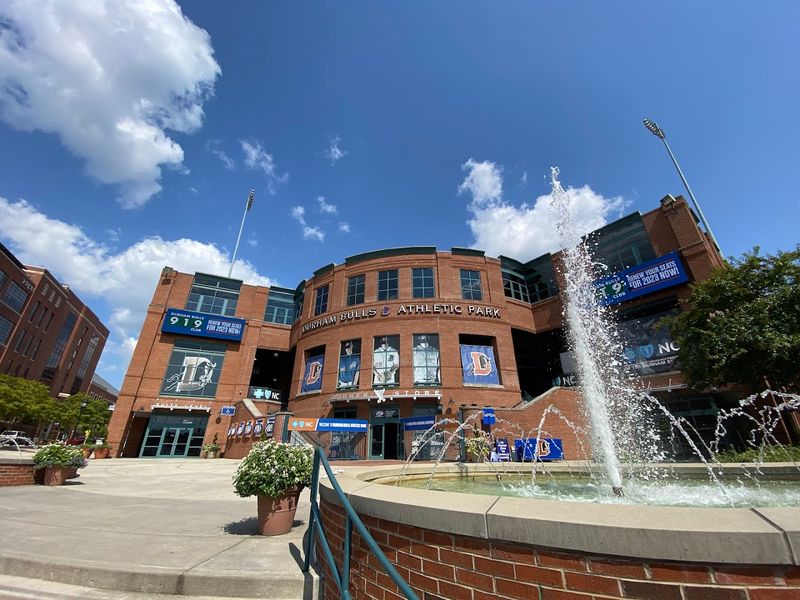
Baseball personality practically hangs from the outfield at Durham Bulls Athletic Park. The Durham Bulls’ official ballpark information notes that the brick park opened in 1995 and expanded to 10,000 seats in 1998, the same year the Bulls began playing at the Triple-A level.
Set at 409 Blackwell Street in downtown Durham, DBAP benefits from one of the best stadium neighborhoods in the state. Restaurants, breweries, hotels, offices, and old tobacco-district architecture all turn a Bulls game into more than a few innings in a seat.
The famous Snorting Bull sign, the Blue Monster in left field, and the relaxed rhythm of minor league baseball give the park a sense of humor and tradition that fans love. Families can settle in without feeling rushed, casual fans can enjoy the food and crowd energy, and baseball diehards still get a polished Triple-A experience.
Downtown Durham’s transformation has only strengthened the ballpark’s appeal, making pregame and postgame wandering part of the ritual. DBAP works because it understands what minor league baseball does best: make a game feel like a neighborhood gathering with better lighting and louder home runs.
11. Segra Stadium
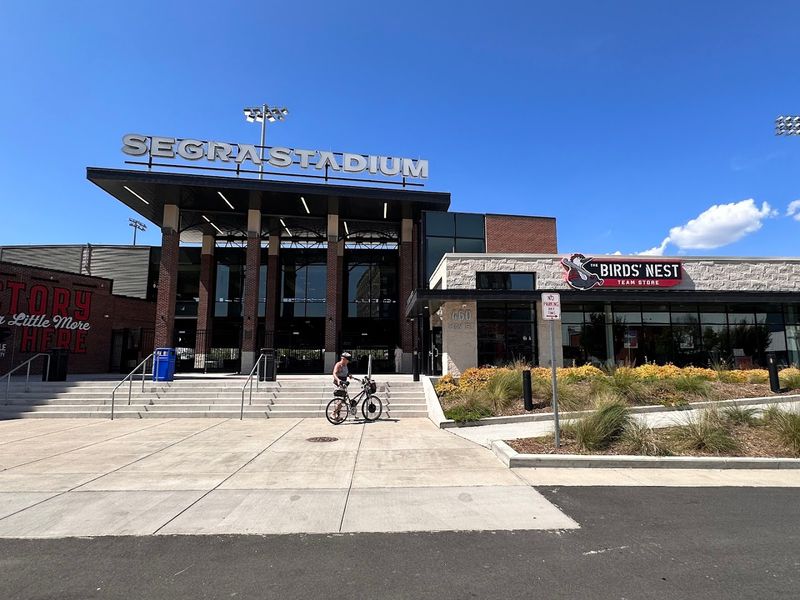
Downtown Fayetteville got a serious upgrade when Segra Stadium opened its gates and brought professional baseball back to the heart of the city. The ballpark feels intentionally designed for nights out, with a modern layout, clean sight lines, and a lively concourse that keeps energy flowing between innings.
From the moment you walk through the entrance, the experience feels polished and purposeful.
Sitting at 460 Hay Street, Fayetteville, NC 28301, Segra Stadium serves as home to the Fayetteville Woodpeckers and operates with a full box office schedule throughout the season. The surrounding downtown district adds context and charm, making the stadium feel like a natural anchor for the neighborhood rather than an isolated venue.
Pre-game dining options nearby help turn a baseball night into a full evening adventure.
For fans across North Carolina who appreciate well-run minor league baseball, Segra Stadium represents exactly what the sport can be at its community level. The attention to detail in the fan experience rivals venues at much higher levels of play.
Fayetteville has embraced this ballpark as a point of civic pride, and that enthusiasm shows up in the stands every single game night.
12. Truist Stadium
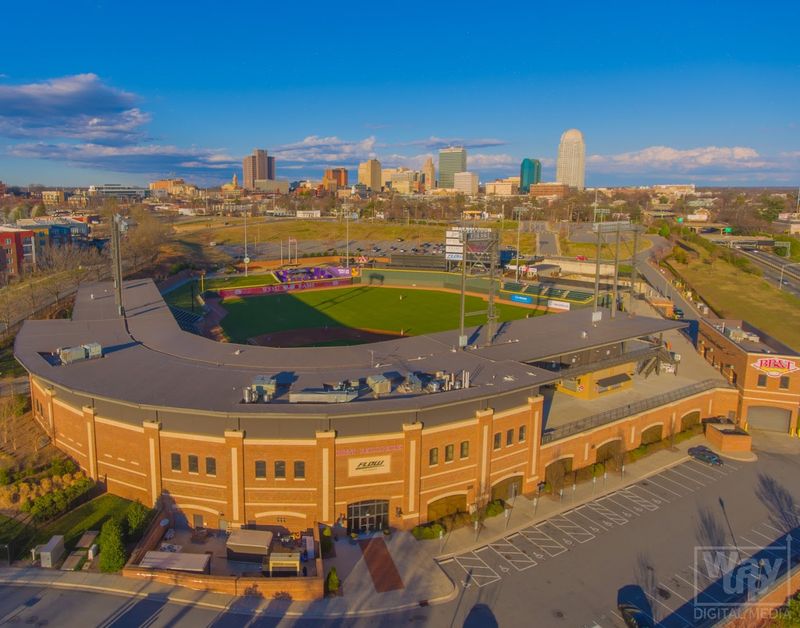
Anchoring the heart of downtown Winston-Salem, Truist Stadium has become one of the most recognizable urban ballparks in all of North Carolina. The Dash bring a lively minor league energy to a setting that feels genuinely metropolitan, with city buildings framing the outfield and a crowd that treats every home game like a special occasion.
Walking to the stadium through downtown only adds to the anticipation.
Located at 951 Ballpark Way, Winston-Salem, NC 27101, the stadium operates with active box office hours and a full home schedule that gives fans plenty of opportunities to catch a game throughout the summer. The ballpark is well-maintained and thoughtfully designed, offering comfortable seating and a clear view of the action from nearly every angle.
Food and beverage options throughout the concourse keep the mood festive from first pitch onward.
Winston-Salem has long been one of North Carolina’s most culturally rich cities, and Truist Stadium fits naturally into that identity. Dash games attract a diverse mix of families, young professionals, and longtime baseball fans who appreciate the accessible, community-centered spirit of the sport.
As a final stop on this tour of great stadiums, it is a genuinely satisfying one.