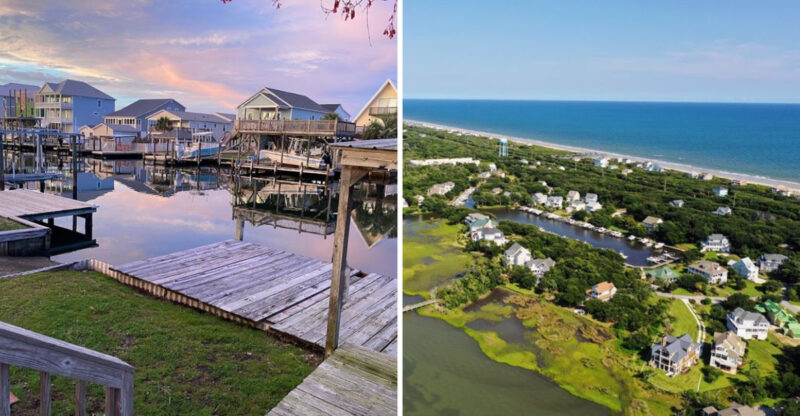
This Waterside North Carolina Theatre Stages America’s Oldest Outdoor Drama
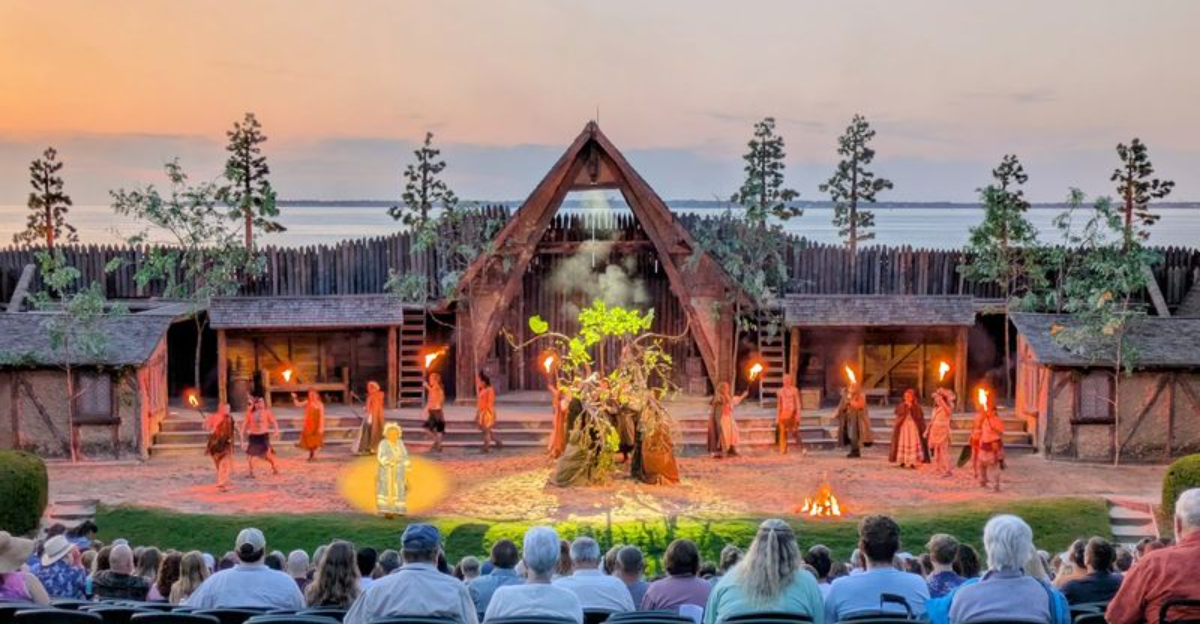
History gets very dramatic when it has salt air, stage lights, and a mystery that still refuses to behave.
On the Roanoke Sound in Manteo, North Carolina, summer nights turn into something far bigger than a regular show.
Since 1937, this outdoor symphonic drama has brought America’s first English settlement back to life near the very place where the story began.
Nearly 450 years later, the disappearance still has everyone leaning in.
Come for the open-air theater, stay for the eerie question nobody has fully answered: where did they go?
America’s Longest-Running Outdoor Drama
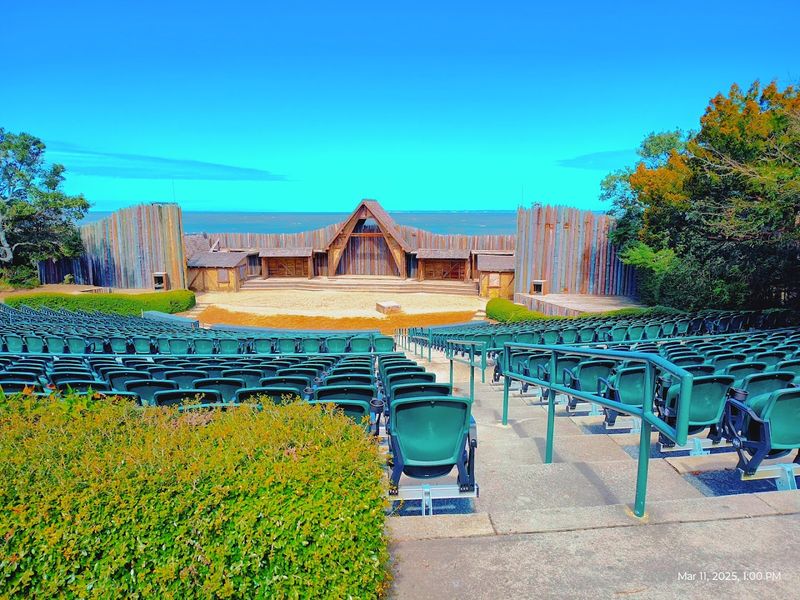
Nearly nine decades of summer performances give The Lost Colony a theatrical legacy few productions can match. First staged in 1937, the show is widely known as America’s longest-running outdoor symphonic drama, and its 2026 season is listed as the 89th season, running June 4 through August 22.
Set at Waterside Theatre in Manteo, the production keeps returning to the story of the English settlers who arrived on Roanoke Island in 1587 and later disappeared from the historical record. That mystery has never stopped pulling people in.
Instead of feeling like a museum lecture, the drama uses music, movement, costumes, staging, and outdoor atmosphere to make the past feel immediate. Families, history lovers, theater fans, and longtime Outer Banks visitors all find different reasons to care.
The show’s staying power comes from that rare mix of place and story. Watching it near the landscape connected to the events gives the performance a weight no ordinary theater could copy.
Waterside Theatre’s Breathtaking Setting
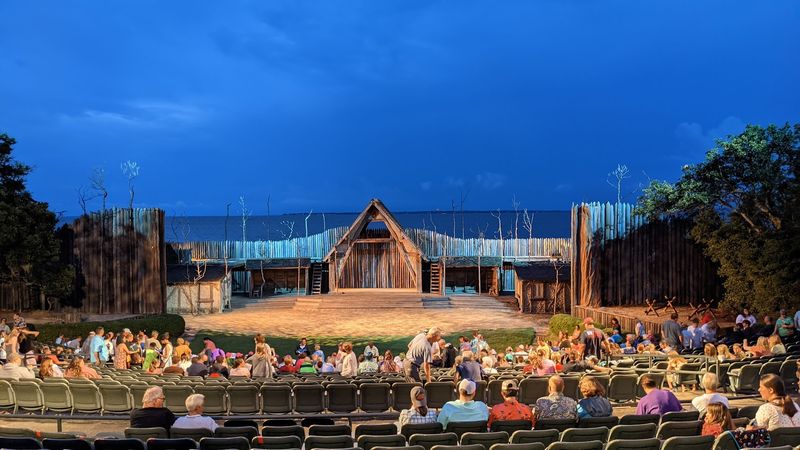
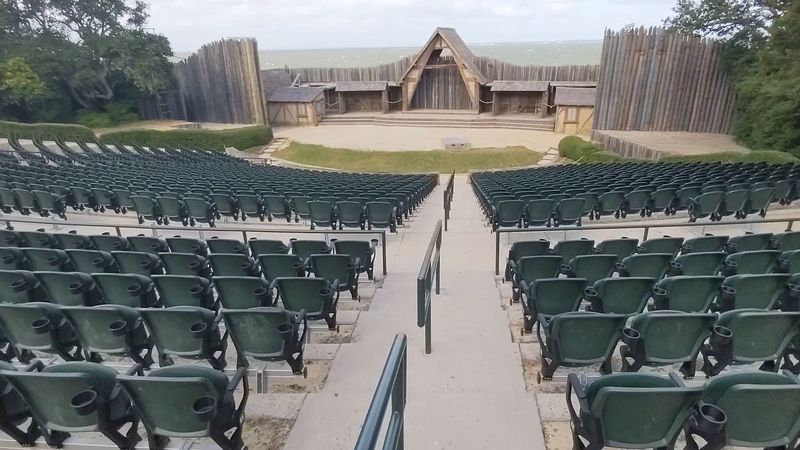
Soundside air gives Waterside Theatre one of the most memorable settings in North Carolina theater. The venue sits within Fort Raleigh National Historic Site at 1409 National Park Drive in Manteo, putting audiences close to Roanoke Island’s layered history and the coastal landscape that shapes the story.
Arriving early is part of the experience because the surrounding area offers trails, trees, water views, and that quiet Outer Banks mood before the show begins. Once evening settles in, the open-air stage starts to feel less like a performance space and more like a natural extension of the site.
Sky, sound, darkness, and breeze all become part of the production. Indoor theaters can control everything, but they cannot recreate the feeling of watching a historical mystery unfold beneath the same coastal sky that frames the island today.
A light jacket can be useful on breezy evenings, and weather awareness matters because outdoor shows depend on conditions. Still, the setting is exactly what makes the night feel special.
The Mysterious Story Behind The Show
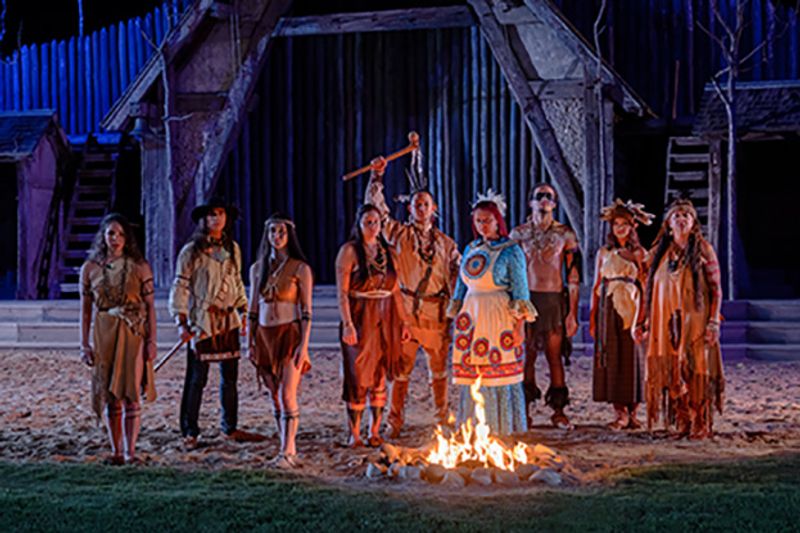
Roanoke Island’s mystery still has a strange pull because the ending remains unresolved. In 1587, English colonists arrived on the island under Governor John White, only for White to return later and find the settlement abandoned, with “Croatoan” left as one of the most famous clues in early American history.
The Lost Colony turns that historical uncertainty into drama, blending documented figures, theatrical interpretation, music, and spectacle. The show’s official site describes each summer’s performance as bringing the story to life at Waterside Theatre in Manteo, on the Outer Banks of North Carolina.
Reading a little background before attending can make the show more powerful because names, tensions, alliances, and stakes become easier to follow. The production is not just about disappearance.
It also touches on ambition, survival, misunderstanding, courage, and the fragile nature of early colonial dreams. North Carolina’s coastal setting gives the story extra atmosphere.
Wind, water, and darkness make the mystery feel closer than it does on a page.
Stunning Special Effects And Production Quality
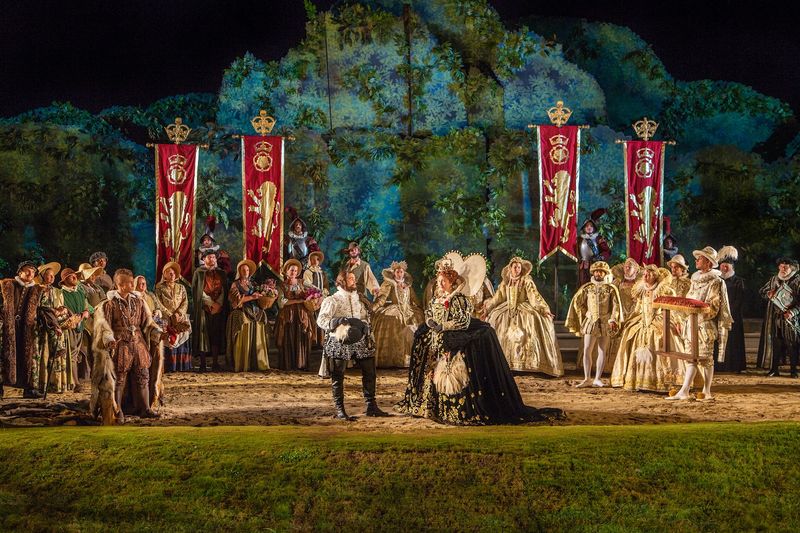
Spectacle helps The Lost Colony feel much larger than a simple history pageant. Current promotional language describes the production as exciting and refreshed, while audience-facing materials highlight music, Native dances, fight scenes, humor, and emotional storytelling as part of the experience.
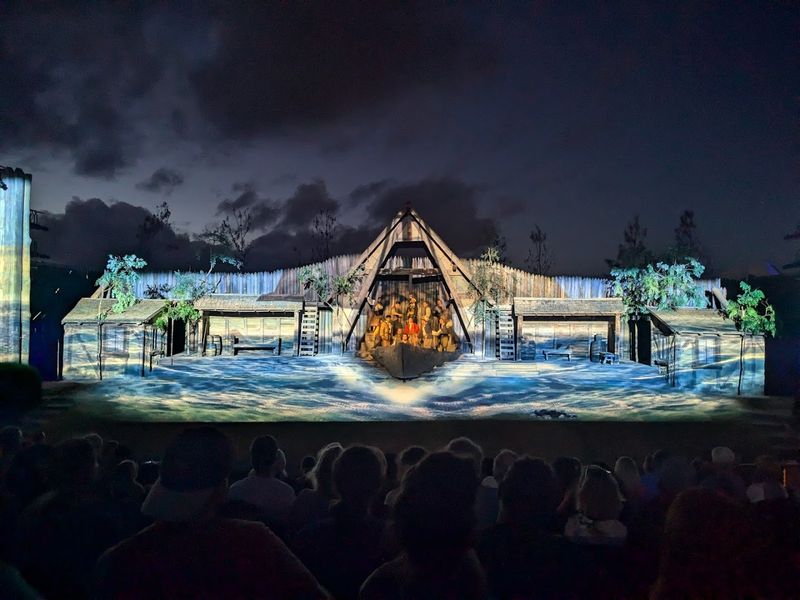
Waterside Theatre gives the show room to move, allowing performers, lighting, costumes, sound, and outdoor staging to work together across a broad stage environment. The result can surprise first-time visitors who expect something modest and instead find a production with real theatrical scale.
Large group scenes, dramatic movement, and the natural darkness after sunset all help the story feel immersive. Because it is outdoors, the technical elements have to compete with real sky, real weather, and real coastal sound, which makes the successful moments feel even more impressive.
Families with children may especially enjoy the action and visual changes, while theater fans can appreciate how much coordination goes into a long-running summer production. The show endures because it keeps balancing tradition with enough stagecraft to hold modern attention.
Indigenous Cultural Context Around The Story
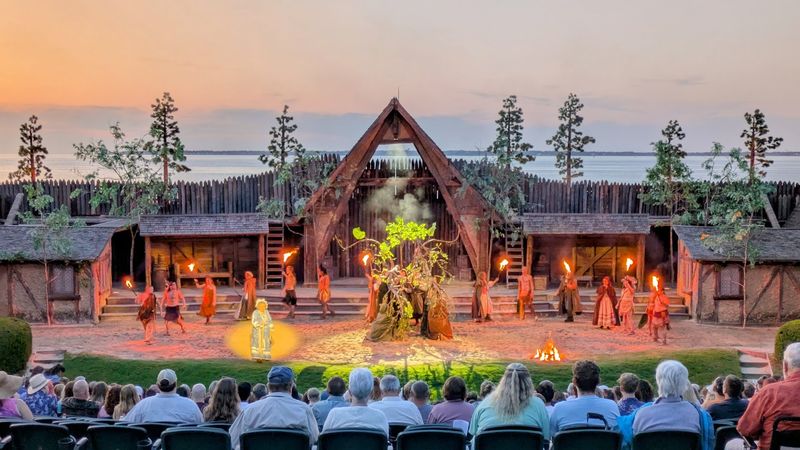
Long before English settlers ever set foot on Roanoke Island, the land belonged to the Croatoan and other Indigenous peoples whose culture shaped the entire region. The production includes Indigenous cultural elements and offers a Native American Cultural Presentation on select nights.
Several performances each week feature a pre-show experience that highlights Indigenous traditions.
On Tuesdays, Fridays, and Saturdays, audiences can arrive early to enjoy a pre-show that deepens the cultural context of the main production. Friday nights have featured pow-wow performances with local Native dancers demonstrating the meaning behind traditional dances from across the United States.
One reviewer described the experience as giving visitors “a deeper appreciation of the area, history, and art” that goes well beyond typical tourist entertainment.
The respectful incorporation of Indigenous history has drawn widespread praise from audience members who appreciate the balance between honoring all sides of the story. North Carolina has a deep and layered Indigenous heritage, and this production treats that legacy with the seriousness it deserves.
Families attending with curious young learners will find the cultural storytelling just as engaging as the dramatic theatrical elements of the main performance.
Andy Griffith’s Famous Starting Point
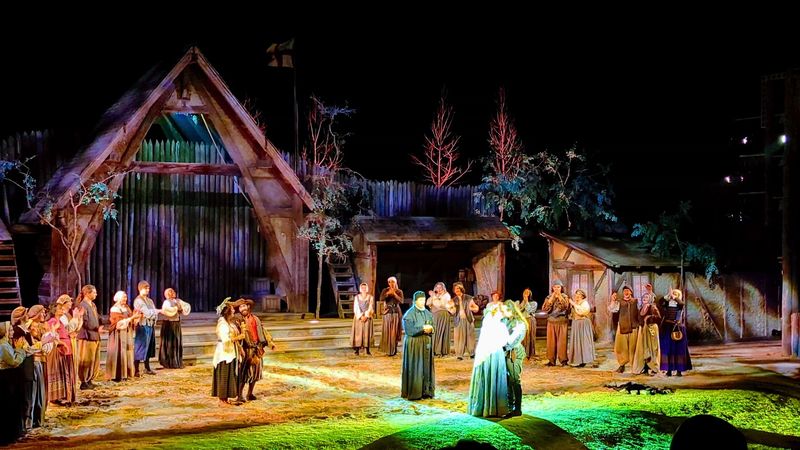
Classic television fans have another reason to pay attention to Waterside Theatre. Andy Griffith, one of North Carolina’s most beloved performers, appeared in The Lost Colony early in his career before becoming a household name.
That connection gives the production a place not only in state history but also in American entertainment history. The show has long served as a proving ground for performers, technicians, dancers, singers, and theater artists, which makes the stage feel alive beyond the story it tells.
Griffith’s later fame adds an especially warm layer because his career became so closely tied to North Carolina identity in the public imagination. Knowing that a future television legend once worked in this outdoor production makes the evening feel connected to a much larger cultural timeline.
The detail should not overshadow the Roanoke story, but it adds charm for visitors who love theater lore. Waterside Theatre is not just where a historical mystery is performed.
It is also a place where performers have built careers and memories for generations.
Practical Tips For Planning Your Visit
Smart planning makes a night at The Lost Colony much easier. Visit North Carolina lists the 2026 season from June 4 through August 22 at 1409 National Park Drive in Manteo, while the official ticket page gives the box office phone number as 252-473-6000 and lists box office hours from 2 p.m. to 8:30 p.m., Monday through Saturday.
Buying tickets ahead of time is wise during busy Outer Banks weeks. Outdoor seating means guests should think about weather, bugs, temperature changes, and comfort before arriving.
A light jacket, bug spray, and a small poncho can make the night smoother, especially when coastal weather decides to be dramatic too. Arriving early helps with parking, restrooms, finding seats, and catching pre-show programming on select nights.
Anyone with accessibility needs should contact the box office before visiting so staff can explain current accommodations and arrival guidance. The experience feels more relaxed when the logistics are handled before showtime instead of during the golden-hour rush.
Why Every Outer Banks Trip Needs This Show
Beach days are wonderful, but The Lost Colony gives an Outer Banks trip a different kind of memory. After a day of sand, seafood, lighthouses, or soundside exploring, sitting under the open sky for a story tied to Roanoke Island feels like a meaningful change of pace.
The production is close to other Manteo and Fort Raleigh attractions, which makes it easy to build a full afternoon and evening around history before the show begins. Visit NC lists the drama at Fort Raleigh’s Manteo location and points travelers to the official site for tickets and pre-show details.
Couples can treat it as a date night, families can make it an educational outing, and history lovers can finally see the famous mystery staged near its setting. The show has lasted because it offers something beaches alone cannot: a sense of place, performance, and unanswered history all at once.
For anyone visiting North Carolina’s coast, Waterside Theatre deserves a spot on the itinerary.