The Seattle, Washington Museum That Will Make Every Pop Culture Fan Feel Like A Kid Again
There are places you visit and forget by the time you reach the parking lot, and then there are places that follow you home, rearrange the furniture in your brain, and refuse to leave.
I found one of the latter on a rainy Washington afternoon when I had nothing more ambitious planned than a decent coffee and a vague wander around.
I almost walked straight past it. That would have been one of the great mistakes of my recent life.
What waited inside was one of the most genuinely extraordinary spaces I have ever set foot in.
A building that somehow contains fifty years of music, film, art, and pure human imagination without once feeling cluttered or overwhelming.
It feels curated by someone who loved every single thing in it, and that love is completely contagious.
I went in mildly curious and came out fully converted, already planning my return visit before I had even reached the street. Washington has been keeping this one close.
A Building Worth The Trip Alone
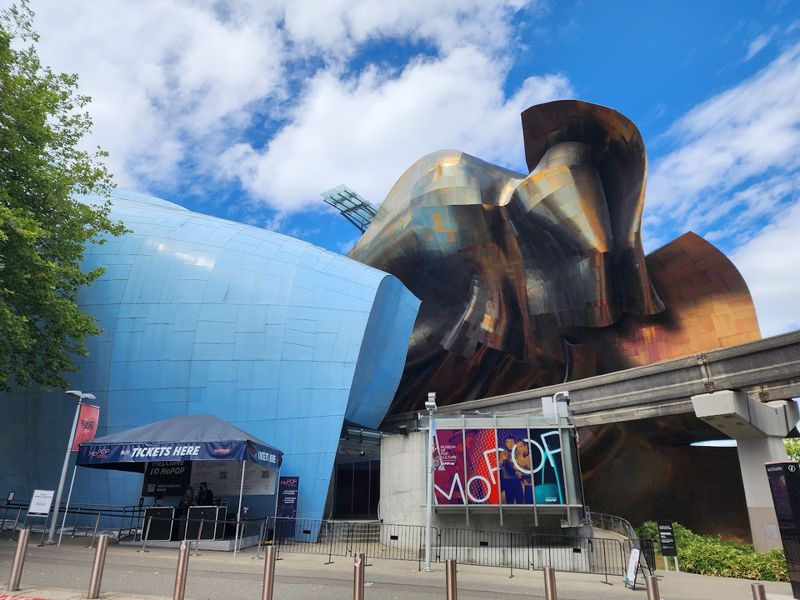
The Museum of Pop Culture starts doing something to you before you even walk through the door.
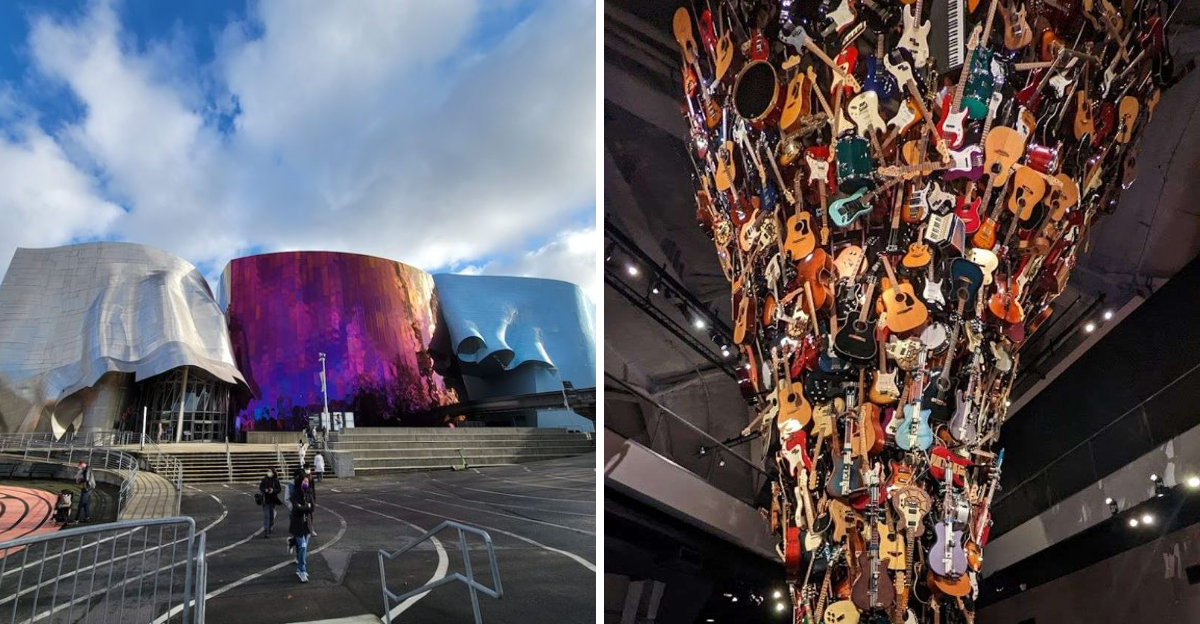
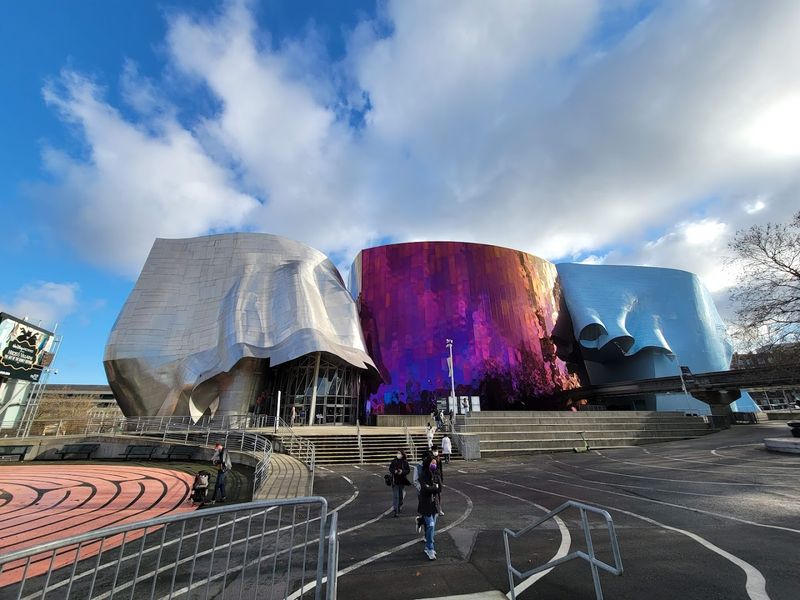
The building itself is a Frank Gehry design, and it looks like a guitar melted in the sun and then decided to become architecture.
Curved metal panels in shades of silver, blue, and gold ripple across the facade in a way that makes you stop and stare.
Standing in front of it feels a little like standing in front of a stage before the show starts. There is genuine anticipation in the air.
The structure alone has been called one of the most distinctive buildings in the Pacific Northwest, and that is not an overstatement.
Even seasoned travelers who have seen plenty of museums tend to pause here. The exterior sets a tone that the inside absolutely delivers on.
It signals immediately that this is not a place for dusty artifacts behind ropes.
Located at 325 5th Ave N, Seattle, Washington, it is a place built for people who genuinely love the things that shaped their childhoods, their playlists, and their dreams.
The Guitar Gallery That Changes How You Hear Music
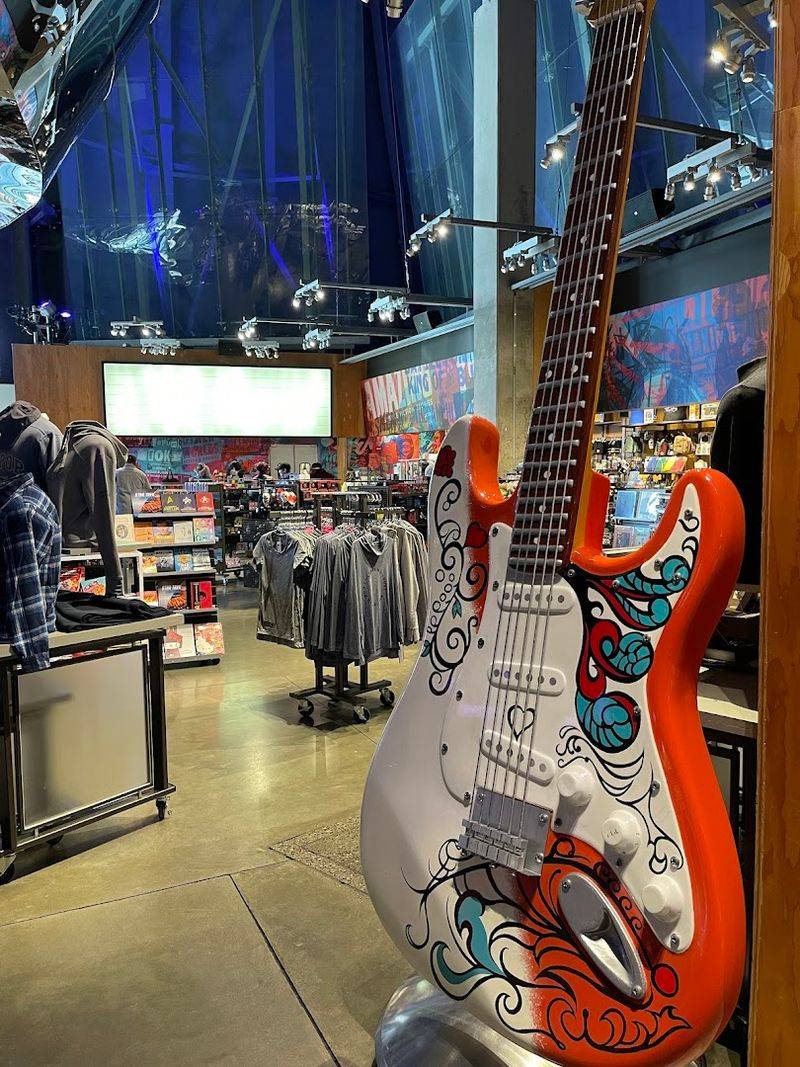
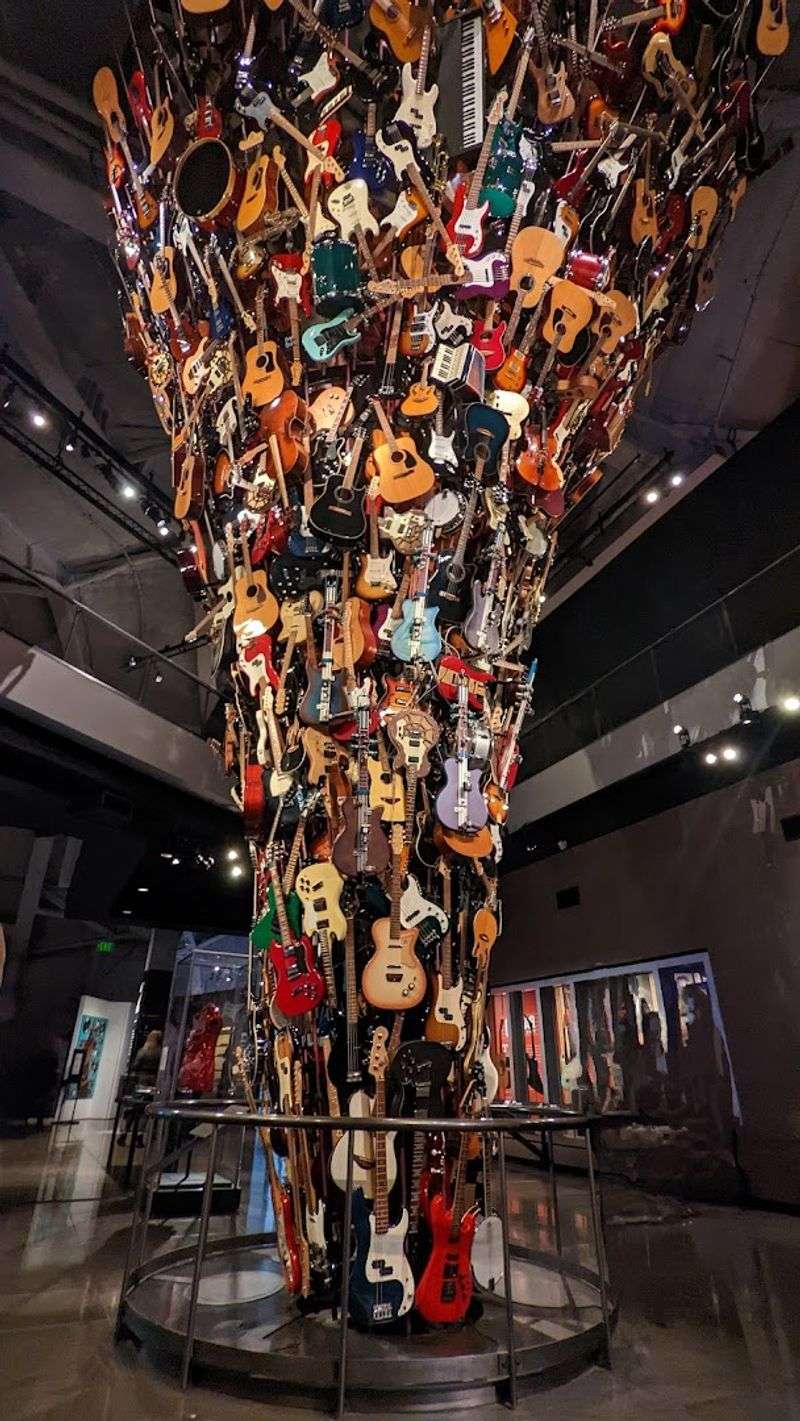
Nothing prepares you for the moment you spot the guitar sculpture hanging in the center of the atrium.
Called IF VI WAS IX, it is made from over 500 guitars, mandolins, and other instruments arranged in a massive spiraling tower that stretches toward the ceiling. It sounds like an art installation.
It feels like a religious experience for anyone who has ever air-guitared their way through a song.
The Gallery of Sound nearby takes things further. Interactive stations let you feel how sound actually works, from acoustics to amplification, using hands-on exhibits that are genuinely fun regardless of your age or music background.
What makes this section special is how it bridges the gap between fan and creator. You are not just looking at famous guitars behind glass.
You are understanding why certain sounds hit differently, why certain songs became anthems, and why music has always been one of the most powerful things humans make. Kids love it.
Adults get a little emotional. Both reactions are completely valid here.
Nirvana And The Pacific Northwest Sound Exhibition
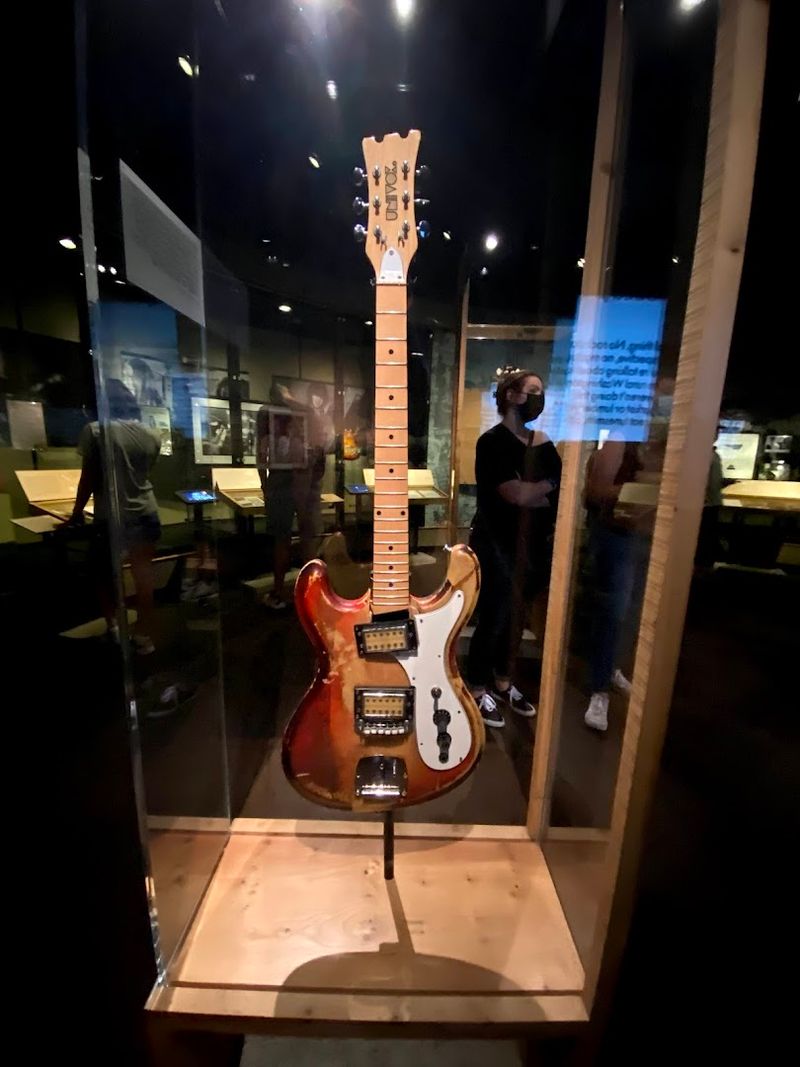
Seattle, Washington, and music are inseparable, and MoPOP does not let you forget that for a single second. The Nirvana exhibit is one of the most emotionally resonant rooms in the entire building.
Kurt Cobain’s actual guitars, handwritten lyric sheets, and personal notebooks are displayed with the kind of care usually reserved for fine art. Because they are fine art, just in a different form.
The exhibit traces the full arc of the grunge movement that exploded out of the Pacific Northwest in the late 1980s and early 1990s.
Bands like Soundgarden, Pearl Jam, and Alice in Chains all get their due alongside Nirvana, giving visitors a real sense of how a region, a sound, and a cultural moment collided at exactly the right time.
Reading Cobain’s handwritten notes up close is something that sticks with you. The exhibit is thoughtful rather than sensational, focused on the creative process and the community that made the music possible.
For anyone who grew up with a flannel shirt and a cassette tape, this room hits exactly as hard as you would hope it does.
Science Fiction And Fantasy Worlds Brought To Life
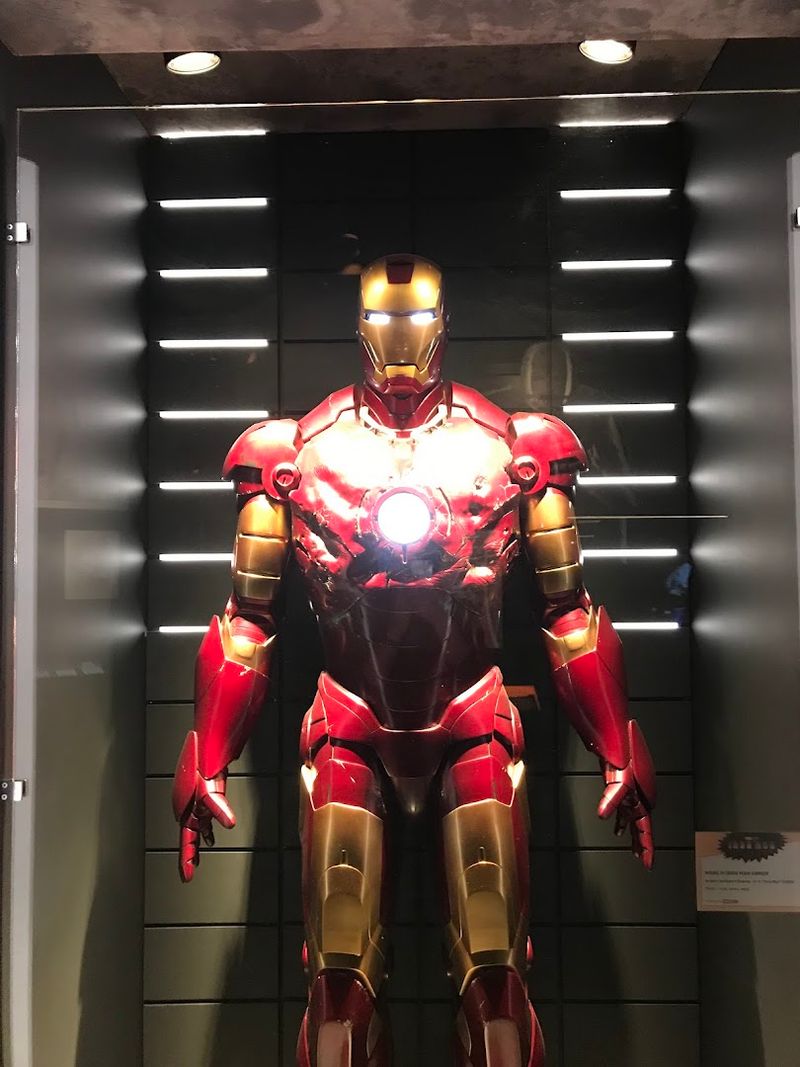
Sci-fi fans, this section was built specifically to make your heart race. The science fiction and fantasy galleries at MoPOP house props, costumes, and artifacts from some of the most beloved franchises in film and television history.
We are talking items from Star Trek, Star Wars, The Terminator, Battlestar Galactica, and more, displayed with real curatorial intention.
Each exhibit case feels like a portal. A phaser from the original Star Trek series sits next to concept art that shows how the designers imagined the future decades before any of us were thinking about it.
Costumes from fantasy films show the craftsmanship that goes into world-building at a scale most people never consider.
What separates this from a standard memorabilia display is the storytelling. MoPOP in Washington consistently asks why these stories mattered, not just what they looked like.
That approach turns a fun exhibit into something genuinely thought-provoking. You leave understanding that science fiction has always been about the present, dressed up in the clothes of the future.
That realization alone is worth the price of admission.
A Cultural History Of Fear In Film
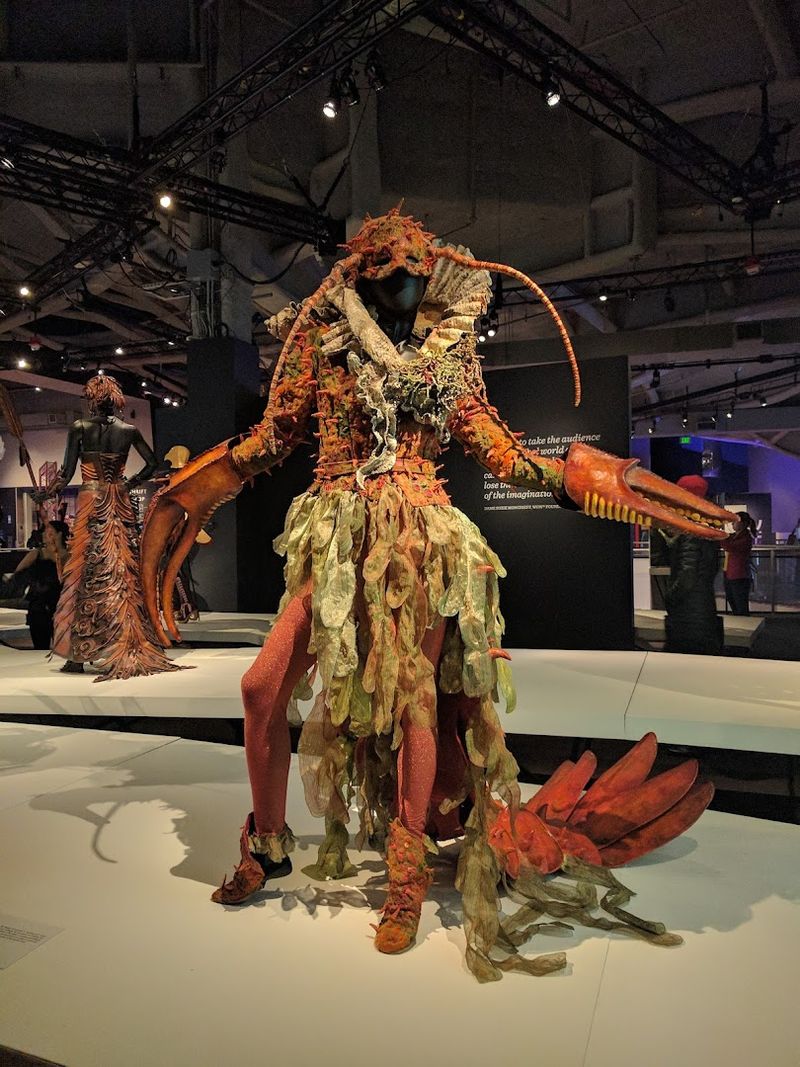
Fair warning: the horror exhibit is not for the faint-hearted, but it is absolutely for the curious.
MoPOP’s permanent horror gallery traces the history of fear in film with a collection of costumes, props, and artifacts that spans decades of cinematic nightmare fuel. Freddy Krueger’s glove is in there.
So is a Xenomorph from Alien. So are things that will make you glance over your shoulder on the walk home.
But the exhibit is smarter than just scaring you. It examines why horror resonates so deeply across generations and cultures, what our fears say about the times we live in, and how filmmakers have used monsters as mirrors.
That context makes the whole thing fascinating rather than just creepy.
The curation is careful and respectful of both the genre and its fans. Horror has often been dismissed as lowbrow entertainment, and MoPOP pushes back on that assumption with genuine intellectual rigor.
Walking through this gallery, you realize that the best horror films are actually serious art. And then you realize something is standing right behind you.
Just kidding. Probably.
Where Players Become Creators
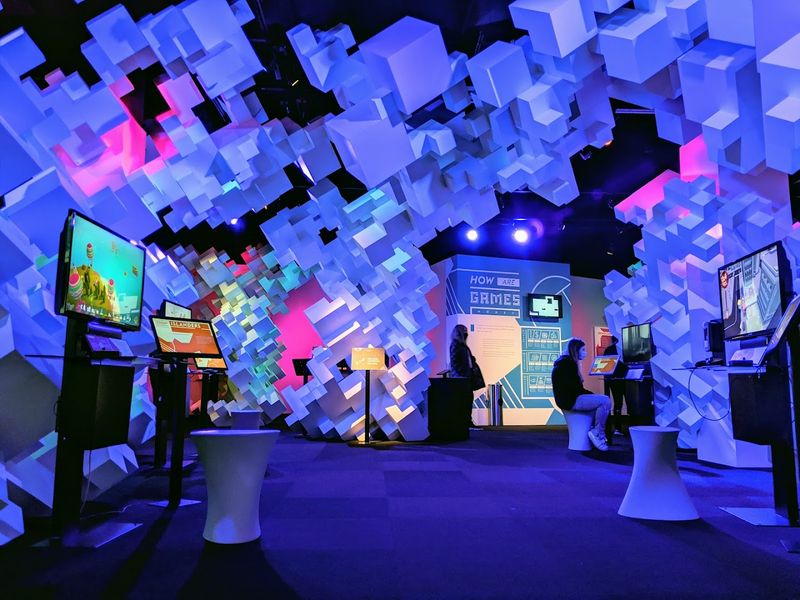
Video games have always been pop culture, but MoPOP makes the case that independent game design is one of the most exciting creative movements happening right now.
The indie game exhibit celebrates the developers who built entire worlds with tiny teams, bold ideas, and not nearly enough sleep. Games like Braid, Minecraft, and Stardew Valley get the spotlight they deserve.
What makes this section genuinely fun is that it is interactive. You can actually play some of the games featured in the exhibit, which immediately clarifies why they became cultural touchstones.
There is something deeply satisfying about understanding a game’s design philosophy and then experiencing it firsthand within the same four walls.
The exhibit also pulls back the curtain on the development process, showing concept art, early builds, and the scrapped ideas that never made it to the final product.
Aspiring game designers find this section particularly inspiring.
But honestly, even if you have never touched a controller in your life, there is something compelling about watching a small group of passionate people create something that millions of people end up loving. That story is universal.
The Interactive Music Experience You Will Not Forget
Most museums ask you to look. MoPOP’s On Stage exhibit asks you to perform.
The setup is exactly what it sounds like: a fully equipped replica of a concert stage, complete with instruments, amplifiers, stage lighting, and a massive projected crowd backdrop.
You pick up a guitar, sit behind a drum kit, or step up to a microphone, and suddenly the room feels completely different.
Groups can play together, which means families and friends end up creating these genuinely chaotic, hilarious, and sometimes surprisingly musical moments.
I watched a kid who could not have been older than eight absolutely destroy a drum solo while her parents cheered from the side. It was one of the most purely joyful things I have seen in a museum, ever.
The experience strips away the intimidation that often comes with music. You do not need training or talent to enjoy it.
You just need a willingness to be a little ridiculous for five minutes.
MoPOP understands that the best memories come from participation, not observation. On Stage is proof that a museum can make you feel something real without a single exhibit label or placard to guide you.
What To Know Before You Go
Getting the most out of MoPOP takes a little planning, and it is genuinely worth putting in that small amount of effort.
The museum is open daily, and tickets can be purchased online in advance, which saves time and occasionally comes with a discount.
Arriving early on weekdays tends to mean smaller crowds and more space to actually absorb each exhibit at your own pace.
The museum sits right next to the Seattle Center, which means you can pair a visit with a trip up the Space Needle or a walk through the surrounding grounds.
Parking is available nearby, but the Seattle Center is also easily reachable by public transit, which takes a lot of stress out of the day.
Plan to spend at least three to four hours inside if you want to see everything properly. The exhibits reward slowness.
Rushing through means missing the handwritten notes, the small details, and the quiet moments that turn a good visit into a great one.
MoPOP is the kind of place that sends you home with your brain full and your mood genuinely lifted. That combination is rarer than it should be, and absolutely worth seeking out.