This Breathtaking Colorado Landmark Feels Almost Too Unreal To Be Natural
Even by Colorado standards, this beautiful place feels like showing off.
I pulled over on a clear morning in Colorado Springs, stepped out of the car with a coffee going cold in my hand, and stood there for a full minute doing absolutely nothing except staring.
It was real, and it is one of the most visually arresting things I have ever encountered in a state that has made a career out of visually arresting things.
Massive red rock formations erupting straight out of the earth at angles that defy every reasonable expectation, framed by blue sky and the distant white of Pikes Peak doing its own quiet thing in the background.
The whole scene looks like someone commissioned a painting and forgot to tell the painter to be subtle.
This state has been sitting on one of the great natural spectacles in the country, and it charges nothing to see it.
The Towering Red Rock Formations
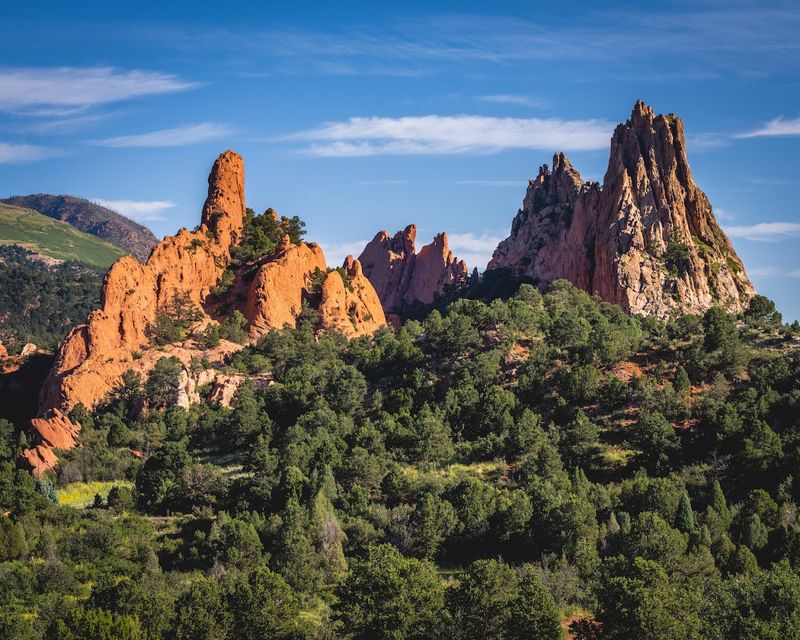
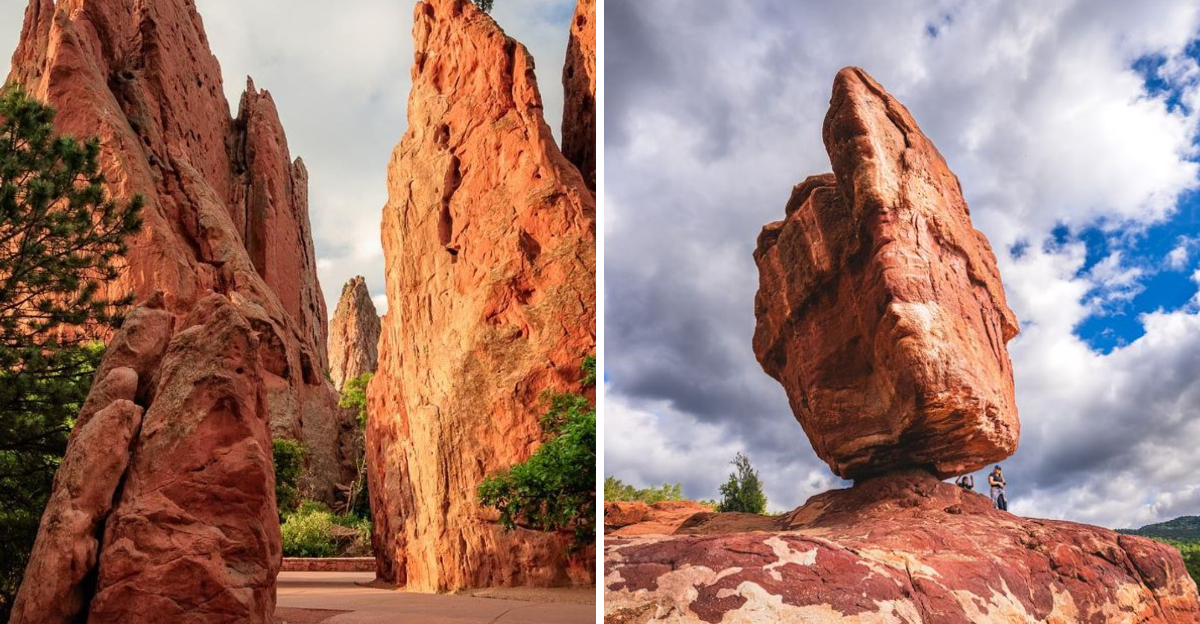
Garden of the Gods sits at 4,014 acres of pure geological drama, and the red rock formations are the whole reason people drive hours to get there.
These sandstone fins rise up to 300 feet tall, and they look like something a movie director ordered for an epic fantasy film. Except they are completely, absolutely real.
The rocks formed over millions of years through a combination of tectonic shifts and erosion. Layers of sediment got tilted nearly vertical when the Rocky Mountains pushed upward.
What you see now is the result of that slow, relentless natural pressure.
Standing at the base of one of these formations puts your sense of scale completely off balance. Your neck cranes back, your jaw loosens, and your brain quietly refuses to process what it is seeing.
The red color comes from iron oxide in the sandstone, which deepens dramatically at sunrise and sunset. Plan your visit around golden hour if you can.
The rocks glow like embers, and the photos you take will make everyone back home deeply jealous.
Siamese Twins Rock Formation
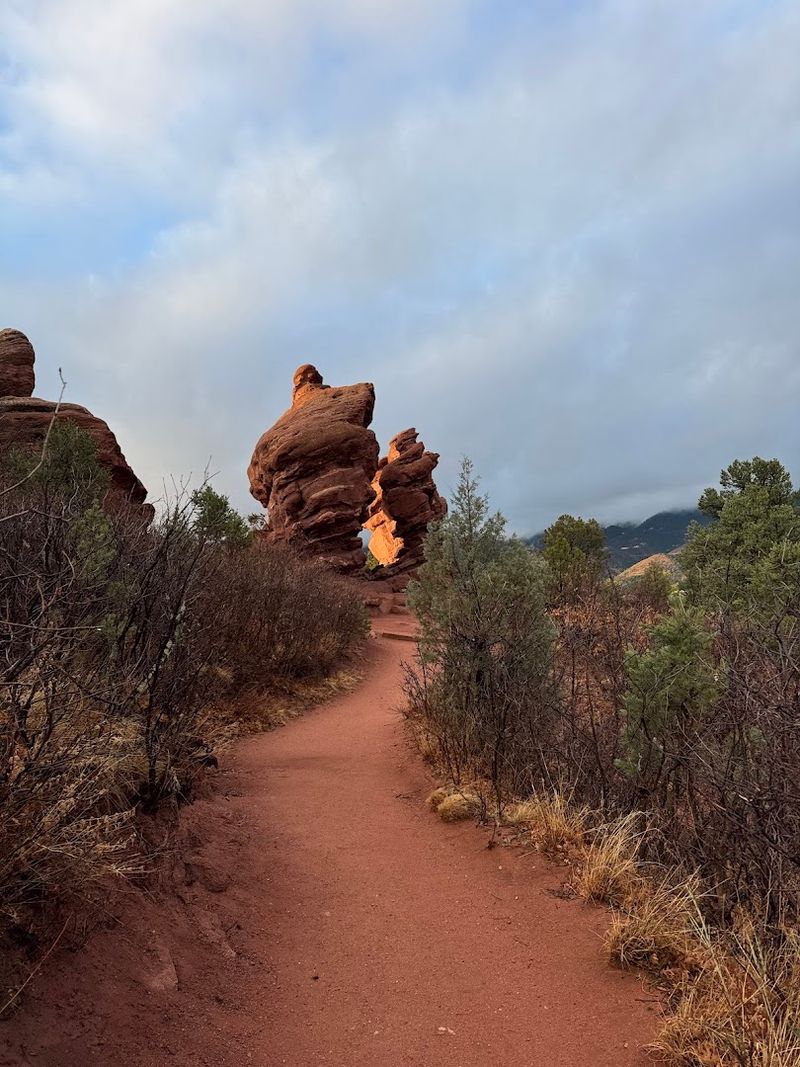
Not every rock formation at Garden of the Gods comes with a built-in window, but Siamese Twins does.
Two sandstone fins lean against each other, creating a natural arch between them. Frame yourself just right, and you get a picture-perfect view of Pikes Peak through the gap.
The hike to reach Siamese Twins is short but rewarding. It is about a half-mile round trip from the trailhead, with some uneven terrain that keeps things interesting.
The payoff at the top is genuinely one of the best photo opportunities in all of Colorado.
What makes this formation feel different from the others is how intentional it looks. The arch frames Pikes Peak so perfectly that it almost feels staged.
First-time visitors often stop mid-trail because the view catches them completely off guard. The best light hits this spot in the morning, when the sun angles across the rock face and the peak sits crisp and clear behind it.
Bring a wide-angle lens if you have one. Bring patience if you do not, because you will want to stay longer than you planned.
The Visitor And Nature Center
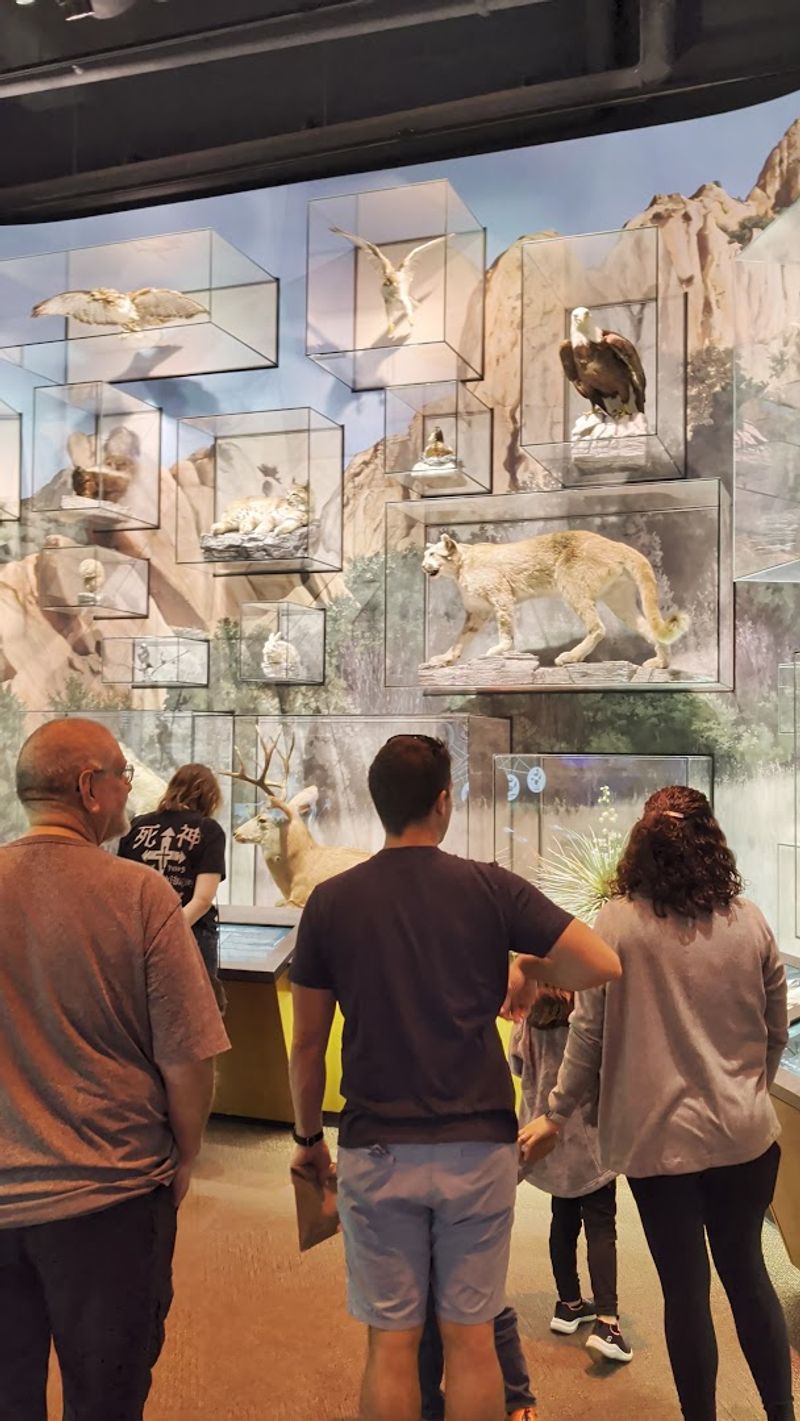
Before you head out into the park, the Visitor and Nature Center is worth at least thirty minutes of your time. The building itself has floor-to-ceiling windows that frame the red rocks like living paintings.
It is the kind of view that makes you forget you are standing inside a gift shop.
The center is located at 1805 N 30th Street, Colorado Springs, and admission to both the center and the park is completely free. That is not a typo.
One of the most visually stunning natural landmarks in the country charges you absolutely nothing to visit.
Inside, you will find interactive exhibits about the geology, ecology, and cultural history of the area. The geology timeline alone is worth a slow read.
There is also a cafe on site if you need fuel before tackling the trails.
The staff are knowledgeable and genuinely enthusiastic about the park, which makes asking questions feel less like interrupting someone and more like starting a good conversation.
Pick up a trail map here before heading out. The park is easy to navigate, but having a map keeps you from missing the best spots.
Perkins Central Garden Trail
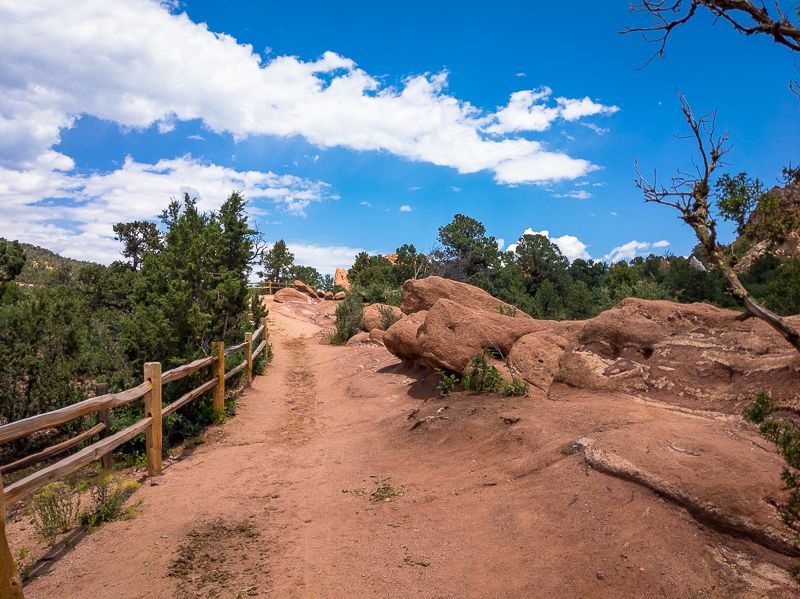
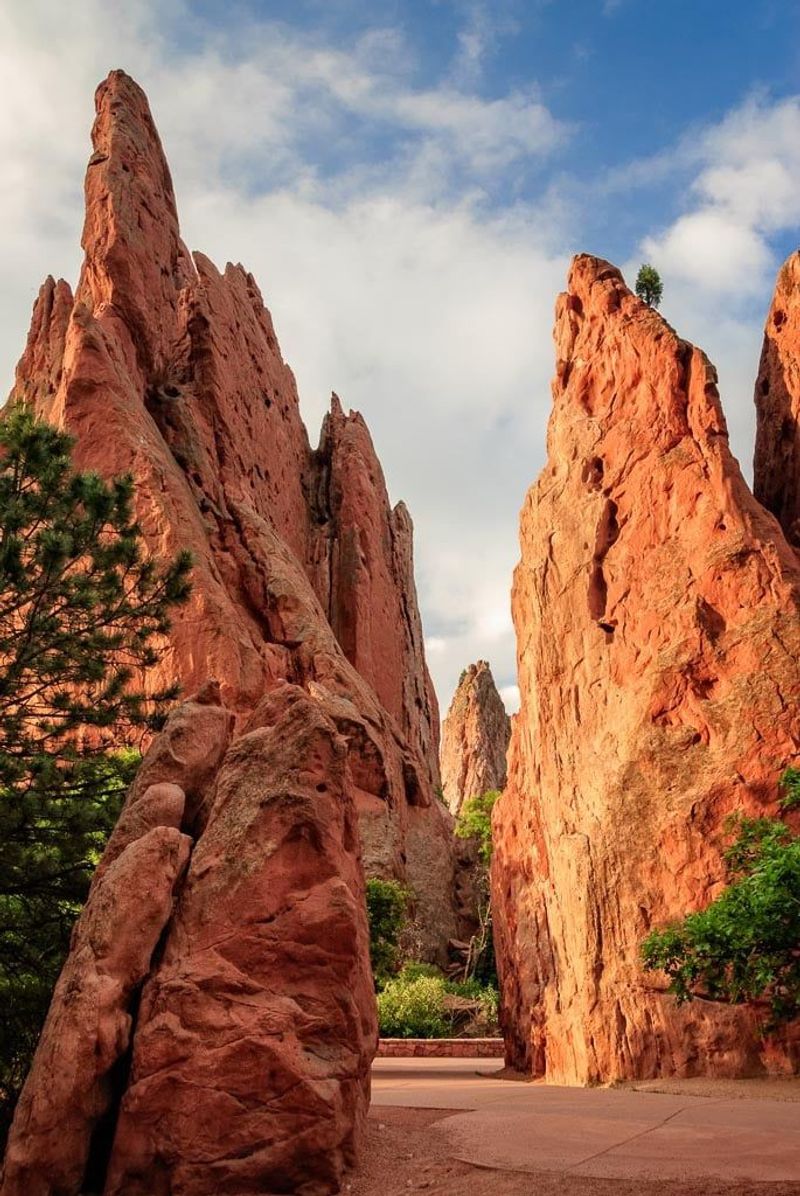
If you only have time for one trail, make it the Perkins Central Garden Trail. It runs right through the heart of the park, putting you directly between the most dramatic formations in the entire landscape.
The trail is paved, relatively flat, and about 1.5 miles long, which means almost anyone can handle it.
Walking this trail feels like moving through a natural cathedral. The rock walls rise on both sides, the sky turns into a narrow blue ribbon above you, and the scale of everything around you becomes impossible to ignore.
Other visitors tend to go quiet on this stretch, which says something.
Early mornings on weekdays are the sweet spot for this trail. The crowds thin out, the light is soft and golden, and you actually get to hear the birds instead of other people’s podcasts.
The trail connects to several longer routes if you want to extend your adventure. Joggers use it regularly, and dogs on leashes are welcome, which means the trail has a genuinely lively, community feel.
It is the kind of walk that resets your brain in the best possible way.
Rock Climbing At The Garden
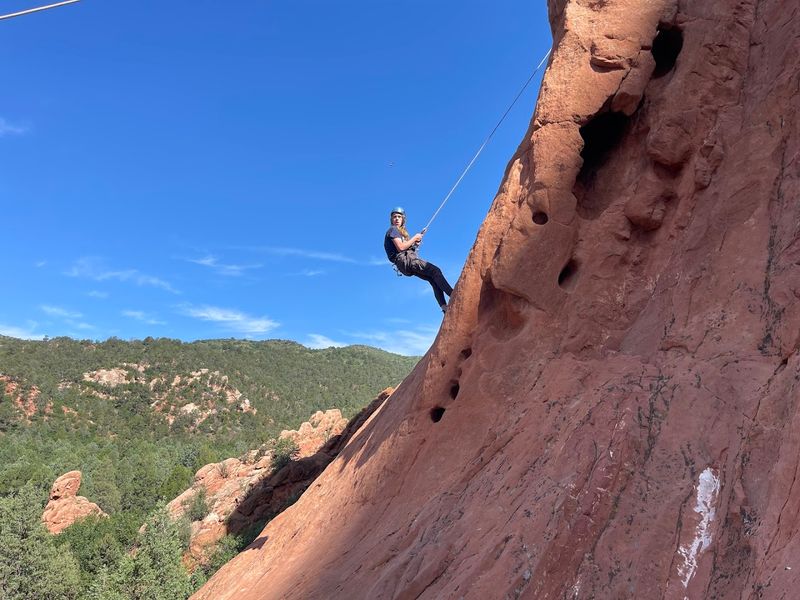
Climbers have been drawn to Garden of the Gods for decades, and once you see the formations up close, the appeal makes complete sense.
The sandstone walls offer hundreds of established routes ranging from beginner-friendly to seriously technical. It is one of the most unique climbing environments in the American West.
Climbing is permitted in designated areas of the park, and a free permit is required. You can register at the Visitor Center before heading out.
The park takes conservation seriously, so certain routes are closed seasonally to protect nesting raptors. Check current closures before you plan a climbing day.
Even if you have never touched a rock wall in your life, watching experienced climbers work their way up these formations is its own kind of entertainment.
They move with a precision and calm that looks almost meditative from below. Guided climbing experiences are available through local outfitters in Colorado Springs if you want to try it yourself with proper instruction.
The feeling of standing on top of a sandstone fin with the entire park spread out below you is, by all accounts, completely unforgettable. Worth every bit of effort it takes to get there.
Sunrise And Sunset Views
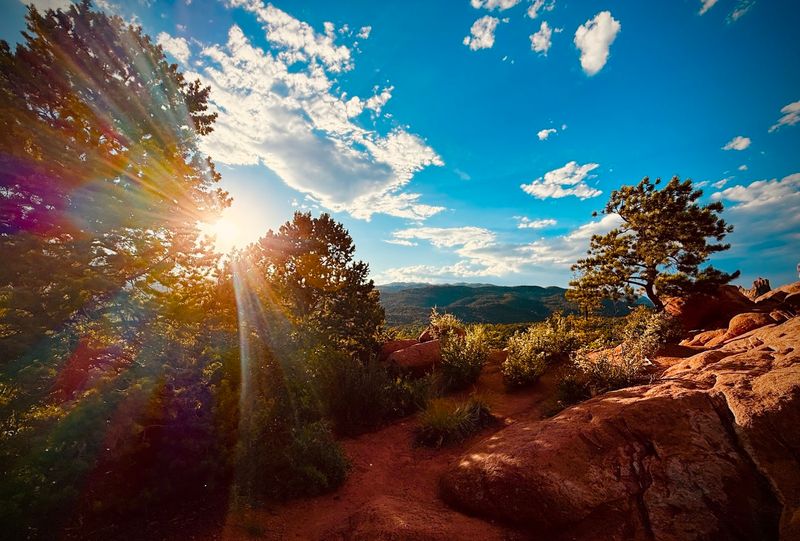
There is a reason photographers set alarms for 5 a.m. when visiting Garden of the Gods. The light at sunrise hits the iron-rich sandstone at a low angle, turning the formations from red to deep orange to something close to gold.
It happens fast, it is breathtaking, and it is completely free to witness.
Sunset delivers a different but equally stunning show. The shadows stretch long across the rock faces, the colors deepen dramatically, and the formations seem to absorb the last light of the day like they are storing it for later.
Both ends of the day are worth your time here.
The best sunrise viewing spots are along the main park road facing east, where you can watch the light creep across the rocks without any obstruction.
For sunset, the western-facing formations near the Balanced Rock area offer a spectacular backdrop. Bring a tripod if you are serious about photography.
The low light conditions reward patience and preparation.
Even if you are not a photographer, just sitting quietly and watching the colors shift is one of those experiences that sticks with you long after you have driven home.
Wildlife Watching In The Park
Most visitors come for the rocks and leave surprised by the animals. Garden of the Gods supports a genuinely diverse range of wildlife, and spotting them adds an entirely different layer to the experience.
Mule deer are the most commonly seen residents, often grazing near the trail edges with zero concern for human observers.
Raptors are a regular sight overhead, including red-tailed hawks and occasionally golden eagles riding thermals above the formations.
The park also hosts marmots, wild turkeys, and a variety of lizard species that dart across the sun-warmed rocks with impressive speed.
The best wildlife viewing happens in the early morning and late afternoon when animals are most active. Move slowly, stay on the trails, and keep noise to a minimum.
Binoculars make a real difference here, especially for spotting birds perched high on the rock faces. The park asks visitors not to feed or approach wildlife, which is worth taking seriously.
These animals live here year-round, and respectful observation keeps the ecosystem healthy for everyone.
Watching a hawk circle lazily above a 300-foot sandstone fin while a deer grazes below is the kind of moment that reminds you why places like this need to be protected.
Balanced Rock
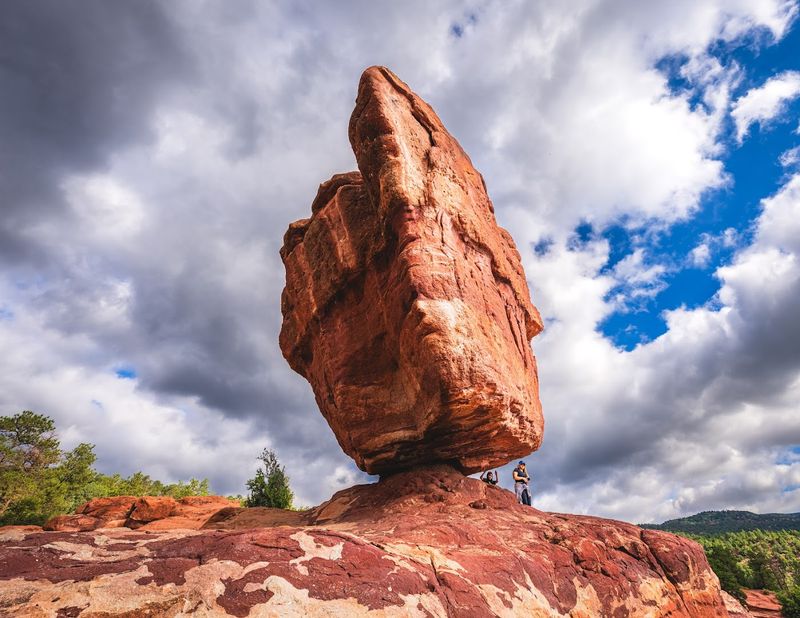
Balanced Rock is the kind of sight that makes your brain short-circuit just a little. A massive boulder, roughly 35 feet tall, sits perched on a slender base that looks like it should have given up centuries ago.
Gravity seems personally offended by this rock, and yet here it stands.
The formation has been a landmark at Garden of the Gods for as long as people have been visiting. Native American tribes considered the entire park sacred, and it is easy to understand why.
There is something genuinely humbling about standing near a rock that has defied physics for thousands of years.
Balanced Rock is conveniently located right off the main park road, making it one of the most accessible stops in the park. You do not need hiking boots or a trail map to experience it.
Pull up, park, walk thirty feet, and prepare to feel appropriately small. Kids absolutely love it, and so do adults who pretend they are too cool to be impressed.
Spoiler: no one is too cool for Balanced Rock. It wins every time.