This Idaho Canyon Looks Like Someone Secretly Dropped A Tropical Paradise Into The Desert
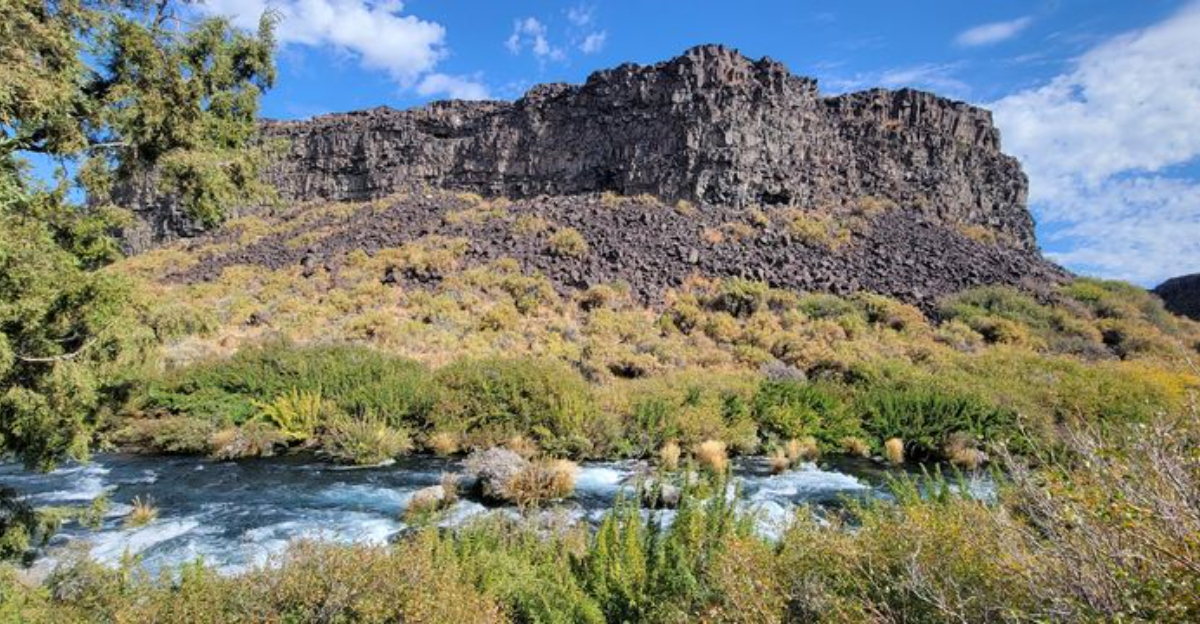
Desert scenery is not supposed to pull a turquoise-water stunt like this.
In southern Idaho, dry farmland suddenly loses the plot and drops into a canyon so bright it feels like someone spilled vacation brochure ink into the rocks.
Basalt walls rise around water clear enough to make swimming pools jealous.
Everything looks far too lush for a place surrounded by sagebrush and open fields, which is exactly why the first view feels mildly illegal.
No palm trees show up, but the color is doing serious tropical cosplay.
Anyone expecting ordinary desert views should prepare to question the entire landscape.
The Jaw-Dropping First View From The Overlook
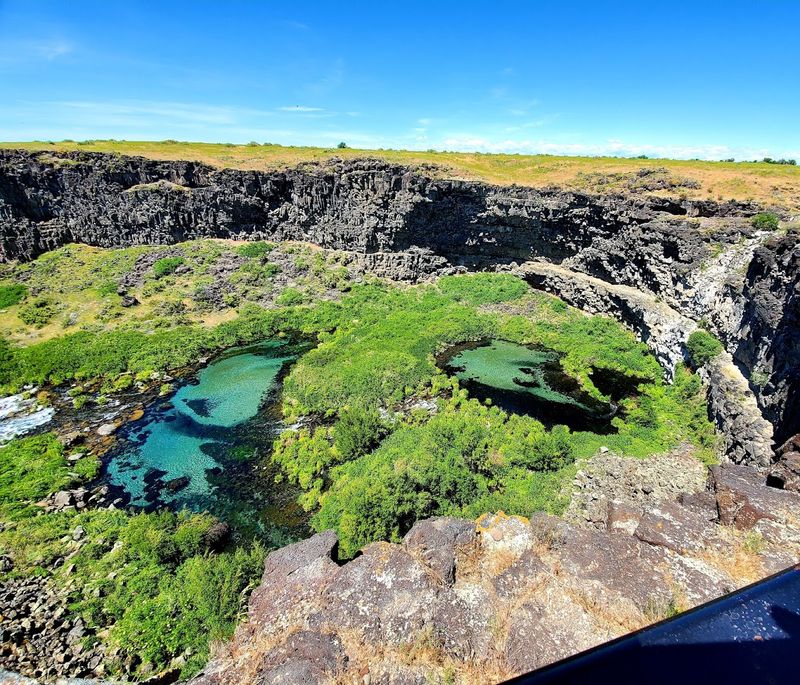
Nothing about the surrounding farmland prepares visitors for the first look into Box Canyon. One minute the landscape feels dry, flat, and unmistakably southern Idaho.
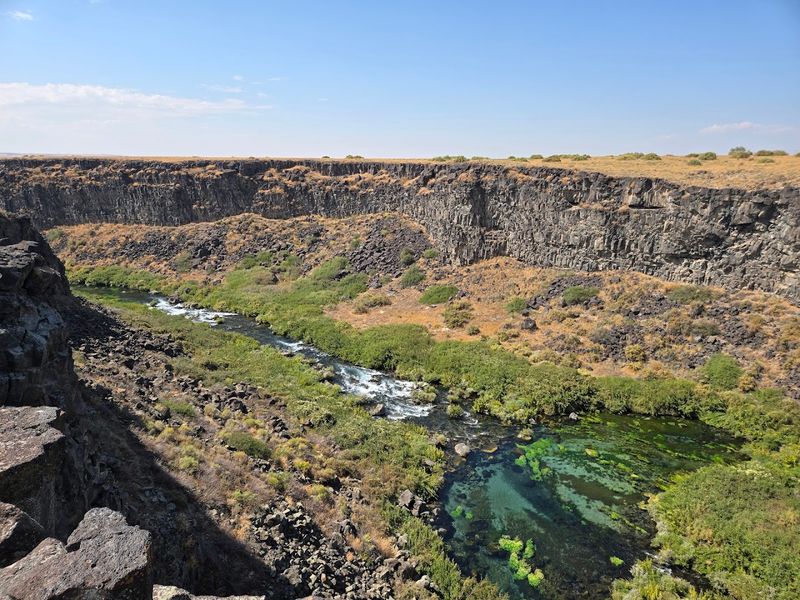
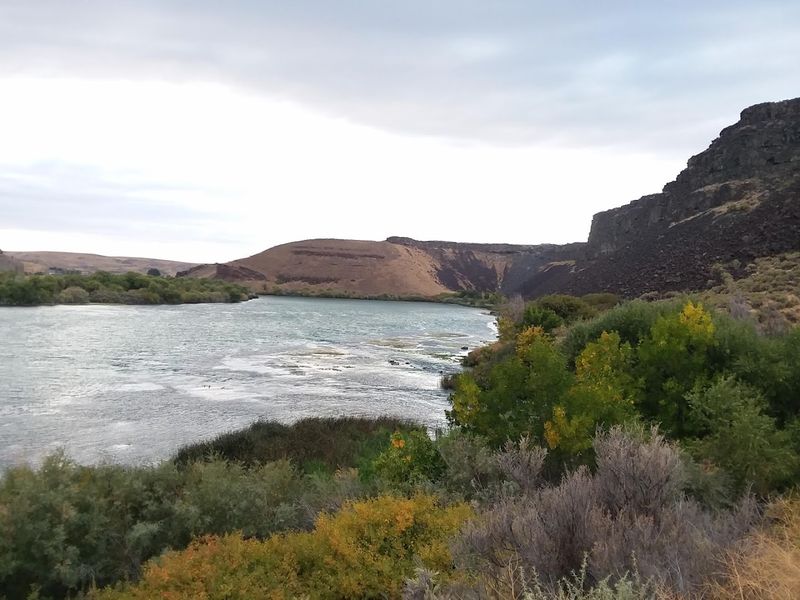
Next, a deep basalt canyon opens below with water so blue-green it looks borrowed from a tropical lagoon. The overlook makes the experience easy to appreciate even for visitors who do not want to hike the steeper trail into the canyon.
Dark volcanic walls, bright spring water, and thick greenery create a visual contrast that feels almost unreal, especially under clear morning light. Photographers love this spot because the color shifts with the sun, moving from deep emerald to bright aqua depending on angle and depth.
The paved viewpoint also makes it possible to enjoy the preserve without committing to the full descent. For anyone road-tripping through the Thousand Springs region, this first view is the reason Box Canyon leaves such a strong impression.
It does not ease visitors into beauty. It simply drops the whole scene below their feet and waits for the silence.
Rushing Springs That Never Stop Flowing
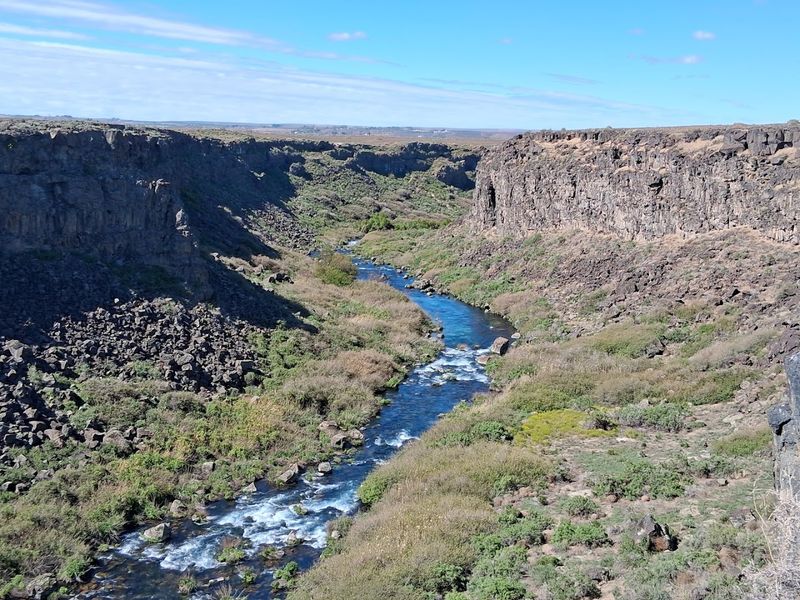
Hidden beneath the drama is one of Idaho’s most fascinating water stories. Box Canyon’s spring flows at roughly 180,000 gallons per minute, and The Nature Conservancy describes it as the 11th largest spring in the United States.
That enormous flow comes from the Snake River Plain Aquifer, where water moves underground through layers of basalt before bursting into daylight at the canyon’s head. The result is water with a clarity and color that feels startling in a high-desert setting.
Instead of a seasonal stream that fades with the heat, this spring-fed system keeps flowing year-round and gives the canyon its lush pocket of life. The constant movement creates a cool, steady soundtrack inside the canyon and supports plants, fish, birds, and wildlife that could not thrive in the surrounding dry landscape.
Geology does all the showmanship here. Basalt, pressure, underground flow, and time work together to create a place that feels impossible until you are standing beside it.
A Waterfall Hidden Inside The Canyon
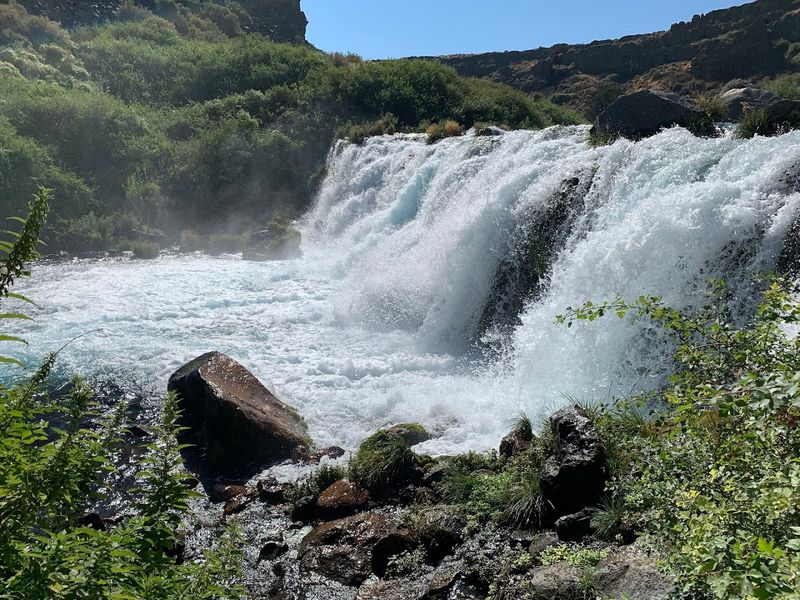
Past the overlook, the canyon rewards hikers with a waterfall that feels like a secret tucked inside another secret. Trail descriptions for Box Canyon note a spring-fed route descending into the basalt-rimmed canyon and reaching a roaring 20-foot waterfall, which often becomes the natural turnaround point for shorter hikes.
The scene is memorable because the water does not just fall; it glows. Clear spring flow, dark lava rock, mineral color, and canyon greenery combine into a view that looks far more dramatic than the landscape above suggests.
Getting close enough to hear the rush and feel the cooler air makes the hike feel worth every careful step. The waterfall also shows how powerful the spring system really is, turning underground water into visible motion within a compact canyon corridor.
Visitors who only stop at the overlook still get a stunning view, but those who make the descent see the preserve’s more intimate side. This is where Box Canyon stops looking like a postcard and starts feeling alive.
Getting Down Into The Canyon Trail
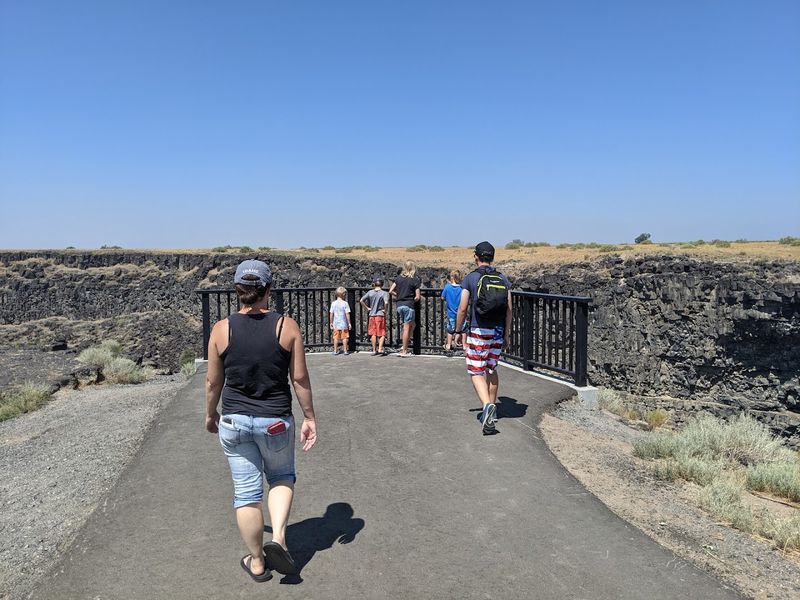
Reaching the canyon floor requires more effort than the overlook suggests, so visitors should not treat the trail like a casual sidewalk stroll. The descent is steep, rocky, and uneven in places, with footing that can feel especially challenging for anyone wearing sandals or smooth-soled shoes.
Once below the rim, the route follows the spring-fed water through a narrow, lush corridor that feels dramatically different from the exposed desert above. Long pants can help in brushy sections, and sturdy shoes with grip make the experience far more comfortable.
Many hikers prefer completing the loop rather than climbing directly back up the steepest section, because the return can feel less punishing when taken gradually. The trail is not extremely long, but it asks for attention.
Loose rock, heat, limited shade near the rim, and the initial drop all make preparation important. For visitors who enjoy a little challenge with their scenery, the route adds just enough adventure to make the turquoise water and waterfall feel earned rather than handed over too easily.
Swimming In The Cold Spring-Fed Pond
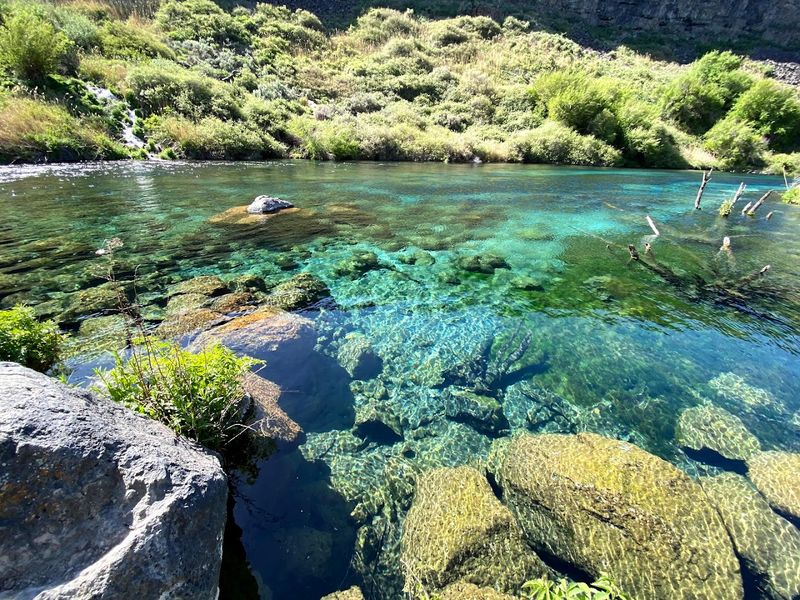
The spring-fed pool near the lower canyon area can look almost too inviting on a hot Idaho day. After hiking through dry heat and rocky trail sections, the clear blue water feels like a reward waiting at the end of the route.
The catch is the temperature. Spring water here stays very cold, so a quick plunge can feel shocking even when the air is blazing.
That contrast is part of the appeal for swimmers who love natural cold-water dips, but it is worth treating the pond with respect. Water shoes help with rocky footing, and a towel waiting back at the car can feel like a brilliant decision afterward.
Visitors should avoid assuming the area has full beach-style amenities, because this is a nature preserve, not a developed swimming complex. Pack out trash, keep the water clean, and give other visitors space.
The pond is memorable precisely because it still feels wild, clear, and unscripted. A careful swim here can become the highlight of the whole visit.
Wildlife You Might Spot Along The Way
Water changes everything in southern Idaho, and Box Canyon proves it. The surrounding region can feel dry and open, but the canyon’s steady spring flow creates a small ribbon of habitat where wildlife has more cover, food, and moisture.
Birds move through the trees and canyon walls, fish can be seen in the clear water, and patient visitors may spot small mammals near the rocks or vegetation. The Nature Conservancy notes the area’s appeal for small-stream trout fishing, which speaks to the quality of the spring-fed environment.
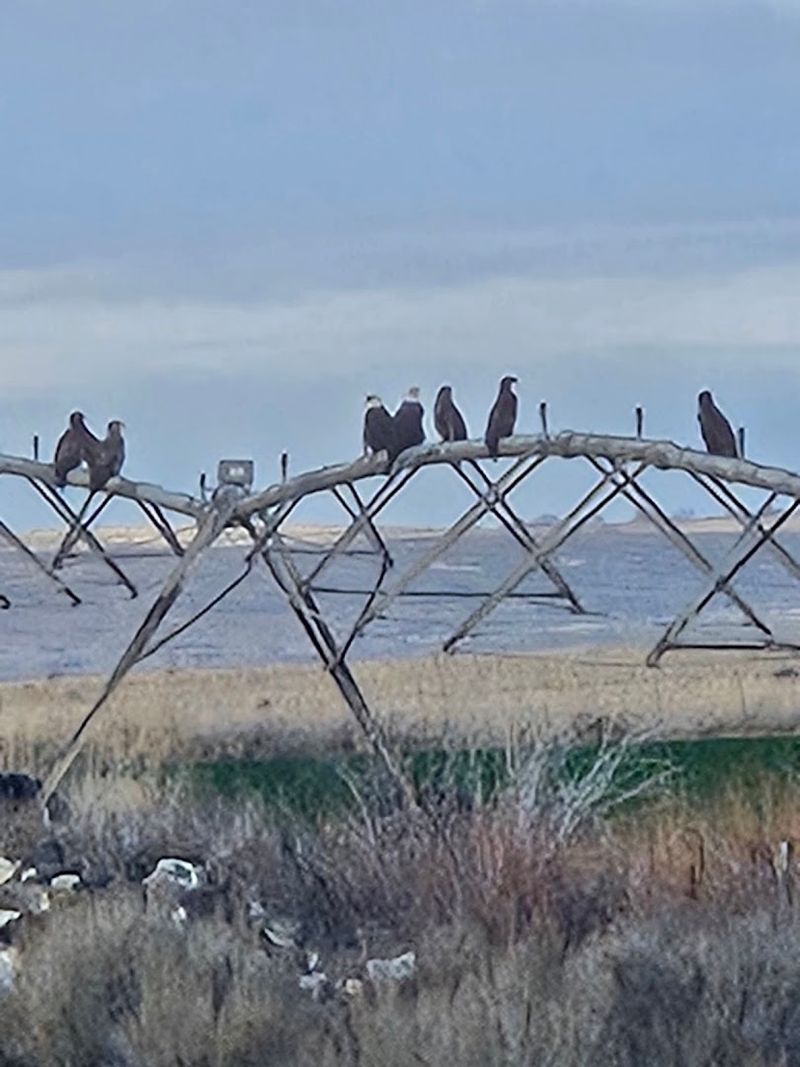
Raptors are also possible in the broader Thousand Springs landscape, where canyon walls and open country create excellent hunting territory. Insects can be part of the experience too, especially during warmer months when vegetation thickens near the water, so repellent belongs in the day pack.
Wildlife viewing here works best at a slower pace. Pause often, listen between the water sounds, and scan the canyon edges carefully.
Box Canyon’s animals do not need to be dramatic to make the place feel richer.
What To Pack For A Perfect Visit
Smart packing can make Box Canyon feel magical instead of uncomfortable. Sturdy trail shoes should come first, because the descent and canyon floor include loose rock, uneven footing, and sections where grip matters.
Sunscreen, sunglasses, and a hat are also important because the upper portions of the preserve can be exposed, especially in summer. Bring more water than seems necessary, since Idaho heat can make even a shorter hike feel demanding.
A small backpack works better than carrying items by hand, particularly if you plan to bring a towel, water shoes, snacks, insect repellent, and a dry layer after swimming. Trekking poles may help visitors with knee or ankle sensitivity during the descent.
A camera or phone with enough battery is worth having because the overlook and lower canyon both photograph beautifully. Leave glass containers at home and pack out every wrapper, bottle, and snack bag.
Box Canyon stays stunning only when visitors treat it like a protected place rather than a casual swimming hole.
Park Hours, Fees, and Getting There
Planning the logistics is fairly simple. Box Canyon is a unit of Thousand Springs State Park, and Idaho Parks lists Box Canyon, Billingsley Creek, Kelton Trail, and Crystal Springs as open year-round for day use from 7 a.m. to 10 p.m.
Visit South Idaho notes that the park is part of the Thousand Springs system and describes a $7 vehicle fee for access, with the pass also applying to other Thousand Springs units when purchased at Malad Gorge. The preserve is reached from the Wendell area, with paved road access leading toward the parking area.
Arriving early is wise during warm weekends, because the overlook, trail, and swimming area can draw more people than the remote setting suggests. Nearby communities such as Wendell, Buhl, and Hagerman can provide fuel, food, or extra supplies before or after the visit.
Check Idaho Parks before heading out for the latest updates on fees, road conditions, access notes, and any seasonal changes. The preserve sits near W Point Road outside Wendell, Idaho.
Why This Spot Deserves A Spot On Your Idaho Bucket List
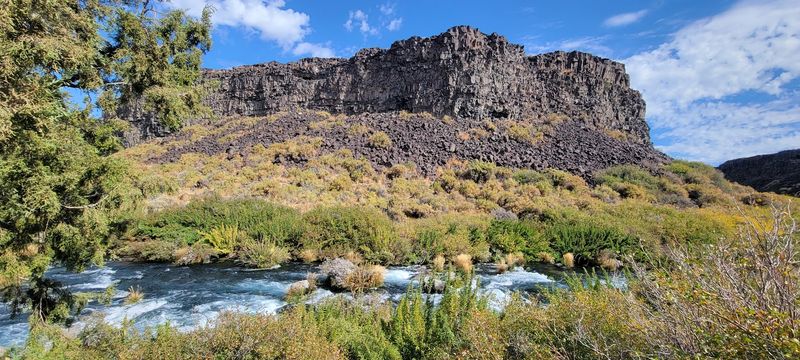
Box Canyon feels memorable because it breaks the rules visitors expect from the landscape. Southern Idaho is already full of volcanic cliffs, desert roads, farmland, and Snake River scenery, but this preserve adds something startling: tropical-looking water rushing through black basalt in the middle of an arid plain.
Visit Idaho describes Thousand Springs State Park as a multi-unit park where underground water flows from volcanic cliff faces, with Earl M. Hardy Box Canyon Springs Nature Preserve among its key units.
That larger setting makes Box Canyon part of a regional geology story, not just a pretty overlook. Still, beauty is what people remember first.
The spring flow, canyon trail, waterfall, swimming pond, and accessible viewpoint all create different ways to experience the same remarkable place. Visitors can make the stop quick or turn it into a half-day adventure.
Either way, the canyon delivers the rare travel feeling of seeing something that seems almost misplaced in the best possible way. Idaho keeps many surprises below the rim, and Box Canyon may be one of its finest.