This UFO-Shaped Tennessee Home Looks Like Something From Another Planet
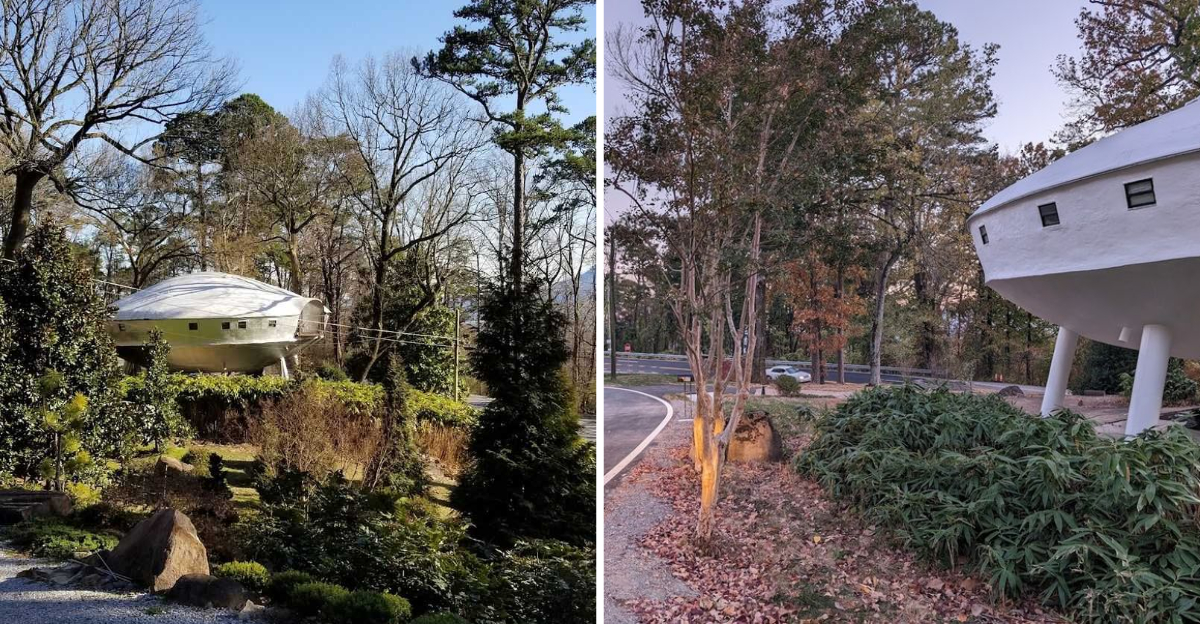
Architecture surprises when it refuses to follow any recognizable rule entirely. This Tennessee home refuses all the rules and the result is extraordinary.
The UFO shape is a fully realized design with real intention. Curved walls and an impossible silhouette evoke pure and vivid science fiction.
From a distance it looks unreal and getting closer only intensifies that. People drive past and pull over without having planned to stop.
I saw a photo and had to see it in person immediately. Tennessee is full of surprises but this one has its own category.
Be prepared to question everything you assumed a home could possibly be.
How It All Began
Can you guess what time it is? It time for a story!
Back in the early 1970s, builder Curtis W. King decided that a regular house simply would not do.
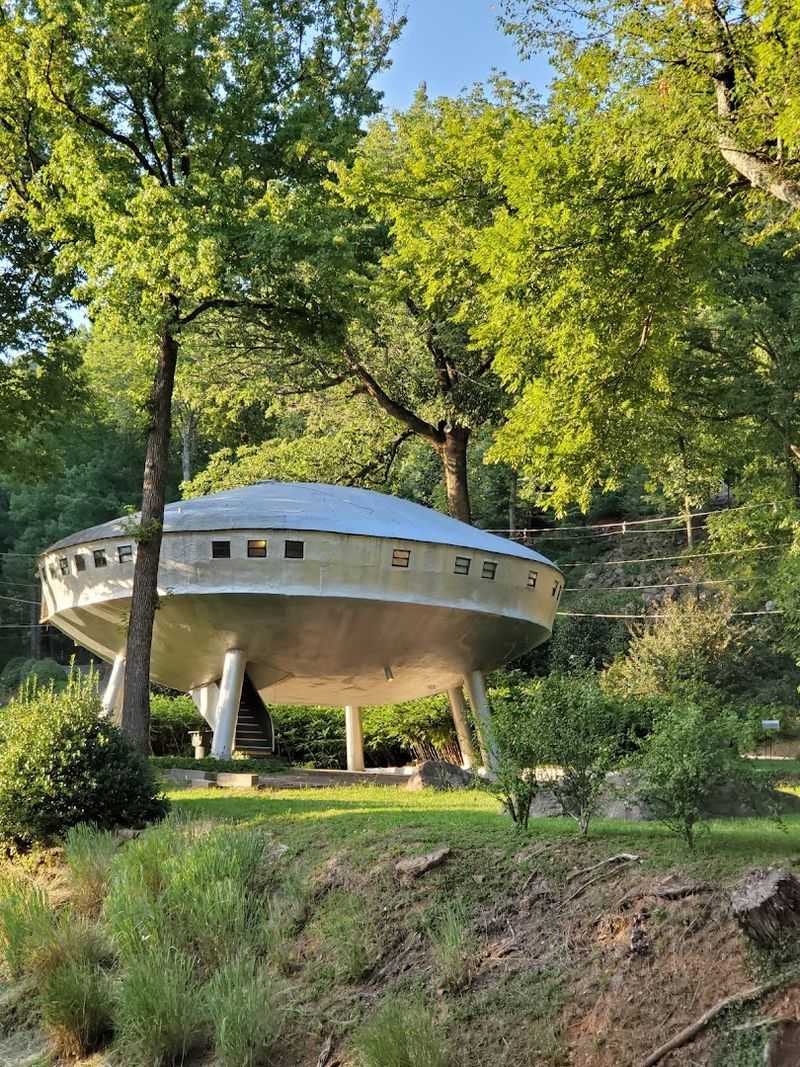
Completed in 1973, this extraordinary disc-shaped structure was reportedly built as a futuristic bachelor pad for his sons and as an example of forward-thinking housing design.
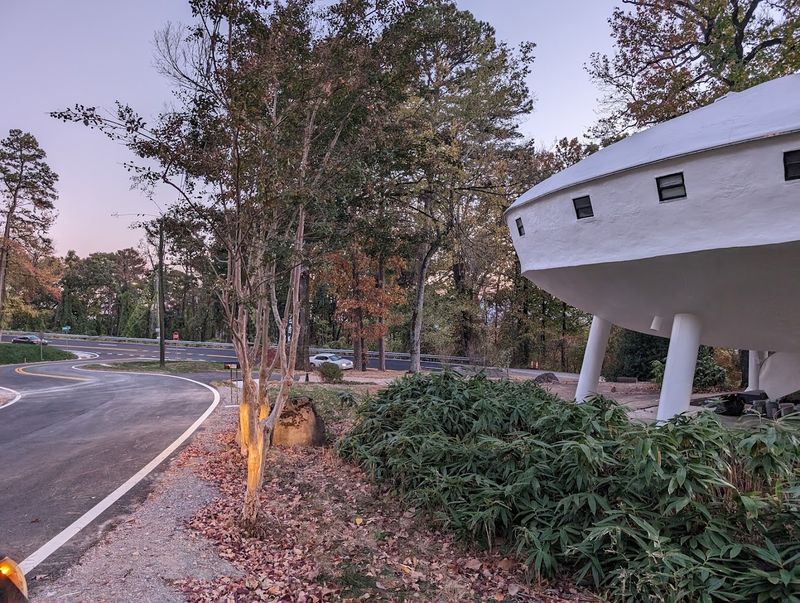
The design was unlike anything I’ve seen before. The circular structure, elevated above a carport tucked beneath the house, created the illusion that it was floating above the mountainside.
Bold, unconventional, and unmistakably inspired by the Space Age, the home quickly became one of the region’s most recognizable landmarks.
What makes the story especially memorable is that the Flying Saucer House was never intended as a tourist attraction or publicity stunt.
It was built as a private family home driven by imagination and a fascination with futuristic design. That sense of creativity still defines the structure today.
The Architecture Itself
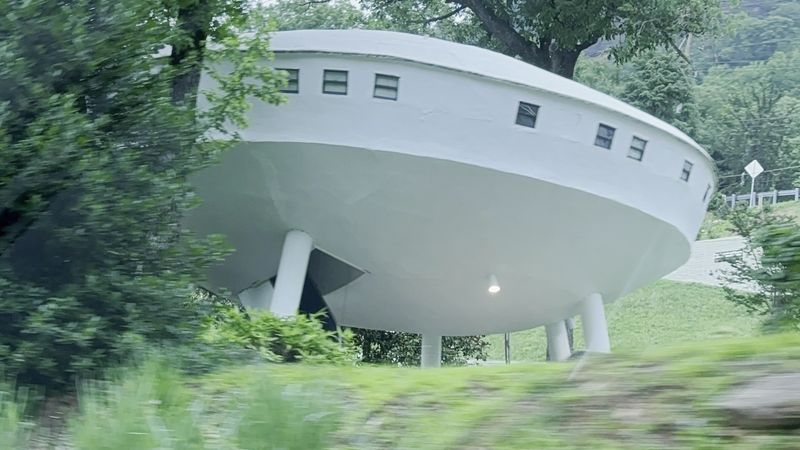
Standing in front of this structure, the first thing you notice is how deliberately round everything is. There are no sharp corners, no traditional rooflines, and no architectural cues that say “ordinary house.”
The entire living space sits inside a wide, flattened disc elevated above ground level, resting on a central support column.
A carport sits directly underneath the main body of the home, which is a clever use of the negative space created by the design.
The circular form wraps around the interior like a continuous loop, giving the structure an almost aerodynamic quality. From certain angles, it genuinely looks like it could lift off at any moment.
The exterior has held up remarkably well over the decades. Visitors consistently note how pristine the Flying Saucer House looks, even after fifty-plus years of Tennessee weather.
The craftsmanship involved in building a curved, load-bearing residential structure in the early 1970s was no small feat. Engineers and builders had to solve problems that standard home construction never requires.
That level of technical ambition, combined with such an outlandish design concept, makes this one of the most architecturally interesting private homes in the entire state.
The Mountain Setting
The location of this landmark is almost as impressive as the building itself.
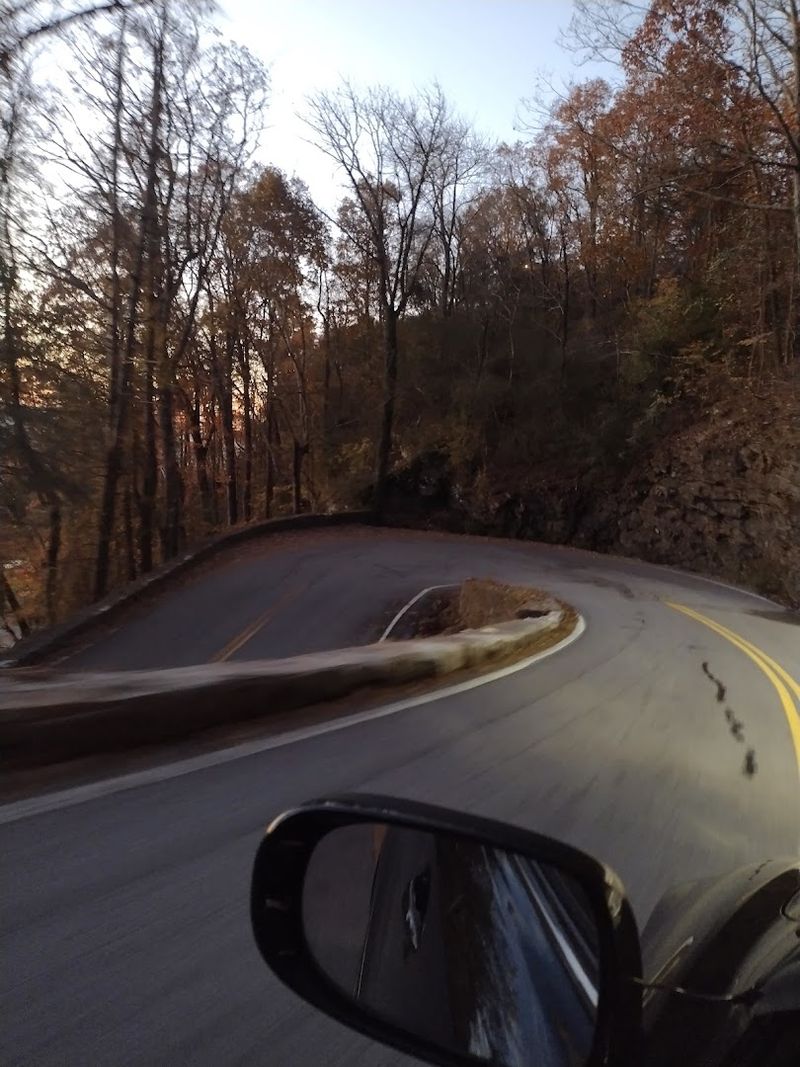
Signal Mountain rises sharply above the Tennessee River Valley. The road leading up to the Flying Saucer House is a curvy, steep climb that rewards patient drivers with spectacular scenery.
S Palisades Drive is a narrow, winding road that demands full attention. The curves can catch you off guard, especially when you are busy scanning the hillside for a disc-shaped house.
A small turnout on the side of the road lets curious visitors pause safely to take in the view without blocking traffic.
Tall trees line the slopes, and the elevation gives the whole area a cool, breezy atmosphere that feels far removed from the bustle of the valley below.
The combination of dramatic scenery, challenging curves, and an architectural landmark waiting around a bend makes this corner genuinely hard to forget.
A Private Home, Not A Park
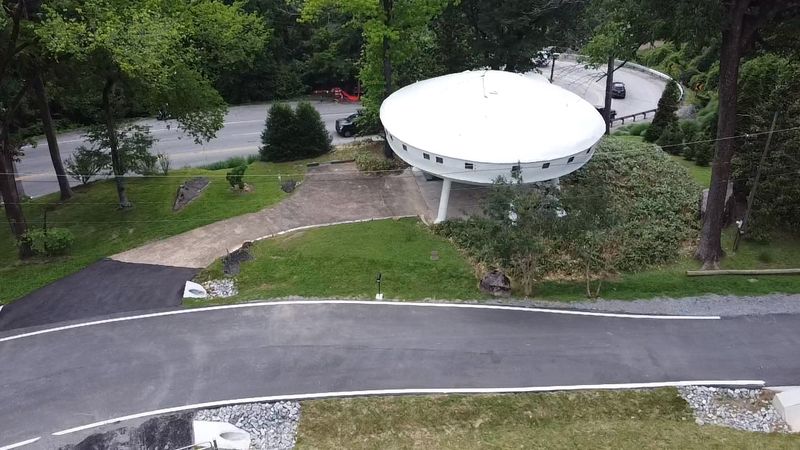
One of the most important things to understand before making the trip is that the Flying Saucer House is a real, occupied private residence.
People live inside that disc. There are no tours, no ticket booths, and no public access to the interior.
The property is not an amusement attraction, and visitors should treat it with the same respect they would give any neighborhood home.
The road-side turnout makes it easy to stop, look, and take photos from a respectful distance. That is genuinely the full experience, and for most visitors, it is more than enough.
Seeing the structure up close, even from the road, delivers a real sense of architectural wonder that photographs rarely capture.
Local news covered the interior of the Flying Saucer House in a television segment roughly a decade ago, which gave curious residents a rare glimpse inside. Since then, no regular public access has been offered.
It is not a museum piece. It is a living, breathing part of Signal Mountain’s daily landscape.
The Roadside Legend Status
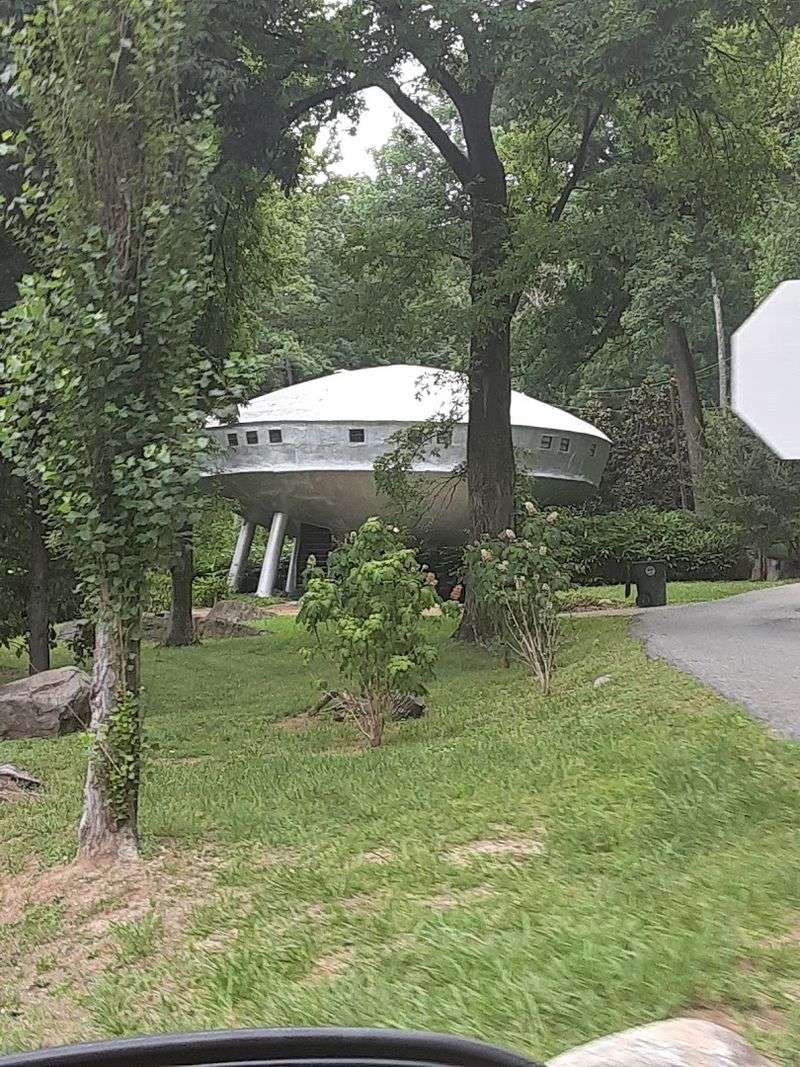
Few roadside curiosities in Tennessee earn a reputation that spans generations. This one has managed exactly that.
Families have been pointing it out to their kids for decades. Those same kids grow up, have children of their own, and make a point of driving past it again. The cycle repeats, and the legend grows a little bigger each time.
The Flying Saucer House has become a recognized stop on the Roadside America circuit, which celebrates the most unusual and memorable roadside attractions across the country.
Being included in that category puts it in genuinely rare company. It is the kind of place that gets mentioned casually in conversations about road trips, always with a grin attached.
What fuels the legend is its accessibility. You do not need to plan a major excursion.
You do not need reservations or a guide. You simply drive up Signal Mountain, keep your eyes open, and let the landscape deliver its surprise.
How To Plan A Perfect Visit
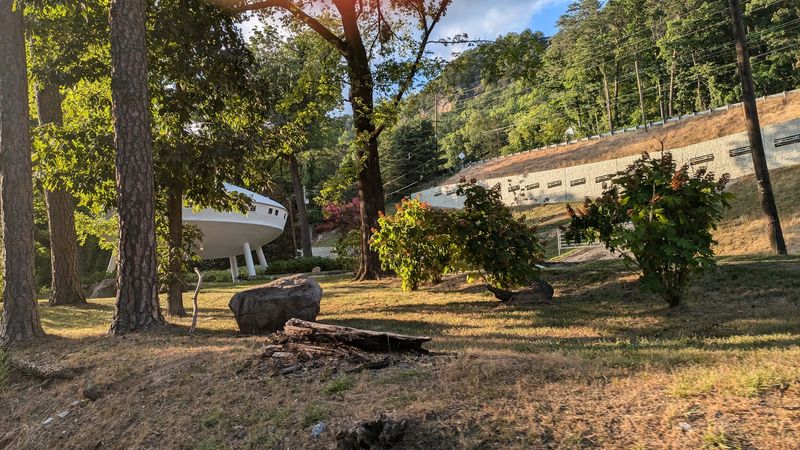
Timing your visit takes a little thought, mostly because of the road conditions rather than the landmark itself.
The Flying Saucer House sits on a steep, curvy section of S Palisades Drive, and wet or icy conditions can make the approach tricky. Clear, dry days make for the safest and most enjoyable drive up the mountain.
Morning light hits the structure beautifully. The disc-shaped exterior catches sunlight in a way that emphasizes its curves and gives the whole thing an almost metallic glow.
Late afternoon works well too, when the shadows lengthen and the valley below starts to take on warmer tones.
Spring and fall seasons are particularly pleasant for a drive up Signal Mountain. Temperatures are comfortable, the foliage is either blooming or turning brilliant colors, and the roads tend to be in good condition.
Summer works fine as well, though the heat in the valley can be intense. Winter visits are possible but require extra caution on the curves.
Whenever you go, give yourself a few extra minutes to simply stand at the turnout and absorb the view.
What Visitors Experience
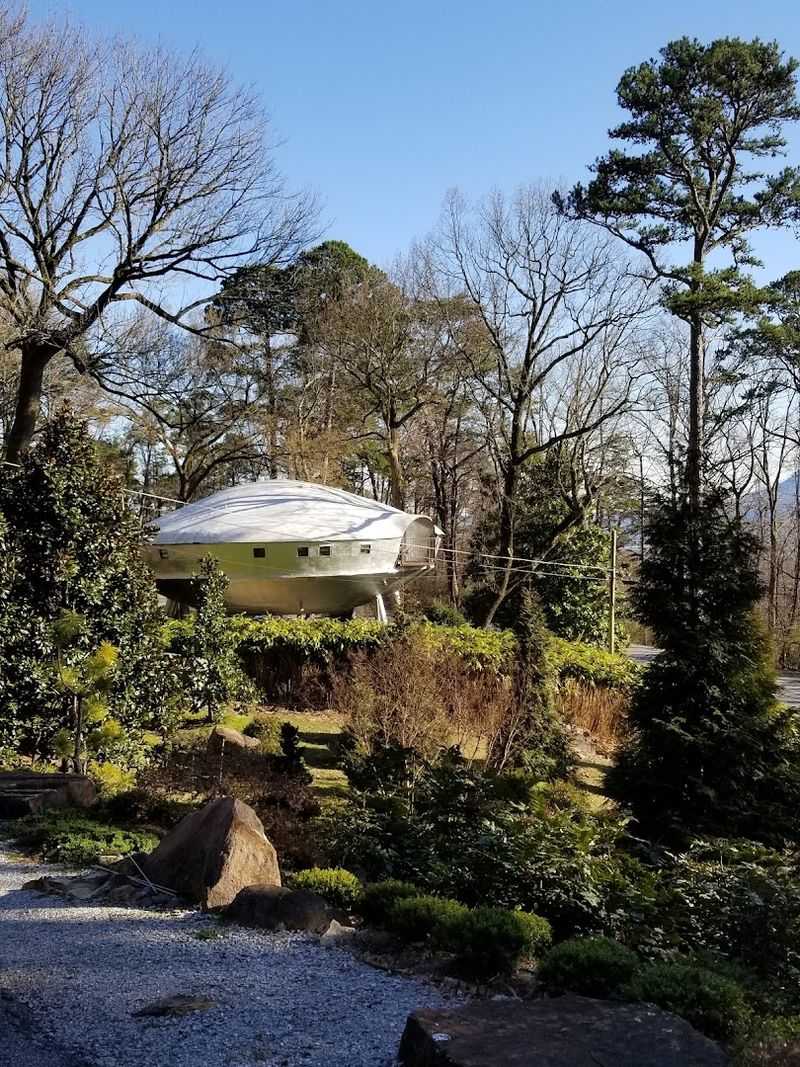
Most people describe their first glimpse of the Flying Saucer House as a genuine double-take moment.
You see it, your brain registers something unusual, and then you look again just to confirm what your eyes are telling you. That reaction is almost universal.
The experience is brief by nature. You pull over, you look, you take your photos, and you soak in the strangeness of seeing a disc-shaped home clinging to a Tennessee mountainside.
Some visitors spend five minutes there. Others linger longer, walking the turnout area and studying the structure from different angles to catch new details.
Motorcycle riders have called the route itself part of the reward, and that tracks completely. The winding road up Signal Mountain is genuinely fun to travel, and the landmark gives the journey a satisfying destination.
Families with kids report that young visitors get a particular kick out of the alien-house concept. The playful energy around the Flying Saucer House is infectious, and even skeptical visitors tend to leave with a smile.
Practical Tips For The Trip
A few practical notes can make your visit smoother and safer. The road up to the Flying Saucer House is steep and curvy, so keep both hands on the wheel and your speed in check.
Distracted driving on this stretch is genuinely risky, and the owners themselves have noted the importance of staying focused on the road.
Park only at the designated turnout on the side of S Palisades Drive. Do not block the road or pull onto private property.
The turnout gives you a clear sightline to the structure and enough space to step out safely. Bring a camera or make sure your phone is charged, because this is absolutely a photo-worthy stop.
Remember that this is a private home in a residential neighborhood. Keep noise to a minimum, avoid lingering too long directly in front of the property, and treat the surrounding area with care.
The owners have been patient and welcoming toward curious visitors for decades, and keeping that goodwill intact matters.
The whole visit is wonderfully simple. You show up, you witness something remarkable. You carry the memory of it with you long after you have driven back down the mountain.