This One Beautiful Minnesota Beach Still Flies Under Most Travelers’ Radar
Hidden beaches reward those who find them and this Minnesota one delivers. Most travelers have somehow overlooked it and regulars prefer it that way.
The water is clear, the sand is clean, and crowds stay thin. Something about this setting earns a longer stay every single time.
The light behaves differently here depending on the hour and season. People who discover this beach share the location selectively and deliberately.
Following a tip I almost ignored led me here and I understood. Minnesota has shoreline that rivals anything more celebrated and this beach leads.
Leave your timeline open and plan to stay far longer than expected.
A Sandy Strip Above The Great Lake
There is something unexpectedly calming about this destination from the moment you arrive.
Park Point Beach sits on Minnesota Point, the longest freshwater sandbar in the world. That is not a small claim.
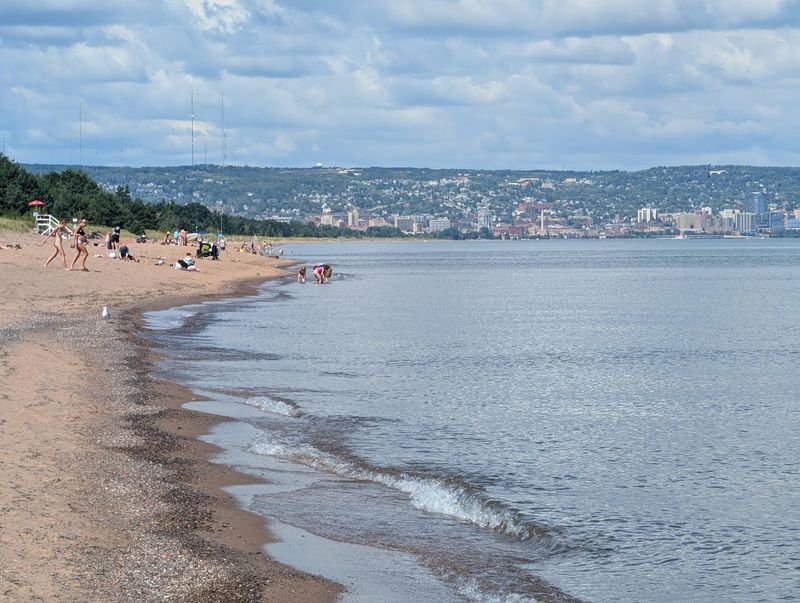
This narrow strip of land stretches about seven miles into Lake Superior, and the beach itself runs for well over a mile of open, walkable shoreline.
This beach is about 15 minutes from downtown Duluth. Getting here is easy, and parking is free, just a short walk from the sand.
Minnesota is full of beautiful natural spots, but few match the drama of standing on this sandbar with water on both sides.
On one side, Lake Superior rolls in with small waves. On the other, the calmer bay side offers quieter views and stunning reflections at sunrise.
The sand here is soft and fine, not the rocky or pebbly texture you might expect from a Great Lakes beach. It stays clean and well-kept throughout the warmer months.
The History Behind The Peninsula
Minnesota Point has a long and layered history that stretches back well before the city of Duluth was established.
The Ojibwe people recognized the strategic and natural value of this sandbar for centuries before European settlers arrived. The land holds deep cultural significance that predates any modern development.
The shipping channel that runs alongside Park Point Beach was artificially cut in the 1870s, creating a shortcut into Duluth Harbor. Before that, ships had to navigate the natural channel at the far end of the point, near where the lighthouse still stands today.
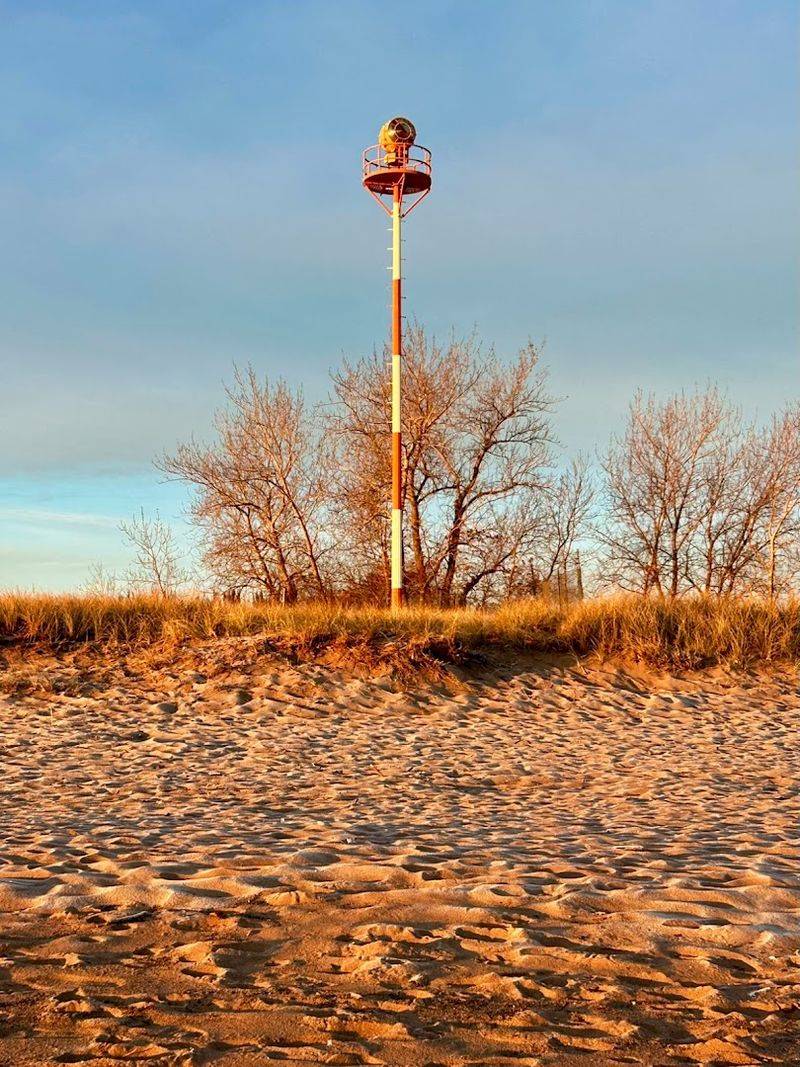
A lighthouse has stood on Minnesota Point since 1858, making it one of the oldest lighthouse sites on the Minnesota side of Lake Superior.
It no longer operates as an active lighthouse. It remains a compelling historical landmark that draws curious visitors who make the full hike to the southern tip of the peninsula.
Giant Ships On The Horizon
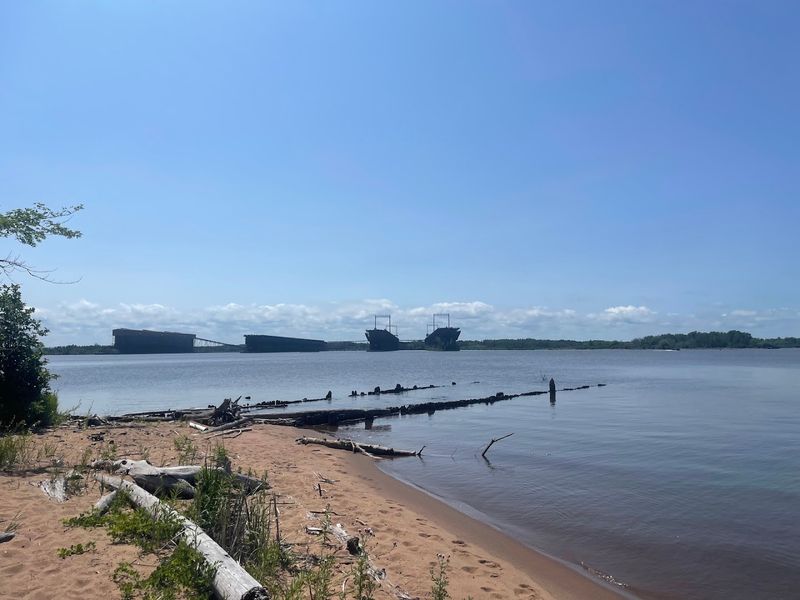
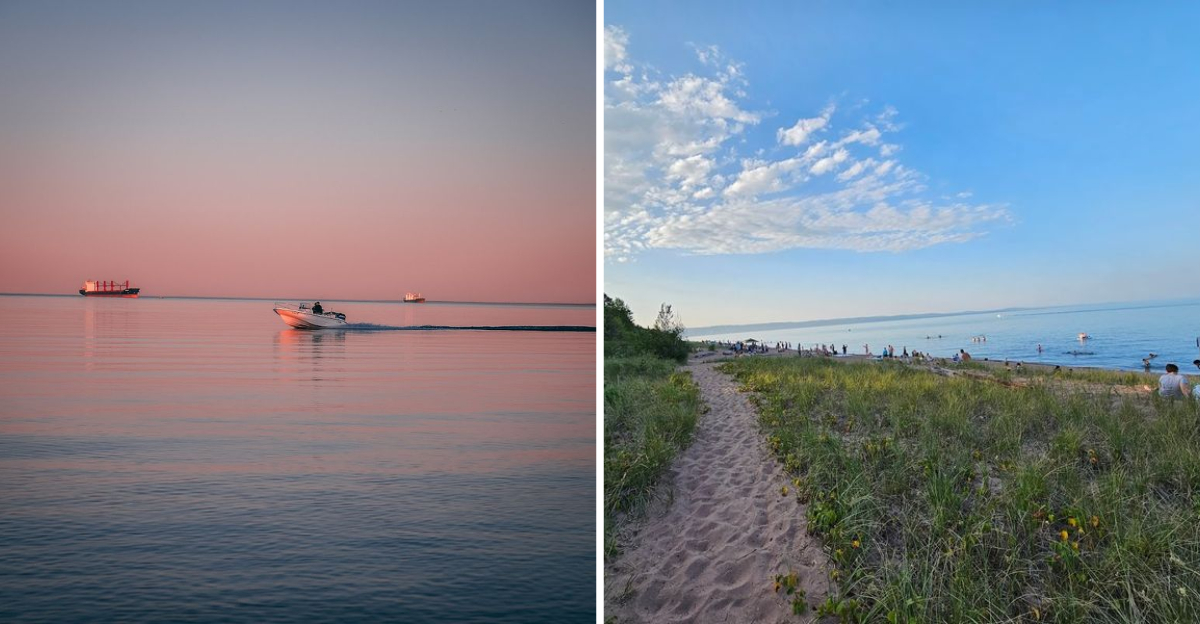
One of the most unexpected thrills at this beach is watching massive freighters glide past the shoreline.
These are not small boats. Some of these cargo ships are over 700 feet long, and they pass close enough that you can clearly read their names from the sand.
The shipping channel runs right alongside the peninsula, which means vessels traveling in and out of Duluth Harbor pass within a surprisingly short distance of where you are standing. It turns a regular beach walk into something that feels almost cinematic.
Ship-watching here has become a beloved local pastime in Minnesota. There are even apps and websites that track vessels on Lake Superior in real time, so you can time your visit to catch a big freighter coming through the channel.
Kids go absolutely wide-eyed when one of these giants rolls past. The scale is hard to process until you are standing there in person.
Adults tend to stop mid-conversation and just stare.
There is something deeply satisfying about watching something that enormous move so quietly and smoothly across the water, almost like it is floating through a dream.
The Forest Trail Next Door
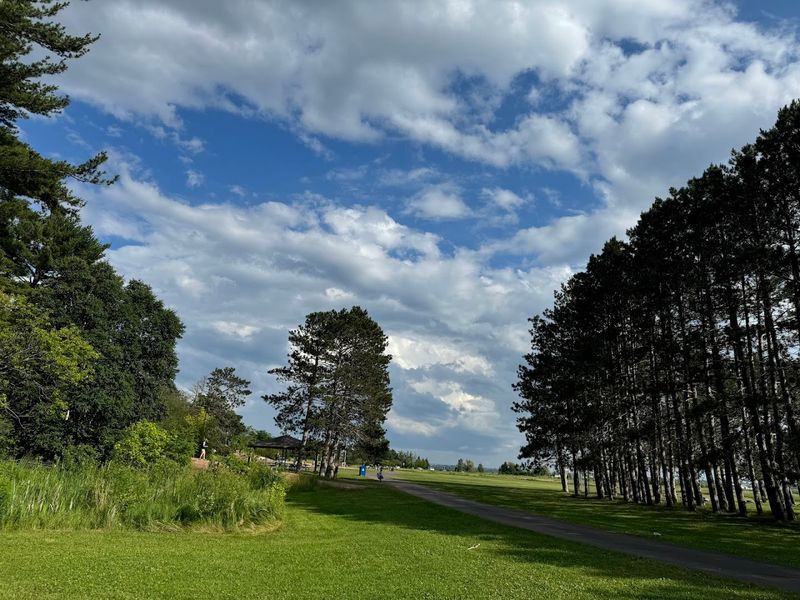
Right beside the beach, a beautiful forest trail winds through a stretch of boreal woods that feels completely separate from the open shoreline.
The contrast is striking. One moment you are on open sand with a wide-open sky, and the next you are walking under a canopy of pine and birch trees.
The trail system at Park Point is well-maintained and easy to navigate. It does not require any special gear or advanced fitness level, making it accessible for most visitors.
Families with kids, solo hikers, and older visitors all use the same paths without any trouble.
Birding is especially popular along this trail. The wooded section attracts a wide variety of migratory species, particularly during spring and fall.
Minnesota sits along several important bird migration corridors, and this spot serves as a reliable stopover for dozens of species.
One of the best parts of this trail is that it connects to the historic Park Point Lighthouse at the far end of the peninsula. The hike out there takes some time, but the payoff is a quiet, historic structure surrounded by water on three sides.
Activities Beyond Just Swimming
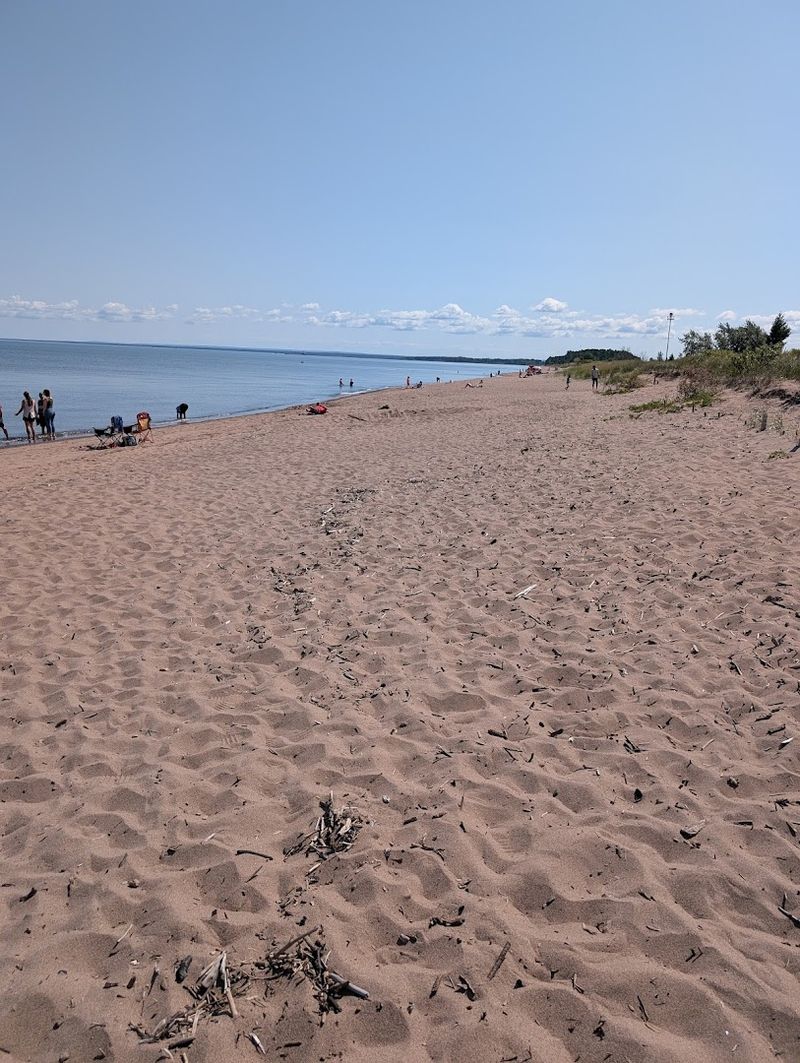
Swimming is just one small part of what makes a trip here worthwhile.
The open beach and steady lake breezes make this an ideal spot for flying kites, and on windy afternoons the sky above the sand fills with colorful shapes. It is one of those simple pleasures that adults enjoy just as much as kids.
The park area near the beach includes a playground and picnic facilities, making it easy to turn a short beach visit into a full afternoon outing. Families often set up for hours, alternating between the playground, the sand, and the trail through the woods nearby.
Running and cycling along the peninsula road is popular with locals year-round. The flat terrain and scenic water views make it a favorite route for people who want their workout to feel less like a workout.
Photography, beachcombing, and simply sitting quietly with a book are all perfectly valid ways to spend time here.
The beach never feels like it demands a specific activity. It welcomes whatever pace you bring to it, and that easygoing quality is exactly what keeps people coming back season after season.
Sunrise Views That Stop You Cold
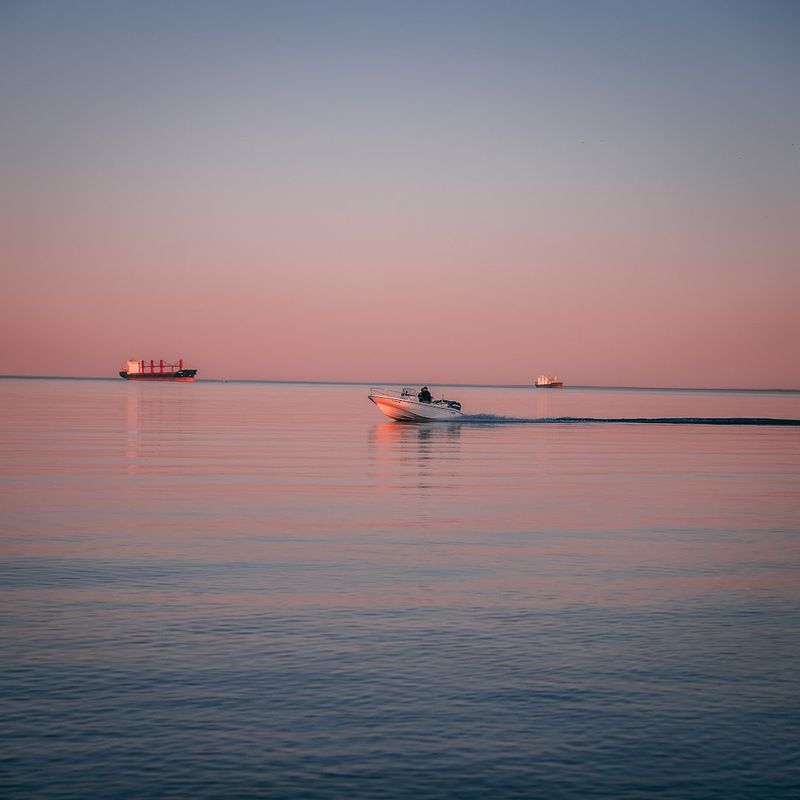
Trust me, it seems almost unfair about how beautiful sunrise looks from this beach.
The fog that rolls off Lake Superior in the early morning catches the light in a way that feels completely unrepeatable. Every visit brings something different, and that unpredictability is part of the appeal.
The bay side of the beach is especially magical at dawn. The water stays calm, and the light bounces off the surface in long, warm streaks.
Cold mornings actually make the experience better, since the fog thickens and creates layered, dreamlike visuals that no filter could improve.
Minnesota mornings can be chilly, even in summer, so bringing a light jacket is a smart move if you plan to catch the early show. The reward is absolutely worth the extra layer and the early alarm.
Photographers make special trips here just for the golden hour. The combination of water, fog, soft sand, and open sky gives you a natural studio with no crowds.
You do not need expensive gear to walk away with stunning shots. A phone camera and good timing are honestly all you need.
Best Times To Plan Your Trip
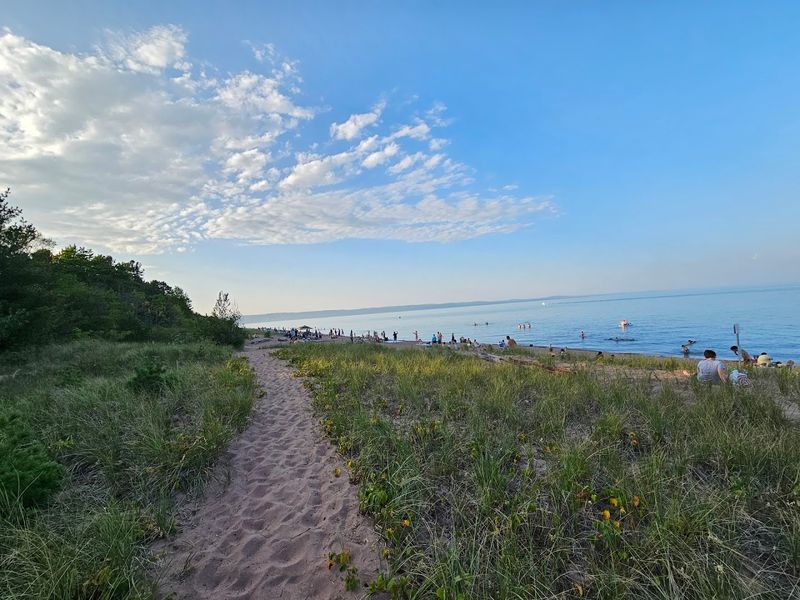
Summer is the most popular time to visit, with July and August bringing the warmest temperatures and the most activity on the beach.
Water temperatures on Lake Superior stay cooler than most ocean beaches, usually in the low-to-mid 60s Fahrenheit, which feels refreshing rather than cold once you are in.
Spring and fall offer a completely different kind of visit. The crowds thin out significantly, and the landscape shifts in dramatic ways.
Fall colors along the Minnesota shoreline are spectacular, and the beach takes on a moody, cinematic quality that summer simply cannot match.
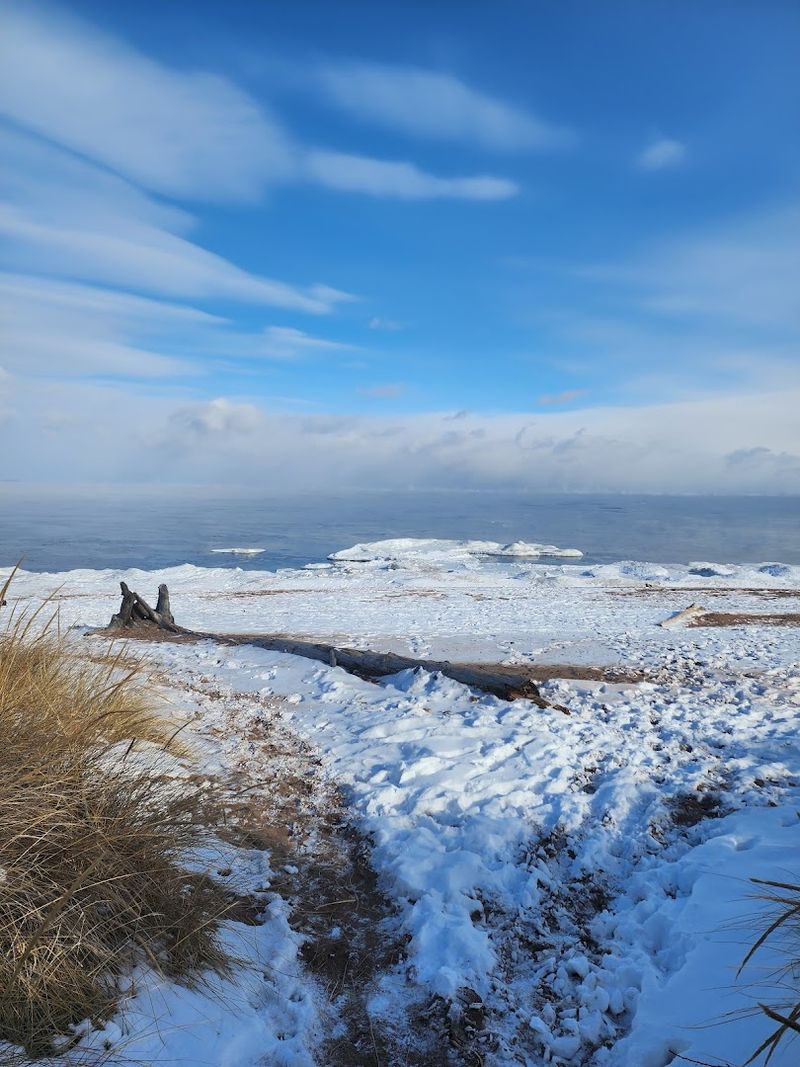
Winter visits are not for everyone. Those who make the trip are rewarded with ice formations along the shoreline that look like something from another planet.
The beach becomes a surreal, quiet landscape of frozen waves and snow-dusted sand. It is unlike anything most people have ever seen.
If you want the beach mostly to yourself, arriving early in the morning on a Tuesday or Wednesday is a reliable strategy. An early start always pays off no matter what time of year you visit.
Why This Beach Stays Off The Radar
Part of what makes this place special is how easy it is to overlook.
Duluth itself draws visitors for its lift bridge, Canal Park, and the famous waterfront district. Most travelers spend their time in that area and never make the 15-minute drive further down the peninsula to reach Park Point Beach.
The beach does not have a big flashy entrance or a commercial strip of shops and restaurants nearby. It is simply a park, a trail, and a long stretch of beautiful shoreline.
That understated quality keeps the crowds manageable and the atmosphere relaxed.
The people who do visit tend to be locals, repeat visitors, or curious travelers who did a little extra research. That self-selecting crowd tends to be respectful, quiet, and genuinely appreciative of the place.
There is also something to be said for a free beach with free parking that does not require a reservation or a permit.
In a world where popular destinations increasingly require planning in advance, showing up here feels like a small, genuine miracle worth celebrating more than once.