The Gorgeous Japanese Garden In Missouri That Feels Almost Too Perfect To Be Real
I was not looking for a moment of genuine awe on a Tuesday afternoon. I was looking for a quiet place to park, maybe walk around a little, and let my brain settle down from the week.
Missouri had other plans. What I found when I pulled off the road that afternoon was an outdoor space so thoughtfully and beautifully designed that I stopped walking about thirty seconds in.
I just stood there, taking it in like someone who had forgotten that places this lovely were allowed to exist on an ordinary weekday.
The kind of place where every path leads somewhere worth seeing, where the light hits the water at an angle that makes you reach for your phone and immediately realize no photograph is going to do this justice.
I stayed far longer than I planned, left far more relaxed than I arrived, and spent the entire drive home trying to figure out why nobody had told me about this sooner.
The First Glimpse That Resets Your Expectations
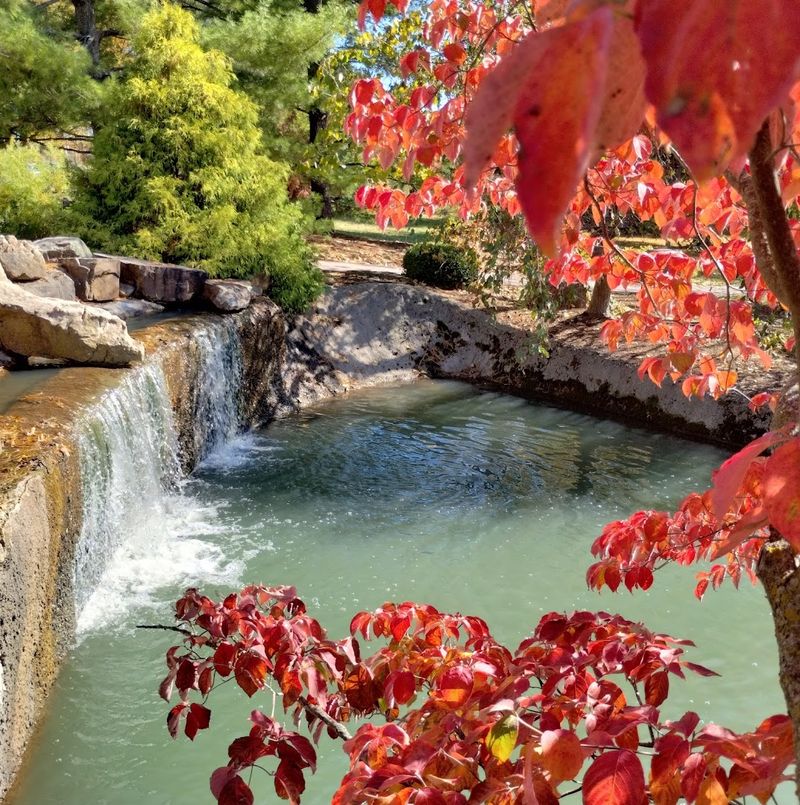
Mizumoto Japanese Stroll Garden does not announce itself loudly. You round a bend in the path and suddenly the noise of the city simply stops.
The air feels different, cooler somehow, and the light filters through the trees in a way that makes everything look slightly cinematic.
The entrance sets a tone that the rest of the garden absolutely delivers on. Stone lanterns stand quietly at intervals like they have been there for centuries.
Every detail feels considered, from the gravel crunch underfoot to the way the plantings frame each view.
Most people pause here longer than they planned to.
That first breath of garden air carries the faint smell of moss and still water, and your shoulders drop about two inches without you even noticing.
It is the kind of arrival that makes you slow your pace and actually look around. That shift in your body is the garden doing exactly what it was designed to do.
It is located at 2400 S Scenic Ave, Springfield, Missouri.
The Koi Pond That Could Make Anyone Meditate
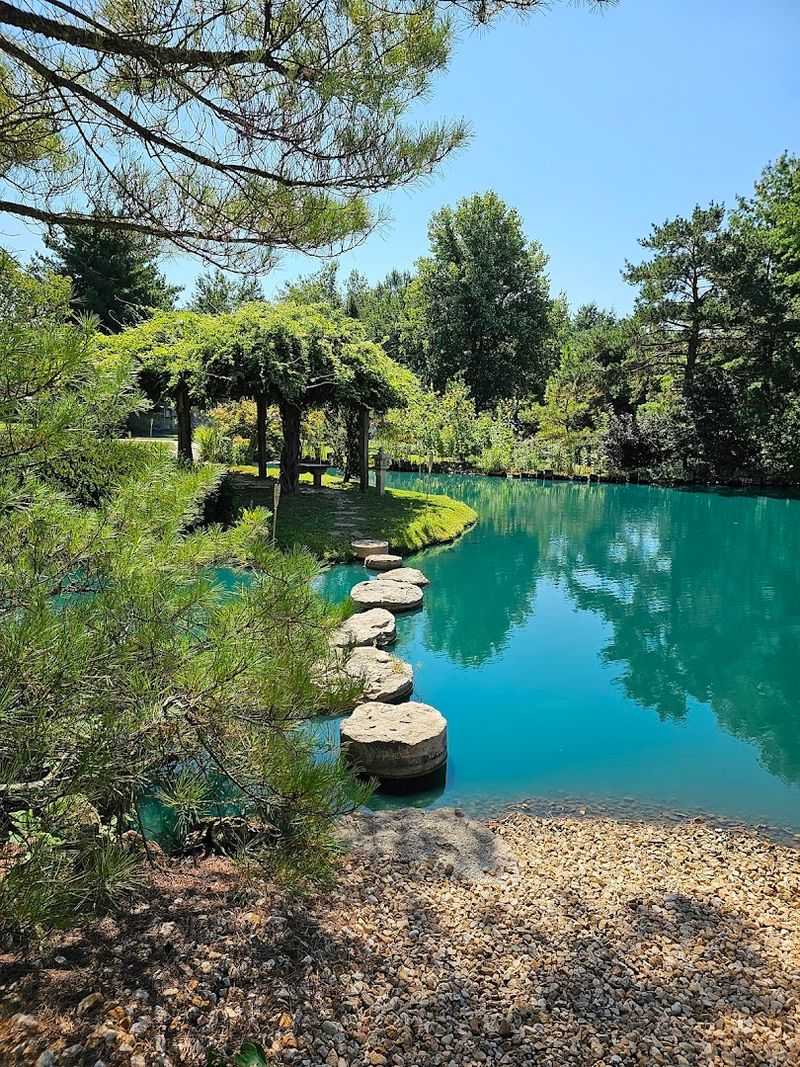
There is a koi pond here that deserves its own fan club. The fish are enormous, unhurried, and spectacularly colored in patterns of orange, white, and gold that look almost hand-painted.
Watching them move through the water is genuinely calming in a way that no wellness app has ever matched.
The pond sits at the heart of the garden and draws every visitor toward it like a magnet. Children press their faces close to the water’s edge.
Adults who came here with their phones out eventually just put them away and stare. That says a lot.
The surrounding plantings reflect perfectly in still water on calm days, doubling the visual impact of every tree and shrub nearby. Weeping willows trail their fingers into the surface.
It is the kind of view that makes amateur photographers feel like professionals for a moment. Spend at least ten minutes here and resist the urge to rush.
The pond rewards patience more than almost any other spot in the garden.
Bridges That Were Built For Lingering
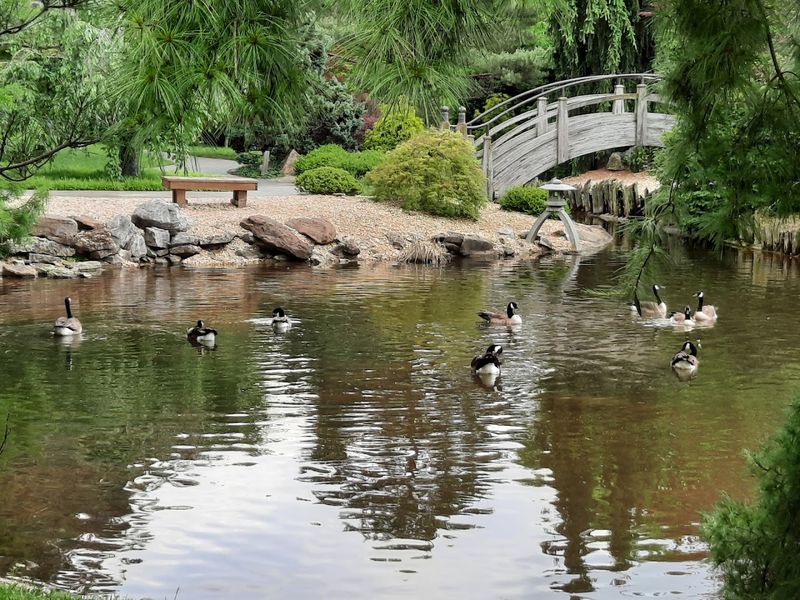
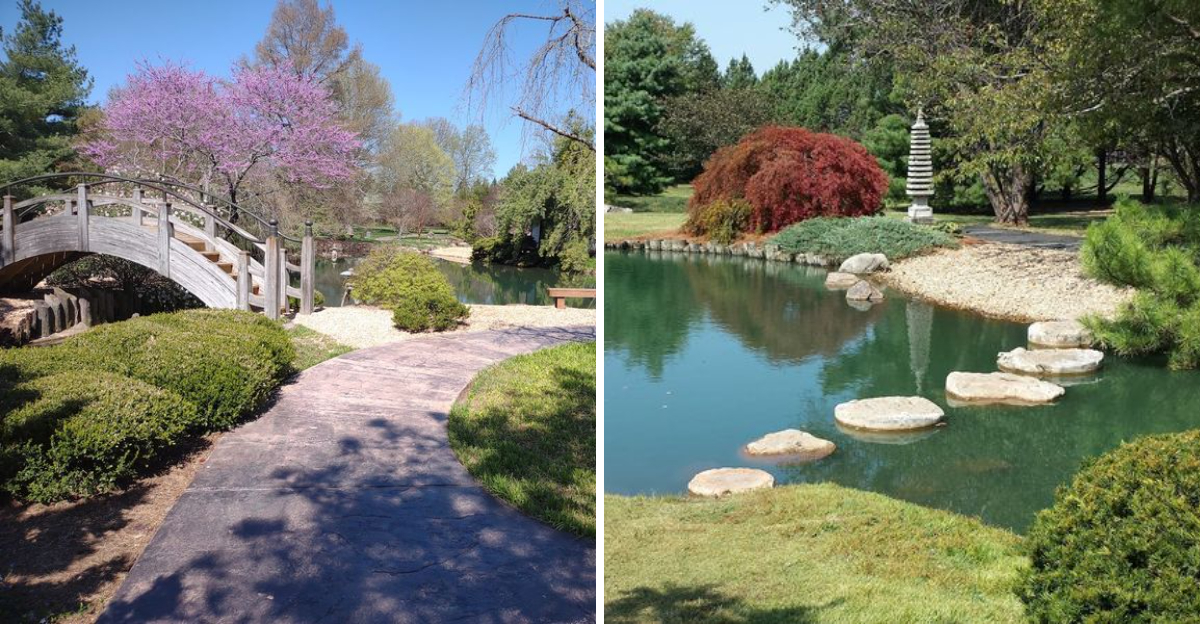
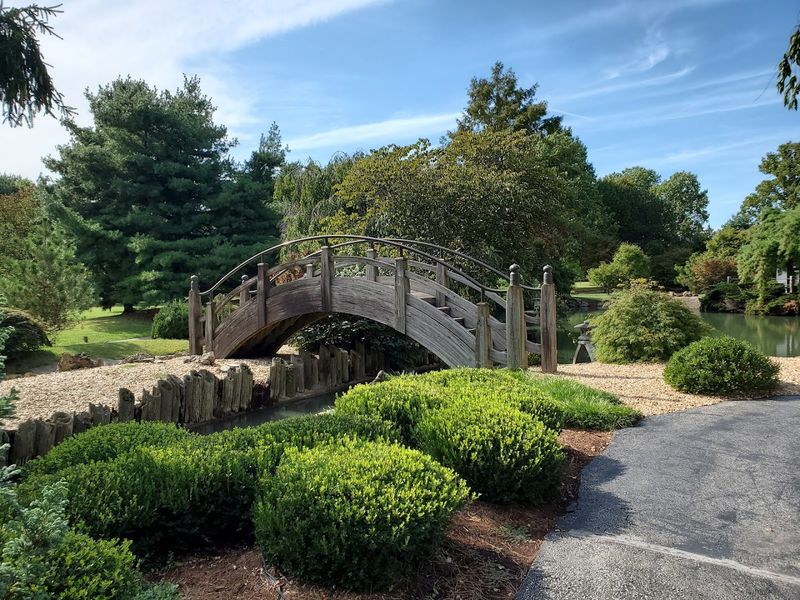
Every good Japanese garden has a bridge moment, and this one delivers several. The arched wooden bridges here are not just functional crossings.
They are destinations.
Standing on the main bridge and looking back toward the pond gives you a view that feels composed, like someone arranged it specifically for your enjoyment.
The bridges are made from weathered wood that has taken on a beautiful silver-gray tone over time. They feel solid and intentional, wide enough to stand on comfortably without crowding.
On a clear morning, the reflection of the arch in the water below creates a perfect circle that photographers absolutely lose their minds over.
What makes these bridges special is how they frame the garden around you. Each one offers a completely different perspective on the same space.
Cross one and you are looking at the pagoda.
Cross another and the whole pond opens up ahead of you. The designers knew exactly what they were doing when they placed each one.
Cross them slowly and look in every direction. You will not regret the extra few minutes spent doing exactly that.
The Pagoda That Earns Every Photo
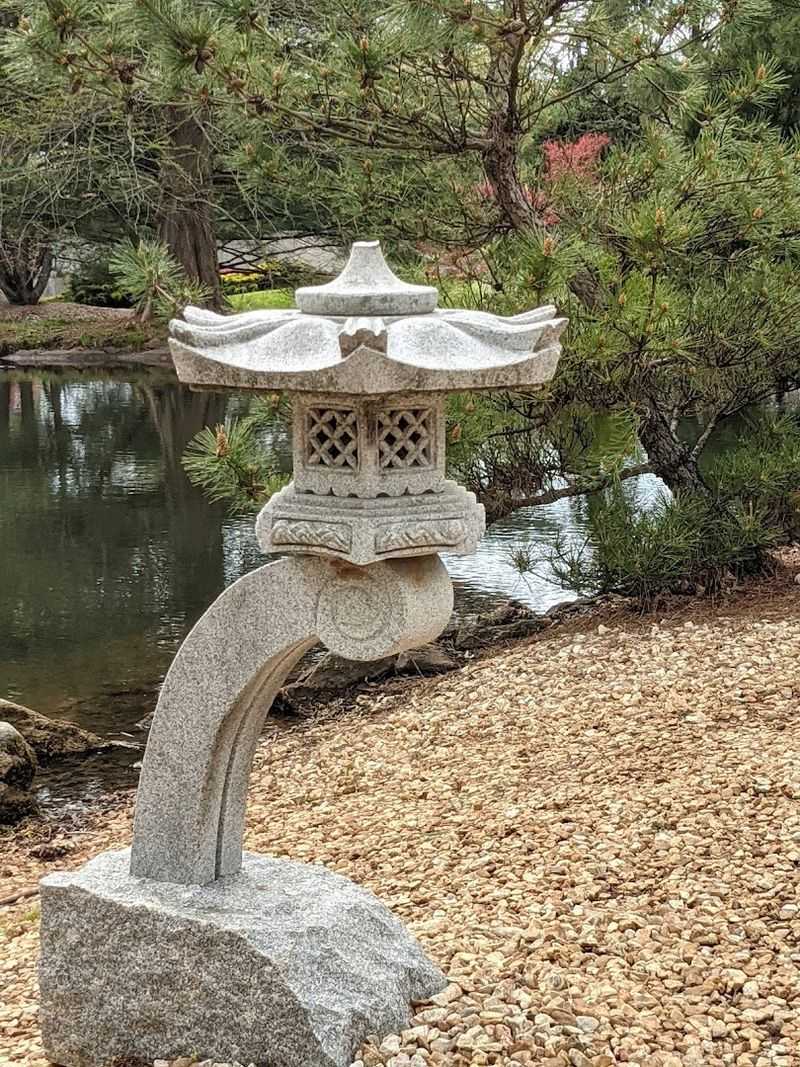
Stone pagodas are a staple of Japanese garden design, but this one at Mizumoto feels particularly well placed. It rises from a bed of carefully shaped plantings and draws your eye from multiple points around the garden.
Every angle offers a slightly different composition, which is why people circle it repeatedly with their cameras.
The pagoda is not flashy. It is made from weathered stone that blends naturally into the surrounding greenery.That restraint is actually what makes it so effective.
It earns its place in the landscape rather than demanding attention.
On overcast days, the soft diffused light brings out the texture of the stone in a way that sunny conditions simply cannot match.
The surrounding plantings, including shaped pines and seasonal flowering shrubs, change throughout the year and give the pagoda a different backdrop depending on when you visit. Spring brings color.
Autumn brings drama. Winter strips everything back to structure and quiet.
Each season makes a compelling argument for returning. This is one of those spots where a single visit never quite feels sufficient.
Seasonal Color That Changes Everything
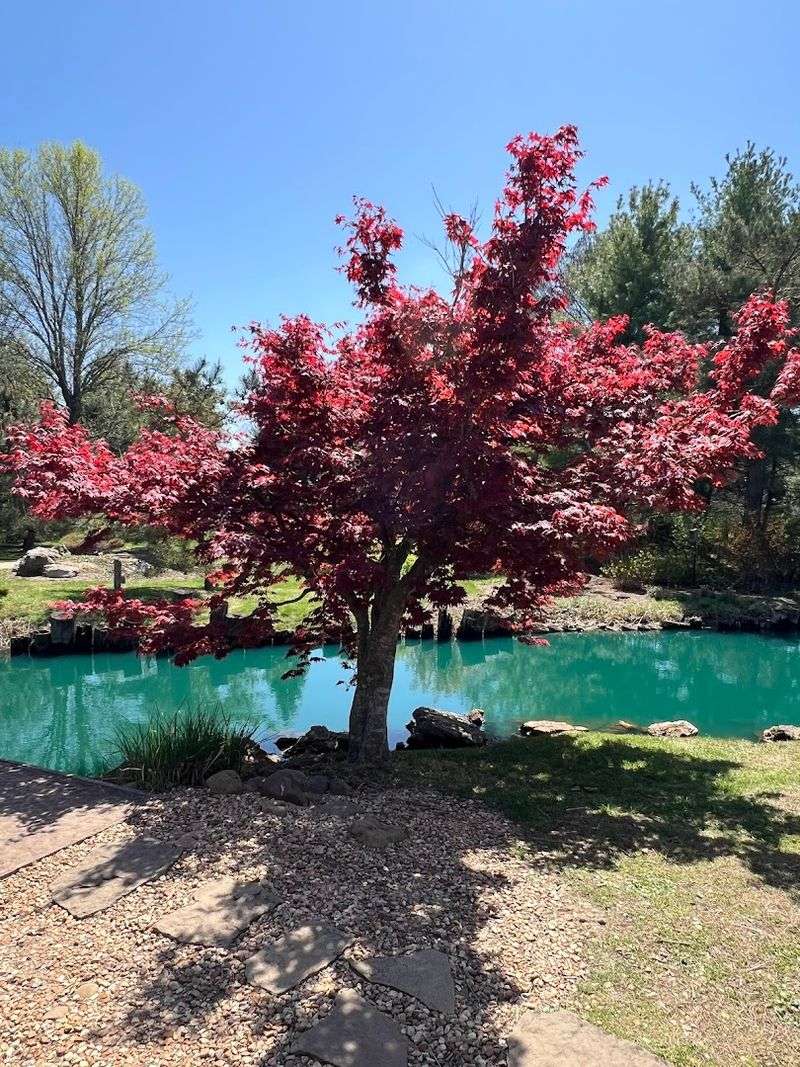
One visit to this garden is genuinely not enough, and the reason is seasonal color. In spring, cherry blossoms and azaleas push out blooms that feel almost theatrical against the backdrop of green moss and still water.
The whole garden shifts its mood entirely and becomes something warmer and softer.
Autumn is when things get truly spectacular.
Japanese maple trees throughout the garden turn shades of red and orange that seem too vivid to be real. The reflection of those colors in the koi pond creates a scene that local photographers return to every single year without fail.
Summer brings lush fullness and deep green shade that makes the garden feel like a genuine escape from Missouri heat.
Winter reveals the garden’s bones, the structural plantings, stone elements, and clean lines that hold everything together beneath the seasonal drama. Each version of this garden is worth experiencing.
If you can only visit once, autumn is the clear frontrunner for sheer visual impact. But honestly, plan for two visits minimum and let the seasons make the case for themselves.
You will understand once you see it.
The Quiet Corners Worth Seeking Out
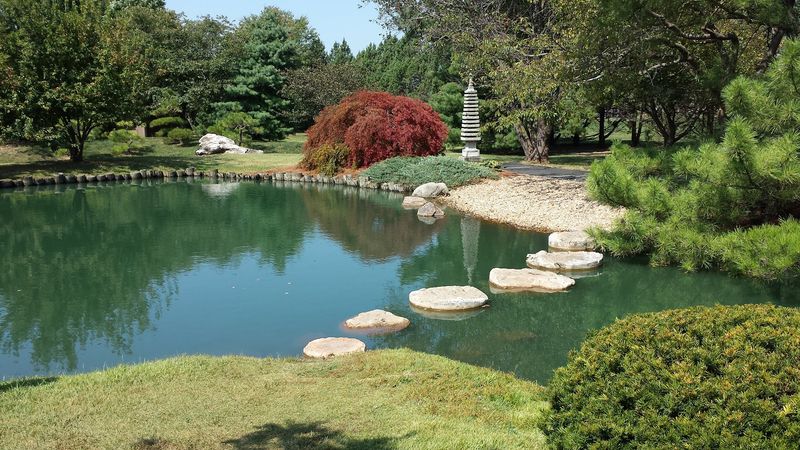
Most visitors follow the main path and see the highlights, which means the quieter corners of this garden go largely undiscovered.
That is genuinely good news for anyone willing to wander a little off the obvious route. Some of the best moments here happen in the spaces between the main attractions.
There are stone benches placed throughout the garden in spots that feel almost conspiratorially private.
Sitting on one of them, surrounded by shaped shrubs and the sound of moving water somewhere nearby, produces a stillness that is hard to find anywhere else in Springfield.
It is the kind of quiet that actually settles into your chest.
The moss-covered ground in some of these tucked sections has a lush, almost luminescent quality in soft light. Small stone lanterns appear in unexpected places.
A carefully pruned tree frames a view you did not know was coming. The garden rewards slow, curious movement rather than a quick lap of the main loop.
Give yourself at least ninety minutes here.
The people who rush through always leave wishing they had stayed longer. That is a pattern worth learning from before you arrive.
Why This Garden Feels Genuinely Different
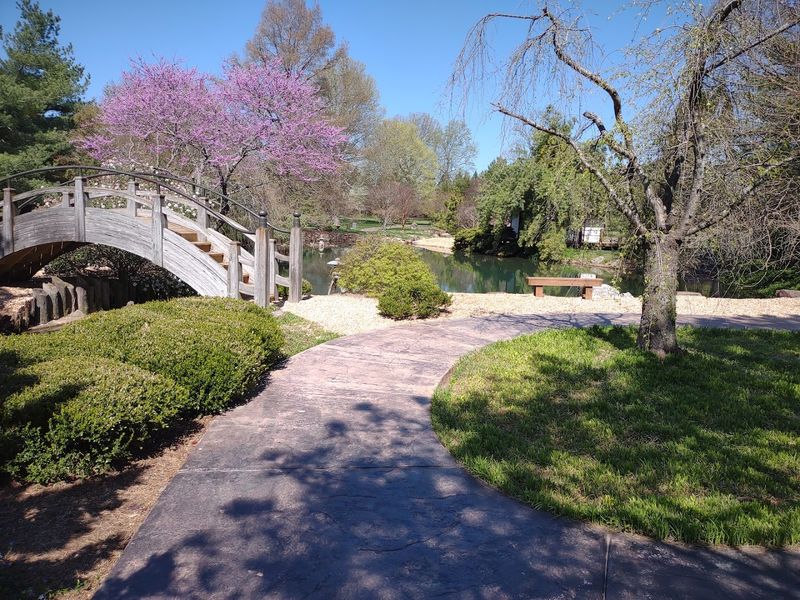
A lot of public gardens feel like good intentions that ran out of budget halfway through. This one does not feel that way at all.
The level of ongoing care here is visible in every trimmed branch and every raked gravel section.
Someone tends this garden with real attention and it shows in every corner.
The design follows traditional Japanese garden principles that emphasize asymmetry, natural materials, and the careful framing of views. Nothing here feels accidental.
The placement of each stone, each plant, and each water feature has purpose behind it. That intentionality is what separates a genuinely great garden from a pretty one.
Springfield is not a city most people associate with world-class cultural attractions, which makes this garden feel even more surprising.
It sits within Nathanael Greene and Close Memorial Park, making it easy to combine with a longer outdoor visit.
The garden itself is free to enter, which is the kind of fact that makes you want to tell everyone you know immediately.
A space this carefully made, available for free, in the middle of Missouri, is the sort of thing that deserves far more attention than it currently receives.
Planning Your Visit The Right Way
Arriving early on a weekday morning is the single best piece of advice anyone can give you about this garden.
The light is softer, the paths are quieter, and you get the experience the garden was actually designed for rather than the weekend crowd version. Early visits feel almost private.
Comfortable walking shoes are a practical necessity since the paths include gravel sections and slight elevation changes.
The garden is not strenuous, but it rewards leisurely walking rather than a quick loop. Bring a water bottle, especially in summer, because the Missouri heat does not take days off.
Parking is straightforward and the surrounding park offers additional walking trails if you want to extend your visit.
Check seasonal hours before you go since they shift with daylight. Photography enthusiasts should note that overcast days produce the best light for shooting the stone elements and water reflections.
Come with no agenda, leave your schedule loose, and let the garden set the pace. That is genuinely the best way to experience everything this remarkable Missouri space has to offer.