10 Unexpected Places In Oregon That Are Almost Too Gorgeous To Believe
Oregon earns the word gorgeous slowly and then suddenly all at once. These places push that word right to its very absolute limit entirely.
Some are well known and some remain largely undiscovered by most visitors. Visual impact here is something photographs consistently fail to fully capture.
Standing inside any one tends to produce a specific and lasting silence. This list crosses terrain, coastline, and geology without repeating itself at all.
I found one by accident and stayed far longer than I planned. Each place redefines what the word unexpected actually means here completely.
Go without a plan and return with a different view of Oregon.
1. Shore Acres State Park
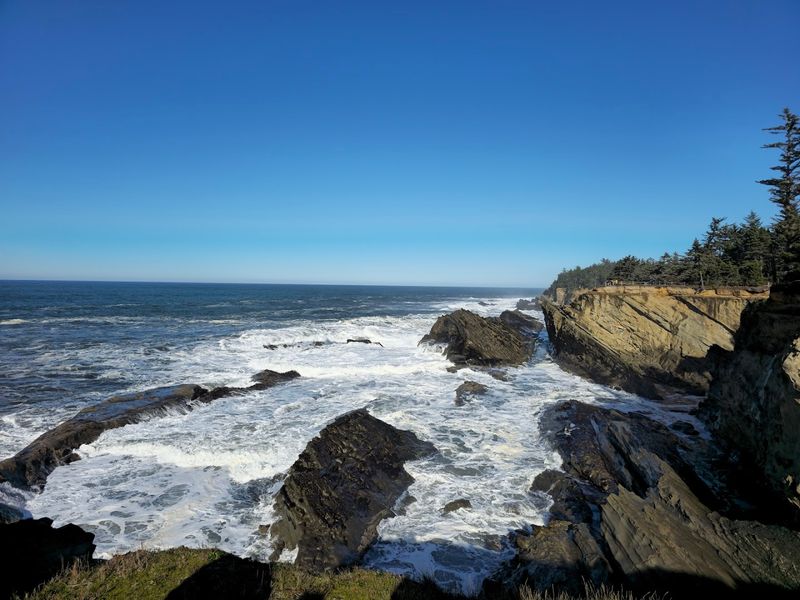
I must admit, nothing quite prepares you for the raw power of the Pacific Ocean when it slams into the sandstone cliffs here.
Shore Acres State Park is near Coos Bay on the southern Oregon coast. The winter waves at this park can tower over 30 feet high.
That alone would be enough to earn a spot on any list. But Shore Acres also hides one of the most beautiful botanical gardens on the entire West Coast.
Manicured rose gardens, Japanese-style ponds, and blooming dahlias share space with wild ocean drama just steps away.
The contrast between delicate flowers and crashing surf is genuinely hard to wrap your head around. Spring brings a riot of color to the garden beds.
Summer is calm and perfect for a slow afternoon stroll along the bluffs.
The park has a glass-enclosed shelter near the cliff edge. You can stand inside and watch massive waves explode against the rocks without getting soaked.
Pack a picnic and plan to stay longer than you think you need to, because this park has a way of holding you there.
2. Painted Hills, Mitchell
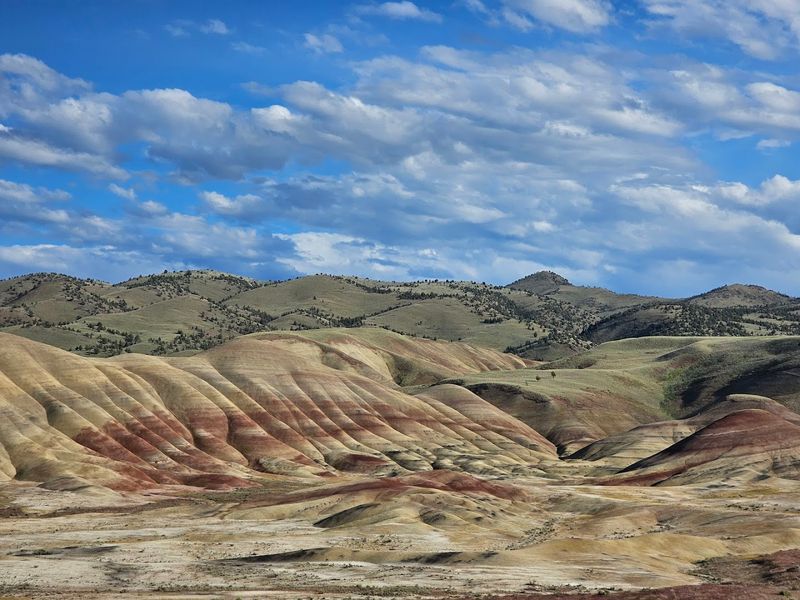
No filter is needed when you photograph the Painted Hills.
These rolling mounds of ancient clay sit within the John Day Fossil Beds National Monument near the small town of Mitchell in Central Oregon. The colors, deep red, gold, black, and tan, are completely real and entirely natural.
Each layer represents a different geological era, some dating back over 33 million years. The hills change color depending on moisture and light, which means no two visits look exactly the same.
Morning and late afternoon light tend to make the reds glow the most intensely.
Short, well-marked trails loop around and above the formations without disturbing the fragile clay surface. Staying on the boardwalks is essential here, since footprints in the clay cause lasting damage.
The Carroll Rim Trail offers a higher vantage point for sweeping panoramic views.
Spring brings a bonus surprise: tiny yellow wildflowers called desert gold bloom across the surrounding grasslands. The area gets very little rainfall, so the hills look their most dramatic after a light morning shower.
Mitchell is a tiny ranching community just a short drive away. It has a handful of local spots to grab a meal before heading back out to stare at one of the most surreal landscapes in the entire American West.
3. The Wallowa Mountains
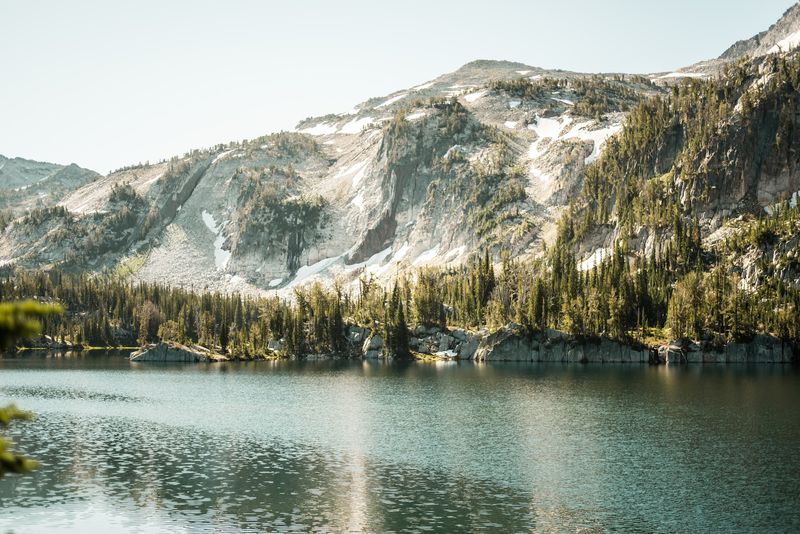
Who would have thought that a corner of Northeast Oregon could rival the Swiss Alps in sheer mountain drama?
The Wallowa Mountains rise dramatically from the high desert plains in Wallowa County, creating a landscape that stops you cold. Locals have called this region Oregon’s Little Switzerland for good reason.
Eagle Cap Wilderness sits at the heart of the range and protects over 360,000 acres of pristine backcountry. Glacially carved lakes dot the landscape, and the water in Wallowa Lake is so clear it almost looks fake.
Wildflowers blanket the meadows in July and early August. Hiking here ranges from easy lakeside walks to multi-day backpacking routes through high alpine terrain.
The town of Joseph serves as the main gateway and has a surprisingly strong arts scene. Bronze sculptures line the streets, and local galleries showcase serious talent from regional artists.
A gondola at Wallowa Lake State Park lifts you partway up the mountain for views that stretch into Idaho. Fall turns the aspen groves gold, making September one of the best months to show up.
If you are a hiker, a photographer, or someone who simply needs a reminder that the world is beautiful, the Wallowas will deliver exactly what you came looking for.
4. Steens Mountain, Harney County
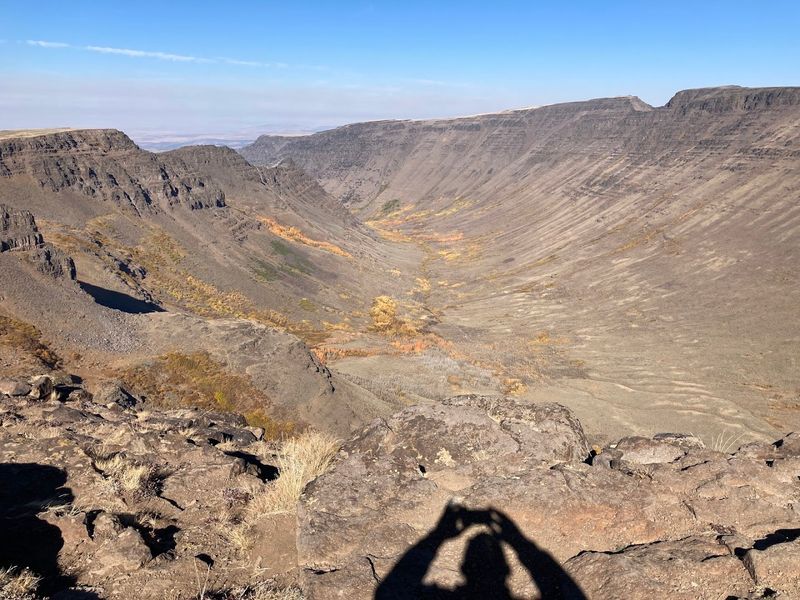
Trust me, you have never seen the high desert look quite like this before.
Steens Mountain is a massive fault-block mountain in Harney County, rising nearly 9,700 feet above sea level. The eastern face drops sharply in one of the most dramatic fault scarps in North America.
Driving the Steens Mountain Loop Road takes you through five distinct ecological zones in a single afternoon. You move from sagebrush flats to alpine tundra almost without realizing it.
Four enormous U-shaped glacial gorges cut into the western slope, each one more jaw-dropping than the last.
Kiger Gorge is the most famous of the four and offers a viewpoint that feels like standing at the edge of the world. Wild Kiger mustang horses roam the lower slopes, descendants of Spanish colonial horses.
Spotting a herd in the early morning is an experience that stays with you.
The nearest town is Fields, a tiny community with a diner that has earned a loyal following among road-trippers. Dark skies over Steens Mountain are exceptional, making it one of Oregon’s top stargazing locations.
The road typically opens in late June and closes with the first heavy snow, so summer and early fall are the sweet windows to plan around.
5. Crack In The Ground, Christmas Valley
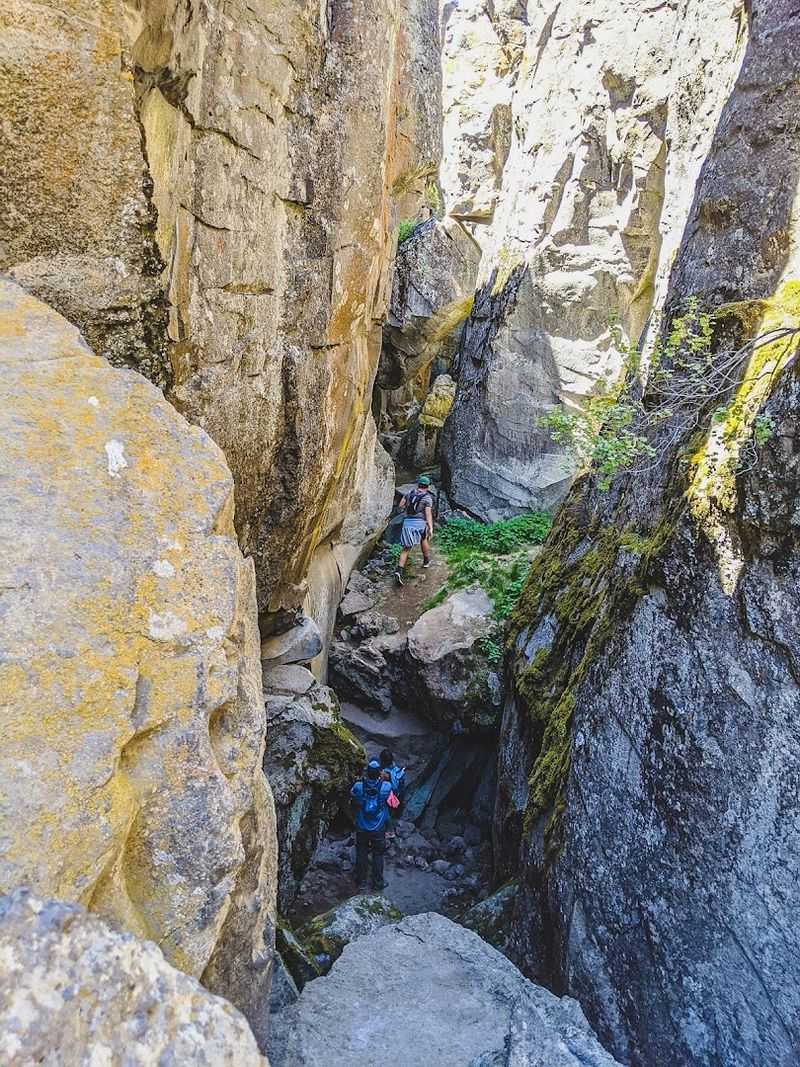
I never would have guessed that a hike through a crack in the earth could be this genuinely thrilling.
Crack in the Ground is an ancient volcanic fissure located near Christmas Valley in Lake County. The fissure stretches about two miles long and drops up to 70 feet deep in some sections.
Formed thousands of years ago when a lava tube collapsed, the crack has barely changed since. Cool air gets trapped inside the narrow walls, keeping the interior noticeably colder than the surrounding desert.
The hike is free and requires no permit, which makes it one of Oregon’s most accessible geological wonders. You scramble over rocks, squeeze through tight passages, and occasionally need to use your hands.
Trail shoes with good grip are a smarter choice than sandals here.
The surrounding Christmas Lake Valley is a flat, remote expanse of high desert that feels wonderfully off the grid.
Bring plenty of water, a headlamp for the darker sections of the fissure, and a sense of adventure that matches the strangeness of this utterly unique landscape.
6. Alvord Desert, Harney County
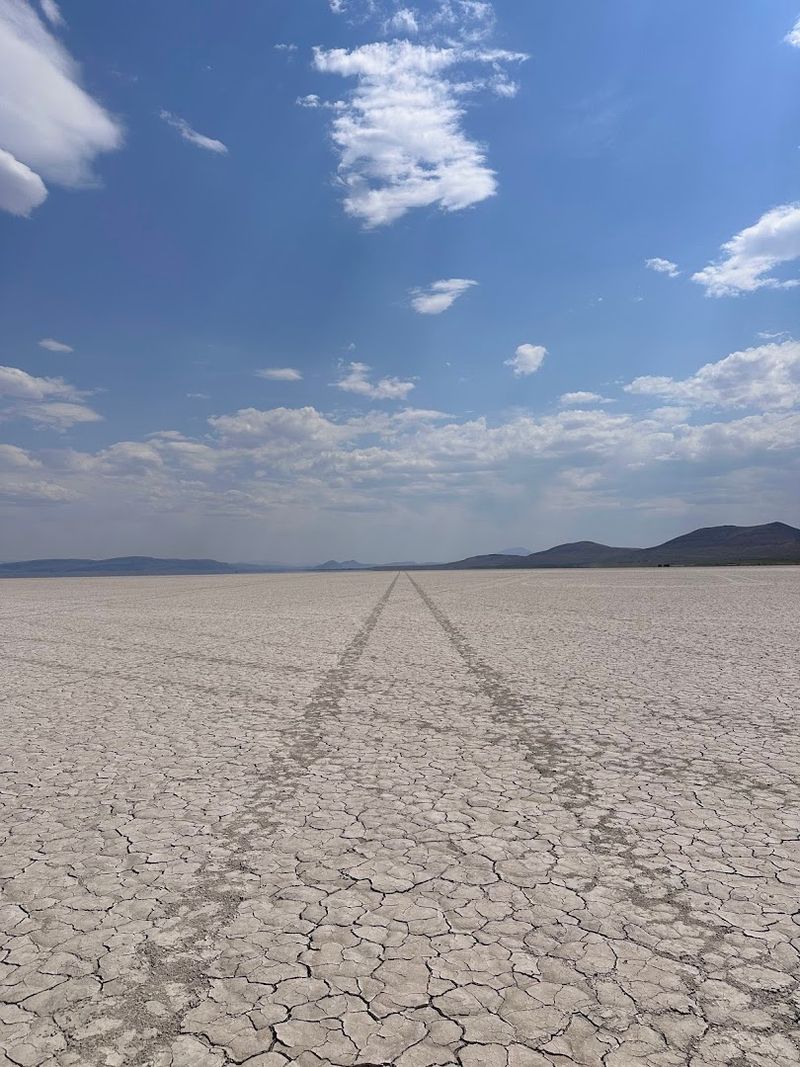
You might not believe me when I say that Oregon has its own version of the Bonneville Salt Flats.
The Alvord Desert is a vast, white playa stretching across the floor of a basin in Harney County, Southeast Oregon. It sits in the rain shadow of Steens Mountain, making it one of the driest spots in the entire state.
The flat, cracked surface of the playa is formed by ancient lake bed sediment left behind as the water evaporated over thousands of years.
After rare winter rains, a thin sheet of water covers the playa and creates a mirror-like reflection of the mountain above. The visual is so otherworldly that it genuinely makes you question your surroundings.
Land speed enthusiasts have used the flat surface for racing, and kite buggies are a popular sight on windy days. The nearest hot springs, Alvord Hot Springs, sit right at the edge of the playa with views of the open basin.
Soaking in natural geothermal water while staring out at a white desert is a very specific sort of magic. Frenchglen is the closest settlement, a tiny ranching hamlet about an hour’s drive away.
The roads leading to the Alvord are unpaved and can get rough, so a high-clearance vehicle makes the journey much smoother and far less stressful.
7. Thor’s Well, Yachats
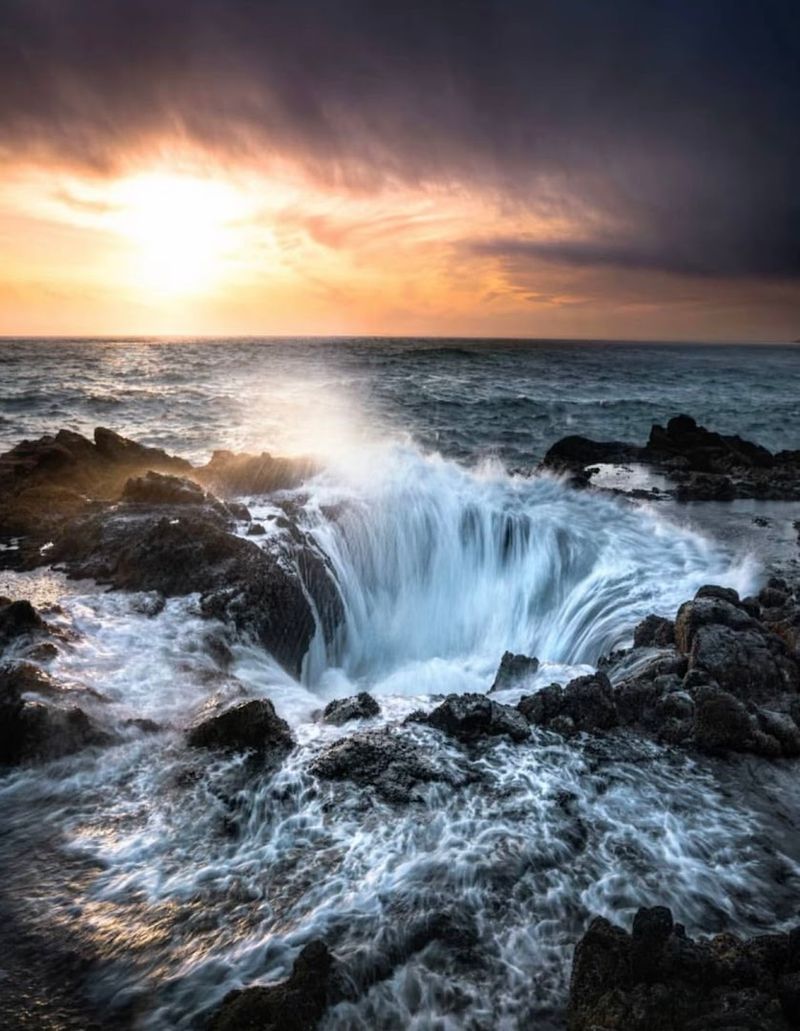
Can you believe a hole in the ocean floor can look like the sea is being swallowed whole?
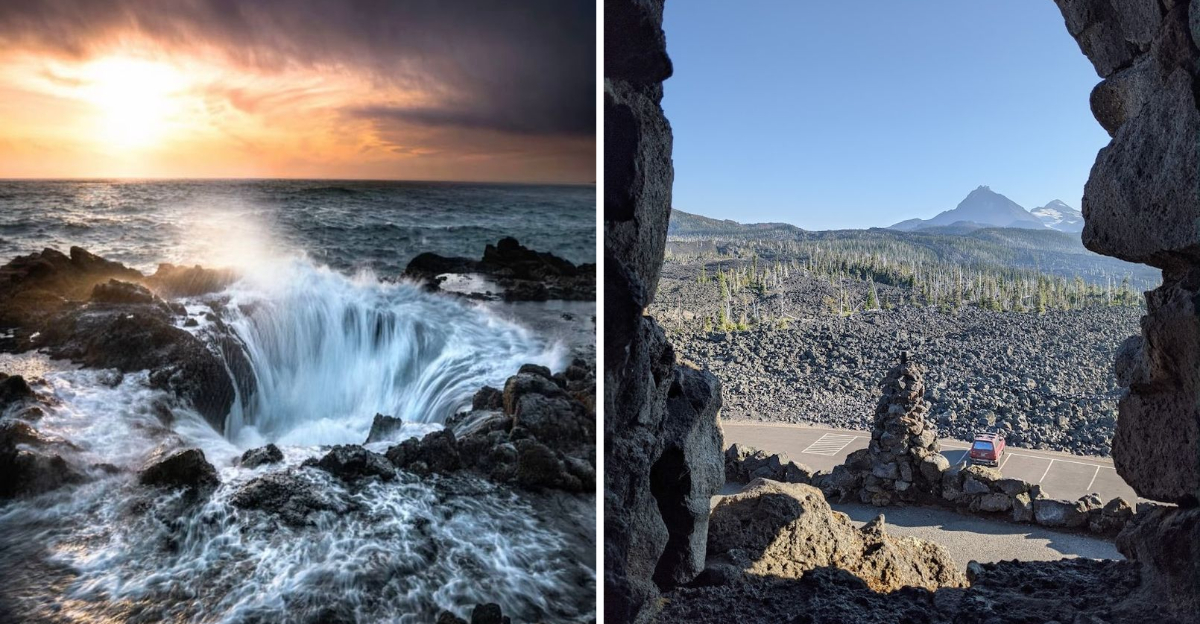
Thor’s Well is a natural saltwater sinkhole carved into the basalt rock near Yachats on the central Oregon coast. At high tide, it puts on one of the most dramatic shows in the natural world.
Water rushes in, fills the bowl, then drains back down in a swirling cascade. The effect looks almost supernatural, which is exactly how it earned its nickname, the drainpipe of the Pacific.
Photographers travel from across the country just to capture it at golden hour.
Low tide gives you a closer look at the structure itself. The basalt edges are rough and ancient, shaped by thousands of years of wave action.
High tide is where the real spectacle happens, so time your arrival carefully.
Cape Perpetua Scenic Area is the surrounding landscape, and it offers hiking trails and ocean viewpoints that make the whole trip worthwhile. The well is along a short, flat trail from the parking area.
Safety matters here, so stay behind the marked boundaries and never turn your back on the waves, because the Pacific plays by its own rules.
8. Toketee Falls, Umpqua National Forest
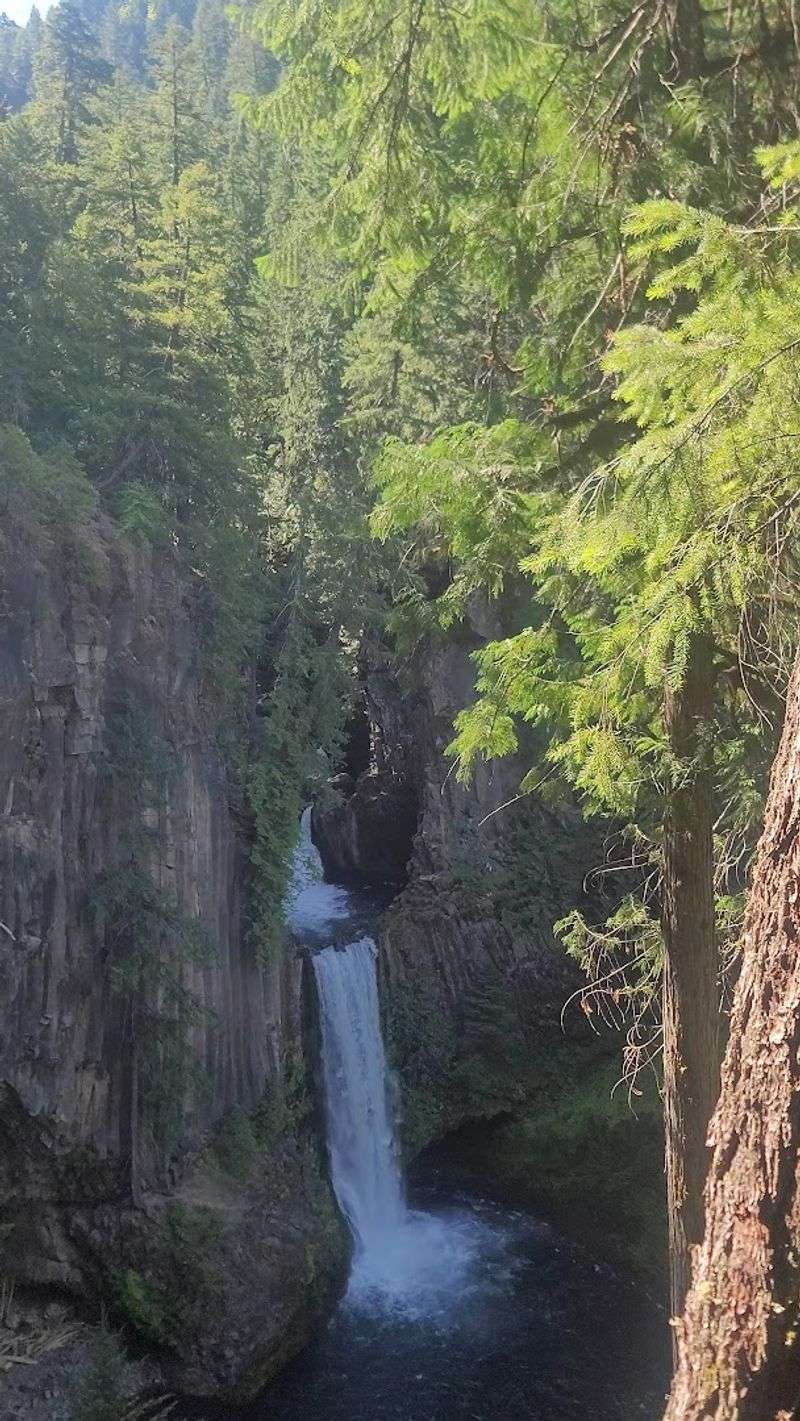
Doesn’t it seem impossible that a waterfall this perfectly framed could exist without a Hollywood set designer involved?
Toketee Falls drops in two dramatic tiers through a frame of geometric basalt columns in the Umpqua National Forest of Southwest Oregon. The columns are so perfectly symmetrical that they look almost engineered.
The name Toketee comes from a Chinook word meaning graceful or pretty, and the falls absolutely live up to it.
The upper tier drops about 28 feet, and the lower tier plunges an additional 90 feet into a deep, blue-green pool. The contrast between the dark volcanic rock and the white rushing water is striking in any season.
Getting there requires a short, 0.8-mile round-trip hike through old-growth Douglas fir forest. The trail ends at a wooden viewing platform that puts the falls directly in your sightline.
A longer hike nearby accesses Watson Falls, another stunning drop worth adding to the day.
The North Umpqua River corridor surrounding the area is lush and deeply peaceful. Summer brings the most stable weather, but fall adds golden foliage to the forest backdrop.
The address for the trailhead is along Highway 138 near Toketee Lake, roughly 60 miles east of Roseburg, and the parking area fills up fast on weekends, so arriving early is a genuinely good idea.
9. Dee Wright Observatory, McKenzie Pass
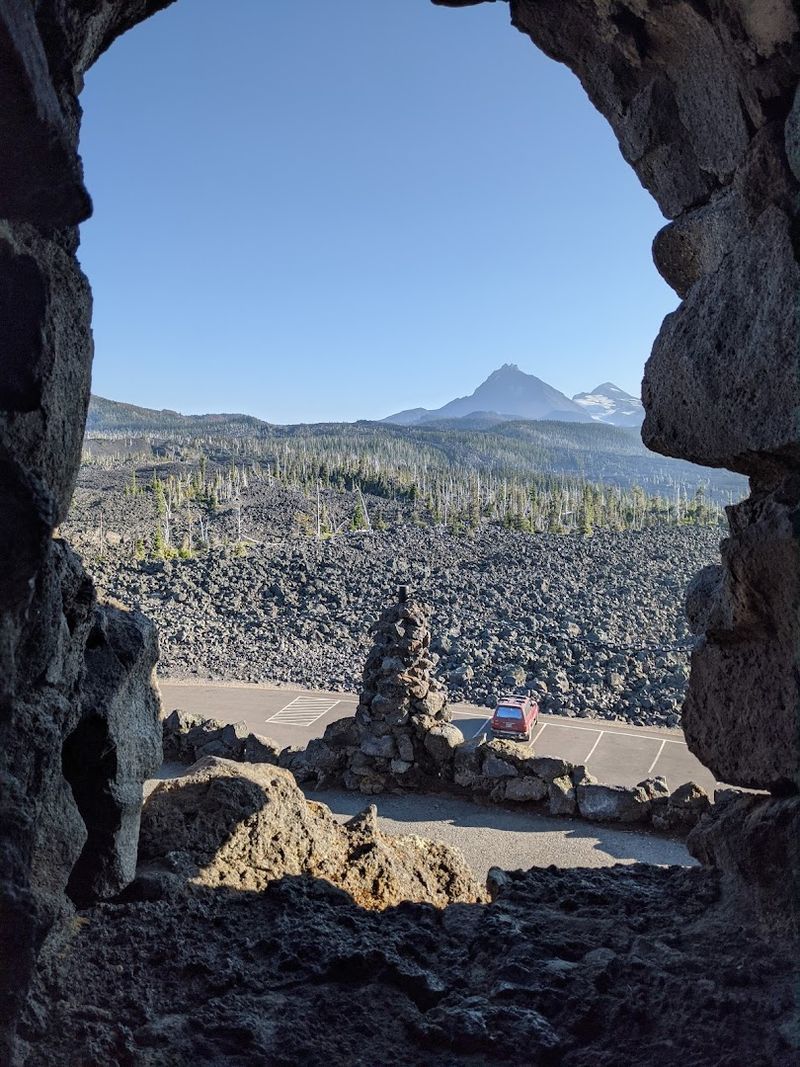
I know, a building made entirely from lava rock sounds like something out of a fantasy novel.
The Dee Wright Observatory sits at the summit of McKenzie Pass in the Oregon Cascades, built by the Civilian Conservation Corps in the 1930s. Every single stone used in its construction came from the surrounding lava fields.
The structure blends so naturally into the volcanic landscape that it can be hard to spot from a distance. Inside, narrow windows frame specific Cascade peaks, turning the mountain views into living paintings.
On a clear day, you can identify Mount Washington, North Sister, Middle Sister, and South Sister all at once.
The Lava Beds surrounding the observatory stretch across miles of jagged, black basalt. A paved half-mile interpretive trail loops through the flow and explains how the landscape formed.
McKenzie Pass Road, also known as Highway 242, is a scenic byway that closes every winter under heavy snow. It typically reopens in late June, making summer the prime season for this trip.
The road itself is a winding, tree-lined spot before opening dramatically onto the lava fields. Cyclists and motorcyclists love it for good reason.
The observatory at the top rewards everyone who makes the climb with one of the most dramatic panoramas in the Pacific Northwest.
10. Bagby Hot Springs, Mount Hood National Forest
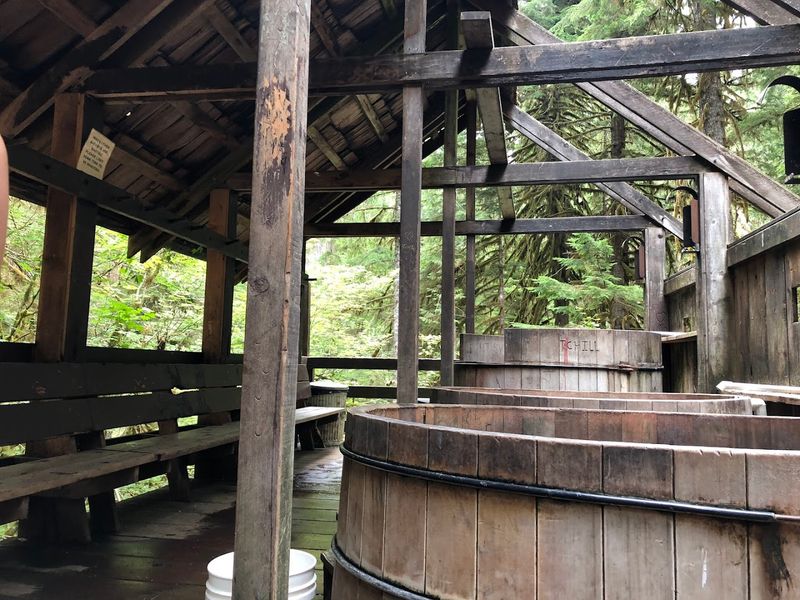
Would you ever think that the best soak of your life could happen inside a hand-carved cedar log deep in an old-growth forest?
Bagby Hot Springs is tucked into the Mount Hood National Forest in Clackamas County. Getting there requires a 1.5-mile hike through towering Douglas firs and western red cedars.
The springs feed naturally heated water into a series of hand-hewn cedar log tubs inside rustic wooden bathhouses. The water temperature ranges from warm to very hot depending on which tub you choose.
The whole setup feels like it belongs in a fairy tale set in the Pacific Northwest.
The trail to reach the springs follows the Hot Springs Fork of the Collawash River, which adds its own scenic charm to the journey.
Moss covers nearly every surface, and the forest canopy filters the light into something soft and green. Ferns line the path in dense, lush clusters.
Bagby is managed by the Mt. Hood National Forest and requires a Northwest Forest Pass for parking.
Weekdays are significantly quieter than weekends, especially during summer. The springs are at 70600 Bagby Road near the town of Estacade.
Bringing water-resistant sandals, a towel, and a headlamp for the return hike in the dark makes the whole experience run much more smoothly from start to finish.