You’d Never Guess This California Town Holds A Massive Military Museum With 170+ Displays
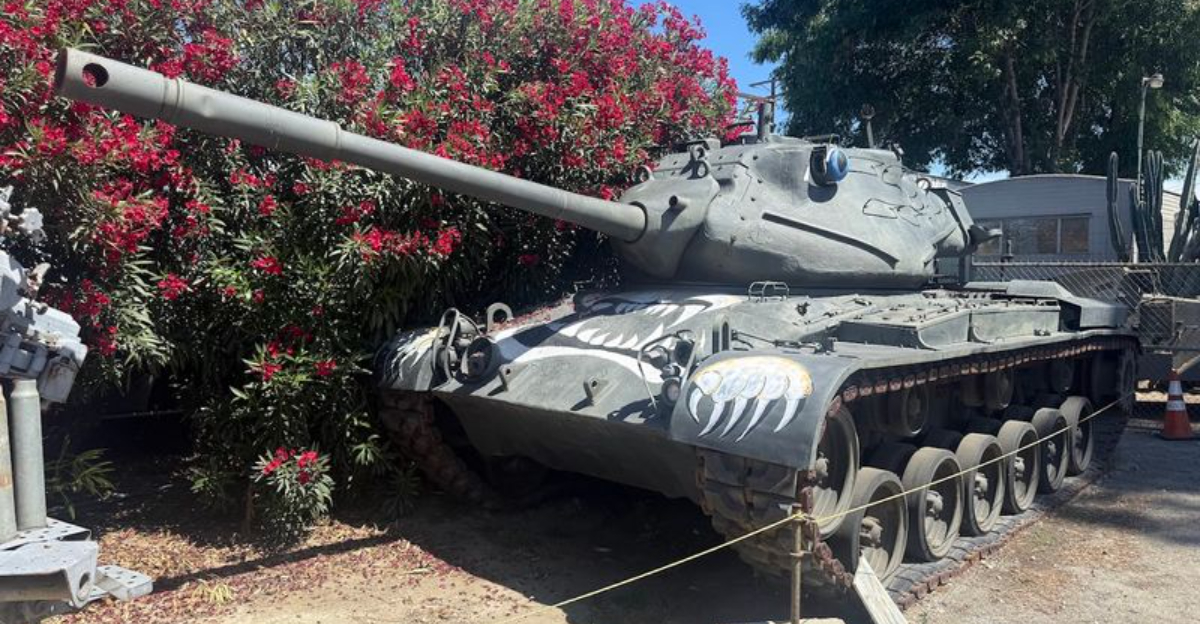
Nothing about this town looks like it would contain tanks and rows of military history waiting behind the gates. Then the museum appears.
One display leads to another. Then another.
Before long, a quick visit starts turning into the kind of deep dive that quietly eats half the day.
A small California town manages to hide a military collection massive enough to overwhelm first-time visitors in the best way.
That surprise is part of the appeal.
More than 170 displays create the feeling of walking through history at full size instead of reading about it from behind glass.
Huge vehicles, restored equipment, and decades of stories give the place a weight that photographs do not fully capture.
People arrive curious. They leave wondering how they had never heard about it sooner.
A Museum That Surprises Everyone Who Passes By
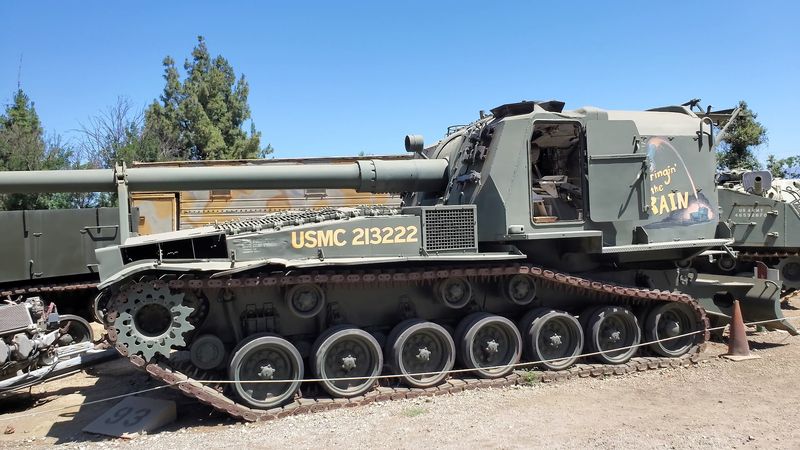
Most people drive past 1918 Rosemead Blvd in South El Monte without realizing what sits just beyond the fence line.
The museum, located at 1918 Rosemead Blvd, South El Monte, CA 91733, blends so naturally into the neighborhood that it can feel almost invisible until the rows of tanks and armored vehicles suddenly come into view.
Founded in January 1962 and privately owned, the American Military Museum has spent decades quietly building one of the most impressive outdoor military collections in the country.
The seven-acre grounds hold over 170 military vehicles and exhibits, making it a genuinely unexpected find in the middle of suburban Southern California.
The museum describes itself as the largest inter-service military collection in the Western United States, a bold claim that the sheer volume of equipment tends to support.
Visitors who arrive expecting a small roadside curiosity often find themselves spending far more time than planned, walking row after row of preserved history under open California skies.
Over 170 Displays Cover Decades Of Military History
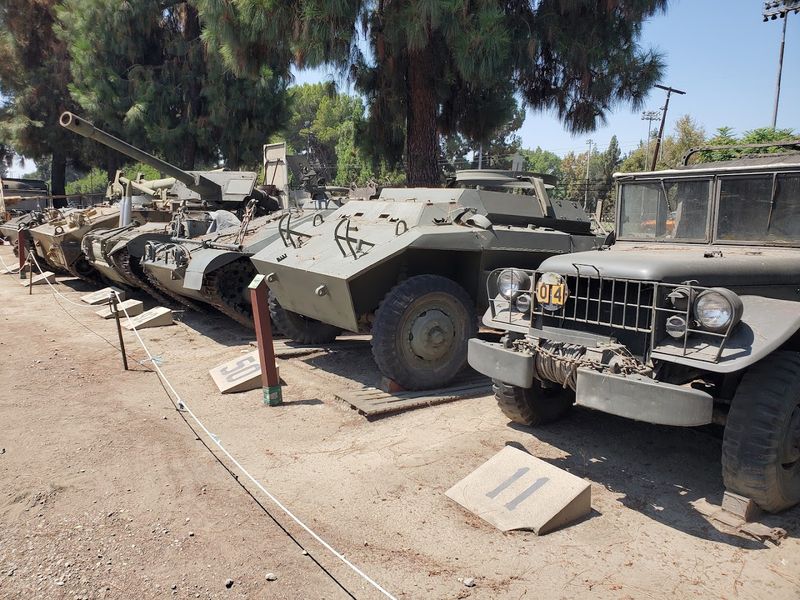
The sheer number of exhibits at the American Military Museum is what sets it apart from most small regional collections.
With over 170 to 180 individual pieces on display, the grounds cover military hardware from World War I through Operation Desert Storm, giving visitors a sweeping timeline of American and international military equipment.
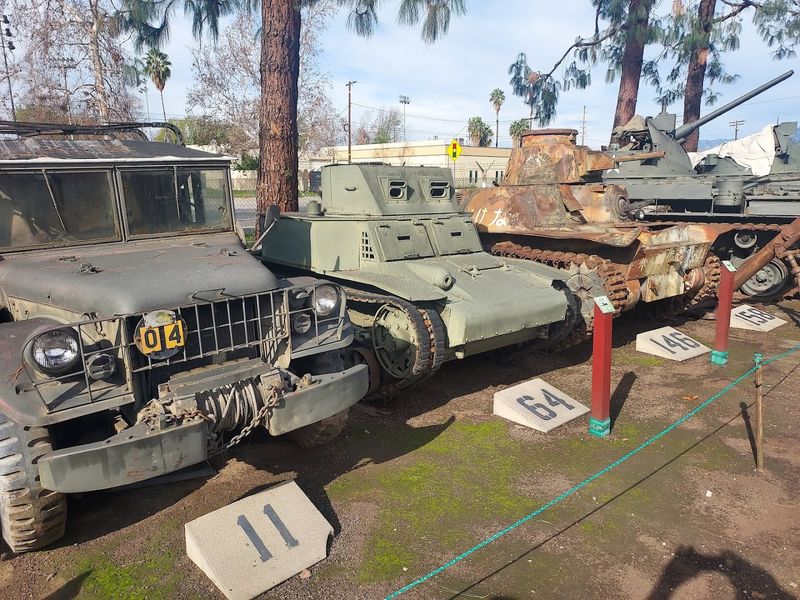
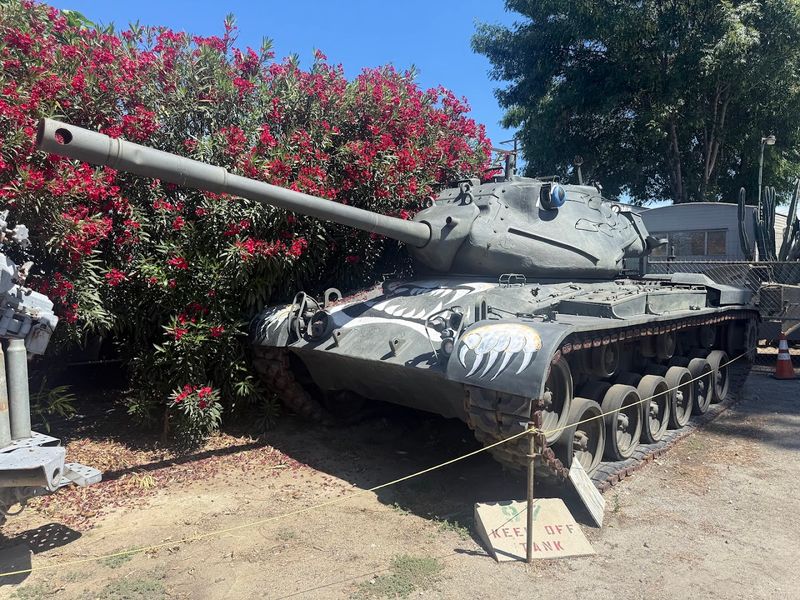
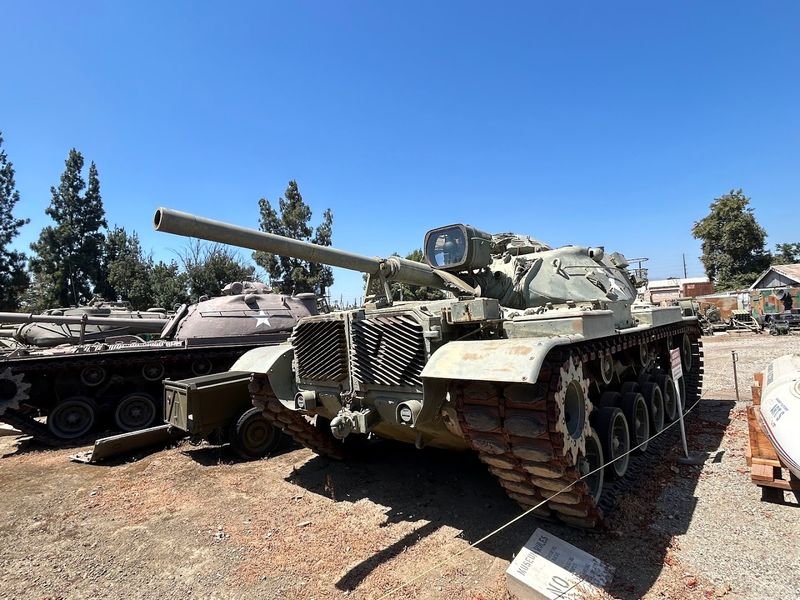
Tanks take center stage throughout the collection, with well-known models like the M4A3 Sherman, the M47 Patton, and the M551 Sheridan representing different chapters of armored warfare.
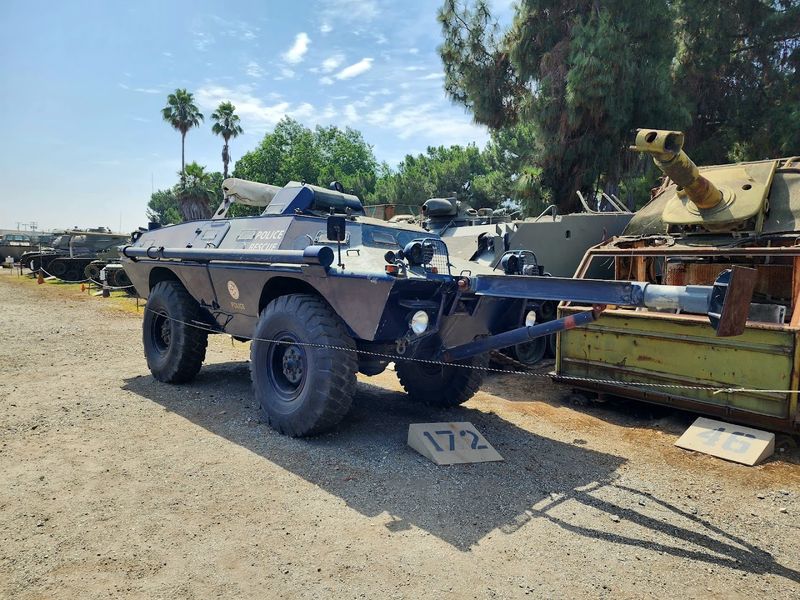
Artillery pieces including the M7 Priest sit alongside half-tracks, amphibious vehicles, jeeps, trucks, and Humvees, creating a landscape that feels more like a living history lesson than a traditional indoor exhibit.
Smaller artifacts such as helmets and shell casings are also part of the collection, adding texture and human scale to the larger machines.
Informational signage accompanies the exhibits and is available in multiple languages, which helps visitors of all backgrounds connect with the history on display.
The variety across eras and vehicle types means there is genuinely something new to notice no matter how many times someone visits the grounds.
The Famous Tanks That Earned The Nickname Tankland
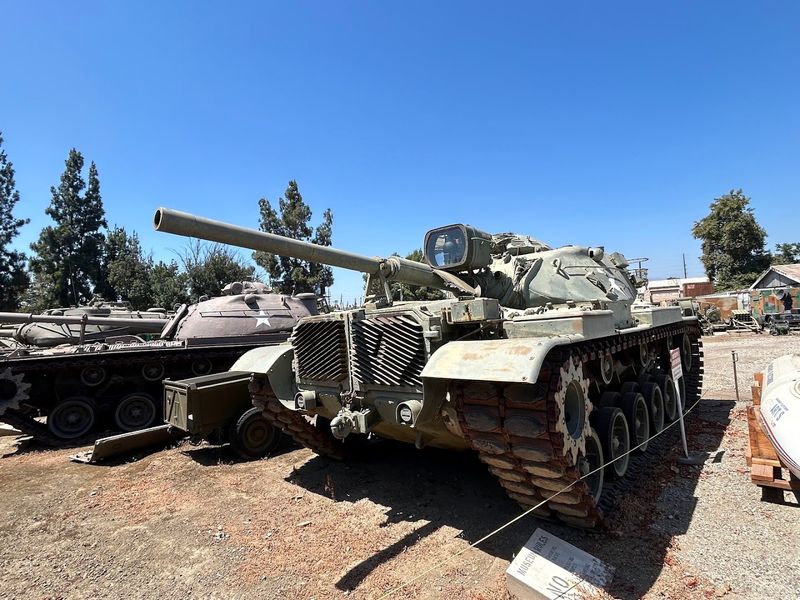
The nickname Tankland did not come from nowhere.
Tanks dominate the landscape at the American Military Museum in a way that makes the name feel completely earned, with multiple models from different eras lined up across the seven-acre property.
The M4A3 Sherman is one of the most recognizable pieces in the collection, a tank that saw heavy use during World War II and carries enormous historical weight for anyone familiar with that era of combat.
Alongside it, the M47 Patton represents the postwar transition in American armor, while the M551 Sheridan brings the collection forward into the Vietnam War period with its distinctive lightweight design.
Walking among these machines gives a strong sense of how tank design evolved over decades, from the relatively compact Sherman to the more streamlined Cold War-era vehicles.
Each tank carries informational signage that explains its history, combat use, and technical specifications in accessible language.
Visitors cannot climb on the vehicles, but getting up close to see the scale and detail of each machine is an experience that photographs rarely capture fully.
A Bell UH-1B Huey Helicopter Is Among The Highlights
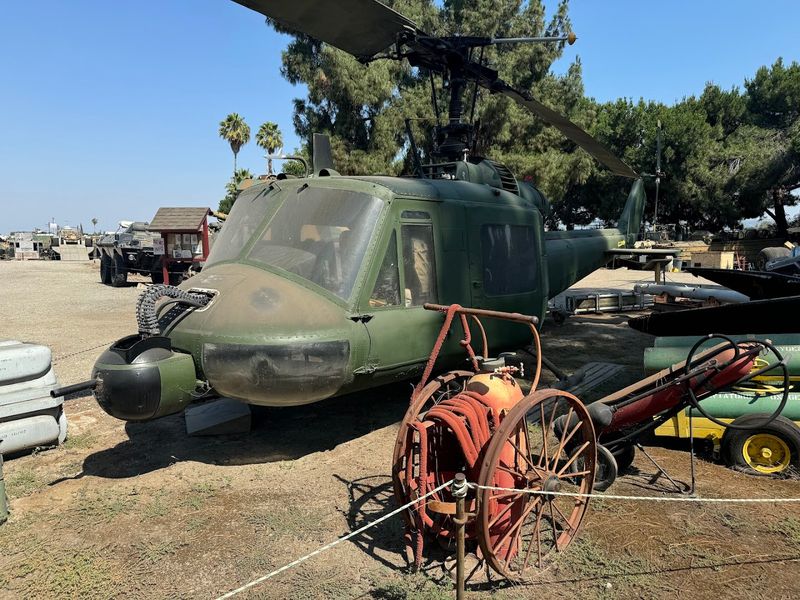
Not everything at the American Military Museum rolls on tracks or wheels.
One of the most striking exhibits on the grounds is a Bell UH-1B Huey gunship helicopter, a machine that became one of the most iconic symbols of the Vietnam War era.
The Huey sits in the open air alongside the ground vehicles, and its presence adds a completely different dimension to the collection.
Seeing the helicopter up close makes it easy to understand why it became such a powerful image in military history, with its rotor design and compact frame that carried enormous responsibility across countless missions.
For visitors who grew up watching footage of the Vietnam War or who have family connections to that era, standing near the actual aircraft tends to carry a different kind of weight than reading about it in a book.
The museum’s self-guided format allows visitors to spend as much time as needed near each exhibit, so there is no pressure to move on before fully taking in what is in front of them.
Budget-Friendly Admission Makes History Accessible
Five dollars for adults is genuinely hard to argue with when the grounds hold over 170 pieces of military equipment spread across seven acres.
The American Military Museum keeps its admission prices at a level that makes the experience accessible to families, students, and anyone curious enough to stop in on a weekend afternoon.
Reduced admission rates apply for veterans, seniors, and children, making the pricing structure thoughtful across different visitor groups.
Children under five get in free, and parking on the grounds is also free, which removes two of the most common friction points for family outings in Southern California.
For the value offered, the five-dollar entry fee tends to surprise first-time visitors in the best possible way.
Spending an hour or more walking through rows of tanks, artillery pieces, helicopters, and armored vehicles for the cost of a fast-food drink is the kind of deal that feels almost too good to be true.
Group tours for parties of 20 or more are also available for organized visits, making the museum a practical option for school groups and community organizations looking for a hands-on history experience.
Open Friday Through Sunday With A Practical Schedule
Planning a visit to the American Military Museum requires a little scheduling awareness since the grounds are open only on Fridays, Saturdays, and Sundays from 10 a.m. to 4:30 p.m., with the last admission accepted at 4:20 p.m.
Knowing this ahead of time saves the frustration of arriving on a weekday and finding the gates closed.
The limited weekly schedule actually works in favor of the visit experience, since the museum tends to maintain a calm and unhurried pace during open hours.
Arriving earlier in the day allows more time to move through the exhibits without feeling rushed as closing time approaches.
Because the entire collection sits outdoors across seven acres, rainy days can affect visits since the museum closes when conditions make the grounds unsafe or too wet.
Checking the weather before heading out is a practical step worth taking, especially during the winter months in Southern California when rain is more likely.
The museum can be reached by phone at 626-442-1776, and additional information is available at tankland.com for anyone wanting to confirm hours or ask about group tours before making the drive.
A Self-Guided Educational Experience For All Ages
The self-guided format at the American Military Museum gives visitors complete control over the pace and focus of their experience.
Each exhibit comes with informational signage that covers the vehicle’s history, combat use, and technical background, and the multilingual format of the information makes it accessible to a wide range of visitors.
History fans who want to read every sign and study each vehicle closely could easily spend well over an hour on the grounds.
Casual visitors who prefer to walk through and take in the overall atmosphere can cover the space more quickly, making the museum a flexible option for different kinds of travelers and different energy levels.
The educational angle is one of the museum’s genuine strengths, since the exhibits are designed to explain military history through preserved equipment rather than simply putting machines on display without context.
Younger visitors tend to respond strongly to the scale and variety of the vehicles, while older visitors often find personal or historical connections to specific pieces.
The museum also offers wheelchair accessibility, which ensures that the experience remains open to visitors with mobility considerations.
Why South El Monte Makes This Discovery Feel Extra Special
Part of what makes the American Military Museum so memorable is the contrast between the setting and the scale of the collection inside.
South El Monte is a quiet community in the San Gabriel Valley, far removed from the major battlefields and military bases that most people associate with large-scale military museums.
Finding over 170 pieces of military equipment in a suburban Southern California neighborhood creates a sense of genuine surprise that adds to the experience.
The museum has been part of the South El Monte landscape since 1962, which means it has been quietly holding this remarkable collection for more than six decades while the surrounding community went about its daily life.
That sense of unexpected discovery is something that tends to stick with visitors long after they leave.
The museum also rents its vehicles and facilities for film and television productions.
This means some of the machines on the grounds may have appeared in movies or shows without most viewers ever knowing where they came from.
For anyone traveling through the San Gabriel Valley or looking for something off the beaten path in California, the American Military Museum offers a kind of reward that feels hard to replicate elsewhere in the region.