This Underrated Ancient Site In North Carolina Feels Like It Belongs To Another World
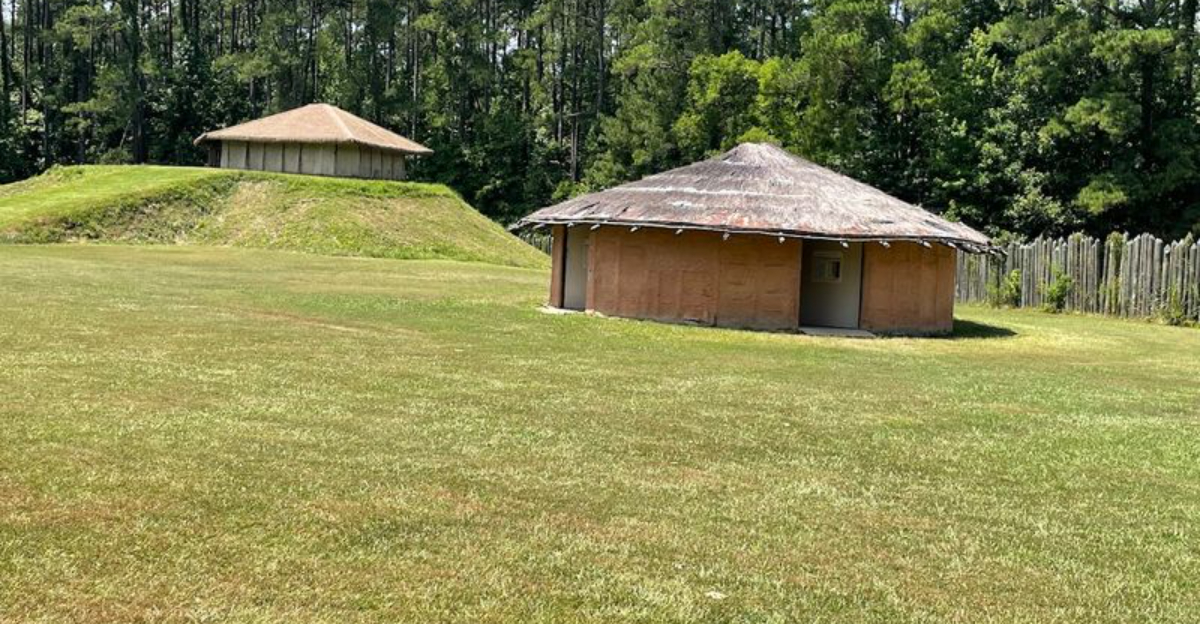
Some places ask you to slow down before you even understand why.
Here, in North Carolina, the quiet feels meaningful rather than empty. A walk through this ancient site is not about rushing toward a big flashy reveal.
It is about noticing the land, the silence, and the deep history still carried in the space.
Built by the Pee Dee culture around A.D. 1000, this ceremonial center offers a rare chance to reflect on a community that shaped the region long before modern roads reached it.
Nothing about the visit needs to be exaggerated.
Its power comes from respect, preservation, and the feeling that the past is still close enough to be honored carefully.
A Mound That Defies Time
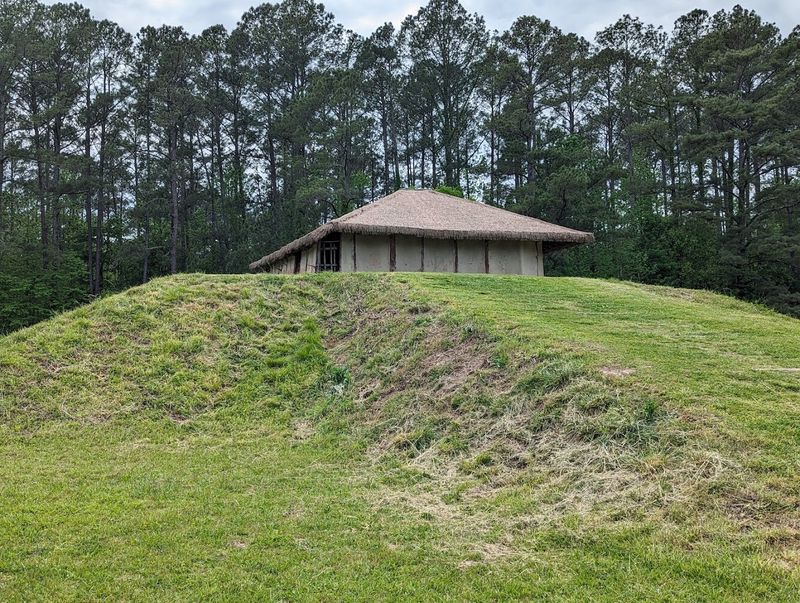
Rising above the open ceremonial ground, the reconstructed mound at Town Creek immediately gives the site its visual and emotional center.
Earthen mounds were central to many Mississippian communities, and this one helps modern visitors understand how architecture, ceremony, leadership, and community life could come together.
The platform mound is not presented as a fantasy version of the past; it is part of a state historic site shaped by decades of archaeological work and interpretation. Walking around it gives the visit a grounded rhythm, especially because the landscape remains quiet enough for details to register.
The reconstructed temple structure on top helps show how the mound may have functioned as part of a larger ceremonial complex. Instead of relying on flashy displays, the site lets the land do much of the storytelling.
That restraint makes the place more effective. Standing near the mound, it becomes easier to sense why Town Creek mattered to the Pee Dee people and why North Carolina continues to preserve it as a rare window into the region’s Indigenous past.
Free Admission, Priceless History
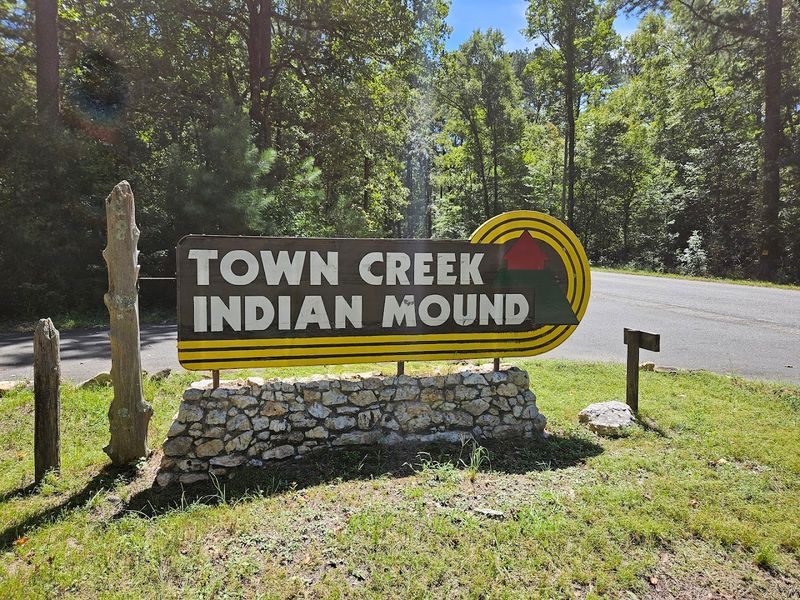
Admission to Town Creek Indian Mound is free, which makes the site one of the most accessible cultural destinations in central North Carolina. That matters because the history interpreted here belongs in public view, not behind a high ticket price.
Families, students, road-trippers, and curious local residents can all visit without turning the outing into an expensive commitment.
Before exploring the grounds, guests can stop at the visitor center to view exhibits explaining the Pee Dee culture, the mound complex, and the archaeological research connected to the site.
Staff at North Carolina state historic sites are often one of the best parts of the experience, because their work turns unfamiliar history into something easier to understand without making it feel simplified.
Donations and gift shop purchases may support the site, but they are not required for entry.
The free admission also encourages slower, more thoughtful visits. Someone can stop in briefly or spend extra time reading, walking, and looking without feeling rushed.
For a place with this much cultural significance, that open access feels especially valuable.
Reconstructed Temples Worth Seeing
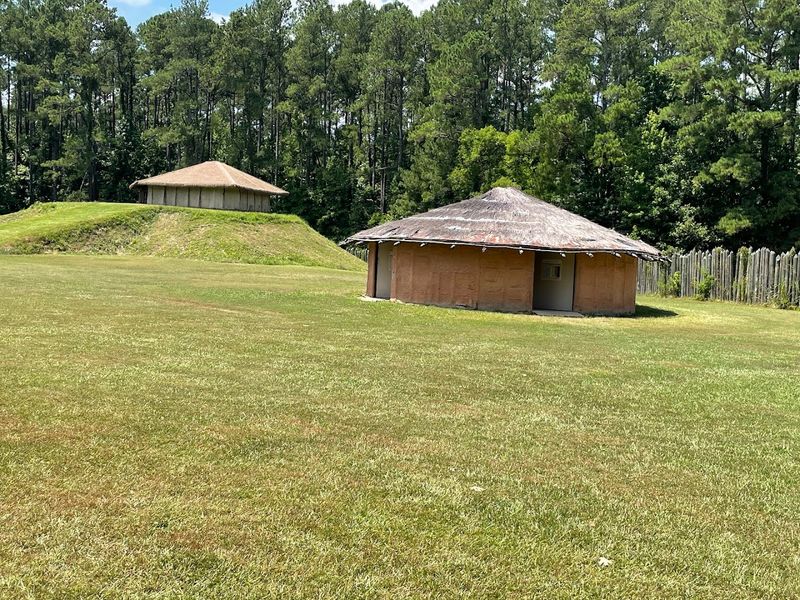
Reconstructed structures give Town Creek Indian Mound a rare sense of dimension, helping visitors move beyond dates and labels into a clearer idea of how the ceremonial center may have looked.
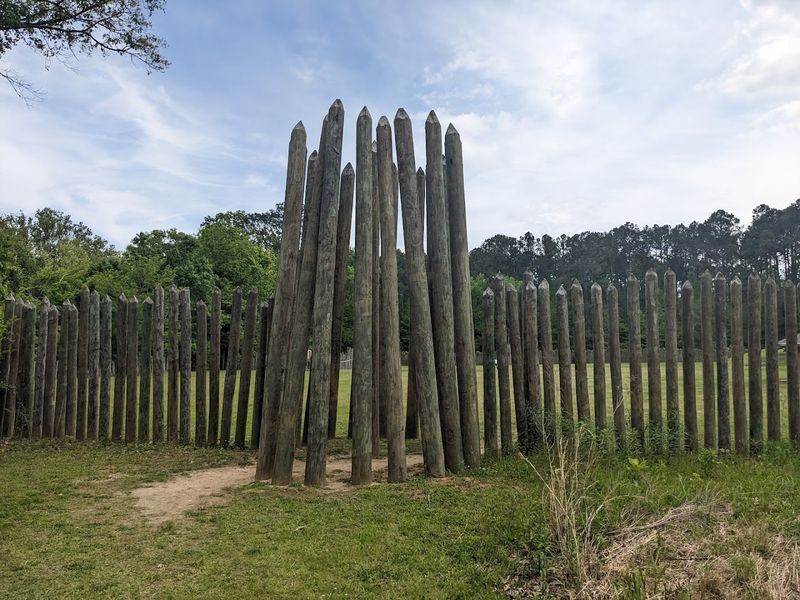
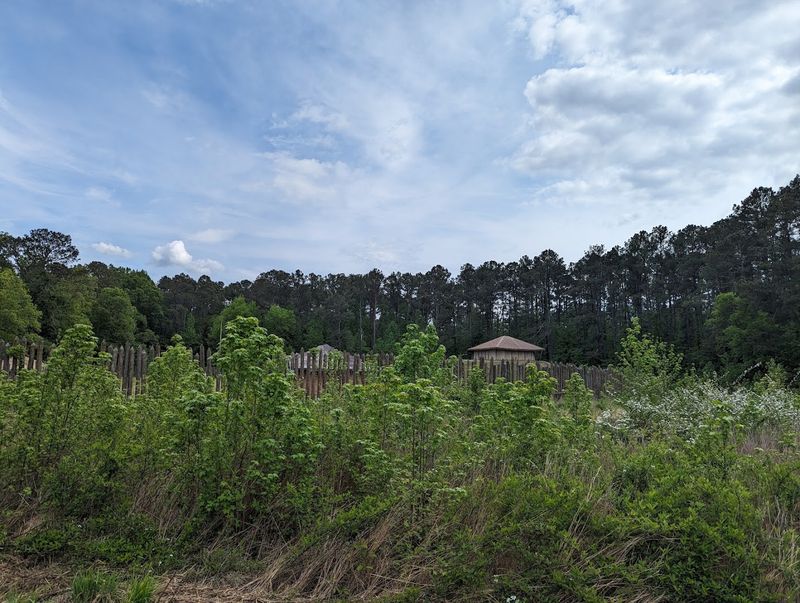
The mound, temple, priest’s house, mortuary house, and stockade-style features are based on archaeological interpretation rather than guesswork for dramatic effect.
Those structures matter because they make the site understandable for people who may not arrive with any background in Mississippian culture or North Carolina archaeology. Simple materials and careful forms help show how the Pee Dee community organized sacred, social, and political space.
Walking near the reconstructed buildings also makes the site feel more complete, since the mound was never meant to stand alone as an isolated object. It belonged to a larger ceremonial world.
The open plaza and surrounding enclosure help visitors picture gatherings, rituals, leadership activity, and movement through the space. Nothing here feels like a theme-park version of Indigenous history when approached respectfully.
Instead, the reconstructions work as teaching tools, turning archaeological evidence into something visible, walkable, and easier to remember.
The Pee Dee Culture Story
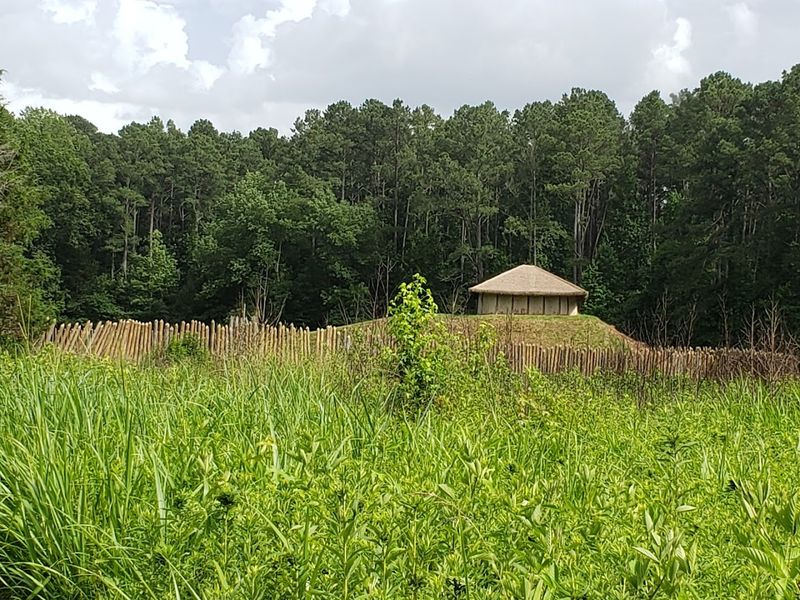
Long before North Carolina existed as a state, the Pee Dee people built and used Town Creek as an important ceremonial and political center.
Centuries before European colonization, a sophisticated Indigenous world flourished here as part of the broader South Appalachian Mississippian culture tradition.
Archaeologists have studied Town Creek for decades, beginning with major professional work in 1937, and that long research history gives the site unusual depth.
Pottery, tools, structural remains, burial evidence, and the layout of the mound complex all help explain how people lived, gathered, traded, worshiped, and organized community life.
Because the Pee Dee left no written record, archaeology is essential to understanding their story. The visitor center makes that process easier to follow by connecting objects and reconstructions to daily and ceremonial life.
Calling the site “ancient” is accurate in a broad travel-writing sense, but the more meaningful point is that this is a living reminder of Indigenous presence, skill, and cultural complexity in the Piedmont.
Town Creek challenges the idea that important Native history only belongs in the distant West or the mountains.
A Nature Trail Full Of Calm
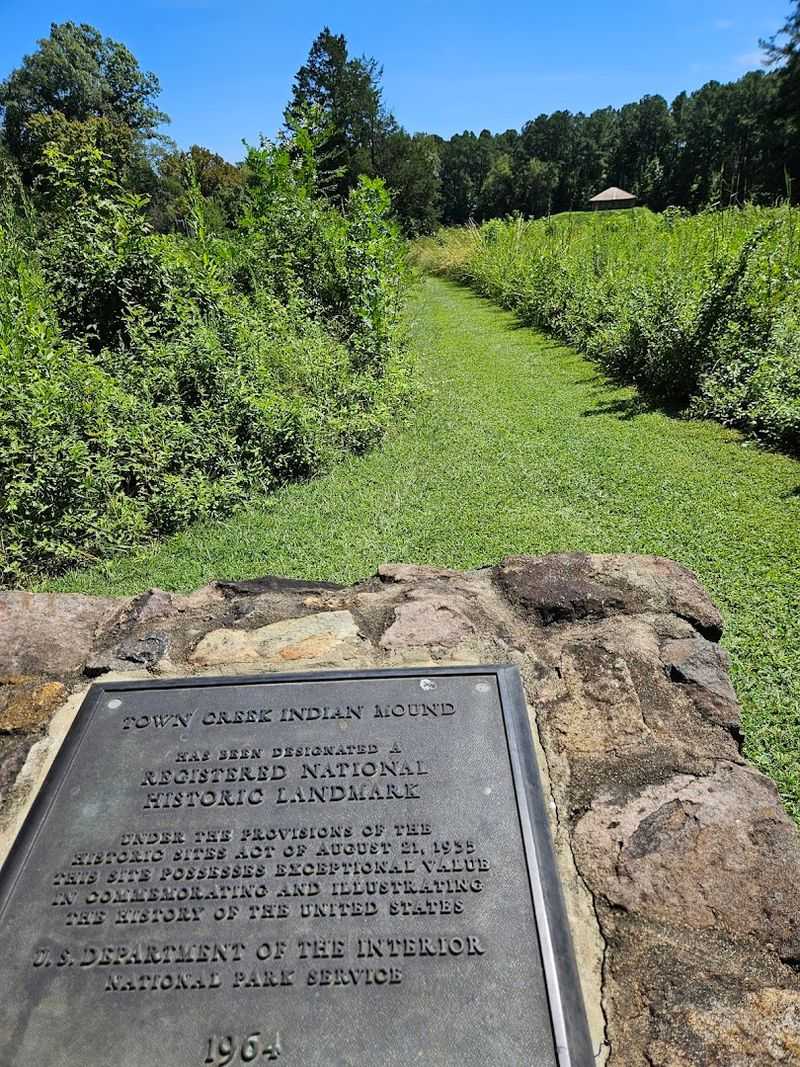
Beyond the mound and visitor center, the landscape around Town Creek adds a quieter layer to the visit. A short nature trail gives guests a chance to move through the property at an easy pace, with the Little River setting helping the historic site feel connected to land, water, and seasonal change.
This part of the experience is not about dramatic overlooks or strenuous hiking. It works because it gives the mind a moment to settle after the heavier historical material.
Families can use the trail as a gentle break, while adults often appreciate the chance to step away from exhibits and simply absorb the surroundings. Trail conditions can change after storms, rain, maintenance work, or seasonal issues, so checking ahead is a smart move if the walk is a major part of the plan.
Comfortable shoes are still helpful, especially when the ground is damp. When open, the trail rounds out the visit nicely by reminding people that Town Creek was not only a ceremonial center.
It was also part of a larger natural landscape that shaped how people moved, gathered, and lived.
Burial House And Sacred Ground
Among the reconstructed elements at Town Creek, the mortuary or burial-related interpretation asks for the most respectful attention.
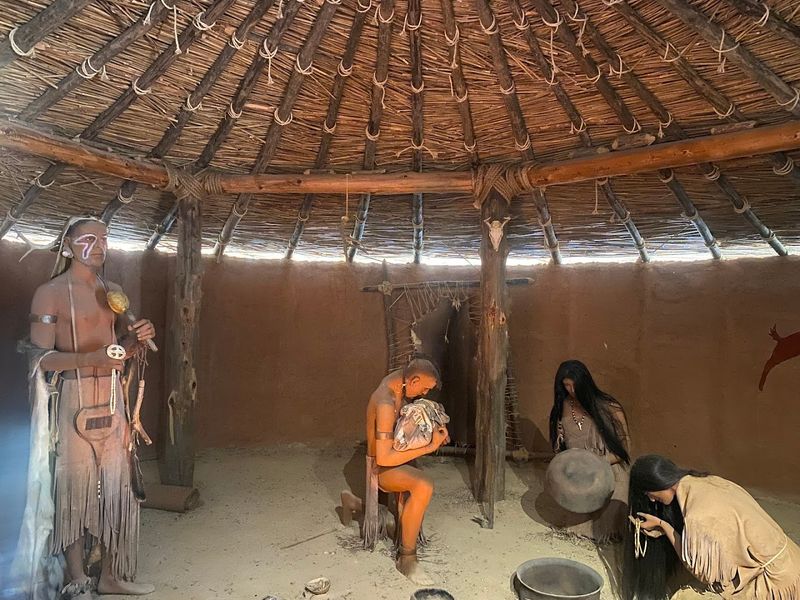
Burial practices were central to the site’s ceremonial life, and the reconstructed mortuary house helps visitors understand its ties to belief, community memory, and sacred responsibility.
Because real people and real cultural practices are being interpreted here, the experience should never be treated as spooky entertainment or a curiosity stop. The power of the space comes from its seriousness.
Inside the reconstructed enclosure, the mound, plaza, temple, and mortuary structure together reflect a community shaped by ceremony, leadership, and connection to ancestors.
Walking through this area slowly makes the interpretation more meaningful, especially when paired with the visitor center exhibits.
The site’s calm atmosphere can feel striking, but that feeling comes from preservation and respect rather than mystery for mystery’s sake. Town Creek is most memorable when visitors approach it as sacred cultural ground, not simply an unusual roadside attraction.
Planning Your Visit Smartly
A successful visit begins with the basics, and Town Creek Indian Mound keeps them refreshingly simple.
The site is positioned at 509 Town Creek Mound Road, Mount Gilead, NC 27306, and official hours are Tuesday through Saturday, 9 AM to 5 PM, with closure on Sunday, Monday, and designated state holidays.
Admission is free, making it easy to plan as a short standalone trip or as part of a larger central North Carolina day. Calling ahead or checking the official North Carolina Historic Sites page is still wise because weather, holidays, trail conditions, or special events can affect the experience.
Most visitors can see the visitor center, mound area, reconstructions, and trail in about an hour, while people who like reading exhibit panels or taking photographs may want more time. Closed-toe shoes, water, and bug spray are practical choices during warmer months.
The setting is rural, so arriving with a full tank, a flexible schedule, and a plan for food before or after the visit can make the day feel smoother. Early arrival also helps avoid heat during late spring and summer.
Why This Place Deserves More Visitors
Town Creek Indian Mound deserves more attention because it offers something many historic stops cannot: a direct, carefully interpreted look at Indigenous life in North Carolina long before European settlement. The site’s importance is not based on hype, dramatic ruins, or exaggerated mystery.
Its strength comes from archaeological depth, cultural meaning, open land, reconstructed features, and the quiet clarity of a place where visitors can actually see how the ceremonial center was arranged.
North Carolina has many historic houses, battlefields, and scenic landmarks, but fewer public sites focus entirely on American Indian history with this level of preservation and interpretation.
Free admission makes the experience even more worthwhile, especially for families and students who may be encountering the Pee Dee culture for the first time. The mound, visitor center, trail, and reconstructed buildings work together to create an outing that feels educational without being dry.
More visitors would help keep attention on the value of preserving places like this. Town Creek is not just a hidden gem near Mount Gilead.
It is a reminder that North Carolina’s oldest stories are still present in the landscape.