Stroll To The Very End Of A Historic Pier In California To Find This Dreamy Café
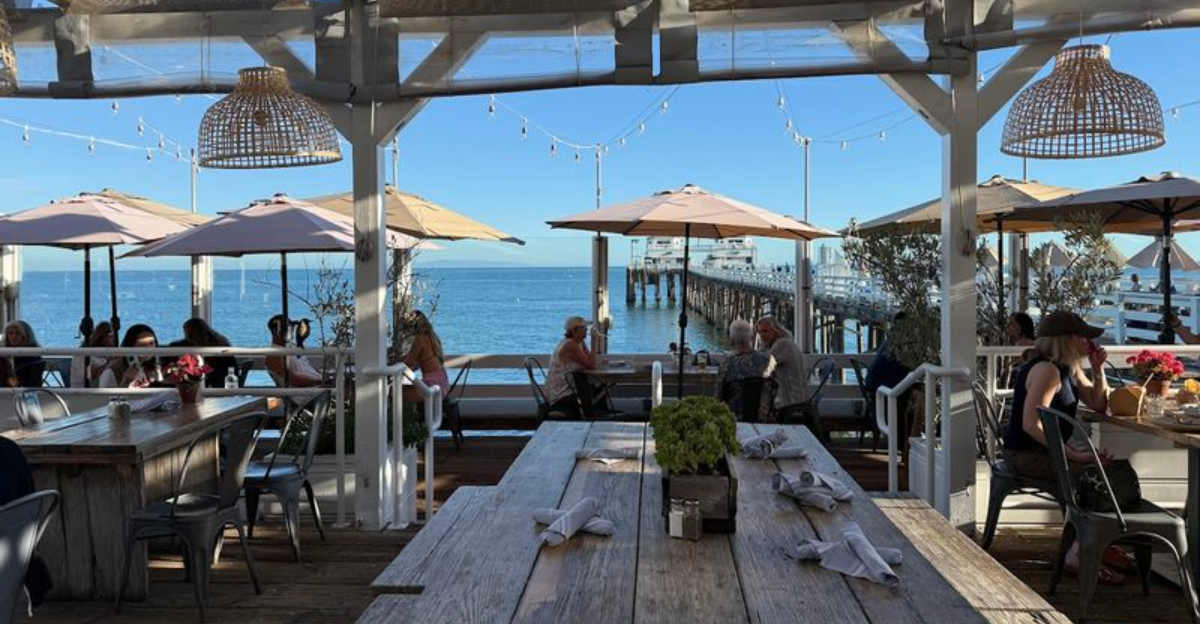
A café at the end of a pier already has unfair advantage.
The walk builds suspense. Boards creak underfoot. Water moves on both sides. Land slowly falls behind you until coffee starts feeling like a reward for reaching the edge.
A historic California pier can make a simple café stop feel like the final scene of a very good day.
That is the charm. You are not just grabbing a drink. You are earning the view one step at a time.
The whole approach matters here: the salt air, the open water, the little thrill of realizing the café is waiting exactly where the pier runs out.
Most coffee stops sit beside traffic. This one sits at the end of a walk people remember before they even order.
By the time you reach the table, leaving too quickly feels almost disrespectful.
Malibu Pier Gives The Meal Its Coastal Setting
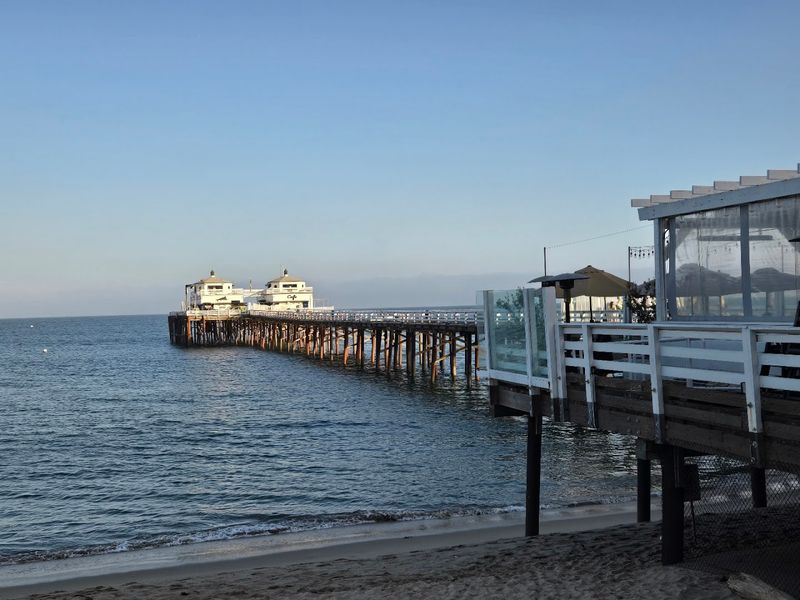
Walking out over the water before a meal is not something most restaurants can offer, but the setup here makes that part of the whole experience.
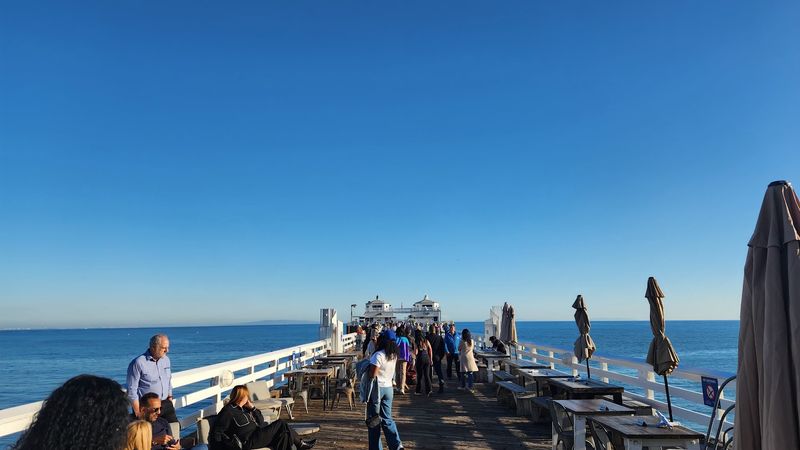
The Malibu Pier stretches far enough into the Pacific that by the time the café comes into view, the sound of waves below the wooden planks is already setting the mood.
Salt air, the gentle creak of the structure underfoot, and the wide-open horizon ahead create a sensory buildup that no indoor restaurant can replicate.
The pier itself sits along Pacific Coast Highway in Malibu and functions as both a working fishing pier and a public destination.
That combination means the walk out tends to feel lively rather than empty, with fishermen casting lines and visitors pausing to look over the railings at the water below.
By the time a seat is found and food is ordered, the coastal setting has already done most of the atmospheric work.
The café benefits enormously from being at the far end rather than somewhere in the middle, because the views from that position reach in nearly every direction without obstruction.
Historic Pier Views Make The Stop Feel Special
Few piers along the California coast carry as much layered history as this one.
Originally constructed in 1905 to serve the agricultural shipping needs of Rancho Malibu, the Malibu Pier eventually opened to the public for fishing and recreational use in 1934.
During World War II, the far end of the pier served as a U.S. Coast Guard lookout point, which adds a quietly significant detail to the spot where café tables now sit.
The pier was designated a Point of Historical Interest in 1985, and that recognition reflects how deeply it is woven into the identity of this stretch of coastline.
After significant storm damage in the 1990s forced a lengthy closure, the pier was carefully restored and reopened in 2008, bringing the structure back to its familiar place along the Malibu shoreline.
Sitting at a table at the end of this pier connects the experience to something much older than the café itself.
The views looking back toward the Santa Monica Mountains and down the curve of the coastline serve as a reminder that this particular vantage point has meant something to people for well over a hundred years.
Malibu Farm Restaurant Remains Open Near The Pier Entrance
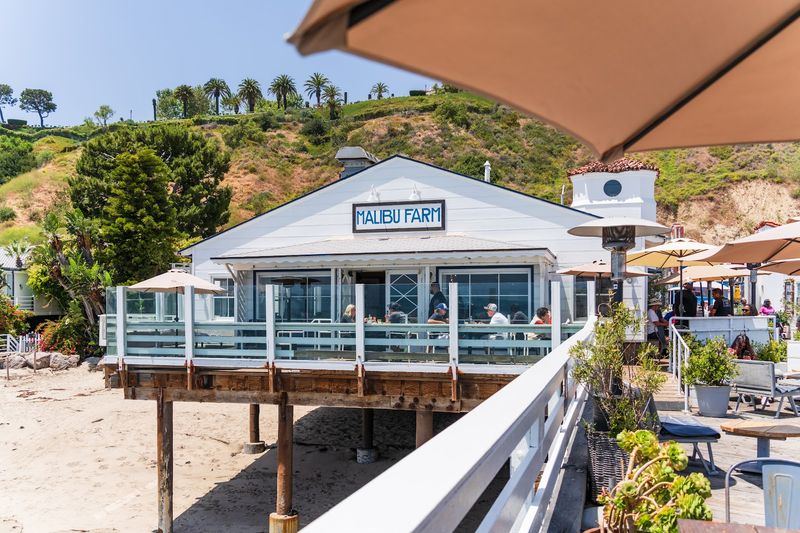
The Malibu Farm brand actually operates two separate locations on the pier, and understanding the difference helps visitors plan accordingly.
The more formal Malibu Farm Restaurant sits near the pier entrance and offers a full sit-down dining experience with table service and a broader menu.
The casual Malibu Farm Pier Cafe, which is the focus here, is located at the very far end of the pier and operates as a counter-service spot with a relaxed, walk-in format.
Both locations share the same farm-to-table philosophy and commitment to fresh, locally sourced ingredients, but the atmosphere and pacing differ noticeably between the two.
The café at the end tends to feel more breezy and informal, with guests grabbing food and settling into outdoor seats facing the open ocean.
Malibu Farm Pier Cafe is located at 23000 Pacific Coast Hwy Building B, Malibu, CA 90265, right at the far end of the pier structure.
Knowing which building to head toward before arriving saves time and helps set the right expectations for the type of meal and service style each location provides.
Fresh, Local-Style Food Fits The Beachfront Mood
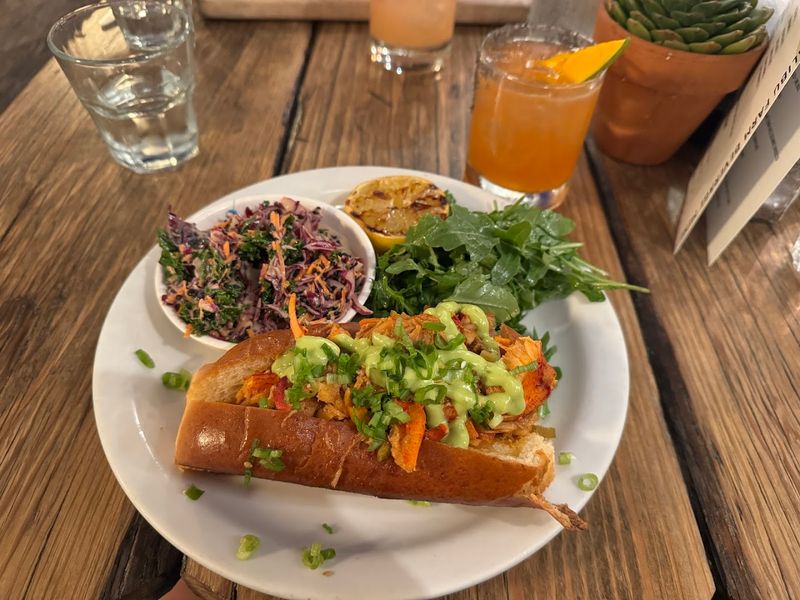
The menu at the café is built around a farm-to-table philosophy that prioritizes fresh, organic, and locally sourced ingredients, some of which come directly from the founder’s own Malibu farm.
That grounding in real, seasonal produce gives the food a quality that feels consistent with the setting rather than out of place on a pier.
Popular items include the fried egg sandwich, the shrimp sandwich, the crab cake sandwich, zucchini pizza, and the coconut vegan curry, which comes up frequently as a standout dish.
The menu also includes gluten-free, dairy-free, and vegan choices, making it accessible for guests with different dietary preferences without those options feeling like an afterthought.
Portions tend to be generous relative to the lighter, health-conscious style of cooking, and the ingredients read as noticeably fresh rather than mass-produced.
Freshly squeezed orange juice, mocktails, and coffee round out the drink options well.
The food quality holds up as a genuine reason to visit rather than just a secondary feature behind the views, which keeps the café from feeling like a place where the scenery carries a weak menu.
Sunlight, Salt Air, And Wooden Planks Shape The Experience
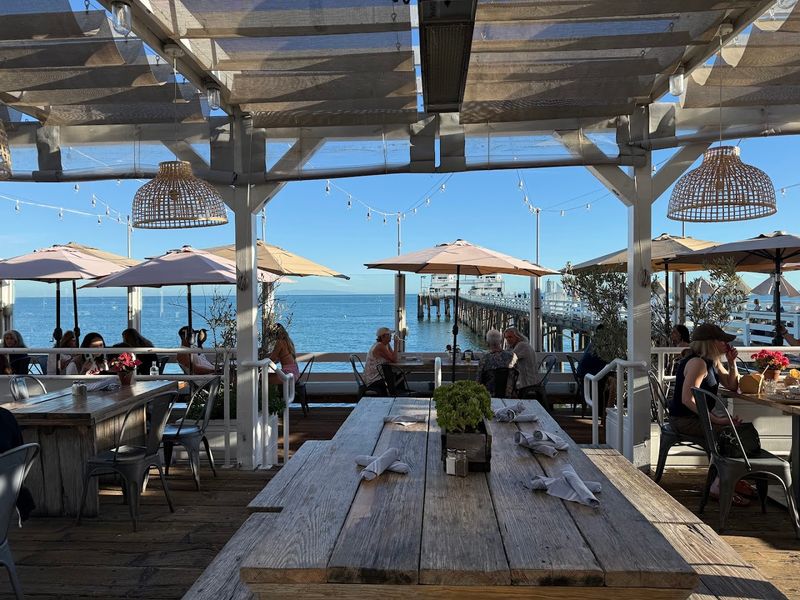
The physical qualities of the pier itself contribute to the café experience in ways that go beyond just the view.
Worn wooden planks underfoot, the faint smell of salt carried on a steady ocean breeze, and the quality of California sunlight reflecting off the water below create a sensory environment.
On sunny mornings, the light on the water tends to be sharp and bright, which gives the whole pier a luminous quality that photographs well and feels energizing in person.
Later in the afternoon, the light softens and the shadows from the railing stretch across the planks in a way that feels unhurried and easy.
Overcast days carry their own appeal, with the diffused light creating softer tones and a more contemplative mood over the water.
The café provides heating lamps and blankets for cooler conditions, which means the outdoor experience does not shut down when the temperature drops or the coastal fog rolls in.
That practical accommodation allows the sensory qualities of the pier setting to remain accessible across a wider range of visiting conditions throughout the year.
PCH Access Makes It An Easy Coastal Drive Stop
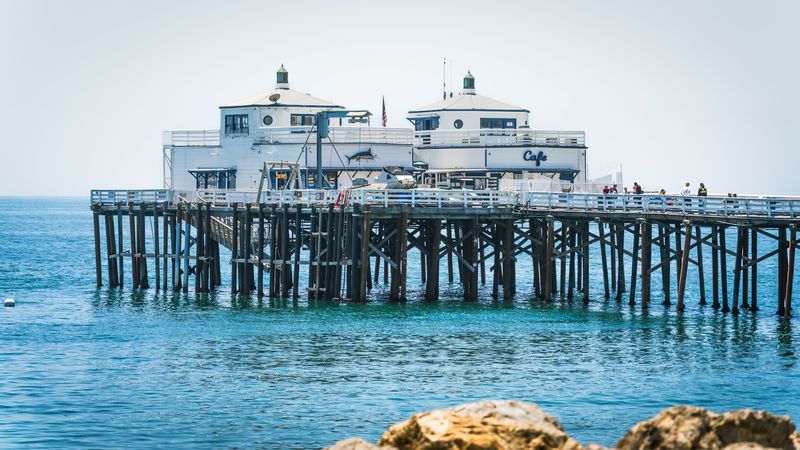
Pacific Coast Highway runs directly past the pier entrance, making the café one of the more accessible stops along the entire stretch of coastline between Santa Monica and the broader Malibu area.
For anyone already driving PCH, the turnoff is straightforward and the pier is visible from the road, which removes any guesswork about where to exit.
Parking options include street parking along PCH, which is free, and a paid lot located across from the restaurant entrance.
Weekend parking in the paid lot tends to cost more than weekday rates, so arriving earlier in the day on a Saturday or Sunday may help manage that expense.
The lot is conveniently close to the pier entrance, which makes the start of the walk easy.
The café operates on a walk-in basis with no reservations required, which suits the spontaneous nature of a coastal highway stop well.
Hours run from 9 AM to 8 PM on most weekdays and until 9 PM on Saturdays, giving visitors a reasonable window across different times of day.
That combination of easy highway access, walk-in availability, and a wide operating window makes the café a genuinely flexible stop rather than a complicated one to plan around.
Malibu’s Pier History Gives The Café Angle More Weight
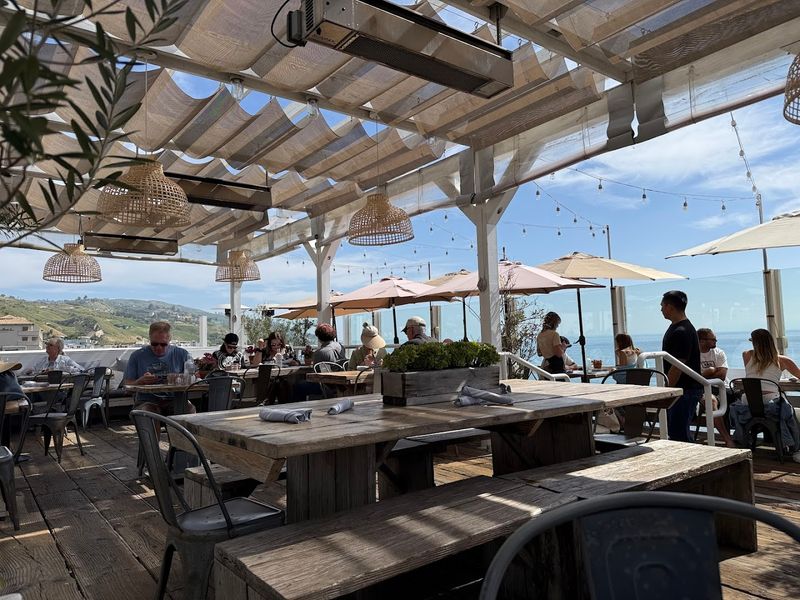
Knowing the history of the pier before sitting down to eat adds a quiet layer of meaning to the experience.
The structure was first built in 1905 to serve the shipping needs of Rancho Malibu, and it later became a public fishing and recreation pier in 1934.
The twin Cape Cod-style buildings at the end of the pier were added after World War II by William Huber, who purchased and restored the pier following storm damage, and one of those buildings housed the pier’s first restaurant.
The pier was officially designated a Point of Historical Interest in 1985, recognizing its place in California’s coastal and cultural record.
After being severely damaged by El Niño storms in 1993 and 1995, the pier went through an extended closure before being fully restored and reopened in 2008.
That timeline of use, damage, restoration, and continued public life gives the café’s location a weight that newer waterfront dining spots simply cannot claim.
Eating at the end of a structure that has served commercial, military, recreational, and culinary purposes across more than a century makes the meal feel connected to something larger than just a good view and fresh food.
Surfrider Beach Adds A Classic Malibu Backdrop
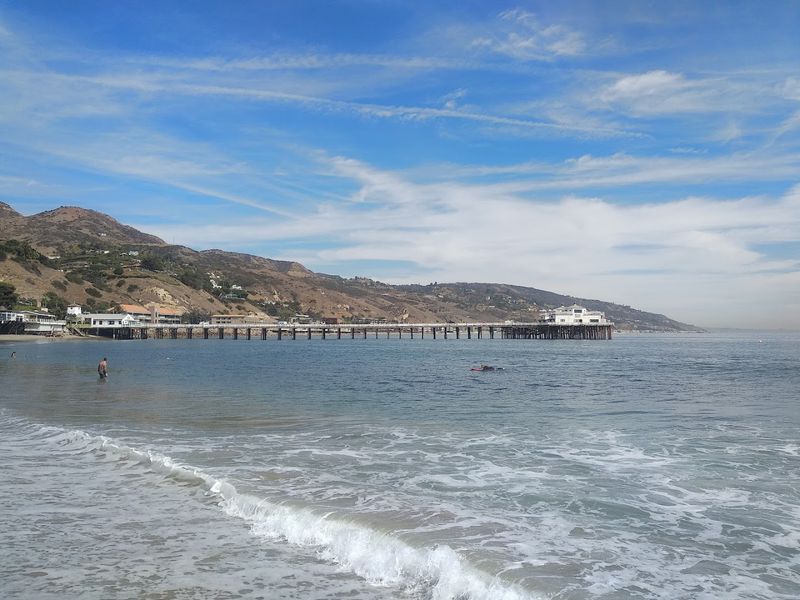
One of the quieter pleasures of sitting at the café involves watching Surfrider Beach from above.
The beach stretches along the base of the pier and is widely recognized as one of the most famous surf spots in California, drawing consistent waves that attract surfers of varying skill levels throughout the year.
From a table on the deck or upper patio, the view down toward Surfrider Beach gives the meal a distinctly Malibu quality that is hard to manufacture elsewhere.
Watching surfers paddle out, catch waves, and ride them toward shore adds a layer of visual entertainment that feels organic rather than staged.
The beach itself also helps frame the pier visually when looking back toward the shore, creating a classic postcard-style backdrop of sand, surf, and the low hills of the Malibu coastline rising behind.
For visitors who are not familiar with Surfrider Beach, the café visit often becomes an unplanned introduction to one of California’s most iconic surf locations.
That combination of food, history, and coastal culture happening simultaneously in one spot is part of what makes the stop feel layered and worth the drive.