A 1-Mile Hike To A Secluded North Carolina Beach Rewards Visitors With Live Oaks, Coastal Birds, And Wildflowers
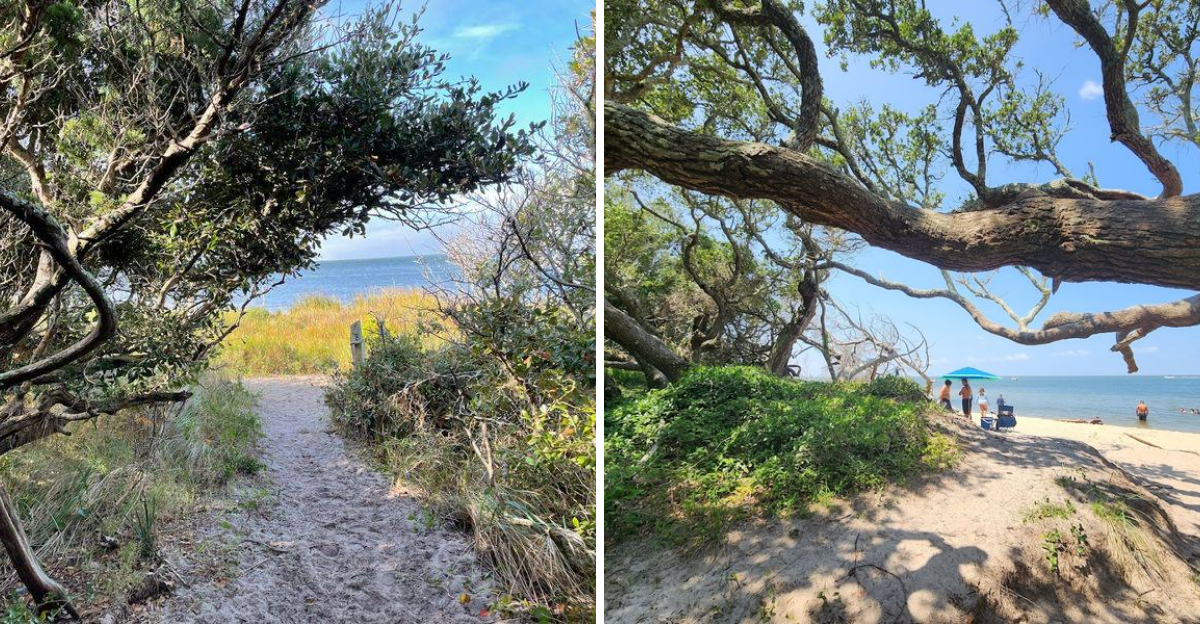
A one-mile trail should not act like it is guarding classified beach information, but this one clearly enjoys the drama.
First come the live oaks, twisting overhead like old coastal bouncers deciding whether hikers deserve the view.
Then the path keeps going just long enough for everyone to wonder if the shoreline is shy, missing, or simply being theatrical.
Pamlico Sound finally appears with the calm confidence of a beach that knows it made people work a little and has zero apologies.
No loud boardwalk chaos waits at the end. No snack stand tries to sell the moment back to you.
Just water, wind, and the smug joy of finding a place that feels like a secret hidden in North Carolina.
A One-Mile Ocracoke Walk That Ends At The Water
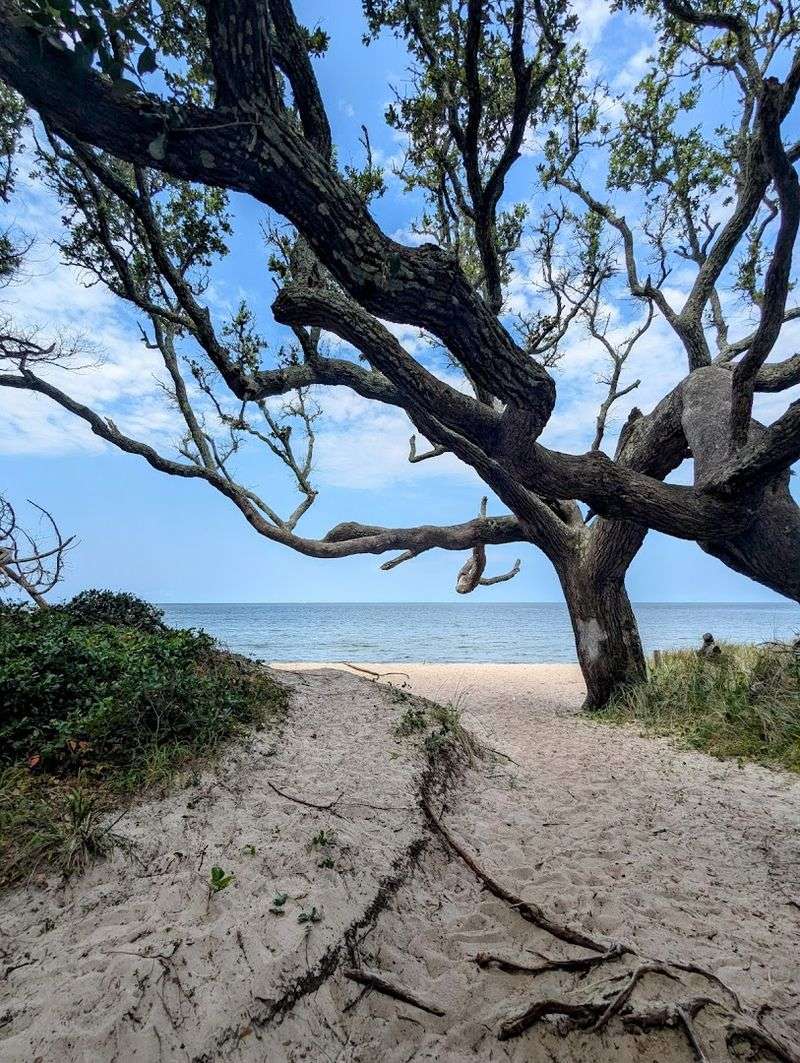
Short hikes have to earn their confidence quickly, and Springer’s Point Preserve does exactly that.
The preserve’s trail runs from Loop Road through maritime forest and wetland edges. It ends at the Pamlico Sound shoreline, giving walkers a full change of scenery in a modest distance.
Some visitor guides describe the walk as roughly a mile out and back, while local descriptions often note a short, flat path that feels easy for most relaxed walkers. Sand, roots, occasional damp patches, and natural surfaces can still make sturdy shoes a smart choice.
Benches and interpretive signs help visitors slow down instead of treating the route like a race to the water. Since no cars or golf carts may park at the trailhead, walking or biking in becomes part of the experience rather than a nuisance.
The reward arrives quietly: calm soundside water, open sky, and a beach that feels sheltered from the busy parts of Ocracoke. Morning or late-day visits often feel especially gentle, but daylight hours are the rule to follow.
Live Oaks Turn The Trail Into A Shaded Coastal Tunnel
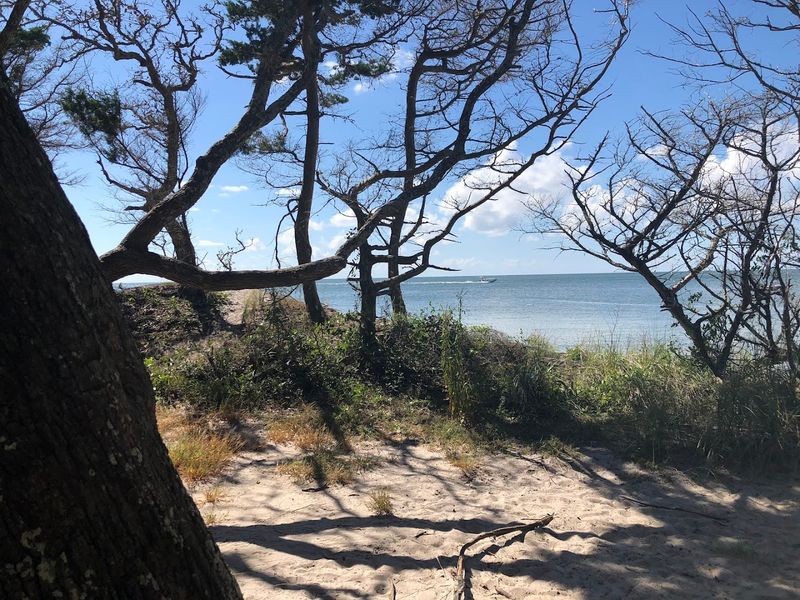
Old live oaks give this walk its most memorable shape before the beach ever appears. Their low, twisting limbs create pockets of green shade, while wax myrtle, red cedar, vines, and coastal shrubs add texture around the trail.
Ocracoke’s maritime forest has been shaped by wind, salt spray, sandy soil, and storms, so the trees often grow with a sculptural toughness that feels distinctly coastal. Shade matters on a summer island walk, especially when open beach and sun are waiting near the end.
Under the canopy, the air can feel cooler, quieter, and more protected, giving visitors time to notice bark, leaves, roots, and filtered light rather than only the destination.
The North Carolina Coastal Land Trust identifies maritime forest and tidal red cedar forest as important habitats within the preserve, which helps explain why the trail feels so layered.
Photographers may love the curving branches, but the better memory is often simpler: walking slowly beneath old trees while the sound remains just out of view. Staying on the path protects those habitats and keeps the experience open for the next person.
Teach’s Hole Gives The Beach A Hint Of Pirate Mystery

Pirate history gives Springer’s Point a famous shadow, even on the sunniest day. Just offshore lies Teach’s Hole, associated with Edward Teach, better known as Blackbeard, whose final confrontation took place near Ocracoke in November 1718.
Visit NC describes the preserve as overlooking the area tied to that final confrontation, which gives the soundside beach a historical charge beyond its quiet scenery. Still, standing near the water makes it easy to understand why this island setting captured so much imagination.
Protected channels, barrier-island geography, and remote approaches all shaped the area’s maritime past. The preserve also contains cultural resources, which is why current rules ask visitors not to disturb artifacts or sensitive areas.
Families may come for the pirate connection, but the best visit goes beyond the dramatic name. Teach’s Hole adds mystery, while the preserve’s living landscape keeps the experience grounded in place, conservation, and memory.
Coastal Birds Make The Quiet Shore Feel Alive
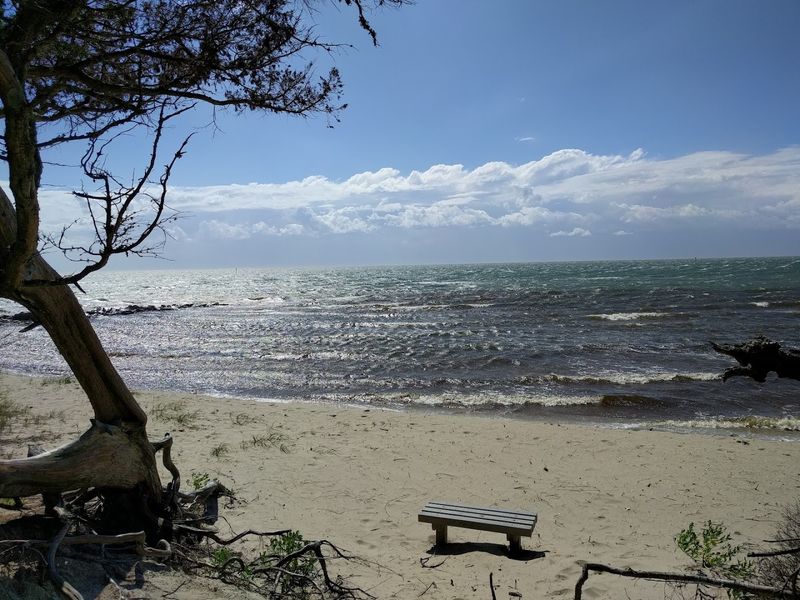
Birdlife helps the soundside beach feel active without breaking its calm. Springer’s Point protects maritime forest, salt marsh, wet grasslands, tidal red cedar forest, and Pamlico Sound shoreline, and that habitat variety gives birds plenty of reasons to move through the area.
Visitors may see gulls, wading birds, shorebirds, songbirds, raptors, or other coastal species depending on season, weather, tide, and patience. The Outer Banks sits along important migratory routes, so spring and fall can add extra interest for anyone carrying binoculars.
Quiet behavior near the shoreline usually improves the experience because birds notice movement and noise long before people realize they are being loud. A slower pace also reveals smaller signs of life: wingbeats over the marsh, quick movement along the sand, or a bird lifting from the shallows.
No checklist is needed for the shore to feel rewarding. Even casual visitors often find themselves watching longer than expected once the trail opens to water.
The preserve’s rule against disturbing wildlife is not just good manners; it helps keep this small habitat refuge functioning as more than a scenic stop.
Wildflowers And Maritime Forest Keep The Short Hike Interesting
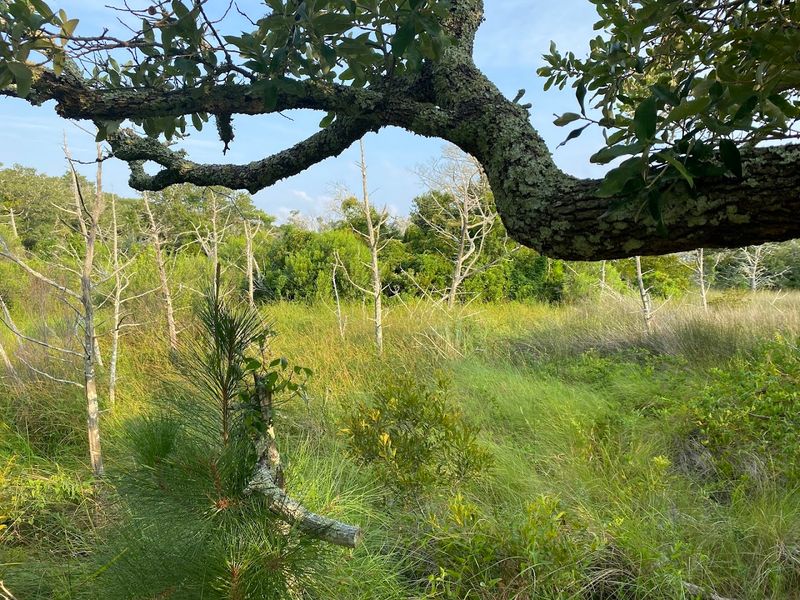
Plant life keeps the walk from feeling like a simple path to the beach. Springer’s Point protects maritime forest, maritime shrub communities, tidal red cedar forest, estuarine marsh, wet grasslands, and shoreline habitat, so the scenery changes subtly as the trail moves toward the sound.
Wildflowers can appear seasonally along sunny edges, while shrubs, vines, oaks, cedars, grasses, and marsh plants shape the preserve’s quieter beauty. Nothing here feels manicured in a formal garden sense, and that is the point.
Coastal plants survive by adapting to salt, wind, sandy soil, flooding, drought, and storm exposure, which makes the landscape both delicate and tough. Interpretive signs help visitors notice what might otherwise become a blur of green.
After rain, some stretches may feel damp or muddy, and exposed roots can turn a casual walk into a place where attention matters. The short distance never feels thin because each section has its own texture.
A person could rush to the sound and miss half the story, but the preserve rewards anyone willing to look closely at the living systems holding the island together.
No Trailhead Parking Makes The Beach Feel Even More Secluded
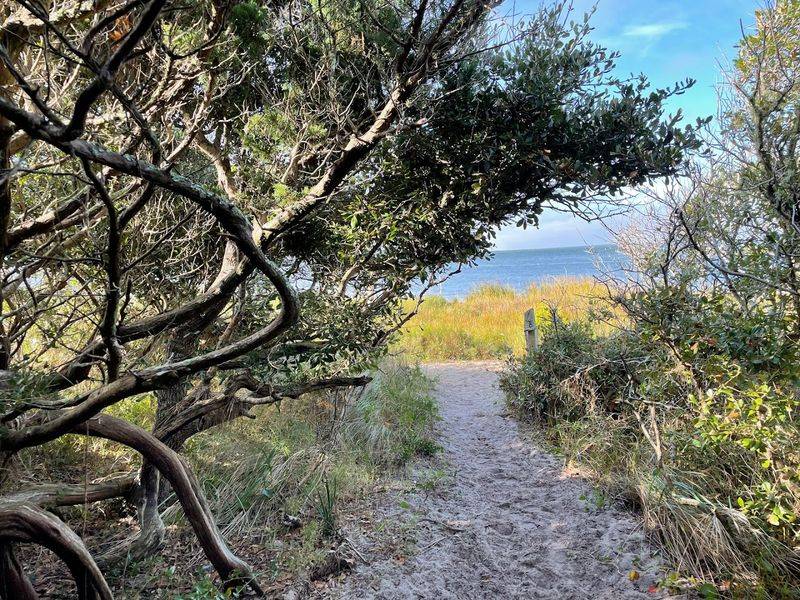
Limited access does some of the preserve’s crowd control naturally. Coastal Land Trust rules are clear: no parking of cars or golf carts at the preserve entrance, no motorized vehicles on the trail, and foot access only, with a bike rack provided near the entrance.
National Park Service information also notes that Springer’s Point is accessible by foot or bicycle and that parking is prohibited on the road and private driveways. Visitors who drive to Ocracoke need to park elsewhere legally, then walk or bike to the preserve.
That extra step may sound inconvenient, but it helps protect nearby residents, narrow roads, and the quiet character of the site. It also means the beach at the end tends to feel more earned than a shoreline reached from a large parking lot.
Planning ahead keeps the logistics simple. Bring water, travel light, respect posted rules, and avoid blocking private property.
The absence of trailhead parking is not a flaw in the experience. It is one reason the preserve still feels calm, small-scale, and genuinely removed from busier beach access points.
Pamlico Sound Views Wait At The End Of The Path
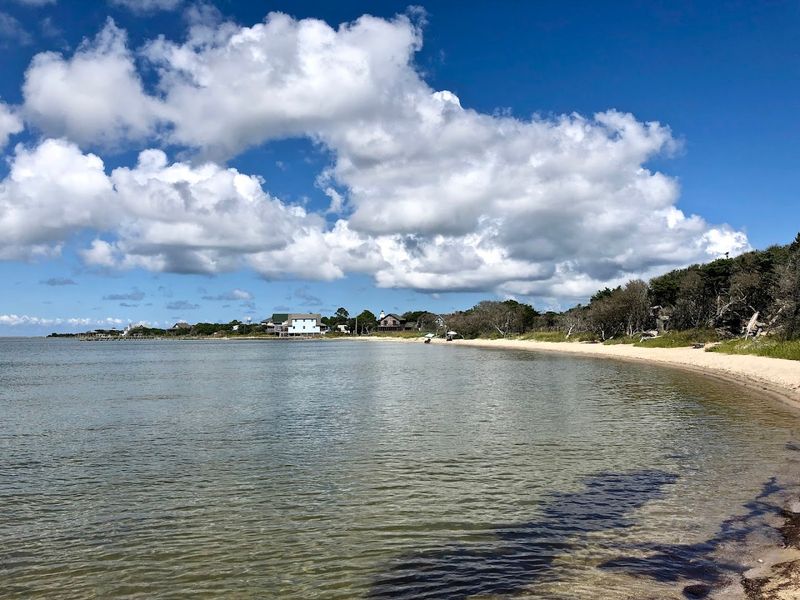
Reaching the sound feels like the trail quietly opening its hand. After the shade and enclosed forest, Pamlico Sound appears wide, flat, and luminous, with gentler water than the ocean-facing side of Ocracoke.
This is not the place for dramatic surf. Instead, the shoreline offers soft soundside views, calmer shallows, bird movement, and a horizon that makes people lower their voices without meaning to.
Swimming is allowed only at your own risk, according to Coastal Land Trust rules. Visitors should stay off the rock jetty, shoreline rock, and oyster shell bag sill because those features help protect the shoreline and habitat.
A blanket, water, bug protection, and enough time to sit for a while can make the ending feel more rewarding than a quick photo stop.
Sunsets can be beautiful from soundside areas, but guests need to remember the preserve closes at sunset. The best version of the visit respects both moods: linger long enough to feel the place, then leave before the daylight rules say the day is done.
Ocracoke’s Hidden Preserve Rewards People Who Slow Down
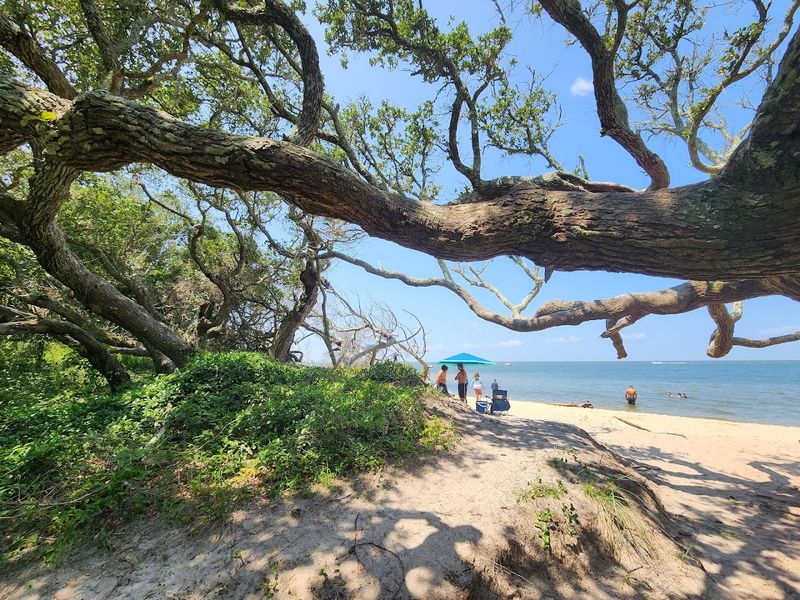
Rushing through Springer’s Point Preserve misses almost everything that makes it special. The site is free to visit and open from 8 AM to sunset, with the trail entrance on Loop Road near the Ocracoke Lighthouse area and commonly referenced around 104 Loop Road, Ocracoke, NC 27960.
No cars or golf carts may park at the entrance, so visitors should walk or bike in, use legal parking elsewhere, and treat the neighborhood setting with care.
The preserve protects about 132 acres of coastal habitat, including maritime forest, salt marsh, wet grasslands, red cedar forest, and Pamlico Sound shoreline. It also holds cultural history connected to Ocracoke and Teach’s Hole.
Dogs must stay leashed, camping, fires, smoking, and alcohol are not permitted, and plants, wildlife, artifacts, and shoreline protection structures should be left undisturbed. A good visit does not require athletic effort or a full afternoon.
It asks for attention. Slow walkers will notice the live oaks, birds, wild plants, sound views, and quiet historical weight that make this short trail feel like one of Ocracoke’s most meaningful natural stops.