This North Carolina Mountain Farm Museum Feels Like Walking Into Appalachian History
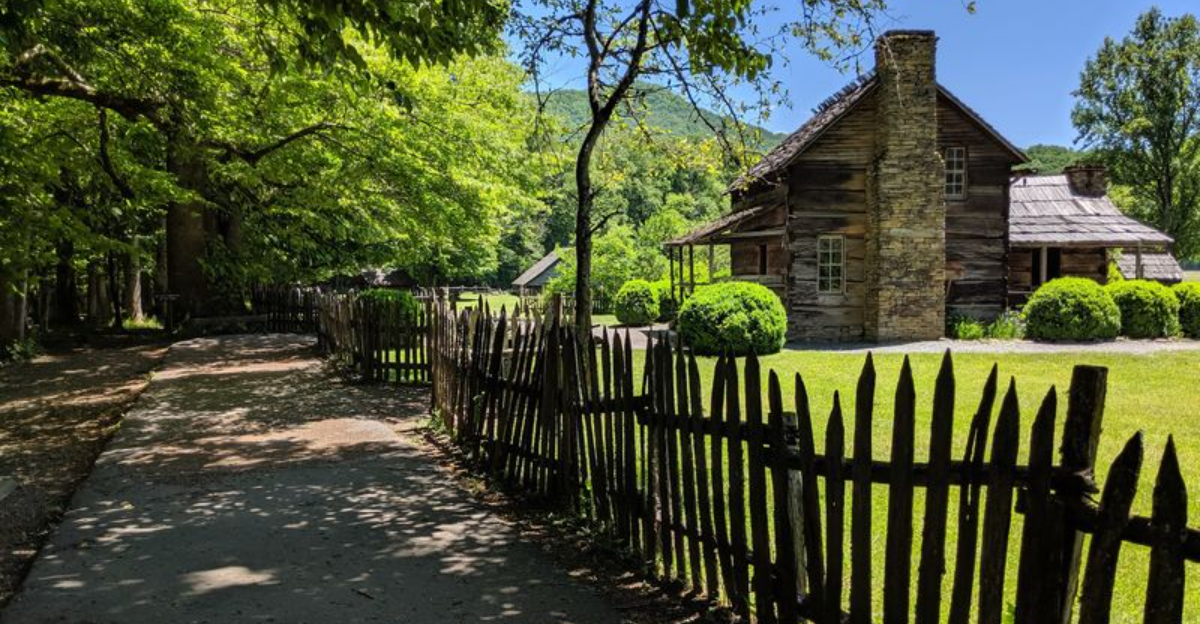
History feels a lot more interesting when the buildings look like they might start gossiping about farm chores from 1880.
Near the Oconaluftee River, this North Carolina open-air museum brings Appalachian life close without making visitors feel trapped in a dusty textbook.
Old log buildings and weathered fences make the whole place feel quietly alive, while mountain air does the rest.
No admission fee makes the stop even better, especially for families trying to stretch a Smokies trip without missing the good stuff.
Spend twenty minutes or stay longer. Either way, the past feels close enough to hear the barn door creak.
A Real Open-Air Farmstead At The Cherokee Entrance
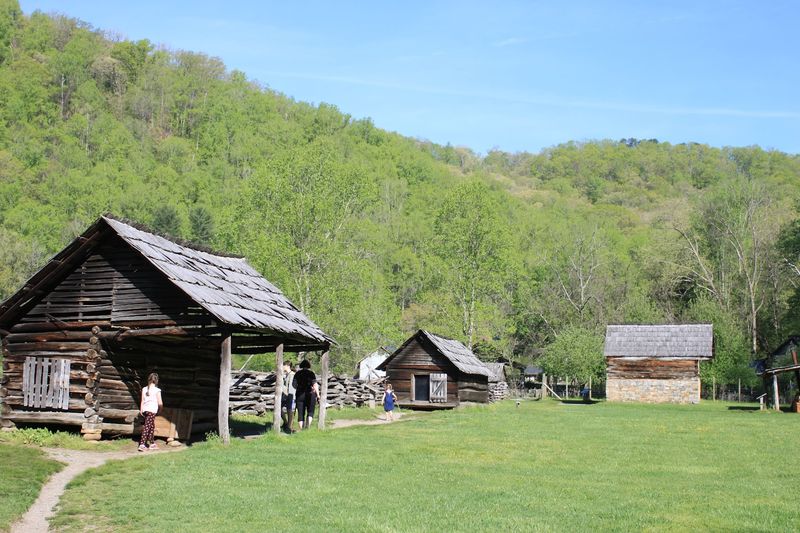
Mountain air, split-rail fences, and old log buildings set the mood before any sign has to explain the place.
Mountain Farm Museum sits directly by the Oconaluftee Visitor Center near Cherokee, giving travelers an easy first stop when entering Great Smoky Mountains National Park from the North Carolina side.
Rather than relying on replicas as its main draw, the museum preserves authentic log structures moved from different areas of the park during the 1950s. These buildings form a late-19th-century mountain farmstead in one walkable outdoor setting.
Visitors can explore the grounds at their own pace, moving between buildings while the surrounding meadow, river, and ridgelines keep the experience tied to the landscape.
That open-air design matters because Appalachian farm history depended on land, weather, timber, livestock, gardens, and practical daily work.
A regular indoor exhibit could explain those things, but this setting lets visitors feel the spacing, materials, and physical scale of a historic mountain homestead.
The address, 1194 Newfound Gap Road, Cherokee, NC 28719, also makes planning simple because the visitor center, restrooms, parking area, trail access, and museum grounds all sit together.
Park entry remains free, while vehicles parked longer than 15 minutes need a parking tag, so the visit stays affordable but not entirely fee-free for drivers.
Log Buildings Bring Appalachian History Out Into The Open
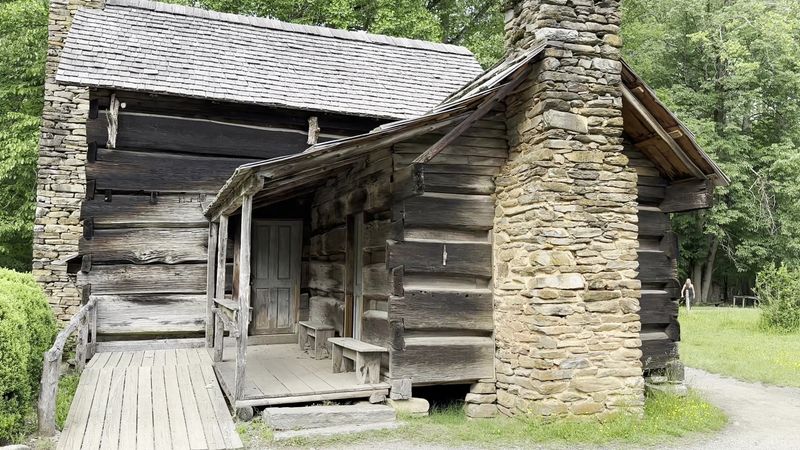
Weathered timber makes the museum feel less like a lesson and more like a place where work actually happened.
The Mountain Farm Museum features historic log buildings tied to late-19th-century Appalachian farm life. Structures such as a farmhouse, barn, smokehouse, applehouse, corn cribs, and other outbuildings are grouped near the Oconaluftee Visitor Center.
Those buildings help visitors understand how many separate spaces a working mountain farm needed before modern conveniences changed domestic life.
Food storage, animal care, blacksmithing, cooking, gardening, and seasonal preservation all required physical effort and specific structures.
Instead of presenting Appalachian history as one romantic cabin in the woods, the museum shows a fuller system where every building served a practical purpose.
Hand-hewn logs, notched corners, simple interiors, and farm tools highlight how daily labor once functioned on the mountain farm. The setting helps visitors, especially families with children, connect older rural life to modern kitchens, grocery stores, and central heating.
The experience works because the buildings sit outdoors in a natural mountain setting, so the farmstead never feels detached from the environment that shaped it. Visitors can move slowly, read signs, look at construction details, and compare each structure’s role.
Every log wall, fence line, and doorway helps tell a story about daily work, skill, and resourcefulness in western North Carolina.
The John E. Davis Farmhouse Gives The Museum Its Strongest Anchor
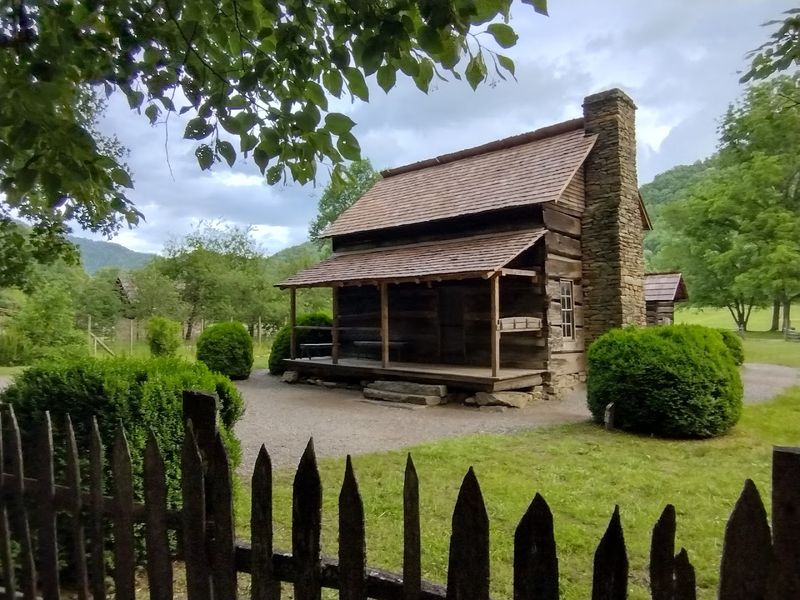
One farmhouse carries much of the site’s emotional weight because it gives the whole farmstead a human center. The John E.
Davis farmhouse originally stood in the Indian Creek and Thomas Divide area north of Bryson City before being moved to the museum grounds. Regional park information describes it as one of the historic log structures preserved at Oconaluftee.
Romantic Asheville notes that the Davis House is an important example because it was built from chestnut wood before chestnut blight dramatically changed American chestnut forests in the early 20th century.
That detail adds another layer to the building. It is not only a family home, but also a material reminder of a forest landscape that changed dramatically.
Standing near the farmhouse makes mountain history feel more personal because the structure was designed around ordinary needs: shelter, warmth, cooking, sleeping, storage, and family routine.
Plain construction can be surprisingly powerful in a place like this because it leaves little room for fantasy.
Life here would have required constant work, careful use of resources, and cooperation across generations.
The farmhouse anchors the museum, giving visitors a sense of how daily life once flowed through its rooms and outbuildings. It reflects a rhythm shaped by seasons, from tending animals to storing food for winter, far removed from modern travel routines.
Split-Rail Fences Make The Setting Feel Like A Mountain Homestead
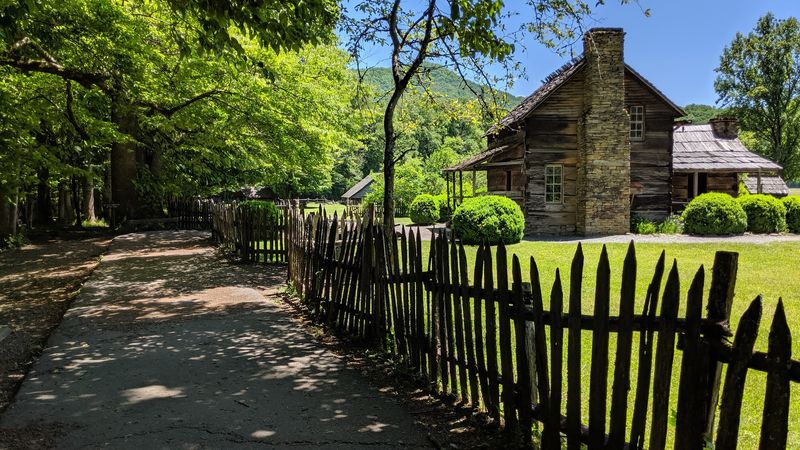
Fence lines do quiet work at Mountain Farm Museum, guiding the eye while making the grounds feel like a real farm rather than a collection of buildings placed in a field.
Split-rail fencing suits the Appalachian setting because it reflects a practical building tradition based on timber, labor, and simple construction rather than decorative polish.
Farmers used fences to separate livestock, gardens, work areas, and paths, so these rails help visitors understand how movement and boundaries would have shaped daily life. The visual effect is strong too.
Weathered wood set against meadow grass, mountain trees, and old log structures creates a strong Appalachian historical scene. Fences reinforce the working-farm character, connecting directly to daily rural life.
Children often respond to the space before they absorb the history, following rails, peering through gaps, and understanding with their bodies that this was an outdoor world organized around chores and seasons.
Adults get a different reward by noticing how simple materials can define an entire landscape. Split-rail fences also make the site especially photogenic without turning it artificial.
They frame the buildings, lead visitors through the grounds, and help the museum feel lived-in, practical, and tied to the mountain environment surrounding the Cherokee entrance.
Old Barns And Outbuildings Show How Daily Farm Life Worked
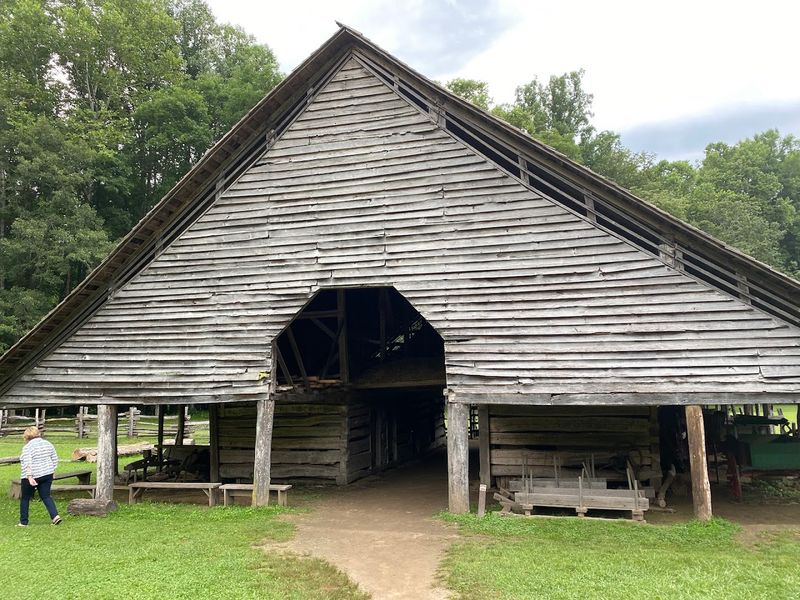
A single cabin could never explain the amount of labor needed to keep an Appalachian farm running. Mountain Farm Museum is most useful because it includes multiple support buildings, not just a house, giving visitors a fuller look at the daily systems behind rural mountain life.
The collection includes structures such as a barn, smokehouse, applehouse, corn cribs, and other farm buildings, all arranged near the Oconaluftee Visitor Center as part of a late-19th-century farmstead. Each structure points to a different need.
Corn had to be dried and stored, meat had to be preserved, tools had to be maintained, animals needed shelter, and harvests had to stretch through difficult seasons.
Seeing those buildings together helps visitors understand how self-sufficient farming was not a charming aesthetic but a demanding, practical way of living.
The outbuildings can be especially interesting for kids because they make history visible through objects and spaces rather than abstract dates. A smokehouse or corn crib immediately raises questions: What went there?
Who used it? How did it work?
That curiosity is exactly what makes the museum engaging. Every stop around the farmstead adds another piece to the same story, showing how mountain families organized work, food, and survival with whatever materials the land provided.
The Oconaluftee River Trail Starts Right Nearby
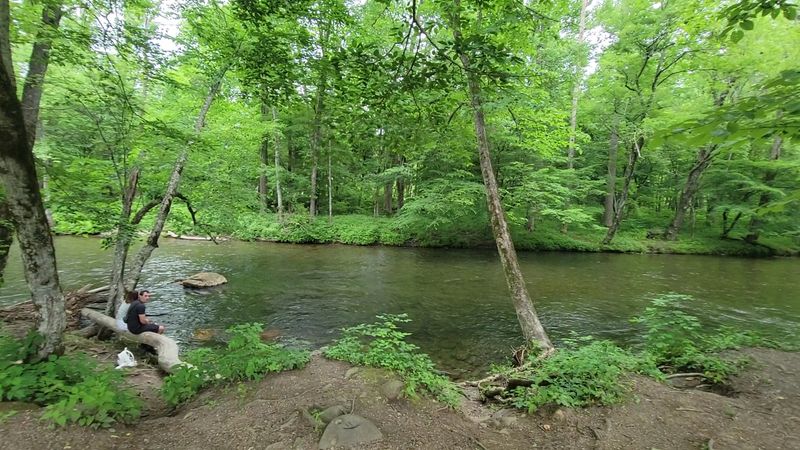
River sound gives the museum visit an easy second act, especially for travelers who want a walk after exploring the farmstead. The Oconaluftee River Trail begins near the Oconaluftee Visitor Center and follows the river for about 1.5 miles one way toward the outskirts of Cherokee.
Romantic Asheville notes that the trail is relatively flat, with a few small hills, and is one of only two Great Smoky Mountains National Park trails where visitors may walk dogs and ride bicycles.
That makes it unusually useful for families, pet owners, and travelers who want an accessible walk without committing to a strenuous mountain hike.
Pairing the trail with Mountain Farm Museum turns the stop into a richer half-day experience because visitors can move from cultural history into riverside scenery without driving anywhere else.
The Oconaluftee River adds atmosphere with clear water, smooth stones, forest shade, and the calming sound of current beside the path.
Wildlife sightings are possible in the area, especially around quieter times of day, but visitors should stay alert and respectful. The trail works because it extends the museum’s sense of place.
Appalachian farm life depended on water, land, and forest, and this walk lets visitors feel those natural pieces surrounding the historic buildings.
Cherokee’s Smokies Entrance Gives The Visit A Scenic Backdrop
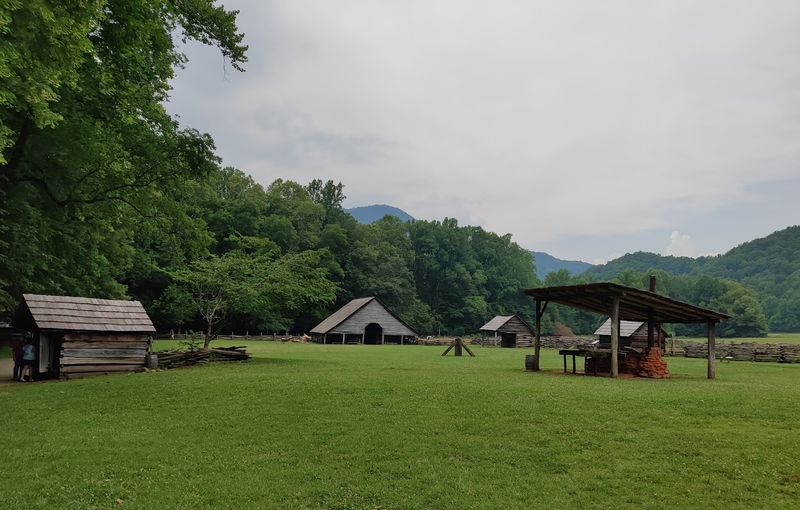
Scenery starts doing its part long before visitors reach the parking area near Oconaluftee.
Cherokee side of Great Smoky Mountains National Park places Mountain Farm Museum at a major North Carolina gateway. It sits near Newfound Gap Road, the southern end of the Blue Ridge Parkway, and the town of Cherokee.
The Oconaluftee Visitor Center serves as a key park orientation stop, with National Park Service information listing its location at 1194 Newfound Gap Road, Cherokee, NC 28719. That setting gives the museum more impact than it might have in a detached location.
Ridgelines, river sounds, forest edges, and mountain weather all surround the farmstead, helping visitors understand why Appalachian life looked the way it did.
Misty mornings can make the buildings feel especially atmospheric, while sunny afternoons show off the meadow and fence lines with crisp detail.
The visitor center also adds practical value because travelers can get information, use restrooms, browse exhibits, ask questions, and start the nearby river trail from the same area.
For first-time Smokies visitors entering from North Carolina, this cluster of stops offers a strong introduction to both natural and cultural history.
The farm museum may be free and easy to reach, but the mountain setting makes it feel far more immersive than a simple roadside pause.
Elk Sightings Can Turn The Stop Into A Bigger Memory
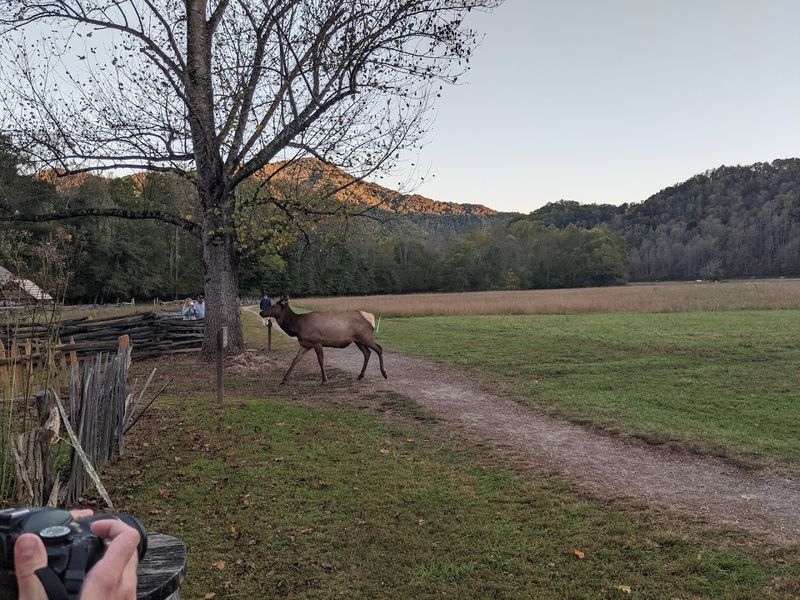
Wild elk can change the whole mood of a visit in seconds, especially when they appear near the open fields around Oconaluftee.
Great Smoky Mountains National Park began reintroducing elk in 2001. Oconaluftee area near Cherokee is now one of the most well-known places on North Carolina side of park to see them.
Dawn and dusk are often the most promising times, although sightings are never guaranteed because these are wild animals moving on their own schedule.
Seeing elk near Mountain Farm Museum can make the stop feel like two experiences at once: preserved Appalachian history in the foreground and living wildlife moving through the surrounding landscape.
That combination is powerful, but visitors need to keep distance and follow park rules. Elk are large wild animals, and approaching them for photos is unsafe.
A respectful view from the roadside, field edge, or designated area is the better choice. Cameras may come out quickly when a bull elk or a small herd appears, but patience matters more than getting close.
For many families, an elk sighting becomes the story they remember most from the Cherokee entrance. It adds surprise, scale, and a little wild drama to an already memorable museum stop.