These 10 Incredible Places In North Carolina Feel Like A Trip To Europe
Europe sounds lovely until the airfare starts acting like it was personally trained to ruin everyone’s plans.
Luckily, North Carolina has a few places that make the passport feel a little dramatic.
One minute, you are fully in the American South.
Next, a grand estate, old village street, or soaring chapel makes your brain whisper, “Wait, did we miss a connecting flight?” No jet lag required.
No tiny airplane pretzels involved.
Just a surprising collection of spots where European influence shows up through architecture, history, gardens, and old-world atmosphere.
Some places lean elegant.
Others feel charming in that “should I be carrying a baguette?” kind of way.
Across North Carolina, these destinations prove that a little Europe can show up much closer than expected, and thankfully, nobody has to explain luggage fees to enjoy it.
1. Old Salem Museums & Gardens
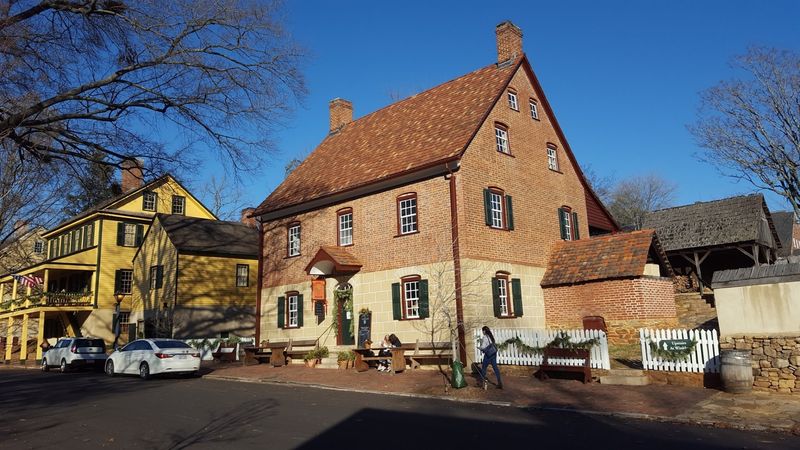
Cobblestone paths, brick buildings, and Moravian history give Old Salem Museums & Gardens one of the strongest European connections on this list.
The site is at 900 Old Salem Road, Winston-Salem, NC 27101, and the official Old Salem page confirms that address while describing ticketed venues and historic spaces throughout the district.
Salem was founded by Moravians, a Protestant community with roots in Central Europe, and that heritage still shapes the architecture, foodways, crafts, gardens, and village layout.
Walking through the district feels different from a typical historic street. The buildings reflect a religious and cultural community that brought Germanic and Central European traditions to North Carolina.
Interpreted spaces, restored buildings, trades, baked goods, and gardens help visitors understand how daily life once worked here. The experience can feel European, but not in a vague fairytale way.
Its Old World character comes from actual migration, faith, craftsmanship, and settlement patterns. Visitors should check current venue openings because parts of Old Salem operate on ticketed schedules and some spaces may be temporarily closed or appointment-based.
Even with those planning details, Old Salem remains one of the best places in the state to feel transported by history rather than decoration.
2. Tryon Palace
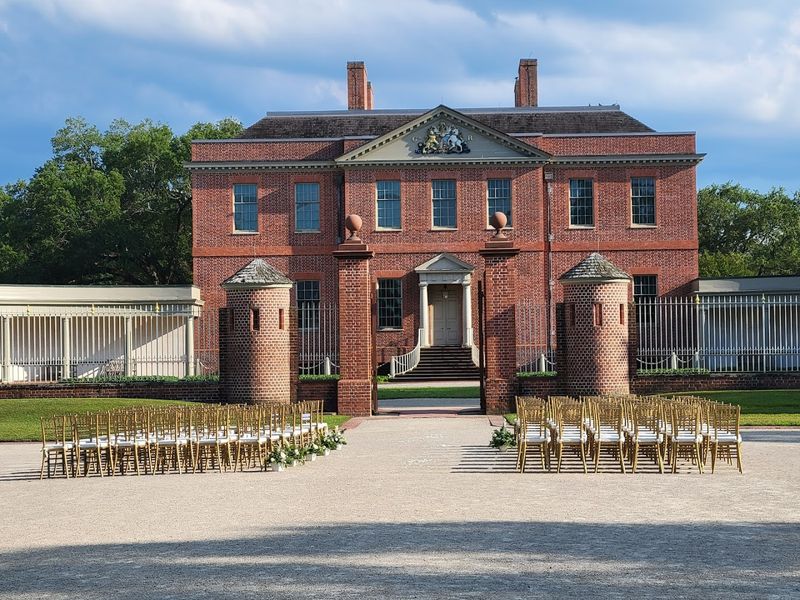
Georgian symmetry gives Tryon Palace the kind of formal presence associated with English colonial power and 18th-century estate design.
The palace is based at 529 South Front Street, New Bern, NC 28562, and the official site identifies it as North Carolina’s First Capitol in historic downtown New Bern.
The original palace was built in the late 18th century for royal governor William Tryon. The current structure is a carefully reconstructed historic site that lets visitors experience its architecture, interiors, gardens, and surrounding history in one place.
Formal gardens are a major part of the European feeling here, with clipped shapes, ordered paths, and planted spaces that echo the design language of English and European estates.
Inside, furnished rooms and guided interpretation connect the building to colonial politics, social life, material culture, and the complicated histories surrounding the site.
New Bern’s riverfront setting adds another layer, since visitors can pair the palace with a walk through one of North Carolina’s most historic towns.
Tryon Palace does not feel like Europe because it copies a tourist fantasy. It feels that way because it reflects the British colonial world that shaped early North Carolina government, architecture, and elite domestic design.
For history lovers, that makes the visit especially layered.
3. Duke Chapel
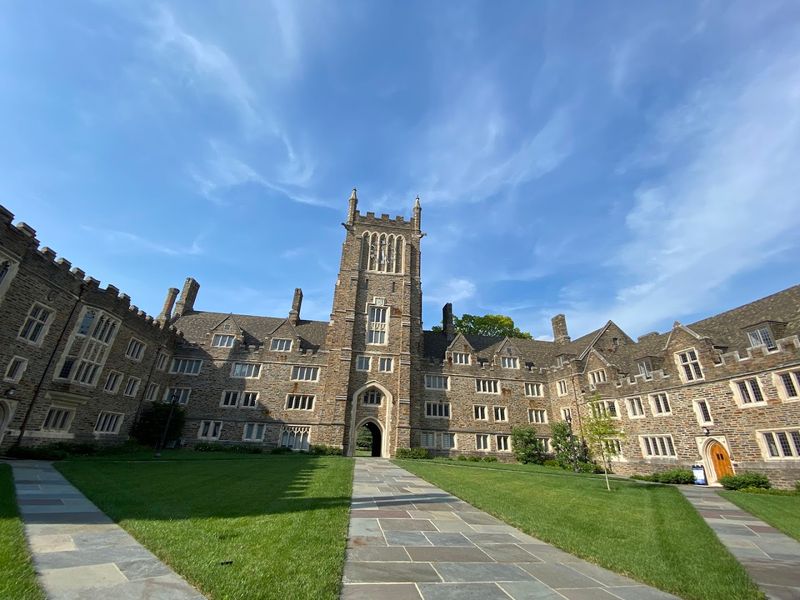
Gothic stonework makes Duke Chapel feel like it belongs in an old university city rather than the middle of Durham.
Duke University’s official chapel page lists the tower as 210 feet tall and notes 77 stained-glass windows. The Collegiate Gothic style features pointed arches, ribbed vaults, large stonework, and vertical lines inspired by European church architecture.
The chapel stands at the center of Duke’s West Campus, and its design immediately gives the area an English university atmosphere.
Inside, the long nave, stained glass, carved details, and organ music can make the space feel almost cathedral-like, even though it is a university chapel rather than a medieval church.
The scale is what surprises many first-time visitors. The building rises with a seriousness that changes the mood of the campus around it.
A visit here works especially well for architecture fans, music lovers, photographers, and anyone who enjoys sacred spaces even when they are not attending a service.
Access can vary around worship, university events, concerts, and closures, so checking the chapel’s current visitor information is important.
Duke Chapel earns its place because its European feeling comes from real architectural language, not just a decorative flourish.
4. Biltmore Estate
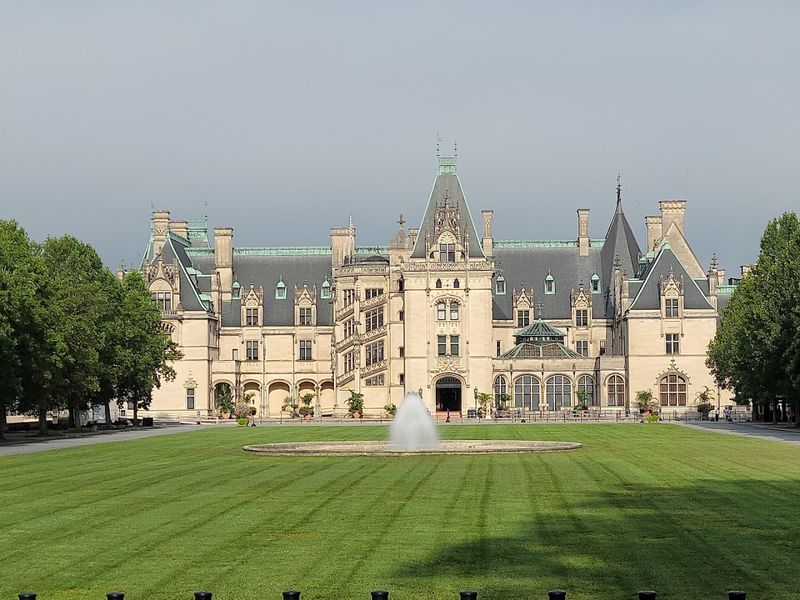
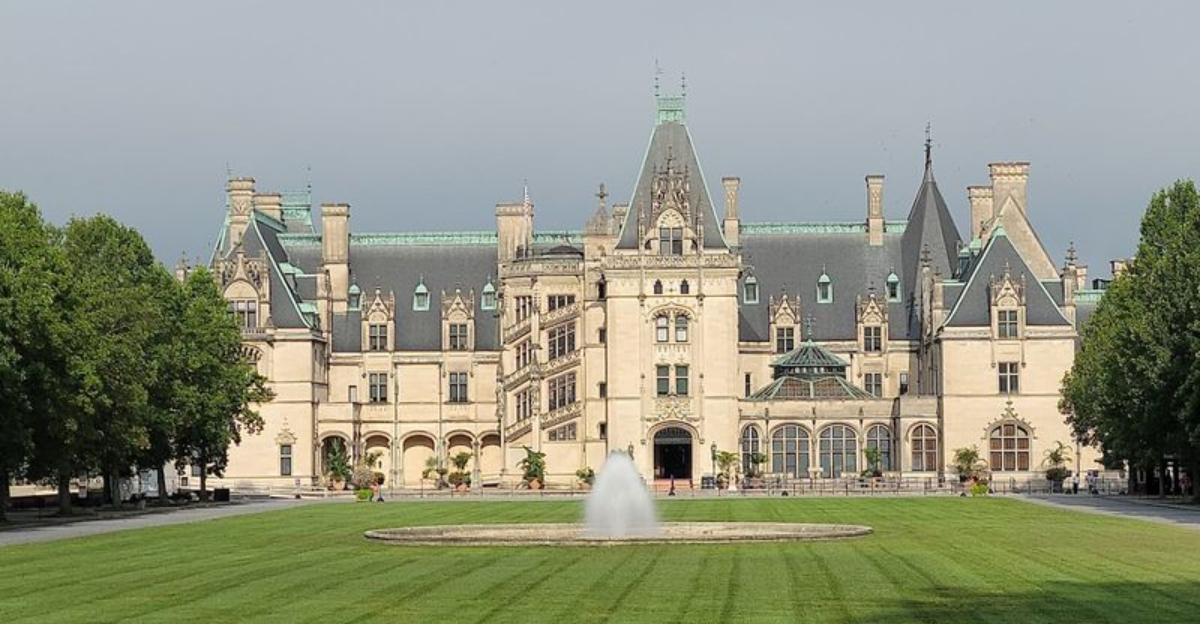
French Renaissance ambition reaches its largest American expression at Biltmore Estate, and the scale still catches visitors off guard.
Biltmore’s own fast-facts page describes Biltmore House as America’s Largest Home, a 250-room French Renaissance château designed by architect Richard Morris Hunt and spanning 175,000 square feet.
That corrects a common mistake: the house is not 8,000 square feet; the estate itself is often discussed in terms of thousands of acres, while the house is far larger than 8,000 square feet.
Found at 1 Lodge Street, Asheville, NC 28803, Biltmore was commissioned by George Vanderbilt and completed in 1895, drawing heavily from grand European estate traditions.
Inside, the house offers carved woodwork, tapestries, formal rooms, grand staircases, a banquet hall, library, and Gilded Age details that make the European influence feel unmistakable.
Outside, the gardens and grounds designed by Frederick Law Olmsted add another layer of estate grandeur, balancing architecture with sculpted landscape.
Biltmore is ticketed and can be expensive compared with other stops, but it remains the most obvious North Carolina destination for visitors who want a chateau-style experience without leaving the state. Its European feeling is not subtle, and that is exactly why people keep going.
5. Graylyn Estate
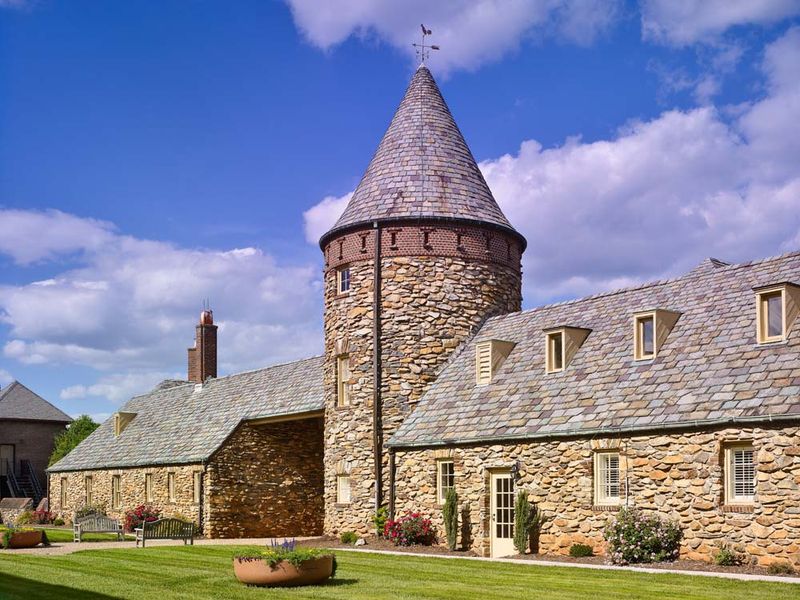
Norman Revival architecture gives Graylyn Estate a refined European mood without needing the massive scale of Biltmore.
Graylyn’s official history identifies it as the former country estate of Bowman and Nathalie Gray. The estate’s Norman Revival-style Manor House was built in the late 1920s, and today it operates as a historic hotel and conference center.
Travel listings place the estate at 1900 Reynolda Road, Winston-Salem, NC 27106, near Wake Forest University and Reynolda Village.
The European feeling comes through steep rooflines, stonework, manor-house massing, carved details, courtyards, and the sense of arriving at a private estate rather than a standard hotel.
Unlike a museum-only property, Graylyn lets overnight guests actually stay within the historic environment, which makes the experience more immersive. Public access can depend on hotel, event, and dining operations, so visitors should confirm options before arriving just to wander.
Still, the property belongs on this list because it offers one of North Carolina’s clearest examples of early-20th-century American wealth borrowing European manor-house language for atmosphere and status. The result feels elegant, quiet, and slightly removed from everyday Winston-Salem.
For travelers who want a European-style estate stay without crossing the Atlantic, Graylyn offers a polished alternative with real architectural character.
6. Historic Biltmore Village
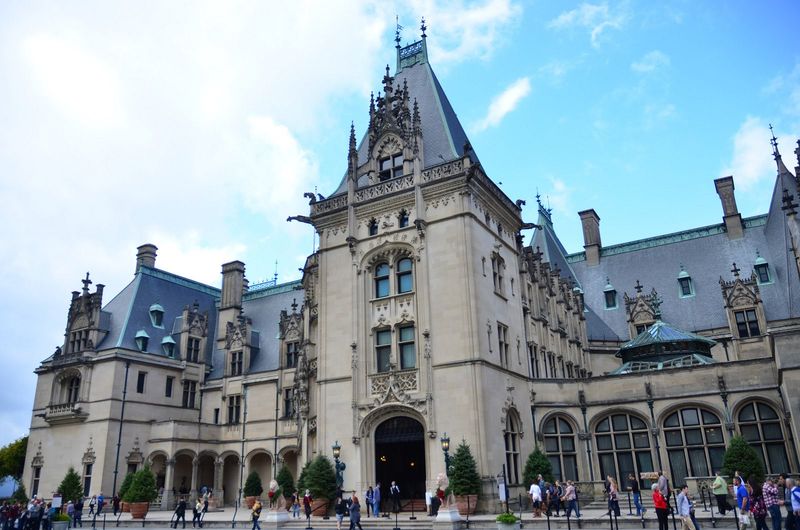
English village planning gives Historic Biltmore Village its charm, especially when visitors understand why it looks the way it does.
The village’s official history explains that Biltmore Village was originally modeled after a small English village. It was designed as a gateway to George Vanderbilt’s Biltmore Estate while also functioning as a self-sustaining community.
That makes it more than a shopping district with attractive buildings. Its identity is tied directly to the estate world next door, where architecture, landscape, labor, transportation, and daily services were organized around Vanderbilt’s larger vision.
Today, Biltmore Village is known for shops, restaurants, galleries, hotels, and walkable streets near the entrance to Biltmore Estate.
The English-village feeling comes through brick buildings, historic scale, small storefronts, church architecture, and the way the area feels planned rather than randomly assembled.
Visitors can browse, eat, and walk without needing a full estate ticket, which makes it a more casual Asheville stop. Some areas around Biltmore Village have faced weather-related disruption in recent years, so checking current business status and access is always wise.
Still, the village remains one of the best places in North Carolina to experience European-inspired planning as part of an everyday neighborhood rather than a fenced attraction.
7. Reynolda House And Reynolda Village
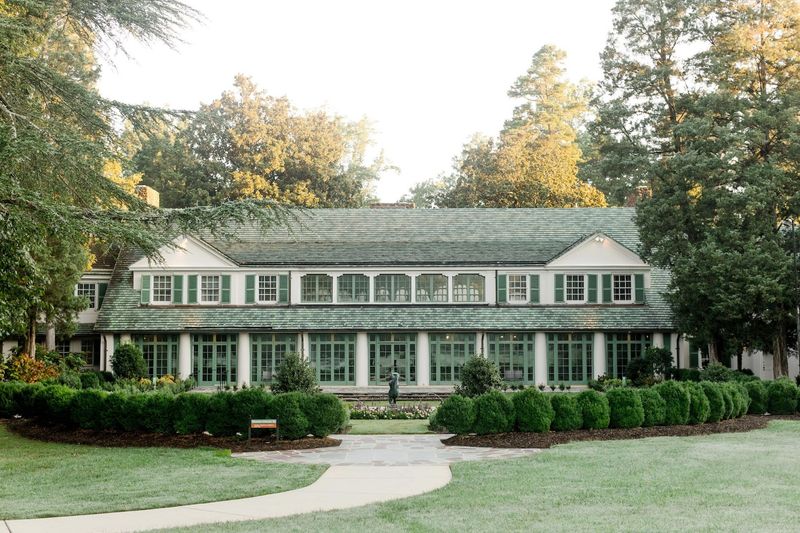
Country-estate atmosphere makes Reynolda feel graceful, layered, and quietly European even while its art collection tells an American story.
Reynolda lists Historic Reynolda at 2250 Reynolda Road, Winston-Salem, NC 27106, with Reynolda Gardens at 100 Reynolda Village and Reynolda Village at 2201 Reynolda Road.
Visit Winston-Salem describes Reynolda House as connected to the Country House movement and notes its museum setting, historic objects, and American art collection. That country-house influence is what gives the property its European feel.
The main house, gardens, lawns, village buildings, and estate layout all work together in a way that recalls English estate planning, but with North Carolina materials, families, and history shaping the final result.
Visitors can tour the museum, walk the gardens, browse Reynolda Village shops, or combine all three for a fuller estate experience.
The village’s converted farm buildings make the property especially appealing because they keep the estate’s working landscape visible, not just the refined main house. Admission applies for the museum, while gardens and village access follow their own hours and rules, so planning ahead helps.
Reynolda stands out because it feels elegant without being overwhelming. It gives visitors a sense of manor-house culture, garden walks, and village charm in one Winston-Salem destination.
8. Little Switzerland
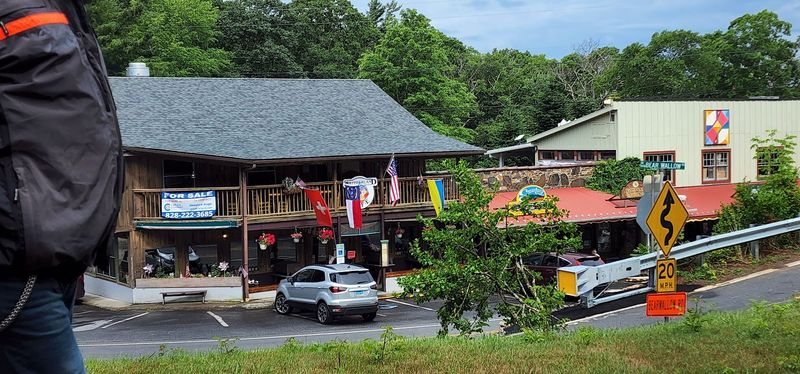
Alpine scenery gives Little Switzerland the most literal European comparison on this list. Destination McDowell describes Little Switzerland as an iconic stop along the Blue Ridge Parkway at Milepost 334, known for food, shopping, hospitality, and sweeping mountain views.
The Blue Ridge Parkway Association explains that the community was named for panoramas of deep valleys and distant ranges resembling the foothills of the Swiss Alps. That origin matters because the name is not random marketing pasted onto an ordinary mountain stop.
Visitors come for views, cooler air, winding roads, chalet-style influences, nearby trails, and the feeling of a tiny seasonal mountain retreat perched above the valley.
The Switzerland Inn, at 86 High Ridge Road, Little Switzerland, NC 28749, adds to that mood with lodging, dining, and big Blue Ridge views.
Many businesses in the area operate seasonally or adjust hours around mountain weather, so checking ahead is essential, especially outside warmer months. Little Switzerland is not a full Swiss village, and it should not be oversold as one.
Its charm comes from the way mountain views, place names, architecture, and summer-colony history combine to create a North Carolina version of an alpine escape. For a Parkway road trip, it is one of the easiest “Europe-adjacent” stops to love.
9. Grovewood Village
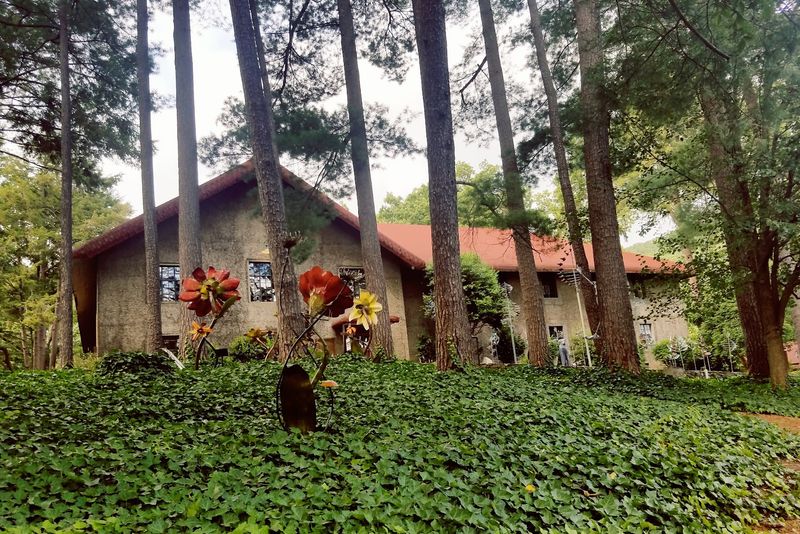
Craft-village energy gives Grovewood Village a European feeling that comes through making, not mimicry.
The official Grovewood Village site lists the address as 111 Grovewood Road, Asheville, NC 28804, and explains that the historic site once housed the weaving and woodworking operations of Biltmore Industries.
Explore Asheville describes Grovewood as an 11-acre property listed on the National Register of Historic Places. It now houses Grovewood Gallery, working artist studios, the Biltmore Industries Homespun Museum, and Asheville’s only antique car museum.
That history makes the village feel like an arts-and-crafts enclave rather than a generic shopping stop.
Biltmore Industries played a major role in the craft revival. Grovewood’s history page notes that Edith Vanderbilt supported the weaving program, with weaving techniques studied in Britain and a loom shipped from Scotland to Asheville.
Today, visitors can browse American-made craft, see artist studios, explore the museum, and enjoy the village setting beside The Omni Grove Park Inn.
The European feel is subtle but real: craft traditions, historic workshops, stone and timber character, and a campus-like arrangement that rewards slow wandering. Grovewood belongs on this list because it feels like an artisan village shaped by skill, history, and preservation.
10. The Cathedral Of All Souls
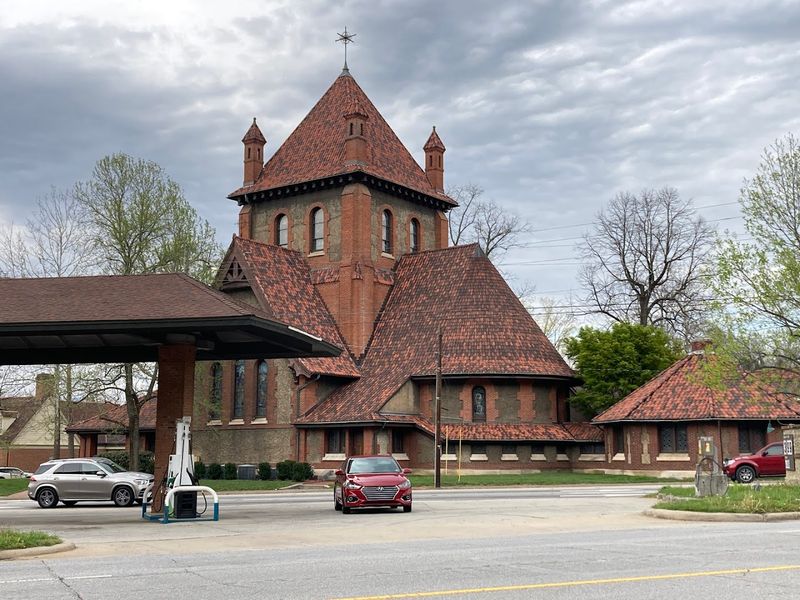
Romanesque Revival architecture makes the Cathedral of All Souls one of Asheville’s most distinctive European-inspired buildings.
The cathedral’s official history page states that Richard Morris Hunt designed the church in a Romanesque Revival style. The design reflects his manorial vernacular approach used at Biltmore, with influences tied to the Norman transition from Romanesque to Gothic.
The building was commissioned by George Vanderbilt for Biltmore Village and completed in 1896. Its current address is commonly listed as 9 Swan Street, Asheville, NC 28803, while the church itself anchors Historic Biltmore Village beside All Souls Crescent.
Rounded arches, heavy timber trim, red brick, pebble-dash stucco, stained glass, and rich interior woodwork give the building a character that feels closer to old European village churches than many American parish buildings.
Because it remains an active Episcopal cathedral, visitors should be respectful and check current access, services, and tour options before arriving.
The cathedral works especially well as the final stop on this list because it ties several threads together: Biltmore’s estate planning, Richard Morris Hunt’s architecture, village design, and sacred space. It is not just pretty background for the shopping district.
It is one of the reasons Biltmore Village feels so intentionally Old World.