This Dreamy Town In California Is So Peaceful, You’ll Wish To Stay Longer
Some towns seem determined to make schedules fall apart.
You arrive with a plan.
A few hours later, the plan is sitting abandoned somewhere between a quiet street and a view that looked too good to walk past.
Time behaves differently in places like this.
Shops invite wandering instead of rushing. Ocean air lingers where it is wanted. Even a simple walk starts collecting reasons to keep going.
Along one stretch of the California coast, checking out feels like the least appealing activity available.
That is the problem. The pleasant kind.
A place this peaceful does not demand attention. It slowly steals it.
One street becomes another. One stop becomes three. Before long, an afternoon starts looking suspiciously short for everything you still want to see.
Some towns make a strong first impression. This one specializes in making people look at the clock and wish it disagreed.
The Village Feels Like A Storybook By The Sea
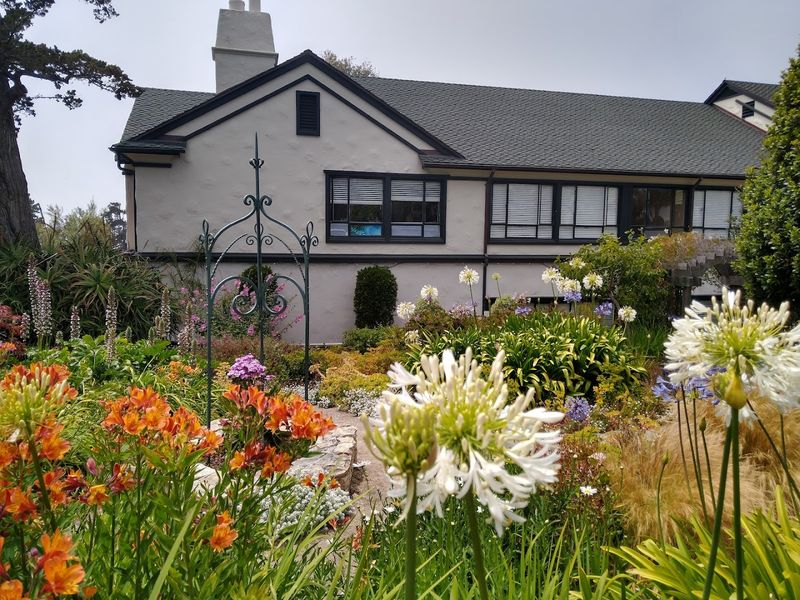
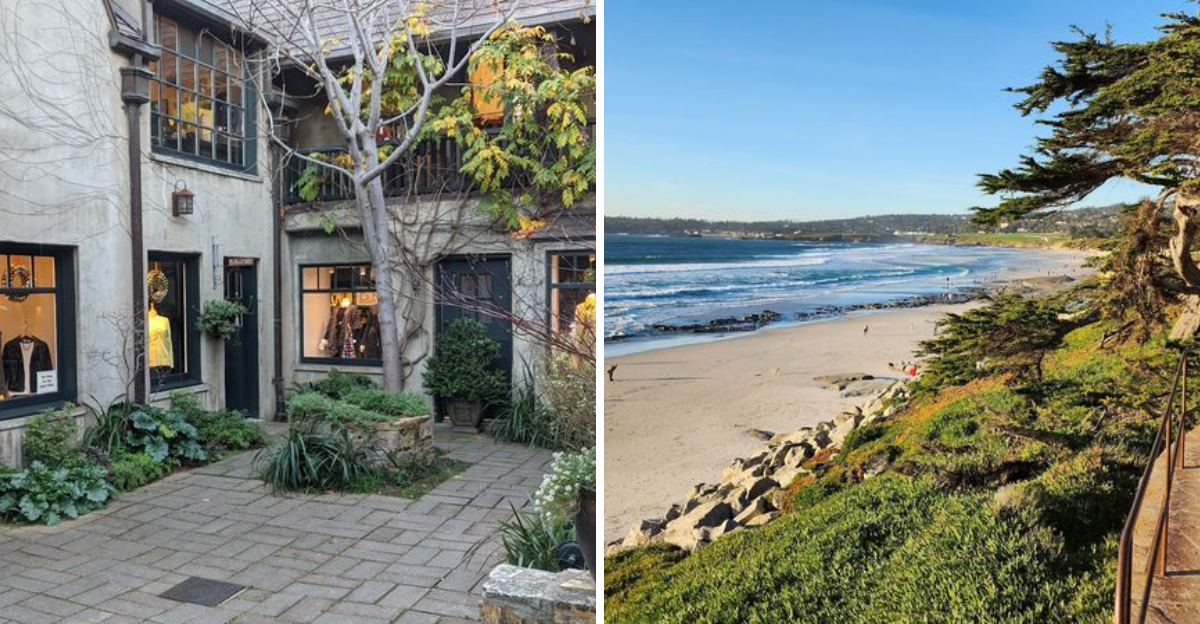
Arriving in Carmel-by-the-Sea has the vibe of stepping into a place that time decided to treat gently.
The streets are narrow and mostly free of traffic noise, and the architecture leans heavily into a storybook aesthetic that feels surprisingly natural rather than forced or themed.
Cottages with steeply pitched roofs and arched doorways sit beside flower-filled window boxes, and the overall scale of the village keeps everything feeling human-sized and unhurried.
The town spans roughly one square mile, which means almost every corner is reachable on foot without needing a map.
Many of the buildings date back to the early twentieth century, and the town has worked hard to preserve that character by keeping chain stores and large commercial developments out.
Independent shops, small cafes, and locally owned galleries fill the spaces instead, which gives the village a consistency that feels earned rather than manufactured.
Even on busier weekends, the village tends to absorb visitors without feeling overwhelmed.
The layout naturally spreads foot traffic across winding lanes and tucked-away courtyards, so crowding rarely becomes the dominant experience.
The overall effect is a town that genuinely feels calm, not just marketed as calm.
Carmel Beach Gives The Town Its Softest Escape
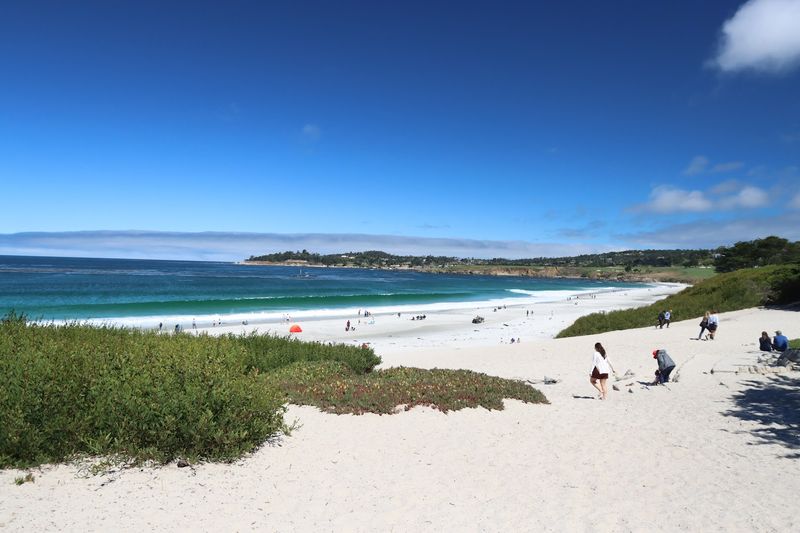
At the foot of Ocean Avenue, the sand shifts from pavement to something much softer and considerably more beautiful.
Carmel Beach stretches along the base of a low bluff, offering wide open views of Carmel Bay with Pebble Beach and Point Lobos visible in the distance on clear days.
The sand here is notably white and fine, which gives the beach a brightness that stands out even on overcast mornings.
Dogs are allowed off-leash under voice control, which makes the beach feel livelier than many coastal spots in California.
Watching dogs sprint across the sand while their people stroll near the water adds a warmth to the scene that photographs rarely capture fully.
The beach is also popular at sunset, when the light turns the ocean into something worth stopping for.
Parking near the beach can get competitive on weekends, so arriving earlier in the day tends to make the experience more relaxed.
The walk down from the village is short and easy, and the path back up gives a gradual view of the cottages and cypress trees that frame the town from above.
Spending even an hour here tends to reset the pace of the whole day in the best possible way.
Fairytale Cottages Make A Walk Feel Unusually Magical
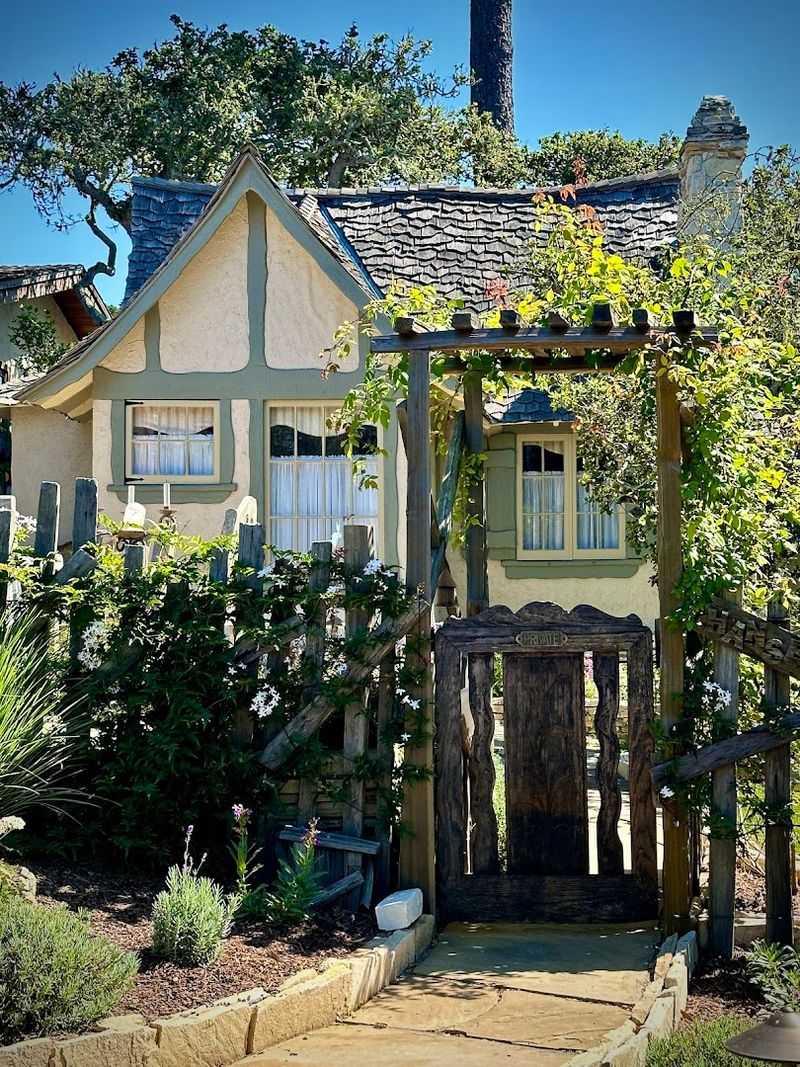
Back in the 1920s, a craftsman named Hugh Comstock began building small, whimsical cottages for his wife’s doll business, and those structures ended up shaping the entire visual identity of Carmel-by-the-Sea.
The cottages he designed feature steeply pitched roofs, irregularly shaped windows, and arched doorways that give each one a handmade quality.
Walking past them feels oddly familiar, like recognizing something from a childhood illustration without being able to name the book.
Some of the most well-known examples include the Hansel and Gretel cottages, which sit close together and share the same playful proportions.
The Tuck Box on Dolores Street is another Comstock creation that now operates as an English tea room, making it one of the few fairytale structures visitors can actually step inside.
The official Carmel visitor resources include a self-guided walking tour specifically designed for viewing the cottages respectfully without disturbing residents.
Because many of these cottages are private homes, the walking tour format encourages a thoughtful pace rather than a rushed photo sprint.
Strolling the residential streets early in the morning offers the quietest experience, when the light is soft and the lanes are mostly empty.
The cottages reward slow attention rather than a quick glance from a moving car.
Hidden Courtyards Make The Village Feel Slower
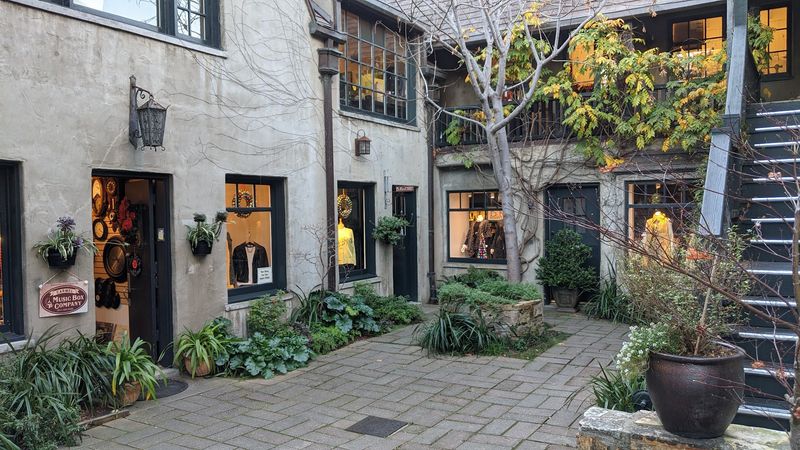
More than 40 hidden courtyards and passageways are tucked between the buildings of Carmel-by-the-Sea, and finding them feels genuinely satisfying rather than accidental.
Some are barely wide enough for two people to pass side by side, while others open into small plazas with benches, garden plantings, and entrances to independent shops or galleries.
The village essentially rewards those who slow down and pay attention to what sits just off the main path.
These spaces serve a practical function too, since they connect parallel streets and create shortcuts that make the village feel even more walkable.
But the practical benefit matters less than the mood they create.
Stepping into a quiet courtyard mid-afternoon, when the light filters through cypress branches and the street noise fades, produces a kind of pause that is hard to find in most tourist destinations.
Several of these courtyards contain small cafes or specialty shops that might be missed entirely by someone sticking only to Ocean Avenue.
The treasure-hunt quality of exploring them adds a layer of discovery to what could otherwise be a straightforward shopping street.
Spending a full afternoon doing nothing but wandering these passages and stopping wherever something looks interesting is a completely valid and genuinely enjoyable way to experience the village.
Ocean Avenue Leads Straight Toward The Water
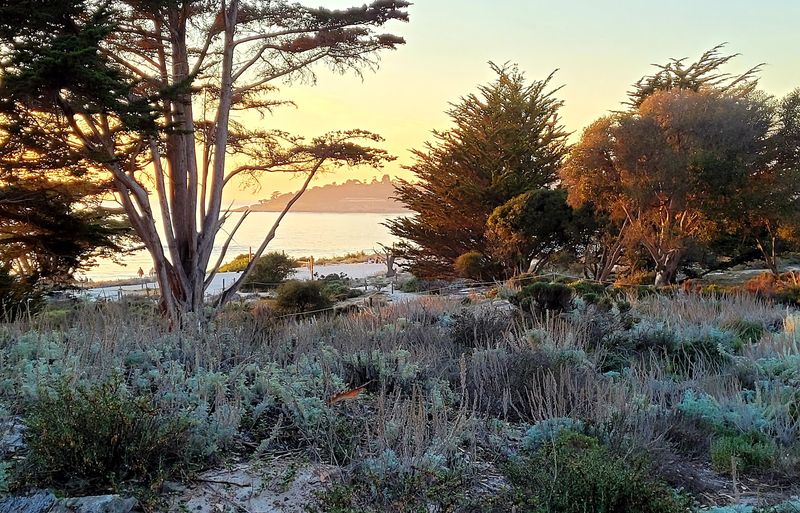
The main street of Carmel-by-the-Sea runs directly downhill toward the water, which means every walk along it ends with an ocean view as a natural reward.
Ocean Avenue is lined with independent boutiques, galleries, cafes, and a handful of restaurants, all operating without the visual clutter of chain signage or large commercial storefronts.
The town has maintained ordinances keeping major chain restaurants largely out of the village, which gives Ocean Avenue a consistency that feels rare in California coastal towns.
Shopping here tends to move at a slower pace than a typical retail strip because the stores themselves are small and browsable rather than warehouse-style.
Galleries displaying paintings, sculpture, and photography sit alongside clothing boutiques and specialty food shops, making a single walk down the avenue cover a surprising range of interests.
The street itself is also wide enough to feel comfortable even when foot traffic picks up on weekends.
Reaching the end of Ocean Avenue and stepping onto the bluff above Carmel Beach provides one of the more satisfying transitions in any California coastal town.
The shift from a pedestrian shopping street to open ocean views happens quickly and without any awkward transition zone.
Scenic Road Adds Calm Views Above Carmel Bay
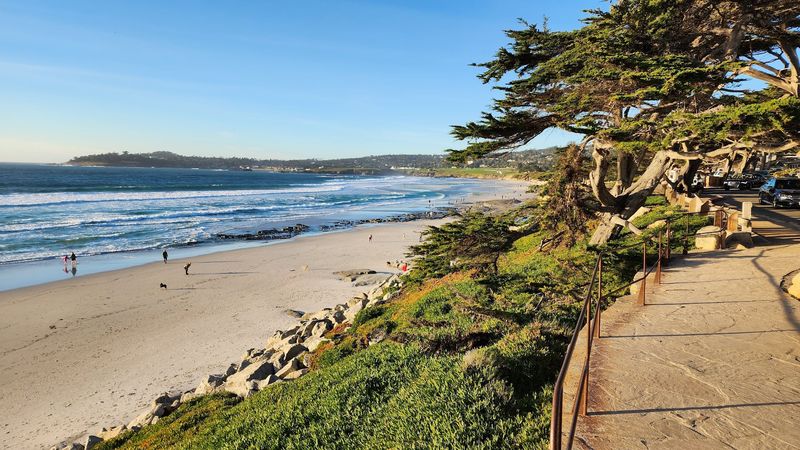
Running along the bluff above Carmel Beach, the Scenic Bluff Path offers a walking route that keeps the ocean in view for almost the entire distance.
The path connects Carmel Beach to Carmel River State Beach to the south, passing above rocky outcroppings and through stretches of native coastal vegetation.
On clear days, the views stretch across Carmel Bay toward Pebble Beach and Carmel Point, giving the walk a visual range that goes well beyond a typical beachside stroll.
The path is unpaved in sections, which keeps it feeling natural rather than developed, and the surface is generally manageable for most walkers with comfortable shoes.
The bluff itself sits at a height that makes the ocean feel both close and expansive at the same time, which is a combination not every coastal trail manages to achieve.
Benches are placed at intervals along the route, making it easy to stop and sit without feeling like the walk needs to be completed on a schedule.
Morning tends to be the quietest time on the path, when marine layer sometimes softens the light and the beach below is mostly empty.
The walk is short enough to complete in under an hour but rewarding enough to do slowly. Starting from the base of Ocean Avenue and heading south along the bluff is a straightforward way to begin.
Mission Trail Nature Preserve Brings A Quiet Wooded Side
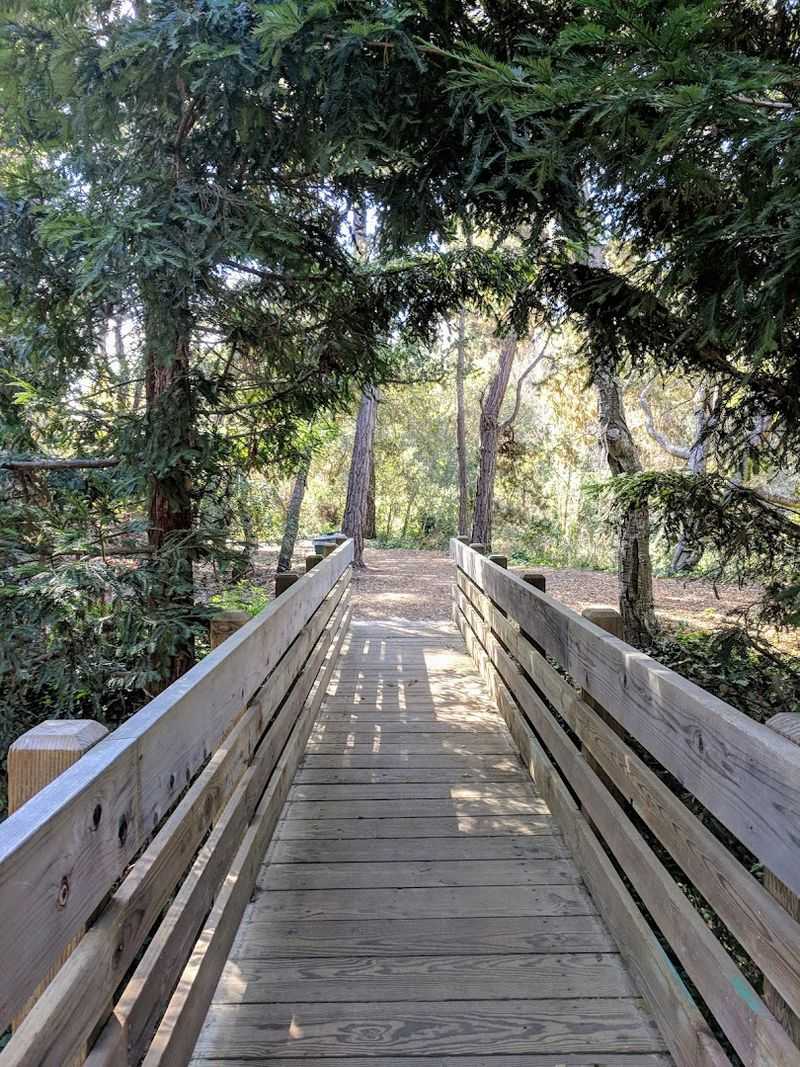
Just a short distance from the village center, Mission Trail Nature Preserve covers 34 acres and offers around three miles of walking trails through a surprisingly varied set of habitats.
Monterey pine forest, oak woodland, wetland areas, and coastal prairie all exist within the preserve’s boundaries, which gives the trails a changing character that keeps the walk interesting from start to finish.
The forest sections in particular feel noticeably cooler and quieter than the open streets of the village.
The preserve sits adjacent to the Carmel Mission, making it easy to combine a nature walk with a visit to one of California’s most historically significant landmarks.
Mission San Carlos Borromeo de Carmelo dates back to 1770 and includes a museum and working basilica that are open to visitors.
The combination of a wooded trail and a centuries-old mission creates a morning itinerary that covers both natural and cultural ground without requiring a car.
Trail conditions within the preserve are generally well-maintained, and the paths are suitable for walkers of most fitness levels.
Birdwatching is a common activity here, as the varied habitats attract a range of species throughout the year.
Bringing water and wearing layers is recommended since the tree cover can make temperature shifts between sunny and shaded sections more noticeable than expected.
Art Galleries Give The Town A Gentle Creative Pulse
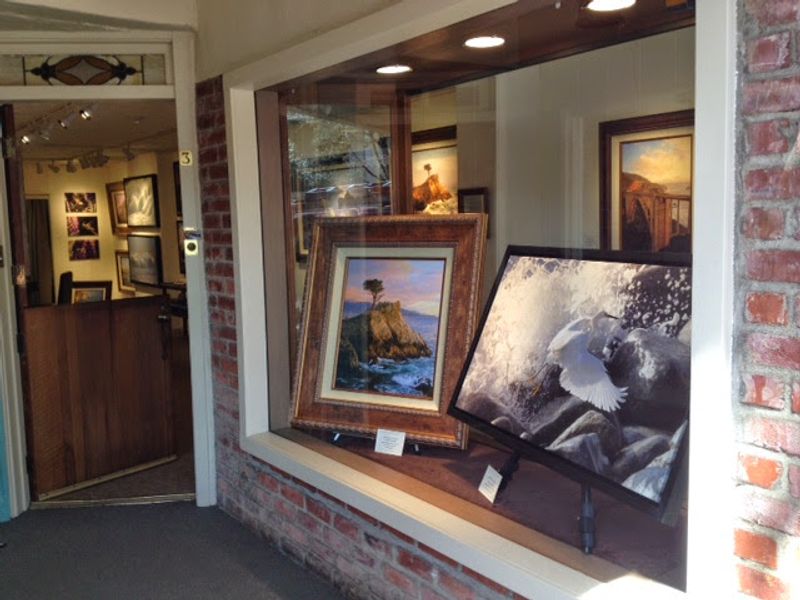
Nearly 100 art galleries operate within the one-square-mile boundaries of Carmel-by-the-Sea, which makes the town one of the more concentrated gallery destinations on the West Coast.
The range of work on display is genuinely broad, covering oil painting, watercolor, photography, sculpture, and mixed media across galleries that vary in size from small street-front rooms to larger multi-room spaces.
Browsing without any intention to purchase is completely normal here, and most galleries maintain a low-pressure atmosphere that encourages unhurried looking.
The town’s connection to visual art goes back more than a century, when writers and painters began settling in Carmel in the early 1900s, drawn by the coastal light and the relatively affordable land.
That history gives the current gallery scene a sense of continuity rather than trend-chasing, and many of the galleries represent artists who have long-standing connections to the region.
The work on display often reflects the landscape directly, with coastal scenes, forest light, and ocean color appearing frequently across different styles and media.
Gallery Thursday, a monthly evening event where galleries stay open late and welcome visitors, offers a more social version of the usual browsing experience.
The event is free to attend and gives a sense of the local art community in a setting that feels relaxed rather than formal.