The 171-Mile Oregon Route That Feels Like One Long Hidden Gem
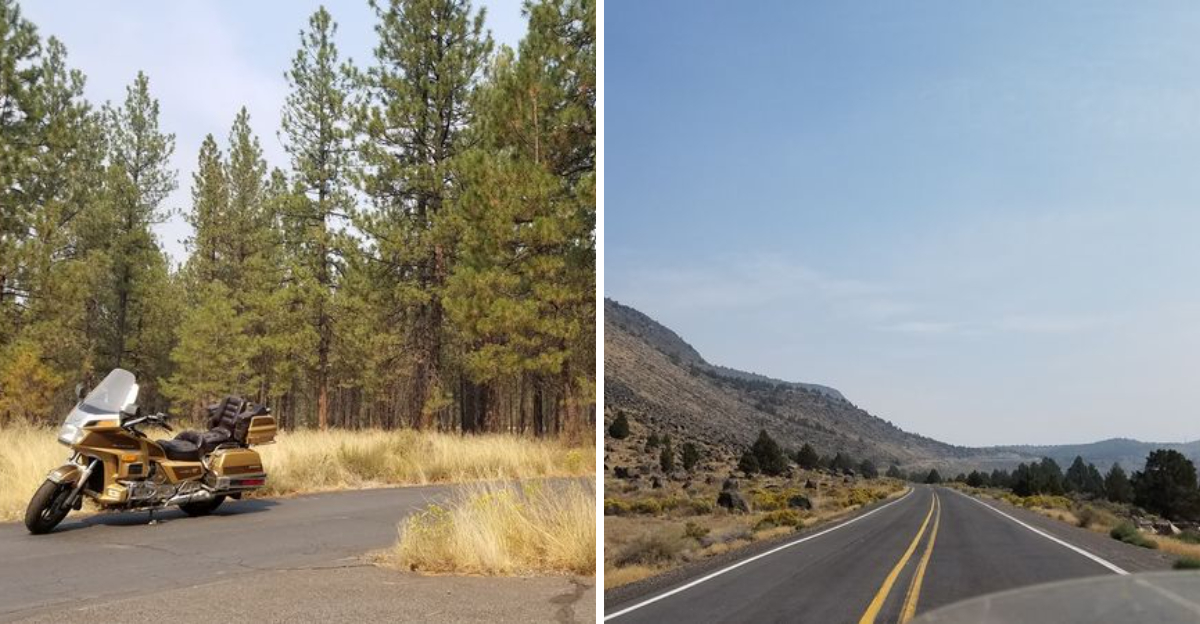
Most people drive through Oregon on the interstate, which is a perfectly efficient way to miss almost everything worth seeing.
The state’s real personality lives on the roads that do not show up as the fastest route on any navigation app, and this route is one of the most convincing arguments for turning that app off entirely.
One hundred and seventy one miles of high desert, rimrock, and sky so wide it feels slightly personal.
No traffic, no franchise restaurants, and no one tailgating you because everyone else took the highway like a sensible person.
Just you, the road, and a landscape that operates completely on its own terms and seems entirely unbothered by whether you appreciate it or not.
I drove this route without a full plan and with only a vague sense of what to expect, and it delivered the kind of quiet and unhurried satisfaction that most drives spend their whole length promising and never producing.
Oregon Outback Scenic Byway Overview
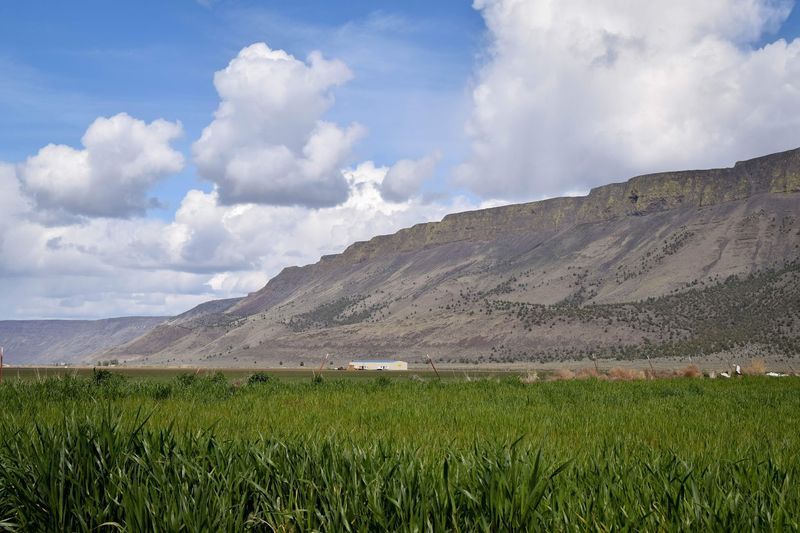
The Oregon Outback Scenic Byway starts near La Pine on OR-31 and winds south toward Lakeview, covering 171 miles of terrain that most people never bother to explore.
That is their loss and your gain.
This route passes through Fremont-Winema National Forest, Fort Rock State Natural Area, Summer Lake, and the wide Chewaucan River valley. Each stretch feels distinct.
You go from pine forest to open desert to alkaline lake beds without ever feeling like you took a wrong turn.
The byway is paved and accessible for most standard vehicles. Road conditions can change in winter, so checking ahead is smart.
Spring and fall offer the most comfortable temperatures and the best light for photography. Summer brings heat but also wildflowers along the roadsides.
This route is not about speed. It rewards slow driving, frequent stops, and a genuine curiosity about what sits just beyond the next ridge.
Consider it a lesson in how much Oregon hides when you stay on the interstate.
Fort Rock State Natural Area
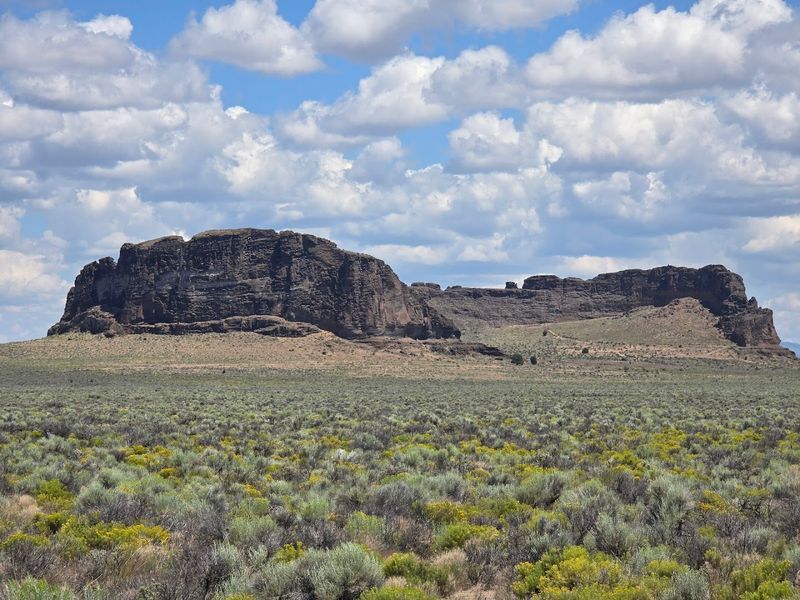
Fort Rock is the kind of geological feature that stops you mid-sentence. It is a 200-foot-tall volcanic tuff ring that erupted from an ancient lake bed roughly 100,000 years ago.
From the road, it looks like a fortress dropped in the middle of nowhere.
A short trail loops around the interior of the ring, giving you a ground-level sense of just how massive this formation really is. The walls rise steep and jagged on all sides.
Walking inside feels quieter than you expect, like the rock absorbs sound along with sunlight.
Archaeologists discovered sagebrush sandals inside Fort Rock Cave nearby, dating back over 9,000 years. That makes this area one of the oldest confirmed human occupation sites in North America.
Knowing that while you crunch across the gravel floor adds a layer of meaning to the visit.
Fort Rock sits just off OR-31, making it an easy and worthwhile detour early in the drive. Arrive before noon for the best light on the rock face.
Summer Lake Wildlife Area
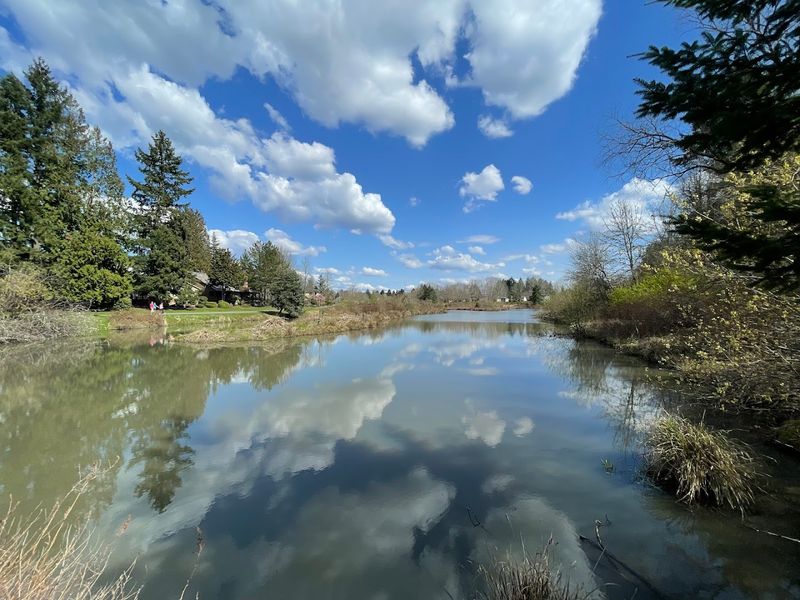
Summer Lake Wildlife Area covers roughly 18,000 acres of wetlands, alkaline flats, and upland habitat along the byway.
It is one of the most important migratory bird stopover sites in the Pacific Northwest, and it does not get nearly the attention it deserves.
Over 320 bird species have been recorded here. Sandhill cranes, white pelicans, tundra swans, and numerous shorebird species pass through during migration.
The spring migration window runs roughly March through May, and fall migration picks up again in September. Bring binoculars.
Seriously, bring binoculars.
The Summer Lake Hot Springs facility sits nearby and offers a warm soak after a long day of driving, which feels like exactly the right reward. The lake itself changes dramatically with the seasons.
In summer, water levels drop and the flats turn white with mineral deposits. In spring, the water returns and the birds follow.
There are viewing platforms and gravel roads for easy access. This is one of those places where you plan to stop for twenty minutes and end up staying two hours.
Fremont-Winema National Forest
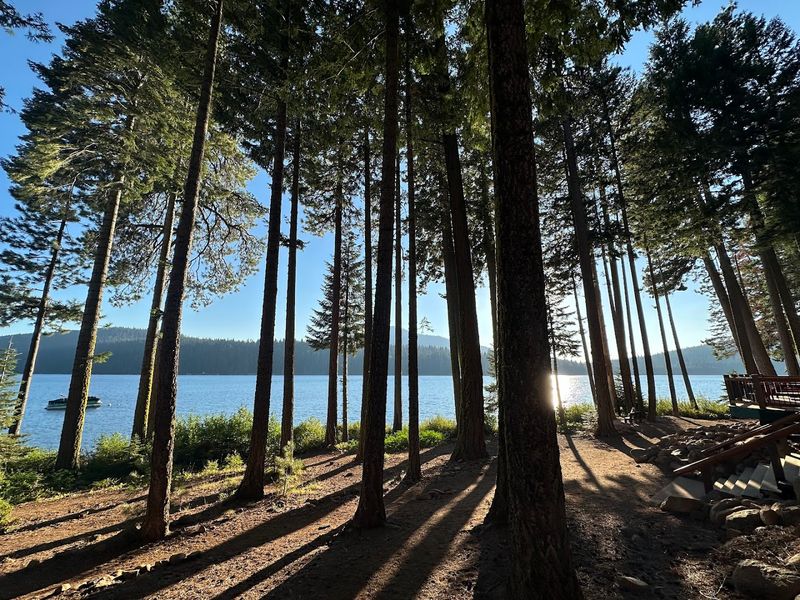
Fremont-Winema National Forest flanks the northern section of the byway and gives the route its green, shaded start before things open up into high desert.
The forest covers over 2.3 million acres across south-central Oregon, making it one of the largest national forests in the state.
Ponderosa pine dominates the landscape here, growing tall and straight with that distinctive vanilla-and-butterscotch scent on warm days.
It is subtle, but once you notice it, you keep leaning out the window to catch it again. The forest also contains significant wetlands, meadows, and volcanic features that most visitors never find.
Fishing in the Chewaucan River and Sycan River draws anglers looking for solitude. Hiking trails range from easy lakeside walks to longer backcountry routes.
Camping spots inside the forest are quieter than most national park campgrounds, with fewer crowds and better stargazing.
The elevation here hovers around 4,800 feet, which keeps temperatures manageable even in July. If you are starting the byway from La Pine, the forest eases you in gently before the desert takes over.
Paisley And The Chewaucan River Valley
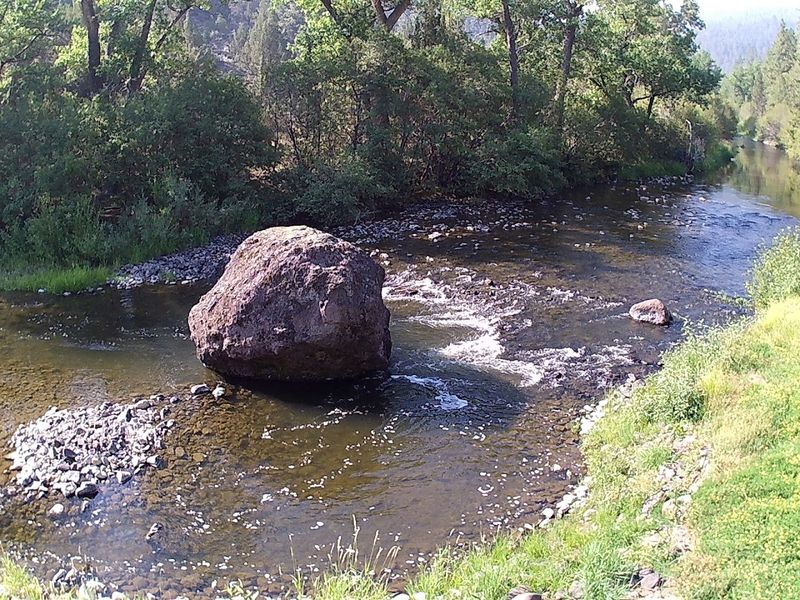
Paisley is the kind of small town that reminds you communities can exist at almost any scale.
Population hovers around 250 people, and the town sits in the Chewaucan River valley like it has always belonged there. It has, actually, since settlers arrived in the 1870s.
The town has a general store, a small diner, and the Paisley Caves nearby, where archaeologists found human coprolites dating back 14,300 years.
Those findings pushed back the known timeline of human presence in the Americas significantly. Not bad for a town most maps barely acknowledge.
The Chewaucan River flows through the valley and offers fishing for native redband trout. Surrounding ranchland gives the area a working, lived-in feeling that a lot of scenic byways lack.
Stopping here for lunch or a short walk stretches the legs and gives you a feel for what life actually looks like along this route.
Paisley is not a tourist destination. It is a real place, and that distinction is exactly what makes it worth stopping for.
Lake Abert & Abert Rim
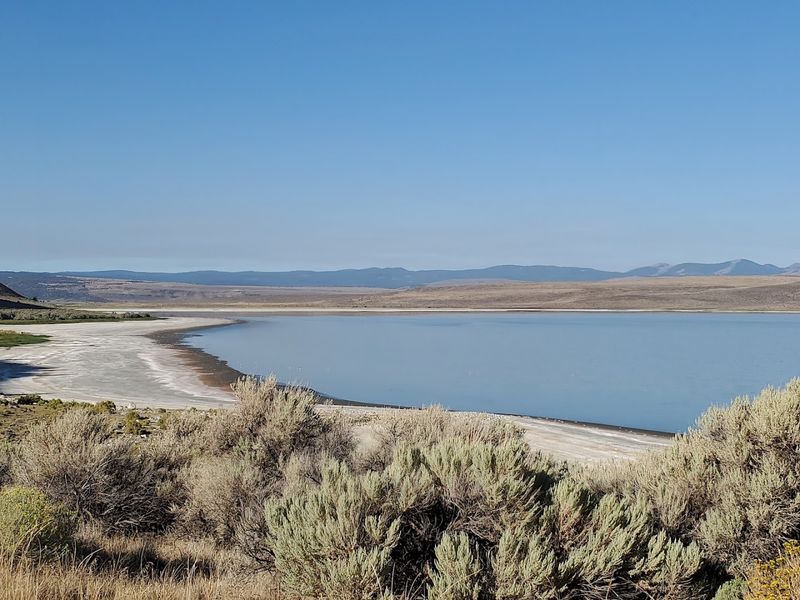
Abert Rim is the longest exposed fault scarp in North America, stretching roughly 30 miles and rising over 2,500 feet above Lake Abert.
You can see it from the highway, and it is genuinely hard to believe something this dramatic sits roadside without a massive visitor center and gift shop attached.
Lake Abert itself is a terminal alkaline lake, meaning water flows in but does not flow out. The salinity levels support brine shrimp and alkali flies, which in turn feed enormous flocks of migrating birds.
Eared grebes, phalaropes, and avocets gather here in numbers that can reach into the tens of thousands during peak migration.
The lake level fluctuates significantly with drought conditions, so what you see depends heavily on when you visit.
Even in low-water years, the reflection of Abert Rim on the shallow brine surface creates a surreal, almost otherworldly landscape.
There are no facilities here. You pull off the road, step out, and just stand there looking.
Sometimes that is enough. This stretch of OR-31 is one of the most visually striking miles of road in the entire state.
The Southern Endpoint
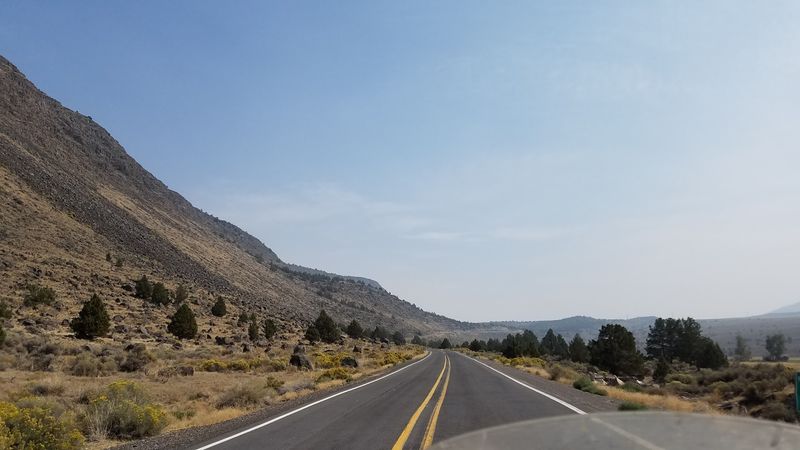
Lakeview calls itself the Tallest Town in Oregon, sitting at 4,800 feet elevation and serving as the Lake County seat.
It is a working ranching and timber town that also happens to be one of the best paragliding destinations in the country, thanks to consistent thermal winds off Hunter’s Hot Spring area.
The town has a genuine downtown with a hardware store, a few restaurants, a small museum, and accommodations that do not require a second mortgage.
After 171 miles of mostly empty highway, Lakeview feels like a real arrival. The Schminck Memorial Museum holds a solid collection of pioneer-era artifacts and gives real context to the history of this remote region.
Hunter’s Hot Spring, just north of town, is a geothermal area with a geyser that erupts regularly, making it one of only a few regularly erupting geysers in Oregon.
The landscape around Lakeview opens into wide ranchland framed by juniper-covered hills. It is the kind of town where locals wave at strangers and mean it.
Ending the byway here feels earned. You drove through something real, and Lakeview is the honest, unpolished finish line it deserves.
Stargazing And Night Sky Along OR-31
Light pollution on this route is almost nonexistent. Once you get south of La Pine and leave the last gas station behind, the night sky becomes something you actively have to reckon with.
On a clear night, the Milky Way appears as a dense, textured band of light, not just a faint smear.
Lake County, which covers much of the southern portion of the byway, is one of the least densely populated counties in the contiguous United States.
That translates directly into darker skies. Amateur astronomers have noted this area as one of the premier dark sky locations in the Pacific Northwest.
Pulling off the road after dark requires some caution since the shoulders are narrow in places and wildlife is active. A gravel pullout near Summer Lake or the open flats near Lake Abert works well for an extended stop.
Bring a blanket, a red-light flashlight to protect your night vision, and a star map app if you want help identifying what you are seeing.
Give your eyes about twenty minutes to adjust fully. What happens after that adjustment is the kind of thing that makes the whole drive worth it.