This Connecticut Lighthouse Holds Two State Records Most People Don’t Know About
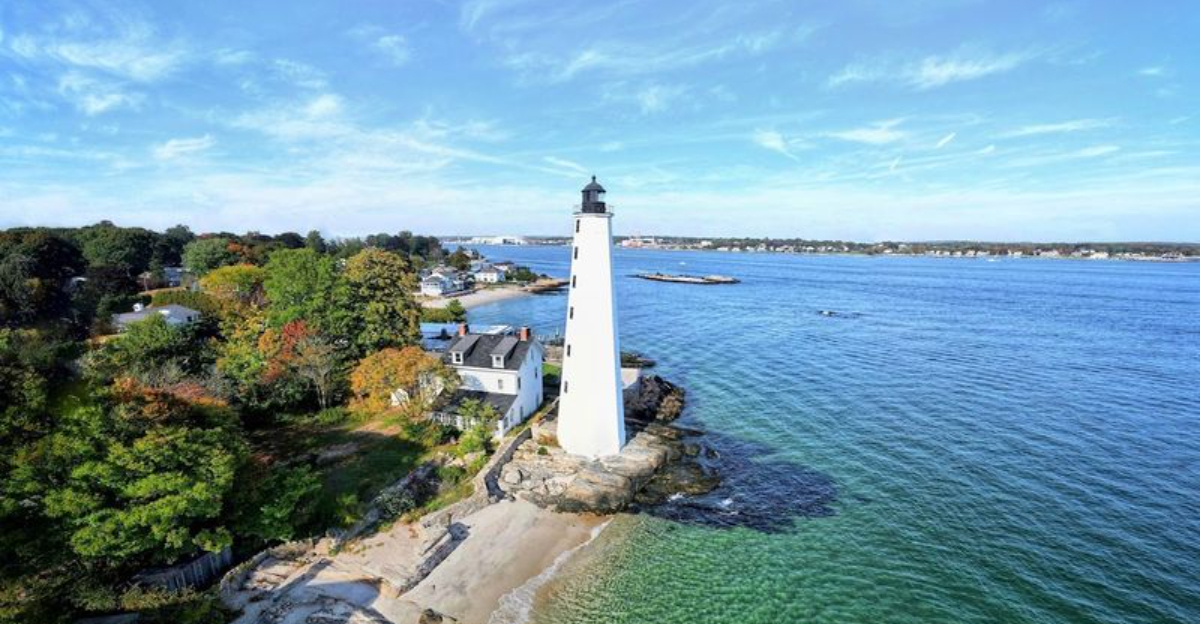
Lighthouses already carry a certain romance to them but this one has something extra going for it that most people have absolutely no idea about.
Two state records sitting quietly behind one of Connecticut’s most fascinating coastal landmarks and the story behind them is genuinely worth knowing.
The kind of fact that stops people mid sentence when they hear it for the first time. History lovers lose themselves completely here and casual visitors leave considerably more informed and considerably more impressed than they expected.
Getting out to see this lighthouse feels rewarding on its own but discovering what makes it genuinely unique among everything else on the coastline turns the whole visit into something that stays with you.
A place this historically significant that remains this underappreciated is one of those finds that makes exploring close to home feel like a completely worthwhile mission.
1. Connecticut’s Oldest Lighthouse
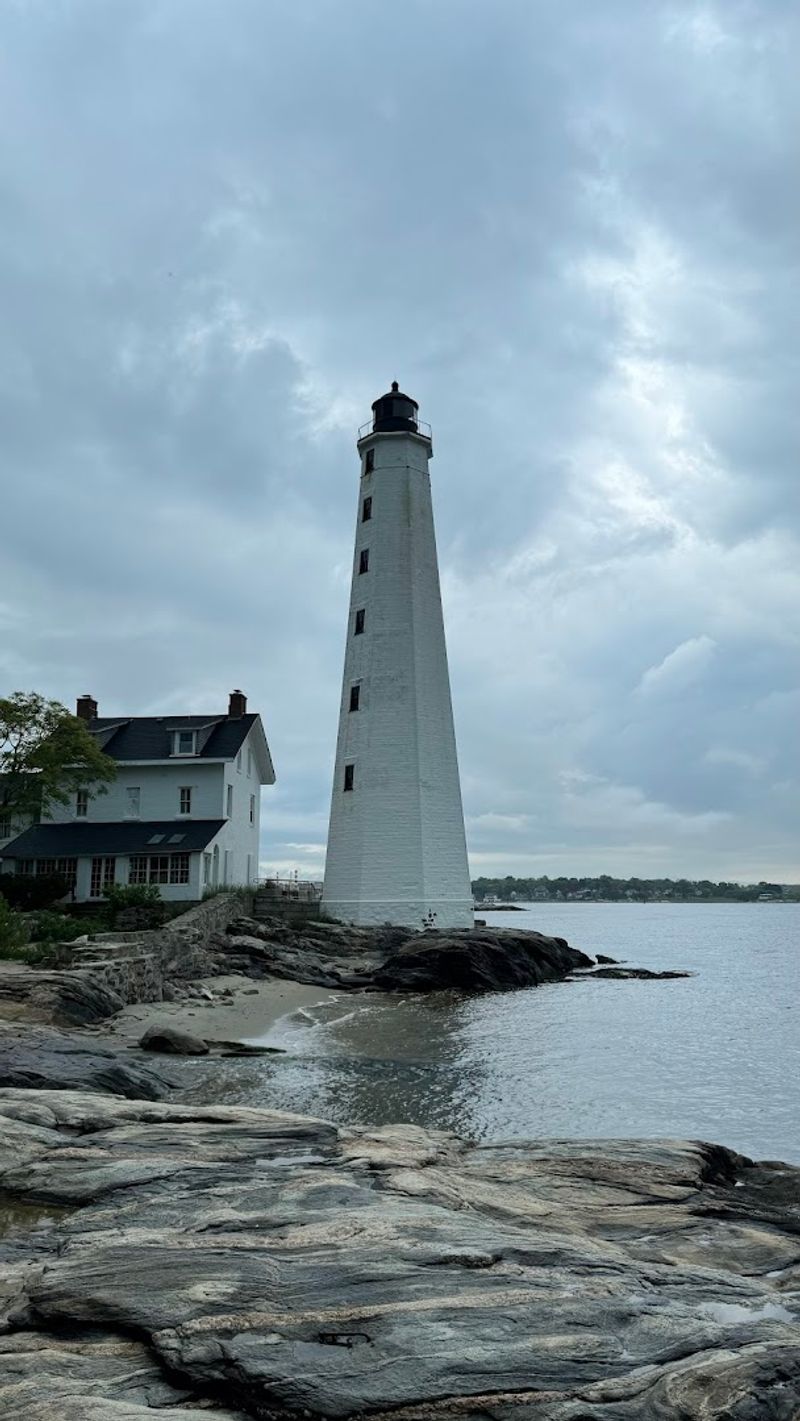
Coastal history feels especially vivid at New London Harbor Lighthouse, a landmark with roots reaching back to the colonial era. First established in 1761, it holds the distinction of being the oldest lighthouse in the state and the first ever built on Long Island Sound.
The original tower was later replaced in 1801 by the octagonal stone structure that continues to watch over the harbor today.
The lighthouse is connected to the New London Maritime Society, whose Custom House Maritime Museum is at 150 Bank Street in New London. Because access is limited and guided, visitors need to arrange tours in advance rather than simply showing up on-site.
That extra planning adds to the sense that this is a rare piece of maritime history, not a casual roadside stop.
During a tour, guests can climb 116 steps to the lantern room and get a closer look at a beacon that has helped guide harbor traffic for more than 260 years.
For history lovers, preservation fans, and anyone drawn to working coastal landmarks, the experience offers a memorable link to centuries of seafaring life.
2. Also The State’s Tallest
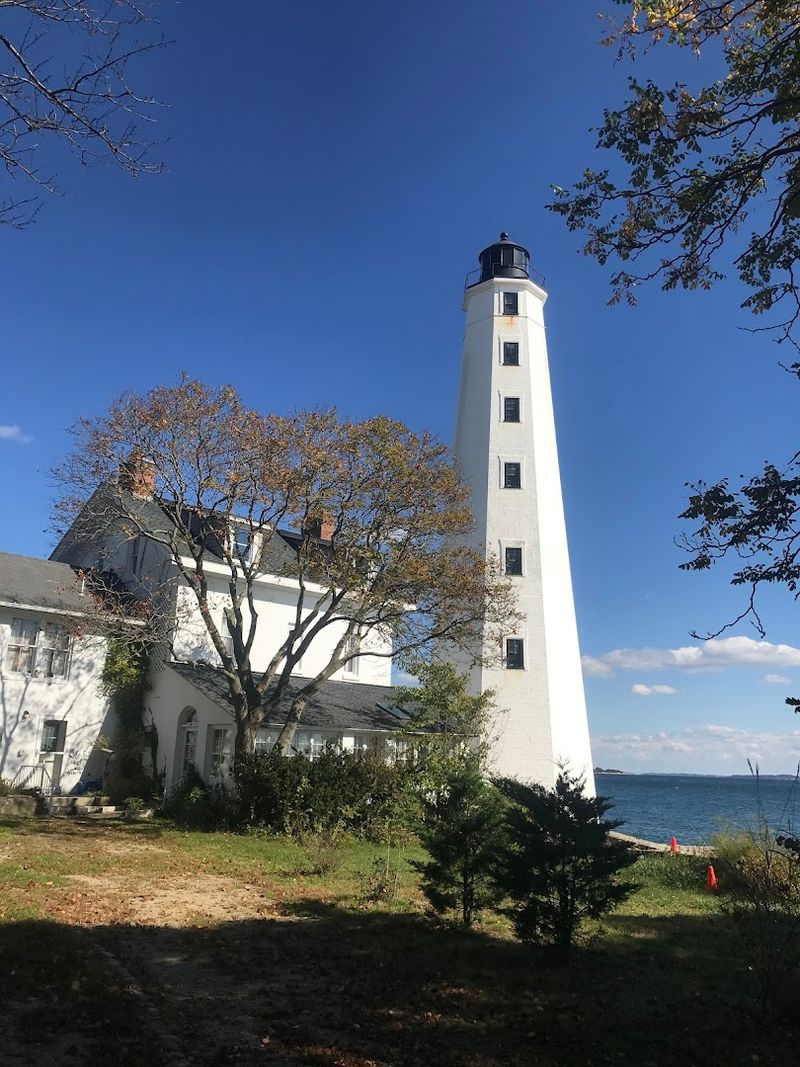
Standing at 89 to 90 feet tall, the New London Harbor Lighthouse earns a second record that surprises most people who visit the shoreline.
Height records for lighthouses are not often discussed in casual conversation, yet this tower holds the title for tallest lighthouse in both Connecticut and on Long Island Sound.
The octagonal granite design gives it a strong, clean profile that photographs well from multiple angles.
That combination of being both the oldest and the tallest lighthouse in the state is genuinely uncommon. Most lighthouses earn one distinction or the other, not both at once.
The structure’s height was intentional, designed to make the light visible across a wide stretch of open water where ship traffic has historically been dense and navigation has always required reliable visual markers.
Getting a full view of the tower tends to work best from Pequot Avenue or from the water, particularly from the Orient Point Ferry as it approaches New London.
The New London Maritime Society offers guided tours inside the lighthouse on a regular weekend schedule throughout the year, allowing visitors to climb all 116 steps and appreciate the tower’s full scale from the inside out.
3. Watching Over New London Harbor
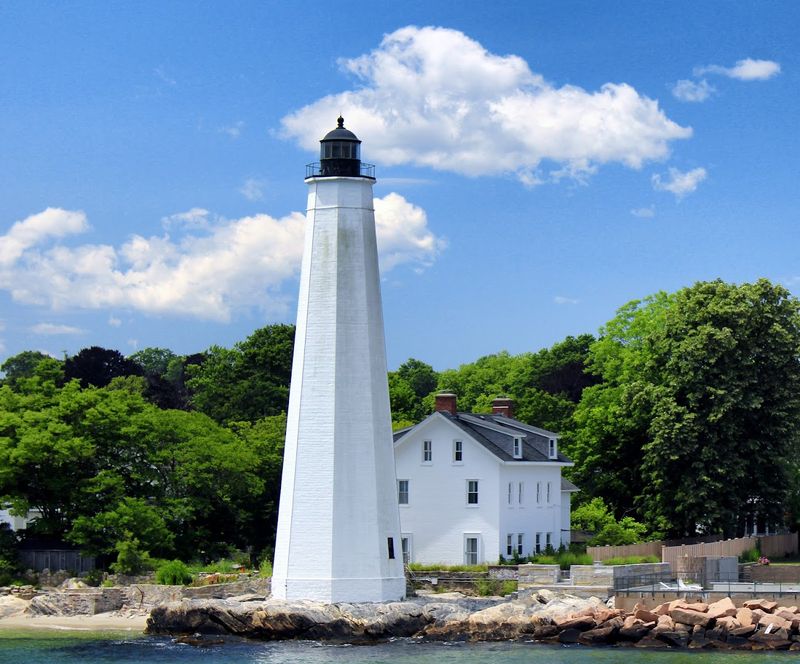
The New London Harbor Lighthouse remains an active navigational aid today, meaning the light at the top of that 89-foot granite tower still serves a real purpose for vessels moving through the harbor.
That active status sets it apart from many historic lighthouses that have been decommissioned and converted into museums or private residences.
New London Harbor itself has a long history as a significant port, and the lighthouse has been part of that story since the colonial era.
The harbor sees a mix of commercial ferry traffic, recreational boating, and Coast Guard activity, all of which benefit from having a reliable fixed light marking the approach.
Watching the lighthouse from the waterfront gives a clear sense of how naturally it fits into the working rhythm of the harbor.
Visitors who take the guided tour through the New London Maritime Society can climb all the way to the lantern room and see exactly how the light operates in its current form.
The experience connects the lighthouse’s colonial origins directly to its present-day function in a way that feels both grounded and genuinely interesting.
4. Best Viewed From Pequot Avenue
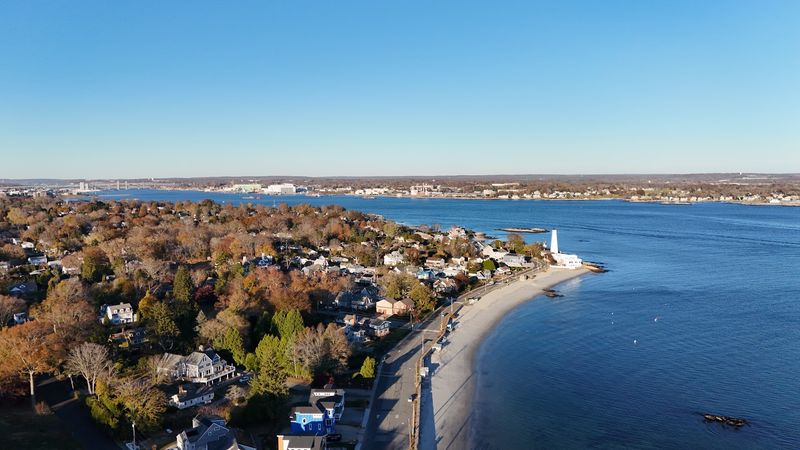
Getting a good look at the New London Harbor Lighthouse from the street takes a little planning, but Pequot Avenue offers one of the more accessible vantage points without needing to schedule a tour.
The tower rises clearly above the surrounding landscape, and its octagonal granite form is recognizable from a reasonable distance.
The neighborhood setting adds an interesting contrast, placing a colonial-era lighthouse within a quiet residential stretch of New London.
A brochure holder is mounted on the fence near the lighthouse property with information about how to arrange a proper visit through the New London Maritime Society.
Stopping along Pequot Avenue to take in the exterior view is a perfectly reasonable first step before booking a guided tour, and many visitors find that seeing the tower up close from the roadside makes them more curious about what the interior looks like.
The Orient Point Ferry route also provides a striking water-level view of the lighthouse as it approaches New London from Long Island. Both vantage points offer a different perspective on the tower’s scale and placement within the harbor landscape.
Checking satellite view before arriving tends to help with navigation since the property can be easy to miss on a first visit.
5. A Landmark With Serious History
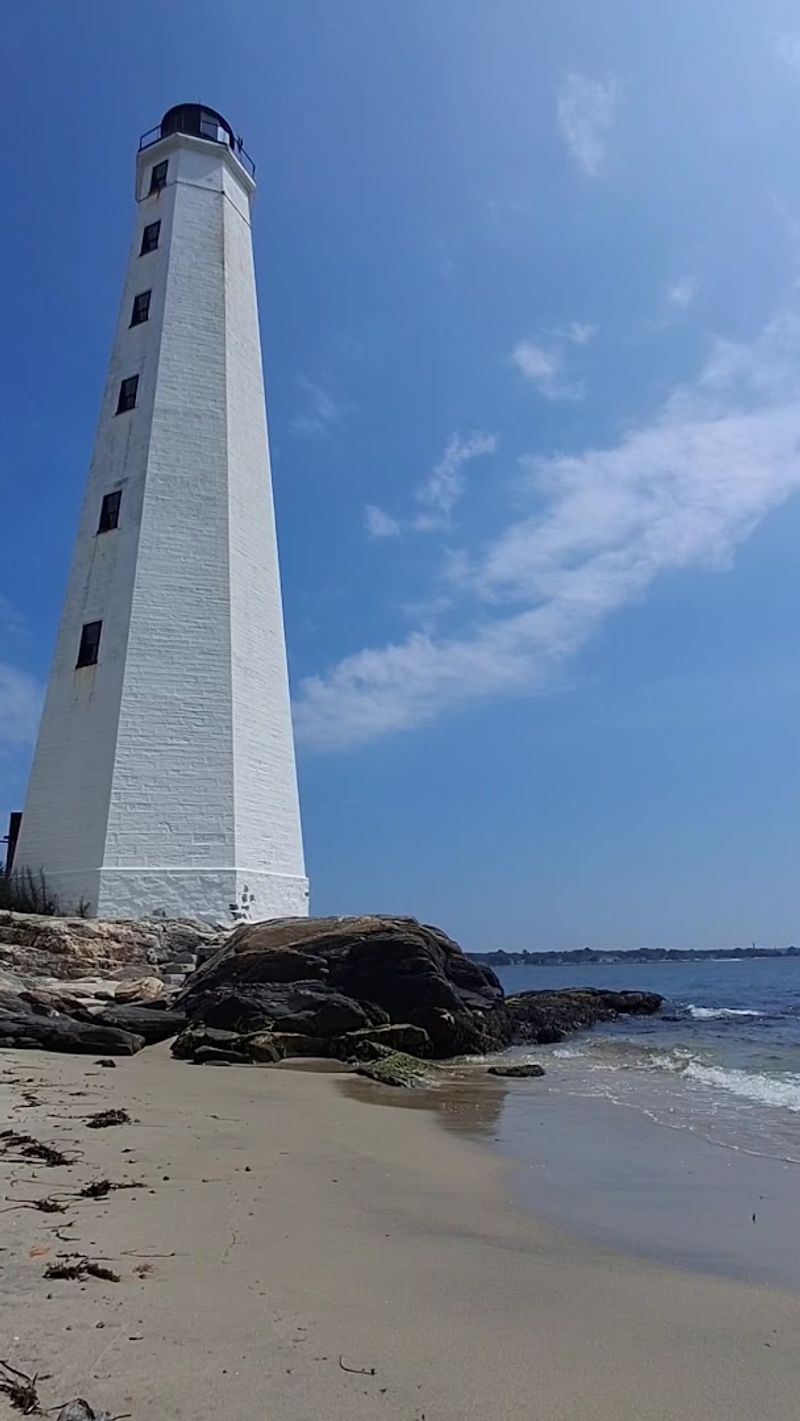
Not every historic landmark in New England can claim a direct connection to the colonial period, but the New London Harbor Lighthouse genuinely can. The site was first established in 1761 under colonial governance, predating American independence entirely.
The current granite tower, built in 1801, replaced the original structure and has remained standing through more than two centuries of storms, wars, and changing maritime technology.
The New London Maritime Society became the steward of this federal property in 2010 and has since worked to preserve both the physical structure and its public accessibility.
The Society went through a four-year legal process to protect the public’s right to visit the lighthouse, which speaks to how seriously the history of the site is taken by those responsible for it.
Tours run on a regular weekend schedule year-round and can also be arranged by appointment.
For visitors who appreciate the kind of history that stays in one place and accumulates over generations, the New London Harbor Lighthouse delivers that experience in a tangible way.
Climbing 116 steps through a granite tower that has been standing since the early 1800s tends to put the passage of time into a perspective that no museum exhibit can fully replicate.
6. First Lit In Colonial Times
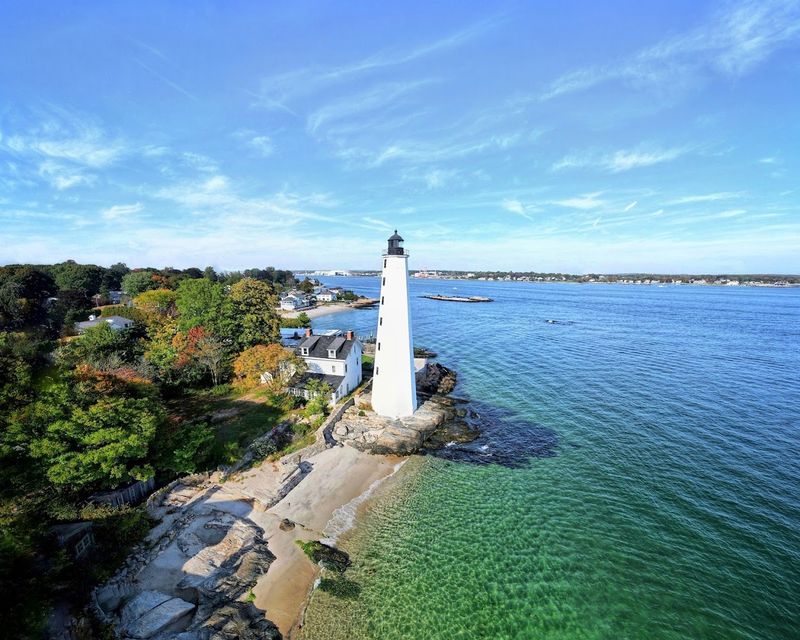
Being the first lighthouse built on Long Island Sound is a distinction that carries real weight when you consider how much maritime traffic has passed through these waters over the past two and a half centuries.
The New London Harbor Lighthouse was established in 1761, well before the United States existed as a country.
That means the light was guiding ships through New London Harbor during the American Revolution, the War of 1812, and every major chapter of American coastal history that followed.
The original 1761 structure was eventually replaced by the current octagonal granite tower in 1801, which was designed to be more durable and more visible across the open water of Long Island Sound. The choice of an octagonal shape was not purely aesthetic.
The design was intended to withstand the kind of wind and weather stress that a standard round or square tower might handle less efficiently.
Understanding that the lighthouse predates the nation itself tends to shift how visitors experience the tour offered by the New London Maritime Society.
Standing inside a tower that was first lit in colonial times and is still actively functioning today gives the visit a sense of continuity that goes well beyond typical sightseeing.
It is a working piece of American history.
7. Still An Active Harbor Light
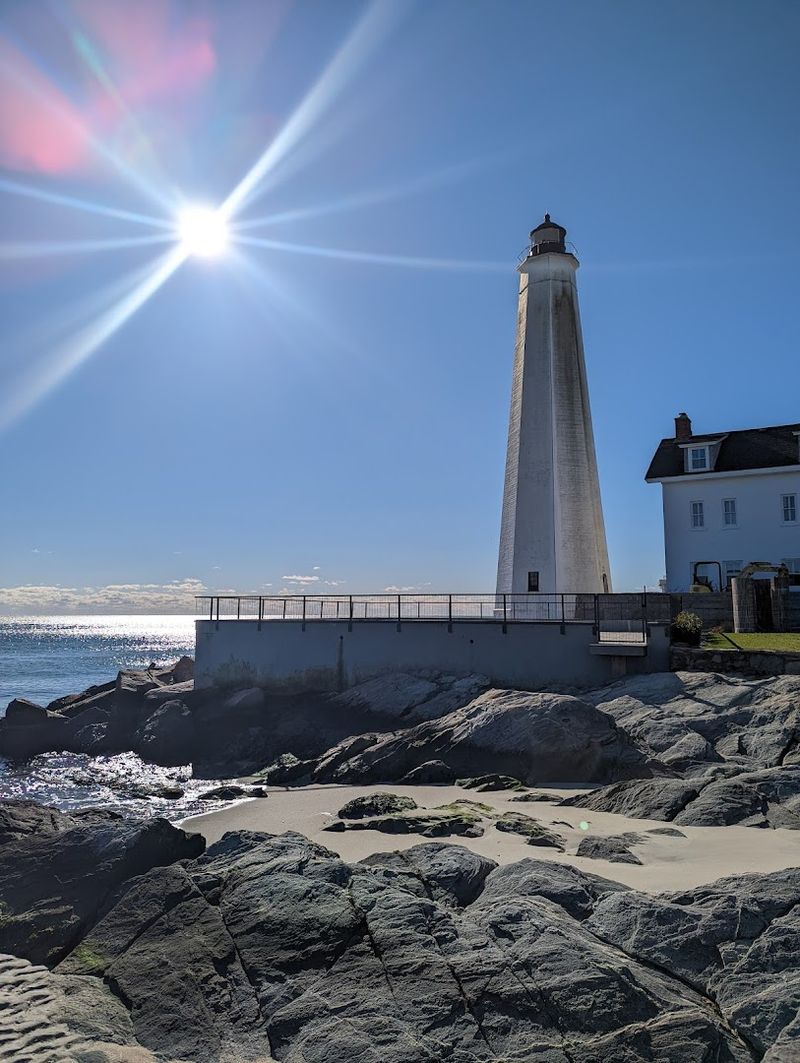
Most people assume that old lighthouses are just museums or decorative landmarks, so finding out that the New London Harbor Lighthouse still functions as an active navigational aid tends to come as a genuine surprise.
The light at the top of the tower continues to serve vessels moving through New London Harbor today, maintaining a practical purpose that connects directly back to the lighthouse’s original reason for existing in 1761.
Active status means the lighthouse is maintained to federal standards, which has helped preserve the structure’s integrity over time. The New London Maritime Society manages the property and coordinates with the relevant federal authorities to ensure the light remains operational.
Seeing the lighthouse from the water, particularly from the Orient Point Ferry as it approaches New London, gives a clear sense of how the light functions within the broader harbor navigation system.
The tower’s 89-foot height ensures the light is visible from a significant distance across Long Island Sound, which is exactly what a working harbor light needs to do.
That combination of age and ongoing function makes this lighthouse genuinely unusual along the entire New England coast.
8. A Quiet Coastal Photo Stop
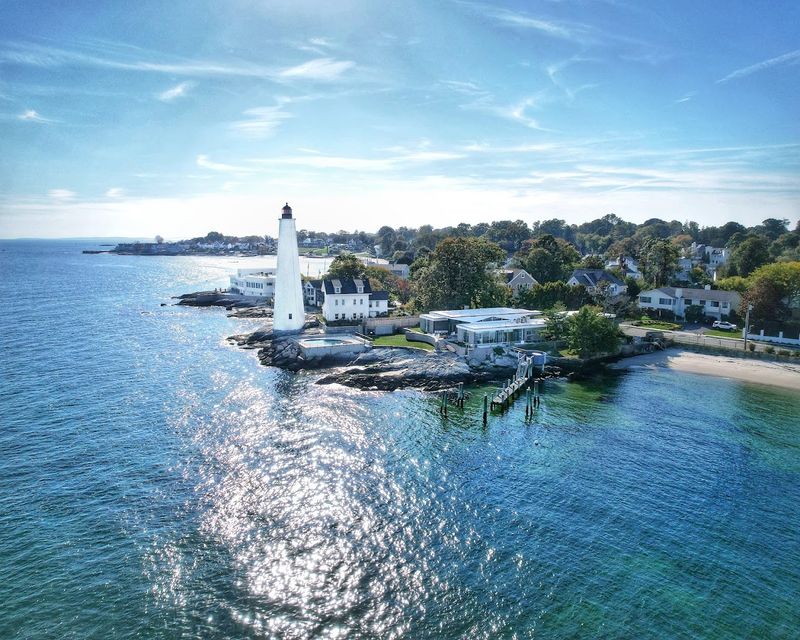
For photographers and casual visitors alike, the New London Harbor Lighthouse offers a genuinely photogenic subject without the crowds that tend to follow more heavily promoted attractions.
The octagonal granite tower has clean lines and a classic New England silhouette that works well in natural light at almost any time of day.
The surrounding landscape, with water nearby and a quiet residential neighborhood as backdrop, keeps the composition interesting from multiple angles.
Street-level views from Pequot Avenue provide accessible photo opportunities without requiring a scheduled tour. The tower is visible above the fence line and surrounding trees, and the scale of the structure becomes more apparent the closer you get to the property boundary.
Arriving on a weekday morning tends to mean fewer people around, which helps when trying to get a clean shot of the exterior.
Water-based views from the Orient Point Ferry or from the harbor itself offer a different kind of framing, showing the lighthouse in context with the broader harbor landscape.
For those who do book a guided tour through the New London Maritime Society, the view from the lantern room at the top of the 116-step climb provides an elevated perspective on both the lighthouse and the surrounding coastline that is difficult to replicate from ground level.
9. Long Island Sound’s Record Holder
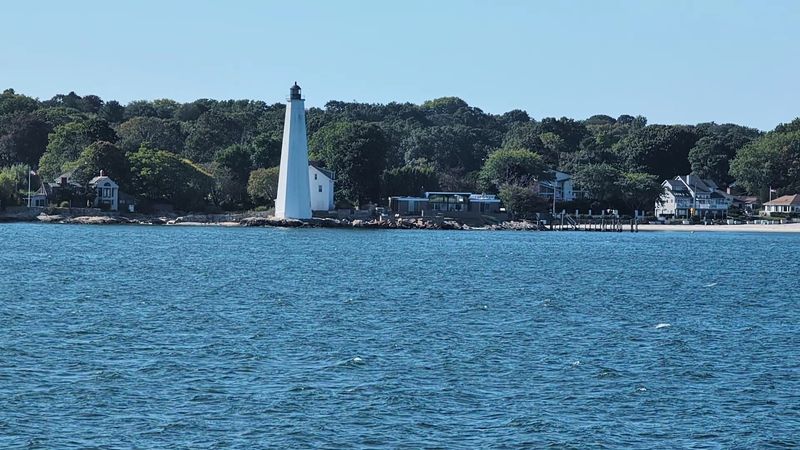
Holding the title of tallest lighthouse on Long Island Sound means the New London Harbor Lighthouse stands above every other lighthouse along a coastline that stretches across Connecticut and New York.
At 89 to 90 feet tall, the tower was built to be seen from a considerable distance across open water, and that practical design decision turned out to have lasting historical significance.
No other lighthouse along the Sound has matched that height.
Long Island Sound is one of the busiest coastal waterways in the northeastern United States, with ferry routes, commercial shipping lanes, and recreational boating all sharing the same stretch of water.
Having the oldest and tallest lighthouse on the Sound located in New London places the city in an interesting position within regional maritime history.
The lighthouse has been part of that navigational network since before the country was founded.
Visitors who want to experience the full scale of the lighthouse from the Sound’s perspective can look for it from the Orient Point Ferry, which passes close enough to give a clear view of the tower against the shoreline.
Booking a guided tour through the New London Maritime Society remains the best way to fully appreciate both records this lighthouse holds, from the ground floor all the way up to the lantern room.