New Mexico’s Largest National Park Feels Like Walking Across Another Planet
There are landscapes that make you feel small in a wonderful way, and then there is this place, which makes you feel like you have accidentally entered the set of a science fiction film.
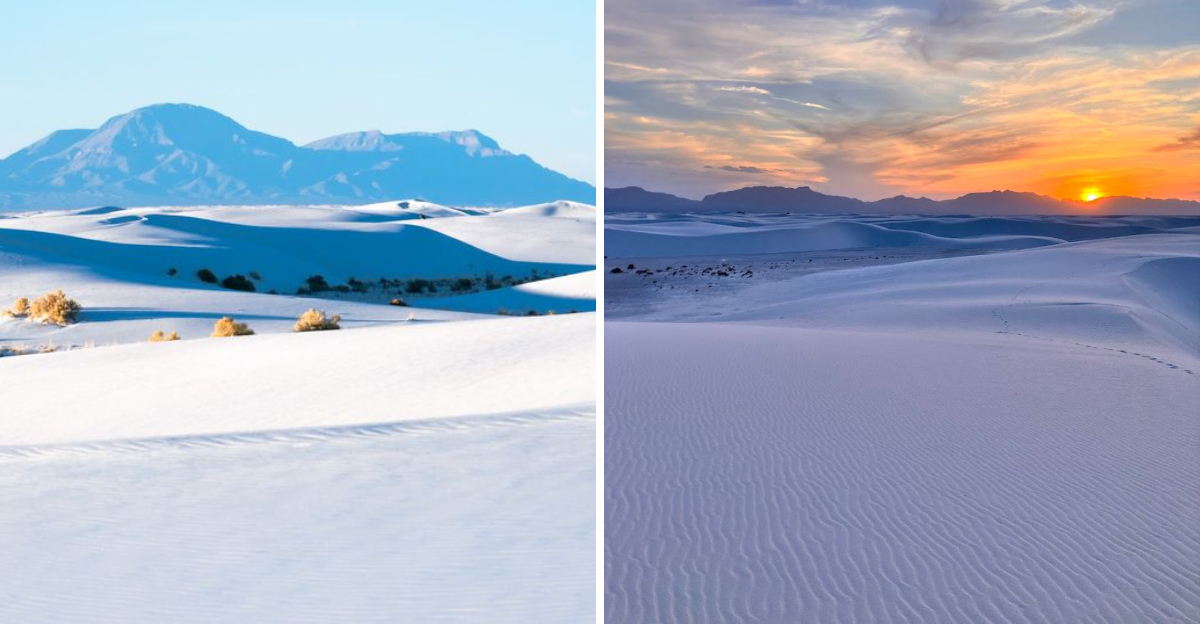
The gypsum dunes stretch in every direction, impossibly white, shifting quietly under a sky that seems bigger here than anywhere else in New Mexico.
Most natural wonders reward you for showing up.
This spot goes further than that. It genuinely disorients you, in the best possible sense, stripping away every familiar visual reference until all that remains is light, sand, and a silence so complete it starts to feel intentional.
People come expecting pretty photographs and leave having experienced something closer to a full reset.
The dunes look different at dawn than at noon, different again at golden hour, and completely otherworldly under a full moon.
One visit rarely feels like enough, which is exactly how the best places tend to work.
Sand Unlike Any Other
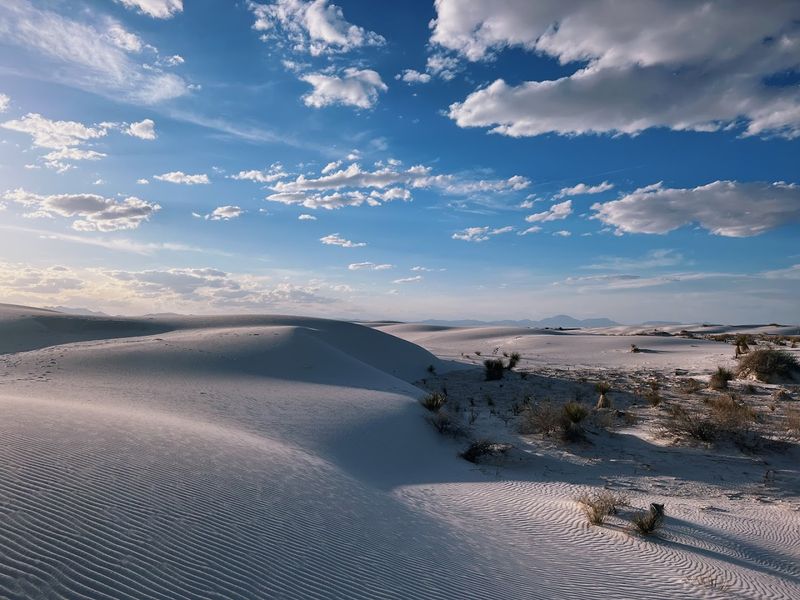
Forget everything you think you know about sand, because White Sands National Park plays by completely different rules.
The dunes here are made of gypsum crystals, not the quartz you find at a typical beach.
Gypsum does not absorb heat the way regular sand does, which means you can walk barefoot across these dunes even in the middle of summer without burning your feet.
White Sands National Park covers roughly 229 square miles of this surreal white landscape in southern New Mexico.
The park was officially designated a national park in December 2019, after spending decades as a national monument. That upgrade was long overdue.
The dunes are always moving, pushed by steady desert winds. Some dunes shift several feet every year, slowly swallowing plants and trails.
Standing on top of a tall dune, watching the ridgelines ripple into the distance, you genuinely feel like you have stepped onto another planet.
Scientists have even used this landscape to test Mars rover concepts, and honestly, it makes total sense.
When The Park Turns Pink
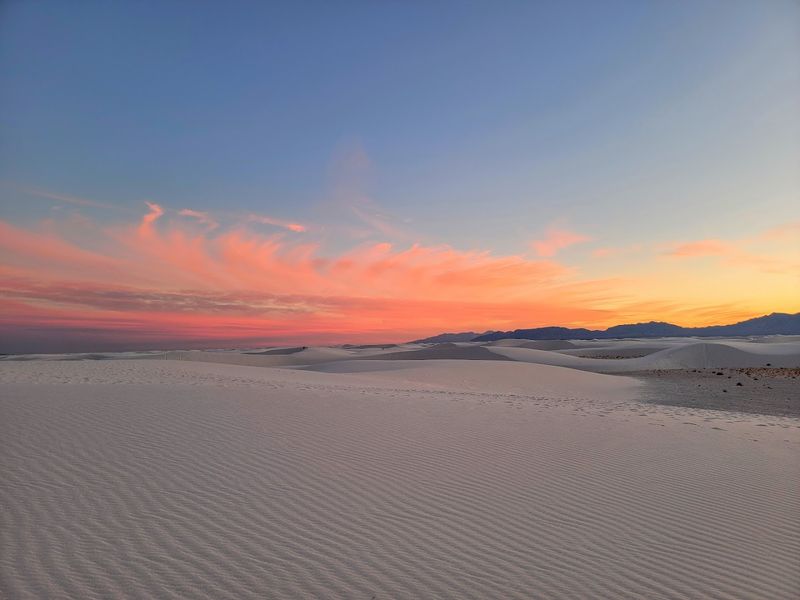
Most people arrive at White Sands around midday, squint into the glare, and head home. The people who show up at sunrise or sunset get an entirely different park.
The white dunes catch every shade of pink, orange, and lavender as the light shifts, turning the whole landscape into something that looks like a painting someone spent way too long perfecting.
The park offers special sunrise and sunset programs led by rangers during certain times of year. These guided walks take you out into the dunes while the light is doing its best work.
Even without a ranger program, arriving about an hour before sunset and staying until the stars appear is one of the best free experiences in the American Southwest.
The Milky Way over White Sands on a clear night is something most people genuinely do not expect.
Light pollution is minimal out here, and the white dunes reflect enough starlight to make the whole scene feel almost dreamlike. Bring a jacket, because desert nights cool down fast.
Sledding The Dunes
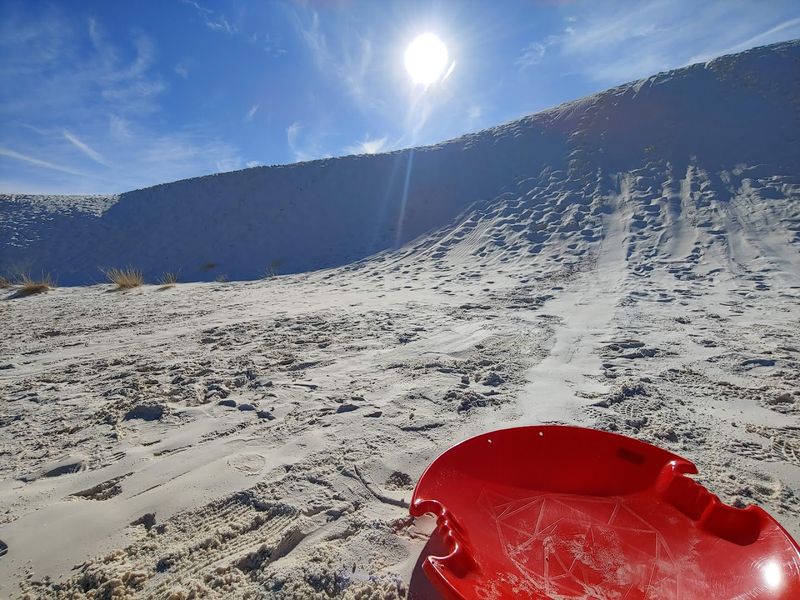
Sand sledding at White Sands is one of those activities that sounds a little ridiculous until you are flying down a steep white dune, screaming, with no way to stop gracefully.
The park visitor center sells plastic sled discs specifically designed for the gypsum dunes. You can also rent them there, which is worth knowing before you drive three hours with a snow sled strapped to your roof.
The sledding works best on the steepest dune faces, which take a bit of hiking to reach. The climb up is genuinely tiring in loose sand.
The ride down lasts about four seconds and makes every step of that climb feel worth it.
Wax the bottom of your sled before each run using the wax blocks sold at the visitor center. Without it, the friction slows you to a crawl and ruins the whole experience.
Kids absolutely love this activity, but so do adults who are willing to look slightly ridiculous in the name of fun.
The gypsum does not stain clothes the way dark sand would, so you can brush off and look reasonably presentable afterward.
The Interdune Boardwalk
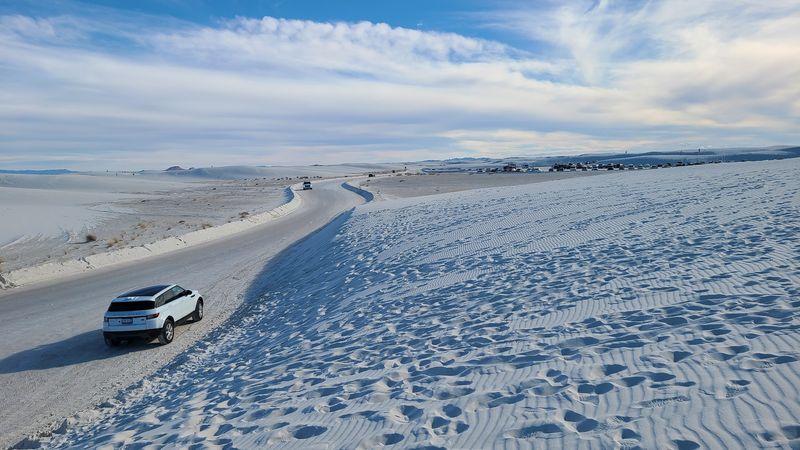
Not every great experience at White Sands requires hiking miles into the backcountry.
The Interdune Boardwalk is a flat, paved, half-mile loop that cuts right through the dune field and is fully accessible for wheelchairs and strollers.
It sounds modest, but the views from this trail are genuinely spectacular and completely underrated.
Along the boardwalk, interpretive signs explain the science behind how gypsum forms, how plants survive in this harsh environment, and why some animals here have evolved to be nearly white to blend in with the dunes.
The bleached earless lizard is one famous example, and spotting one feels like winning a tiny wildlife lottery.
The trail also passes through interdune areas where moisture collects and plants like soaptree yucca manage to survive by growing incredibly long roots.
Some of those yucca plants look like they are barely holding on, but they have been anchoring themselves to shifting sands for decades.
Early morning is the best time to walk this trail, before tour groups arrive and while the light is still soft and golden across the white sand. It is quiet, beautiful, and easier than most people expect.
Wildlife That Has Mastered The Art Of Camouflage
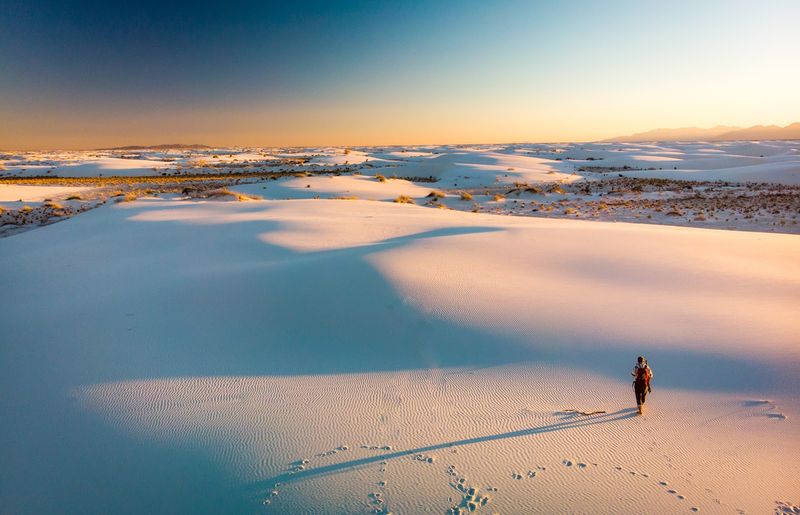
White Sands is not just a landscape. It is an active experiment in evolution happening right in front of you.
Several animal species living in and around the dunes have developed pale coloring over thousands of years to blend into the white environment.
The bleached earless lizard is probably the most famous example, but there are also white-colored mice and certain insects that have pulled off the same trick.
Spotting wildlife here requires patience and a slow pace. Roadrunners occasionally dart across the dunes, which never gets old.
Coyotes pass through the park regularly, usually at dawn and dusk. Pronghorn antelope graze in the surrounding basin and sometimes wander near the park boundaries.
The dunes themselves hide a surprising amount of life just beneath the surface. Beetles, spiders, and other insects burrow into the gypsum to escape daytime heat.
After a rare rain, the park transforms quickly, with flowers blooming and animals becoming noticeably more active.
Rangers recommend keeping a respectful distance from all wildlife and never feeding any animals.
The ecosystem here is delicate, and every creature in it has worked hard to survive in one of the most demanding environments in North America.
Sleeping Under The Stars In The Dunes
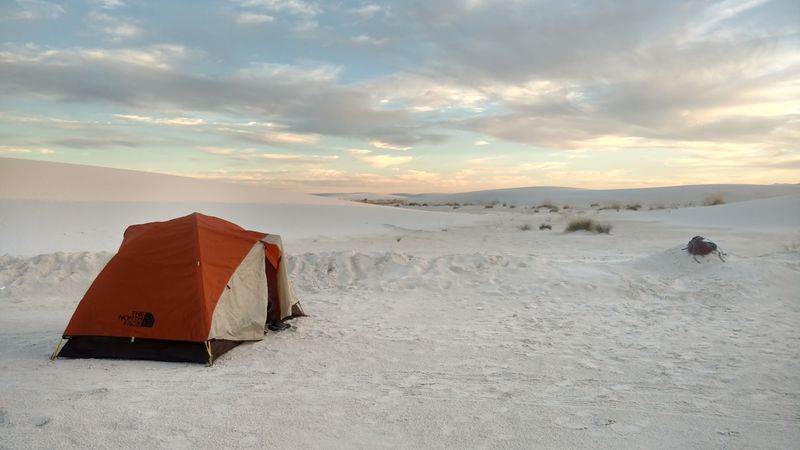
Backcountry camping at White Sands is currently closed, but visitors can still experience the dunes after dark during special evening programs and full moon events.
The park’s Full Moon Nights extend access on select dates, giving visitors a chance to see the white dunes under moonlight without staying overnight.
Check the park calendar before planning around any night program, since events can change because of weather or missile range activity.
There are no facilities out there. No water, no restrooms, no shade structures.
You carry everything in and carry everything out.
The payoff is complete silence, an unobstructed night sky, and the strange sensation of watching the dunes glow faintly under moonlight while the rest of the world is asleep.
Morning brings soft light, cool air, and the tracks of nocturnal animals printed fresh in the sand around your campsite.
The Science Behind The Sand
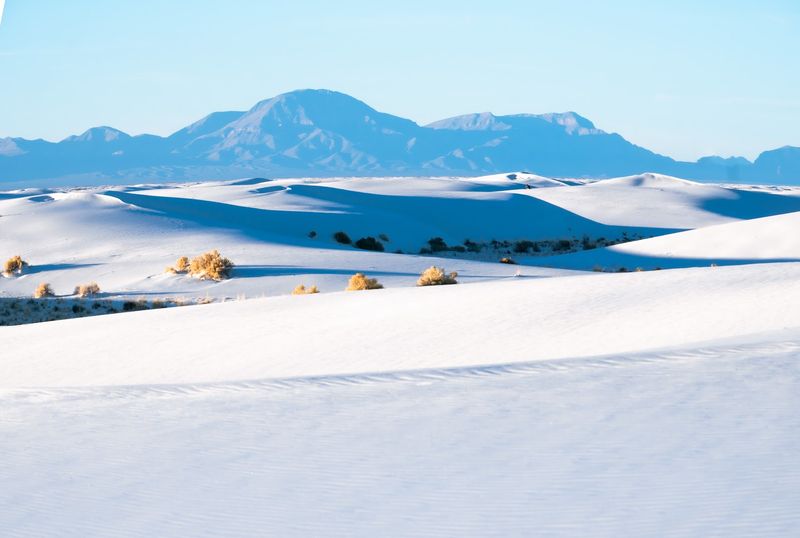
White Sands sits inside the Tularosa Basin, a closed basin that has no outlet to the ocean.
Rainwater and snowmelt flow down from the surrounding San Andres and Sacramento Mountains and collect in Lake Lucero, a dry lake bed at the southwest edge of the park.
That water is loaded with dissolved gypsum, which it picks up from rock formations in the mountains.
When the lake water evaporates under the desert sun, it leaves gypsum crystals behind on the lake bed.
Wind then picks up those crystals, breaks them into smaller grains, and carries them northeast across the basin, building the massive dune field we see today. The whole system has been running for roughly 10,000 years.
What makes this unusual is that gypsum is water-soluble. Most gypsum deposits wash away before they can form dunes.
The Tularosa Basin is so dry and so enclosed that the gypsum accumulates faster than it dissolves, creating one of the largest gypsum dune fields on Earth.
The visitor center has an excellent exhibit explaining all of this with clear graphics and hands-on displays.
Spending fifteen minutes there before hitting the dunes makes the whole experience significantly more interesting.
Planning Your Visit
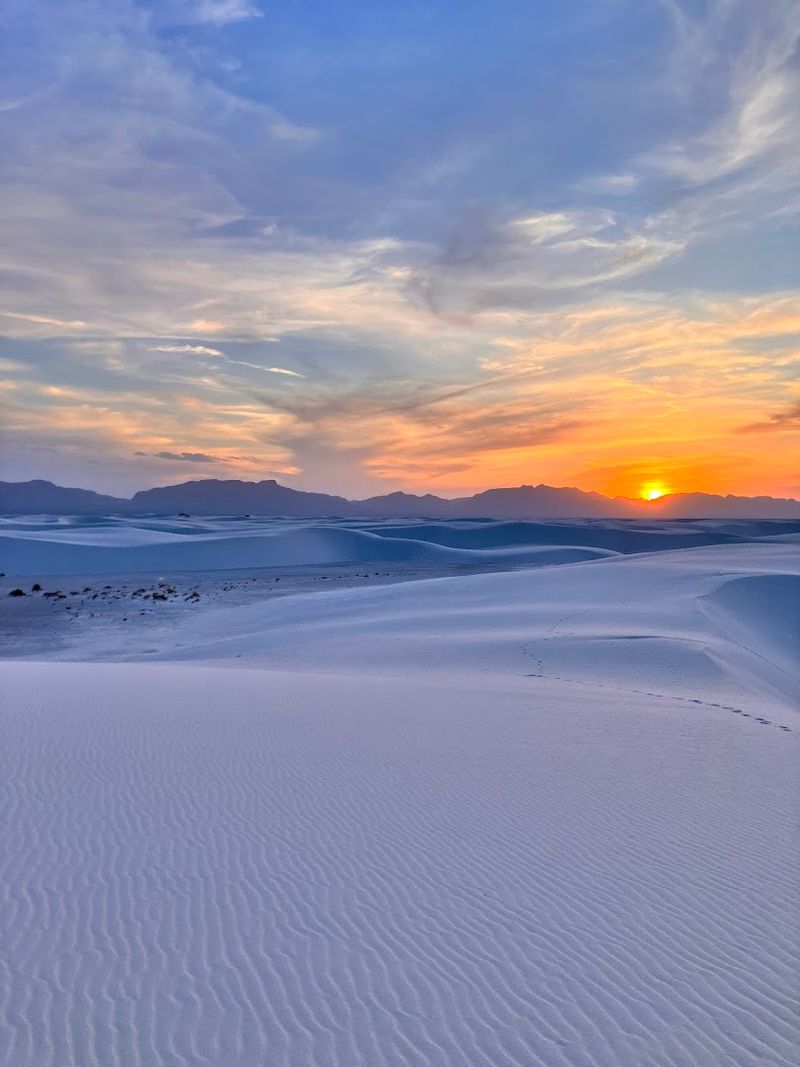
White Sands National Park is located near Alamogordo, New Mexico, along US Highway 70.
The entrance fee is affordable by national park standards, and an America the Beautiful annual pass covers it entirely if you visit multiple parks throughout the year.
The park entrance road runs about eight miles into the dune field and ends at a turnaround loop.
The park closes periodically for missile testing on the adjacent White Sands Missile Range. These closures typically last two to three hours and happen a few times per month.
The park posts closure schedules online and at the entrance station, so checking ahead saves frustration. Highway 70 also closes during these testing windows.
Summer temperatures regularly exceed 100 degrees Fahrenheit in the afternoon. Visiting early in the morning or in the evening dramatically improves the experience and reduces heat risk.
Bring more water than you think you need, wear sunscreen, and pack a hat. The white surface reflects sunlight intensely, which means sunburn happens faster here than most people expect.
Fall and spring offer the most comfortable temperatures for exploring the dunes on foot. The park is open year-round, and winter visits, while cold, bring a quiet and beautiful stillness to the landscape.