14 Amazing California Places Many People Live Their Whole Lives Without Ever Seeing
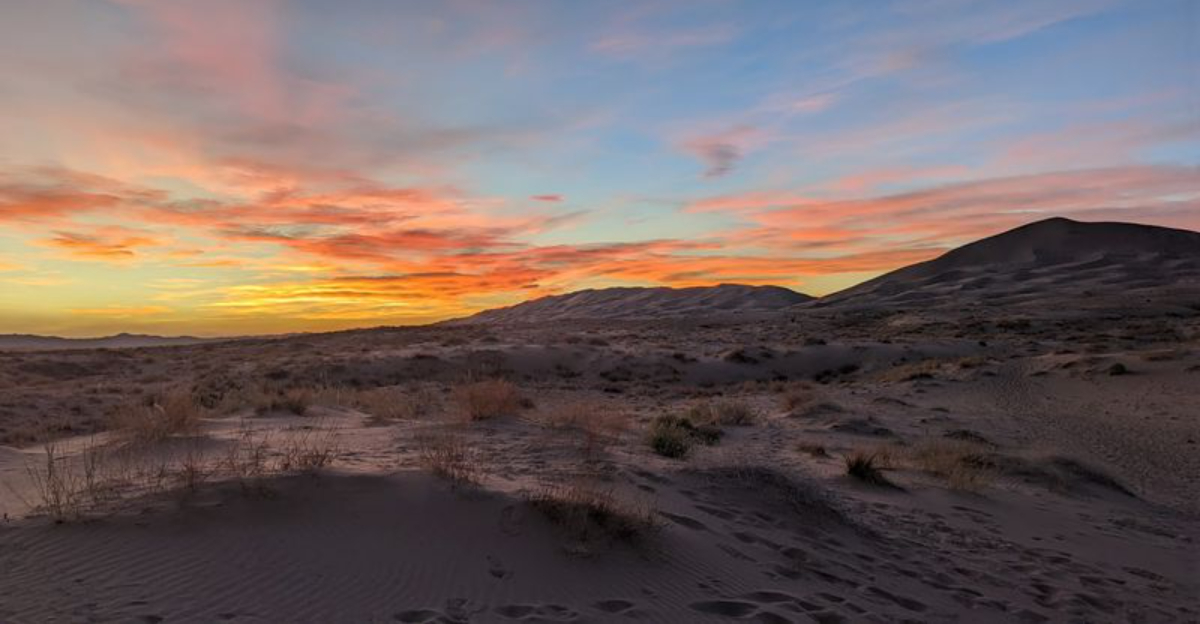
Living near amazing places does not guarantee anyone actually sees them.
People can spend years talking about “one day” while the calendar keeps winning. Work gets busy. Weekends disappear.
The familiar grocery run happens way more often than the unforgettable overlook two hours away.
California keeps some of its best surprises off the obvious route.
A regular-looking road can lead to a strange desert landscape, a quiet mountain view, or a place that makes people ask why they waited so long.
Plenty of residents know the famous stops. That is not the issue.
The real surprises are the places that slip past the usual lists.
They are odd, peaceful, dramatic, or just different enough to make a person feel like they missed a whole chapter of their own state.
1. Ahjumawi Lava Springs State Park
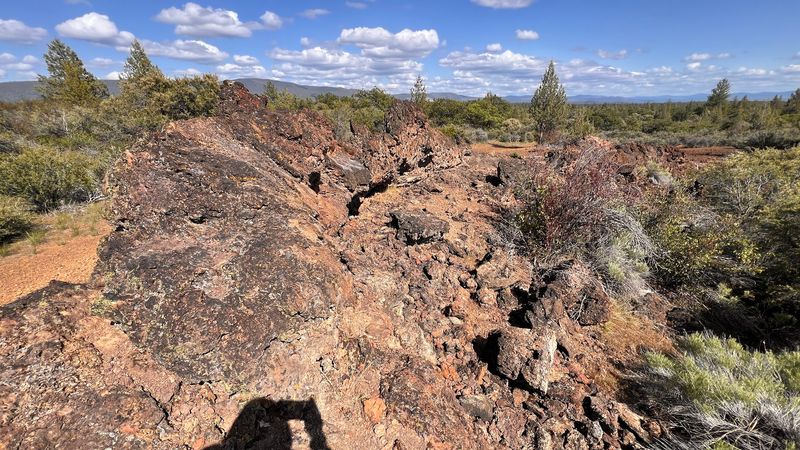
Getting to Ahjumawi is already part of the adventure, because the only way in is by boat or canoe.
Located in northeastern California near the town of McArthur, this state park sits where Big Lake, Tule River, and several spring-fed waterways converge into one of the largest freshwater spring systems in the entire country.
There are no roads leading to the main camping and hiking areas, which means crowds are basically nonexistent.
The lava rock landscape feels ancient and otherworldly, with jet-black formations jutting out near crystal-clear water that stays remarkably cold year-round.
Canoe rentals are available nearby, and the put-in point at Rat Farm Landing is where most visitors launch. Bring your own food and plenty of water since there are no facilities inside the park.
Wildlife sightings here tend to be frequent and up-close, including osprey, bald eagles, river otters, and mule deer.
The name Ahjumawi comes from the Pit River Tribe and means “where the waters come together,” which honestly describes the vibe perfectly.
Plan for at least a full day, and if camping overnight is on the table, the solitude under those northeastern California stars is something truly hard to forget.
2. Eureka Dunes
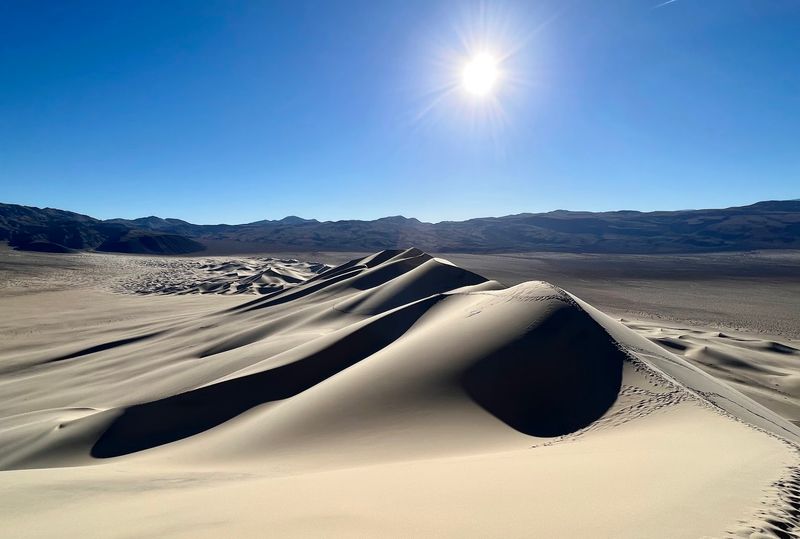
In the northern reaches of Death Valley National Park, the Eureka Dunes are the tallest sand dunes in California and among the tallest in all of North America, reaching heights close to 680 feet.
Most Death Valley visitors never make it out here because the access road is long, unpaved, and a solid distance from the main park hubs.
That remoteness is exactly what makes arriving here feel like stumbling onto something almost no one else knows about.
The dunes are also known for producing a rare low rumbling sound sometimes called “singing sand” when dry grains slide down the steep faces.
Early morning and late afternoon light turns the sand every shade of gold and copper, making it a genuinely stunning spot for photography.
Several rare plant species found nowhere else on Earth grow at the base of the dunes, including the Eureka Dune grass and shining milk-vetch.
Camping is allowed near the dunes with a permit, and the night skies here rank among the darkest in the lower 48 states. High-clearance vehicles are strongly recommended for the access road.
3. Lava Beds National Monument
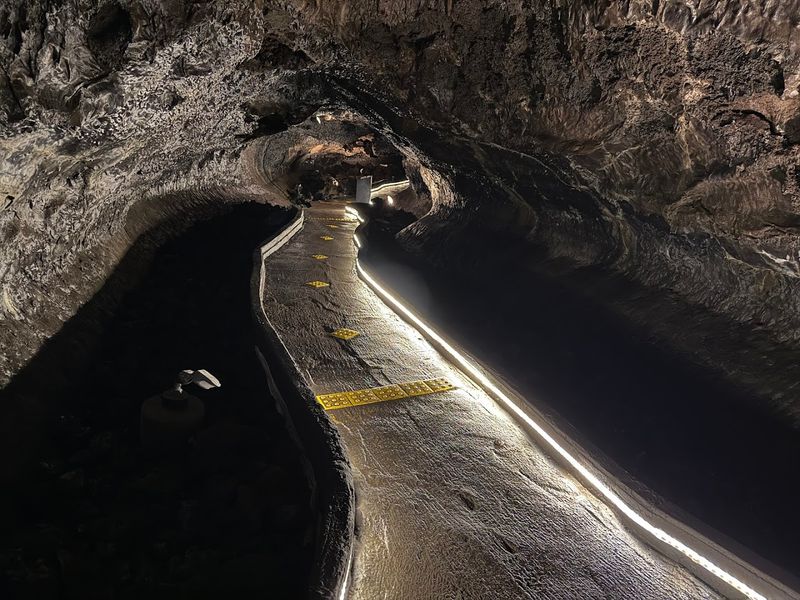
More than 700 lava tube caves sit beneath the surface of Lava Beds National Monument, making it one of the most cave-dense areas in the entire country.
This monument does not get anywhere near the attention it deserves.
Visitors can pick up a free cave loop key at the visitor center and explore multiple caves on their own, ranging from easy walk-in tubes to crawl-through passages that will definitely test your comfort zone.
Above ground, the monument holds a lot of history too.
The Modoc War of 1872 to 1873 was fought across this exact landscape, and Captain Jack’s Stronghold still stands as a preserved battlefield site.
Native American petroglyphs and pictographs are also found throughout the park, with Petroglyph Point being one of the most significant rock art sites in the western United States.
Bring multiple light sources into any cave since the darkness is absolute once you are inside. Helmets are available to borrow at the visitor center.
The elevation sits around 4,000 feet, so temperatures can be cooler than expected even in summer.
Stargazing here is seriously next-level thanks to minimal light pollution across this part of the state.
4. Carrizo Plain National Monument
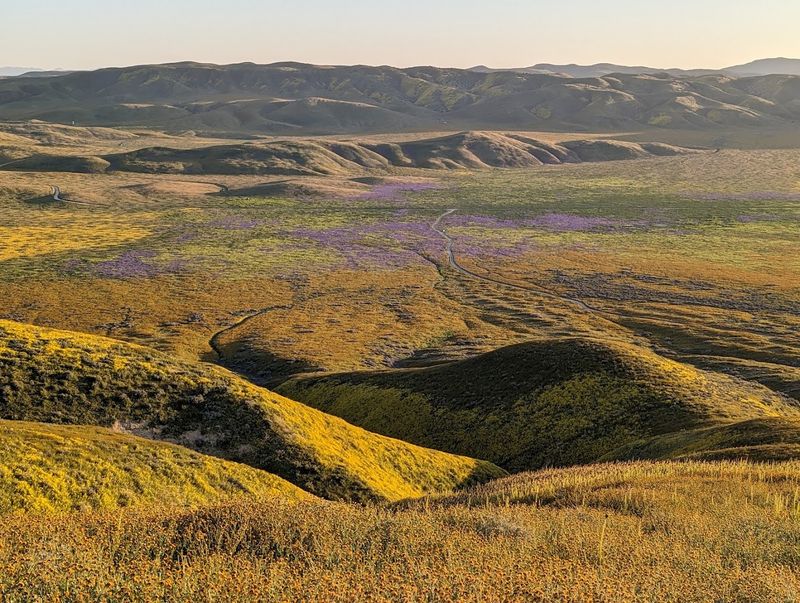
Stretching across a remote valley in San Luis Obispo County, Carrizo Plain National Monument holds the largest single native grassland remaining in California.
During a good rain year, the wildflower superbloom here can genuinely stop you in your tracks.
Fields of goldfields, owl’s clover, and phacelia blanket the valley floor in colors so vivid they look almost digitally enhanced, yet it is completely real and completely free to witness.
Soda Lake, a seasonal alkaline lake at the heart of the monument, draws massive flocks of sandhill cranes during winter migrations, sometimes numbering in the thousands.
The San Andreas Fault runs directly through the plain, and you can actually see the fault line cutting across the landscape if you know where to look.
Painted Rock, a large sandstone outcropping near the southern end, contains some of the most significant Chumash rock art in existence.
There are no gas stations, restaurants, or cell service inside the monument, so preparation matters a lot before heading out.
Bloom timing varies year to year depending on winter rainfall, and checking with the Bureau of Land Management field office before a spring visit can save a lot of disappointment or, better yet, lead to perfect timing.
5. Mayyan Ooyakma Coyote Ridge Open Space Preserve
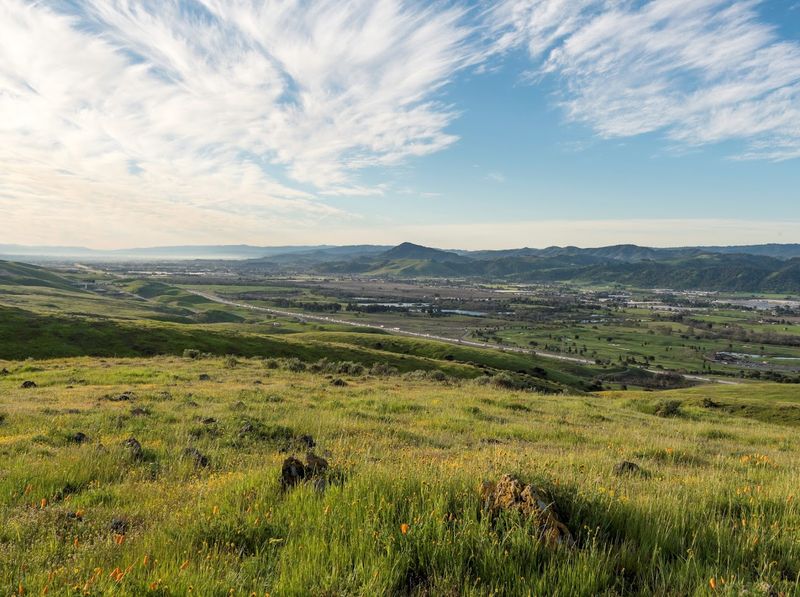
Sitting right on the edge of Silicon Valley, Mayyan Ooyakma Coyote Ridge Open Space Preserve is one of those places that Bay Area residents drive past constantly without ever stopping to explore.
The preserve protects a stretch of the Diablo Range and sits within one of the most biologically diverse regions in the entire state of California.
Serpentine grasslands here support rare plants and insects found almost nowhere else, and the views across the South Bay on a clear day are genuinely jaw-dropping.
The name honors the Ohlone people whose ancestral territory encompasses this land, and interpretive information at trailheads helps connect visitors to that deeper history.
Trails range from moderate to strenuous, with some routes connecting into the broader Coyote Valley Open Space Preserve trail network.
Spring is when the preserve really shows off, with native wildflowers carpeting the hillsides in waves of purple, yellow, and white.
Parking access points are limited, and trailhead lots can fill up on weekend mornings, so arriving early is genuinely the move here.
Dogs are not permitted on most trails within the preserve in order to protect sensitive wildlife habitats.
Checking the Midpeninsula Regional Open Space District website before visiting will give the most current trail conditions and access information.
6. Forestiere Underground Gardens
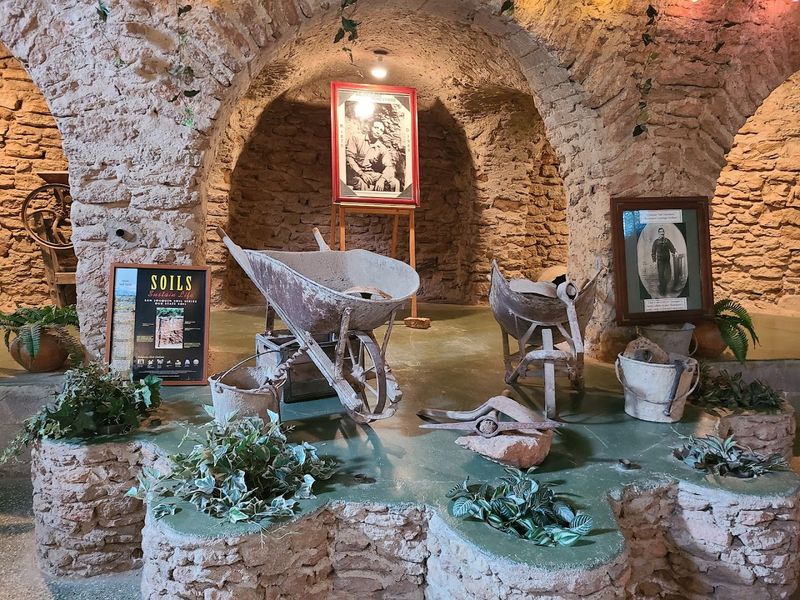
Baldassare Forestiere spent roughly 40 years hand-carving an elaborate network of underground rooms and passageways beneath the hardpan soil of Fresno, and the result is one of the most singular human-made wonders in all of California.
The underground gardens are open for guided tours and feel like stepping into someone’s lifelong dream made entirely by hand.
The rooms stay naturally cool even during brutal Central Valley summers, which was actually part of the original design concept.
Fruit trees, including citrus, grapes, and even a multi-grafted citrus tree bearing several different varieties, grow in the underground courtyards where skylights allow sunlight to reach them.
Forestiere began digging in 1906 partly as a response to the scorching heat and partly out of pure creative vision.
The space eventually grew to cover around ten acres underground, with some rooms going three levels deep.
Tours run seasonally and must be booked in advance, as group sizes are kept small to preserve the site.
The experience is genuinely unlike anything else in the state, and locals who have lived in Fresno for decades are sometimes surprised to learn it exists at all.
7. Pinnacles National Park Caves and Condor Areas
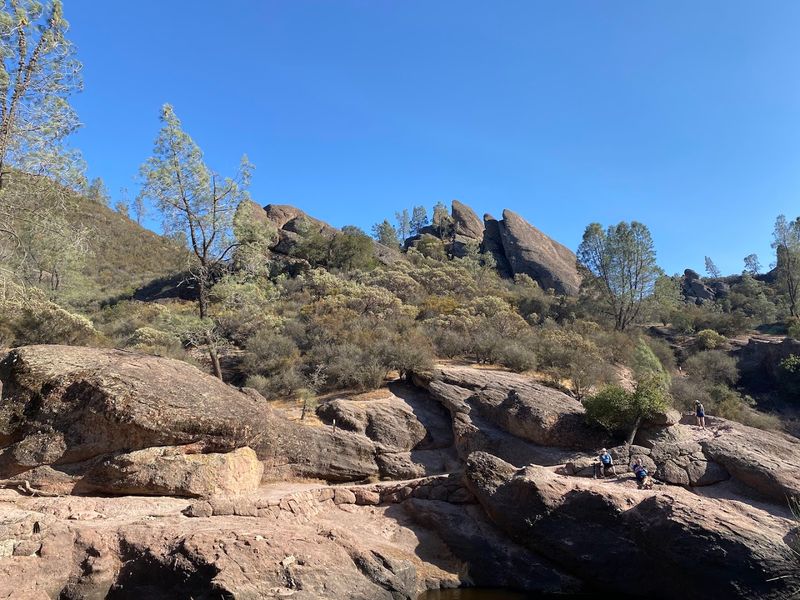
Pinnacles National Park consistently ranks as one of the least-visited national parks in the entire country, which is honestly a gift for anyone who makes the trip.
It was formed by an ancient volcano whose remnants were slowly split and shifted by the San Andreas Fault over millions of years.
The result is a dramatic landscape of towering spires, sheer rock faces, and boulder-choked canyons unlike anything else in coastal California.
The talus caves at Pinnacles are not traditional caves but rather narrow gorges where massive boulders have fallen and wedged together to create dark, winding passageways.
Bear Gulch Cave and Balconies Cave are the two main cave systems, and exploring them requires a headlamp and a willingness to crouch, squeeze, and scramble.
Bear Gulch is sometimes partially closed during Townsend’s big-eared bat breeding season, so checking the park website before visiting is worth the two minutes it takes.
California condors were reintroduced here, and spotting one soaring overhead with that unmistakable nine-foot wingspan is a real possibility on any given visit.
The park has two separate entrances on opposite sides with no road connecting them, so choosing east or west entry before arriving matters.
8. Bodie State Historic Park
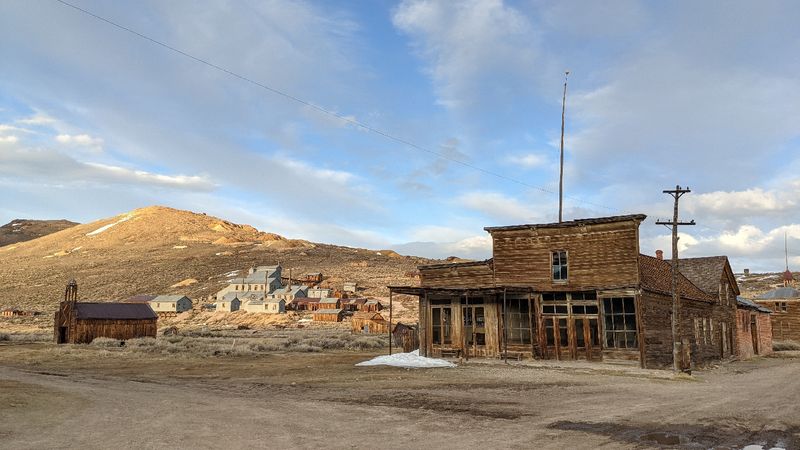
Few places in California carry the atmospheric weight of Bodie, a genuine gold rush ghost town frozen in a state of what park officials call “arrested decay.”
Sitting at nearly 8,400 feet elevation in Mono County, Bodie was once home to around 10,000 people during its peak in the late 1870s and early 1880s, making it one of the largest and most lawless mining camps in the American West.
Today more than 100 structures still stand, many with their original furniture, tools, and personal belongings still inside.
Walking through the townsite feels genuinely eerie in the best possible way. Peeling wallpaper, rusted stoves, and dusty bottles sit exactly where they were left behind when the last residents departed.
The park maintains the buildings in their current condition rather than restoring them, preserving the authentic sense of slow abandonment that makes Bodie so compelling.
The road to Bodie is unpaved for the last three miles and can be rough, especially after winter. The park is open year-round but is most accessible from late spring through early fall.
Winter visits are possible but require preparation for deep snow and severe cold at that elevation.
Arriving on a weekday significantly reduces crowds, and the golden hour light on those weathered wooden buildings is something genuinely worth planning around.
9. The Lost Coast
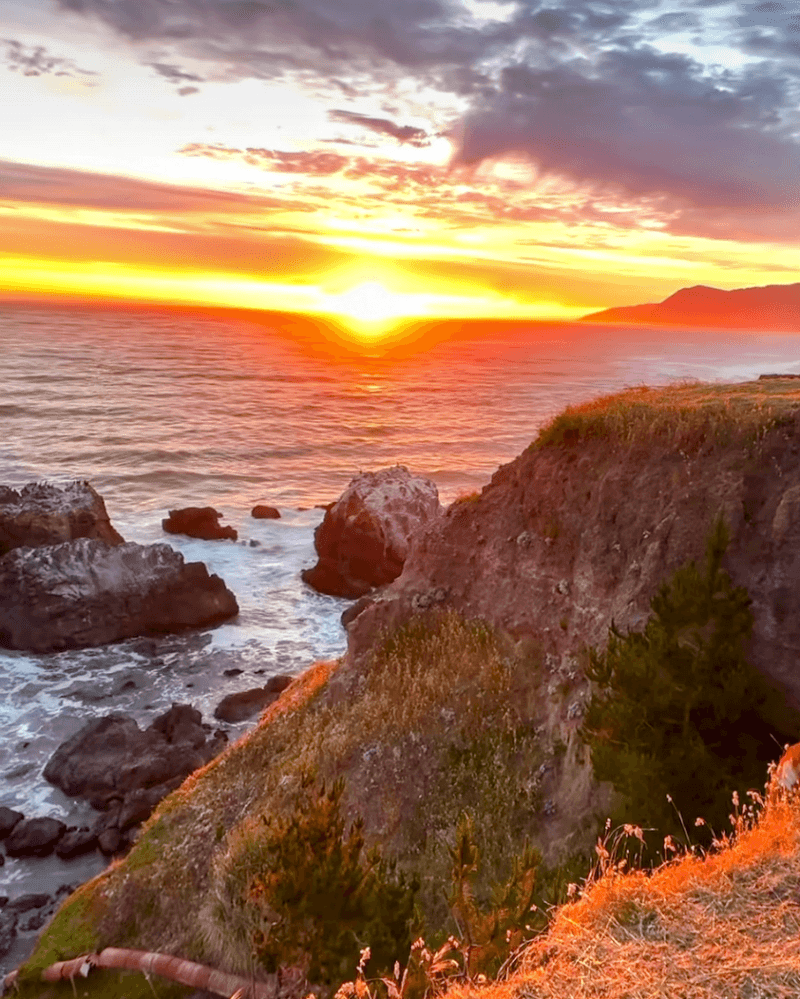
California’s Lost Coast earned its name because the terrain was too rugged for the Pacific Coast Highway to pass through, leaving this stretch of Humboldt and Mendocino coastline essentially roadless and untouched.
The King Range rises sharply from the ocean here, creating some of the steepest coastal terrain in the contiguous United States.
That inaccessibility is exactly what has kept it wild, raw, and profoundly quiet compared to nearly every other piece of California coastline.
It runs roughly 24 miles from Mattole Beach to Black Sands Beach near Shelter Cove, and completing it requires crossing creek mouths, navigating tide-dependent impassable headlands, and carrying everything you need for multiple days.
Black sand beaches, tide pools, sea stacks, and Roosevelt elk wandering the shore are all part of the experience.
Some sections of the trail are only passable at low tide, so consulting a tide chart before setting out is not optional.
The King Range National Conservation Area managed by the Bureau of Land Management provides permits and current conditions information.
Cell service is essentially nonexistent throughout the entire area, and that disconnection from everything digital is part of what makes the Lost Coast feel so genuinely restorative.
10. Kelso Dunes
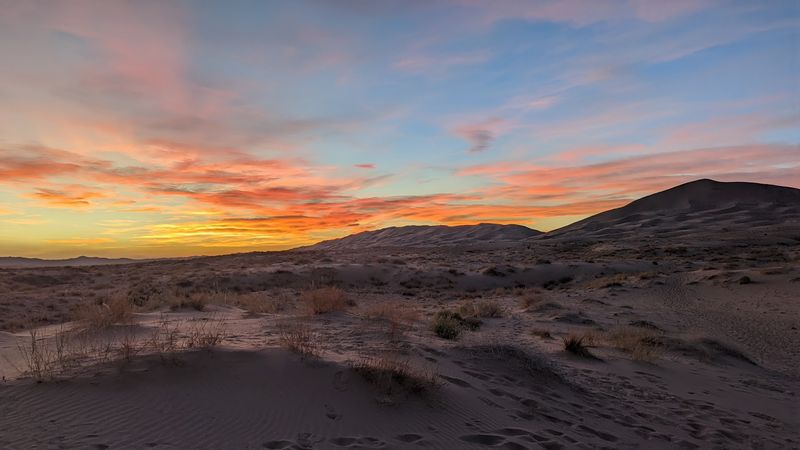
Rising nearly 700 feet from the desert floor, Kelso Dunes are the third tallest dunes in North America and one of the most undervisited natural wonders in all of California.
Sitting within the Mojave National Preserve between Barstow and Needles, they are far enough off the interstate to keep crowds minimal even on weekends.
The approach across the flat desert makes their sheer size hit you all at once as you get closer, and that first impression is genuinely hard to shake.
Under the right conditions, the dunes produce a low humming or booming sound when sand avalanches down the steep slip faces, a phenomenon caused by the movement of dry rounded sand grains.
Hiking to the top of the main dune crest takes roughly 45 minutes to an hour each way, and the soft sand makes the climb feel significantly harder than the distance suggests.
The views from the top span the entire Mojave basin in every direction.
Dawn and dusk visits offer cooler temperatures and dramatically better light for photography.
Summer midday heat here can be genuinely dangerous, so early morning starts are strongly advised from June through September.
A small parking area sits at the trailhead, and there are no fees to access Kelso Dunes specifically, though the Mojave National Preserve has its own entrance considerations worth checking before the drive.
11. Salt Point State Park
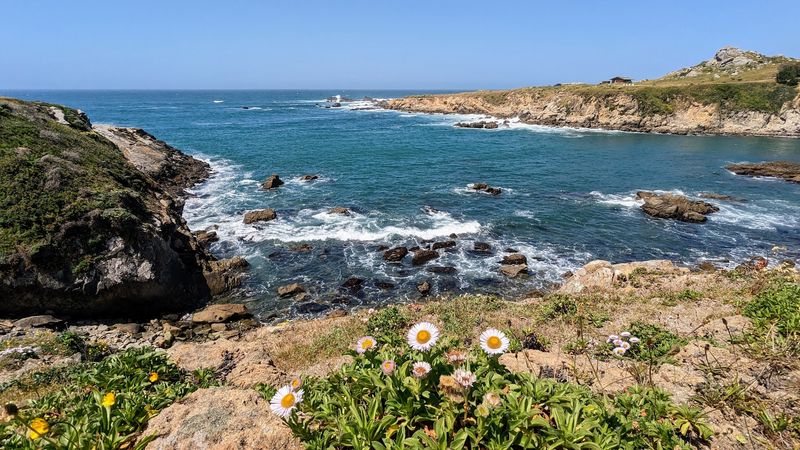
Along the Sonoma Coast roughly 90 miles north of San Francisco, Salt Point State Park protects a stretch of coastline that feels more like the edge of the world than a day trip from the Bay Area.
The park is best known for its wave-sculpted sandstone formations called tafoni, which are honeycomb-like pockets and cavities eroded into the rock by salt and moisture over thousands of years.
Walking along the bluffs and looking down at those formations is one of those quietly surreal experiences that sticks with you.
Salt Point also holds the distinction of being the first underwater park established on the West Coast, with a protected marine reserve that draws divers and snorkelers to explore kelp forests, abalone habitat, and diverse sea life.
Tidepooling along the rocky shoreline reveals sea stars, chitons, anemones, and hermit crabs in abundance during low tide.
Rhododendron Creek Trail through the park’s interior forest offers a completely different texture, moving through dense bishop pine and coastal scrub.
Camping is available at two campgrounds within the park, and reservations are recommended during summer and on holiday weekends.
The coastal bluff trails are largely unpaved and can be uneven, so sturdy footwear makes a real difference.
12. Petrified Forest
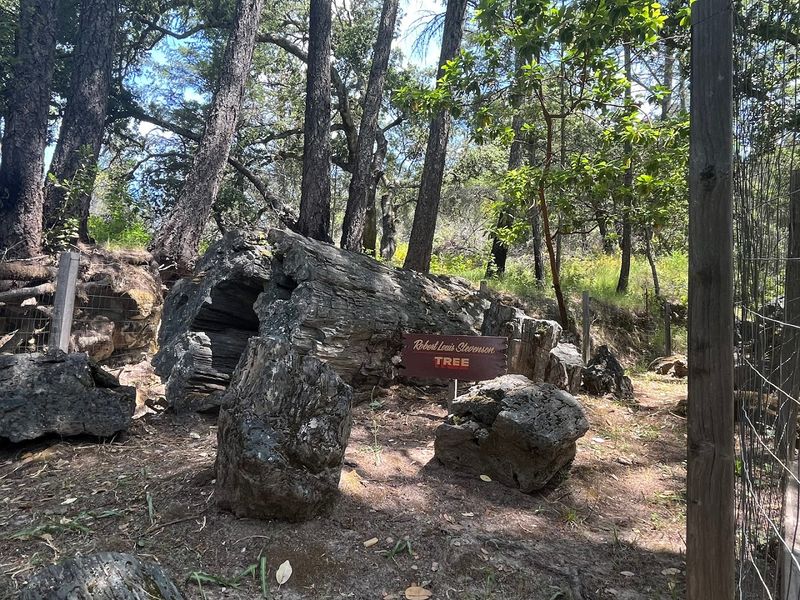
About three miles west of Calistoga in the Napa Valley wine country foothills sits one of California’s most quietly fascinating natural sites.
The privately operated preserve where ancient redwood trees were turned to stone by a volcanic eruption roughly 3.4 million years ago.
The Petrified Forest at 4100 Petrified Forest Rd in Calistoga has been open to visitors since 1871, making it one of the oldest tourist attractions in the entire state.
The eruption of Mount St. Helena buried an entire ancient redwood forest under volcanic ash, and over millions of years silica-rich groundwater gradually replaced the organic material with mineral deposits.
The detail in some of the petrified logs is remarkable, with bark texture, growth rings, and even small branch stubs still clearly visible.
A self-guided trail winds through the site and takes roughly 45 minutes to an hour to complete at a relaxed pace.
Admission is charged, and the preserve is family-friendly with manageable trail distances and a small gift shop and museum at the entrance.
The setting within oak woodland gives the site a peaceful, shaded quality even on warm days.
Combining a visit here with a stop in Calistoga for a soak at one of the town’s famous hot spring spas is a very Bay Area way to spend a weekend.
13. China Camp State Park
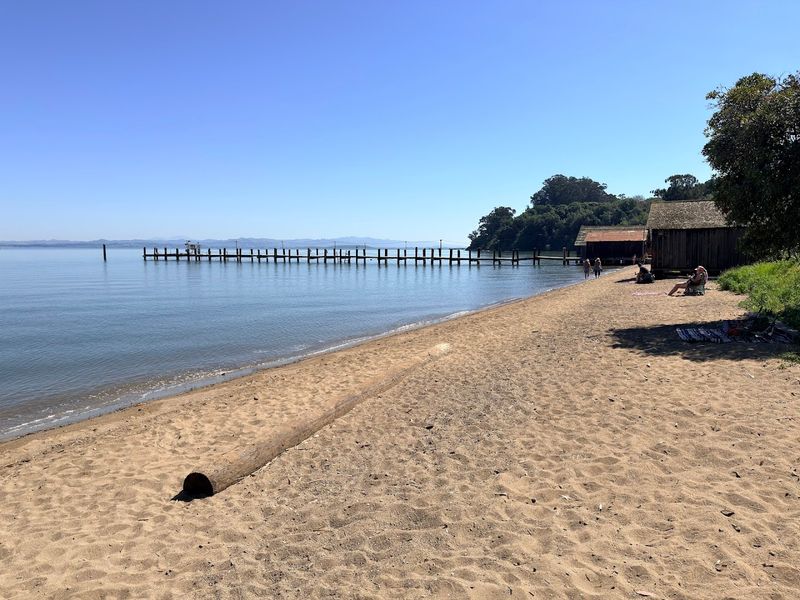
Just a few miles east of downtown San Rafael, China Camp State Park preserves one of the last remaining Chinese shrimp fishing villages in the United States, a place with deep historical significance.
The village was established in the 1870s and 1880s by Chinese immigrants who built a thriving shrimp harvesting and drying operation along this protected stretch of San Pablo Bay.
At its peak, the village supported a population of several hundred people and shipped dried shrimp to markets throughout California and to China.
The historic wooden buildings, including a shack that once served as a store and residence, still stand at the water’s edge and are maintained as a museum.
The surrounding park encompasses over 1,500 acres of oak woodland, chaparral, and bay shoreline that feel surprisingly remote given the proximity to the suburban North Bay.
Trails range from flat bayside paths to steeper ridge routes with panoramic views across San Pablo Bay toward the East Bay hills.
Mountain biking is popular on the park’s trail network, and the mix of terrain makes it appealing for riders of varying skill levels.
The park sometimes hosts living history events at the village site, so checking the California State Parks calendar before visiting could add a richer layer to the experience beyond the usual trail walk.
14. Providence Mountains State Recreation Area and Mitchell Caverns
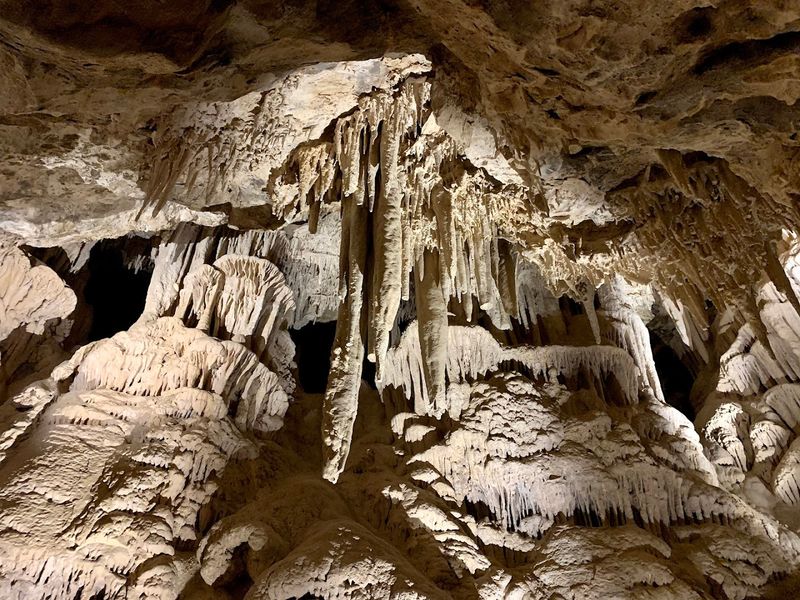
Hidden within the Providence Mountains in the eastern Mojave Desert, Mitchell Caverns are among the most remarkable and least-known cave systems in California.
The caverns sit inside the Providence Mountains State Recreation Area, which is itself tucked within the larger Mojave National Preserve.
Two marble caves, El Pakiva and Tecopa, contain an impressive array of speleothems including stalactites, stalagmites, cave ribbons, and rare cave formations called helictites.
Tours of the caverns are ranger-led and run on a limited schedule, making advance reservations genuinely important rather than optional.
The caverns maintain a constant temperature of around 65 degrees Fahrenheit year-round, which feels refreshing against the desert heat outside.
Above the caverns, short hiking trails lead to sweeping views across the Providence Mountains and out over the vast Mojave basin toward Nevada.
The drive to the recreation area involves roughly 16 miles of unpaved road from Interstate 40 at the Essex Road exit, and high-clearance vehicles are recommended.
The surrounding desert landscape along the drive is striking in its own right, with Joshua trees, cholla cactus, and dramatic volcanic outcroppings lining the route.