Nebraska Is Home To A Stunning Gothic Revival Cathedral With Old-World Beauty
Gothic Revival architecture has a way of making people look up before they even mean to.
Pointed arches will do that. So will tall towers, detailed windows, and the kind of craftsmanship that makes a visit feel a little special.
A cathedral does not need to be enormous to make an impression. It just needs presence.
The kind that slows your steps and makes the outside world feel briefly quieter.
Old-world beauty feels especially striking in Nebraska when it appears in a place many travelers might not expect.
That contrast is part of the appeal.
You get the familiar rhythm of the Plains. Then suddenly, there is stonework, stained glass, and a building that feels shaped by patience.
Late Gothic Revival Details Give Grand Island A Cathedral With Serious Old-World Drama
Few buildings in the Great Plains carry the kind of architectural weight that this cathedral does on a quiet Nebraska afternoon.
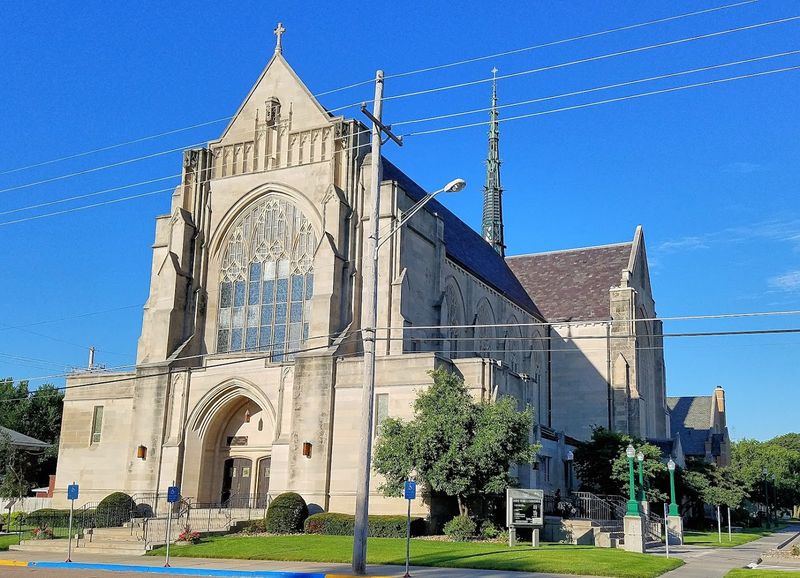
Completed in 1928, the Late Gothic Revival style was chosen deliberately to evoke the grandeur of European ecclesiastical architecture, and the result is a structure that feels genuinely dramatic without trying too hard.
Pointed arches frame every doorway and window opening, while stepped buttresses push outward along the exterior walls, giving the building a muscular, upward-reaching silhouette.
The sandstone facade catches light differently depending on the time of day, shifting from warm gold in the morning to a cooler gray tone by late afternoon.
Architects Henry W. Brinkman and J. Stanley Hagan brought serious skill to the project, balancing ornate Gothic detailing with practical construction that has held up for nearly a century.
The exterior feels cohesive rather than overdone, which is a harder balance to strike than it looks.
Grotesques adorn the spire area, adding small moments of visual surprise for anyone willing to look up and pay close attention.
Grand Island, Nebraska is not a place most people associate with Gothic drama, but this cathedral makes a compelling case for reconsideration.
Paris-Inspired Design Makes The Building Feel Far From Ordinary Nebraska Architecture
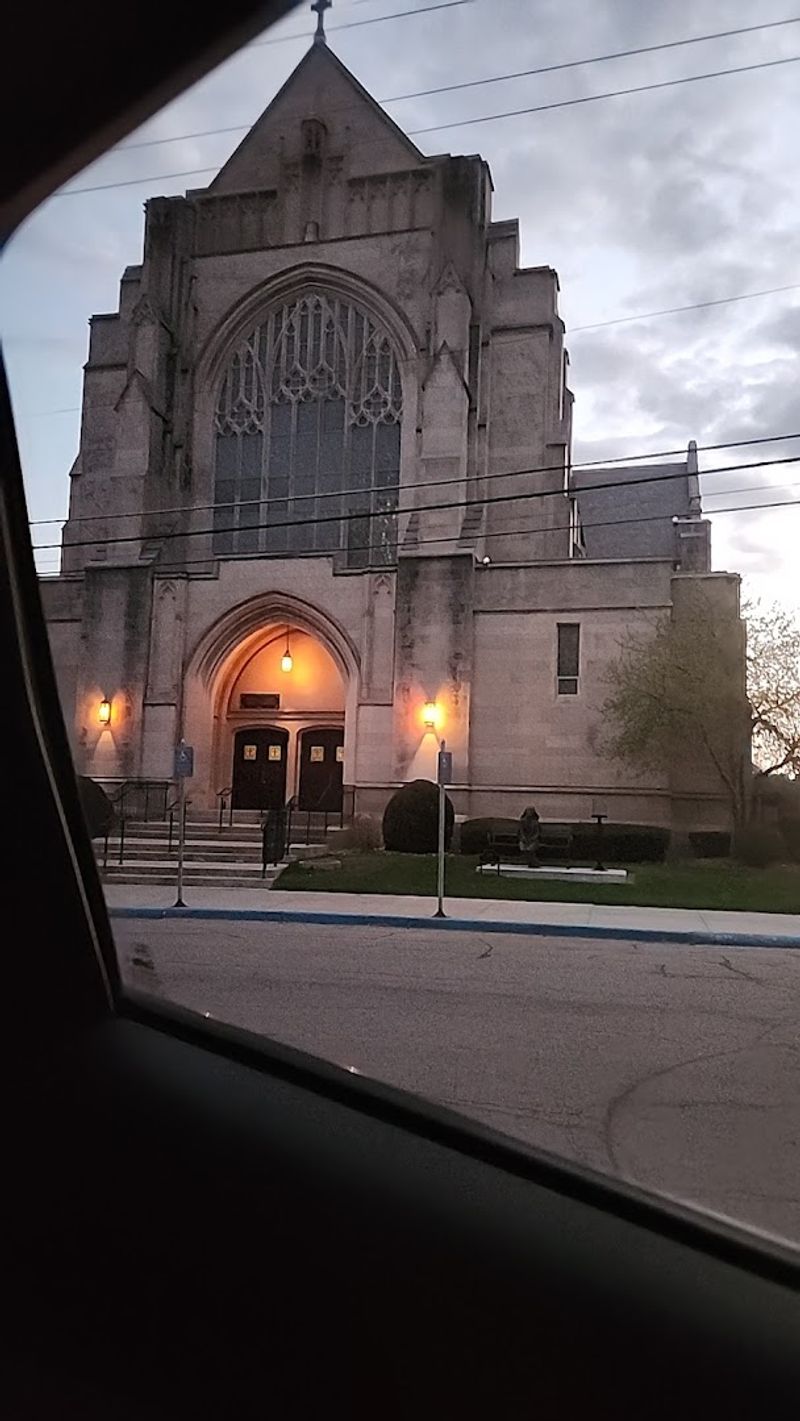
The Parisian Sainte-Chapelle served as a design reference when Brinkman and Hagan planned this cathedral, and that influence shows up in ways that feel both subtle and unmistakable.
Sainte-Chapelle is famous for its vertical elegance and its ability to make stone feel almost weightless, and the Grand Island cathedral channels that same sensibility through its proportions and interior spatial arrangement.
Walking through the front entrance, the shift in scale from the street outside to the nave inside is genuinely startling in the best way.
The cross-shaped floor plan follows classic Gothic cathedral logic, with a nave, transepts, and a sanctuary that draw the eye forward and upward simultaneously.
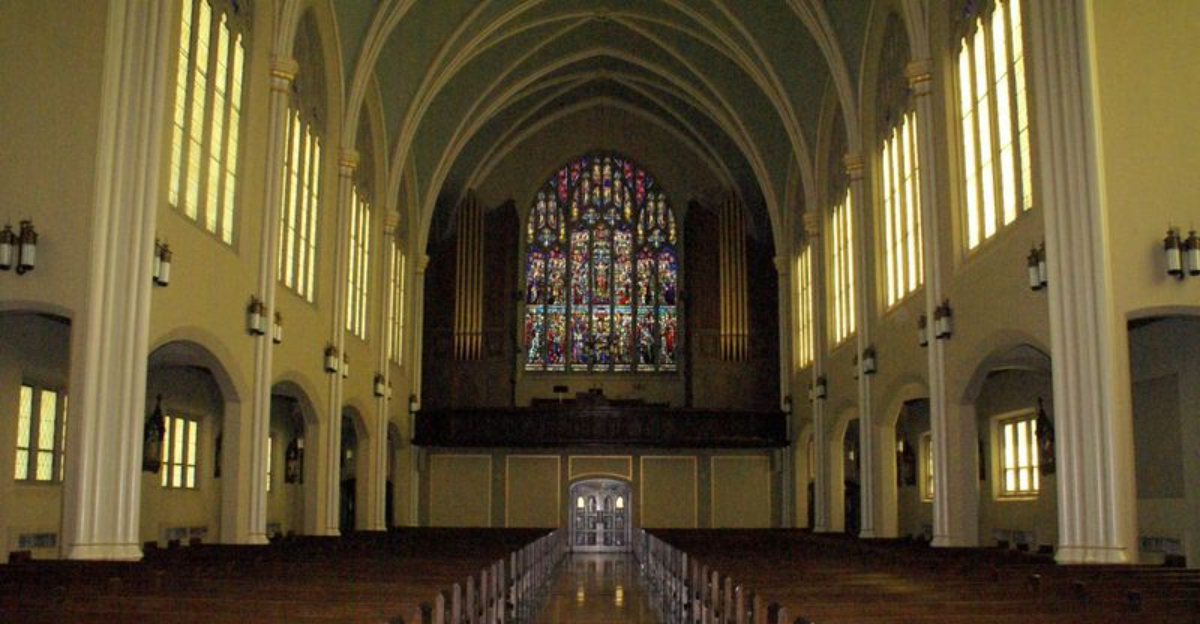
Engaged clustered columns line the nave, rising without interruption toward the fan-vaulted ceiling 75 feet overhead.
That kind of unbroken vertical line is what gives Gothic spaces their particular emotional quality, a sense of being lifted rather than enclosed.
Nebraska architecture tends toward the practical and horizontal, shaped by the landscape around it.
Finding a building here that reaches so deliberately skyward and draws on one of Paris’s most celebrated chapels as a model makes the cathedral feel like a genuine outlier, and a remarkable one at that.
Stone Tracery Adds The Kind Of Craftsmanship People Usually Stop To Stare At
Stone tracery is one of those architectural details that most people respond to emotionally before they understand what they are looking at.
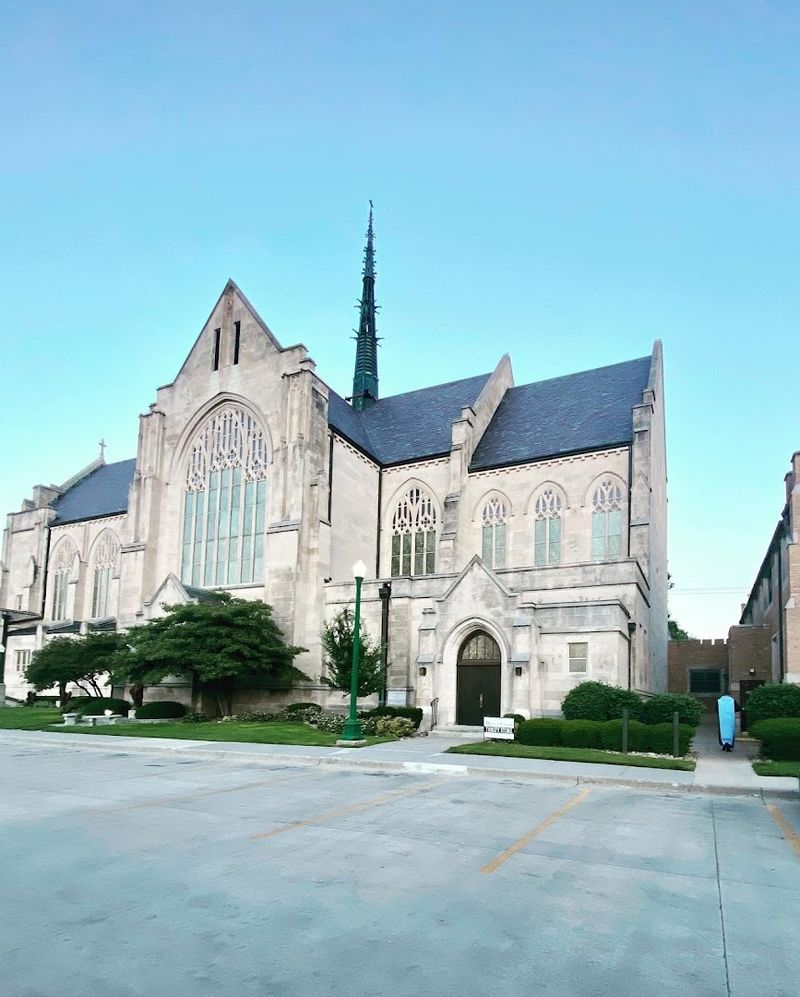
The interlocking geometric patterns carved from stone around the clerestory windows at this cathedral represent hours of skilled labor and a level of craft that is genuinely rare in American church construction.
Funding limitations during the building period meant that the clerestory windows themselves were filled with plain colored glass rather than pictorial scenes, but the stone frames surrounding them are anything but plain.
Each tracery frame follows Gothic geometric logic, with curved and pointed forms interlocking in patterns that feel both mathematical and organic at the same time.
The effect draws attention upward along the nave walls and creates a rhythm of light and shadow that shifts throughout the day as sunlight moves across the exterior.
Stone tracery of this quality requires skilled masons who understand both the structural role of the stonework and its decorative function, and the craftsmanship here holds up to close inspection.
Visitors who take time to walk slowly along the nave and look at the wall surfaces rather than rushing toward the altar tend to notice details that reward patience.
Soaring Interior Lines Pull Your Eyes Up Before You Even Mean To Look
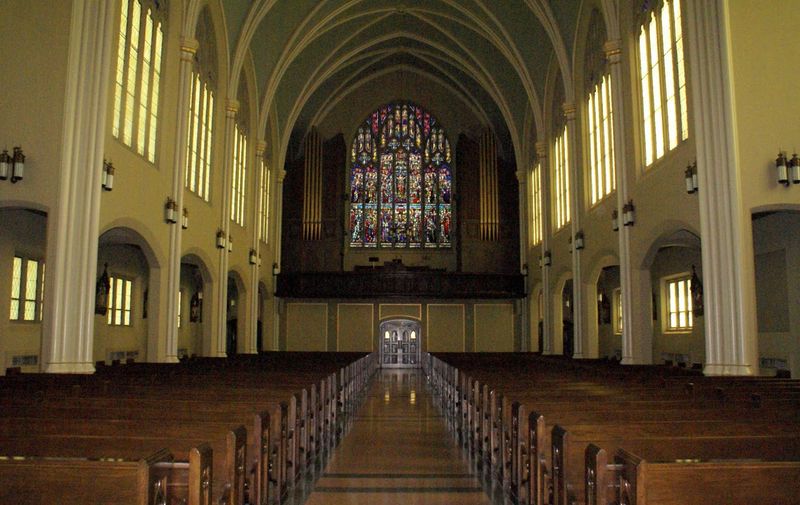
A 75-foot fan-vaulted nave is not something most visitors expect to find in central Nebraska, and the surprise of that height makes the first impression inside the cathedral genuinely powerful.
Fan vaulting is a particularly sophisticated form of Gothic ceiling construction, where ribs spread outward from each column support in a pattern that resembles the unfolding of a fan.
The visual effect is one of extraordinary lightness, as though the stone ceiling above is floating rather than resting on the walls below.
Engaged clustered columns rise from the floor without interruption, their vertical lines reinforcing the upward pull that the vaulted ceiling creates.
The proportions of the nave were carefully calculated to maximize that sense of height relative to width, which is why the interior feels taller than a simple measurement might suggest.
Light enters from the clerestory windows along the upper nave walls, casting soft illumination that emphasizes the texture of the stone surfaces and the geometry of the vault ribs.
Seating capacity exceeds 900 people, making this the largest church building in Hall County, yet the interior does not feel cavernous in an uncomfortable way.
The vertical emphasis keeps the space feeling purposeful and gathered rather than simply large, which is a difficult architectural balance to achieve.
Stained Glass Gives The Cathedral Its Soft, Colorful, Chapel-Like Glow
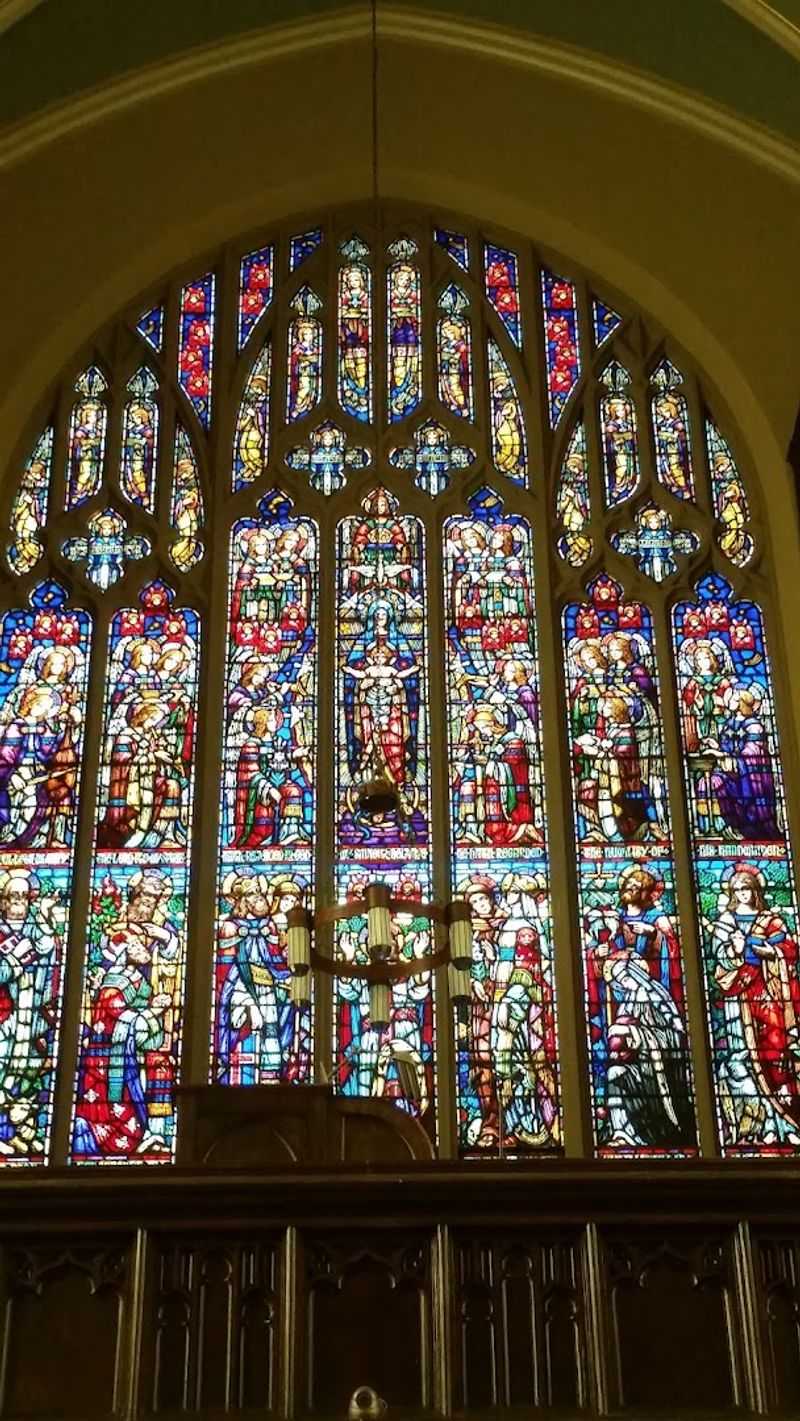
Color and light do something particular to the atmosphere inside a Gothic space, and the stained glass at this cathedral contributes meaningfully to the experience of being inside it.
The large rose window at the back of the building depicts the Madonna and child surrounded by angels and saints, and it was imported from Italy already completed rather than assembled on-site.
That decision speaks to the level of quality the diocese was committed to achieving even within the financial constraints of the era.
Rose windows are among the most recognizable features of Gothic cathedral design, and their circular geometry creates a visual anchor that draws the eye toward it with real force.
Light passing through the colored glass fills that end of the cathedral with a soft, shifting warmth that changes character depending on the time of day and the season.
The clerestory windows along the nave use plain colored glass rather than pictorial scenes, but their stone tracery frames give them a visual presence that keeps the nave walls from feeling bare.
Afternoon light tends to produce the most vivid color effects inside the building, making a mid-afternoon visit a good choice for anyone who wants to experience the glass at its most expressive.
Gothic Marble Altars Make The Interior Feel Grand Without Losing Its Sacred Calm
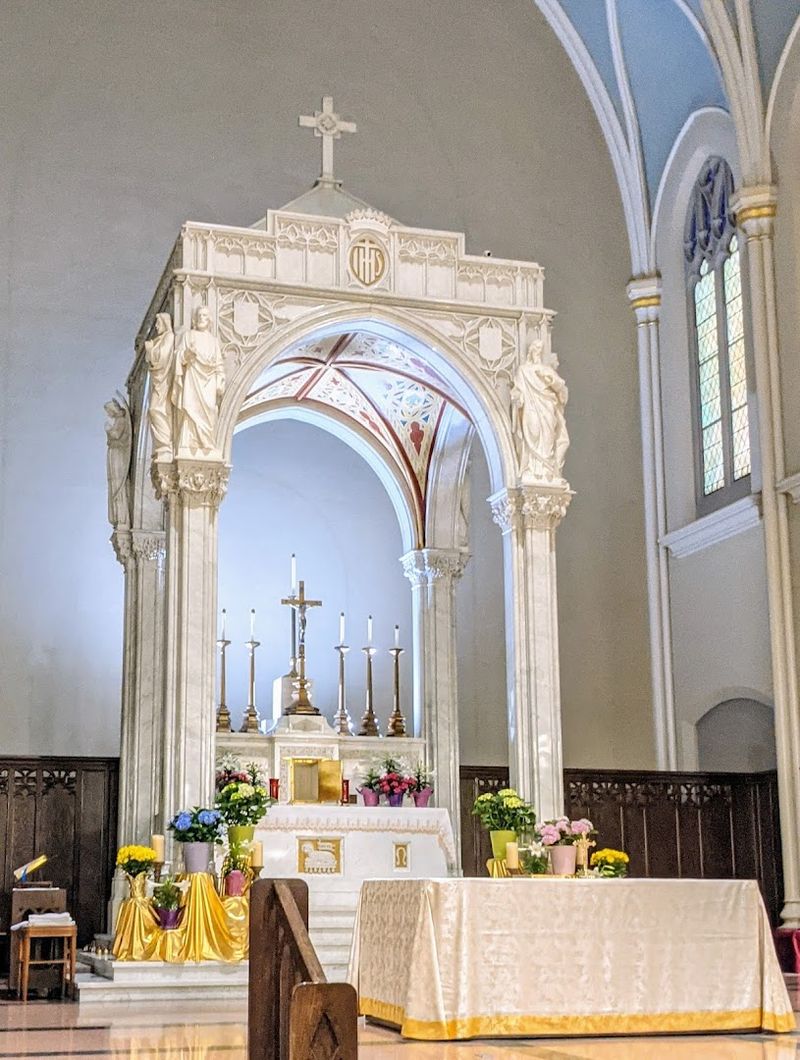
Italian marble arrived in Grand Island in the early 1930s, and the altars carved from it remain among the most visually striking elements inside the cathedral.
The main altar and its baldachino, which is the canopy structure rising above it, were both crafted from pure white Italian marble in a Gothic design that complements the architecture of the nave above.
Four smaller altars in the same material complete the ensemble, creating a coherent visual language throughout the sanctuary area.
Italian artisans were brought in specifically to carve the relief sculptures on the altars, and their work is detailed enough to reward close examination.
Figures representing the four Evangelists stand at the piers of the baldachino, giving the structure both theological meaning and sculptural presence.
The white marble contrasts with the warm sandstone tones of the surrounding architecture in a way that draws the eye toward the sanctuary without overwhelming the rest of the interior.
What keeps the space from feeling ostentatious despite the quality of the materials is the restraint of the overall composition.
Nothing competes aggressively for attention, and the altars feel like a natural culmination of the upward movement that begins the moment a visitor steps through the front doors.
1920s Construction Adds Almost A Century Of Story To Every Stone And Arch
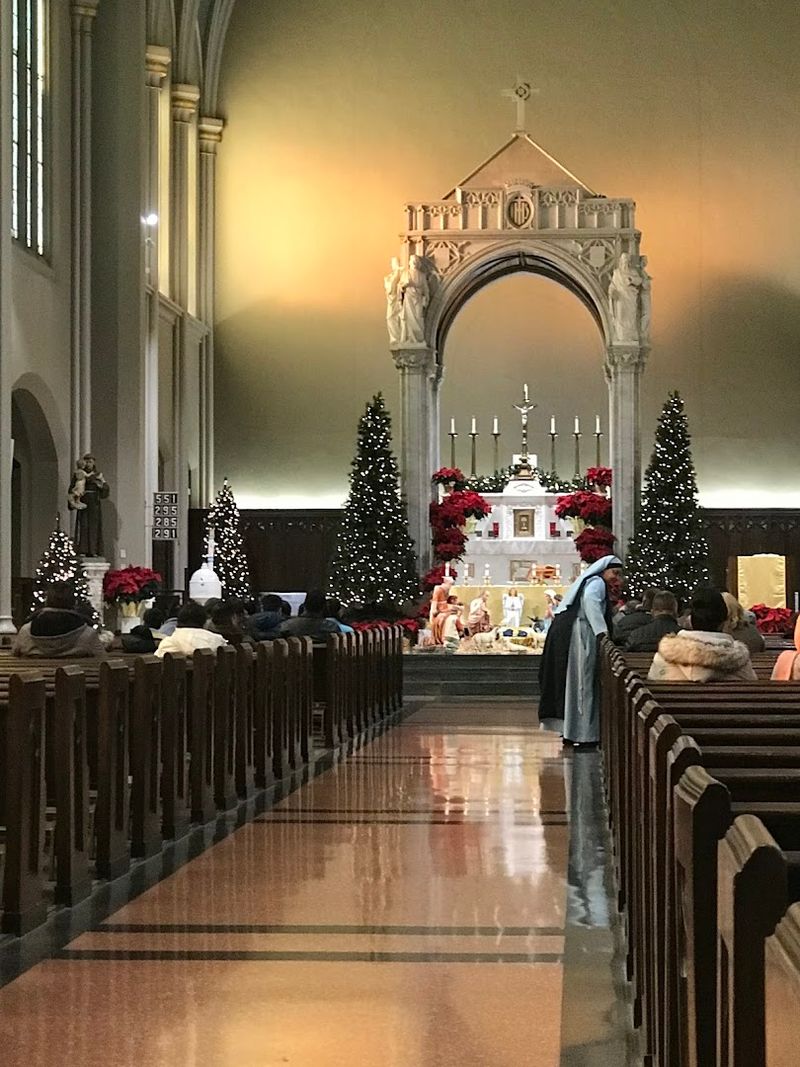
Construction began in 1926 and the cathedral was dedicated on July 5, 1928, by Cardinal Patrick Hayes of New York, a dedication that marked the completion of a project that had been years in the planning.
One of the more remarkable facts about the building’s history is that it was completed debt-free, which was an unusual achievement for a project of this scale during the economic climate of the late 1920s.
That financial discipline speaks to the organizational strength of the diocese and the commitment of the local Catholic community to seeing the project through.
Nearly a century of weather, use, and quiet maintenance has given the sandstone exterior a texture and depth that only time can produce.
The stone surfaces show the subtle variations of aging that make historic buildings feel genuinely different from new construction, even when both are well maintained.
Arches that have stood through decades of Nebraska winters carry a physical history that newer materials simply cannot replicate.
The building’s age also means that the craftsmanship inside, from the carved marble to the stone tracery to the imported glass, has been tested by time and has held.
Visiting a building that has been in continuous use for nearly a hundred years adds a layer of meaning to the experience that no amount of architectural description can fully capture.
National Register Status Confirms This Cathedral Is More Than Just Pretty From The Street
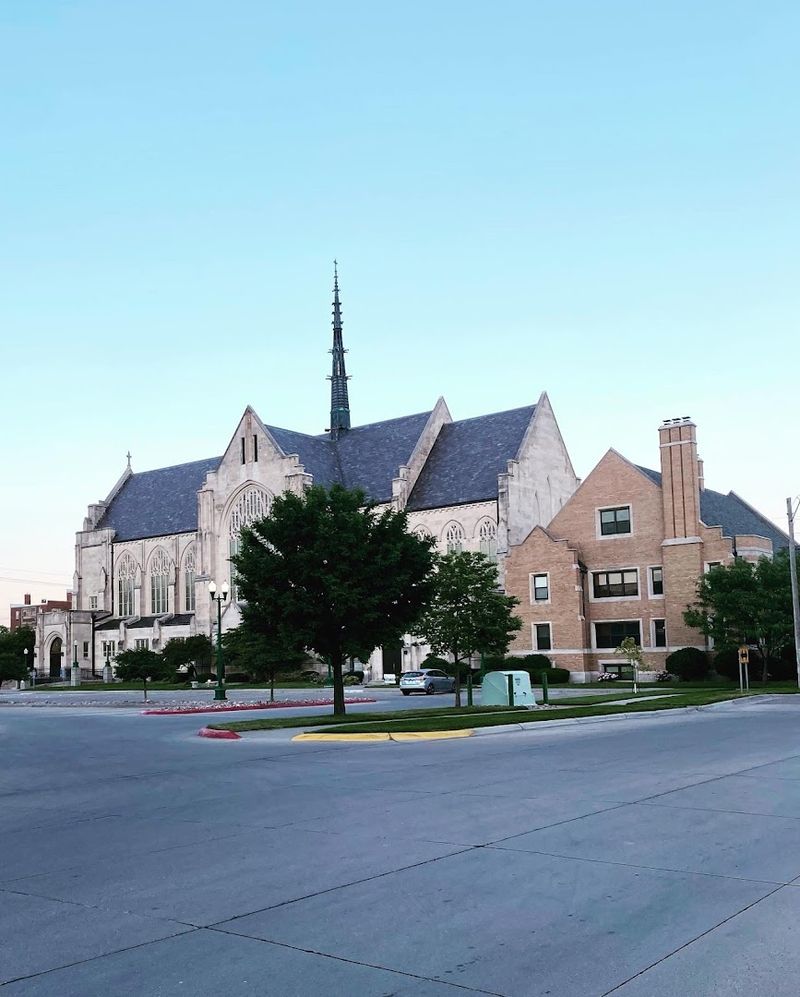
Added to the National Register of Historic Places in 1982, the cathedral earned that recognition specifically for its architectural merit as one of Nebraska’s finest examples of Gothic Revival church design.
National Register status is not awarded based on sentiment or local popularity but requires a formal evaluation of historical significance, architectural integrity, and broader cultural context.
The fact that this building met those criteria confirms that its qualities are recognized beyond the local community that built and maintains it.
The cathedral is located at 112 S Cedar St, Grand Island, NE 68801, and the building’s presence on the Register also connects it to a broader network of significant American architectural heritage.
National Register designation does not automatically guarantee preservation funding, but it does establish a formal record of the building’s significance that supports ongoing stewardship efforts.
For visitors, the designation adds a layer of context that helps explain why the building feels as substantial as it does.
Knowing that independent architectural historians have evaluated this cathedral and found it worthy of national recognition can shift the experience of visiting it in a meaningful way.
The building is not just locally beloved but formally acknowledged as a significant work of American religious architecture, which is a distinction that relatively few structures in Nebraska hold.