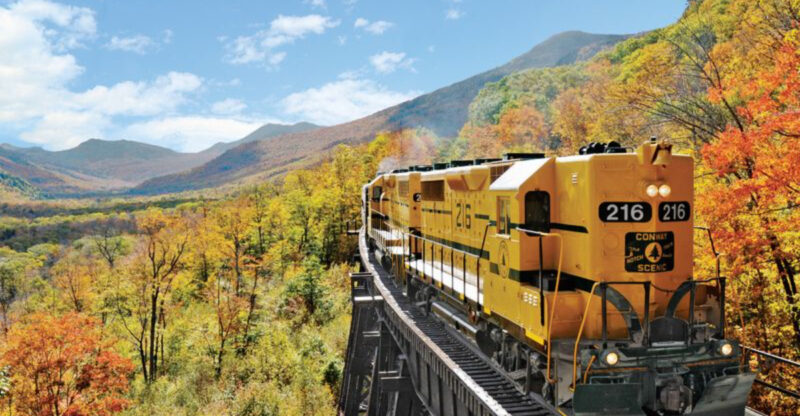
The New Hampshire Boardwalk That Takes You Deep Inside The Mountains
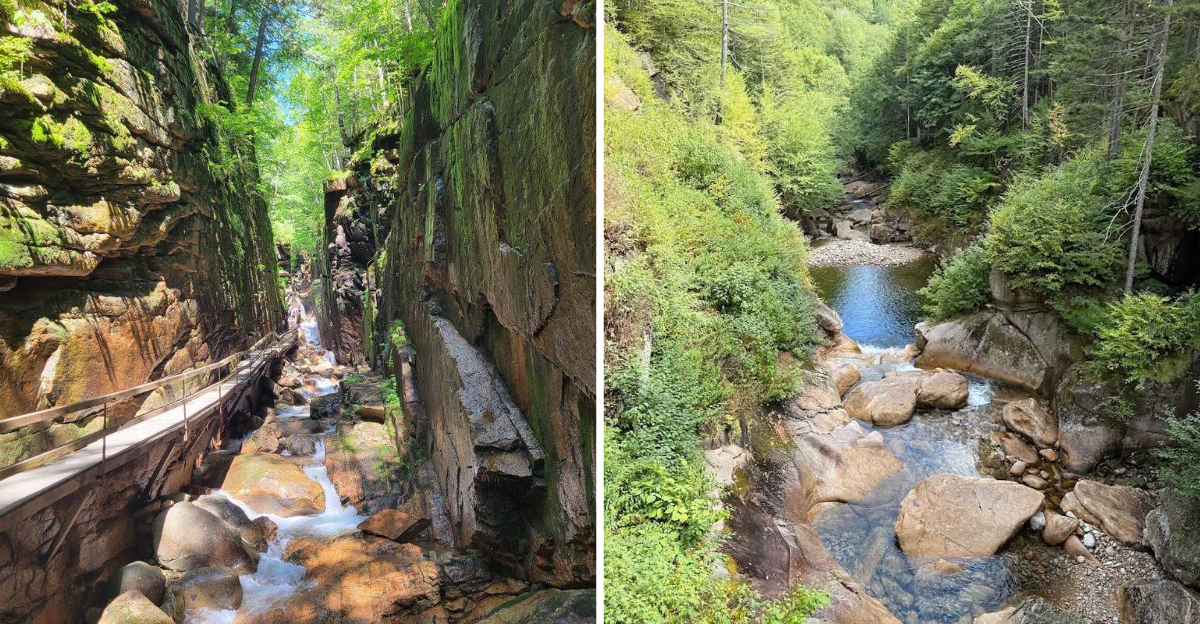
Few trails pull you in the way this one does.
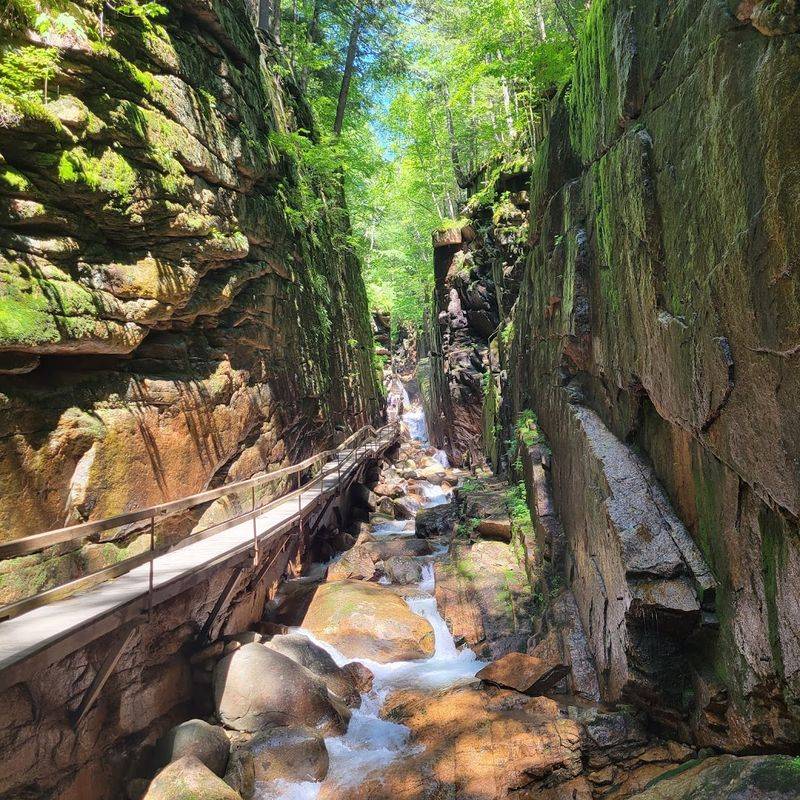
You begin on a wooden boardwalk threading into the mountains. Soon the granite walls close in, mossy and impossibly tall.
Water grows loud long before it ever comes into view. Then the gorge narrows, and the peaks lean closer.
I felt wonderfully small beneath all that towering stone. Higher up, a hidden waterfall thunders where the walls split. Birds call from somewhere in the green canopy far above.
New Hampshire tucked all of this into one quiet gorge. Even restless kids fall completely silent out here. Go and see it before the secret slips out.
The Gorge Boardwalk Experience
I know this sounds dramatic, but walking through a crack in the mountain is exactly what the boardwalk at Flume Gorge delivers.
The wooden path hugs the walls of a narrow gorge carved by the Flume Brook, and the walls on either side climb as high as 90 feet above your head. At some points, the gap between the granite walls is barely 12 feet wide.
The boardwalk itself is well-maintained and sturdy, making the walk feel safe even when the brook rushes loudly below. You can hear the water before you see it, which builds up a nice sense of anticipation.
The moment the gorge walls close in around you, everything gets quieter and cooler in the best possible way.
Moss covers almost every surface, giving the whole place a vivid green glow. Looking up, you can spot boulders wedged between the walls far above, some of which have been there for centuries.
The natural drama of this trail is hard to put into words. This is the sort of place that makes you stop mid-step just to take it all in.
Geology Hiding In Plain Sight
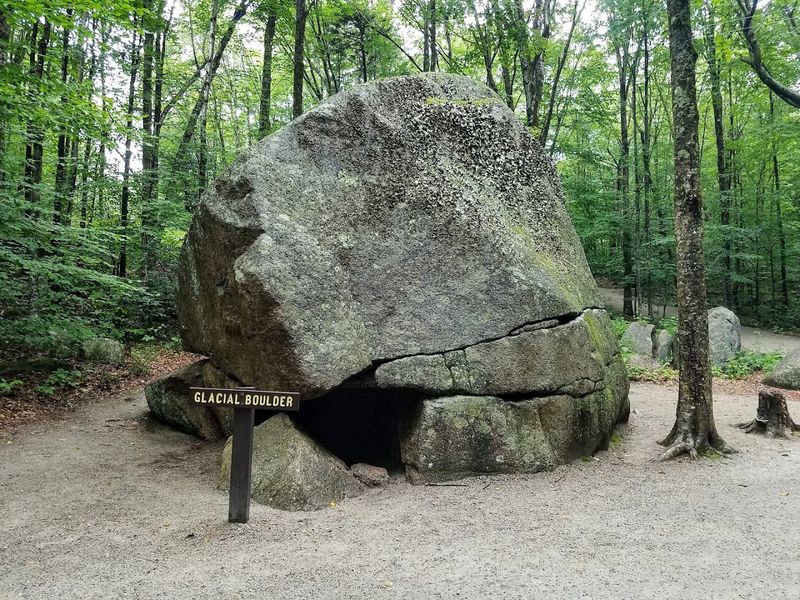
Most people visit Flume Gorge at 852 Daniel Webster Hwy in Lincoln for the views. The rocks themselves are telling a story that goes back roughly 200 million years.
The granite walls were formed deep underground and slowly pushed to the surface over geological time. What you are walking through is the result of water patiently eroding a natural fault line in the rock.
The dark vertical streaks you see on the walls are called dikes, which are places where molten rock once forced its way through cracks in the granite.
They cooled and hardened into a slightly different type of rock, and now they stand out like bold brushstrokes on a massive canvas.
There is also a noticeable temperature drop as you move deeper into the gorge. The narrow walls block sunlight for much of the day, keeping the air noticeably cooler than the surrounding forest.
New Hampshire geology rarely gets this personal. You are not reading about rock formations from a distance. You are surrounded by them, touching them, and walking through them.
The Trail Loop Worth Taking
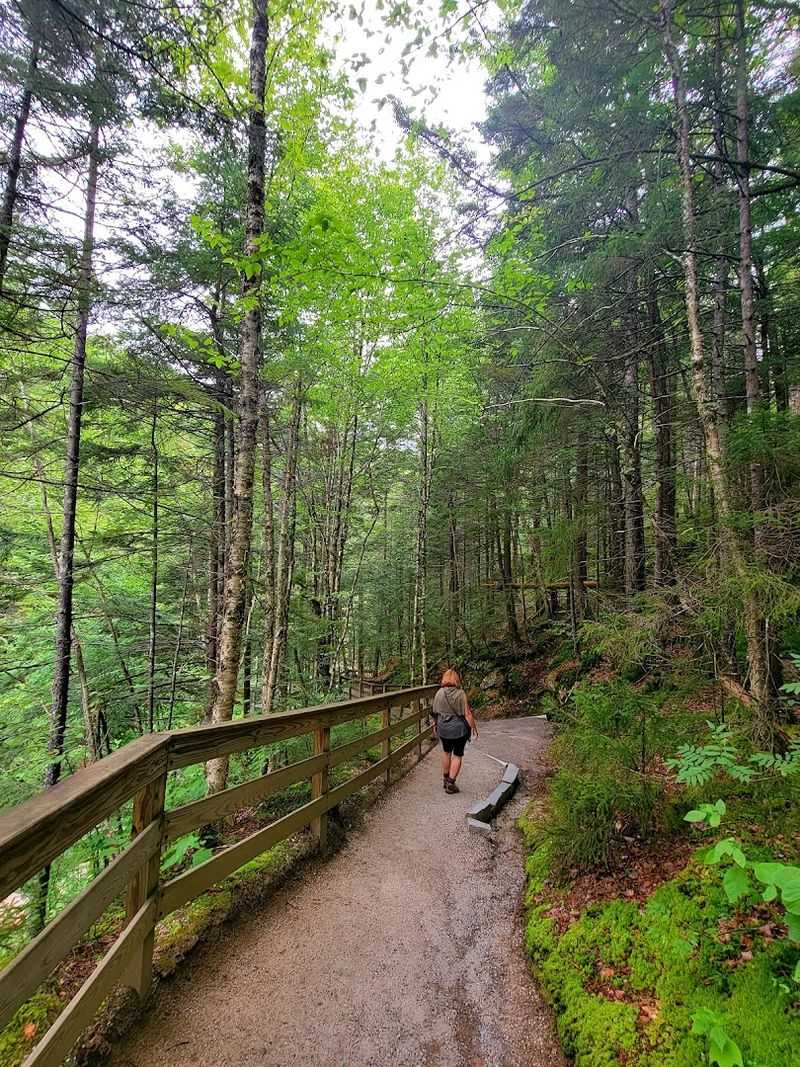
The gorge itself is only one part of the full Flume Gorge trail loop, which covers about two miles in total.
The complete circuit takes most visitors between one and two hours, depending on how often you stop to gawk at everything. Spoiler alert: you will stop a lot.
After passing through the gorge, the trail opens up into a wider forest path that leads past a covered bridge and several scenic overlooks.
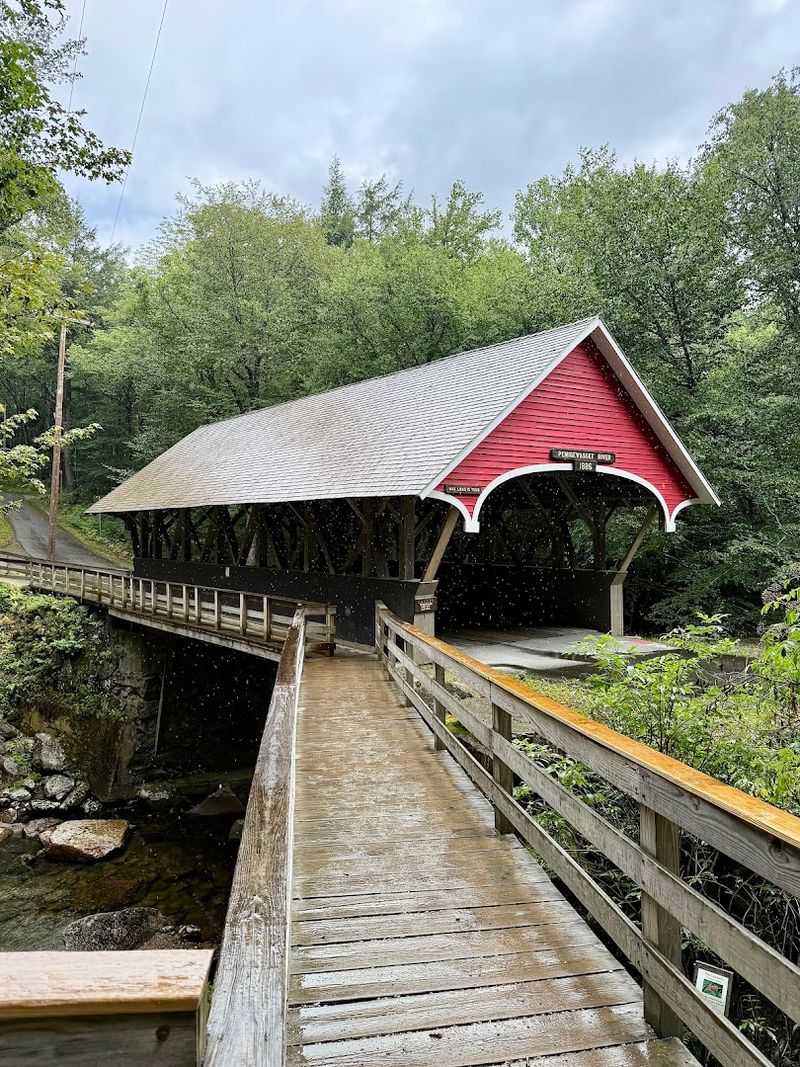
The Sentinel Pine Covered Bridge is a personal favorite along this stretch. It spans high above The Pool, a deep glacial basin in the Pemigewasset River, about 40 feet deep, 150 feet across, ringed by 130-foot cliffs.
The path then climbs slightly before looping back down toward the visitor center. There are a few steeper sections, but nothing that would qualify as difficult.
Families with young kids handle this trail regularly, and older visitors manage it comfortably as well.
One small detail I noticed on the trail signs was the elevation markers, which quietly reminded me that I was already pretty high up in the White Mountains.
Waterfalls Around Every Corner
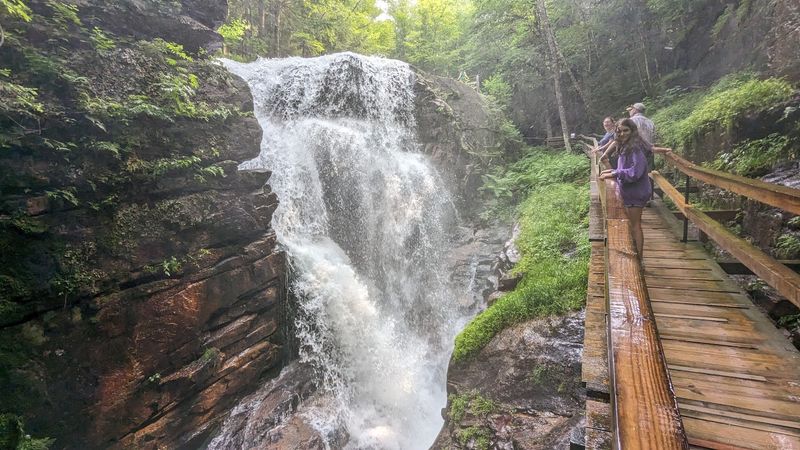
Water is the main character at Flume Gorge, and it shows up in multiple forms throughout the trail.
The gorge itself is carved by the Flume Brook, which tumbles and crashes along the base of the boardwalk the entire way through. But the waterfalls do not stop there.
Avalanche Falls sits at the far end of the gorge, and it is one of those sights that earns an audible reaction from almost everyone who rounds the corner and sees it.
The water drops about 45 feet down a smooth granite face before joining the brook below. The mist that floats up from the base is a welcome surprise on a warm day.
Further along the loop, smaller cascades appear at various points along the trail.
Some are barely a trickle over mossy ledges, while others are full rushing streams cutting across the path. Each one adds its own soundtrack to the walk, layering the ambient noise into something genuinely calming.
I remember standing near one of the smaller falls and just listening for a moment, which felt oddly necessary after the intensity of the gorge.
Best Time To Visit
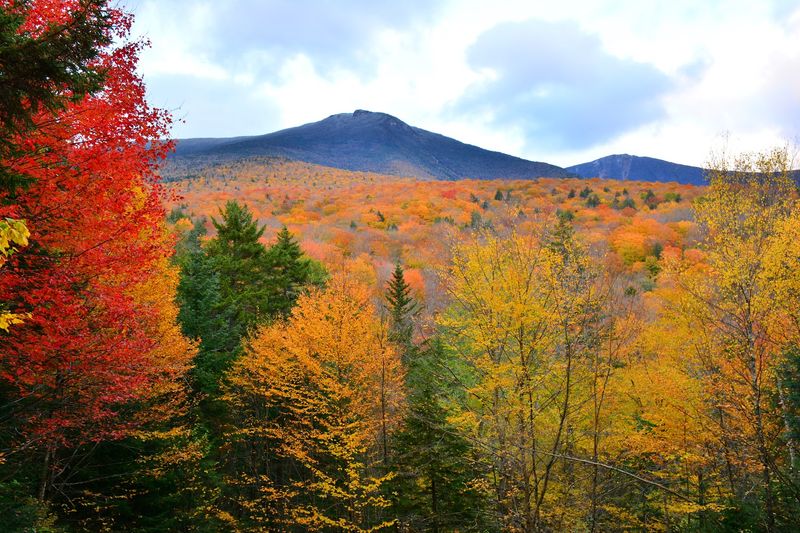
Timing a visit to Flume Gorge can make a significant difference in the overall experience.
The gorge is open seasonally, typically from mid-May through late October, so planning ahead is worth the effort. Each season brings its own personality to the trail.
Summer is the busiest period, with peak crowds arriving on weekends in July and August. The gorge stays cool even on hot days, which makes it a popular escape from the summer heat.
Arriving early in the morning helps avoid the thickest crowds and gives you a quieter, more personal experience.
Fall is arguably the most dramatic time to visit. New Hampshire in October is basically a color explosion, and the trail loop offers stunning views of the surrounding hills covered in red, orange, and gold.
Spring brings high water levels and extra waterfall intensity, which adds a raw energy to the gorge that summer visitors do not always get. The brook runs fast and loud, and the mist near Avalanche Falls is at its thickest.
Each season offers something different, so a return visit always makes sense.
Wildlife You Might Spot
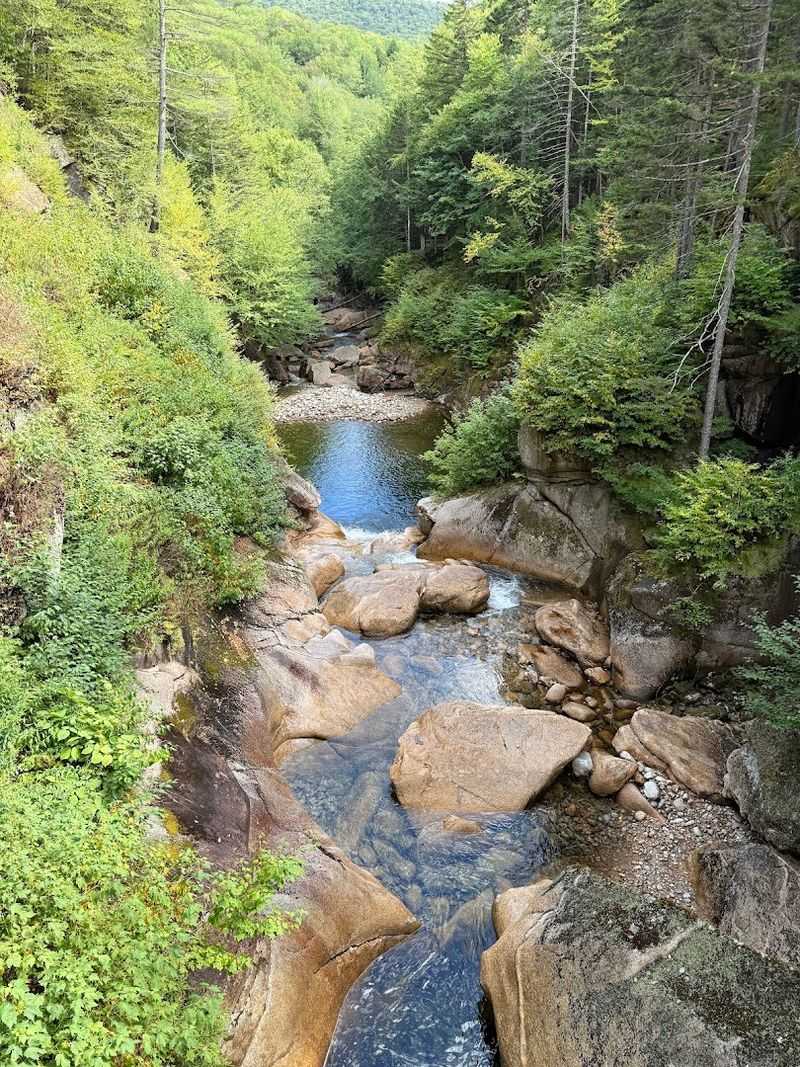
The forest surrounding Flume Gorge is part of Franconia Notch State Park, which covers thousands of acres of protected land.
That kind of habitat supports a surprising variety of wildlife, and the trail gives you a real chance to encounter some of it. Patience and quiet footsteps go a long way here.
White-tailed deer are fairly common in the early morning and late afternoon hours near the trailhead area. I spotted a pair grazing near the tree line on my way back to the visitor center, completely unbothered by the nearby path.
Bird activity is also notable throughout the hike. The forest holds a mix of warblers, thrushes, and woodpeckers depending on the season.
In spring, the bird noise is almost constant and adds a lively layer to the whole experience. Keep an eye on the canopy and you will likely catch something interesting.
Salamanders and frogs appear near the wetter sections of the trail, especially close to the brook crossings.
Visitor Center And Park Amenities
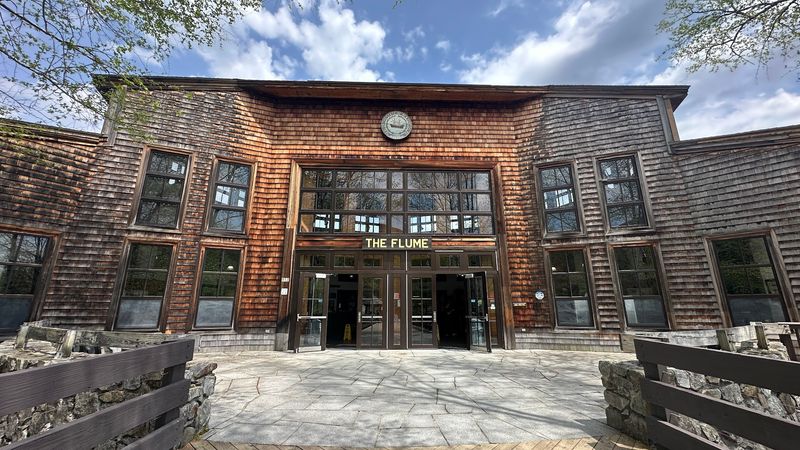
The visitor center at Flume Gorge is a solid starting point before hitting the trail.
It has exhibits about the gorge’s natural history, the geology of the White Mountains, and the plant and animal life found in the park. Spending ten minutes inside before the hike genuinely improves the experience.
There is a small theater inside that plays a short film about the gorge, which is a nice way to set context before you see the real thing.
The staff are knowledgeable and approachable, and they are good at giving trail tips based on current conditions. If water levels are especially high after recent rain, they will let you know what to expect.
Restrooms, a gift shop, and a snack area are all available at the visitor center, which covers the basic practical needs of most visitors. Parking is available on-site, though the lot fills up fast on busy summer weekends.
The center also serves as the ticket purchase point for the trail. The admission fee supports the maintenance of the boardwalk and the surrounding park infrastructure.
What To Pack For The Trail
Packing smart for a visit to Flume Gorge is less about heavy gear and more about a few key items.
The trail is not technically demanding, but the wooden boardwalk can get slippery when wet, so footwear with decent grip matters more than most people expect. Trail runners or light hiking shoes work well.
Water is essential even on a short hike. The two-mile loop does not seem long, but between the excitement, the photo stops, and the cool gorge air, people tend to stay out longer than planned.
A small water bottle tucked in a daypack covers this easily.
A light rain jacket is worth throwing in, especially in spring and fall when the weather in New Hampshire shifts quickly.
The gorge also generates its own mist near the waterfalls, so a layer you can peel off easily is practical. Temperatures inside the gorge run noticeably cooler than outside, which catches some visitors off guard.
A camera or fully charged phone is basically mandatory.
The gorge offers photo opportunities around every bend, and running out of battery partway through is a genuinely frustrating experience.