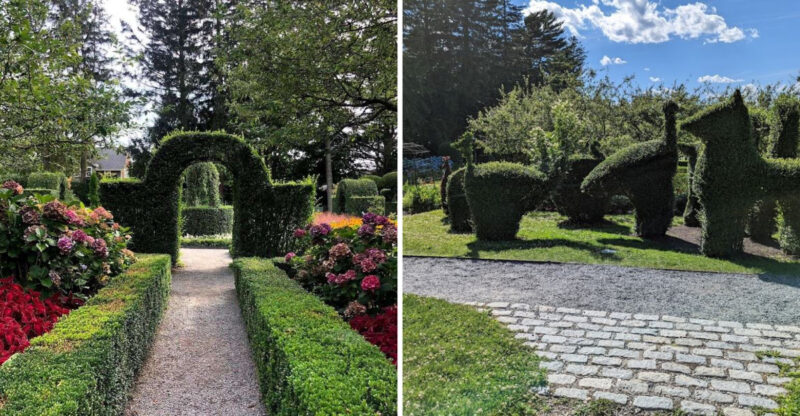
Rhode Island Is Home To A Museum That Feels Like Two Worlds In One
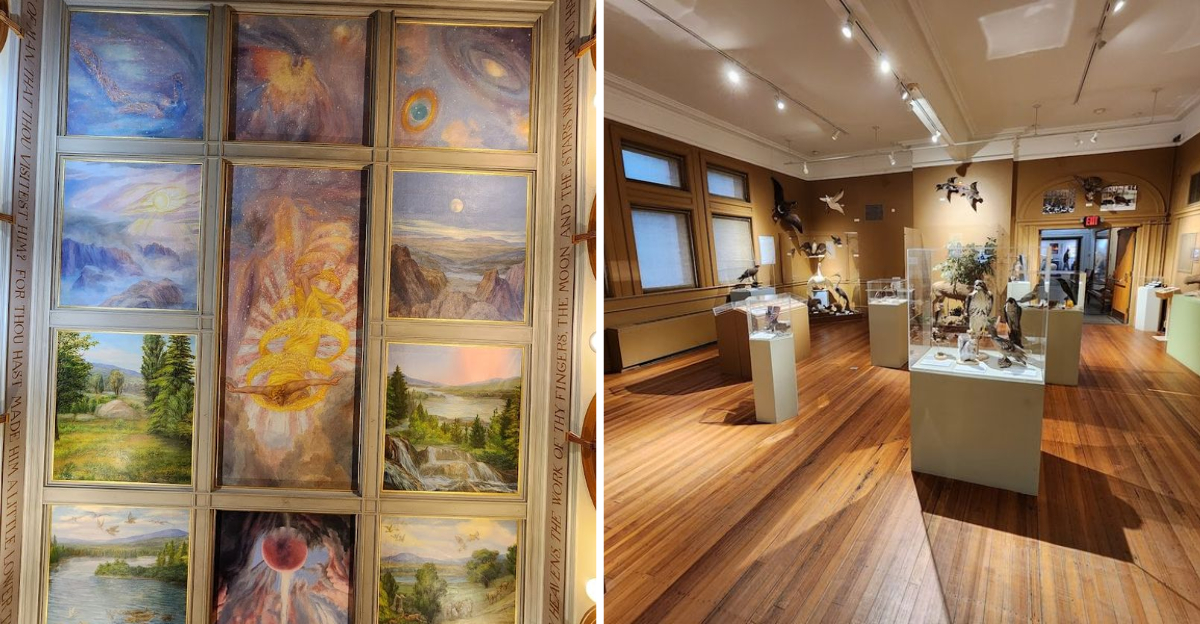
Two completely different worlds share one single museum.
You cross a threshold and everything suddenly changes. Downstairs, fossils and taxidermy fill the grand old halls.
Upstairs, Pacific Island treasures wait in hushed, careful cases. Then the lights dim and a planetarium dome opens overhead.
Rhode Island built only one place quite like this. I love a museum that keeps me happily off balance.
One half feels nothing at all like the other. You wander deeper, unsure what the next room holds.
That uncertainty quietly turns into restless, delighted curiosity.
One ticket somehow buys you two completely separate trips. Choosing a favorite half feels impossible.
A Building That Means Business
There is something about a grand old building that just commands respect.
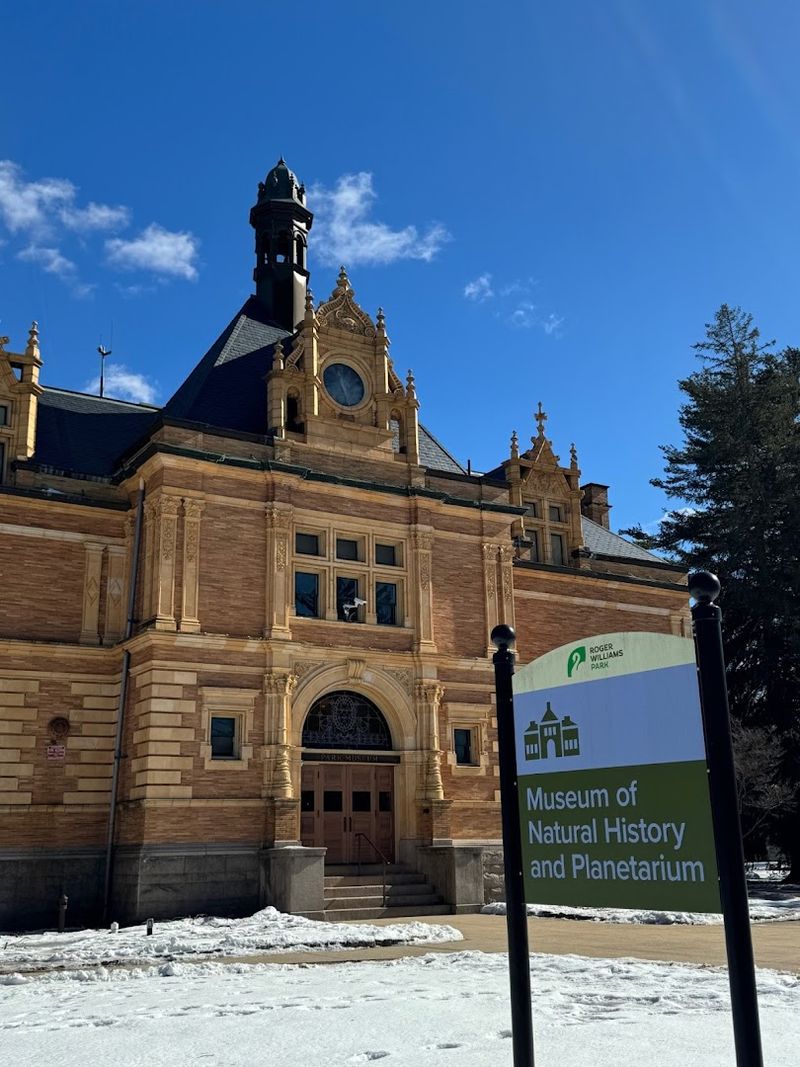
The Museum of Natural History and Planetarium sits inside Roger Williams Park in Providence, and before you even step through the front door, the structure itself tells you this visit is going to be worthwhile.
Its French Château styling and yellow-brick façade give it a stately look that makes you feel like you are about to learn something real.
The lobby greets you with a massive ceiling mural that most people almost walk past without looking up. Stop and look up. Seriously.
A whale bone jaw arches near the entrance, setting a dramatic tone right from the start. The space feels grand for a building that is technically compact, and that contrast is part of its charm.
Parking is available in a small lot beside the building, and street parking is nearby too. The museum is open daily from 10 AM to 4 PM, making it easy to plan a visit around your schedule.
The admission cost is refreshingly affordable, which makes walking through the front door feel like a smart decision rather than a splurge.
Fossils That Stop You Cold
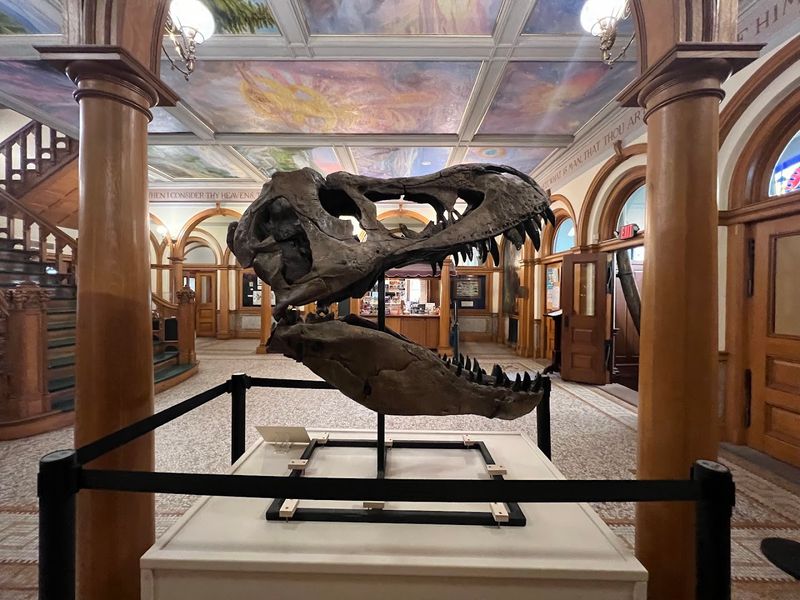
Some exhibits you walk past politely. This one at 1000 Elmwood Ave stops you mid-step.
The fossil collection at the Museum of Natural History and Planetarium includes a Tyrannosaurus Rex skull that has absolutely no business being in a museum this size, and yet there it is, staring back at you with full prehistoric confidence.
A giraffe skull also makes an appearance, which is a combination nobody really expects. The fossil displays are arranged in a way that feels approachable rather than overwhelming.
Labels are clear and written so that kids and adults both get something useful from the information. There is no need to have a science degree to appreciate what is in these cases. The bones do the talking.
What I noticed during my time in this section was how quietly focused people got around these displays. The usual museum chatter dropped a notch.
Something about standing near a T. Rex skull, even a replica, has a humbling effect.
Rhode Island does not have many spots where you can get that close to deep prehistoric history, which makes this exhibit rare for the state.
Taxidermy With Real Personality
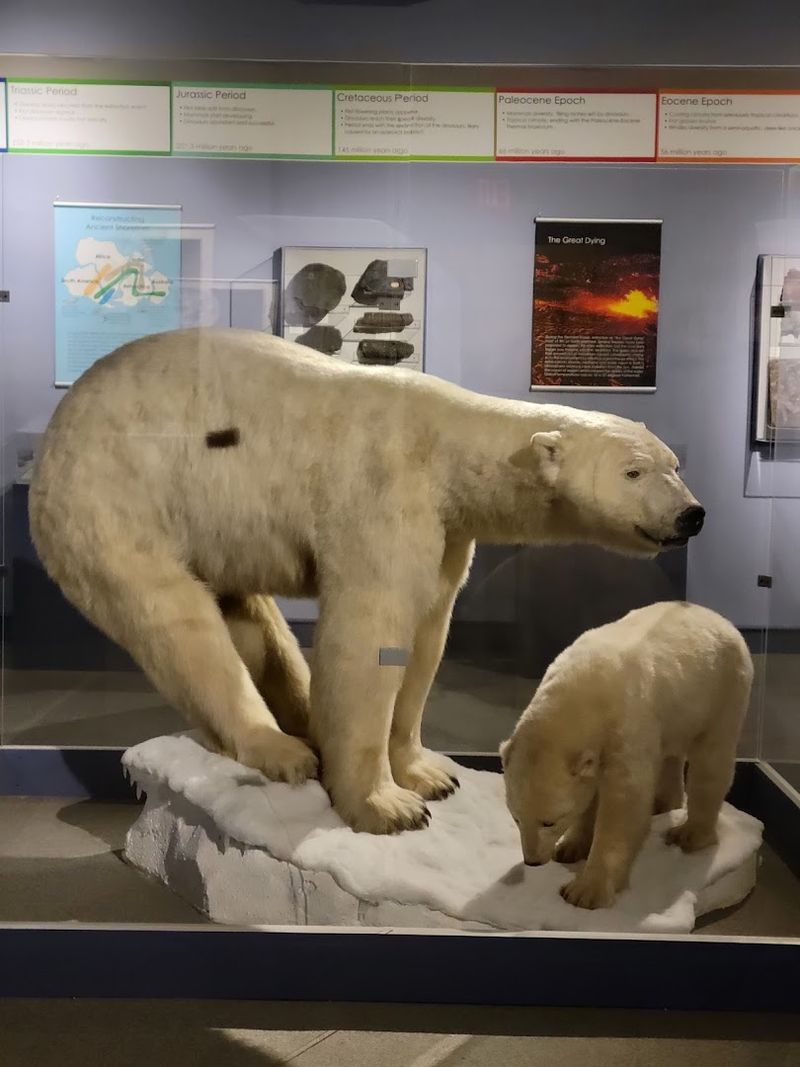
Taxidermy is one of those things that either fascinates you or makes you do a double take.
At the Museum of Natural History and Planetarium, the taxidermy collection leans firmly into fascinating territory.
The polar bears in the Changing Planet room are the undeniable stars of this section. They are enormous, well-preserved, and positioned in a way that makes them feel almost alive.
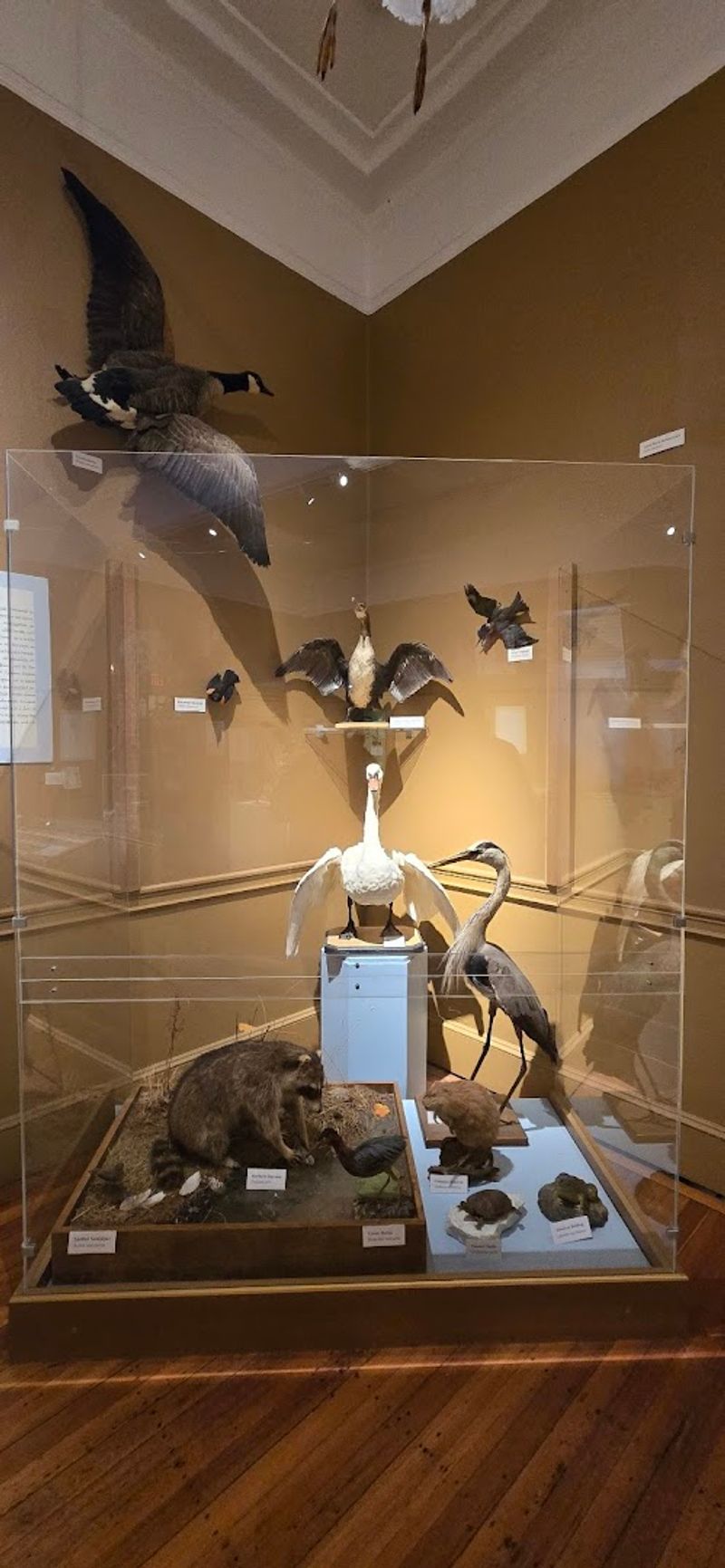
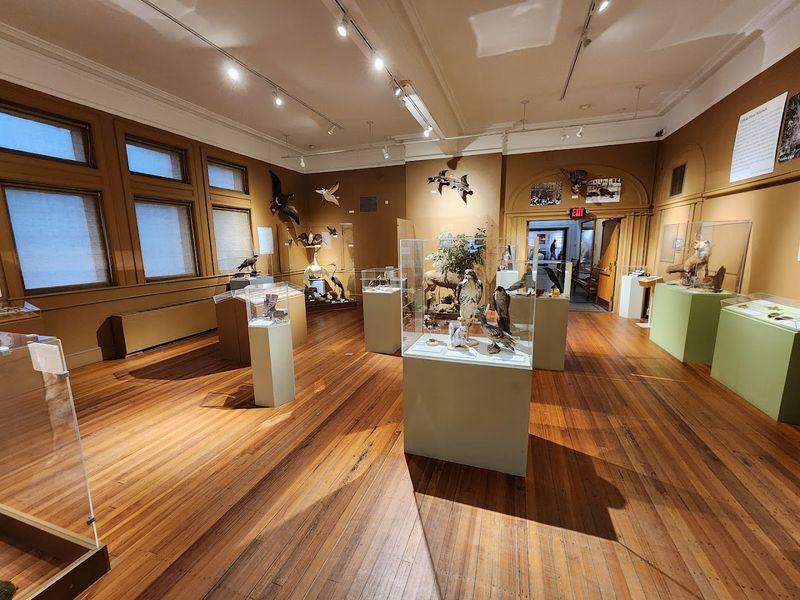
The collection spans a wide range of species, from birds to larger mammals, giving the rooms a natural history feel that is hard to manufacture.
Some of the older pieces show their age, which honestly adds to the character rather than taking away from it.
The bird collection is particularly strong and often goes underappreciated because the polar bears tend to steal the spotlight.
The whole taxidermy section gives the museum a classic natural history feel that connects it to the great science institutions of the past. That connection feels intentional and worth appreciating.
Rocks, Minerals, And Hidden Sparkle
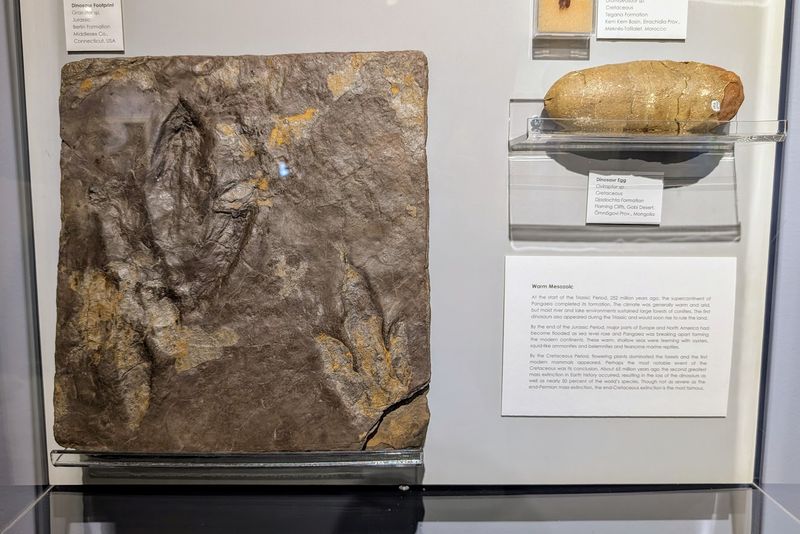
Not every exhibit needs a dinosaur to be impressive.
The rocks and minerals section at the Museum of Natural History and Planetarium proves that point with quiet confidence.
The display cases hold specimens that range from everyday stones to stunning crystalline formations that catch whatever light hits them and scatter it in unexpected directions.
The informational labels throughout this section do solid work explaining the geological significance of each piece.
You get context about where minerals form, why certain crystals grow the way they do, and how these materials connect to broader Earth science.
For younger visitors especially, this section has a way of turning something that sounds dry into something that sparks curiosity.
One small observation worth sharing: the lighting in parts of this exhibit could use some improvement. Some cases are positioned in ways that make it tricky to see finer details without shifting your angle a bit.
That said, the collection itself more than compensates for any viewing challenges. A few of the mineral specimens are the sort of thing you would expect to find in a much larger institution.
The Oceania Room Is Stunning
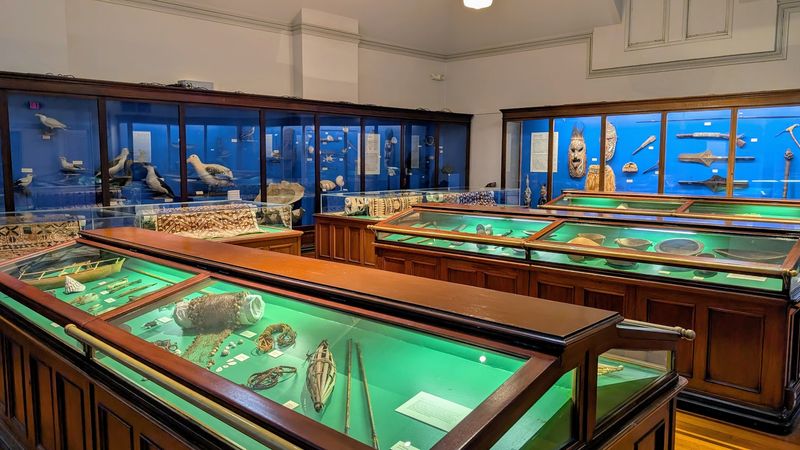
Trust me, walking up to the second floor of the this Rhode Island museum feels like crossing a border into a completely different world.
The Oceania exhibit is one of the strongest rooms in the entire building, and that is saying something given the competition downstairs.
Pacific Island artifacts, ceremonial objects, and cultural items fill the cases with a depth and quality that rivals exhibits found in much larger institutions.
The curation here feels thoughtful. Each piece is positioned and labeled in a way that respects its cultural origin while also making the information accessible to someone encountering these cultures for the first time.
There is real weight to the objects in this room. You get a sense that they carry history in a way that photographs simply cannot replicate.
Personally, this section gave me pause in the best possible way. The hush of the room felt different up here, more deliberate somehow.
A few of the display case lights were flickering during my visit, which was a minor distraction, but it did not take away from the overall impact.
The Live Bee Hive Moment
Most museums stick to things that are safely behind glass and completely still.
The Museum of Natural History and Planetarium decided to take a different approach with one of its most talked about exhibits: a live, active honeybee hive built directly into the display. Real bees.
Moving. Working. Building comb. Right there in front of you.
It is the kind of exhibit that makes you do a genuine double take. You expect static displays, and then suddenly there is an entire functioning colony going about its business while visitors press their noses up to the glass.
The educational value is obvious, but the sheer novelty of it is what really lands. Even people who are not particularly interested in insects tend to get pulled in by the movement and activity.
The labels nearby explain the roles of different bees in the colony, which adds a layer of context that makes the observation more meaningful.
This is exactly the kind of creative, hands-on approach to natural history that sets this museum apart from more conventional institutions.
The Space Section Delivers
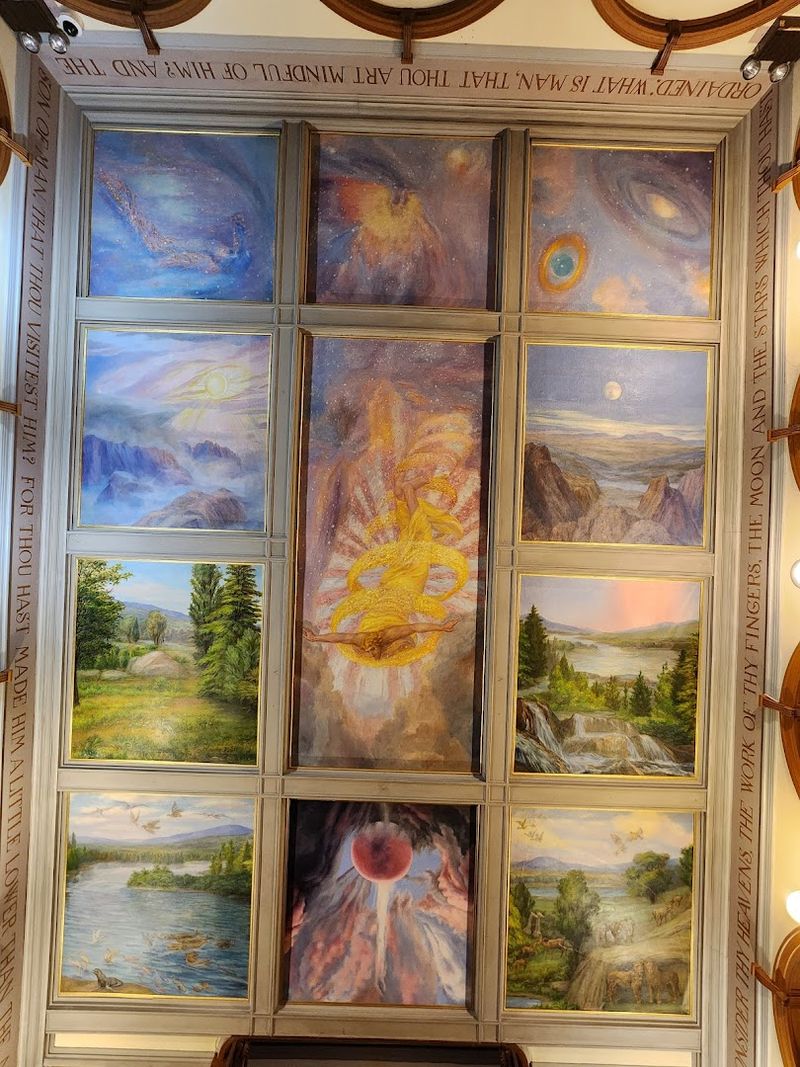
The space section of the Museum of Natural History and Planetarium carries a different energy from the rest of the building.
The lighting shifts, the mood settles into something quieter and more atmospheric, and suddenly you are thinking about planets and stars instead of fossils and feathers.
The transition is surprisingly effective for a building that does not have unlimited square footage to work with.
Displays cover the solar system, constellations, and the broader mechanics of space in a way that is engaging without being overwhelming. The plasma ball is a crowd pleaser, drawing attention from visitors of all ages with its electric energy.
The space area connects naturally to the planetarium show experience, and together they form a cohesive journey from Earth-based natural history up through the cosmos.
Some display cases in this section were still being developed during certain visits, giving the area a slightly work-in-progress feel in spots.
The Museum of Natural History and Planetarium clearly has ambitious plans for this section, and even in its current state it delivers a satisfying and thought-provoking experience.
The Planetarium Show Seals It
The planetarium show is the crown jewel of the whole visit, and skipping it would be a real mistake. Shows run mainly on weekends, so check the schedule before you go.
This museum runs shows that are calibrated to reflect the actual seasonal positions of constellations and planets, so what you see on that dome is not a generic presentation.
It corresponds to the actual night sky above Rhode Island at that time of year.
Reclining back in the darkened room while stars bloom across the ceiling above you is one of those experiences that quietly resets your perspective.
The show runs roughly 30 minutes, which is the perfect length. Long enough to feel immersive, short enough to keep younger visitors engaged from start to finish.
The narration is clear and easy to follow, making the content accessible for families and curious adults alike.
There is a small additional cost beyond general admission to attend the planetarium show, and it is absolutely worth every cent.
The combination of the natural history exhibits downstairs and the cosmic journey upstairs is what gives this place its dual-world identity.