11 Scenic California College Campuses Made For Wandering On Foot
College campuses are underrated places to wander.
You get the architecture, the lawns, and the motivation to walk around like you might suddenly understand campus life better.
A pretty campus does not have to feel formal. It can be a shortcut to a calmer afternoon.
California has campuses where a simple stroll can turn into the best part of the day.
Spanish-style buildings, ocean air, and historic courtyards all add their own kind of pull. The real pleasure, however, is how easy the walk feels.
You do not need to be a student. You do not need a tour. Just comfortable shoes and a little curiosity.
A scenic campus gives you room to drift without committing to a full hike or a packed attraction.
1. Stanford University
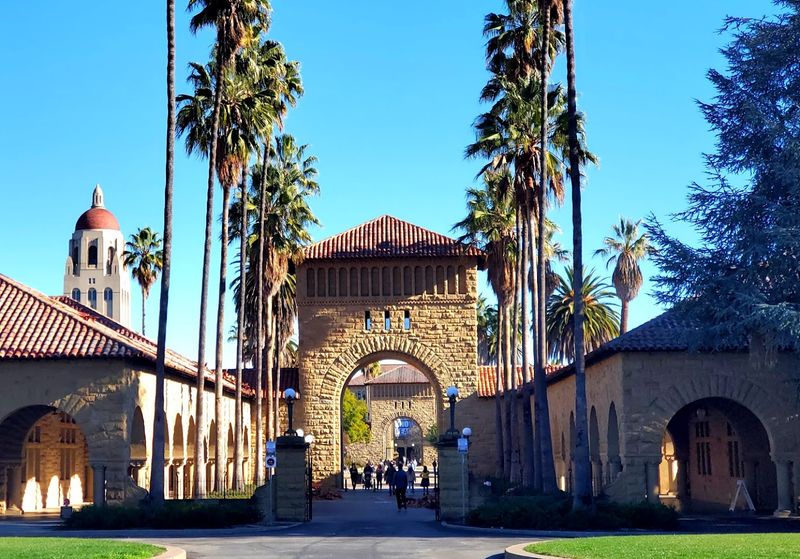
Few places on the West Coast stop you in your tracks quite like the Main Quad at Stanford University.
Located at 450 Jane Stanford Way in Stanford, CA 94305, the campus stretches across a remarkable 8,183 acres of land that feels more like a resort than a place of higher learning.
Frederick Law Olmsted, the same landscape architect behind New York City’s Central Park, helped shape the original vision for these grounds.
Palm-lined roads guide you from one sandstone building to the next, each capped with the signature red-tiled roofs of California Mission-style architecture.
The Hoover Tower rises above the treeline and gives you a solid landmark to navigate by as you wander.
Manicured gardens and wide-open lawns make it easy to slow your pace and just take everything in.
There is even a nature reserve and a lake tucked within campus boundaries, so a single afternoon walk can cover surprising variety.
The whole place has a mellow, sun-warmed energy that feels distinctly Northern Californian. Comfortable shoes and a loose schedule are honestly the best things to bring along for a visit here.
2. University of California, Berkeley
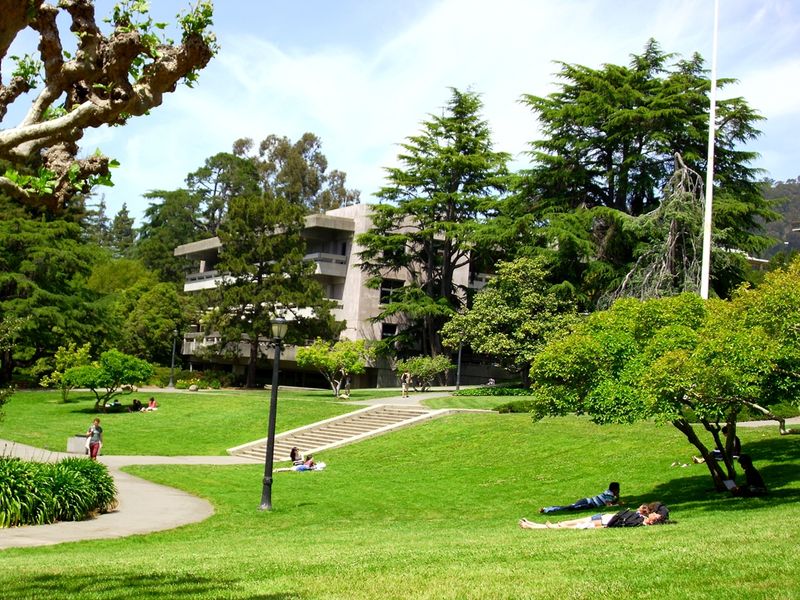
There is something genuinely energizing about walking onto the UC Berkeley campus on a clear day when the San Francisco Bay glimmers in the distance behind Sather Tower.
The campus sits at 200 California Hall in Berkeley, CA 94720, and its Beaux-Arts architecture gives the whole place a confident, historic feel that is hard to shake once you have experienced it.
The Campanile, as locals call the tower, is one of the most recognizable landmarks in all of Northern California.
Wheeler Hall and the Greek Theater add to the architectural richness, and the layout is compact enough that a focused walk covers a lot of ground without feeling exhausting.
Pedestrian paths connect smoothly to downtown Berkeley, so the wandering does not have to stop at the campus edge.
The surrounding streets are packed with bookshops, cafes, and spots to grab a bite after a long stroll.
Weekday mornings tend to be quieter and easier for unhurried exploring, while weekends bring a livelier street energy from the Telegraph Avenue direction.
The campus has a layered personality that rewards slow, attentive walking rather than rushing through.
3. University of California, Los Angeles
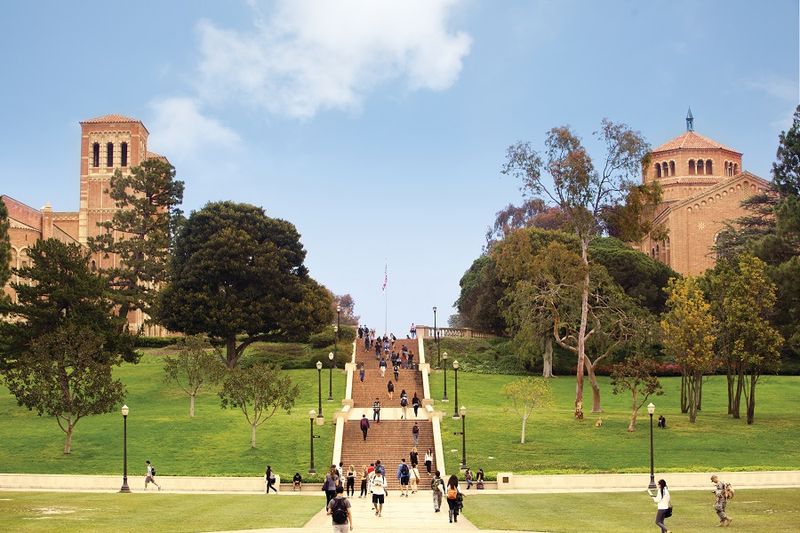
Royce Hall has one of the most recognizable faces in all of Los Angeles, with its twin Romanesque Revival towers framing a red-brick facade that looks like it was lifted straight from a European postcard.
The UCLA campus covers more than 400 beautifully landscaped acres in the Westwood neighborhood, blending classic architecture with open green spaces that invite slow, aimless walking.
Bruin Walk cuts through the heart of campus and is almost always buzzing with student activity.
Tree-lined paths connect the older academic buildings to newer facilities, and the contrast between eras gives the campus a layered visual texture that keeps things interesting as you move through it.
On warmer afternoons, students spread out on the lawns with frisbees and volleyballs, giving the whole place a relaxed, outdoor-living energy that feels very SoCal.
The Sculpture Garden near the Hammer Museum is a quieter corner worth seeking out.
Parking near campus can be tight on weekdays, so arriving by Metro or rideshare tends to make the experience smoother.
The campus rewards explorers who are willing to wander off the main walkways and discover the smaller courtyards and garden nooks tucked between buildings. Totally worth a full afternoon.
4. University of San Diego
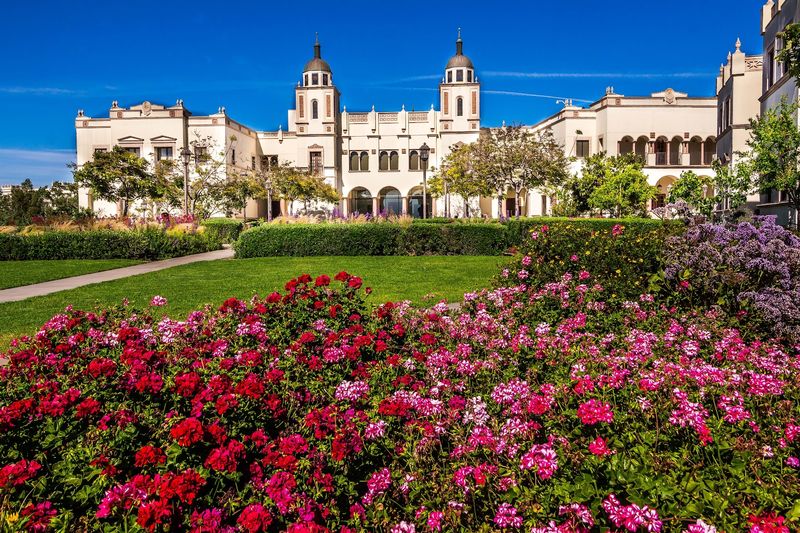
Perched above Mission Bay with ocean views stretching toward the horizon, the University of San Diego campus carries a quietly dramatic quality that catches most first-time visitors off guard.
The campus is located at 5998 Alcala Park in San Diego, CA 92110, and its Spanish Renaissance architecture gives it a cohesive, sun-drenched elegance that feels almost cinematic in the right afternoon light.
Cream-colored facades and red-tiled roofs tie every building together into one visually satisfying whole.
Fountains dot the plazas throughout campus and add a gentle sound layer to the already tranquil atmosphere, making even a short walk feel unhurried and restorative.
The gardens are lush and well-maintained, with flowering plants and trimmed hedges that frame the pathways in a way that feels intentional rather than accidental.
Views of the Pacific Ocean are visible from several vantage points on the upper parts of campus.
The overall ambiance leans Mediterranean in a way that feels authentic to San Diego’s climate and light rather than forced or decorative.
Strolling the outer ring of campus during the golden hour before sunset is a genuinely beautiful experience.
Comfortable walking shoes are recommended since some of the pathways move between elevation changes across the hillside grounds.
5. Pepperdine University

Standing on Pepperdine’s main campus lawn and looking out over the Pacific Ocean toward Catalina Island is one of those views that makes you stop mid-sentence and just stare.
The campus sits at 24255 Pacific Coast Hwy in Malibu, CA 90263, and its 830 acres of hillside grounds blend Mediterranean Revival architecture with some of the most dramatic coastal scenery found on any university campus in the state.
White stucco buildings with red-tiled roofs complement the natural landscape rather than competing with it.
The open meadow near the campus entrance off Pacific Coast Highway serves as a kind of welcoming front porch, sloping gently upward toward the main academic buildings and giving the whole arrival experience a cinematic quality.
Canary Island palms, Moreton Bay fig trees, and various succulents line the pathways and add botanical variety to every walk.
The campus is close enough to Zuma Beach that a post-walk beach visit is entirely reasonable to plan for.
The Palos Verdes Peninsula is visible on clear days, adding another layer to the already generous view.
Morning light hits the white buildings in a way that feels warm and unhurried, making early visits particularly rewarding. Malibu has that special coastal vibe that Pepperdine wears very naturally.
6. University of California, Santa Barbara

Not many universities in the world can claim a lagoon, ocean cliffs, and miles of sandy shoreline as part of their everyday campus scenery, but UC Santa Barbara pulls it off without any fanfare.
The campus is located in Santa Barbara, CA 93106, and its position along the Pacific coastline means that ocean views are essentially built into the experience of walking from one building to the next.
The campus lagoon is a central landmark that anchors the outdoor spaces and gives the grounds a natural, unhurried rhythm.
Bike paths crisscross the campus and connect to the neighboring Isla Vista community, making the whole area feel walkable and socially connected in a way that extends beyond the academic buildings.
On breezy afternoons, the sound of waves carries across the open spaces and makes even an ordinary campus stroll feel like something worth remembering.
The light here has that particular coastal softness that Northern California and Central Coast regulars tend to recognize immediately.
Visiting during the week tends to mean fewer crowds and a more relaxed pace along the shoreline paths.
The combination of academic buildings, open green spaces, and immediate beach access makes UCSB one of the most sensory-rich campuses to explore on foot in the entire state.
7. University of California, San Diego
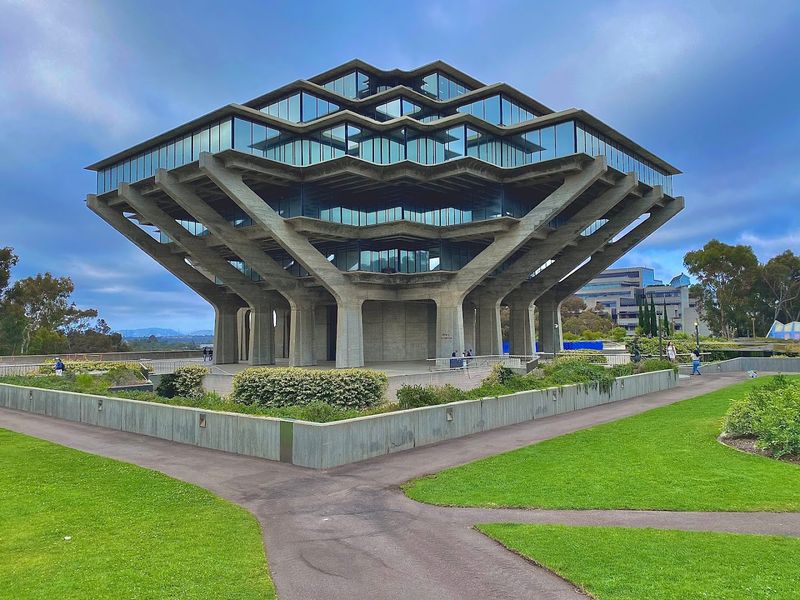
The Geisel Library at UC San Diego looks like something that landed from another dimension, with its cantilevered concrete tiers stacked above a glass base in a way that defies easy architectural categorization.
The campus is situated at 9500 Gilman Dr in La Jolla, CA 92093, and it pairs that futuristic energy with eucalyptus groves and coastal trails that give the walking experience a grounded, natural counterbalance.
The contrast between bold modernist buildings and fragrant tree-lined paths makes every turn on campus feel a little unexpected.
The Stuart Collection of public art is scattered across the campus grounds, placing sculptures and installations in spots that reward wanderers who are paying attention rather than rushing.
Some pieces blend into the landscape so naturally that stumbling upon them feels like a genuine discovery.
Shoreline trails near campus connect to the broader La Jolla coastal scenery, which is some of the most dramatic in all of Southern California.
The eucalyptus groves have a distinctive scent and a filtered light quality that makes certain parts of campus feel almost meditative.
Weekday mornings are particularly good for unhurried exploration before the foot traffic picks up.
The beach and the Torrey Pines area are close enough to extend a campus walk into a full half-day outdoor adventure.
8. University of Southern California
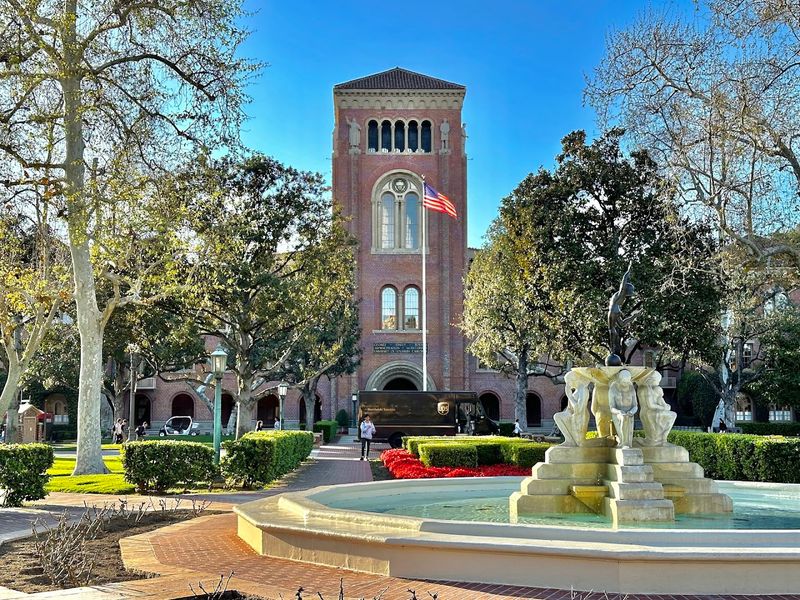
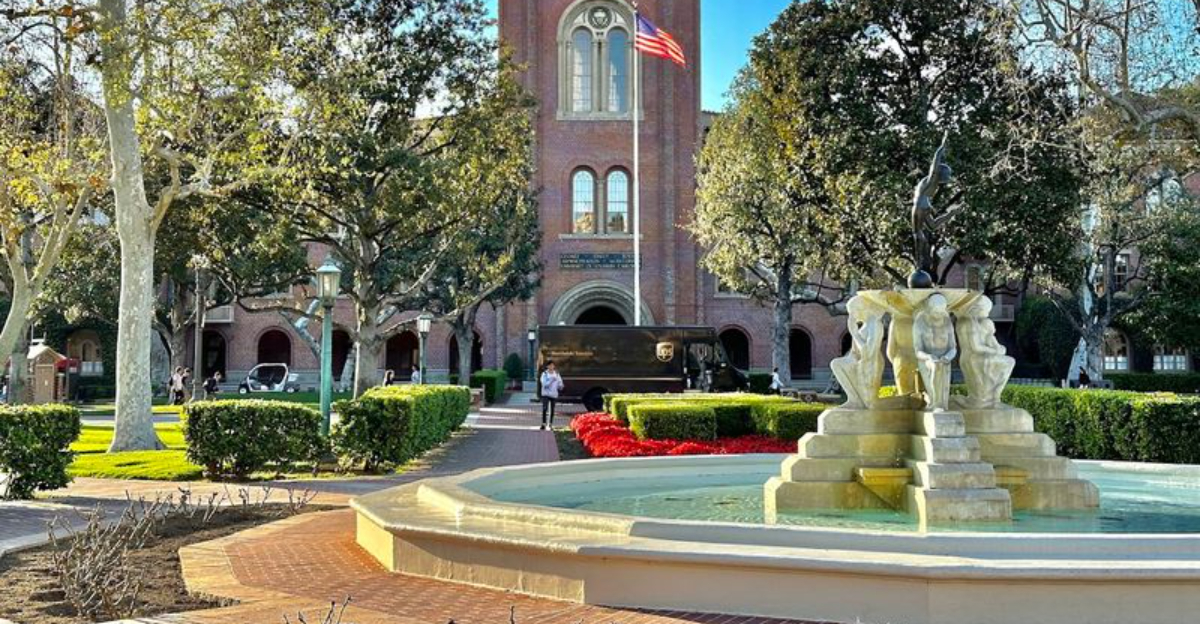
Walking through USC’s University Park campus on a warm afternoon has a particular kind of energy that feels both historic and alive at the same time.
The Romanesque Revival brick buildings that anchor the older parts of campus give the grounds a warm, amber-toned visual character that photographs beautifully and feels even better in person.
Alumni Park sits near the center of campus and provides a green, shaded respite from the surrounding city bustle.
The Tommy Trojan statue is a well-known gathering point and a useful landmark for orienting yourself during a first-time visit.
Tree-lined walkways connect the academic core to the newer parts of campus, where modern architecture introduces a visual shift that keeps the walk from feeling repetitive.
The campus is compact enough to cover on foot in a focused two-hour loop without missing much.
Street parking in the surrounding neighborhood can be limited on game days and major event weekends, so planning arrival logistics in advance tends to make visits smoother.
The campus sits in the heart of Los Angeles, which means the energy of the city is always present just beyond the tree line.
USC has a spirited, sun-drenched personality that feels very much at home in Southern California.
9. Scripps College
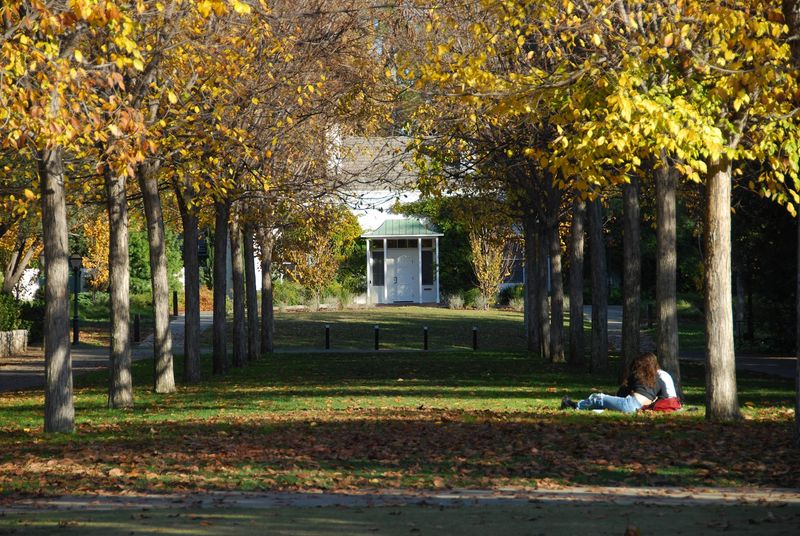
There is a quiet, almost garden-party elegance to Scripps College that makes it stand out even within the already beautiful Claremont Colleges consortium.
At 1030 Columbia Ave in Claremont, CA 91711, the campus is relatively small in scale, which actually works in its favor for walking exploration since every pathway and courtyard feels intentional and carefully considered.
Mediterranean-style architecture with arched walkways, white stucco walls, and flowering vines gives the grounds a warmth that is easy to settle into.
The manicured gardens throughout campus are genuinely impressive, with plantings that shift in color and texture across the seasons and reward repeat visits at different times of year.
Because Scripps is part of the Claremont Colleges system, a wander can naturally extend into neighboring campuses like Pomona, Claremont McKenna, or Harvey Mudd without any major logistical planning.
The whole cluster of campuses creates a walkable academic village that feels unlike anything else in California.
Afternoons tend to bring a peaceful, unhurried pace to the Scripps grounds, especially mid-week when student activity is more spread across the day.
The intimate scale of the campus makes it one of the most comfortable places in Southern California to wander without a map or a specific destination in mind. Totally chill and completely beautiful.
10. University of California, Davis
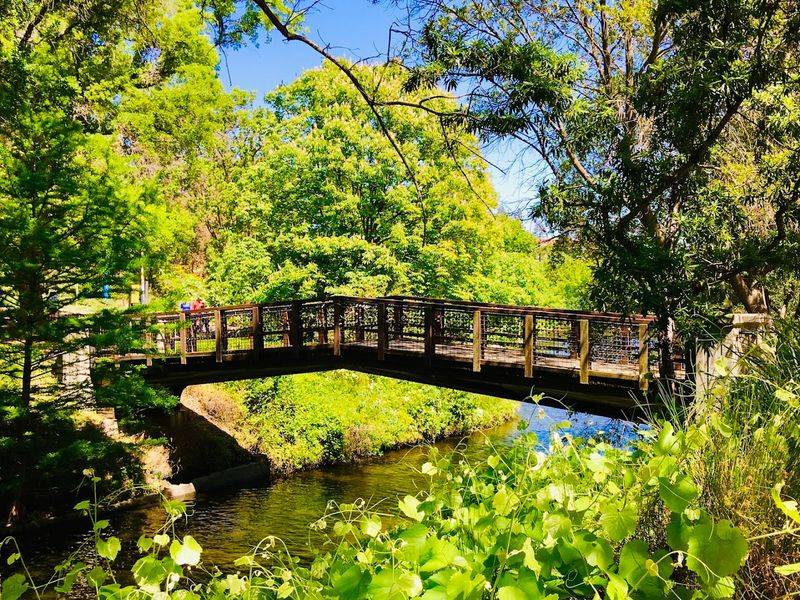
Flat, tree-covered, and genuinely built for getting around on foot or by bike, the UC Davis campus has a relaxed agricultural-town energy that feels refreshingly unpretentious compared to some of the more glamorous campuses on this list.
The university sits at 1 Shields Ave in Davis, CA 95616, and its layout is open and easy to navigate, with wide pathways and generous green quads that make aimless wandering feel natural rather than directionless.
The Central Valley light here is broad and bright, giving the campus a sunny, unhurried character that suits its surroundings.
The Mondavi Center for the Performing Arts is one of the more architecturally striking buildings on campus and worth a stop even if no event is scheduled.
Arboretum walkways wind along a waterway that cuts through the southern edge of campus and offer a quieter, more nature-focused alternative to the main academic corridors.
Birds and wildlife are a regular presence along those paths, which adds an unexpected layer to the walking experience.
Davis has a strong cycling culture, so foot traffic and bike traffic share the pathways in a generally smooth and well-practiced rhythm.
The town itself is compact and easy to explore after a campus walk, with shops and eateries close by. Low-key and lovely in the best possible way.
11. California Institute of Technology
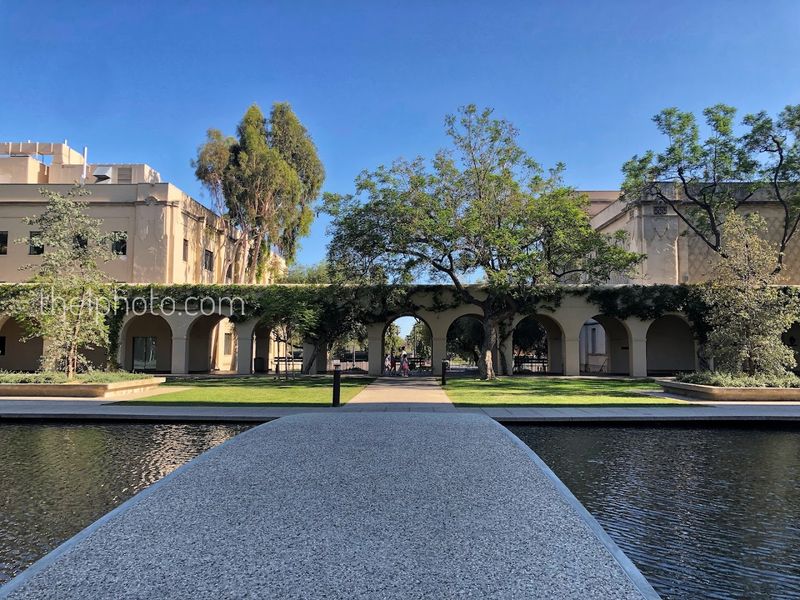
Compact, meticulously maintained, and packed with architectural character, the Caltech campus in Pasadena rewards slow, attentive walking in a way that its small size might not immediately suggest.
The campus is located at 1200 E California Blvd in Pasadena, CA 91125, and its Spanish Renaissance-influenced buildings create a visual consistency that feels cohesive and calming as you move through the grounds.
Olive Walk is one of the most pleasant pedestrian paths on campus and a good starting point for any visit.
Beckman Auditorium is an iconic circular structure near the campus entrance that tends to catch the eye immediately and serves as a useful orientation point for first-time visitors.
The campus gardens are carefully tended and include mature trees that provide shade and a sense of established permanence.
Public art and scientific monuments are scattered throughout the grounds, giving the walk an intellectual texture that fits the institution’s identity naturally.
The surrounding Pasadena neighborhood is walkable and full of character, with Old Town Pasadena just a short distance away for anyone looking to extend the outing into a broader afternoon.
The campus is small enough to cover thoroughly in about an hour, making it an ideal addition to a broader San Gabriel Valley exploration. Solid, beautiful, and genuinely worth the trip.