Nebraska’s Wild Whitewater River Park Turns A Downtown Stretch Into An Adventure Zone
Whitewater sounds like something that should require mountains and helmet, right? Then a downtown river park comes along and changes the rules.
A regular stretch of water suddenly has movement and enough splashy attitude to make people stop and watch.
Nebraska does not usually get bragging rights for whitewater, which makes this kind of place feel even more unexpected.
One minute, you are near downtown. The next, the river is doing its best impression of an adventure destination.
Kayakers get the action. Spectators get the fun of watching without pretending they packed the right shoes.
A park like this gives a city something most people do not see coming.
It adds motion to the riverfront and turns an ordinary outing into a quick hit of excitement.
For anyone who likes outdoor adventure without driving all day to find it, this downtown stretch brings the rush closer than expected.
A Surf Wave Makes Norfolk Feel Briefly Coastal
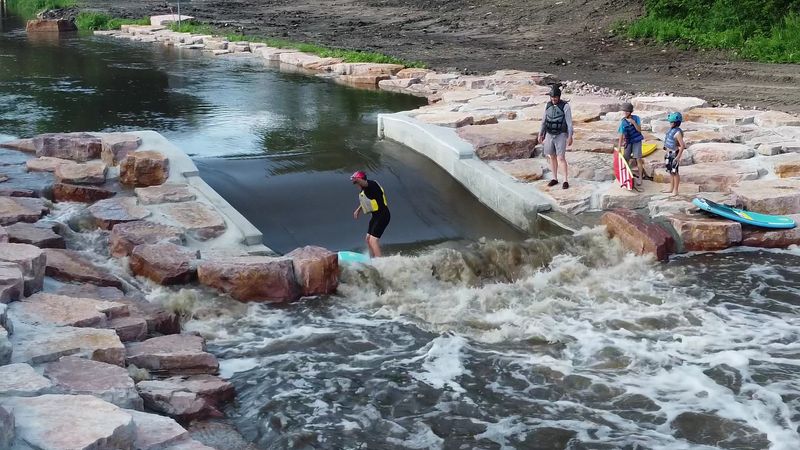
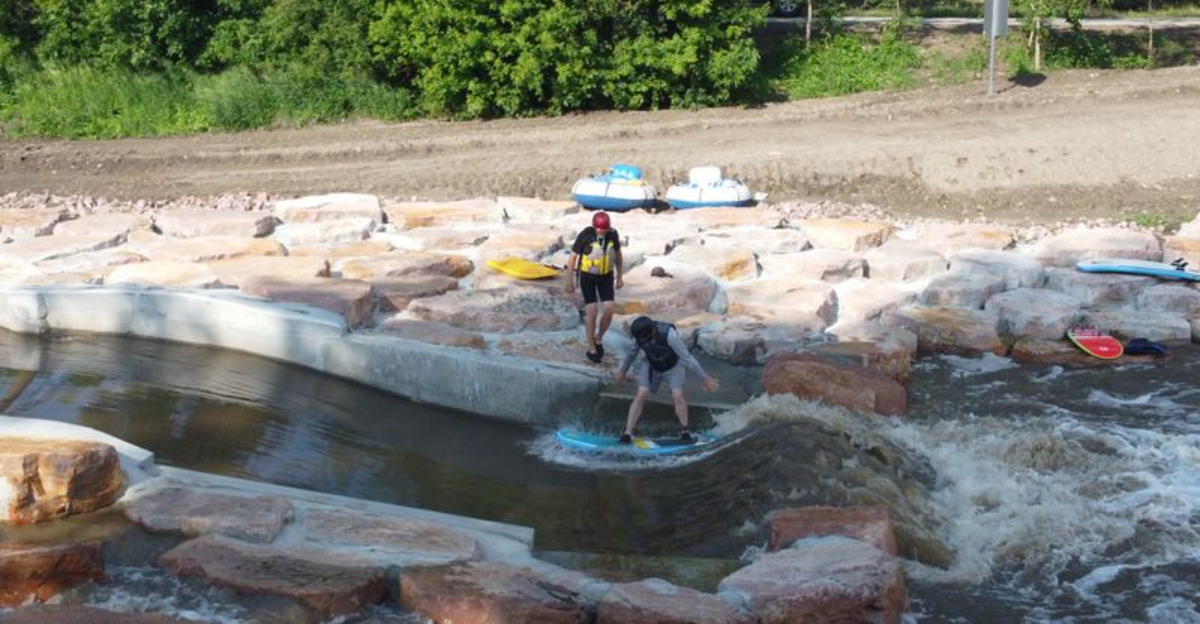
Standing on the bank watching someone ride a stationary wave in the middle of Nebraska is the kind of moment that makes a person do a double-take.
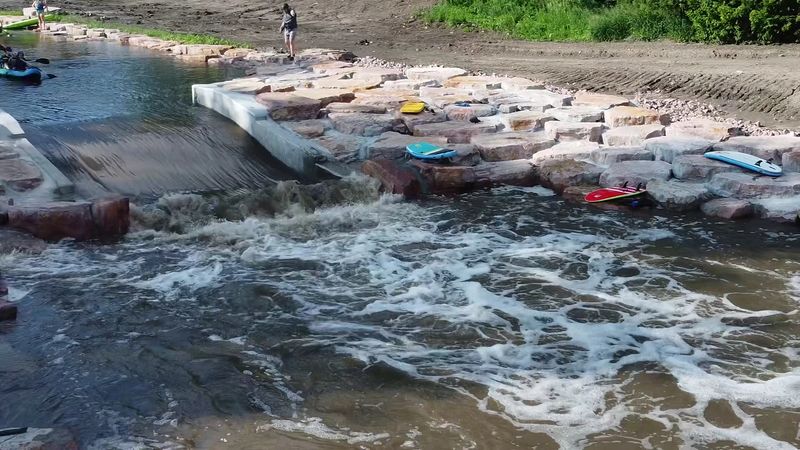
The North Fork Whitewater Park features Nebraska’s first designated river surfing feature, making it one of only a handful of urban whitewater parks in the entire United States built on a natural river with a functional surf wave.
The wave performs best at medium to high river levels, so checking conditions before heading out is a smart move.
At the right flow, the feature creates a genuine surfing pocket where paddlers and river surfers can hold position and practice their technique without needing an ocean or a mountain creek nearby.
For spectators, watching from the bank is just as entertaining as being on the water.
The sound of rushing water combined with the sight of someone carving a wave in a landlocked Midwestern city creates a memorable contrast that tends to stick with visitors long after they leave.
Norfolk has quietly earned a claim that very few Nebraska cities can make, and this surf feature is the centerpiece of that identity.
Seven Drop Structures Keep The Ride Moving
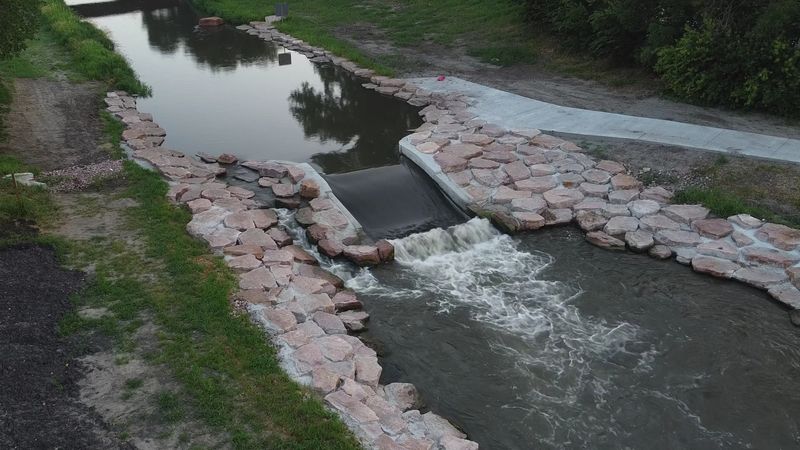
The backbone of the North Fork Whitewater Park is a series of seven engineered whitewater drop structures spread across roughly a quarter mile of the North Fork of the Elkhorn River.
Six of those structures create smaller rapids that build momentum and keep paddlers engaged throughout the run, while the seventh serves as the park’s standout river surfing feature.
What makes these structures particularly interesting is their origin.
The large limestone rocks used to build them were salvaged from the Norfolk Regional Center, giving the park a grounded, local material story that most engineered whitewater courses cannot claim.
The rocks were repurposed rather than imported, which kept costs manageable and connected the project to the region’s existing landscape.
For kayakers and paddleboarders working their way through the course, the progression of drops offers a rhythm that feels satisfying without being overwhelming for intermediate paddlers.
Beginners may want to scout each drop from the bank before committing, since water levels can change the character of each feature significantly.
The variety across seven distinct structures means the run rarely feels repetitive, and paddlers often circle back to work specific drops multiple times in a single session.
The Water Trail Runs Right Through Town
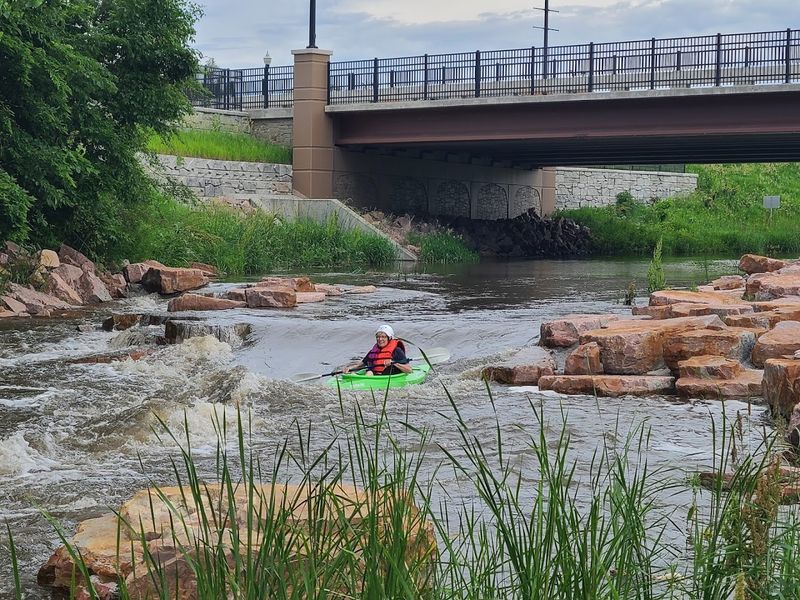
Running through the heart of a city rather than tucking away in a remote canyon gives this water trail a personality that is hard to replicate elsewhere.
The North Fork of the Elkhorn River cuts directly through downtown Norfolk, and the whitewater park route follows that urban corridor for approximately three miles from the first put-in to the final take-out.
That proximity to the city core means paddlers can see downtown infrastructure, riverfront improvements, and parkland all from the water.
The route does not demand a long drive to a trailhead or a shuttle through unfamiliar countryside.
Starting and ending points sit close to parking areas, restaurants, and the broader Johnson Park entertainment corridor, which makes the whole experience unusually convenient.
Weekday visits tend to offer a quieter float with fewer other paddlers on the water, while weekends draw more activity and a livelier atmosphere along the banks.
The combination of whitewater features and calmer stretches between drops means the route suits a range of skill levels and pacing preferences.
For anyone who has never considered Nebraska a paddling destination, floating through downtown Norfolk on a summer afternoon tends to change that perspective fairly quickly.
Kayakers Get A Rare Nebraska Playground
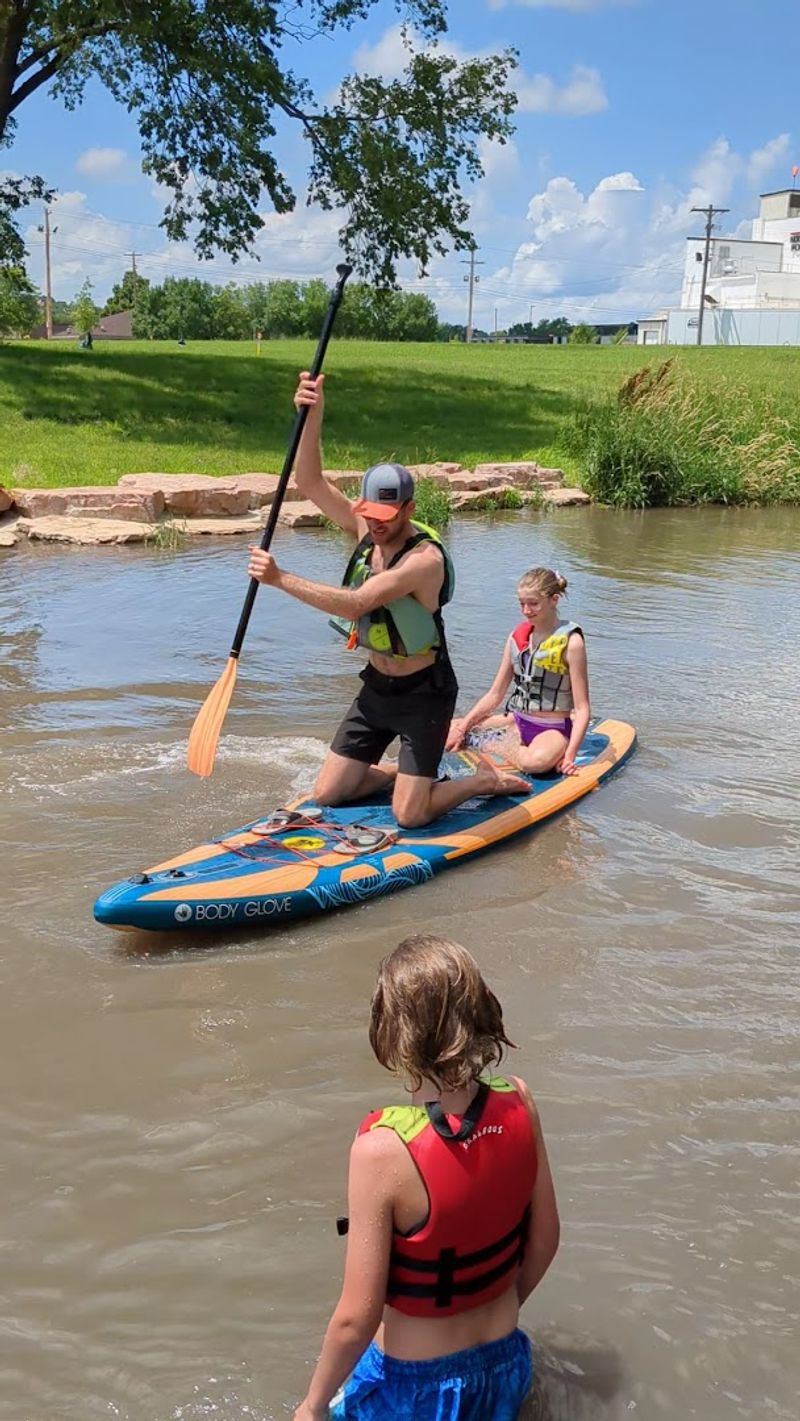
Nebraska does not have an abundance of moving water that challenges paddlers, which is exactly why the North Fork Whitewater Park has drawn kayakers from across the state and from neighboring states as well.
The engineered drops create real current and turbulence that reward proper technique, making the park genuinely useful for paddlers who want to build whitewater skills without traveling to Colorado or Minnesota.
Multiple put-in and take-out options give kayakers flexibility in how they structure a session.
The 1st Street put-in and Winter Park put-in serve as the two main starting points, while Johnson Park and East Bluff Park function as take-outs, creating route variations.
Paddlers who want to work a specific drop repeatedly can eddy out and carry back upstream, which is a common sight on busier weekend days.
The limestone rock structures create defined eddy lines and entry points that experienced kayakers will recognize and appreciate.
For newer paddlers, the park offers a low-stakes environment to try moving water for the first time, especially since the riverbanks are close and the overall scale of the features stays manageable rather than intimidating.
No Admission Fee Makes The Adventure Easier To Say Yes To
Cost is often the quiet barrier that keeps people from trying something new outdoors, and the North Fork Whitewater Park removes that obstacle entirely.
There is no admission fee to access the park, use the river features, or walk the adjacent trails, which makes it genuinely easy to stop by on a whim rather than needing to plan and budget in advance.
Free access also lowers the stakes for first-timers who are not sure if river paddling or tubing is something they will enjoy.
Showing up without a financial commitment means there is nothing lost if someone tries one drop structure, decides the experience is not for them, and heads back to dry land.
That kind of low-pressure entry point tends to bring in a wider range of visitors than paid attractions typically attract.
The life jacket loaner stations at Winter Park and Johnson Park add another layer of accessibility by ensuring that people who arrive without safety gear can still participate safely at no cost.
Gear rental for kayaks and tubes is available through local outfitters rather than on-site, so planning ahead for equipment is still worthwhile.
Overall, the no-fee model aligns with the park’s broader goal of making outdoor recreation feel like a normal part of everyday life in Norfolk rather than a special occasion activity.
Johnson Park Gives The Whole Area A Gathering-Spot Feel
The whitewater park does not exist in isolation.
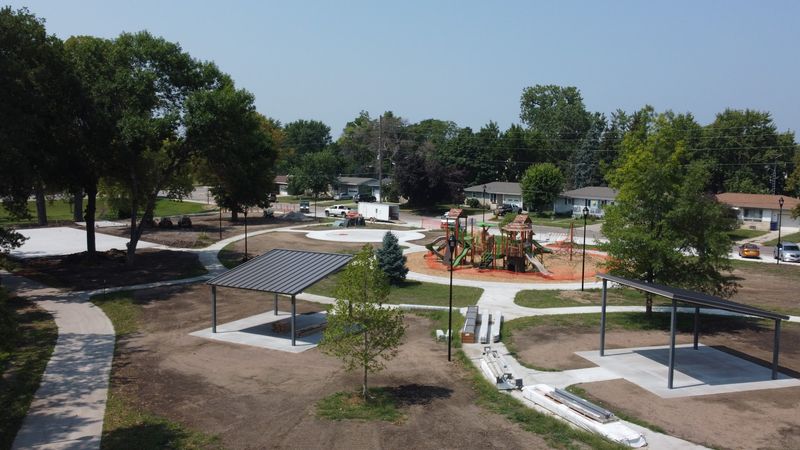
Johnson Park sits adjacent to the river corridor and is undergoing a significant renovation that is turning the space into a full-scale community gathering destination.
That combination of amenities means families can spend an entire afternoon in the area without running out of things to do.
Younger kids who are not ready for the river can use the splash pad or playground while older siblings and adults paddle the whitewater features.
The amphitheater adds a venue for community events that could draw crowds even on days when the river is not the main focus.
A new bridge near the park allows kayakers to pass underneath, which was a deliberate design choice that integrates the water trail with the land-based park infrastructure rather than treating them as separate zones.
The hike and bike trail running through the area connects the riverfront to the broader city trail network, making it possible to arrive by foot or bicycle.
For spectators who simply want to watch paddlers navigate the drops, the riverbank near Johnson Park offers clear sightlines and comfortable space to settle in and observe.
Multiple Access Points Make The Route Flexible
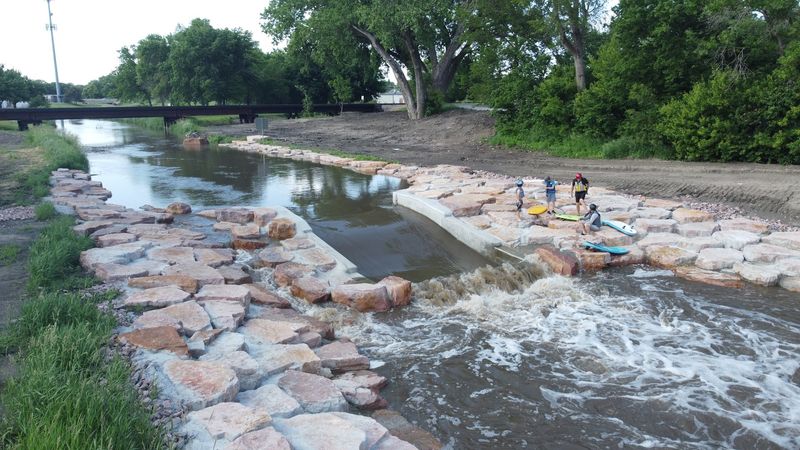
Having four distinct access points along the route gives paddlers genuine control over how much river they take on in a single outing.
The 1st Street put-in and Winter Park put-in serve as the two starting options, and the Johnson Park take-out and East Bluff Park take-out offer two different endpoints, creating a flexible system that accommodates both short and longer floats.
Choosing the Winter Park put-in places paddlers directly above the whitewater features, making it the better choice for those who want to spend most of their time on the engineered drops rather than paddling a long approach.
Starting at 1st Street adds more river distance before the whitewater section begins and suits paddlers who prefer a longer warm-up stretch of calmer water.
Planning a shuttle between put-in and take-out is worth thinking through before arriving, especially for solo paddlers who cannot leave a vehicle at both ends simultaneously.
The three-mile total route length means a car shuttle is manageable within a short drive.
Checking the city’s Visit Norfolk resources or local outfitter guidance before the trip can help clarify current conditions and which access points are most appropriate given the river level on a given day.
Gear Rentals Keep Beginners From Overthinking It
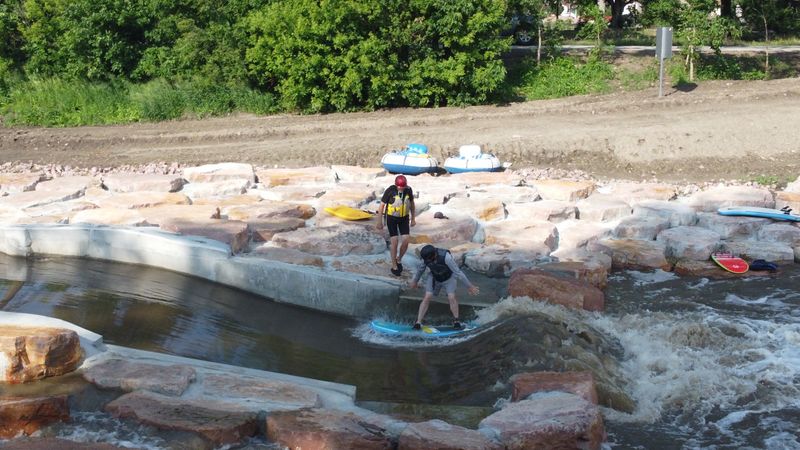
Not owning a kayak or a tube is not a reason to skip the North Fork Whitewater Park, since local outfitters in the Norfolk area can provide rentals for people who want to get on the water without hauling their own equipment.
The park itself does not operate an on-site rental facility, so reaching out to outfitters ahead of the visit is the practical move rather than assuming gear will be available at the water’s edge.
For beginners, renting from a local shop also creates an opportunity to ask questions about the route, current water levels, and which features are appropriate for a first-timer.
That kind of direct local knowledge is often more useful than anything found online, especially since river conditions at the park can shift depending on recent rainfall and the regulated flow from the upstream diversion dam.
Paddleboards, kayaks, and tubes are the primary watercraft suited to the park’s features, and most outfitters familiar with the North Fork route can advise on which option makes the most sense for a given skill level.
Arriving with a clear sense of what the plan is for the day, including which put-in and take-out to use, helps rental conversations go smoothly and ensures the right gear gets matched to the right route.