This Beautiful Church In A Small Connecticut Town Feels Like It Belongs In Old Europe
Old churches can change the pace of a street almost instantly. The sidewalks may be busy, and cars may keep moving past, but the building itself seems to ask for a quieter look.
Its height gives the block a more dramatic feeling. The stonework adds another layer of charm.
A historic church in Connecticut can make a busy town center feel surprisingly old and beautifully far away. That feeling comes from the details.
Pointed shapes, tall windows, and a sense of age all work together without feeling fussy.
It is easy to imagine the building watching the neighborhood change around it year after year. Places like this are not only pretty to photograph.
They give a town a deeper sense of memory. It feels graceful rather than grand, which makes the whole scene even easier to like.
Even from the outside, the church has that little spark of another time, which is exactly why it leaves such a strong impression.
1. A First Look At The Church
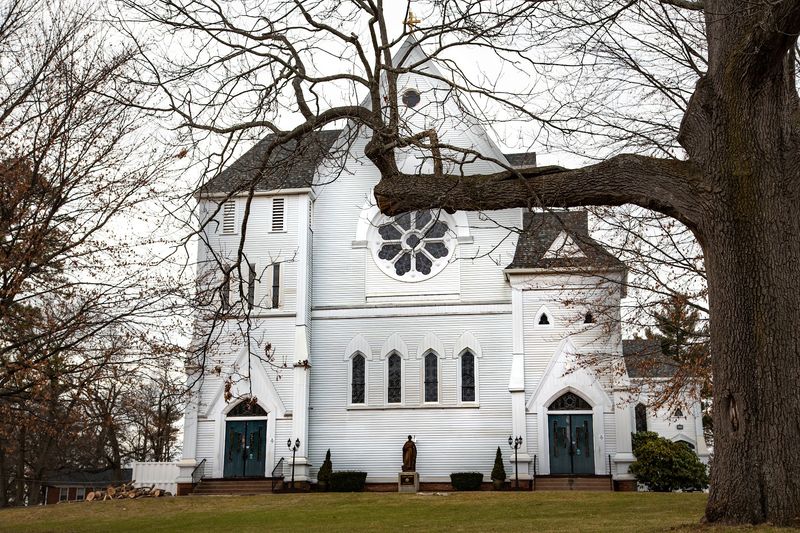
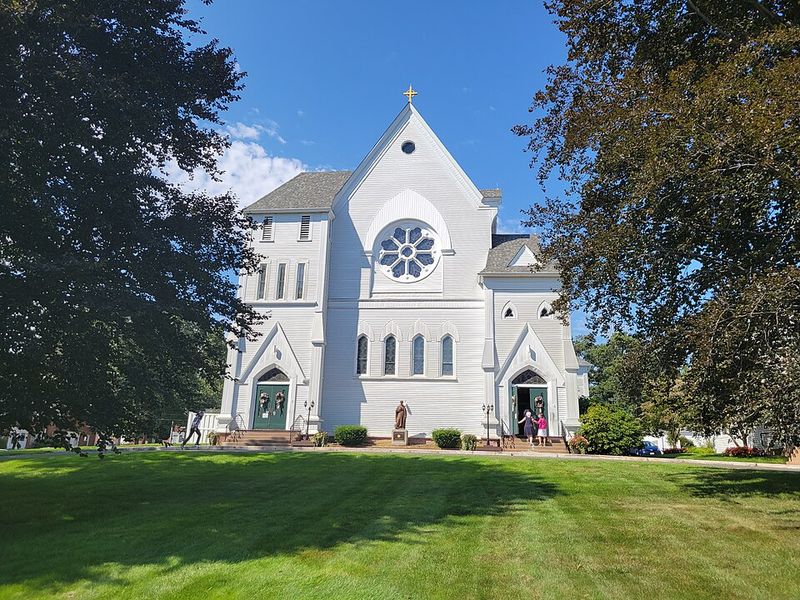
Catching sight of a Gothic church in the middle of a familiar New England streetscape can stop you for a moment, especially when the building carries nearly a century and a half of history in its stonework.
St. James Church in Manchester has that effect, with pointed arches, a sturdy exterior, and strong vertical lines that pull attention upward.
Its facade feels noticeably different from the everyday buildings around it, giving the corner a sense of age and presence.
The church’s history reaches back to the 1870s. Its cornerstone was laid in August 1874, and the building was dedicated on August 20, 1876, placing it among the long-standing landmarks on Main Street.
Over the decades, it has endured more than ordinary wear, including vandalism, partial removal of some elements during the Great Depression, and later restoration efforts that helped bring the structure back into cohesive form.
You’ll find St. James Church at 896 Main St., Manchester 06040, where its scale becomes easier to appreciate up close. The proportions have a European quality, which makes sense given the Gothic church influences behind the design.
In a town setting where many buildings feel more familiar and practical, this church offers a striking reminder of how architecture can hold memory, identity, and visual drama all at once.
2. Where To Find It In Manchester
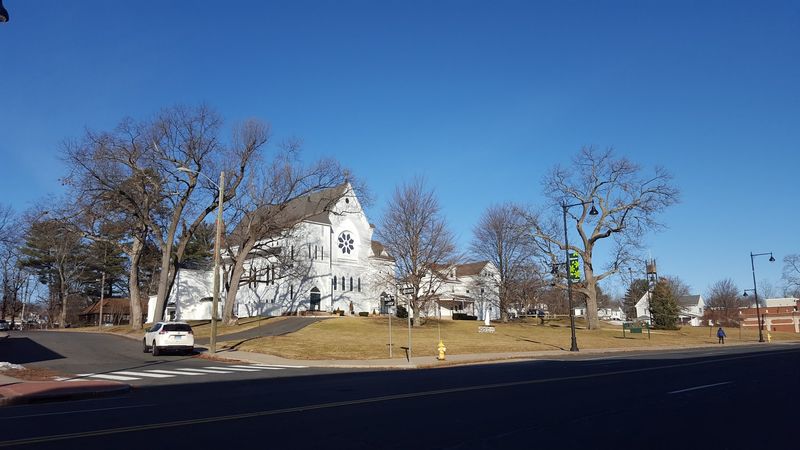
Manchester is a town in Hartford County and it carries a rich industrial past tied closely to the Cheney Brothers silk mill that once defined life in the area.
The Cheney family donated the land on Main Street where St. James Church now stands, which gives the site a layered historical significance beyond just its religious function.
Finding the church is straightforward since it sits right along Main Street, one of the town’s most recognizable roads.
The address is 896 Main St, Manchester, CT 06040, and the church is generally open from 7 AM to 4 PM daily according to current listed hours.
Parking tends to be available in the area, and the location is accessible without needing to navigate through complicated side streets or confusing intersections.
It sits in South Manchester, the same neighborhood where Irish immigrants once settled to work at the silk mills.
Getting there from Hartford takes roughly 15 to 20 minutes by car depending on traffic.
The surrounding area has a mix of residential homes and local businesses, giving the neighborhood a lived-in, community-centered feel that makes the church seem like a natural anchor rather than an out-of-place landmark.
3. The Old Europe Feel
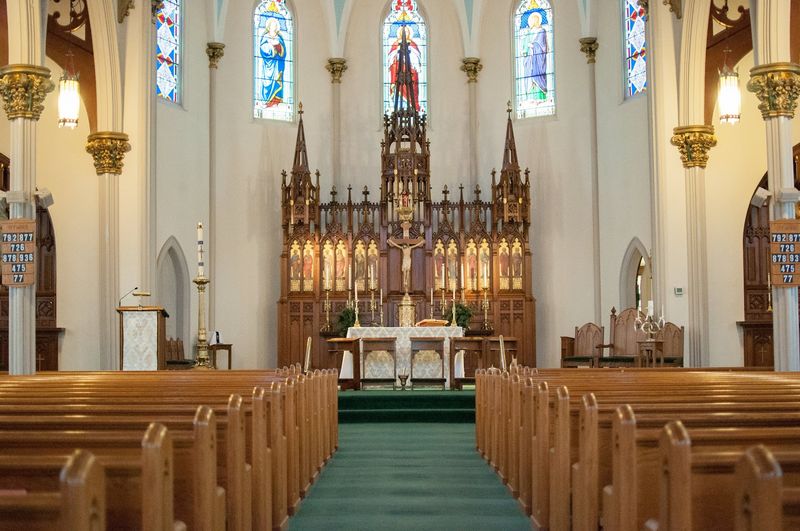
Gothic architecture was never meant to be subtle.
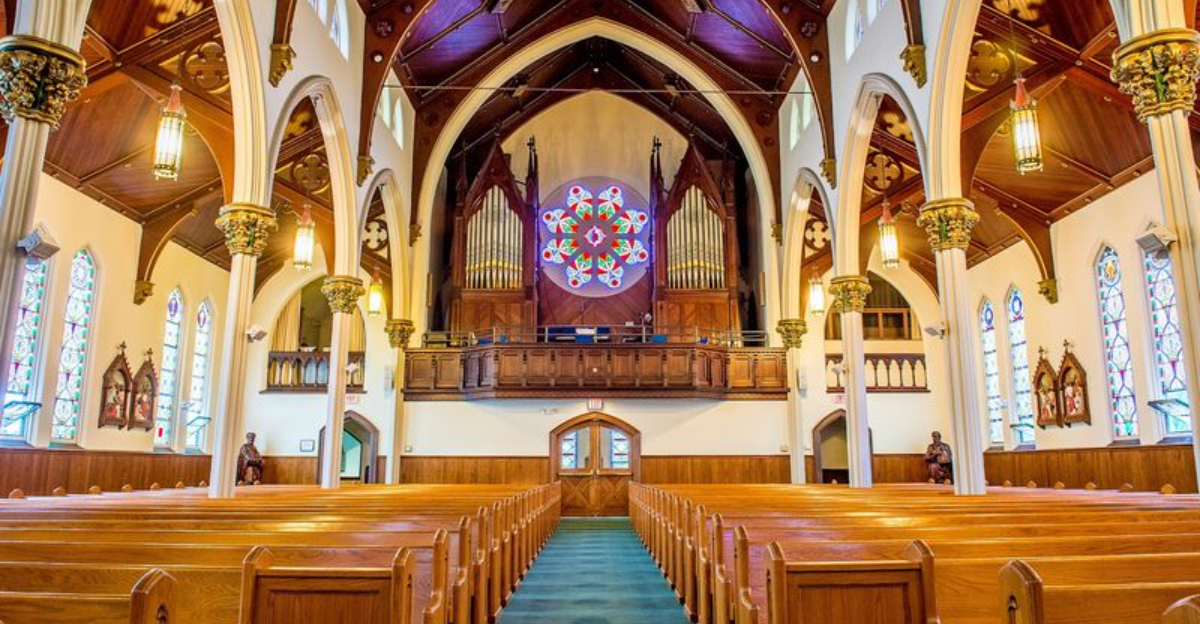
The entire design philosophy centers on height, light, and a sense of reaching toward something beyond the everyday, and St. James Church delivers on all three of those ideas in a setting that most visitors would not expect to find in a Connecticut town.
The Latin Cross floor plan and eastward orientation are both classic features of European Gothic church design, and both are present here.
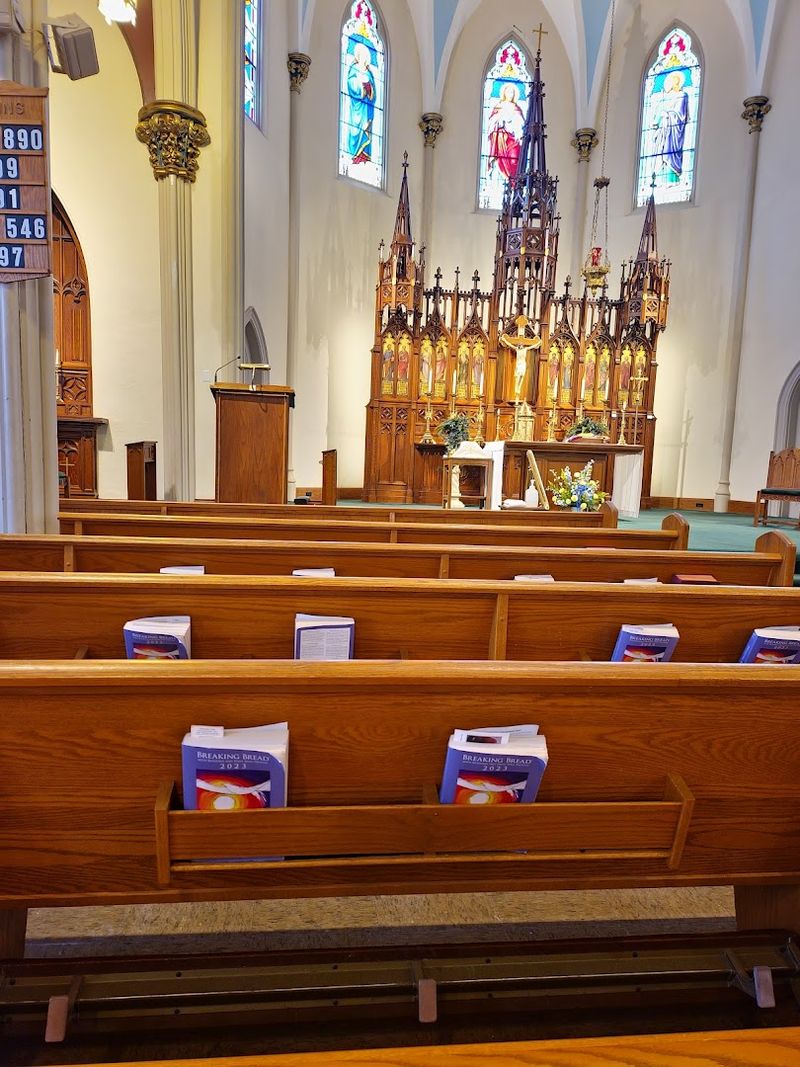
Pointed arches frame the interior spaces while intricate wood carvings add warmth and texture to surfaces that might otherwise feel cold or austere.
The woodwork inside the church has been described as detailed and well-preserved, which is notable given the building’s age and the challenges it has faced over the decades.
The main altar is a canon law altar, meaning it is freestanding and allows for movement around it, which is a distinctive and historically significant feature.
The stained glass windows filter light in a way that shifts the mood of the interior throughout the day. Early morning light tends to create a softer, more muted atmosphere while midday sun can bring the colors in the glass to life more dramatically.
That kind of light behavior is something European cathedrals are famous for, and it translates well here.
4. Details Worth Noticing
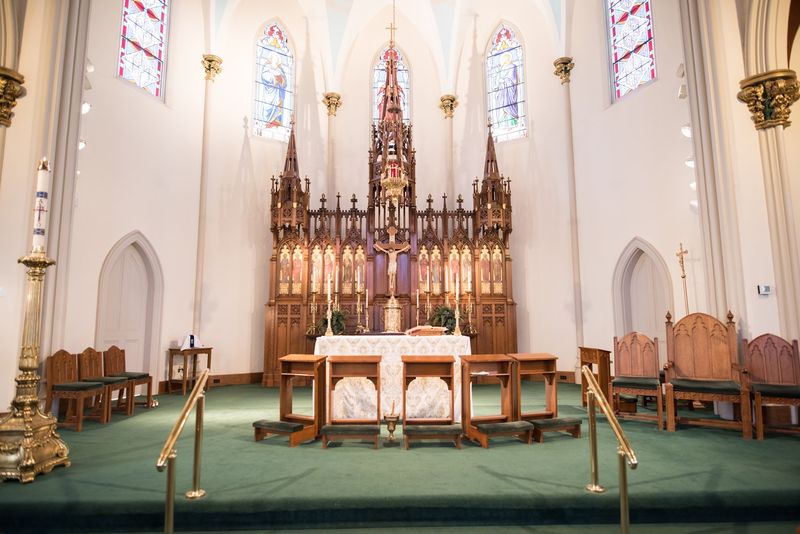
Some buildings reward patience. St. James Church is one of those places where slowing down and actually looking at the smaller details reveals something new each time.
The wood carvings throughout the interior are particularly worth examining up close because the level of craftsmanship involved reflects a dedication that was common in 19th-century church construction but is rarely seen in newer buildings.
The stained glass windows have their own complicated history. Before the church was even officially dedicated, vandals smashed 35 of the original windows on the night of May 4 to 5, 1876.
The fact that the windows visitors see today represent a rebuilt and restored collection adds a quiet layer of resilience to what might otherwise seem like straightforward decorative glass.
The canon law altar is another detail that stands out for those familiar with Catholic church design. Because it does not touch the wall of the church, it maintains a traditional form that has become increasingly rare in modern Catholic buildings.
The overall cleanliness and upkeep of the interior also make the details easier to appreciate since nothing is obscured by neglect or disrepair. Visitors consistently note that the space feels immaculate, which allows the craftsmanship to speak for itself without distraction.
5. A Quiet Place To Pause
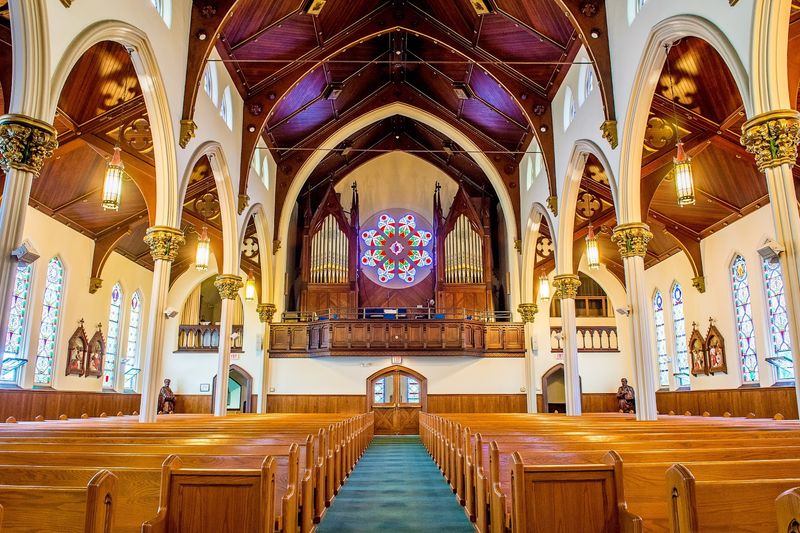
St. James Church opens at 7 AM daily, which means there are windows of time during the week when the space is relatively quiet and visitors can simply sit and absorb the atmosphere without the energy of a full congregation present.
That kind of unhurried access to a beautiful old building is something worth taking advantage of.
The acoustics inside a Gothic church tend to be distinctive. Sounds carry differently under vaulted ceilings, and even small noises like footsteps or a door closing seem to take on a different quality.
Sitting in the wooden pews and listening to the ambient sounds of the building creates an experience that is hard to replicate anywhere else in Manchester.
The pacing of a visit here does not need to be rushed. Spending 20 to 30 minutes walking slowly through the nave, looking at the windows, and noticing the carvings tends to feel more satisfying than a quick look around.
Church hours currently run from 7 AM to 4 PM every day of the week, so there is reasonable flexibility for planning a visit around a personal schedule without feeling pressured by limited access windows.
6. The Neighborhood Around It
South Manchester has a character that reflects its working-class industrial roots while also showing the gradual changes that come with time and community growth.
The neighborhood where St. James Church sits was originally home to Irish immigrants who came to work at the Cheney Brothers silk mill in the late 19th century.
Over the following decades, other immigrant groups arrived and settled nearby, broadening the cultural texture of the area in ways that are still noticeable today.
Main Street itself functions as a connector between different parts of Manchester, and the stretch near the church has a mix of older residential properties and small commercial spaces.
The scale of the street feels human rather than overwhelming, which makes walking around the area comfortable without requiring much planning.
There are no major tourist crowds to navigate, which contributes to the low-key atmosphere that defines the neighborhood.
The Cheney Brothers connection gives the area a historical depth that goes beyond the church itself. The silk mill legacy shaped the layout and demographics of South Manchester in ways that are still reflected in the built environment.
Spending time in the neighborhood before or after visiting the church adds useful context to what the building represents in the broader story of the town.
7. Best Time To Visit
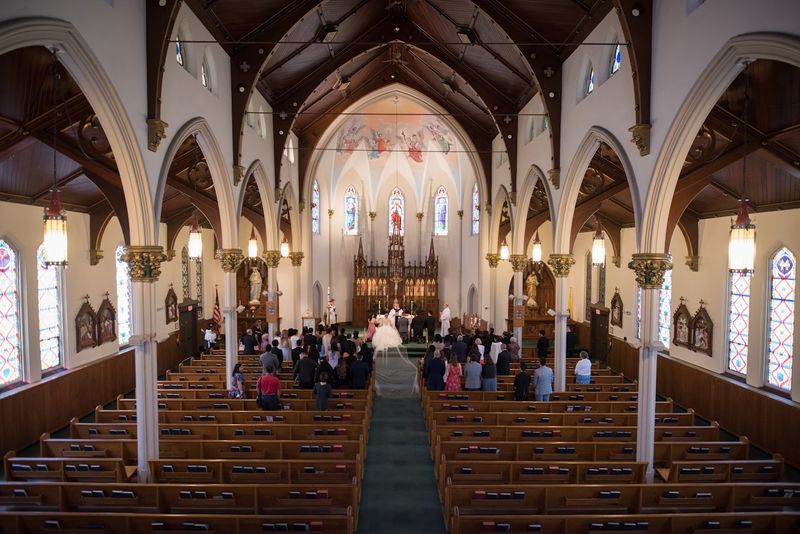
Planning a visit to St. James Church really depends on whether you want a quiet look at the architecture or the fuller experience of seeing the building in use. Weekday mornings are usually the better fit for a calmer visit, especially since daily Mass is offered Monday through Friday at 8 AM.
That time of day gives visitors a chance to appreciate the interior at a gentler pace, without the larger crowds that can come with weekend worship.
Sunday creates a very different mood. The 11 AM Mass at St. James has remained an important part of the parish schedule, and attending a service can change the way the space feels entirely.
Music, spoken prayer, and a gathered congregation bring energy to the church in a way that a quiet visit cannot fully match. The building’s scale, sound, and Gothic details all feel more active when the room is filled for worship.
Season also plays a role in how memorable the visit feels. Fall is especially rewarding around New England churches because the changing leaves add color and warmth to the exterior view.
Against the autumn trees, the stone facade of St. James Church photographs beautifully and takes on an even stronger sense of place.
Spring and early summer are also pleasant choices, particularly for visitors who want to spend time outside studying the arches, stonework, and vertical lines without dealing with harsher weather.
8. Why It Feels Memorable
There is something about a building that has survived vandalism, economic hardship, and the pressures of a changing community and still managed to remain standing and functioning that earns a kind of quiet respect. St. James Church has been through all of that.
During the Great Depression, part of the front was demolished and windows were shattered, yet parishioners pushed back against calls to tear the whole structure down. That collective decision to preserve rather than abandon shapes how the building feels today.
The church is now part of the Saint Teresa of Calcutta Parish, which formed through a series of mergers between several Manchester parishes between 2017 and 2021.
That broader parish structure means St. James Church continues to serve an active community rather than existing purely as a historical artifact.
The building still holds regular masses, welcomes new parishioners, and functions as a living part of Manchester’s Catholic community.
Preliminary plans under a concept called Parish 2030 envision transforming the St. James Church building into a community space while constructing a new church on the current rectory site. Those plans remain in early stages.
For now, the Gothic building at 896 Main Street continues to stand as one of the most architecturally distinctive and historically layered places in all of the state.