Most People Can’t Believe This Unusual Landmark Is Actually In Ohio
Ohio has a habit of making people feel foolish for underestimating it. You drive through a perfectly ordinary street, in a perfectly ordinary neighborhood, and then something appears that has absolutely no business being there.
No warning. No grand entrance.
Just a landmark so unexpected and so impossible-looking that you genuinely question what you are seeing. This state carries more surprises per mile than most people ever bother to discover.
The ones who do find them tend to stand very still for a moment before reaching for their phone. This particular landmark is that kind of stop.
Visitors who grew up here admit they had no idea it existed. People who traveled hours to see it say it exceeded every expectation.
Whatever you picture when you hear the word unusual, Ohio is about to raise the bar considerably.
A Backyard That Became A National Treasure
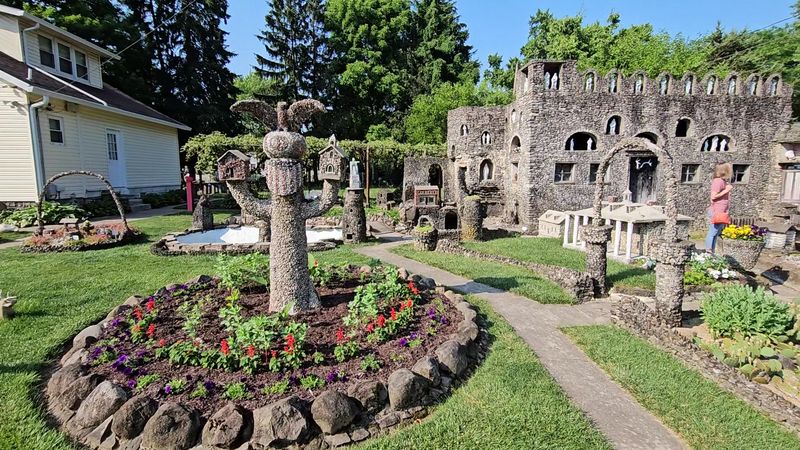
Nobody expects to find a national folk art landmark on a quiet residential street. But that is exactly what happened here, and it still surprises first-time visitors every single day.
Ben Hartman was 48 years old when he lost his job during the Great Depression. Instead of sitting still, he picked up concrete and started building.
What began as a simple cement fishing pond in 1932 turned into something nobody could have predicted.
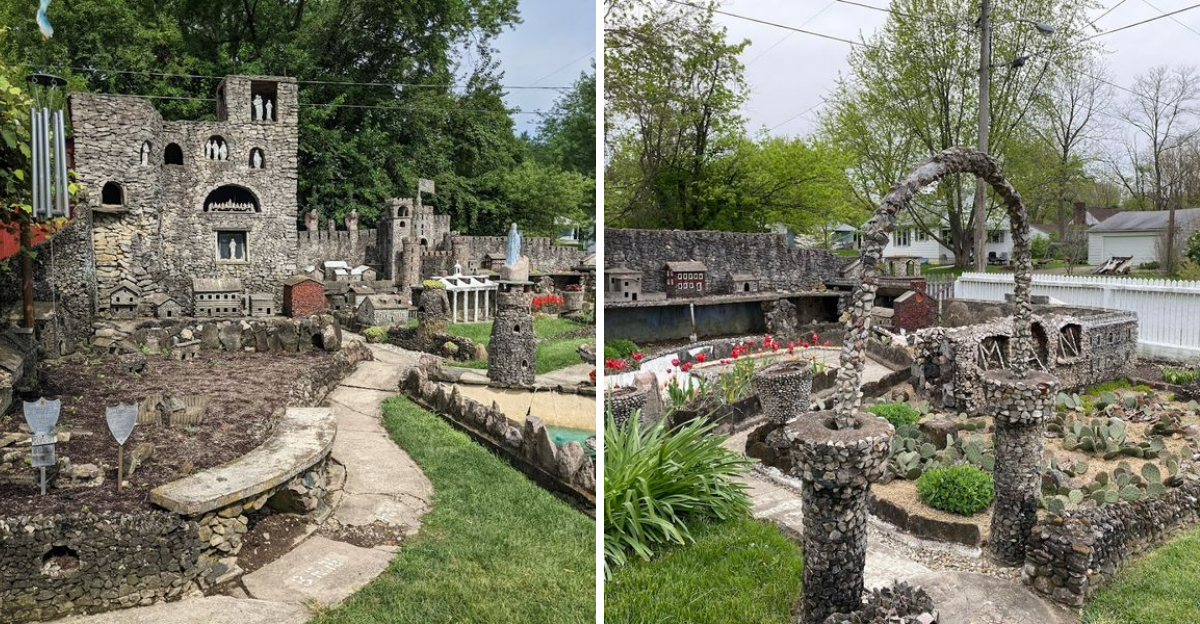
Over the next twelve years, Hartman filled his backyard with hundreds of handmade structures. He used concrete, metal, glass, stone, wood, and found objects from everyday life.
The results were stunning and deeply personal.
The garden covers approximately a quarter of an acre, or roughly 11,000 square feet. That is not a huge space.
Yet Hartman managed to pack over 50 ornate structures into every corner of it.
You can find this incredible place at Hartman Rock Garden, 1905 Russell Ave, Springfield, OH 45506. It is open daily from dawn to dusk.
Best of all, admission is completely free.
The Man Behind The Stones
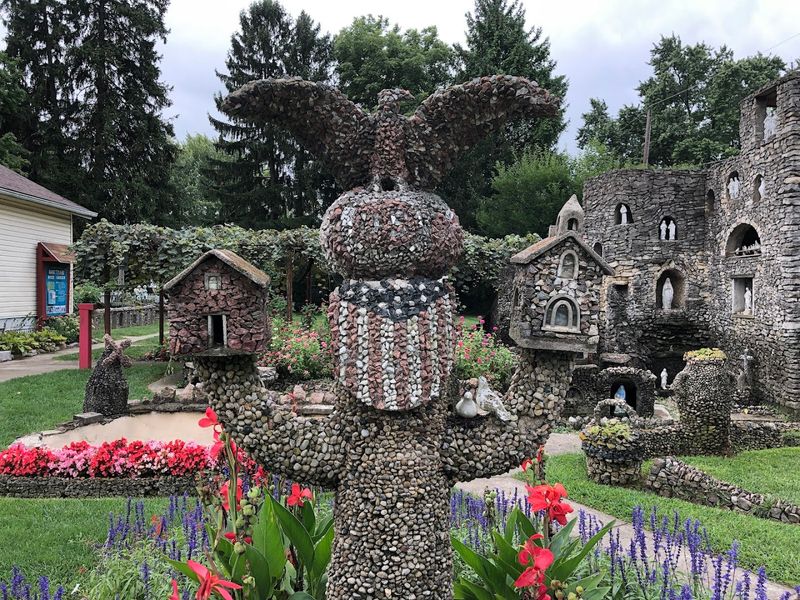
Ben Hartman was not a trained artist. He was a mold worker who refused to let hard times define him.
That determination is visible in every single stone he placed.
Hartman drew inspiration from family, friends, magazines, books, radio programs, and films. His creations were deeply personal and reflected his values around history, religion, and patriotism.
He was building a world that made sense to him.
He worked on the garden from 1932 until his passing in 1944. That is over a decade of daily dedication poured into a backyard project.
The sheer commitment behind that timeline is humbling.
After his passing, his wife Mary maintained the garden for 53 years. She kept every structure intact and the space welcoming to visitors.
Her devotion matched his in every meaningful way.
In 2008, the Kohler Foundation stepped in to restore and preserve the garden. Local residents formed the Friends of the Hartman Rock Garden in 2009.
Their ongoing care ensures this story keeps getting told to new generations of curious visitors.
250,000 Stones And Counting
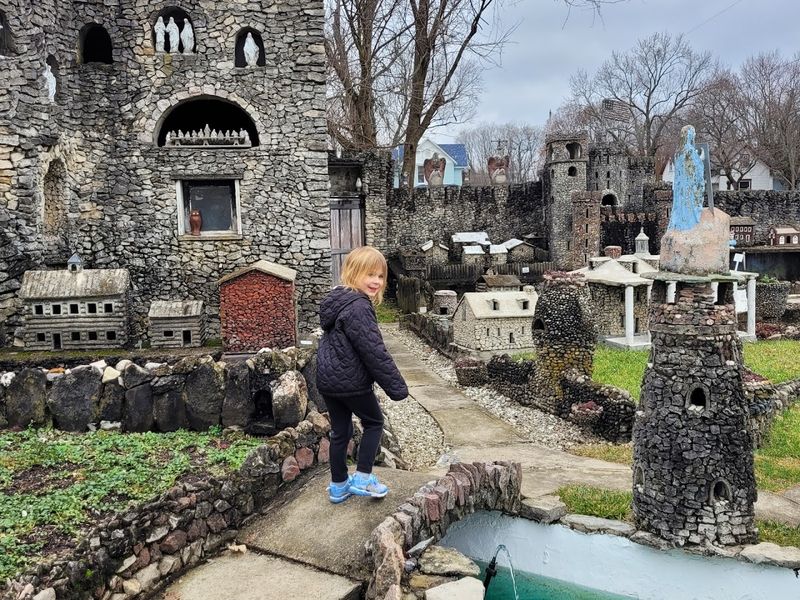
Counting to 250,000 sounds exhausting. Now imagine placing each of those stones by hand into concrete, one at a time, with purpose and precision.
That is exactly what Hartman did across his entire garden. Estimates put the total stone count at around 250,000 individual pieces.
Each stone was selected, positioned, and set with remarkable care.
The most jaw-dropping example is the Tree of Life. Standing seven feet tall, it was built using an estimated 20,000 tiny stones alone.
That single structure took more patience than most people have in a lifetime.
The textures throughout the garden are wild and varied. Some surfaces feel rough and rocky, while others have a mosaic-like smoothness.
Walking through feels like reading a book written entirely in stone.
Kids especially love hunting for tiny details hidden across the structures. There is always something new to spot no matter how many times you visit.
Grab the self-guided tour booklet from the outdoor kiosk before you start exploring.
The Castle That Stops Everyone Cold
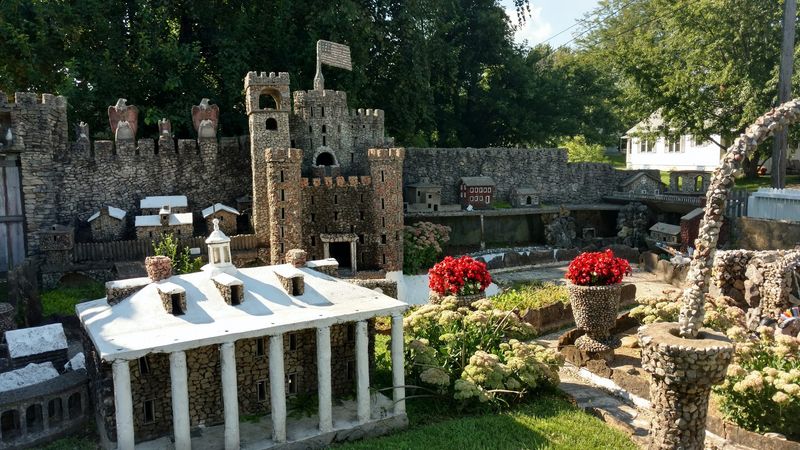
Most backyards have a lawn chair or maybe a birdbath. This one has a 12-foot castle with a working drawbridge and over 107 windows.
The castle is one of the first structures visitors notice when they step into the garden. Its scale is genuinely shocking for a residential lot.
You keep looking for the seam where imagination ends and reality begins.
Every window was individually crafted and set into the concrete walls. Hartman used found glass pieces and small frames to create each opening.
The level of detail makes it look like a scaled-down version of something from a medieval storybook.
Standing next to it puts the work into perspective fast. The structure towers above most adult visitors.
It was built entirely by one man working in his spare time with basic materials.
Photography enthusiasts especially enjoy this section of the garden. The light hits the textured stone walls differently depending on the time of day.
Morning visits tend to offer the best natural lighting for capturing its full dramatic effect.
The Detail And Scale Of This Yard Will Completely Surprise You
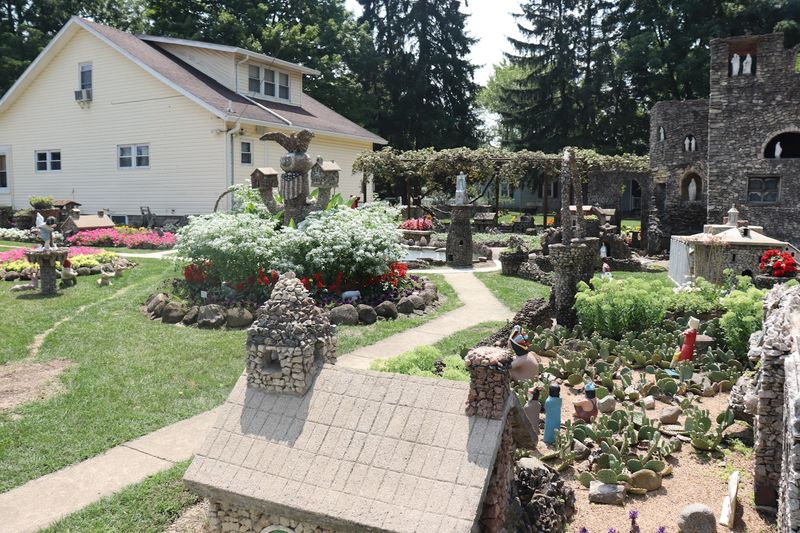
Somehow, Hartman fit a surprising mix of American landmarks, history, and imagination into a small backyard. That is not an exaggeration, it is almost literally true.
The garden includes a 14-foot stone cathedral that towers over everything around it. It also features miniature replicas of the White House, Mount Vernon, and Independence Hall.
Each one was built from memory and reference materials Hartman gathered from books and magazines.
One of the most unexpected features is a sand-filled rendition of Death Valley. It sits quietly in a corner of the garden, offering a stark contrast to the ornate stone structures nearby.
The range of subjects Hartman chose to recreate is genuinely impressive.
He also built a replica of the Lincoln Tomb and a Noah’s Ark scene. Religious themes, patriotic imagery, and pop culture references from the 1930s all share the same small space.
The variety keeps every corner of the garden feeling fresh and surprising.
Visitors who know their American history will have a field day recognizing each structure. Bring a friend who loves trivia and let them try to name each one.
It turns a simple walk into a fun and educational challenge.
The Only Concrete Picket Fence In The Country
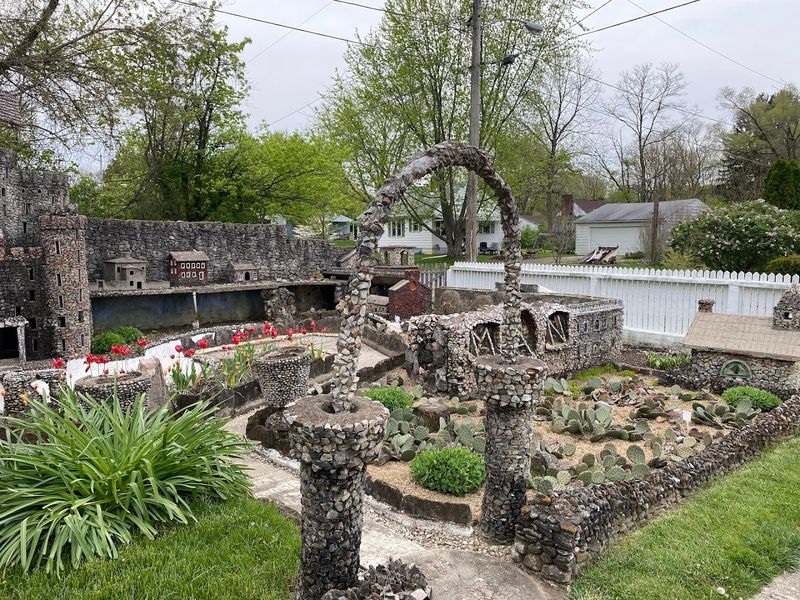
Most fences are wood or metal. Hartman built his entirely from concrete, and it is believed to be the only one of its kind in the entire country.
The fence runs along the perimeter of the garden and immediately signals that something unusual is happening inside. It looks like a standard white picket fence at first glance.
Then you get closer and realize every picket is solid, handcrafted concrete.
The craftsmanship on the fence matches everything else in the garden. Hartman did not cut corners anywhere, not even on the boundary of the space.
That consistency of effort is part of what makes the whole place feel so intentional.
It also serves as a natural frame for photos. Many visitors snap their first shot of the fence before they even step inside.
It sets the tone perfectly for what waits beyond it.
Details like this are what separate truly remarkable folk art from ordinary yard decoration. Hartman was not making things to impress critics.
He was building a world that reflected who he was, and the fence was as much a part of that world as anything else inside it.
Free To Visit And Worth Every Minute
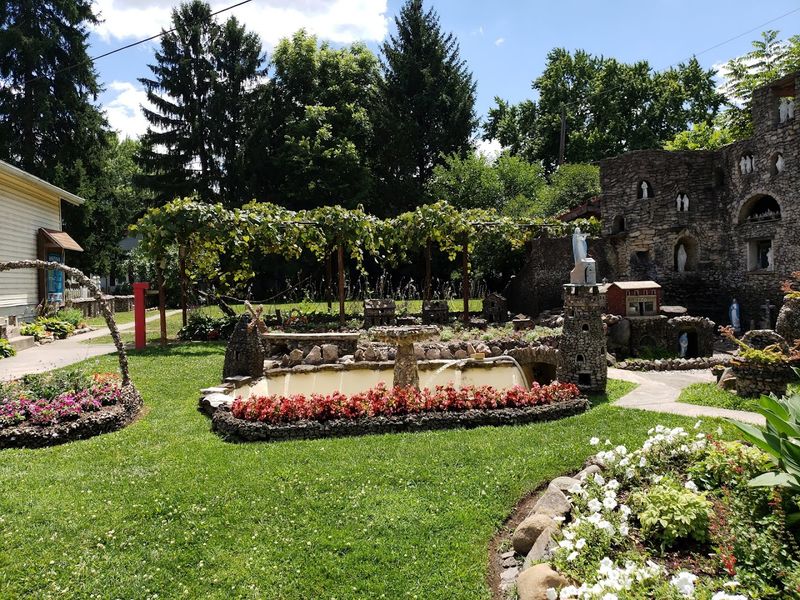
Free admission to a nationally recognized landmark sounds too good to be true. At this place, it is completely real and genuinely appreciated by everyone who shows up.
The garden is open daily from dawn to dusk, seven days a week. No tickets, no reservations, and no crowds blocking your view.
Just show up and start exploring at your own pace.
Self-guided tour booklets are available at an outdoor kiosk near the entrance. The booklets help you identify each structure and understand its significance.
Kids can also pick up an interactive scavenger hunt sheet to keep them engaged throughout the visit.
Most visitors spend anywhere from 15 to 60 minutes exploring the space. The amount of time you spend depends entirely on how curious you are.
Curious people tend to stay much longer than they planned.
One practical note worth remembering: there are no restrooms on the property. Plan accordingly before you arrive.
Also, visitors are asked not to touch the structures or walk in the flower beds, so the garden stays beautiful for everyone who comes after you.
A Spot That Surprises Even The Most Seasoned Travelers
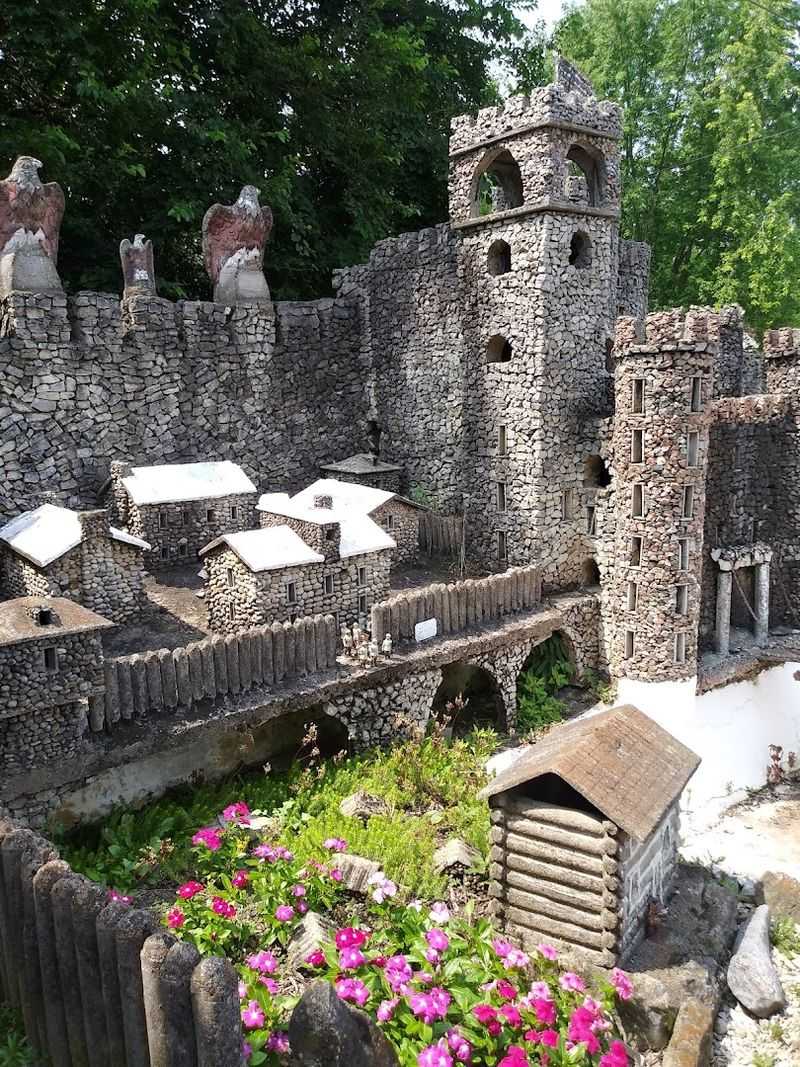
Experienced travelers are hard to impress. They have seen cathedrals, museums, and natural wonders.
Then they walk into this garden and go completely quiet.
The initial view from the street gives almost nothing away. The neighborhood looks ordinary and calm.
Nothing prepares you for the density and creativity packed behind that concrete fence.
What surprises most people is how emotional the experience feels. There is something deeply moving about seeing one person’s vision executed so completely.
You feel the years of work and care in every square inch of the space.
This spot also appears on Atlas Obscura, which lists some of the most genuinely unusual places on earth. Getting featured there is not easy.
The garden earned its spot on that list through sheer originality and the remarkable story behind its creation.
Why This Place Deserves A Spot On Your Ohio Bucket List
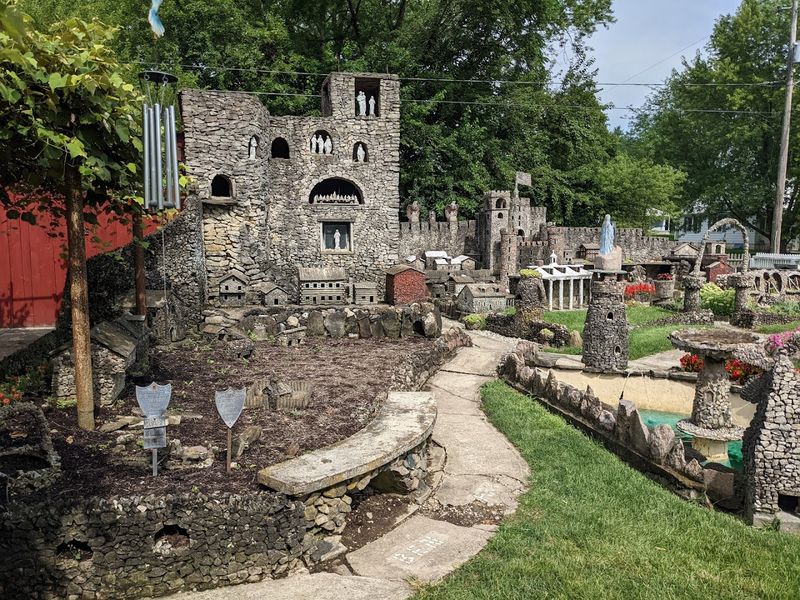
Ohio has a lot going for it, but this garden is something truly one-of-a-kind. Few folk art sites in the country feel quite like it.
The story alone is worth the trip. One man, facing real hardship, chose creativity over despair.
He built something that outlasted him by decades and continues to inspire people every single day.
The garden is also an ideal stop for families with young children. The scavenger hunt booklets keep kids focused and excited throughout the visit.
Parents tend to enjoy it just as much, if not more, once they understand the full history.
Photography lovers will find endless angles and compositions throughout the space. Every structure offers something different depending on where you stand.
The textures, colors, and scale variations make for genuinely compelling images.
Adding this spot to a road trip through Ohio is an easy decision. It costs nothing, takes under an hour, and leaves a lasting impression.
Few places manage to be this surprising, this moving, and this completely free all at the same time.