This Underrated Ohio Aerospace Museum Has More To Explore Than Most Visitors Expect

There is something about standing next to a real aircraft that no photograph ever prepares you for. The scale is wrong in the best possible way.
The history hits differently when you can reach out and almost touch it. Ohio is not a state most people associate with aerospace legend, but that assumption is exactly where the surprise begins.
This state produced some of the most important names in the history of human flight, and one museum takes that legacy seriously in a way that will genuinely catch you off guard. First-time visitors consistently report staying far longer than planned.
The exhibits pull you forward. One room leads to another and suddenly an hour has disappeared.
Ohio has been quietly keeping this one under the radar, which makes the discovery feel even more personal. Do not let the understated reputation fool you.
This place earns every minute you give it.
The Iconic Dome Building That Sets The Mood Instantly

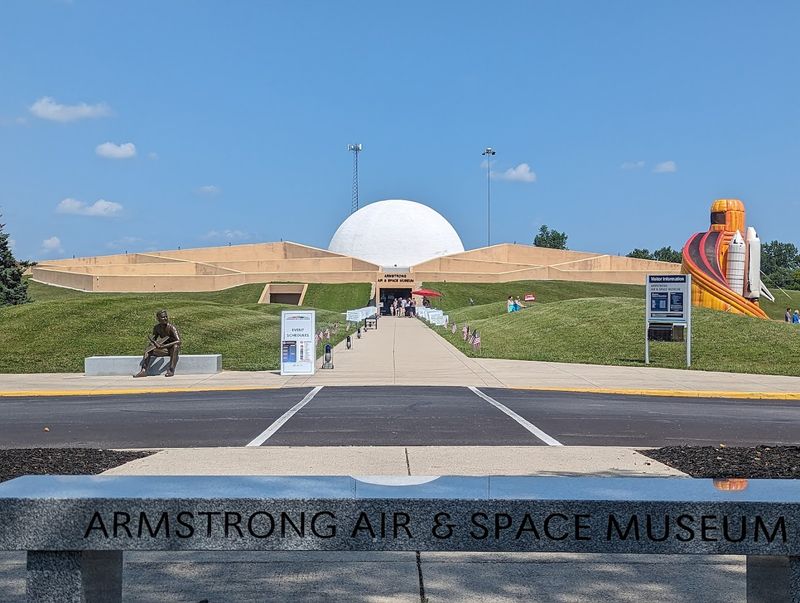
Before you even buy a ticket, the building itself tells you something extraordinary is inside. A massive 56-foot white dome rises from earth mounded around the structure, giving it the look of a futuristic moon base.
It does not look like any museum you have visited before.
Airport landing lights line the walkway leading to the entrance. That small detail alone sets an exciting tone before you step through the door.
The architects clearly wanted visitors to feel something the moment they arrived.
Opened on July 20, 1972, this place launched exactly three years after Neil Armstrong walked on the moon. That timing was no accident.
Every detail here feels intentional and meaningful. Located at 500 Apollo Dr, Wapakoneta, OH 45895, Armstrong Air and Space Museum earns its dramatic first impression with every square foot of its unforgettable exterior design.
The Real Gemini 8 Spacecraft That Survived A Crisis
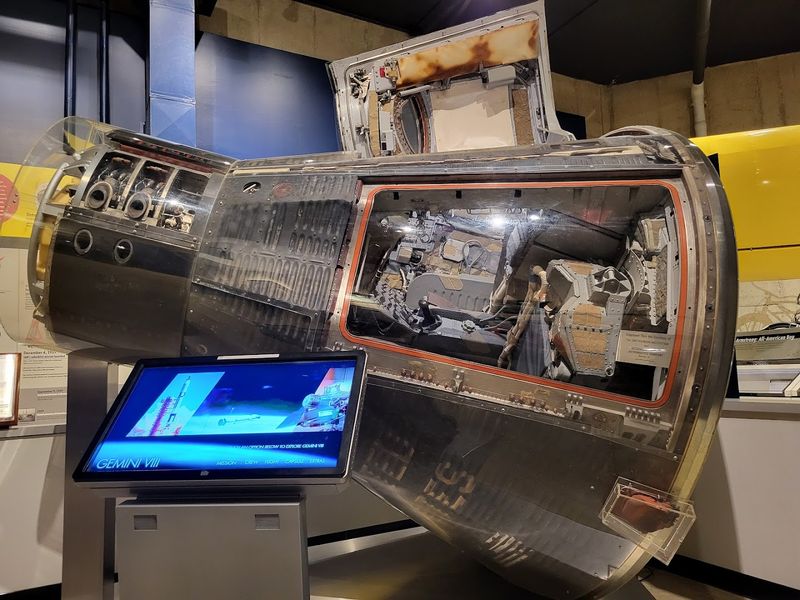
Standing next to a real spacecraft is a genuinely humbling experience. The Gemini 8 capsule at the center of this museum is not a replica or a model.
It is the actual craft that Neil Armstrong and David Scott flew into orbit in March 1966.
This mission achieved the first-ever docking of two spacecraft in orbit. That alone would make it legendary.
But Gemini 8 also suffered a serious in-flight emergency when a thruster stuck open and sent the capsule into a dangerous spin. Armstrong piloted through it and brought the crew home safely.
You can stand right next to this capsule and study every rivet and panel. The heat shield shows real wear from re-entry.
Reading the mission details posted beside it makes the whole story click into place. Seeing the actual size of the capsule also puts into perspective just how brave those astronauts were to climb inside it.
Neil Armstrong’s Original Spacesuits Up Close
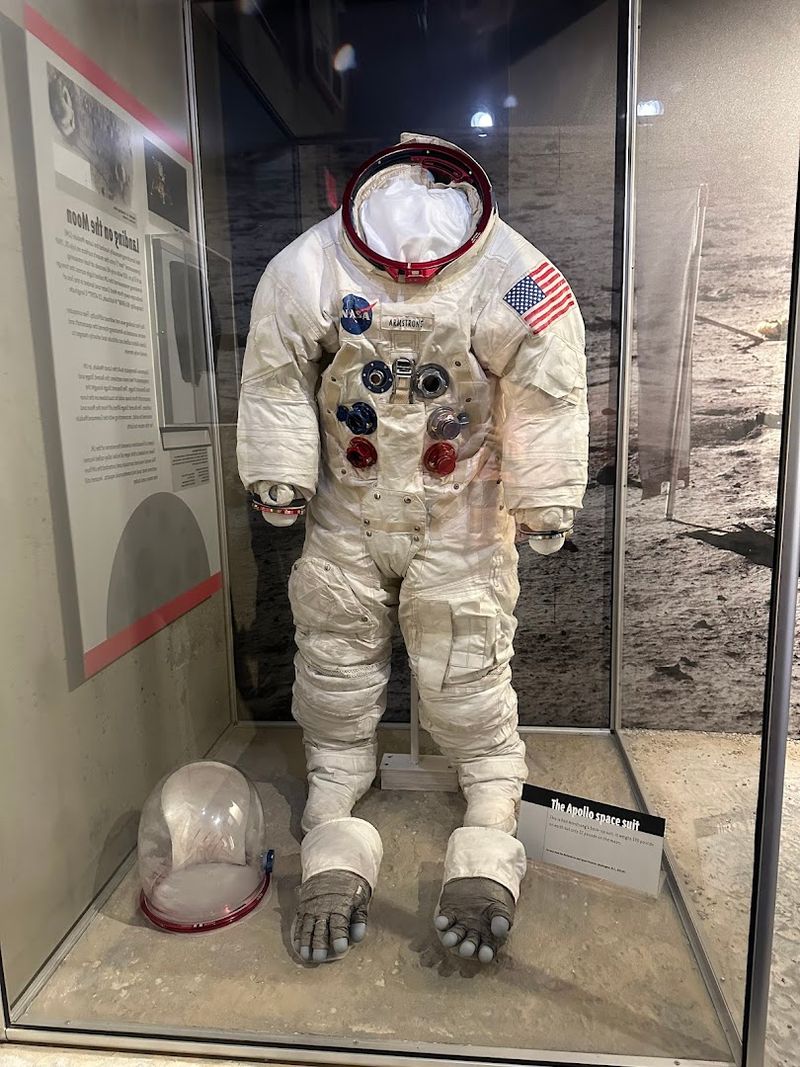
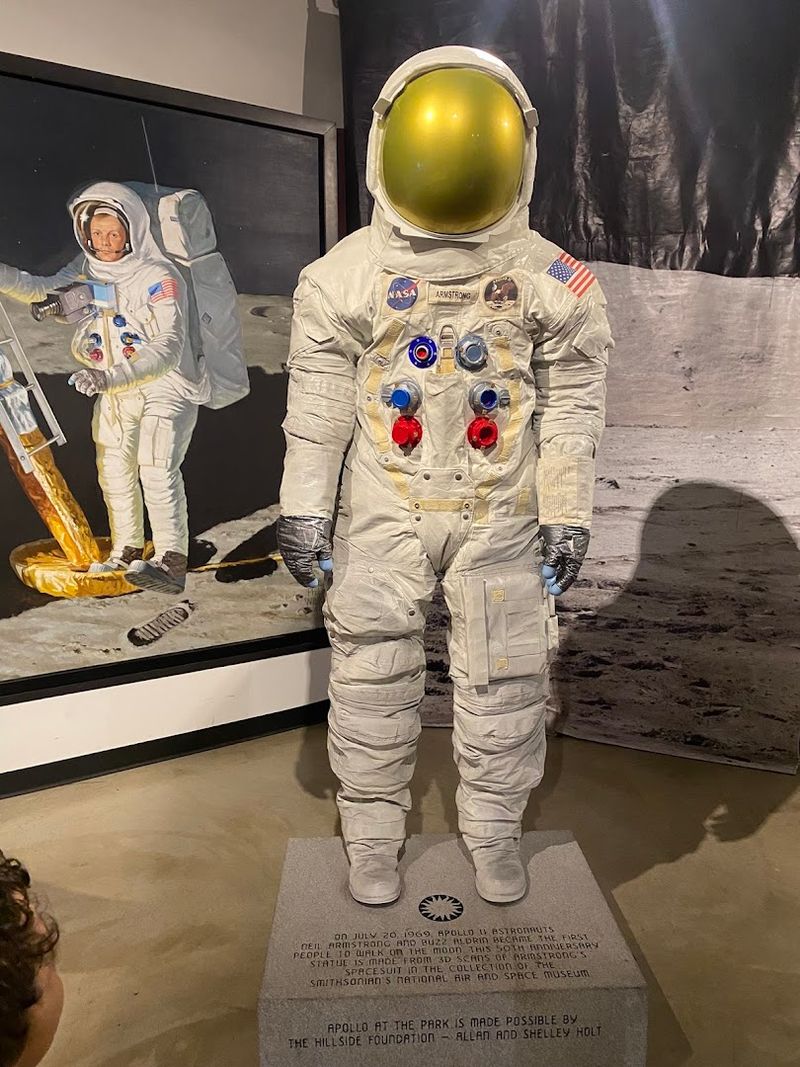
There is something deeply personal about seeing a spacesuit worn by a real astronaut. This spot displays two of Neil Armstrong’s original suits, and neither one is a reproduction.
The Gemini 8 spacesuit and the Apollo 11 backup spacesuit are both here, preserved and presented with full context.
Looking at the Apollo 11 backup suit, you realize how much engineering went into keeping one human being alive in the vacuum of space. Every layer, zipper, and seal had a purpose.
These were not costumes. They were life-support systems built to survive the most hostile environment imaginable.
The Gemini suit looks different from the Apollo version, and the display explains why. Technology evolved rapidly between those two missions.
Comparing the two suits side by side tells a quiet story about how fast aerospace engineering advanced in just a few years. It is one of those moments where history feels completely real and surprisingly close.
An Actual Apollo 11 Moon Rock You Can See In Person
Most people go their entire lives without ever seeing a real moon rock. At this place, you can walk right up to a genuine Apollo 11 lunar sample collected by Neil Armstrong and Buzz Aldrin during their historic moonwalk in July 1969.
It looks small and unassuming at first glance. But then you read the label and realize what you are actually looking at.
That grey fragment came from another world. Armstrong carried it back across 240,000 miles of space, and now it sits a few feet in front of you in Ohio.
The display case is well-lit and clearly labeled, giving you all the scientific context you need to appreciate what makes lunar rock different from anything found on Earth. This is one of those rare museum moments that genuinely stops you in your tracks.
Standing there, I caught myself just staring at it longer than I expected. It earns every second of your attention.
Interactive Flight and Space Simulators for All Ages
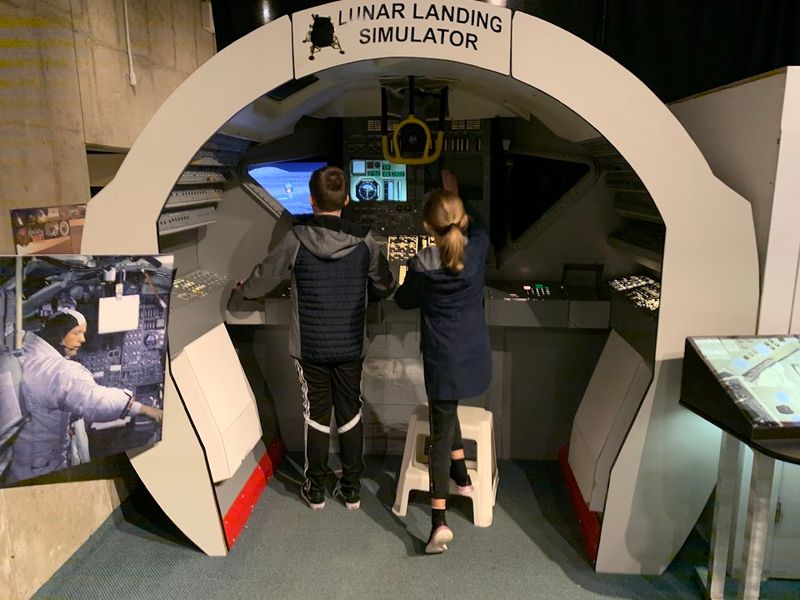
Not every great museum moment involves standing quietly and reading a placard. Some of the best ones involve actually doing something.
This place has multiple interactive simulators that let you attempt a lunar module landing, dock a Gemini capsule, and even experience a zero-gravity trainer.
The lunar landing simulator is harder than it looks. Getting the descent speed and angle right takes real focus, and failing is half the fun.
Kids love it, but adults get just as hooked trying to nail a perfect touchdown on the lunar surface.
The Gemini docking simulator gives you a taste of what Armstrong and Scott had to accomplish in actual orbit. It is surprisingly tense even as a game.
These hands-on stations break up the self-guided tour nicely and keep energy levels high throughout the visit. Families with young children will especially appreciate having something active to do between exhibits.
Plan extra time here because nobody rushes through these stations willingly.
The Astro Theater Apollo 11 Documentary
Halfway through the self-guided tour, the 56-foot dome reveals its true purpose. The Astro Theater inside runs a 30-minute documentary on the Apollo 11 mission, and it is included with your admission ticket.
No extra charge, no reservation required.
The film uses archival footage, audio recordings, and multimedia presentations to tell the story of the mission from launch to splashdown. Watching it inside that curved dome makes the whole experience feel immersive in a way a flat screen simply cannot match.
The sound quality is excellent and the pacing keeps you engaged from start to finish.
Scheduling your visit around a screening makes good sense. The film runs throughout the day at regular intervals.
Catching it in the middle of your tour gives you context that makes the physical artifacts feel even more meaningful afterward. Visitors consistently mention this documentary as one of the highlights of the entire visit, and after watching it myself, I completely understand why they feel that way.
The Infinity Room And Its Mind-Bending Mirror Experience

Just when you think you have seen the most impressive thing in the building, you walk into the Infinity Room. The walls are lined with mirrors that create a repeating reflection stretching in every direction, giving you the visual sensation of standing inside endless space.
It is disorienting in the best possible way. Your brain knows it is a trick, but your eyes are not entirely convinced.
The effect is stronger than you expect, and it lands with real emotional weight in the context of a space museum.
This room works as more than just a visual stunt. It gives you a felt sense of the vastness that astronauts actually travel through.
Standing there in the quiet reflection, surrounded by what feels like infinite depth, makes the courage required for space travel feel more real than any photograph could. It is a creative and genuinely moving exhibit that sticks with you long after you leave the building.
Do not rush through it.
Ohio’s Aviation Legacy And The 26 Astronaut Portrait Wall

Ohio has produced more astronauts per capita than almost any other state, and this place makes sure you know exactly who they are.
A dedicated portrait wall displays all 26 Ohio astronauts, framed and arranged together as a collective tribute to the state’s outsized role in aerospace history.
Beyond the portraits, the museum also displays the 1946 Aeronca 7AC Champion, the actual aircraft where a 16-year-old Armstrong earned his pilot’s license.
That small plane sitting next to spacecraft hardware tells a powerful story about how a career in flight can begin with something modest and grow into something historic.
The Learjet 28 Longhorn and the cockpit of the F5D Skylancer, an aircraft Armstrong flew as a test pilot, round out the aviation section. Each piece connects to a specific chapter of his career.
The progression from that little 1946 plane to the Apollo program is laid out clearly and compellingly. Ohio’s contribution to the history of flight deserves far more recognition than it typically receives.
Practical Tips For Getting The Most Out Of Your Visit

Planning ahead makes a real difference at this place. Budget at least 90 minutes for the self-guided tour, and add 30 minutes if you plan to watch the Astro Theater documentary.
Rushing through means missing details that make the whole experience click together.
Admission is very affordable, with adult tickets around $14 and senior pricing slightly lower. Free on-site parking is available, and the entire museum is wheelchair accessible.
The staff is genuinely knowledgeable and happy to share extra context about exhibits if you ask them questions.
The gift shop at the end of the tour is well-stocked and worth browsing. There are also full-scale mock-ups of Gemini and Apollo capsules outside, and you can actually sit inside the Gemini mock-up for a great photo opportunity.
The museum is generally open daily from 10 AM to 5 PM, with seasonal Monday closures from Labor Day through the end of March.