This Remote Nebraska Stargazing Spot Sits Nearly 3,000 Feet Up With Skies So Dark The Milky Way Steals The Show
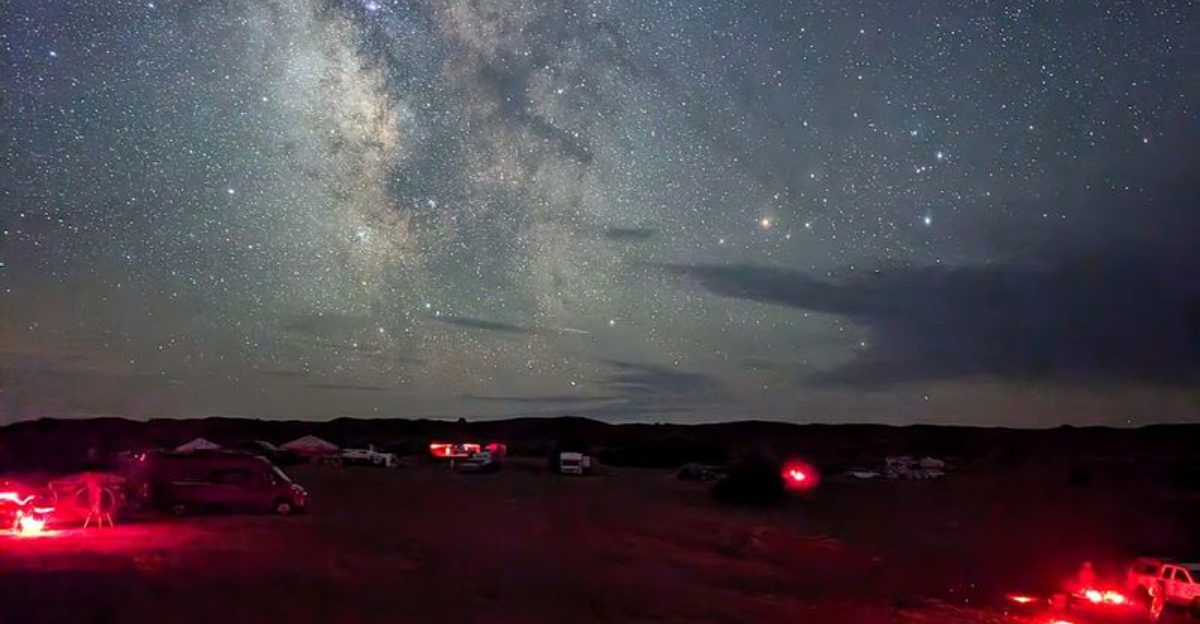
Some places make you work a little for the view. That is not a bad thing.
A remote stargazing spot should feel like you have properly left the noise behind.
The road gets quieter. The lights thin out. Even the conversation in the car starts to change.
Nearly 3,000 feet up in Nebraska, darkness gets the chance to do its job.
That is when the Milky Way stops being an idea from science class and starts looking almost unreal overhead.
No skyline competes with it. No city glow washes it out.
Just deep night, open space, and the kind of stars that make people forget what they were about to say.
A place like this does not need much decoration.
Bring a blanket, a little patience, and someone who will also admit the sky looks ridiculous.
The reward is simple. Look up, and the whole night feels bigger.
The Sky Here Has Official Dark-Sky Credibility
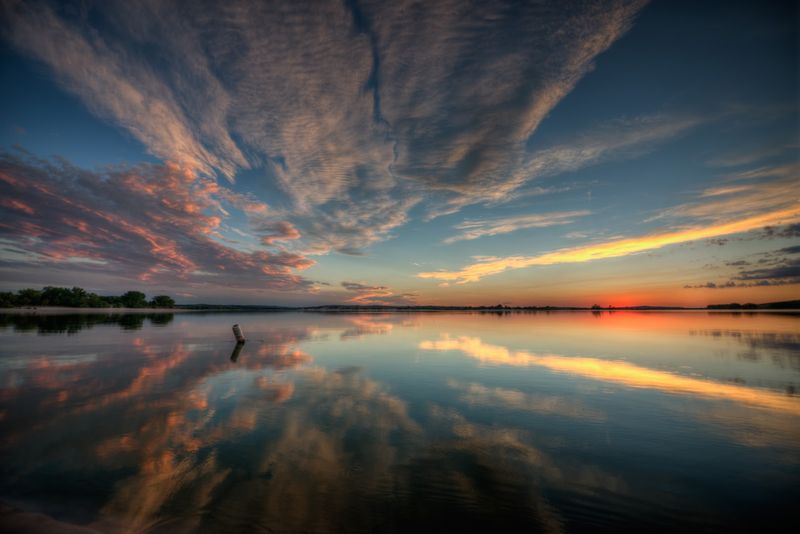
Getting a formal dark-sky certification is not easy, and Merritt Reservoir earned it fair and square.
In 2022, the Nebraska Game and Parks Commission announced that Merritt Reservoir State Recreation Area had become Nebraska’s first International Dark Sky Park.
It’s a designation awarded by DarkSky International to locations that demonstrate exceptional nighttime darkness and a commitment to protecting it.
What makes this credential meaningful is the standard it requires.
The park had to implement lighting retrofits, develop public education programs, and meet strict sky-quality benchmarks before earning the title.
Reaching the milestone of being the 200th certified International Dark Sky Place globally placed Merritt Reservoir in the same conversation as legendary stargazing destinations worldwide.
On the Bortle scale, the skies here rank as Class 1, which is the darkest possible rating an observer can find.
That same Class 1 status is shared with places like Big Bend National Park in Texas and Denali National Park in Alaska.
Sky Quality Meter readings at the site often range from 21.5 to 22.0 magnitudes per square arcsecond, a number that reflects genuinely world-class darkness rather than a marketing claim.
The Observing Fields Sit Almost Exactly At 3,000 Feet
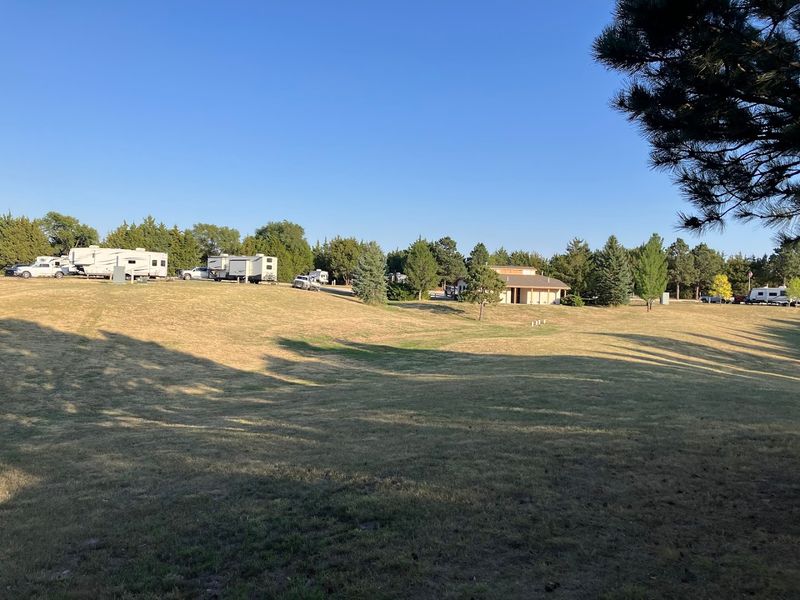
Elevation plays a real role in stargazing quality, and the numbers at Merritt Reservoir hold up to scrutiny.
The Nebraska Star Party’s official observing fields, located south of the lake, sit at approximately 910 meters above sea level, which converts to about 2,985 feet.
That puts them just barely under the 3,000-foot mark, making the “nearly 3,000 feet up” description accurate rather than inflated.
Higher elevation means less atmospheric interference between an observer and the stars above.
The air tends to be drier and thinner at this altitude compared to lower-lying parts of the Great Plains, which can translate to sharper, steadier views through a telescope eyepiece or even with the naked eye.
The conservation pool of the reservoir itself sits at an elevation of approximately 2,946 feet, and other measurements in the area have been recorded as high as 2,953 feet depending on the specific location.
Across the site, the terrain stays consistently elevated, which supports the kind of atmospheric conditions serious astronomers look for when planning an observing session.
The Sandhills geography surrounding the fields also keeps the horizon relatively unobstructed in most directions.
The Milky Way Is Not Just Pretty Language Here
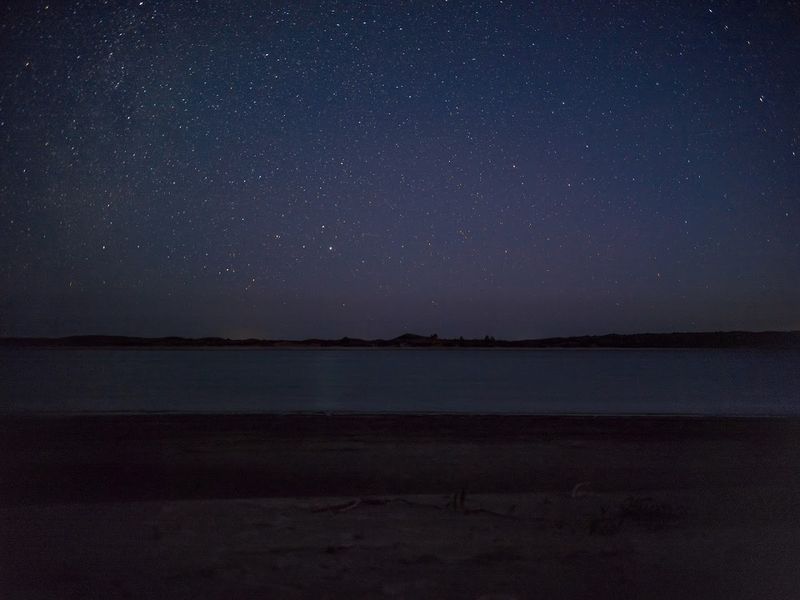
A lot of places claim to offer great Milky Way views, but Merritt Reservoir backs it up with numbers that are hard to argue with.
Observers at the site have reported seeing stars as faint as magnitude 7.8 to 8.1, which goes well beyond what the human eye can typically detect under ordinary conditions.
The glow of the Milky Way’s outer nuclear bulge is easily visible, and the overall band of the galaxy stretches dramatically across the full sky on clear nights.
The darkness here is so complete that the Milky Way has been described as bright enough to cast faint shadows on the ground.
That level of sky glow is rare and puts Merritt Reservoir in a category shared by only a handful of locations across the entire United States.
For someone who has only ever seen the Milky Way as a faint smudge from a suburban backyard, the view here can feel genuinely startling.
Minimal light pollution from surrounding areas makes this possible.
The Sandhills region has very few large towns and almost no industrial development nearby, so the horizon stays dark in every direction. Clear summer nights tend to offer the most dramatic views of the galactic core.
Nebraska’s First International Dark Sky Park
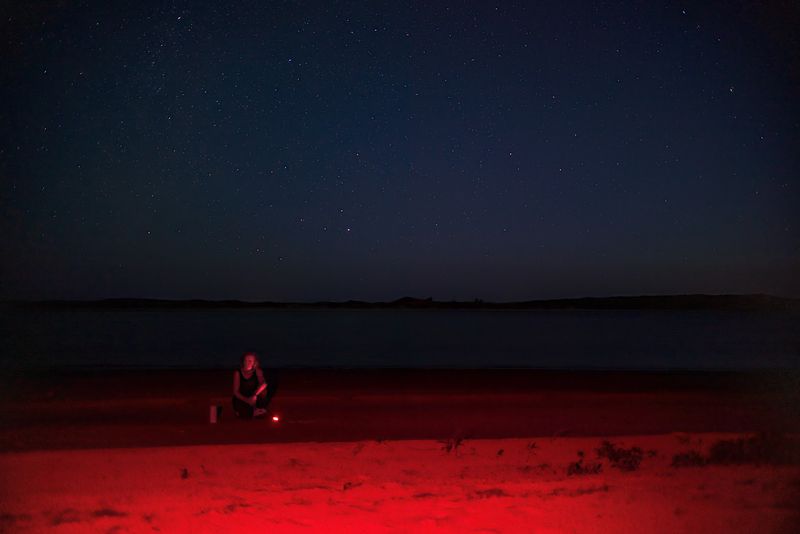
Being first matters in a state as large as Nebraska.
When Merritt Reservoir received its International Dark Sky Park designation, it became the only location in Nebraska to hold that title at the time, setting a precedent for how the state approaches nighttime light preservation.
The process of earning that designation required cooperation between Nebraska Game and Parks, local communities, and DarkSky International.
The park had to demonstrate that it was actively working to reduce artificial light intrusion, which included upgrading existing light fixtures to shielded, low-impact alternatives.
That kind of infrastructure investment signals a long-term commitment to protecting the site’s nighttime environment rather than simply capitalizing on existing conditions.
Statewide significance comes with the territory when a location earns a first-of-its-kind title.
The designation helped put Merritt Reservoir on the radar for astronomy enthusiasts, travel writers, and outdoor recreation planners who might not have previously considered Nebraska a stargazing destination.
The recognition also encouraged conversations in other Nebraska communities about how dark-sky principles could be applied more broadly across the state’s rural regions.
The Nebraska Star Party Happens Here Every Year
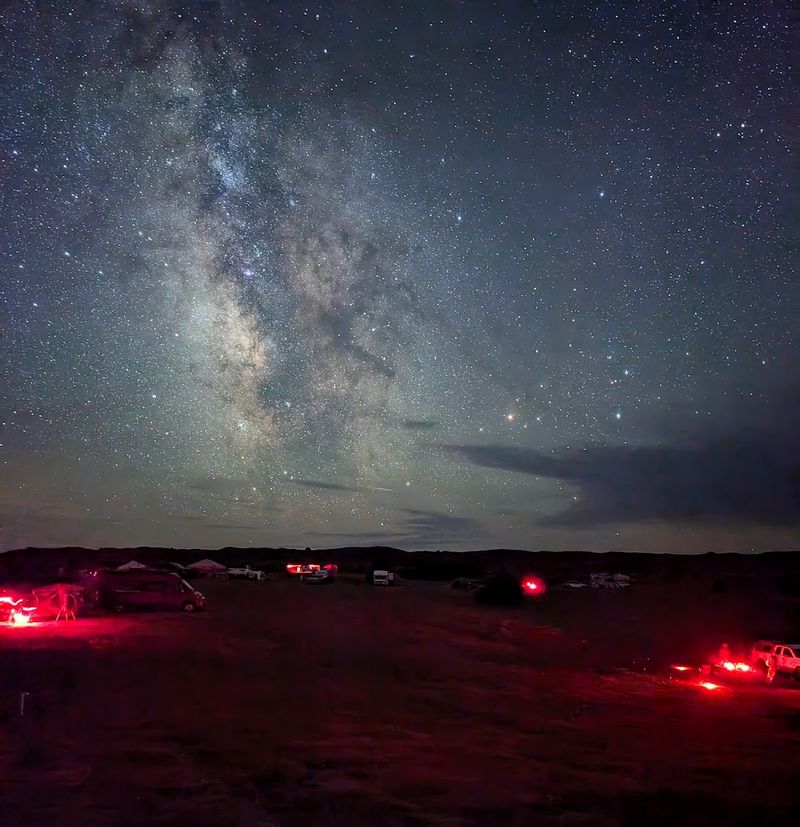
Few annual astronomy gatherings in the central United States carry the reputation that the Nebraska Star Party has built over the years.
Held at Merritt Reservoir each summer, the event brings together amateur astronomers, astrophotographers, families, and curious newcomers for a full week of organized observing, educational sessions, and community activities under some of the darkest skies in the country.
The 2026 Nebraska Star Party is scheduled for July 12 through July 17 at Merritt Reservoir, giving those who plan ahead plenty of time to make travel arrangements.
The event typically features constellation talks led by knowledgeable volunteers, field schools for beginners, guest speakers from the astronomy community, and nightly observing sessions that run well past midnight.
Meals and giveaways are often part of the program as well.
What keeps people coming back year after year is the combination of the sky itself and the community surrounding it.
The atmosphere at the event tends to be welcoming rather than exclusive, with experienced observers often happy to let newcomers look through their telescopes.
Attending the Nebraska Star Party is one of the most accessible ways to experience Merritt Reservoir’s skies in a structured and social setting.
The Setting Is Remote Enough To Matter
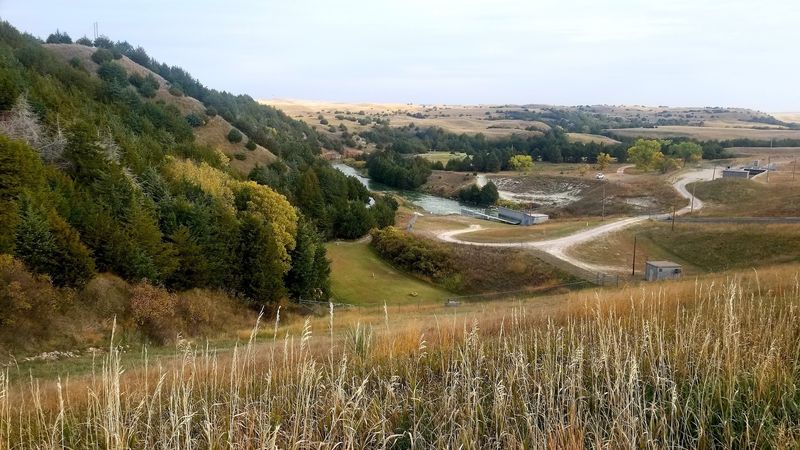
Dark skies do not happen by accident. The reason Merritt Reservoir holds a Class 1 Bortle rating is directly tied to its geography.
Located about 25 miles southwest of Valentine in Cherry County, the reservoir sits deep within the Nebraska Sandhills, a region defined by rolling grass-covered dunes and an almost complete absence of commercial or industrial development.
Cherry County itself is one of the largest counties by area in the contiguous United States, and its population density is among the lowest anywhere in the country.
There are no major cities within the surrounding region that would push significant light pollution toward the site.
The nearest town of any size is Valentine, and even that community is small enough that its glow has minimal impact on the horizon from the observing fields.
That level of isolation is not a drawback for stargazers. It is the entire point.
The Sandhills landscape creates a natural buffer that has kept the night sky here in a condition that most of the developed world simply cannot replicate.
Visitors who make the drive out to Merritt Reservoir are rewarded with a darkness that genuinely feels different from anything available closer to urban centers.
It Works For Beginners Not Just Astronomy Experts
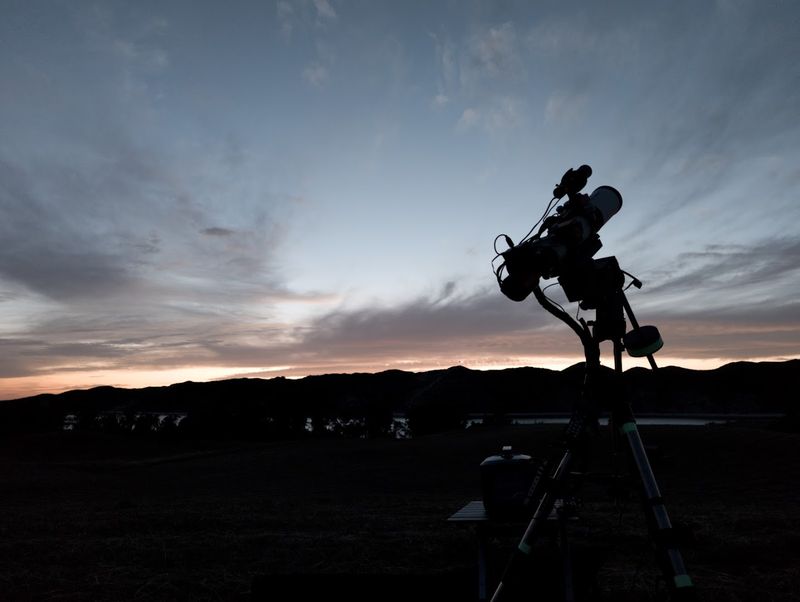
Astronomy can feel intimidating to someone who has never spent time at a serious observing event.
The equipment looks complex, the terminology can be dense, and the culture around amateur astronomy sometimes skews toward the highly technical.
Merritt Reservoir and the Nebraska Star Party actively work against that barrier by structuring the experience to welcome people at every skill level.
Constellation talks are a regular part of the Nebraska Star Party program, breaking down the night sky into recognizable patterns that beginners can actually find and follow.
Organized activities and giveaways keep the energy approachable and fun rather than strictly academic.
Meals provided during the event mean attendees do not have to leave the site to stay fed, which helps maintain the relaxed pace that makes a week-long gathering enjoyable rather than exhausting.
Families with children tend to find the event accessible as well.
The combination of an outdoor camping setting, organized programming, and the sheer spectacle of the Milky Way overhead creates a memorable experience that does not require any prior knowledge of astronomy to appreciate.
Showing up with curiosity and a willingness to look through someone else’s telescope is genuinely enough to have a worthwhile night under these skies.
What To Expect On A Clear Night At The Reservoir
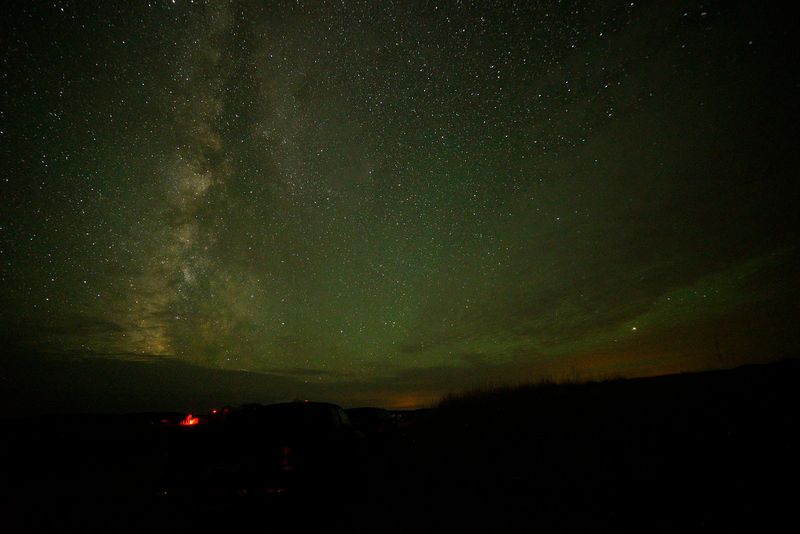
Arriving at Merritt Reservoir after dark for the first time tends to produce a specific kind of quiet disorientation.
The sky holds far more stars than most visitors have ever seen at once, and the Milky Way appears not as a faint suggestion but as a distinct, textured band of light stretching from one horizon to the other.
Eyes need about 20 to 30 minutes to fully adjust to the darkness, and the view continues to improve throughout that adaptation period.
Objects that typically require a telescope from suburban locations become visible to the naked eye here.
The Andromeda Galaxy, various star clusters, and nebulae that most people only know from photographs can be spotted without any equipment under these skies.
Observers with even modest binoculars find the experience dramatically expanded compared to what they might access from a typical backyard.
Temperature drops noticeably after sunset in the Sandhills, even during summer months, so layering is a practical consideration regardless of how warm the afternoon felt.
Red-light flashlights preserve night vision far better than white lights and are strongly preferred in shared observing areas.
Checking the weather forecast and moon phase calendar before making the drive out from Valentine helps ensure the visit lines up with the best possible conditions.
Planning A Visit To Merritt Reservoir
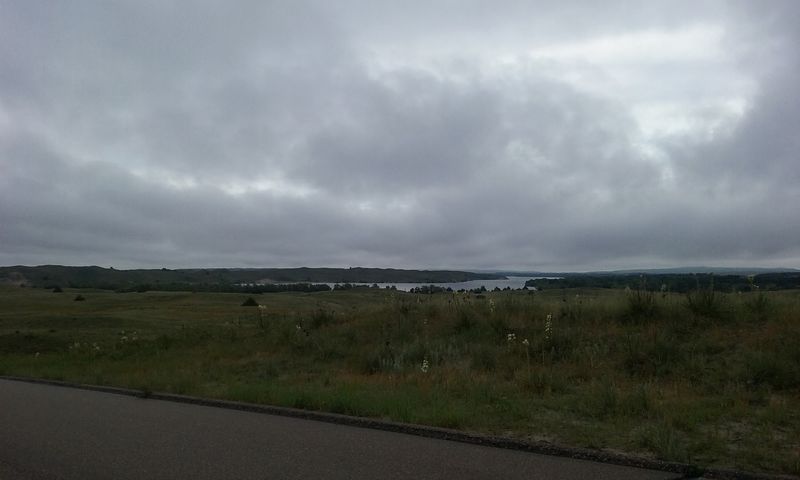
Getting to Merritt Reservoir requires some advance planning, but the logistics are straightforward once the route is mapped out.
The park is managed by Nebraska Game and Parks and sits in Cherry County, approximately 25 to 26 miles southwest of Valentine along Nebraska Highway 97 and then onto local roads leading to the recreation area.
A Nebraska state park entry permit is required for vehicles entering the recreation area, which can be purchased online or at the park.
The best stargazing conditions at the site align with new moon phases, when the sky is at its darkest and no moonlight competes with fainter stars and deep-sky objects.
Summer months tend to draw the largest number of visitors, particularly around the Nebraska Star Party in July, so arriving outside of that peak window can mean a quieter experience.
Spring and fall nights can also offer excellent viewing conditions with noticeably fewer people on the observing fields.
Bringing water, snacks, and warm layers regardless of the season makes any overnight visit more comfortable.
Cell service in the Sandhills can be limited, so downloading offline maps before leaving Valentine is a practical step.
The drive itself passes through some of the most undisturbed grassland in the Great Plains, and taking it slowly enough to appreciate the landscape on the way in sets the right tone for the night ahead.