This North Carolina Temple Has An 87-Foot Tower That Feels Like A Gateway To Another World
Most entrances are content to be useful.
This one shows up like it has a soundtrack.
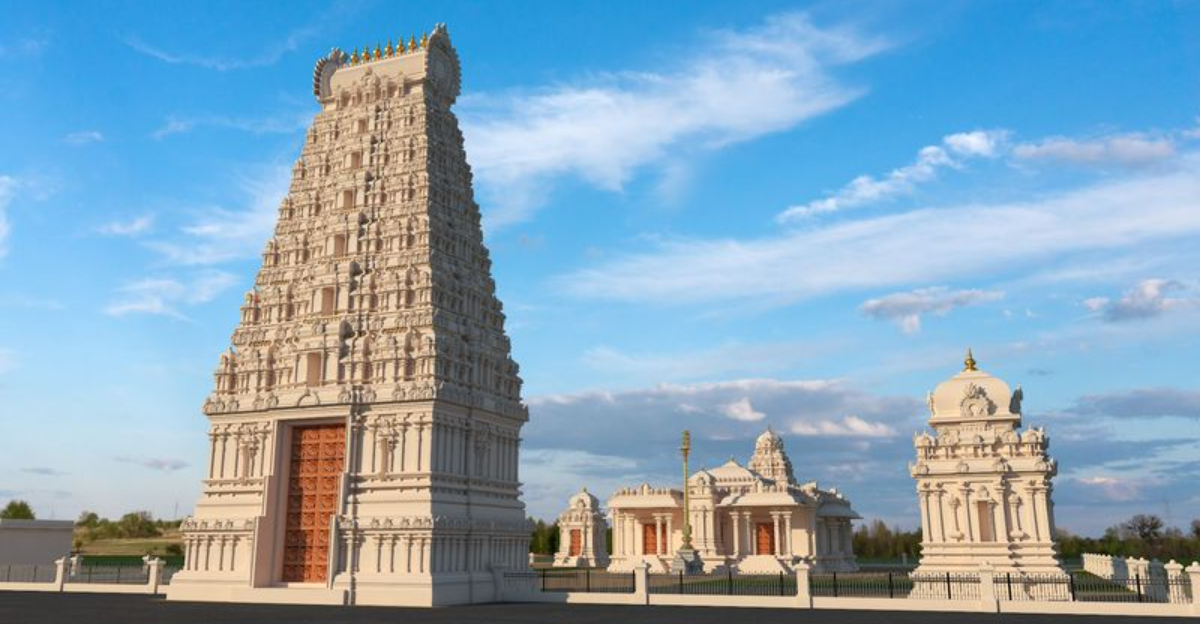
An 87-foot tower rises above the grounds in Cary with the kind of confidence that makes visitors slow down before they remember why they came.
The carvings are so detailed that a quick glance feels almost rude, as if the structure clearly expected people to stop and admire the work properly.
Some landmarks impress because they are big.
This one impresses because the height, color, and South Indian Dravidian design all feel purposeful instead of showy.
Among North Carolina’s unexpected sights, it has the rare ability to make an ordinary arrival feel ceremonial.
Before anyone steps inside, the tower has already done its job.
You Look Up Before You Even Reach The Entrance
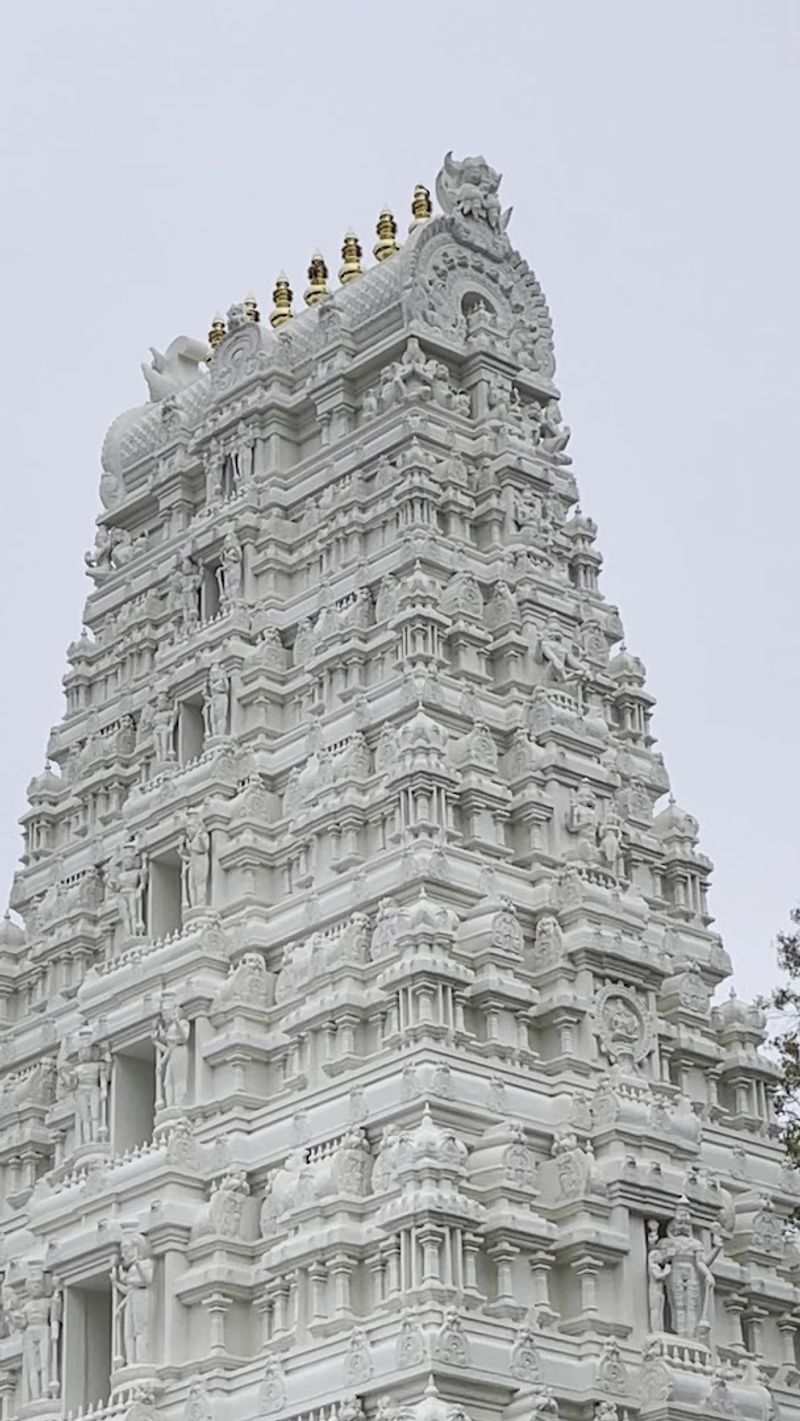
From the moment you pull into 121 Balaji Place, Cary, North Carolina, something pulls your gaze straight upward. The Rajagopuram rises 87 feet into the sky, and no matter how many times you have seen photos of it, the real-life scale is something else entirely.
Your neck tilts back almost automatically as your eyes travel from the base to the very top of this seven-story giant.
Inaugurated on October 24, 2022, during Diwali, the tower was designed to mirror the Sri Venkateswara Temple in Tirupati, Andhra Pradesh, India. The ceremony drew North Carolina Governor Roy Cooper, reflecting its significance.
The community had waited years for this moment, and the celebration matched the occasion.
First-time visitors often stop walking altogether, phones raised, mouths slightly open. The sheer height combined with the richly decorated surface creates a visual experience unlike anything else in the surrounding area.
Plan to spend a few minutes just looking up before you even think about walking through the gate.
The Carved Details Get Better The Closer You Stand
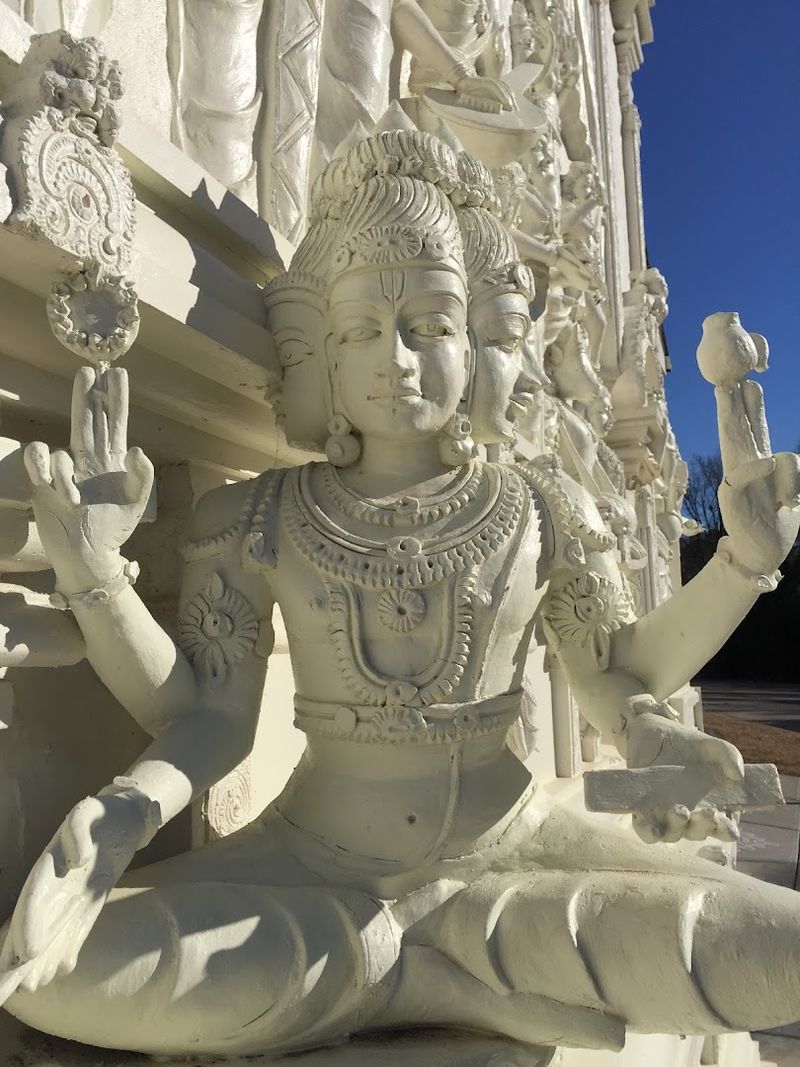
Moving closer changes the tower from impressive silhouette to something much richer. Sculptural figures, layered patterns, and mythological scenes cover the Rajagopuram with a density that rewards patient looking.
According to WRAL, each level was carefully created to tell stories from Indian mythology. Project information for the Rajagopuram addition highlights skilled craftsmen who handcrafted concrete moldings for the exterior façade.
Distance gives you height; closeness gives you expression, texture, and detail.
Faces, gestures, ornaments, and small architectural flourishes begin to separate from the larger surface once you slow down. Instead of trying to take in everything at once, let your eyes move section by section.
Lower tiers reveal one kind of intricacy, while higher levels create a layered vertical rhythm that feels almost like reading upward. Visitors unfamiliar with Hindu iconography may not understand every figure immediately, but the craftsmanship still speaks clearly.
Devotees may recognize deeper symbolic meaning, while newcomers can appreciate the patience and skill involved. Few buildings in the Triangle offer this kind of hand-shaped visual storytelling, especially on a scale that towers over the entrance itself.
You Walk Through A Gateway Filled With Meaning
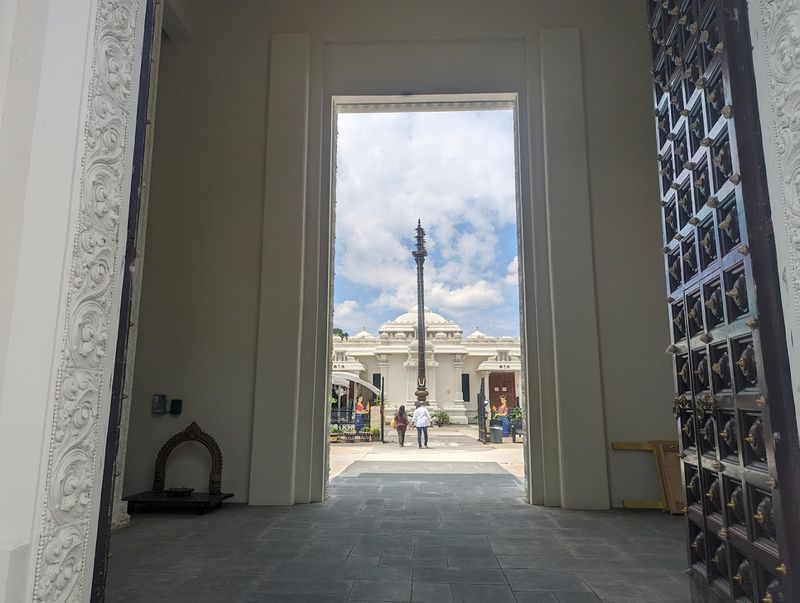
Passing beneath the Rajagopuram carries more significance than simply entering a building. In South Indian temple tradition, a gopuram serves as a sacred gateway, marking movement from the ordinary world toward a space of worship, reflection, and devotion.
Indian Eagle refers to the Cary tower as the Tower of Unity and Prosperity. It further describes the Rajagopuram as a passage between the mundane and the divine, where devotees symbolically release worries before entering the sacred complex.
Community effort also gives the gateway added weight.
News & Observer coverage reported that the tower project cost around $2.5 million and received support from more than 5,000 donors. Every step through the entrance therefore carries both spiritual and communal meaning.
Donors, artisans, temple leaders, families, and volunteers all helped turn the vision into something lasting. Curious visitors do not need to share the faith tradition to sense that this is not an ordinary archway.
Crossing under it asks for a slower pace, a quieter tone, and an awareness that many people see this structure as a sacred beginning.
Cary’s Skyline Feels Different Around This Tower
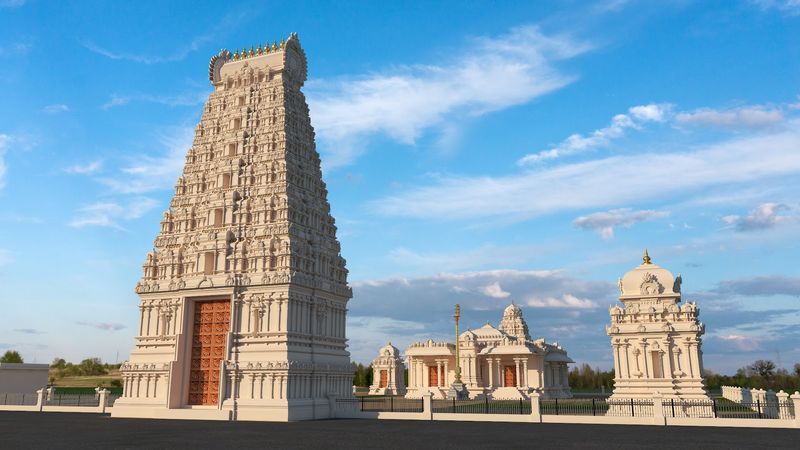
Suburban skylines can blur together, but this part of Cary now has a landmark that refuses to disappear into the background.
Set against trees, roads, and everyday commercial corridors, the 87-foot Rajagopuram delivers a striking vertical expression of South Indian temple architecture. The surrounding area is better known for neighborhoods, offices, and Research Triangle convenience.
ABC11 reported that the tower took more than two years to build and that temple leaders encourage passersby who wonder about it to come in and learn what it represents. That welcome matters because the structure has become more than a visual surprise.
It speaks to the growth of the Hindu community in the Triangle and to Cary’s increasingly global cultural landscape. WRAL later quoted temple leadership describing how Cary and North Carolina have embraced the temple’s growth.
Drivers may notice the upper tiers first, peeking above nearby development, then realize there is an entire temple campus behind the view. Instead of blending politely into the scenery, the tower changes the local sense of place.
It makes Cary feel broader, more layered, and more connected to traditions that reach far beyond Wake County.
The Craftsmanship Makes You Slow Down For A Minute
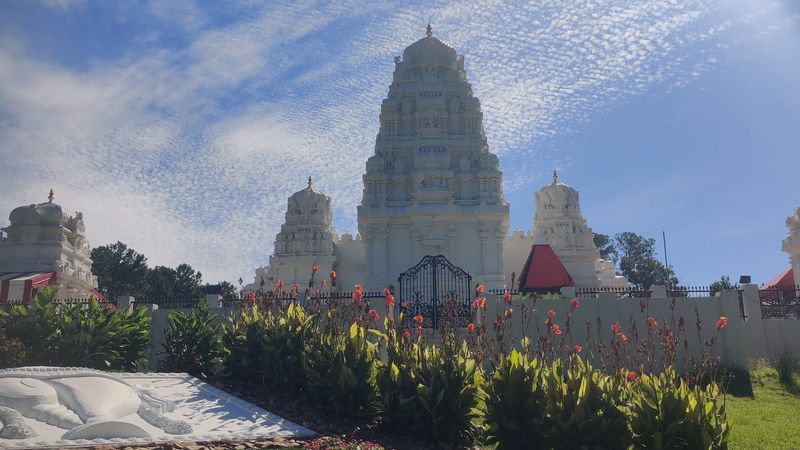
Extraordinary handwork has a way of interrupting hurry. Standing near the Rajagopuram, even visitors with busy schedules tend to look longer than planned because the surface keeps offering another figure, another line, another small carved moment.
WRAL reported that craftsmen from India built the 87-foot-tall Rajagopuram, and ABC11 noted that craftsmen came from India to put the final touches on the structure after more than two years of work.
Craft at this level carries centuries of tradition behind it, even when modern materials and construction methods are involved.
Proportions, repeated forms, symbolic figures, and decorative patterns all work together to create something that feels both monumental and highly detailed. Visitors new to Dravidian-style temple architecture may first notice the height, but the longer view reveals the discipline behind the beauty.
Nothing about the façade feels casual. Each tier contributes to the whole, and each sculpted element helps turn the gateway into a narrative surface.
Quiet weekday visits can make observation easier, though temple hours and special-event schedules should be checked before going. A respectful pause outside may become the most memorable part of the entire visit.
Respectful Visitors Should Know The Temple Etiquette
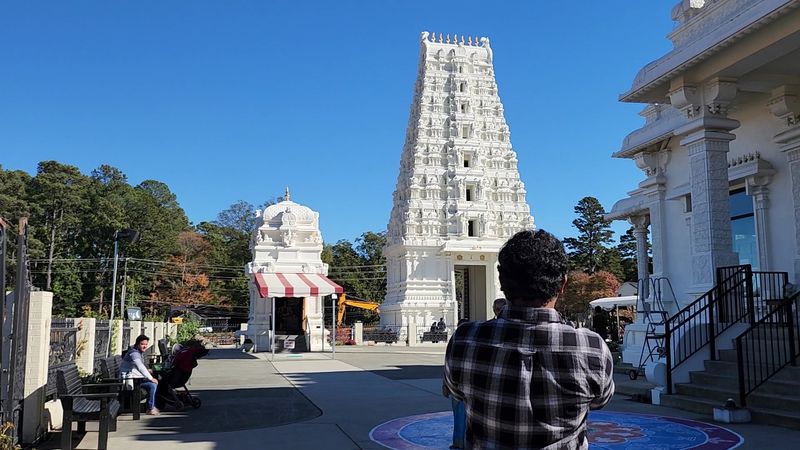
Entering an active Hindu temple requires courtesy, even for visitors who are mainly interested in architecture.
Shoes are typically removed before entering worship spaces, modest clothing is appreciated, and photography restrictions should be followed wherever posted or communicated by temple volunteers.
Third-party temple listings for Sri Venkateswara Temple of North Carolina note traditional dress expectations. They also state that photography is not allowed, while Tripadvisor visitor information lists weekday and weekend hours that may vary by service schedule.
Current timing can change for festivals, rituals, construction, or special events, so checking the temple’s latest announcements before visiting is the safest approach.
Inside, quiet observation matters. Worshippers may be praying, making offerings, attending services, or spending time with family, so the space should never be treated like a casual photo backdrop.
Questions are usually best asked politely when volunteers or staff are available, not during active worship. Visitors from any background can appreciate the temple, but respect keeps the experience meaningful for everyone.
A little preparation makes the visit smoother, warmer, and far more thoughtful.
This Tower Became More Than A Beautiful Entrance
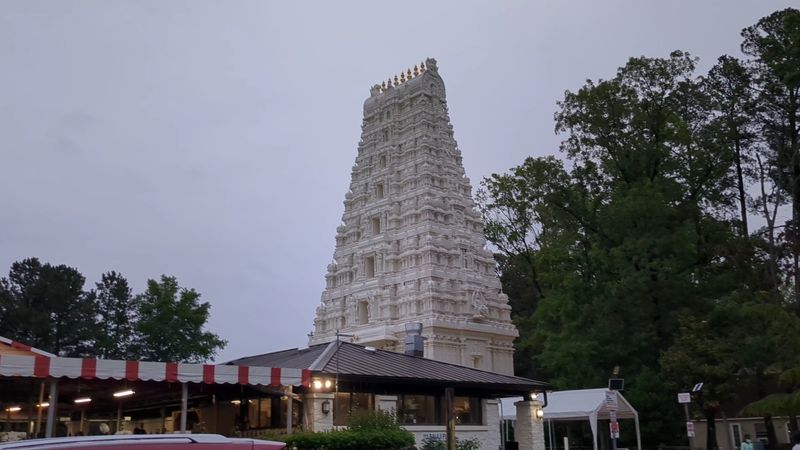
Community support helped turn the Rajagopuram from an architectural plan into a landmark with emotional weight. News & Observer reporting said the temple secured a major community-supported project that WRAL reported as costing $3.4 million.
Numbers tell part of the story, but not all of it. Thousands of donations suggest families, devotees, and supporters saw the project as something worth building for future generations.
Construction began during a difficult period, yet the finished tower now stands as a visible sign of persistence, faith, and cultural pride. Cary’s Hindu community gained a sacred entrance, but the broader town gained a landmark that invites conversation and curiosity.
People who have no personal religious connection to the temple may still admire the craftsmanship, symbolism, and ambition behind the project. Instead of functioning only as an entrance, the Rajagopuram has become a shared point of recognition.
It says that beauty can be communal, devotion can be architectural, and a suburban corner can hold something truly extraordinary.
You Leave With A New View Of North Carolina Architecture
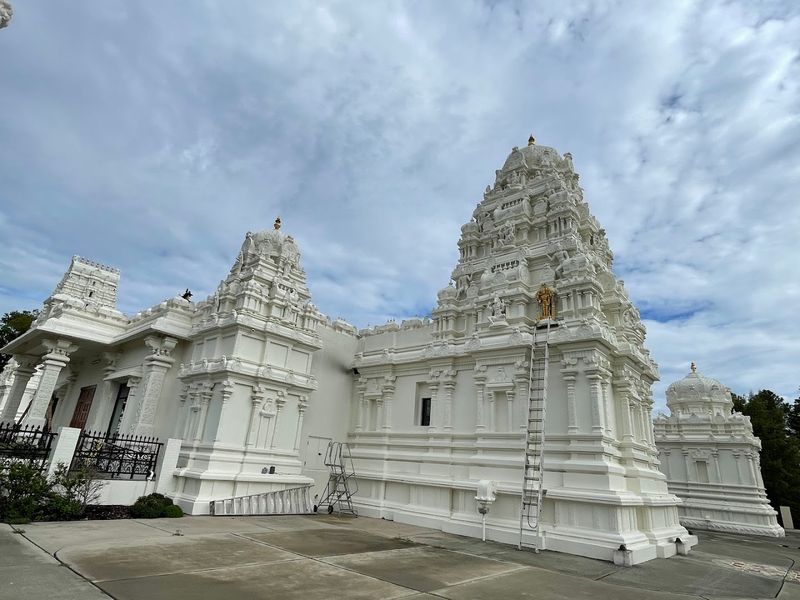
Leaving Sri Venkateswara Temple often means turning back for one more look at the tower. That final glance makes sense because the Rajagopuram challenges narrow ideas of what North Carolina architecture can look like.
Dravidian temple traditions, mythological sculpture, sacred geometry, and community-funded craftsmanship all rise here in Cary, far from the South Indian temple cities that inspired the design.
An 87-foot monumental entrance built by craftsmen from India, the tower was described by WRAL in those terms. Project documentation also identifies it as a notable landmark for Hindu believers and a symbolic religious entrance for the faith.
Seeing that tradition fully present in Wake County makes the experience feel immediate rather than distant or museum-like. Visitors may arrive expecting one impressive photo, then leave thinking about immigration, devotion, artistry, and how communities shape the places around them.
Cary’s Rajagopuram does not need exaggeration to feel unforgettable. Its height, detail, and meaning already do enough.
Long after the visit ends, the image remains clear: an 87-foot tower rising above a quiet North Carolina neighborhood, making the familiar landscape feel larger than it did before.