This Washington Hike Climbs Right Up The Spine Of An Ancient Volcano
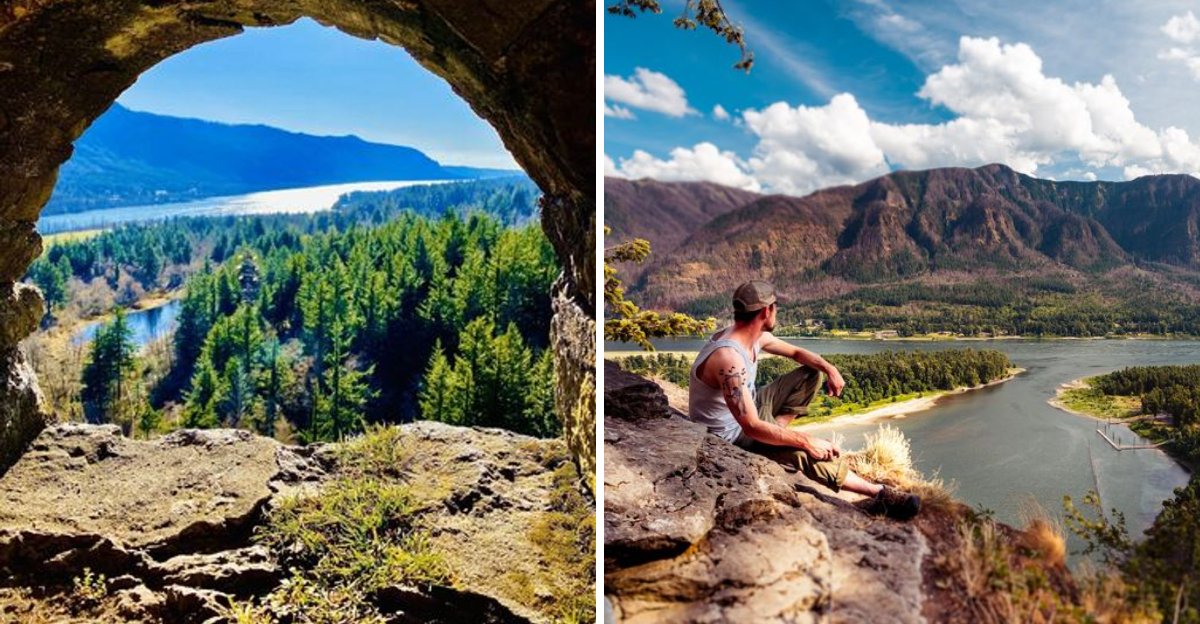
Most hikes give you a nice view and call it a day. This Washington trail hands you an entire ancient volcano.
You climb right along its rugged spine. Each step takes you higher into raw, dramatic terrain.
The kind of scenery that makes your jaw drop a little.
This is no gentle stroll through the woods. The path is steep and demanding, and that is exactly the appeal.
You earn every single view up here.
Imagine standing on ground forged by fire thousands of years ago. The rock tells a story older than anything you can imagine.
At the top, the payoff is pure magic. Endless ridgelines and big open sky in every direction.
Your legs will burn and your lungs will work overtime. Trust me, it is worth every ounce of effort.
So lace up tight and bring plenty of water. This volcano is waiting to be conquered.
The Ancient Volcanic Core
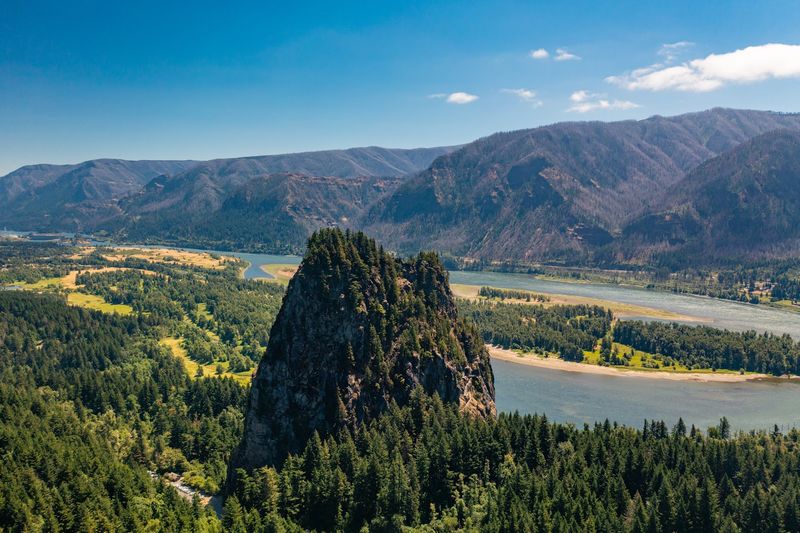
Beacon Rock State Park is unmistakable from the highway. That enormous dark rock jutting straight out of the earth is not just a cool landmark.
It is the solidified magite core of an ancient volcano, left standing after millions of years of erosion stripped everything else away.
Geologists estimate Beacon Rock formed somewhere around 57,000 years ago. The surrounding softer rock eroded over time, leaving this incredibly hard basalt plug standing 848 feet above the Columbia River.
It is one of the largest monoliths in North America, which sounds like a fact someone made up, but it is completely true.
Lewis and Clark named it in 1805 while traveling up the Columbia. They used it as a landmark to signal they were approaching tidal waters.
The rock has been a reference point for travelers for centuries, and standing at its base, it is easy to understand why. It commands attention the moment it comes into view.
The Trail That Defies Expectations
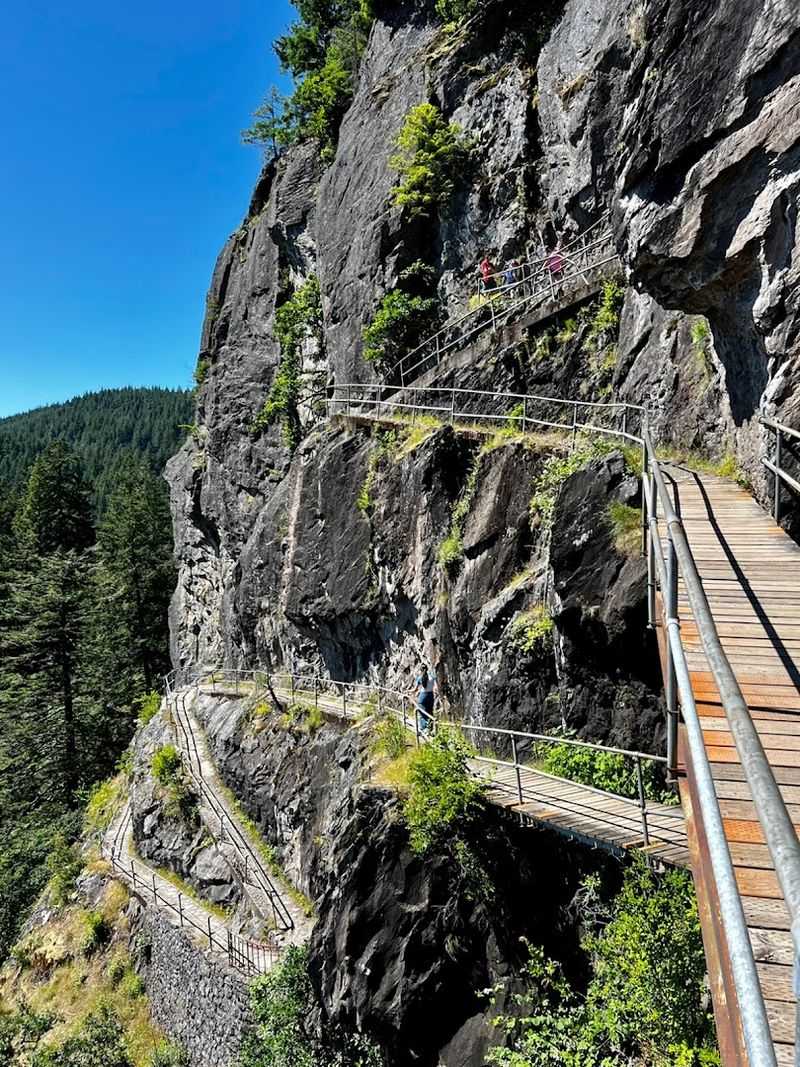
Most people expect a hike this dramatic to be grueling. The Beacon Rock Trail surprises almost everyone who attempts it.
The path to the summit is just 1.8 miles round trip, making it one of the most rewarding short hikes in the entire Pacific Northwest.
That said, short does not mean easy. The trail climbs 848 feet in under a mile, which means your legs will absolutely know about it by the time you reach the top.
The route uses 52 switchbacks and a series of wooden bridges, handrails, and catwalks bolted directly into the rock face. It is genuinely one of the more creative trail engineering projects you will ever walk.
The whole thing was built between 1915 and 1918 by Henry Biddle, who purchased the rock to protect it from being quarried for a jetty project.
He spent years constructing the trail by hand, and the result is a path that feels more like climbing the inside of a cathedral than hiking through the woods.
Every corner reveals a new angle, a new view, and a new reason to keep going up.
Views From The Summit That Earn Their Reputation
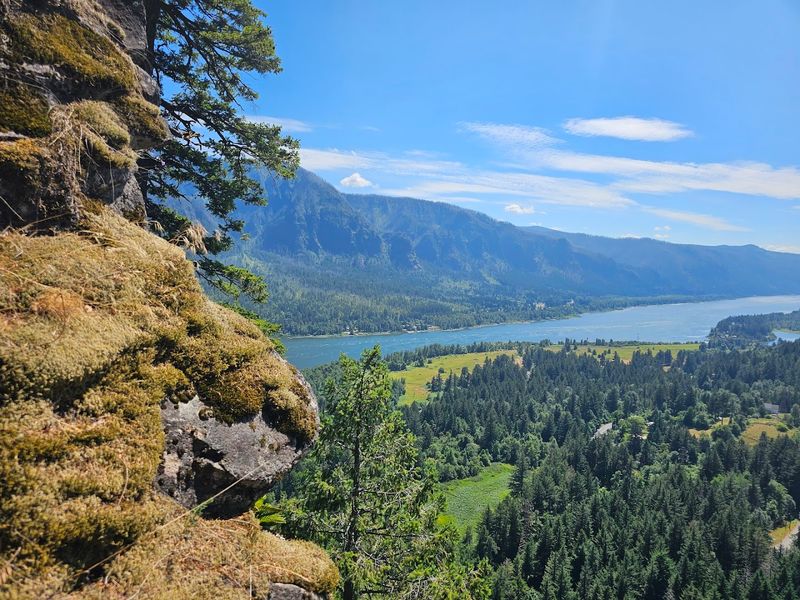
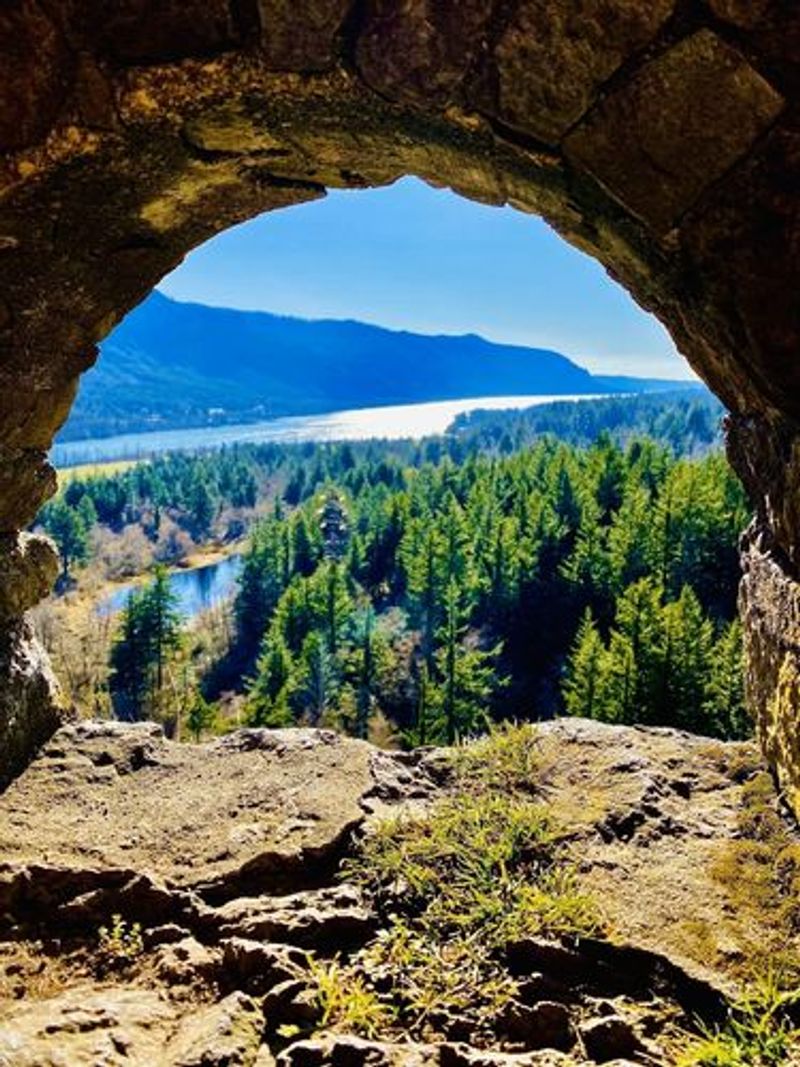
Reaching the top of Beacon Rock feels like stepping onto a stage. The Columbia River stretches out in both directions, wide and silver, cutting through walls of green forest and basalt cliffs.
On clear days, Mount Hood floats on the southern horizon over Oregon. Behind you, the Washington Cascades stack up in layers of blue and gray.
The summit is not a single dramatic peak but more of a broad, open rocky platform.
There is enough space to sit, catch your breath, and actually spend time taking it all in rather than rushing through a photo and heading back down. That unhurried quality makes the summit feel more generous than most.
Wind is a real factor up top, so bringing a light jacket even on warm days is genuinely smart advice. The exposure is significant, and gusts can be strong enough to make you grab a railing.
But that same openness is exactly what makes the view so unobstructed and so worth the climb. Few hikes this short deliver a payoff this large anywhere in the state.
The Columbia River Gorge Setting
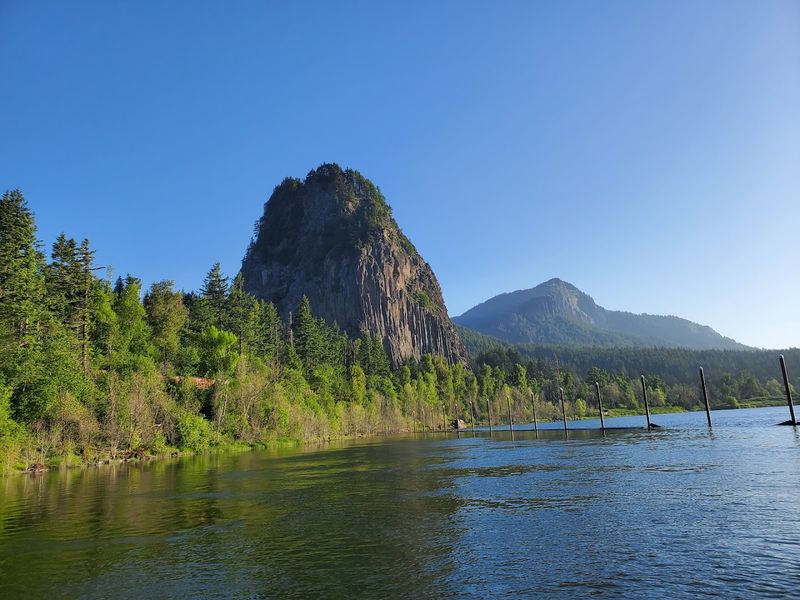
The gorge itself is as much a character in this hike as the rock. The Columbia River carved this corridor over millions of years, and the result is one of the most geologically spectacular landscapes in the American West.
Beacon Rock sits right in the middle of it, which means the approach from the highway is already beautiful before you even lace up your boots.
The park spans both sides of WA-14, with the rock and main trailhead on the south side of the road and additional trails, campgrounds, and a boat launch on the north side.
The north area connects to Hamilton Mountain Trail, which is a longer and more demanding option for hikers who want more mileage after conquering the main attraction.
Wildlife sightings along the gorge are common. Osprey hunt the river below, and raptors ride thermals along the cliff edges throughout the warmer months.
The combination of river habitat, old-growth forest patches, and open rock faces creates a layered ecosystem that rewards anyone paying close attention to what is moving around them.
Best Time To Make The Climb
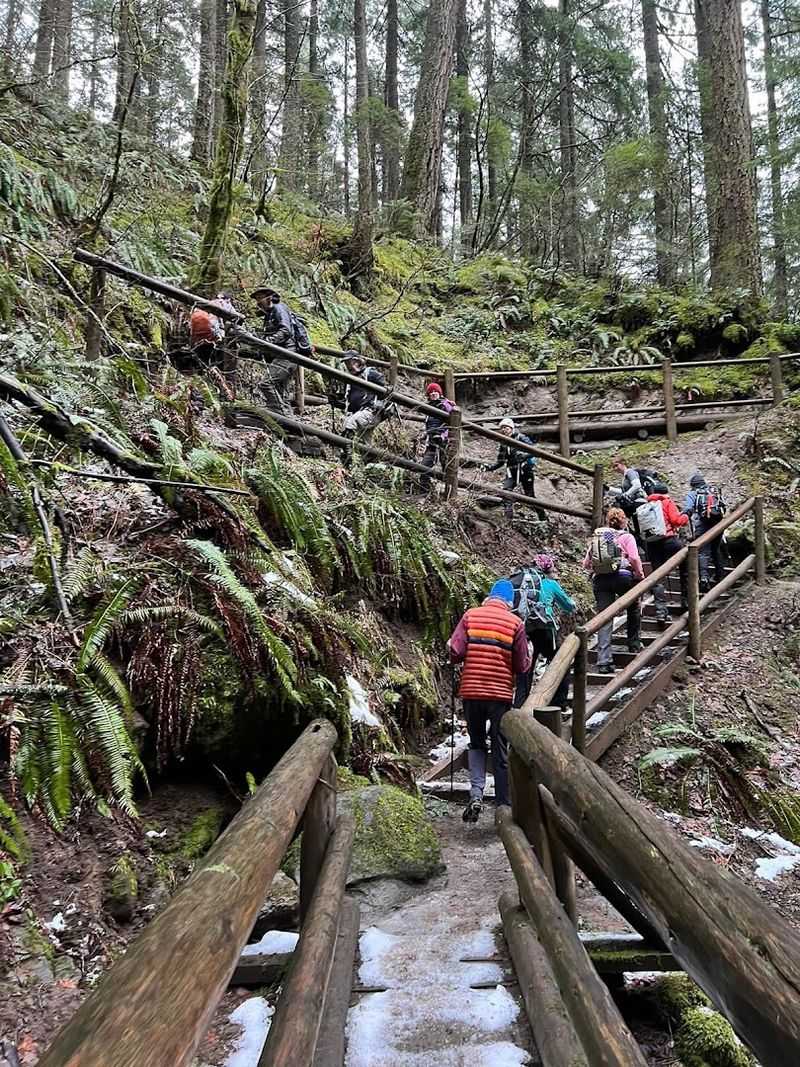
Spring and fall are the sweet spots for this hike. March through May brings wildflowers along the lower sections of the trail, and the air stays cool enough that the climb feels manageable rather than punishing.
Fall turns the surrounding forest into a patchwork of orange and gold that frames the basalt beautifully.
Summer brings the crowds.
Beacon Rock is popular, and the parking lot at the trailhead fills up fast on weekends between June and August.
Arriving before 9 a.m. on a summer morning is the difference between a peaceful climb and a slow-moving queue of hikers on the switchbacks.
The rock does not get any less impressive at 7 a.m., and the light at that hour is actually better for photography anyway.
Winter access depends on weather conditions. The trail can become icy and genuinely dangerous when temperatures drop, and the park sometimes closes sections for safety.
Checking Washington State Parks conditions before heading out in the colder months is worth the two minutes it takes. A surprise ice patch on a trail bolted to a cliff face is not an adventure anyone needs.
What To Pack For This Particular Hike
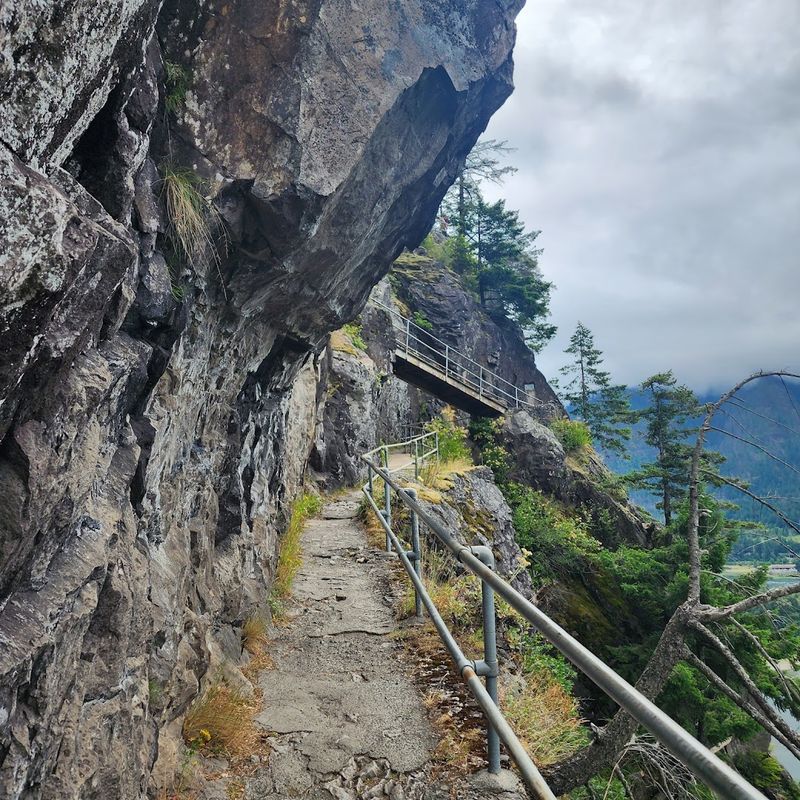
Packing smart for Beacon Rock matters more than people expect for a hike this short. The switchbacks are steep and relentless, and the exposure at the top means conditions change fast.
A wind layer, at least two liters of water, and solid footwear with real grip are non-negotiable starting points.
Trekking poles are genuinely useful here, both on the way up and especially on the descent.
The wooden bridges and metal handrails help, but the trail surface gets slippery after rain, and having that extra contact point with the ground makes a meaningful difference.
Knee comfort on the way down is another reason to bring them if you own a pair.
Snacks that pack easily and eat well at altitude are worth the thought. There is no food available at the trailhead, and the nearest services are a short drive east toward Stevenson.
Sunscreen matters more at elevation than most people remember, even on overcast Pacific Northwest days.
A small first aid kit rounds out what should be a straightforward but well-prepared day out on one of Washington’s most distinctive trails.
The History Behind The Rock And The Park
The story of how Beacon Rock became a public park is genuinely worth knowing. In 1915, the U.S.
Army Corps of Engineers proposed blasting the rock apart to use as jetty fill at the mouth of the Columbia River.
Henry Biddle, a wealthy Philadelphian who had purchased the rock, refused to sell and instead began constructing the trail that still exists today.
Biddle built the trail largely to demonstrate that the rock had far more value as a recreational destination than as quarry material.
He completed most of the work by 1918, and the engineering he used, steel rods, wooden bridges, and carved stone steps, has held up remarkably well for over a century.
After his death, his family offered the rock to Washington State, which accepted it in 1935.
The park eventually expanded to include over 4,600 acres on both sides of WA-14. What began as one man’s effort to save a volcanic rock from destruction became one of the most visited state parks in Washington.
That is the kind of history that makes a hike feel like more than just exercise. It adds a layer of meaning to every step you take up those switchbacks.
Why This Hike Belongs On Your Pacific Northwest List
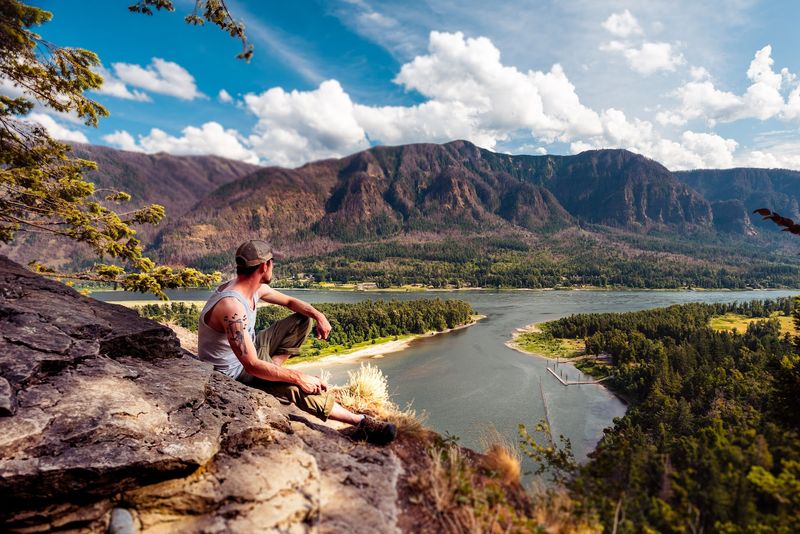
Not every great hike needs to be a multiday epic to leave a lasting impression. Beacon Rock proves that point every single time someone reaches the top and just stands there, quietly stunned by what a short trail can deliver.
The combination of geological drama, river views, and honest physical challenge puts this one in a different category from most day hikes.
It works for a wide range of fitness levels, though the incline will humble anyone who underestimates it.
Families with older kids, solo hikers, and groups looking for something more interesting than a flat nature walk all find what they need here.
The trail is well maintained, clearly marked, and genuinely safe when conditions are right.
Washington has no shortage of spectacular hikes, but few of them let you walk up the spine of an actual ancient volcano in under two hours.
That specificity is what makes Beacon Rock memorable long after the soreness fades. The rock has been standing for tens of thousands of years.
The trail has been there for over a century. Neither is going anywhere, which means there is always time to make the trip, but sooner is better than later.