Why Leave The U.S. When Arizona Has A Place That Feels Like Machu Picchu
People spend thousands of dollars chasing views like this on the other side of the world. They do not realize Arizona has been holding one just as spectacular the whole time.
There is a spot in this state that stops seasoned travelers cold. Ancient stone structures perched on dramatic terrain, sweeping views that stretch further than your eyes can process, and a silence so complete it feels sacred.
No passport required. No eighteen-hour flight.
Just you, open desert air, and ruins that rival anything South America has put on a bucket list. Arizona has a talent for hiding its most extraordinary places in plain sight, and this one might be the best kept secret of all.
If you have been saving up for an international trip, read this first. You might just change your plans entirely.
A Cinder Cone That Rises 1,000 Feet And Demands Your Attention
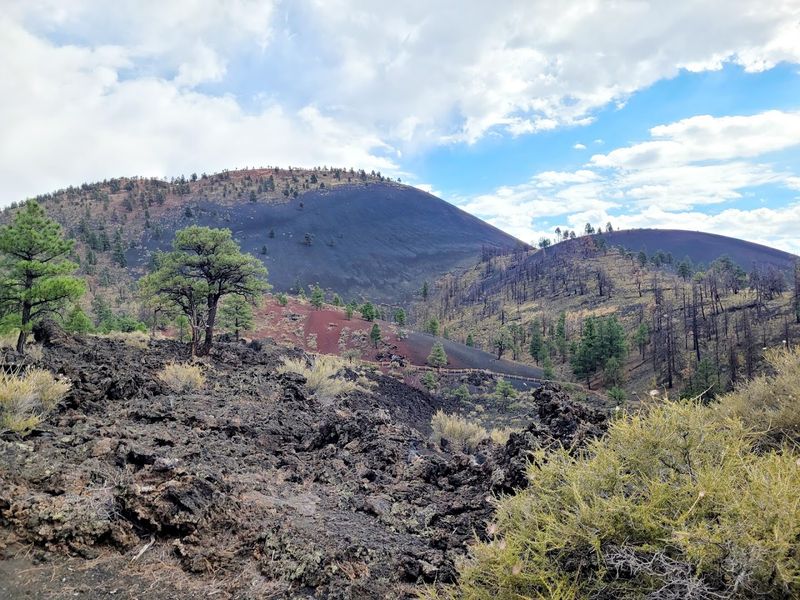
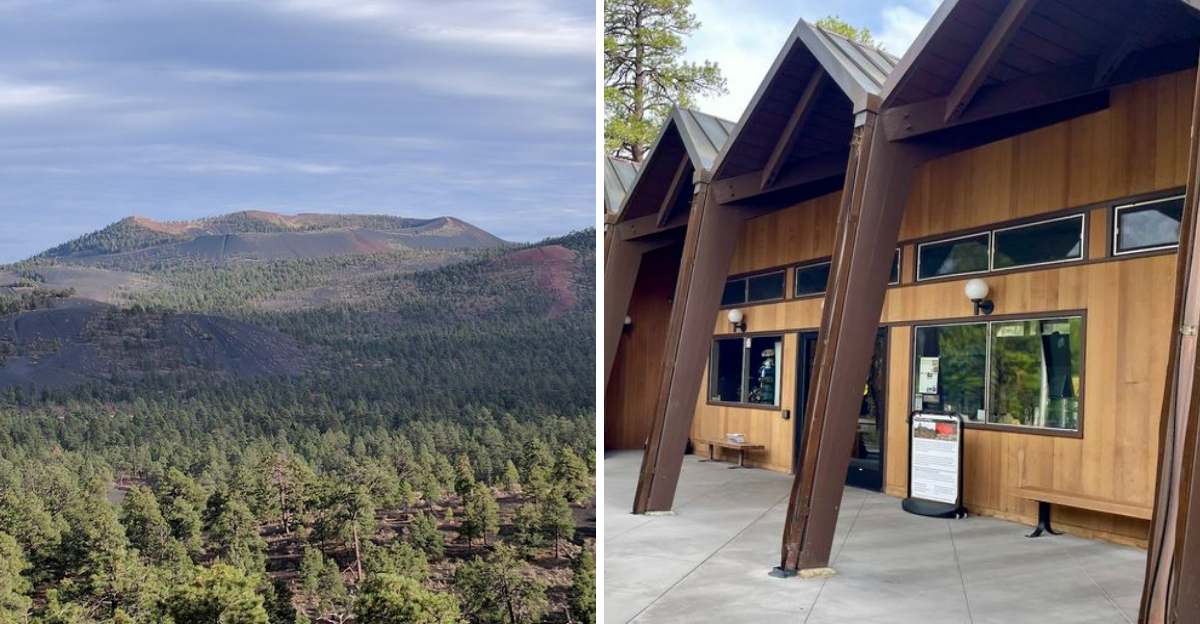
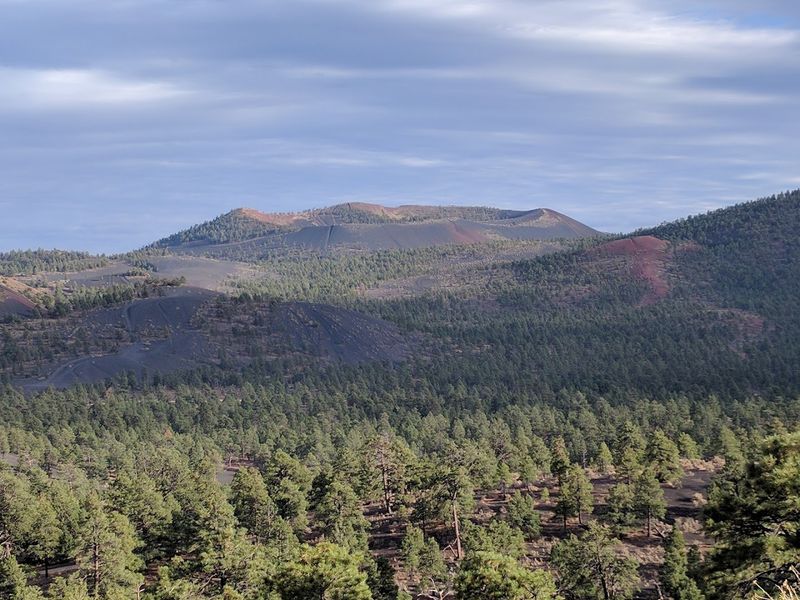
Standing at the base of a cinder cone that rises a full 1,000 feet is a humbling experience. Sunset Crater Volcano National Monument sits at an elevation of 8,042 feet, and the view from the trails below the cone is genuinely jaw-dropping.
The crater does not look like something that belongs in Arizona.
The cone is the youngest and least-eroded in the entire San Francisco Volcanic Field, which contains over 600 volcanoes. That fact alone is worth letting sink in.
You are looking at something geologically fresh, as far as volcanoes go.
The red and black coloring on the upper rim gives the crater its name. At certain times of day, the light hits those mineral deposits and the whole cone seems to glow orange.
It is the kind of visual that no camera fully captures. You have to stand there yourself to feel the scale of it.
Located at 6082 Sunset Crater Road, Flagstaff, AZ 86004, the monument is open daily from 9 AM to 4:30 PM and charges $25 per vehicle.
The Lava Flow Trail Is Short, Easy, And Completely Unforgettable
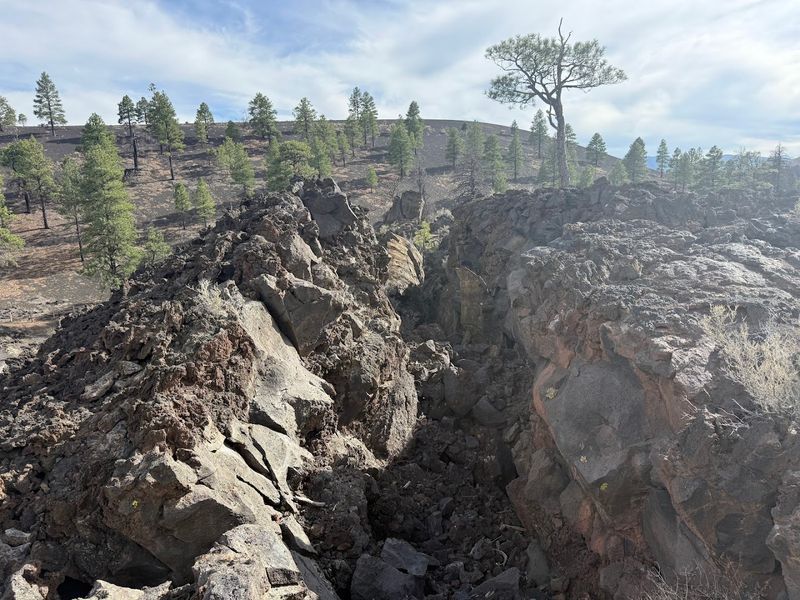
Not every great trail needs to be a brutal all-day trek. The Lava Flow Trail is a 1.3-mile loop that almost anyone can complete, making it suitable for many families and casual hikers.
Yet the scenery along the way offers an impressive variety of volcanic features for such a short trail.
The path winds directly through the lava fields, putting you close enough to touch the jagged black rock formations. Squeeze-ups, where molten lava once oozed through surface cracks, are visible right along the trail.
The geological features here are so specific and strange that reading about them beforehand actually makes the walk more exciting.
A paved section of the trail makes it accessible for visitors who need a smoother surface. The trailhead has a restroom and a solid parking area, so logistics are easy.
Picking up a trail guide at the visitor center before you start is genuinely useful, not just a tourist move. The plaques along the route explain what you are seeing in plain language, and some of them mention that NASA used this exact terrain to train astronauts for moon missions.
That detail alone makes every step feel more significant.
The Moon-Like Terrain That Actually Trained NASA Astronauts
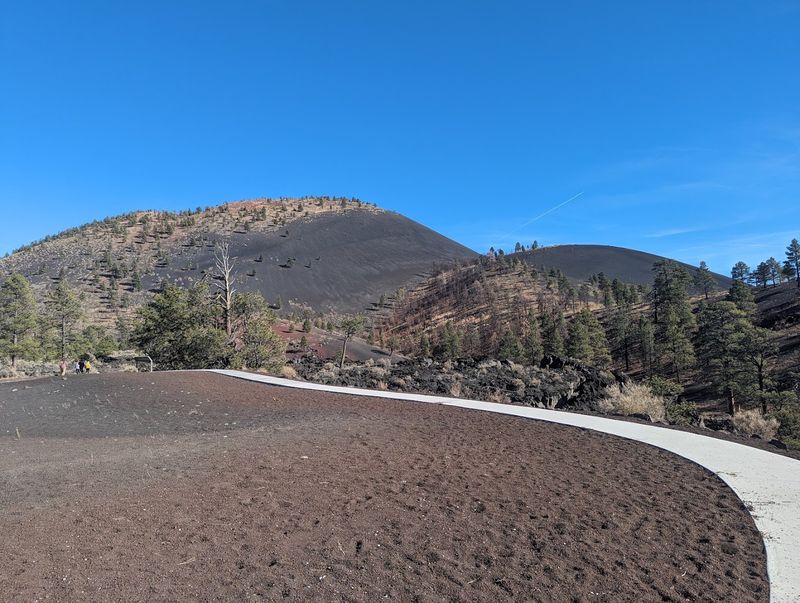
Here is a fact that genuinely changes how you see the landscape. NASA sent astronauts to train on this exact terrain before moon missions.
The black, cratered, ash-covered ground looked close enough to the lunar surface that it served as a real preparation site.
Walking across the lava fields, that comparison starts to make total sense. The ground is uneven, porous, and unlike anything in a typical American park.
There are no rolling green hills or babbling brooks here. It is stark, quiet, and almost eerie in the best possible way.
The a’a lava flows, named for the Hawaiian term for this rough lava type, cover roughly three square miles. The texture is sharp and layered, like the earth itself cracked open and froze mid-pour.
Vegetation slowly creeps back in patches, which makes the contrast between black rock and green plant life even more striking. Standing in the middle of the lava field and looking toward the cone, it is easy to understand why filmmakers, scientists, and space agencies have all found this place useful.
It is genuinely unlike anything else in the continental United States.
Ancient Peoples Lived Here Before The Volcano Changed Everything
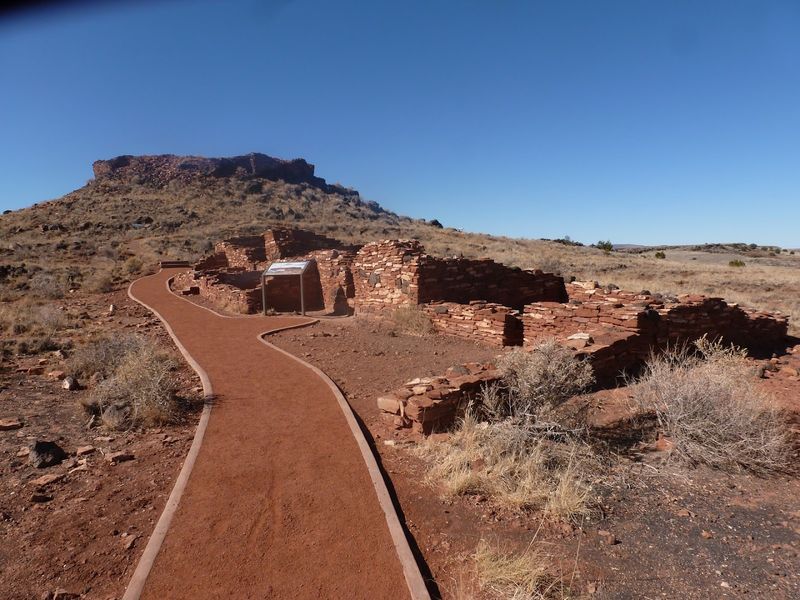
About 900 to 1,000 years ago, the Sinagua people were farming and building pithouses in this region. Then the volcano erupted around 1085 CE and dramatically changed the surrounding landscape and local communities.
Evidence of their homes was found buried beneath layers of ash, which preserved the structures remarkably well.
The eruption was not immediately catastrophic for the surrounding culture. Volcanic ash actually improved dryland farming conditions in the area.
Communities like Wupatki Pueblo grew significantly after the eruption, as people relocated and adapted to a transformed landscape.
That combination of destruction and unexpected benefit is what makes this history so compelling. A volcano erupts, people relocate, and somehow agriculture improves.
The story of the Ancestral Puebloan people here is one of resilience and adaptation, not just displacement. Visiting this spot alongside Wupatki National Monument, which is connected by the same scenic road, gives a much fuller picture of how that eruption shaped a civilization.
The two sites together create a cultural and geological experience that rivals anything you would find on an international itinerary. History this layered and this specific is rare anywhere in the world.
The Bonito Vista Trail Delivers Panoramic Views Worth Every Step
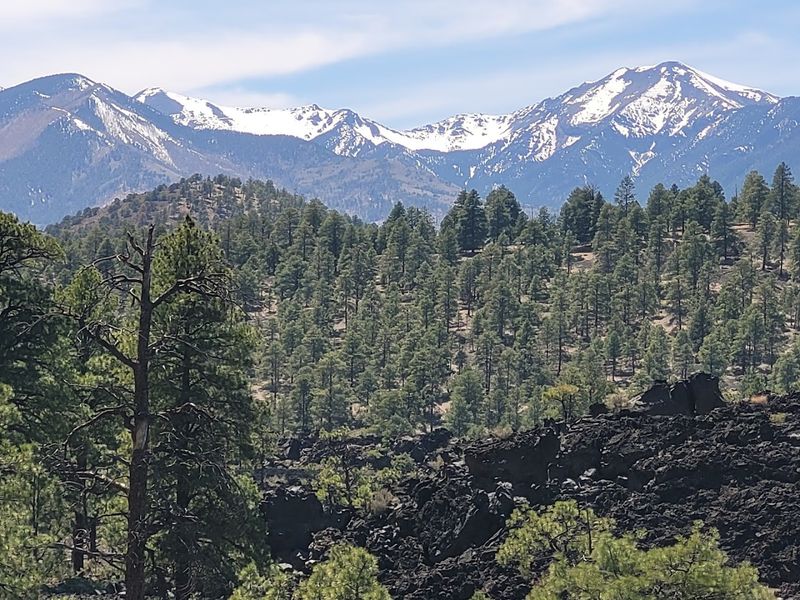
Some trails exist purely to move you from point A to point B. The Bonito Vista Trail exists to make you stop, stare, and forget what you were doing before you got here.
The panoramic views it offers stretch across lava flows and surrounding volcanic peaks in every direction.
On a clear day, the snow-capped San Francisco Peaks are visible in one direction while the dark lava fields roll out in the other. The contrast is visually stunning and genuinely unexpected.
You get alpine scenery and volcanic terrain in a single glance.
The trail is well-maintained and manageable for most fitness levels. It rewards patience, especially if you time your visit for late afternoon when the light softens and the crater’s red rim starts to deepen in color.
Visiting in December, as some have done, reveals an entirely different version of this landscape. Snow dusting the black lava creates a monochrome scene that feels almost cinematic.
Whether you come in summer heat or winter chill, the views from this trail consistently deliver something worth photographing and something even better worth remembering long after the trip ends.
The Eruption That Lasted 200 Years And Reshaped A Region
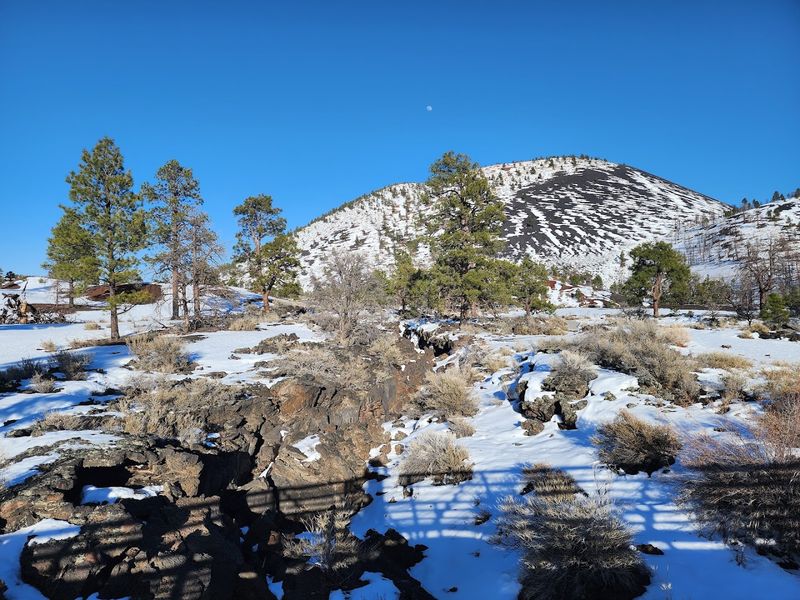
Most people think of a volcanic eruption as a single dramatic event. Sunset Crater tells a different story.
The initial eruption began around 1085 CE, and volcanic activity may have continued intermittently for decades afterward. That is two centuries of geological transformation happening in one place.
The eruption covered somewhere between 800 and 900 square miles with cinders and ash. Three major lava flows spread across roughly three square miles of terrain.
The scale of that output is difficult to visualize until you are actually standing inside the monument and looking at how far the lava fields extend in every direction.
What makes this eruption story particularly fascinating is that it happened during a period when people were actively living in the region. The volcano did not erupt into an empty wilderness.
It erupted into a populated landscape and forced an entire culture to adapt. Geologists continue to study the lava tubes, squeeze-ups, and flow patterns here because the crater is the youngest and best-preserved in the San Francisco Volcanic Field.
Every formation you see on the trail is part of a story that unfolded over centuries, not days. That kind of geological timeline is genuinely rare to experience firsthand.
Wildlife And Vegetation Slowly Reclaiming The Volcanic Landscape
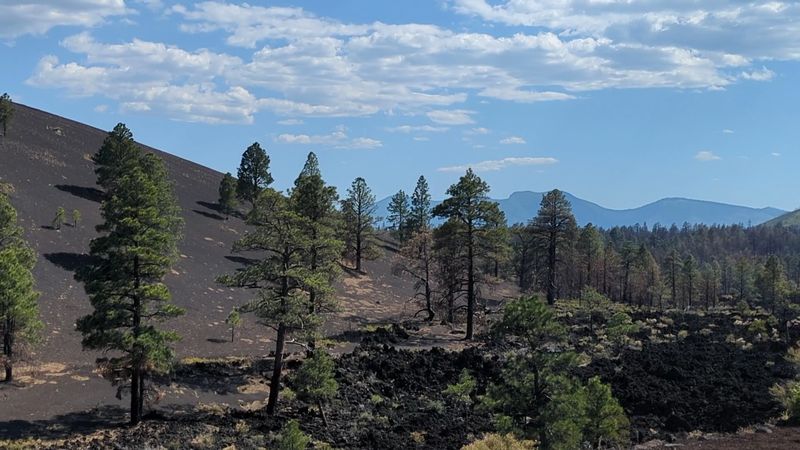
A volcanic landscape sounds barren, and parts of this one absolutely are. But nature has been quietly moving back in for nearly a thousand years, and the results are surprisingly beautiful.
Patches of ponderosa pine, wildflowers, and scrub brush push through the black lava in ways that feel almost defiant.
The contrast between living green plants and ancient black rock creates a visual texture that photographers chase for hours. It is the kind of scenery that makes you slow down and look closely at small details instead of just scanning the horizon.
A single wildflower growing from a crack in the lava is somehow more striking than a whole meadow.
Wildlife moves through the area too, particularly birds and small mammals that have adapted to the rocky terrain. Visiting after a rain, as some do, adds another layer to the experience.
The wet lava darkens further, and the air carries the smell of pine mixed with something mineral and ancient. Watching nature recover from a volcanic eruption in real time, across a thousand-year timeline, is a perspective shift that no nature documentary fully delivers.
Being physically present in that recovery process is what makes this place feel genuinely alive despite its dramatic, rugged appearance.
Practical Tips That Make Your Visit Run Smoothly
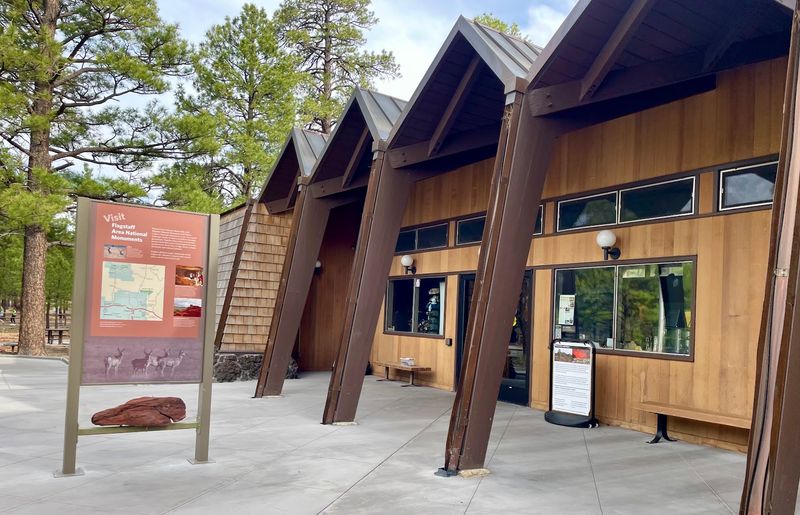
Showing up prepared makes a real difference at this monument. The entrance fee is $25 per vehicle, but that price covers access to both Sunset Crater and Wupatki National Monument, which makes the combined value genuinely solid.
If you hold an America the Beautiful Pass, you can enter for free.
The visitor center is worth a stop before hitting the trails. Rangers there will point you toward the right trail for your group size and fitness level.
Junior Ranger activities are often available for younger visitors through the National Park Service. The monument is open daily from 9 AM to 4:30 PM.
Dogs are welcome in some areas but not on all trails, so checking the park map before you go saves confusion at the trailhead. Trail guides sold at the visitor center add real context to what you are seeing along the route.
Phone signal is weak inside the monument, so downloading a map beforehand is a practical move. The drive in along Sunset Crater Road is scenic on its own, with multiple pull-off spots that are worth using.
Plan for at least two to three hours to do the experience justice.
Why This Arizona Monument Earns Its Comparison To Machu Picchu
Machu Picchu earns its reputation through ancient architecture, dramatic elevation, and a landscape that feels completely removed from ordinary life. While very different from Machu Picchu, this monument offers its own blend of dramatic scenery, elevation, and history.
The elevation here tops 8,000 feet, the history stretches back nearly a millennium, and the terrain looks like nothing else on the continent.
The cultural layer runs deep too. Ancestral Puebloan communities were shaped and resettled because of what happened here.
The eruption of 1085 CE was a significant event that influenced settlement patterns and daily life across parts of the Colorado Plateau.
What Machu Picchu offers in stone ruins and cloud forest drama, this place answers with lava fields, cinder cones, and a sky so wide it feels theatrical. Both destinations reward visitors who slow down and pay attention.
Both carry a weight that is hard to describe until you are standing inside them. The difference is that this one does not require a passport, a long-haul flight, or a multi-day acclimatization period.
It requires a drive through northern Arizona, a $25 entry fee, and a willingness to be genuinely surprised by what your own country has been quietly holding onto all along.