12 California Places Where Old Movie Palaces Still Light Up The Night
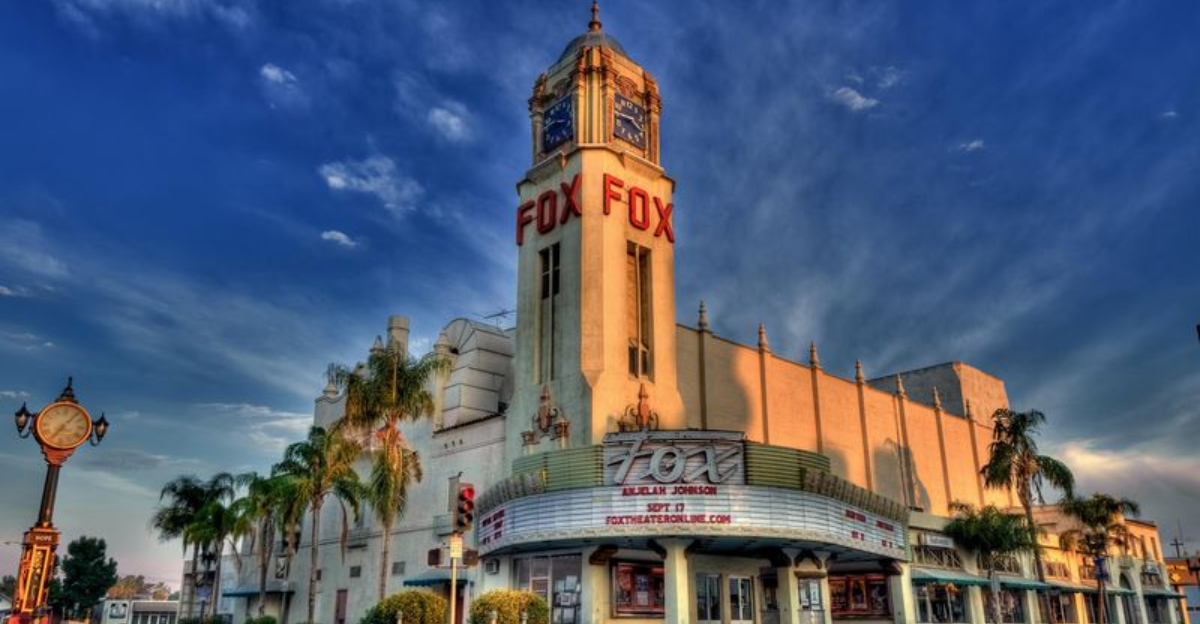
Old movie palaces make a night out feel bigger before the show even starts.
The marquee glows. The sidewalk gets brighter. People look up, because buildings like this were never meant to be ignored.
Modern theaters can be comfortable. These places bring ceremony.
Velvet seats, neon signs, and balcony views all remind visitors that going to the movies once felt like an event.
California still has historic theaters that know how to command a street after dark.
That glow matters. It turns a regular evening into something with a little glamour.
You are walking into decades of premieres, restored details, and screen history that refuses to fade quietly.
A good old movie palace does not need nostalgia to do all the work. The architecture still has presence. The lights still pull people in.
The whole experience makes a simple show feel like a reason to dress up and let the night feel special.
1. Grand Lake Theatre, Oakland
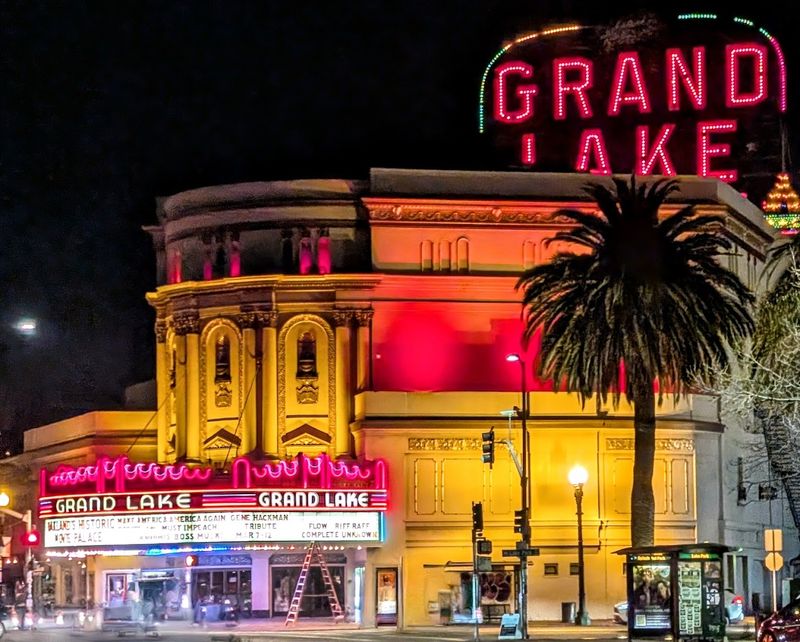
Oakland has a lot of personality, and the Grand Lake Theatre fits right in.
Opened in 1926, it has earned a spot on multiple lists recognizing it as one of the top vintage theaters in the entire country.
The grand vertical sign out front glows against the night sky, making it easy to spot from blocks away.
On Friday and Saturday evenings, the Mighty Wurlitzer organ fills Theater One with live music before the main feature begins.
That pre-show tradition is one of the things that makes a visit here feel genuinely different from a trip to a modern multiplex.
The building itself has been lovingly maintained, with ornate details still visible throughout the lobby and main auditorium.
Located at 3200 Grand Ave in Oakland, this theater continues to screen a rotating mix of current and classic films.
Weekends tend to draw larger crowds, so arriving a few minutes early is a smart move.
The neighborhood around Grand Lake is walkable and full of good spots to grab a bite before the show, which makes the whole outing feel like a proper event rather than just a movie run.
2. El Capitan Theatre, Hollywood, Los Angeles
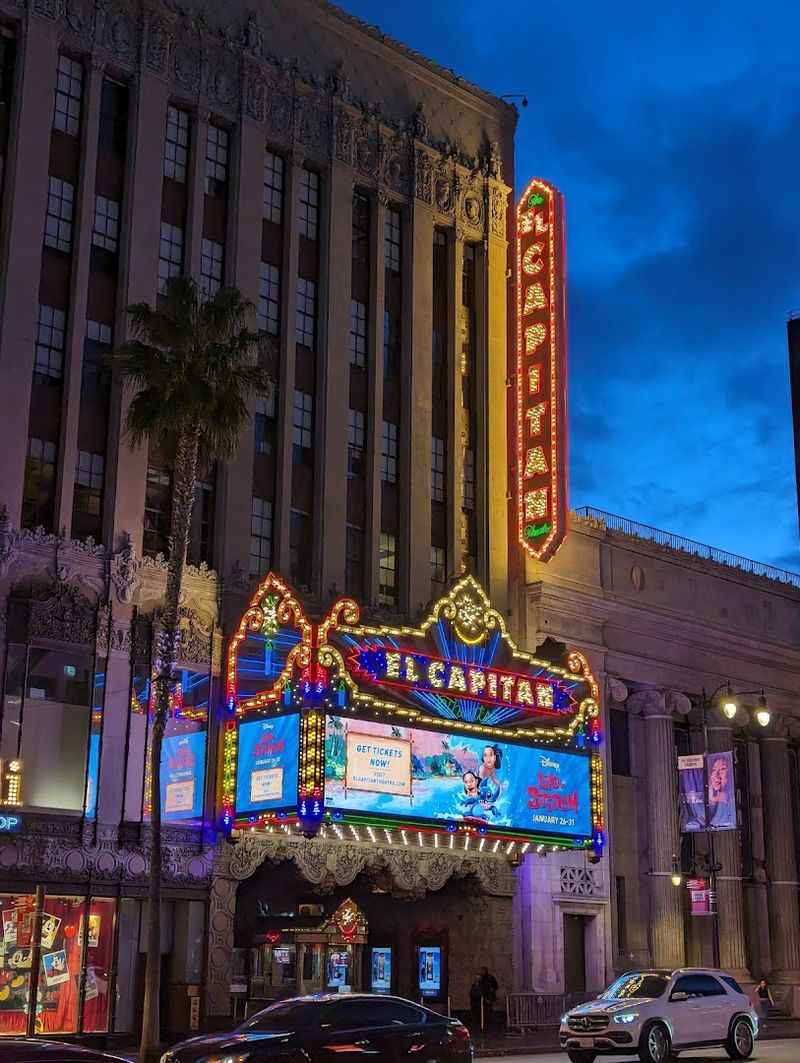
There is something undeniably theatrical about a theater that adds a live stage performance before the movie even starts.
El Capitan Theatre on Hollywood Boulevard has been doing exactly that since Disney took ownership, turning each screening into more of a full entertainment experience.
The Wurlitzer organ, which still works, often plays as guests settle into their seats.
Originally opened on May 3, 1926, El Capitan was the largest legitimate theater in Hollywood at the time, with 1,550 seats.
The building has gone through changes over the decades, but its current restored state reflects serious care and attention to detail. The ornate interior feels celebratory without being overwhelming.
Situated at 6838 Hollywood Blvd in Los Angeles, the theater primarily screens Disney films and tends to offer special programming around major releases.
Families with kids will find it a particularly fun outing since the pre-show entertainment adds something extra to the experience.
Parking on Hollywood Boulevard can be tricky on weekends, so arriving with a little extra time built in is genuinely useful advice rather than just a polite suggestion.
3. TCL Chinese Theatre, Hollywood, Los Angeles
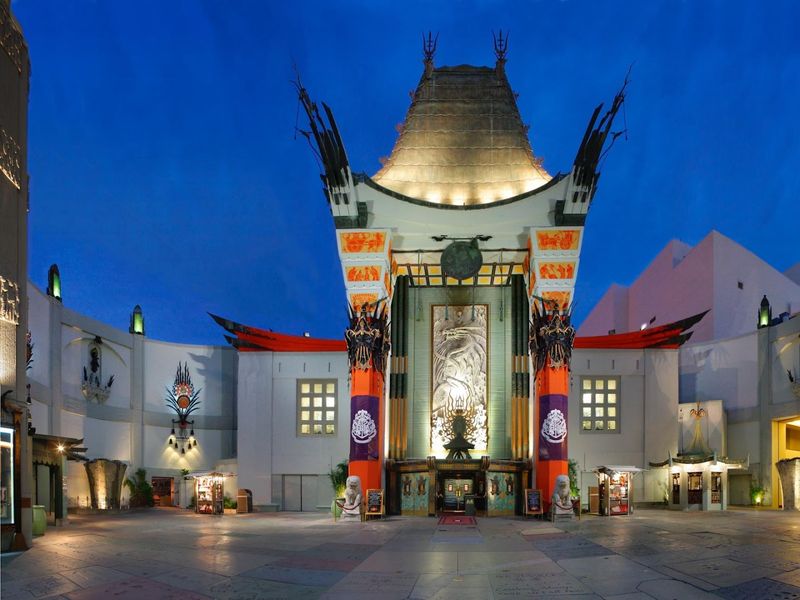
The handprints and footprints pressed into the cement forecourt have made this address one of the most photographed spots in the world.
TCL Chinese Theatre, originally known as Grauman’s Chinese Theatre when it opened in 1927, is still an active cinema showing current films to thousands of visitors each week.
The building’s pagoda-style architecture and ornate detailing make it instantly recognizable even to people who have never visited Hollywood before.
Stepping inside the main auditorium is a reminder of what going to the movies used to feel like when theaters were built to impress.
The ceiling soars overhead and the decor leans into the East Asian-inspired aesthetic that Sid Grauman originally envisioned.
It has been updated with modern projection and sound, so the experience combines historical atmosphere with current technology.
The theater sits at 6925 Hollywood Blvd in Los Angeles and draws both tourists and locals throughout the week.
Weekday visits tend to feel a bit more relaxed compared to the busier weekend foot traffic on the boulevard.
Checking the screening schedule ahead of time is worth the effort since special events and premieres occasionally affect regular showtimes without much advance notice online.
4. Egyptian Theatre, Hollywood, Los Angeles
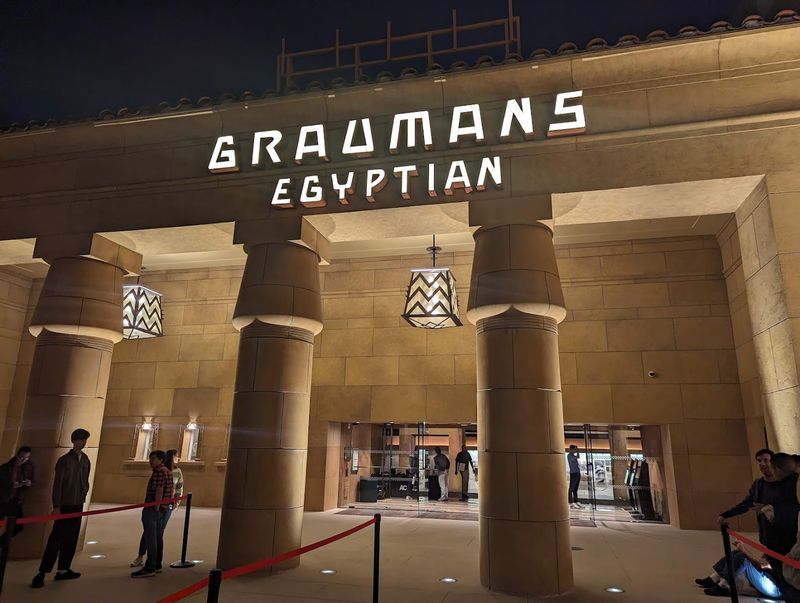
Long before the Chinese Theatre opened, the Egyptian Theatre was already making Hollywood history.
Sid Grauman opened it in 1922, and the very first Hollywood film premiere ever held took place here with Douglas Fairbanks’ Robin Hood.
The ancient Egyptian-inspired columns, hieroglyphic details, and open-air forecourt gave it a look that felt exotic and grand at the same time.
Netflix eventually stepped in to restore the building, bringing it back to life as a proper movie house while reducing its seating capacity to improve comfort.
The restoration kept the original spirit of the space intact while adding the kind of technical upgrades that modern film presentation requires.
A Netflix store is also part of the current setup, which adds a contemporary layer to a very historic building.
Found at 6712 Hollywood Blvd in Los Angeles, the Egyptian now screens both new releases and revival programming, making it appealing to a wider range of film fans.
The programming tends to lean toward cinema-focused audiences rather than general blockbuster crowds.
Visiting on a weeknight can offer a quieter and more contemplative experience, especially for screenings of older or restored films that benefit from a focused viewing environment.
5. Vista Theatre, Los Feliz, Los Angeles
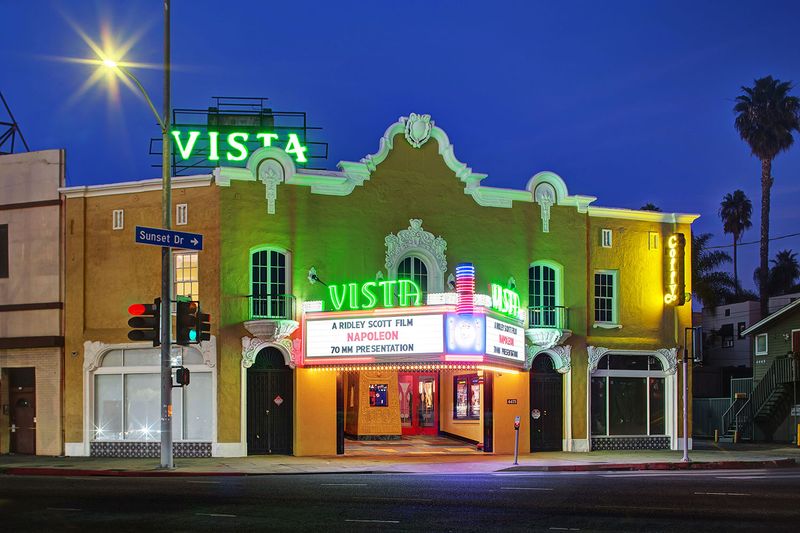
Single-screen theaters have become rare enough that finding one still operating feels like a genuine discovery.
The Vista Theatre in Los Feliz has been around since 1923, which means it has been part of the Los Angeles landscape for over a century.
The Egyptian-influenced architecture on the exterior gives it a distinctive look that stands apart from the surrounding neighborhood storefronts.
Filmmaker Quentin Tarantino purchased and reopened the Vista in late 2023, bringing renewed attention and care to a building that had already earned a devoted following.
The restoration preserved the original architectural details while ensuring the space could function as a working cinema.
Old-school snack options have been kept as part of the experience, which adds a layer of charm that feels intentional rather than nostalgic for its own sake.
The theater is located at 4473 Sunset Dr in Los Angeles and operates as a single-screen venue, which means every visit centers on one shared film experience rather than a multiplex menu of choices.
That focused format tends to create a different kind of audience energy.
Checking the current screening schedule before heading over is especially important since programming at single-screen venues can shift more frequently than at larger commercial theaters.
6. Hollywood Pantages Theatre, Hollywood, Los Angeles
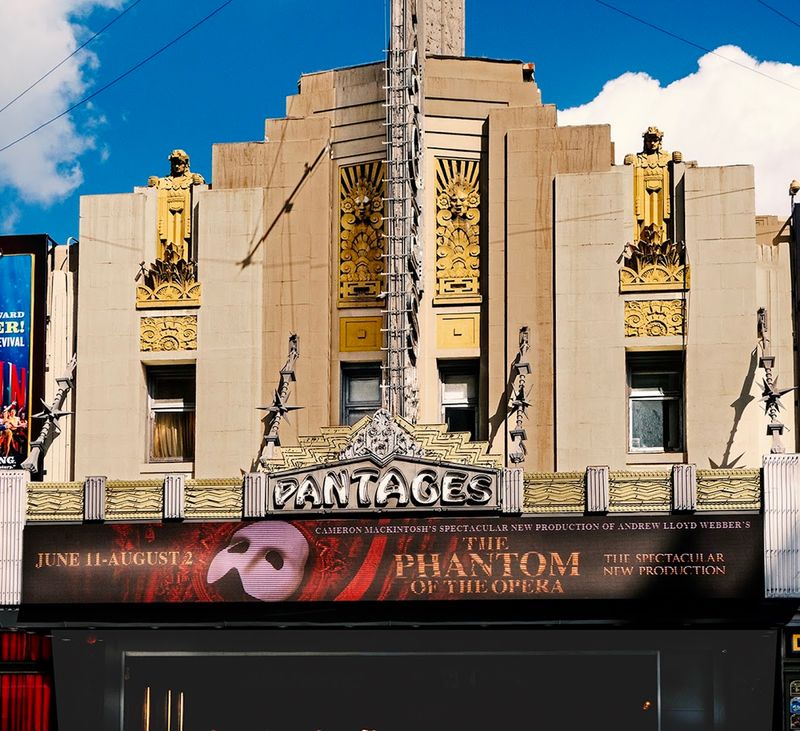
Art Deco architecture has a way of making a building feel both timeless and slightly futuristic, and the Hollywood Pantages Theatre pulls that off with confidence.
Opened in 1930, it was designed with sweeping lines and bold geometric patterns that still look striking today.
The interior is just as impressive as the facade, with ornate ceilings and carefully maintained decorative details throughout.
Unlike some of the other historic venues on this list, the Pantages operates primarily as a live performance theater rather than a cinema.
Broadway touring productions, major concerts, and large-scale live events fill the calendar throughout the year.
That makes it a slightly different kind of historic theater experience, but no less worth mentioning when talking about California’s most beloved old venues.
Located at 6233 Hollywood Blvd in Los Angeles, the Pantages is one of the most active entertainment venues on the boulevard.
Tickets for popular shows tend to sell out well in advance, so planning ahead is strongly recommended.
The neighborhood around the theater has a good amount of foot traffic on show nights, and the building itself is often lit up dramatically in a way that makes arriving early just to take in the exterior feel like part of the evening.
7. Fox Theater, Oakland
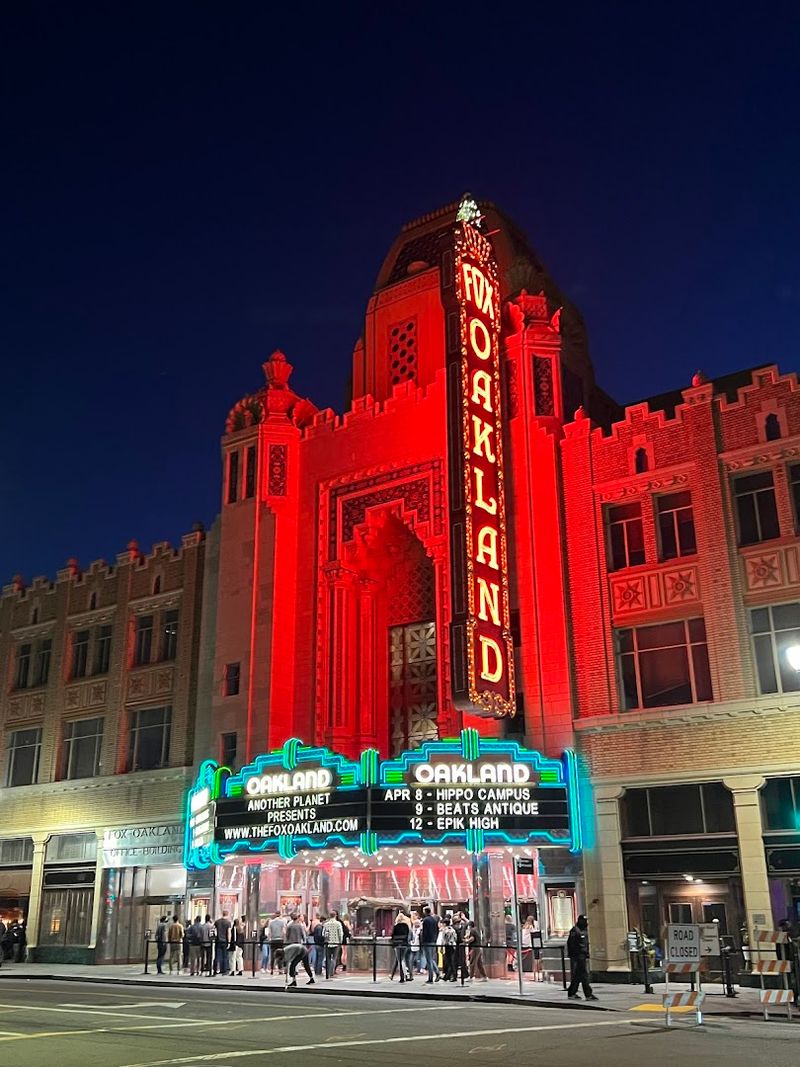
When the Fox Theater in Oakland reopened in spring 2009 after a long restoration, the city gained back something it had been missing for decades.
Originally operating as a first-run movie house from 1928 until 1962, the building sat dormant for years before a major effort brought it fully back to life.
The Moorish-inspired architecture is one of the most visually distinctive features of the building, with intricate tilework and ornamental detailing that rewards a closer look.
Today the Fox functions primarily as a concert venue, hosting a wide range of musical acts and live events throughout the year.
The restored interior maintains the grand scale and decorative richness of its original design while supporting the technical requirements of modern live performance.
The acoustics inside the main hall have earned consistent praise from performers and audiences alike.
The venue is located at 1807 Telegraph Ave in Oakland and sits in a neighborhood that has seen significant growth in arts and dining options around it.
Arriving early on show nights gives a chance to appreciate the building’s exterior lighting and architectural details before heading inside.
Tickets for popular acts can move quickly, so checking the event calendar with some lead time tends to pay off.
8. Fox Theater, Bakersfield
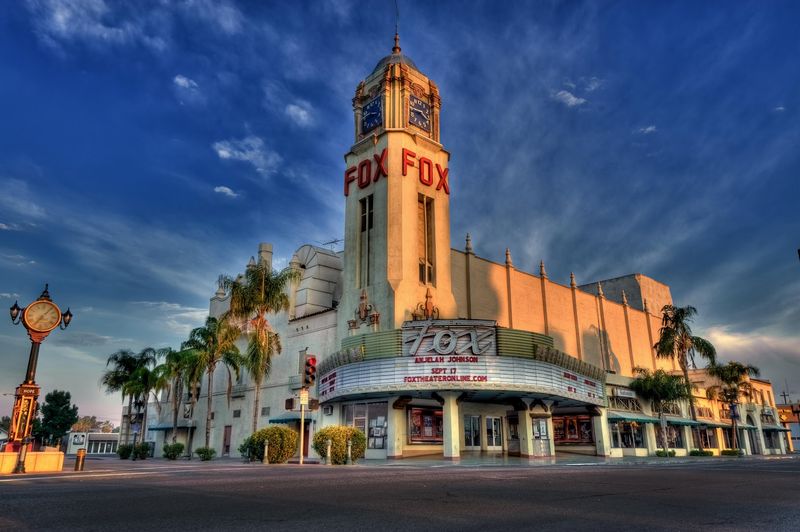
Bakersfield does not always get mentioned in conversations about California’s historic theaters, but the Fox Theater there deserves a spot in that discussion.
Built in 1930, the building reflects the streamlined Art Deco style that was popular during that era, with a vertical sign and marquee that still commands attention on the street.
The restoration work done on the theater brought back much of its original character while making it functional for modern events.
The Fox in Bakersfield operates as a performing arts venue, hosting concerts, comedy shows, theatrical productions, and community events throughout the year.
The mid-size capacity creates an intimate feel that larger arenas simply cannot replicate, and the historic setting adds a layer of atmosphere to any event held inside.
Audiences tend to appreciate that the space feels special rather than generic.
Located at 2001 H St in Bakersfield, the theater anchors a stretch of downtown that has seen renewed interest in recent years.
Checking the venue’s event schedule before visiting is the best way to plan a trip since the programming varies widely across genres and formats.
Parking in the surrounding downtown area is generally manageable on most evenings, though major shows can bring heavier traffic to the neighborhood.
9. Crest Theatre, Sacramento
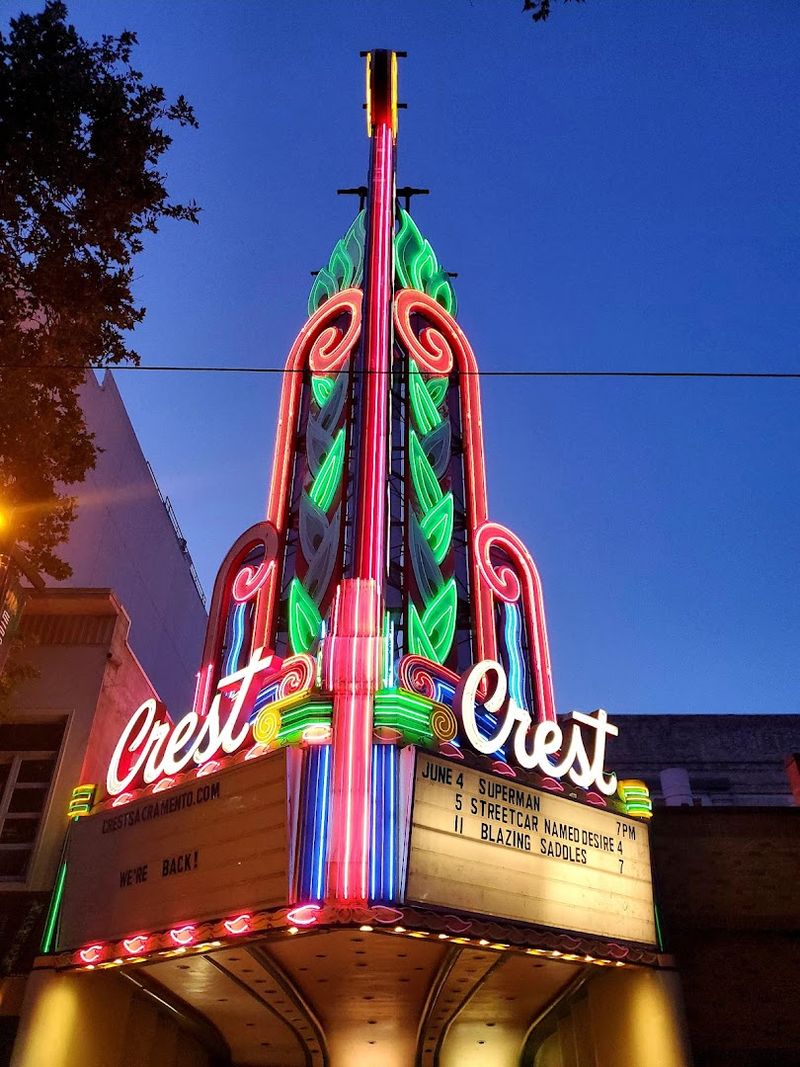
Sacramento has a deep inventory of historic architecture, and the Crest Theatre is one of its most beloved examples.
The building dates back to 1912 in its original form, though the current Art Deco facade was added in 1946 and gives the theater its most recognizable look.
The neon marquee sign is a standout feature that catches the eye from down the block, especially after dark when the glow feels almost cinematic on its own.
Over the years the Crest has hosted films, live music, comedy performances, and special events, making it one of the more versatile historic venues in the region.
The main hall retains much of its mid-century character, with a large screen and tiered seating that suits both film screenings and stage productions.
The mix of programming attracts a broad audience that ranges from film enthusiasts to concert-goers.
Visitors can find the Crest Theatre at 1013 K St in Sacramento, right in the heart of the downtown area.
The location makes it easy to combine a visit with dinner at one of the nearby restaurants before a show.
Checking the current event schedule ahead of time is a good habit since programming can shift between film-focused and live performance-focused periods depending on the season.
10. Tower Theatre, Fresno
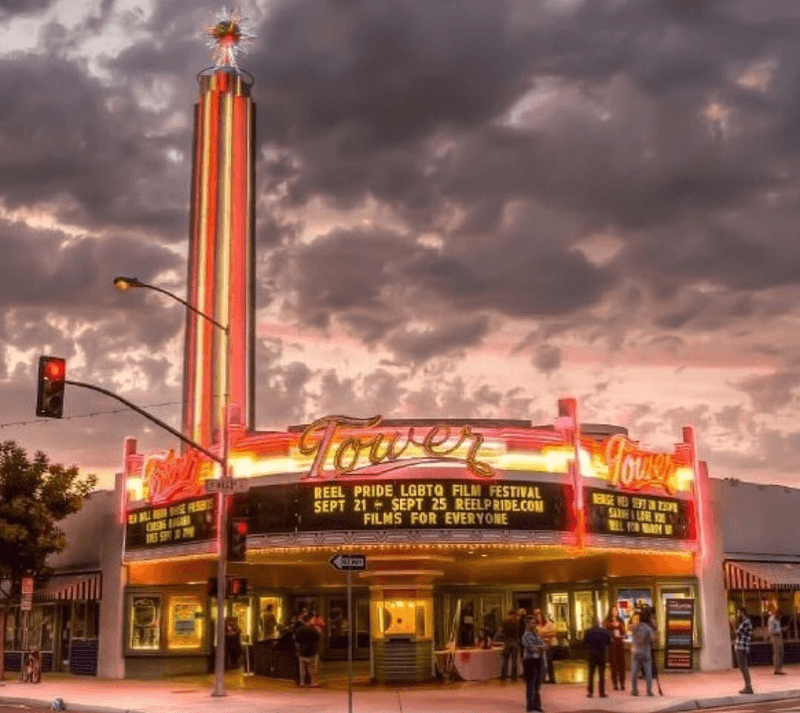
Completed in 1939, the Tower Theatre in Fresno is one of the finest examples of Streamline Moderne architecture still standing in California’s Central Valley.
The curved lines, porthole windows, and bold vertical tower element give the building a look that feels both retro and surprisingly forward-thinking.
A thorough restoration brought the theater back into active use as a cultural hub for the surrounding community.
The current programming at the Tower leans toward live events including indie film screenings, jazz nights, and community festivals, which gives it a more varied calendar than a traditional movie-only venue.
That range of programming reflects how historic theaters have had to adapt to stay relevant and financially sustainable while still honoring their original purpose.
The building’s interior carries the same clean geometric energy as the exterior, making it a genuinely pleasant space to spend time in.
The theater is located at 815 E Olive Ave in Fresno, in the Tower District neighborhood which has long been known as a center for arts and independent culture in the city.
The surrounding area has a walkable strip of restaurants and shops that makes a pre-show outing feel well-rounded.
Weekend events tend to draw larger crowds, so arriving a little early is always a reasonable approach.
11. Arlington Theatre, Santa Barbara
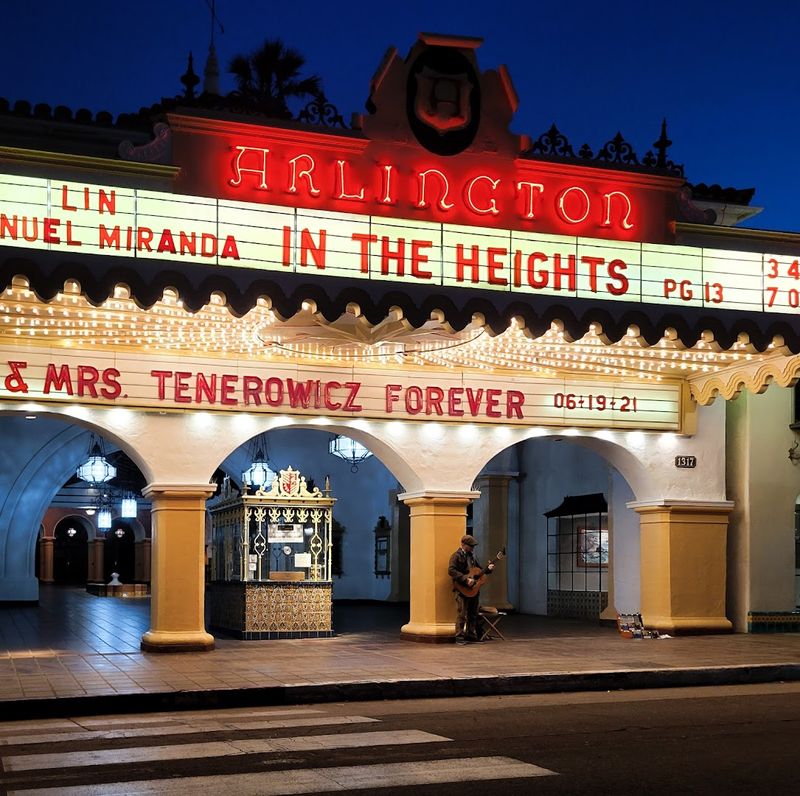
Walking into the Arlington Theatre in Santa Barbara is a surprisingly immersive experience because the interior is designed to resemble an outdoor Spanish village.
The ceiling is painted to look like a night sky and the walls are decorated with architectural elements that suggest a courtyard setting, complete with towers and archways. It is one of those rare theater designs that makes the building itself feel like part of the entertainment.
Opened in 1931, the Arlington has operated as a performing arts venue and cinema over the decades and continues to host a mix of film screenings, concerts, and live events.
The Spanish Colonial Revival exterior fits naturally into Santa Barbara’s broader architectural identity, which makes the building feel like a genuine part of the city rather than just a preserved curiosity.
The main auditorium seats around 2,000 people, giving it a capacity suited to larger productions.
The theater is located at 1317 State St in Santa Barbara, along the city’s main commercial corridor.
State Street is walkable and lined with restaurants and shops, so building an evening around a visit to the Arlington is straightforward.
Tickets for popular events tend to sell out, so checking the schedule and booking in advance is the most reliable way to guarantee a seat.
12. California Theatre, San Jose
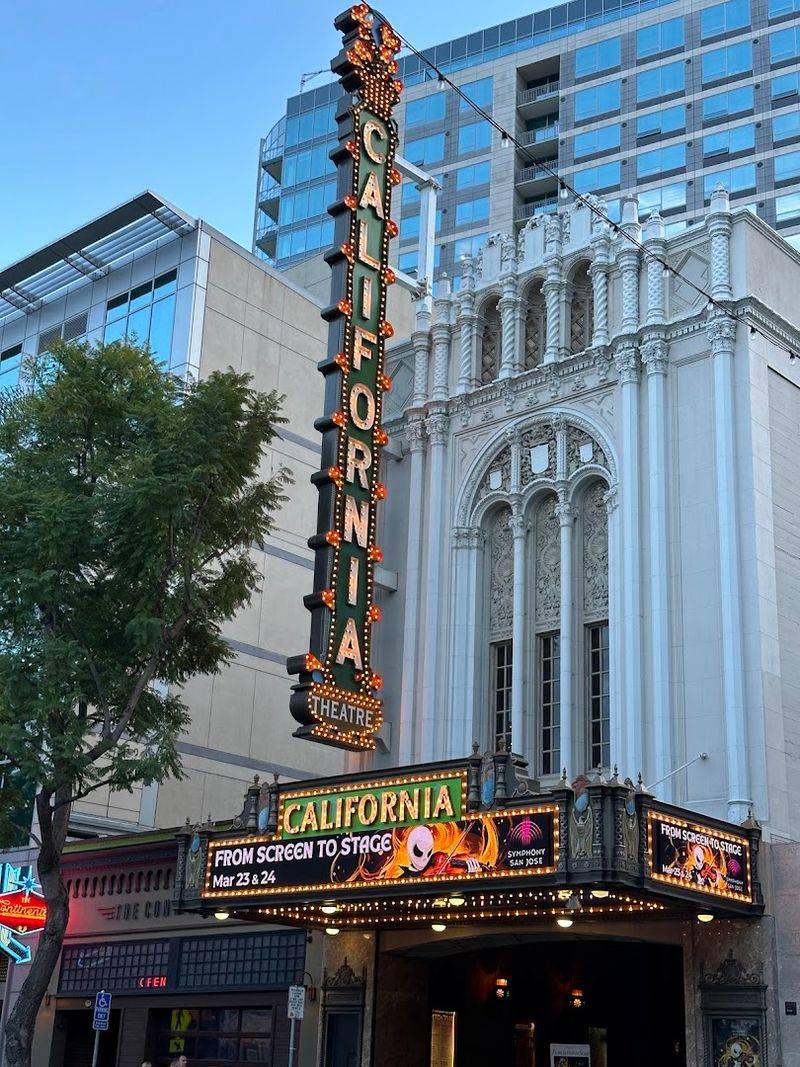
San Jose has been home to the California Theatre since 1927, and the building has managed to survive and adapt through nearly a century of change in the city around it.
The exterior features an elaborate Baroque Revival design with ornamental detailing that makes it one of the more visually striking historic buildings in downtown San Jose.
A major restoration completed in 2004 brought the theater back to its original grandeur after years of limited use.
Today the California Theatre serves as the home of Opera San Jose and Silicon Valley Symphony, which gives it a primary identity as a performing arts venue rather than a movie house.
That shift in use has actually helped preserve the building by tying its survival to an active and funded arts organization.
The interior restoration maintained the original plasterwork, decorative painting, and architectural details that define the theater’s historic character.
Located at 345 S First St in San Jose, the theater sits in a part of downtown that has seen ongoing development and revitalization.
Performance nights bring a lively energy to the surrounding blocks, and the building itself is often lit up in a way that makes it a visual anchor for the area.
Checking the performance calendar before visiting is essential since the venue operates on a seasonal schedule tied to its resident companies.