10 Hidden Corners Of Hawaii Better Left A Little Less Crowded
Crowded beaches tell only half the story. The quieter half hides up winding roads.
You earn it with a little effort. So almost nobody else bothers to try. Ancient valleys open behind the ridgelines.
Hawaii keeps these corners mostly to itself. I have chased them for years now. Every one felt worth the extra miles. The islands guard their secrets well.
All of them really stayed with me. Quiet wins over crowds out here. You park and follow a path. So the crowds fall away. Waterfalls hide at the end. Then a valley opens below.
You just take it in. Go find the calm yourself.
1. Halawa Valley, East Molokai
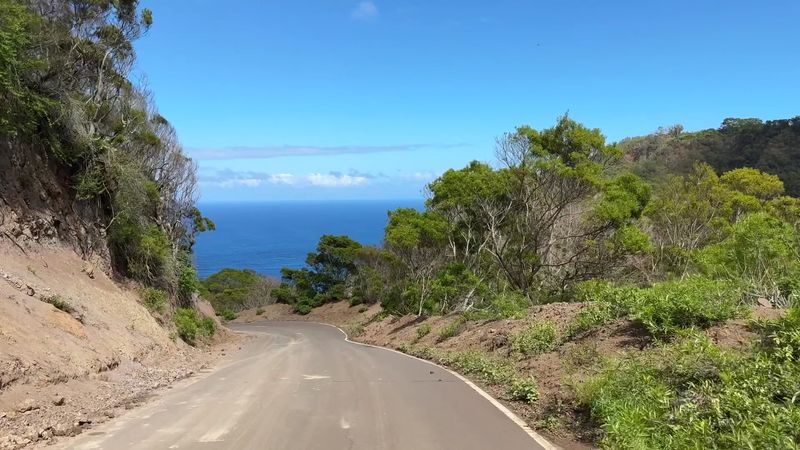
I never would have guessed that one of Hawaii’s oldest settlements would feel this untouched.
Halawa Valley, located on the eastern tip of Molokai, Hawaii, is thought to have been inhabited for well over 1,400 years. That history hangs in the air like mist after rain.
The valley stretches inland from a curved bay, framed by towering green cliffs. A freshwater stream runs through the middle, feeding the ancient taro fields that locals still tend today.
The connection to the land here is real and ongoing.
Reaching the twin waterfalls at the back of the valley requires a guided hike led by Native Hawaiian families from the community. That is not a suggestion, it is the respectful way to go.
The trail crosses the stream multiple times and passes through thick jungle.
Molokai itself is the least touristy of the main Hawaiian islands, and Halawa feels like the quietest corner of a quiet island. There are no resorts, no crowds, and no rush.
The valley rewards those who come with patience and genuine curiosity about Hawaiian culture and history.
2. Papohaku Beach, Maunaloa, Molokai
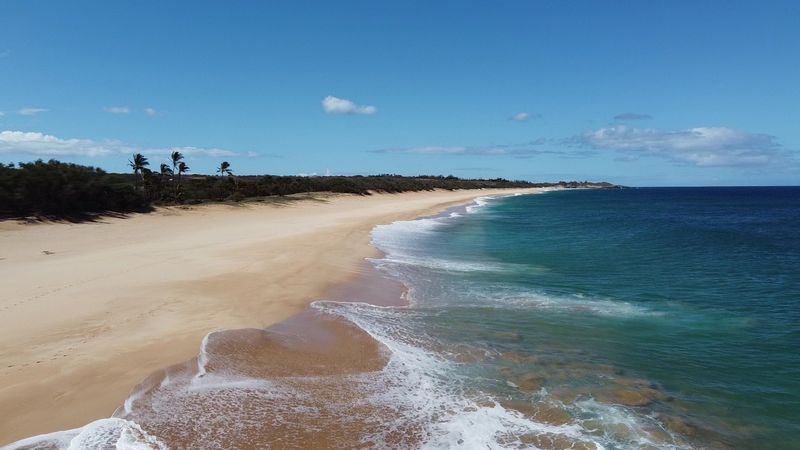
Trust me, a three-mile stretch of white sand with almost no one on it sounds made up, but Papohaku Beach is completely real.
Near Maunaloa on the western shore of Molokai, Hawaii, it is one of the longest white sand beaches in the entire state. The sheer scale of it is almost disorienting.
Most days you can walk the entire length and count the other people on one hand. The sand is pale and powdery, the kind that squeaks underfoot.
Ironwood trees line the inland edge, creating a natural windbreak.
Swimming here can be risky, especially in winter when strong currents and high surf roll in from the northwest. The beach is better suited for long walks, sunset watching, and simply sitting with the sound of the ocean.
It is a place for stillness rather than activity.
Camping is allowed at Papohaku Beach County Park, making it possible to wake up to that empty horizon two mornings in a row. Permits are required and easy to arrange in advance.
Watching the sun drop behind the ocean here, with zero light pollution and zero noise, is the kind of moment that resets something inside you.
3. Keahiakawelo (Garden Of The Gods), Lanai City
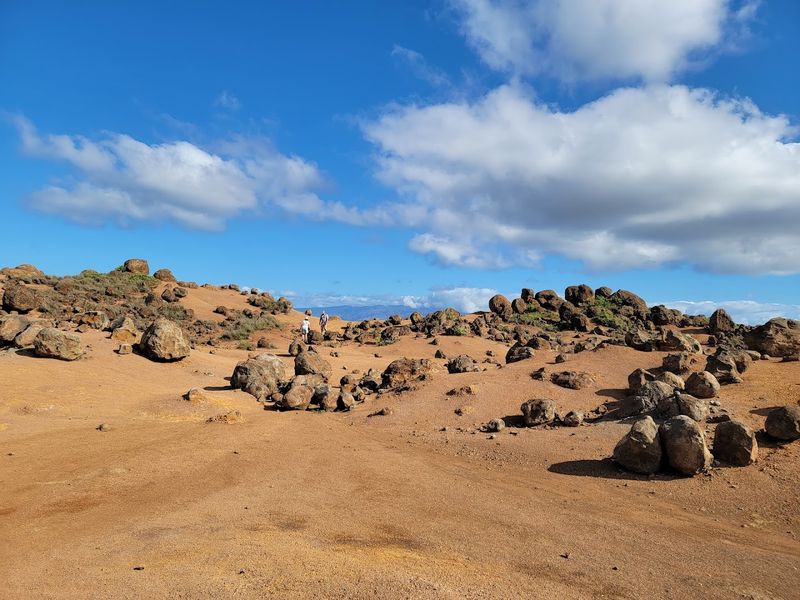
Can you believe that a landscape this strange exists on a Hawaiian island?
Keahiakawelo, commonly called the Garden of the Gods, sits in the upland interior of Lanai, Hawaii, just a short drive from Lanai City. It looks nothing like the rest of Hawaii.
Red, orange, and ochre boulders are scattered across a dry, windswept plain like something dropped from the sky.
Ancient Hawaiian legend says this area was the site of a spiritual contest between two kahuna, or priests, from Molokai and Lanai. The rocks are the remnants of that celestial battle, according to the story.
The best time to visit is either early morning or late afternoon, when the low sun turns the rocks into something almost glowing. Midday light flattens everything out and strips the drama from the scene.
Bring water, because there is no shade and the wind can be deceptive.
Getting here requires a four-wheel-drive vehicle, as the road from Lanai City is unpaved and rough in spots. That barrier alone keeps the crowds thin.
Standing among those formations as the sky shifts color is genuinely one of the more otherworldly experiences Hawaii has quietly been holding onto.
4. Polihale State Park, Waimea, Kauai
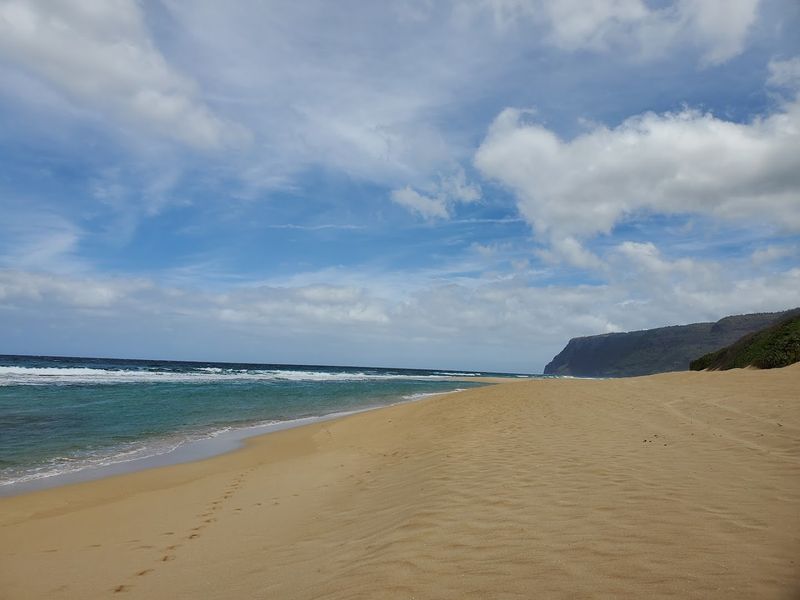
Believe me, the drive alone will make you question your choices, and then the beach will make you forget all of them.
Polihale State Park is tucked at the far western end of Kauai, Hawaii, beyond Waimea, at the end of a long, rutted dirt road through sugarcane fields. Getting here is a small adventure in itself.
The beach stretches for roughly seventeen miles and backs up against the southern end of the Na Pali Coast cliffs. That combination of golden sand, turquoise water, and dramatic cliffs is hard to process at first.
The scale is enormous and the solitude is real.
Swimming is generally not safe here due to strong shore breaks and rip currents. The park is better experienced as a place to walk, camp, and watch the sky.
Sunsets at Polihale are consistently spectacular, with the cliffs turning shades of purple and red as the light fades.
Camping is available with a permit, and spending the night means waking up to a beach that still belongs to the morning. Facilities are basic, so come prepared with everything you need.
The reward for all that effort is a stretch of coastline that feels genuinely untamed, which is increasingly rare anywhere in Hawaii.
5. Maha’ulepu Heritage Trail, Koloa, Kauai
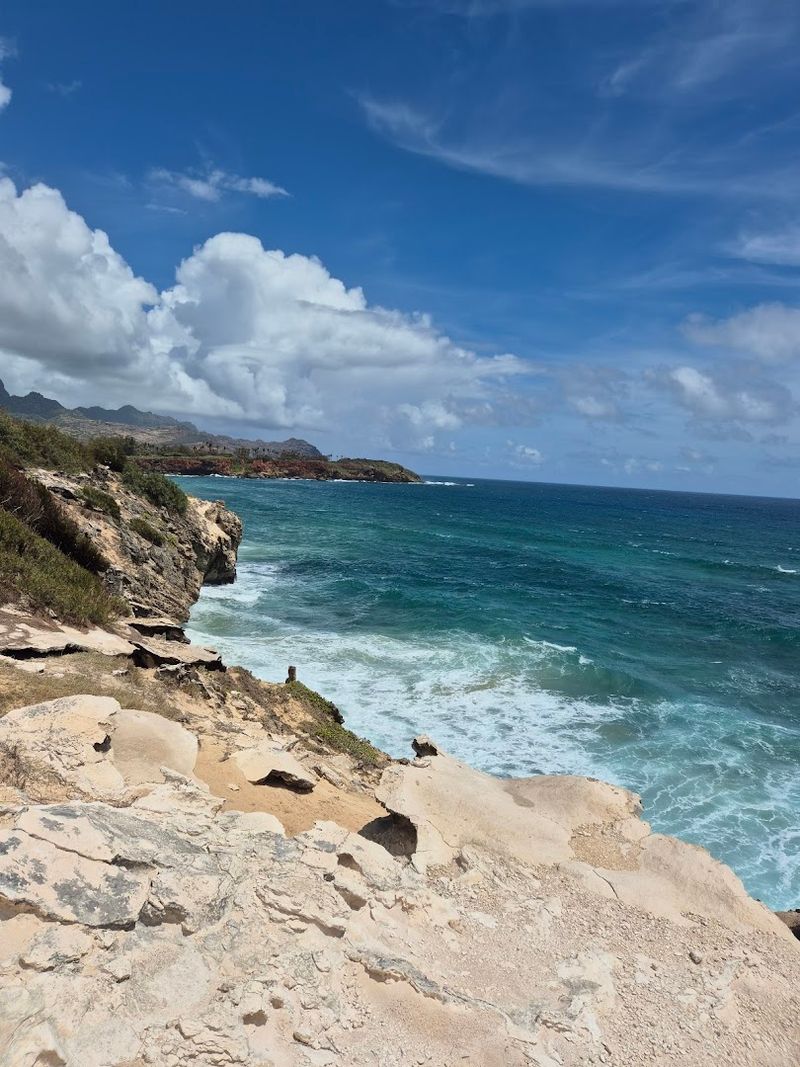
Who would have thought that one of Kauai’s most dramatic coastal walks would be so easy to miss?
The Maha’ulepu Heritage Trail begins near Koloa on the south shore of Kauai, Hawaii, and winds along a stretch of coastline that feels genuinely forgotten. The trailhead is easy to overlook if you do not know where to look.
The path follows the shoreline past sea caves, ancient sand dunes, and fossilized coral formations. Archaeological evidence found along this coast suggests Native Hawaiians lived here for centuries, and the land still carries that weight.
Interpretive signs along the trail explain the cultural and geological history in clear, accessible language.
The waves along this stretch crash hard against the rocky shore, sending spray into the air on windy days. It is not a swimming beach, but the drama of the water against the cliffs makes it one of the most photogenic walks on the island.
Morning light hits the red dirt cliffs in a particularly beautiful way. The full trail is about three miles one way, and the terrain is mostly flat with a few uneven rocky sections.
Sturdy shoes are helpful, and going early avoids both heat and the small number of other hikers who find their way here. The ending near Haula Beach is a quiet reward for finishing the walk.
6. Keanae Peninsula, Maui
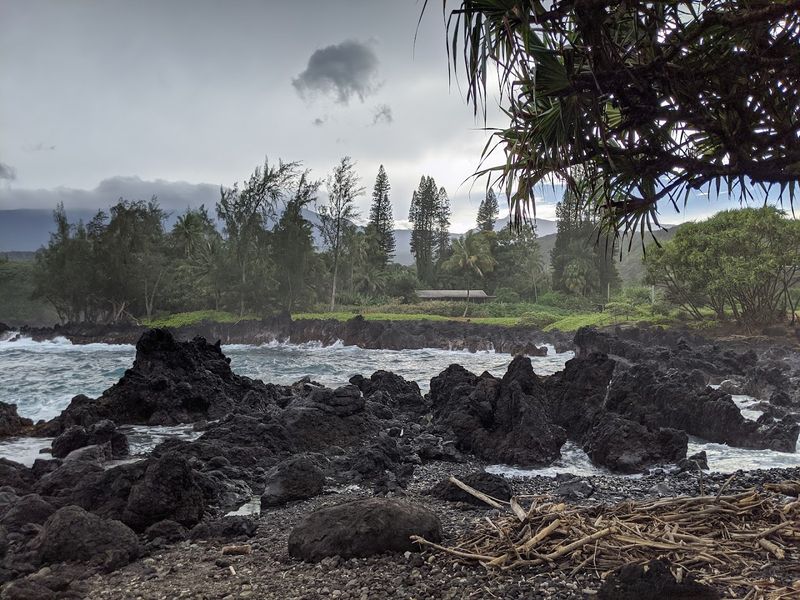
You might not believe me when I say there is a peninsula on Maui that still looks the way it did a hundred years ago, but Keanae is exactly that.
Along the Road to Hana near the village of Keanae on Maui, Hawaii, this small spit of land juts into the ocean on a shelf of ancient lava. The road to it is easy to miss if you blink.
Taro fields cover much of the flat interior, tended by a tight-knit community that has farmed this land for generations.
The Lanakila Ihiihi O Iehowa Ona Kaua Church, a small white coral stone church built in 1860, still stands near the water. That building alone tells a story worth slowing down for.
The coastline is raw lava rock, and the waves hit it hard and unpredictably. Standing near the edge gives a real sense of the ocean’s power.
There is a lookout point above the peninsula that offers a sweeping view of the entire lava shelf and the surrounding coastline.
A small stand near the road sells banana bread that locals have been making and passing down for decades. It is simple and honest, much like the peninsula itself.
Keanae is not a long stop, but it is the kind of short stop that ends up being the one you remember most from the whole drive.
7. Pololu Valley, Kapaau, Big Island
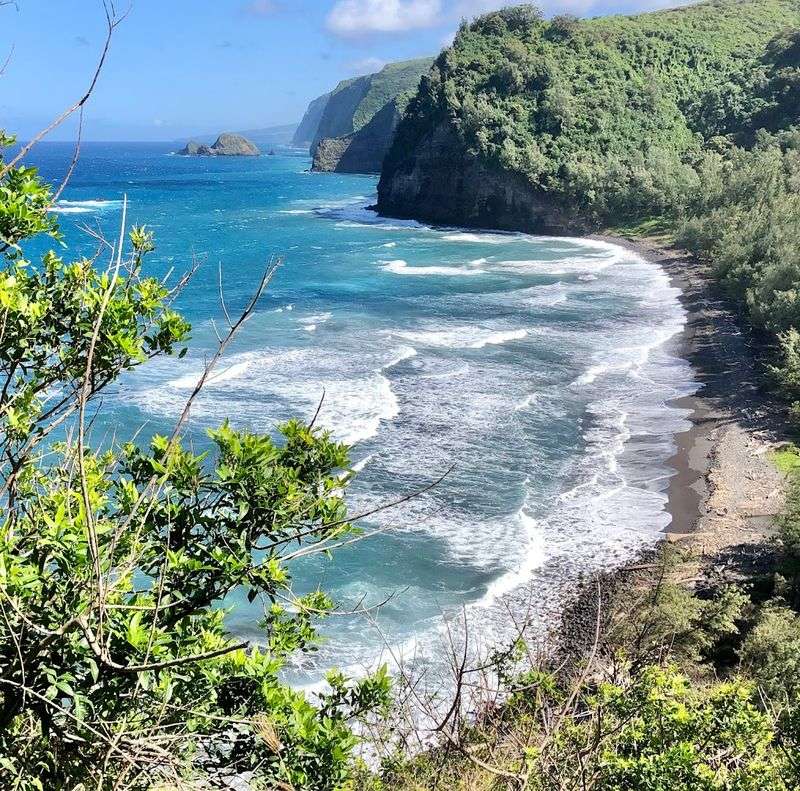
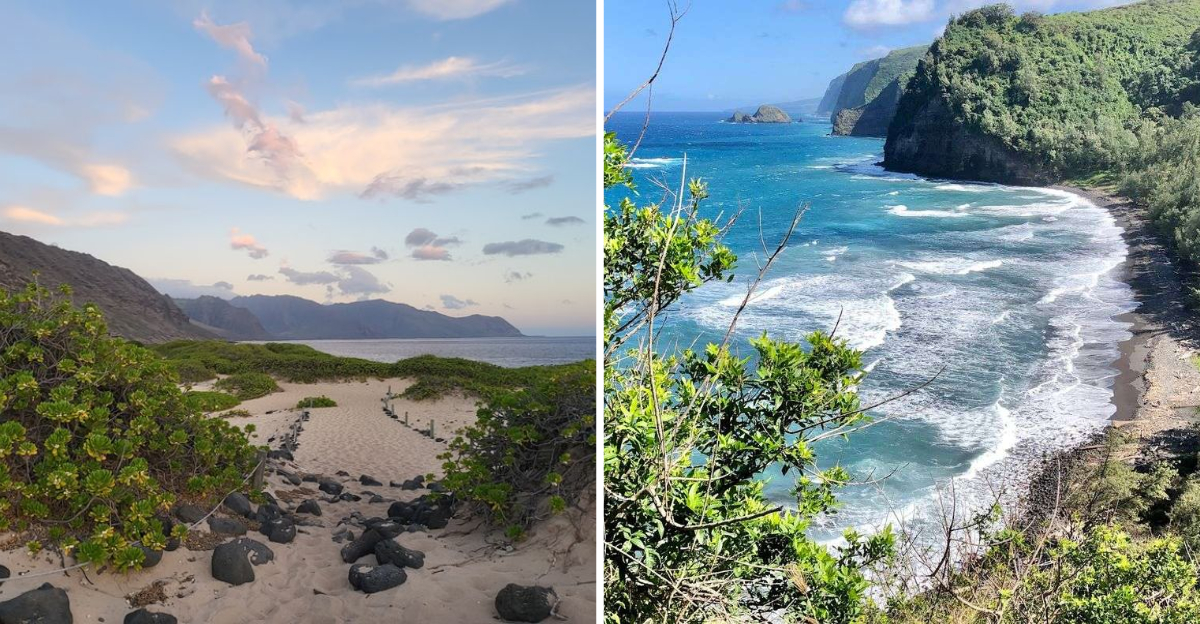
I must admit, standing at the Pololu Valley overlook near Kapaau on the Big Island of Hawaii made me stop talking mid-sentence.
The view down into the valley is the kind that interrupts thoughts. Green cliffs drop sharply to a dark sand beach, and the ocean churns below in deep blue and white.
The hike down to the valley floor takes about twenty minutes and is steep, especially on the way back up. The black sand beach at the bottom is not safe for swimming due to strong currents, but it is worth every step to stand on it.
The valley behind the beach is lush and quiet, with a stream running through the trees. Pololu is the first in a series of valleys that continue northwest along the Kohala Coast, each one more remote and inaccessible than the last.
Those further valleys require ropes and serious hiking experience to reach. Pololu is the approachable entry point into that wild stretch of coastline.
The overlook parking area is small and fills up on weekends, so arriving early on a weekday is ideal. The surrounding Kohala region is one of the least visited parts of the Big Island, which adds to the sense of quiet.
8. Olivine Pools, Kahakuloa, Maui
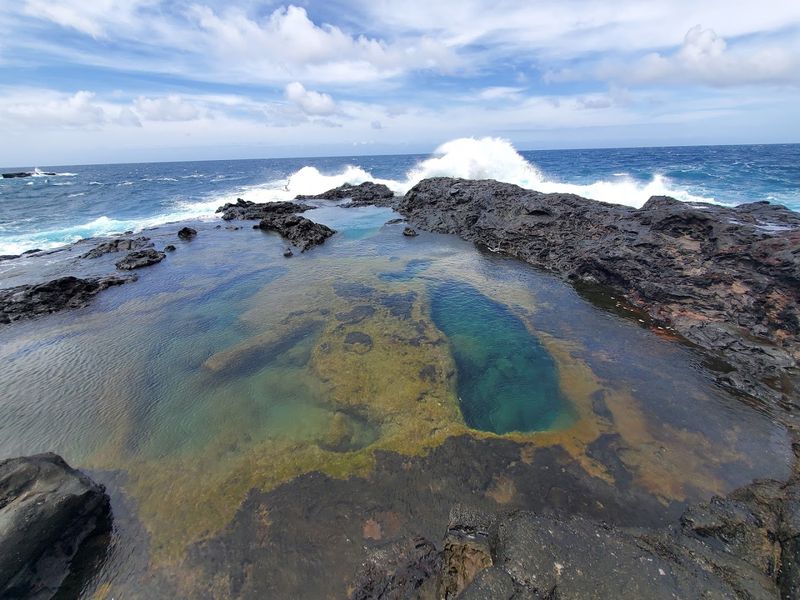
I know, right, it sounds too good to be true: natural pools carved into black lava rock, filled with clear water, on a rugged stretch of Maui coastline almost nobody talks about.
The Olivine Pools are located near Kahakuloa on the remote northwest coast of Maui, Hawaii, along a narrow road that most rental car agreements technically prohibit. The drive itself is part of the story.
The pools form in depressions in the lava shelf, filled and refreshed by wave action from the open ocean.
They are beautiful in a raw, unpolished way that feels entirely different from the manicured beaches on the other side of the island. The black rock, clear water, and dramatic cliffs create a scene that photographs cannot quite capture.
Safety is a genuine concern here. Rogue waves are a real hazard along this coast, and the rocks are slippery.
Watching the ocean for a few minutes before approaching the pools is always a smart move, and never turning your back on the water is a basic rule.
The area around Kahakuloa is one of the last places on Maui where the landscape and community feel genuinely off the tourist circuit.
A small roadside stand near the village sometimes has fresh fruit and snacks for the drive. The Olivine Pools reward the cautious and curious traveler with something that feels quietly extraordinary.
9. South Point (Ka Lae), Naalehu, Big Island
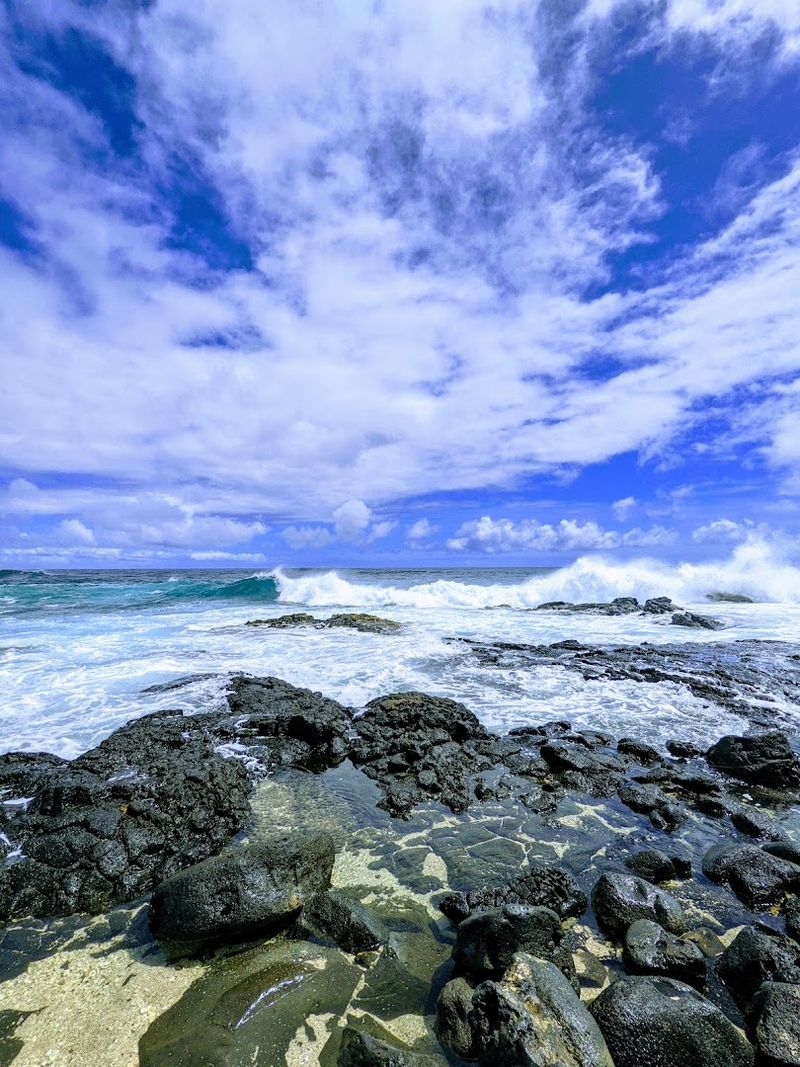
Doesn’t it seem remarkable that the southernmost point in the entire United States is a windswept cliff on the Big Island of Hawaii?
Ka Lae, also known as South Point, sits near Naalehu on the southern tip of the Big Island, and it is as far south as you can go in America. The wind here is nearly constant and fierce.
The area has been continuously inhabited for roughly 1,500 years, making it one of the oldest known settlement sites in Hawaii. Ancient canoe moorings carved into the rocks are still visible along the cliff edge.
That detail alone makes the place feel layered with time.
The famous Green Sand Beach, also called Papakolea, is a few miles east of Ka Lae and requires a three-mile walk each way across dry, windy terrain.
The sand gets its color from olivine crystals eroded from a nearby cinder cone. It is one of only a handful of green sand beaches in the world.
The road to South Point is paved but narrow, and the final stretch passes through wind turbines that hum steadily in the breeze. There are no services, no shops, and no crowds most days.
Standing at the cliff edge and looking south toward Antarctica, with nothing but open ocean ahead, is a genuinely clarifying experience.
10. Ka’ena Point State Park, Waialua, Oahu
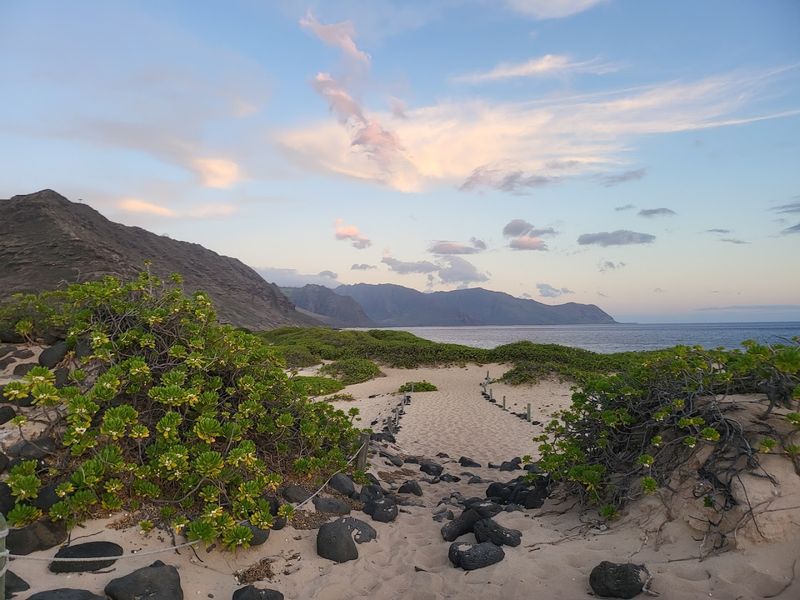
Would you ever think that Oahu, the most visited island in Hawaii, has a corner so wild that it requires a two-mile hike just to reach it?
Ka’ena Point State Park sits at the northwestern tip of Oahu near Waialua, Hawaii, and it is genuinely one of the most remote-feeling stretches of coastline on the island.
The two access trails, one from the north shore side and one from the west side, both require leaving the car behind and walking.
The point itself is home to a protected seabird colony, including the Laysan albatross, which nests here from November through July. A low fence surrounds the nesting area to keep both birds and people safe.
Watching an albatross land after a long ocean flight is a slow, graceful thing that is hard to look away from.
Hawaiian monk seals, one of the most endangered marine mammals in the world, haul out on the rocks here regularly.
Keeping a respectful distance is both legally required and the right thing to do. The seals seem completely unbothered by the ocean crashing around them.
The trail from the Waialua side begins at the end of Farrington Highway and follows an old railroad bed along the coast.
The terrain is rocky and exposed, so sun protection and water are essential. Ka’ena Point is the kind of ending to a hike that makes the whole effort feel like it was always worth it.