These 10 Western North Carolina Natural Wonders Look Almost Too Stunning To Be Real
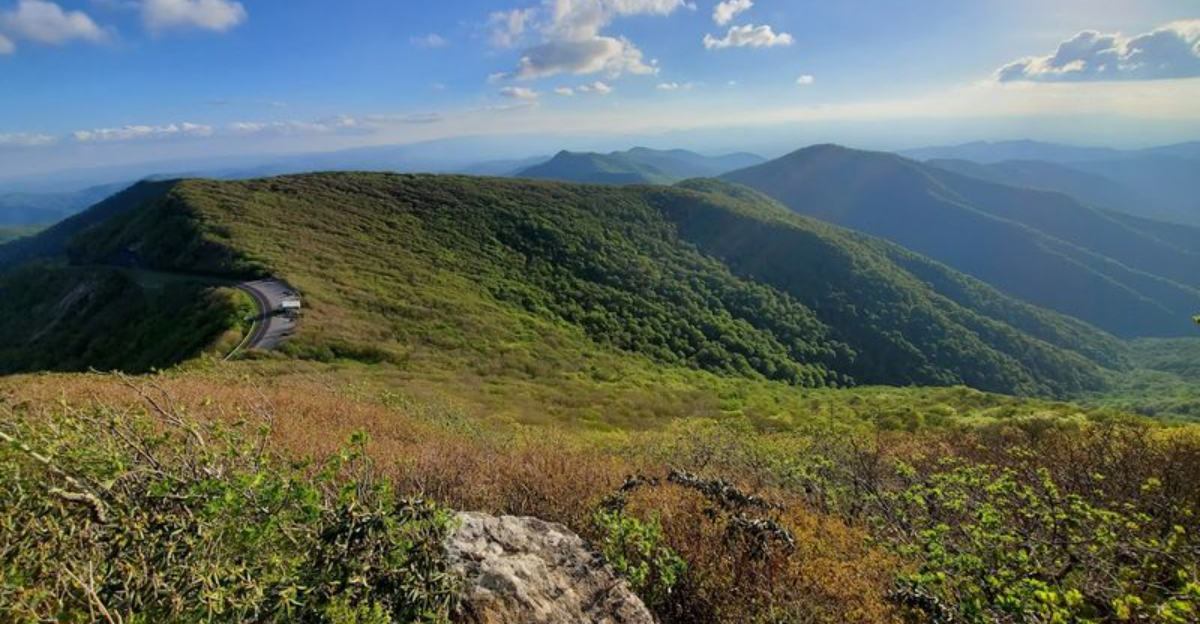
Nature gets a little unreasonable in this part of the mountains, like it decided subtlety was for flatter places.
Western North Carolina has the kind of scenery that makes people pull over mid-conversation and forget what they were saying.
The views do not politely wait for your attention. They grab it.
One bend in the road can feel peaceful, then the next suddenly looks dramatic enough to make your camera panic.
That is why these natural wonders deserve more than a quick glance on a map.
They turn a regular trip into a reminder that the world can still completely outdo your expectations.
Come ready to slow down, look longer, and let the mountains make a very strong argument for staying one more day.
1. Linville Gorge Wilderness
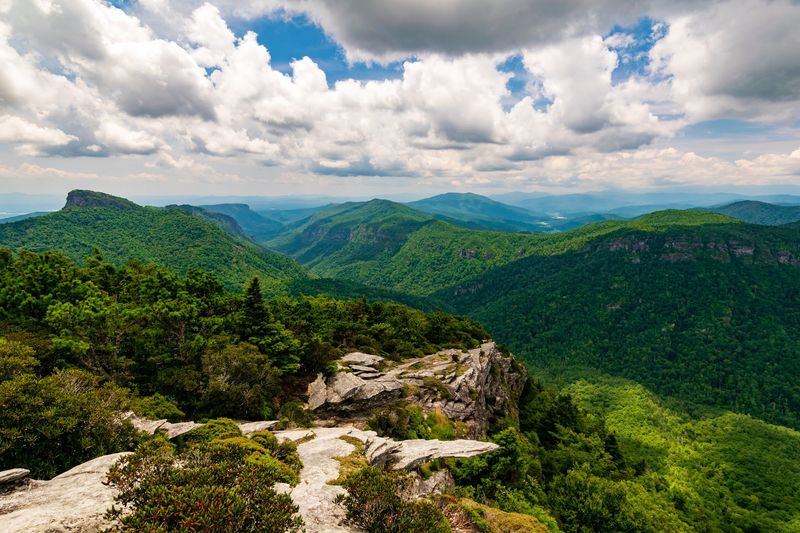
Rugged does not even begin to cover Linville Gorge Wilderness.
The Forest Service describes this Pisgah National Forest landscape as a steep, rocky gorge shaped by Jonas Ridge on one side and Linville Mountain on the other. The Linville River drops about 2,000 feet into the valleys below.
That kind of scale explains why people call it the “Grand Canyon of the East,” even if the place has its own distinctly Appalachian personality. Trails here are not casual little loops with handrails and snack stops every few minutes.
They can be rocky, steep, primitive, and demanding, especially once hikers move away from the more popular overlooks and down toward the river.
Cliffs, dense hardwood forest, hidden campsites, rushing water, and sweeping views create a landscape that feels raw compared to many eastern destinations. The gorge also feels much larger in person than it appears on a map.
Spring brings fresh green growth and wildflowers along ledges, while fall turns the walls into a layered sweep of orange, gold, and red. Linville Falls makes a good first stop for newcomers, but the wilderness beyond asks for more preparation.
Anyone heading deep into the gorge should carry a real map, plenty of water, and enough humility to turn around when the mountains say so.
2. Grandfather Mountain
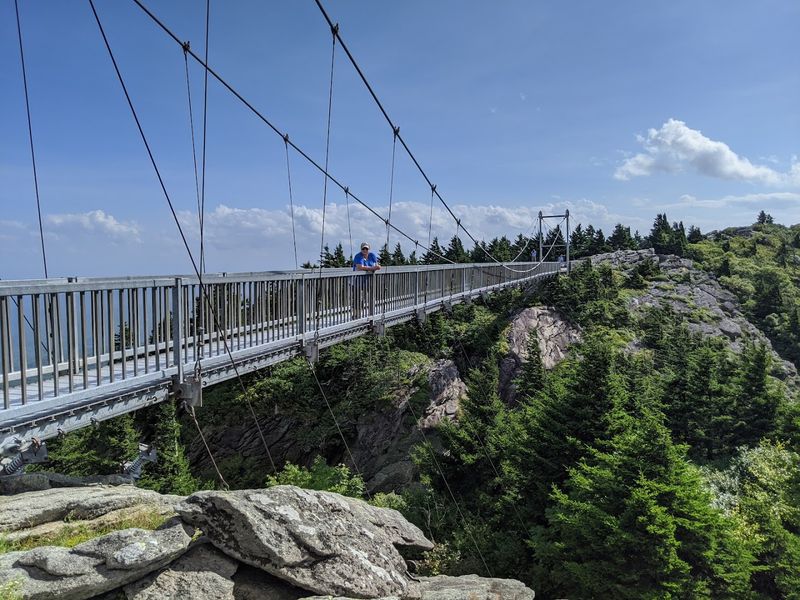
Wind, rock, and sky all seem louder on Grandfather Mountain.
At 2050 Blowing Rock Highway in Linville, the park entrance opens the door to one of the region’s best-known high-country experiences. Visitors find the Mile High Swinging Bridge, wildlife habitats, trails, and a nature center.
The bridge gets most of the attention for good reason. Crossing it feels like stepping into thin air, with mountain ridges rolling outward and the drop below adding just enough drama to make every photo look earned.
Still, Grandfather Mountain is more than one brave walk across a bridge. Its high-elevation environment supports rare plants, changing weather, rocky trails, and sweeping views that can shift from crystal clear to cloud-wrapped in minutes.
Families can stay on the easier side of the attraction, exploring animal habitats and learning exhibits. More experienced hikers can take on tougher trails that feel much wilder than the polished entrance suggests.
Golden hour can make the ridgelines glow, but fog may be even more memorable, turning the bridge and rocks into something moody and almost unreal.
Grandfather Mountain works because it delivers spectacle without losing its natural sharpness. It is scenic, educational, windy, dramatic, and just intimidating enough to make visitors remember where they are standing.
3. Mount Mitchell State Park
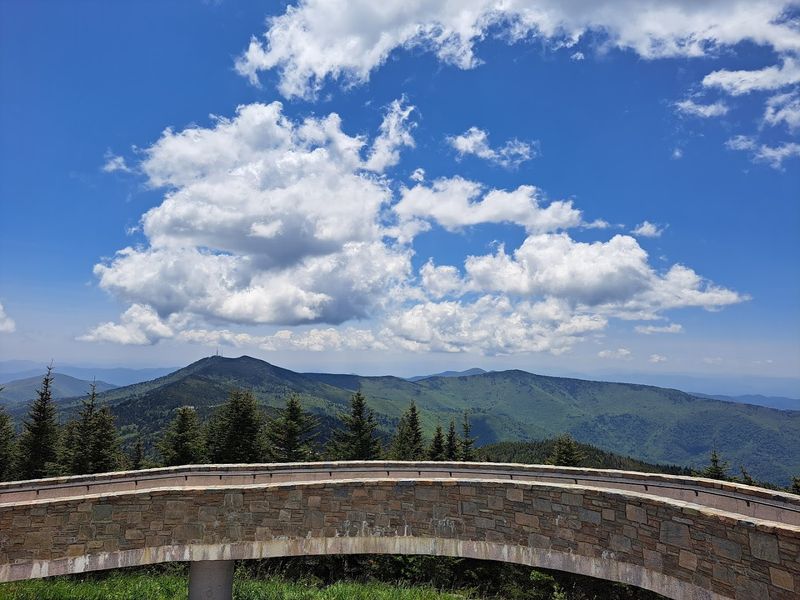
Clouds often treat Mount Mitchell like a place to gather, and that only makes the summit feel more powerful. At 6,684 feet, Mount Mitchell is the highest point east of the Mississippi River, and North Carolina State Parks notes that its observation deck offers sweeping mountain views on clear days.
The word “clear” does a lot of work up here because the weather can change quickly. One moment, the ridges stretch out in layered blue waves.
The next, fog rolls across the summit and turns the spruce-fir forest into something closer to New England or Canada than what many people expect from the South. That cool, high-elevation ecosystem is a major part of the wonder.
Trails range from short paved paths near the summit to much harder routes that test serious hikers, and even a simple visit can feel monumental because the air, trees, and temperature are so different from the valleys below.
A jacket is smart even in summer, especially for anyone who assumes July in North Carolina cannot possibly feel chilly.
Picnic areas, exhibits, and nearby Blue Ridge Parkway access make the park easy to build into a bigger mountain day. The summit view is the headline, but the real magic comes from standing in a rare Southern landscape that feels lifted into another climate entirely.
4. Chimney Rock State Park
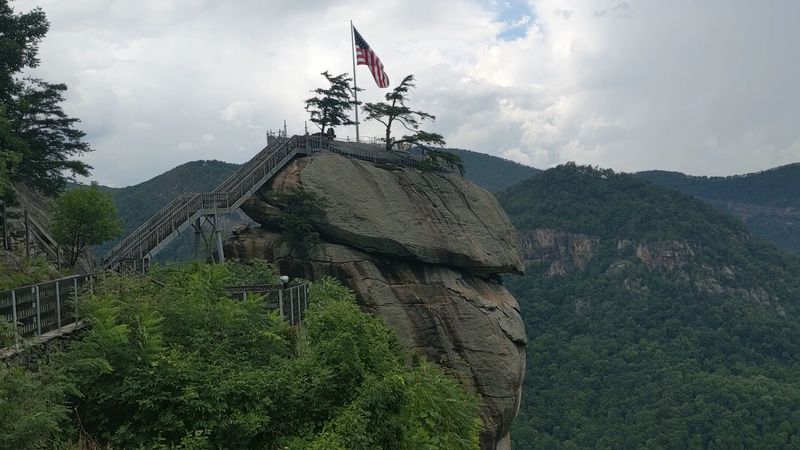
Stone does the showing off at Chimney Rock State Park, where one dramatic formation rises above Hickory Nut Gorge with the confidence of a natural lookout tower.
From the park’s famous vantage point at Chimney Rock State Park, visitors get sweeping views over Lake Lure, the Rocky Broad River valley, and the surrounding Blue Ridge slopes.
Nearby, Hickory Nut Falls adds a completely different kind of spectacle, dropping water through a dramatic cliffside setting that contrasts the wide mountain panorama.
The park lists Hickory Nut Falls Trail as a 1.4-mile round trip hike that usually takes 45 minutes to an hour, and its waterfall feature describes Hickory Nut Falls as 404 feet of beauty.
That combination makes this one of the easiest places in Western North Carolina to pair a huge overlook with a major waterfall in the same visit.
The main rock view feels bold and open, while the falls trail slips into forest before arriving at the base of the tall cascade. Families appreciate that the park offers different levels of effort, from more accessible viewing options to trails with stairs, rocks, and climbs.
Film fans may recognize the area’s cinematic quality, but no screen version fully prepares visitors for the real gorge view. Chimney Rock feels polished enough for a classic day trip and wild enough to keep its edge.
The cliffs, river, lake, and waterfall all seem to be competing for the most dramatic angle.
5. Whitewater Falls
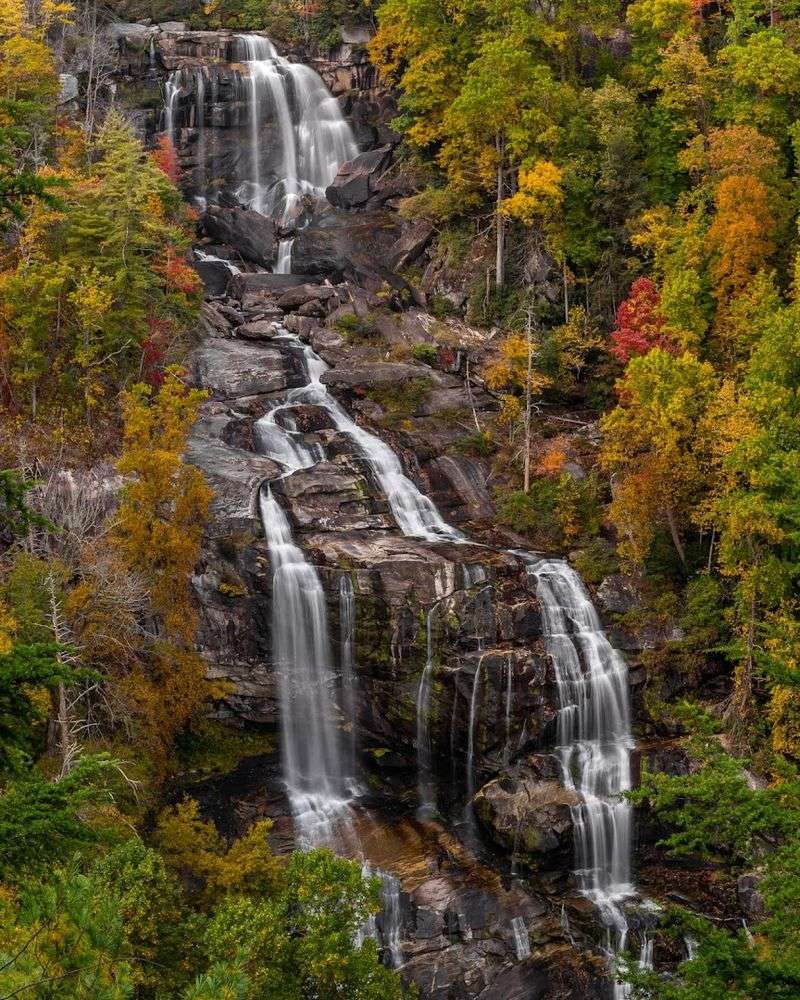
Water does not politely fall at Whitewater Falls; it drops with authority. The Forest Service identifies Upper Whitewater Falls in North Carolina as a 411-foot plunge and calls it the highest waterfall east of the Rockies.
That number sounds impressive on paper, but the overlook makes it feel much larger because the water spills down through a rugged escarpment landscape that still feels wild around the edges.
The short walk from the parking area helps make the view accessible for many visitors, though the stairs to the lower overlook add effort and the terrain beyond official viewpoints should be treated seriously.
This is not a waterfall for scrambling toward the base or testing slippery rocks. The power of the water and the steepness of the area make staying on designated paths the smart choice.
Ferns, moss, mist, and deep green forest give the scene a lush quality, especially after rain, while morning light can soften the entire gorge and make the falling water glow.
Whitewater Falls also sits in a broader waterfall-rich region near Cashiers, which makes it tempting to pack too many stops into one day.
Still, this one deserves time on its own. The scale, sound, and steep mountain setting give it the kind of presence that makes people lower their voices without realizing it.
6. Dry Falls And Cullasaja Gorge
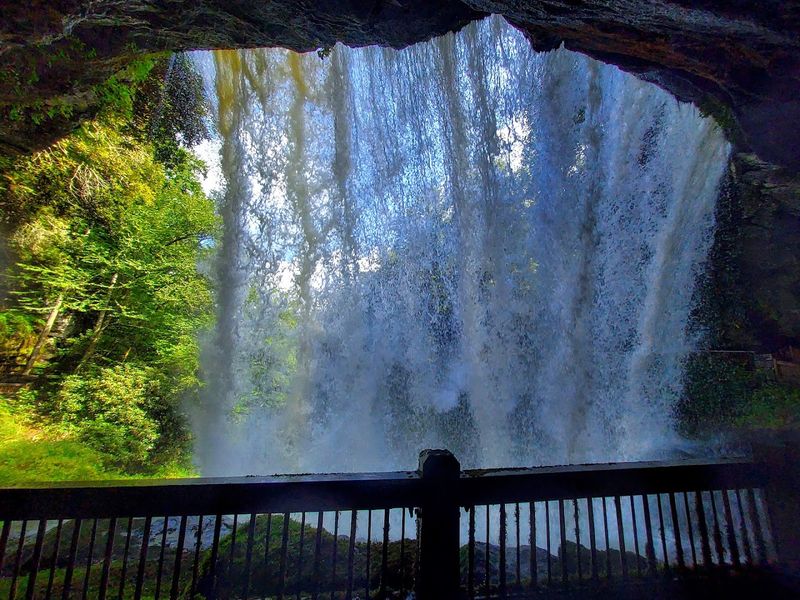
Walking behind a waterfall sounds like something a travel writer would exaggerate, but Dry Falls lets visitors do exactly that.
Near Highlands, Dry Falls drops about 75 feet over a cliff inside Nantahala National Forest. A short path leads behind the curtain of water, letting visitors feel the rush of the falls from the back without getting completely soaked.
Spray can still win during wetter periods, which is honestly part of the fun. Dry Falls is only one piece of the bigger Cullasaja Gorge experience, though.
The drive along U.S. 64 curves through a narrow, dramatic corridor carved by the Cullasaja River. Cliffs, forest, roadside cascades, and flashes of water keep appearing in quick succession, making the route feel longer and more cinematic than it really is.
Bridal Veil Falls and other nearby waterfall stops add to the sense that this stretch of highway is almost showing off.
Dry Falls works especially well because the access is short, the view is immediate, and the perspective is unusual enough to thrill people who have already seen plenty of waterfalls.
Autumn may be the most photogenic season, when foliage burns bright along the gorge walls, but summer brings lush green growth and strong water sounds.
Few short stops in Western North Carolina give such a memorable payoff with so little walking required.
7. Looking Glass Rock
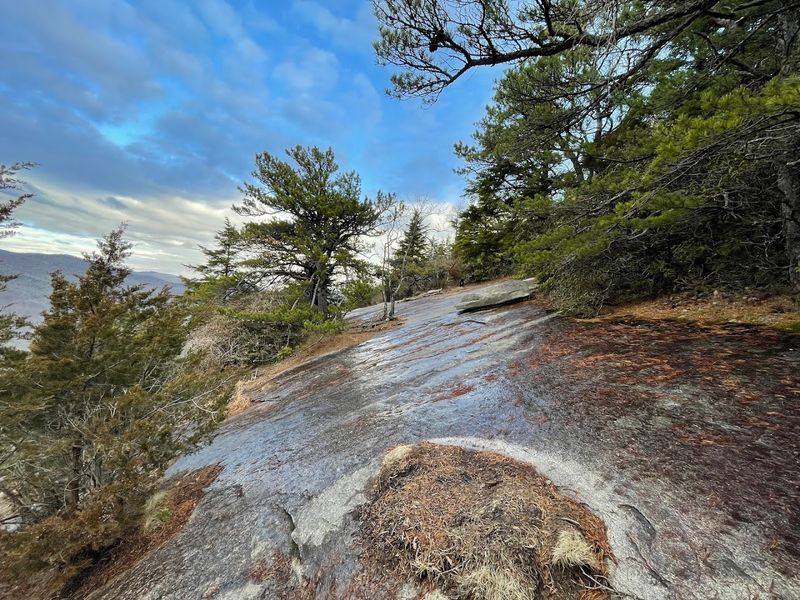
Granite gives Looking Glass Rock its power. This huge dome rises above Pisgah National Forest near Brevard, and the name comes from the way water and ice can make its face shine like a mirror in the right conditions.
The Forest Service lists the Looking Glass Rock Trailhead in Pisgah Forest as a year-round site, while hiking guides describe the trail as a popular climb off Forest Road 475 near the Pisgah Center for Wildlife Education area.
The hike is commonly treated as a roughly six-mile round trip with a steady climb, so this is not the place to underestimate the effort just because the destination looks smooth from far away.
Switchbacks, forest shade, rhododendron, and long uphill stretches build toward a summit area with broad views over the surrounding canopy and ridges.
Rock climbers know Looking Glass for a different reason, because the sheer granite faces offer classic routes that have helped make the Brevard area a major climbing destination.
Hikers should stay back from exposed edges at the top, especially when rock is wet or visibility is poor. The mountain looks serene from a distance, but it feels much bigger once you are on it.
Looking Glass Rock earns its place here because it is both landmark and challenge, a natural sculpture that can be admired from below or climbed with a little sweat and patience.
8. Craggy Gardens
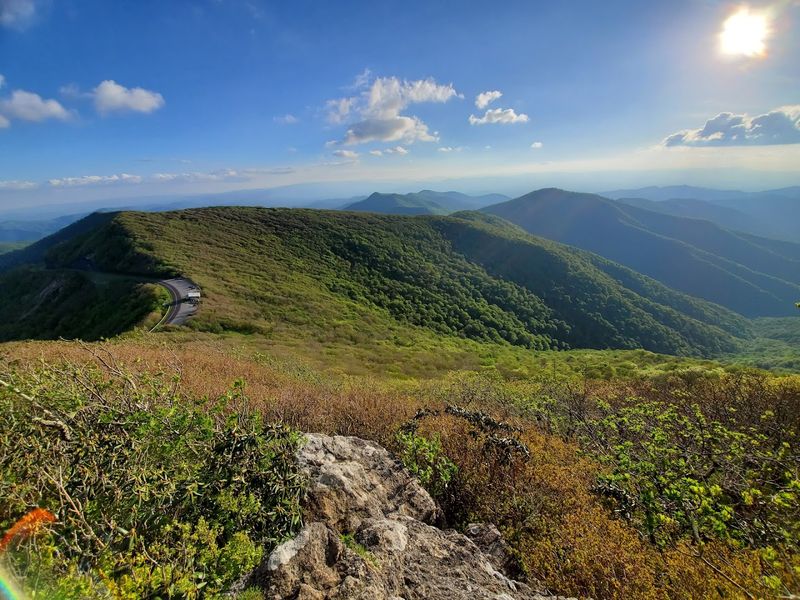
Color makes Craggy Gardens famous, but the mood keeps people coming back even outside peak bloom.
The Blue Ridge Parkway identifies the Craggy Gardens area around Mileposts 364.4 to 367.6 and notes that generations of visitors have come in June to see the pink and purple Catawba rhododendron display.
The National Park Service also describes colorful rhododendron and misty mountain peaks as the main draw, with a visitor center and hiking trails in the area. During bloom season, the slopes can look almost unreal, with bright flowers scattered through high-elevation greenery and rocky balds.
Outside that window, Craggy still delivers open views, twisted trees, shifting fog, and a windswept character that feels different from lower Blue Ridge stops.
The Craggy Pinnacle Trail is short but rewarding, climbing to panoramic overlooks that make the surrounding ridges look endless on clear days.
Early morning fog can turn the area soft and mysterious, while sunset brings warmer light across the mountaintops. Parking can be challenging during rhododendron season, especially on weekends, so patience helps.
Craggy Gardens is not just a pretty flower stop. It is one of those high places where weather, blooms, rock, wind, and long views all seem to arrive with their own personalities.
9. Joyce Kilmer Memorial Forest
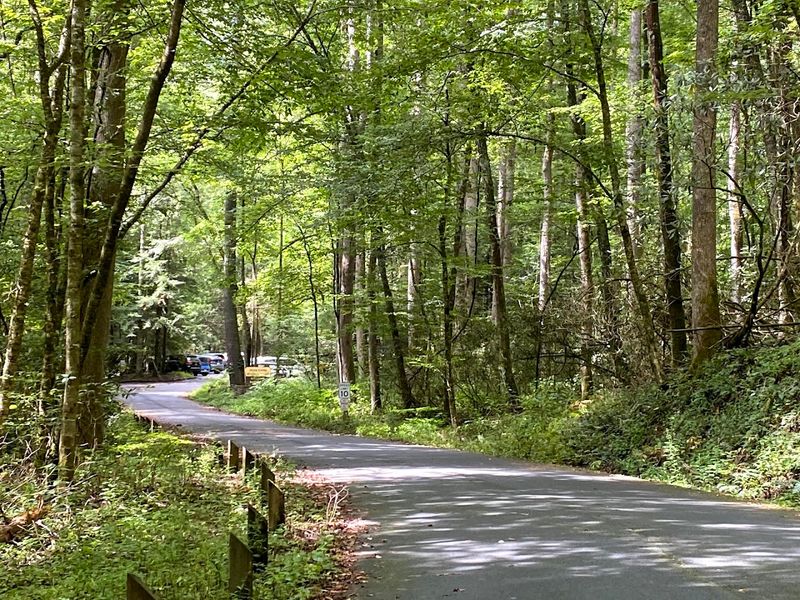
Ancient trees change the volume of a place.
Near Robbinsville, Joyce Kilmer Memorial Forest stands as one of the region’s rare old-growth cove hardwood forests. The Forest Service notes it can only be explored on foot via a two-mile loop trail leading through towering, ancient trees.
The forest feels different from a scenic overlook because its wonder is vertical, close, and quiet.
Instead of a single sweeping view, visitors find massive trunks that feel almost unreal, tall canopies, and dim green light filtering through the forest. Ferns, moss, and quiet trails create the sense of a landscape allowed to grow old with dignity.
Tulip poplars, oaks, hemlocks, and other hardwoods create a layered forest that can feel cool even on warm days, especially along the shaded loop. The place honors poet Joyce Kilmer, best known for “Trees,” but the forest does not need poetry to make its point.
It makes it through scale and silence. The trail is gentle compared with many mountain hikes, though roots and damp ground still deserve attention.
Picnics near the trailhead, slow walking, and a willingness to look up often make the visit better than rushing through for mileage.
Joyce Kilmer Memorial Forest belongs on this list because old growth is its own kind of natural wonder, and Western North Carolina has very few places where that feeling lands so strongly.
10. Panthertown Valley Backcountry Area
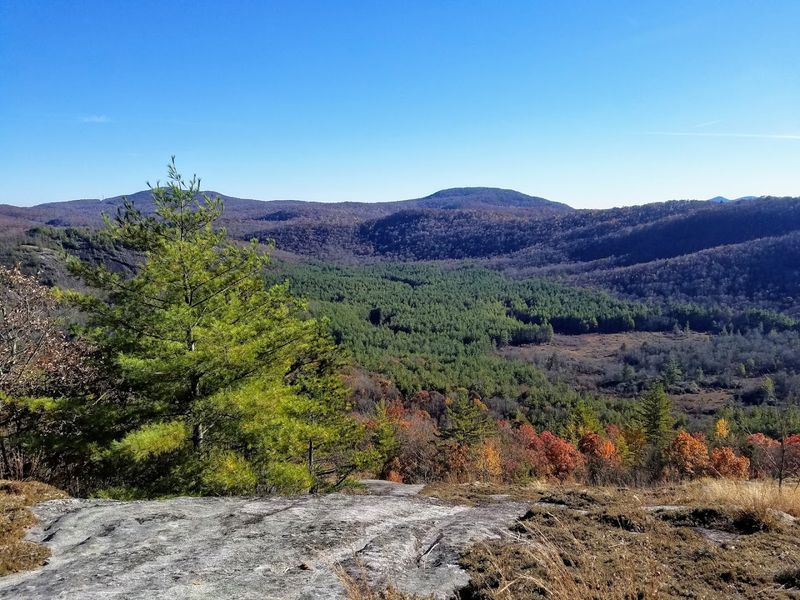
Wild variety makes Panthertown Valley feel much bigger than one destination. Friends of Panthertown describes the area as having a U.S.
Forest Service designated trail system with more than 30 miles of rugged, primitive, non-motorized backcountry trails, while local guides place it in Nantahala National Forest between Lake Toxaway and Cashiers.
That trail network winds through a landscape of waterfalls, broad valleys, streams, bogs, rock faces, forest, and granite domes that help explain why some people call it the “Yosemite of the East.”
The nickname is bold, but Panthertown has enough drama to survive the comparison in its own Appalachian way.
Schoolhouse Falls is one of the most beloved stops, especially in warm weather, but the valley rewards people who go beyond one waterfall and understand the layout before wandering too far. Trails can be confusing, signage can feel sparse to first-time visitors, and cell service should not be trusted as a guide.
A map, compass or downloaded navigation, sturdy shoes, and backcountry awareness matter here. Backpackers, hikers, mountain bikers, and equestrians all use parts of the trail system, so sharing the space respectfully is part of the experience.
Panthertown feels stunning because it is not overly polished. It still asks visitors to pay attention, and that makes its waterfalls, cliffs, and quiet valleys feel earned.