11 Hidden Natural Wonders In West Virginia Worth The Drive
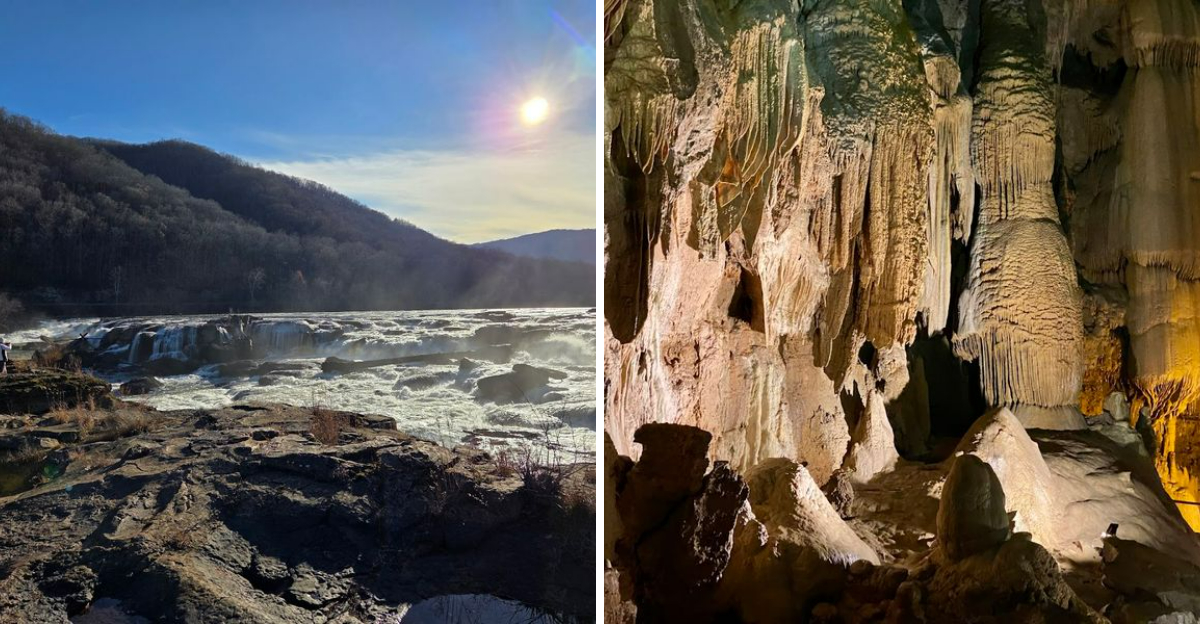
Most people drive through West Virginia and think they have seen it. They have not.
Beneath the ridgelines and deep inside the hollows, this state keeps secrets that even lifelong residents have never found. Ancient caverns that swallow sound.
Bogs that look like they belong on another continent. Rock formations so strange they stop you mid-trail.
These are not places you stumble onto by accident. You have to go looking.
West Virginia rewards the curious like few states can, and the eleven wonders on this list prove it. Clear your weekend, fill your tank, and bring someone worth sharing a view with.
What waits out there will genuinely surprise you.
1. Blackwater Falls State Park
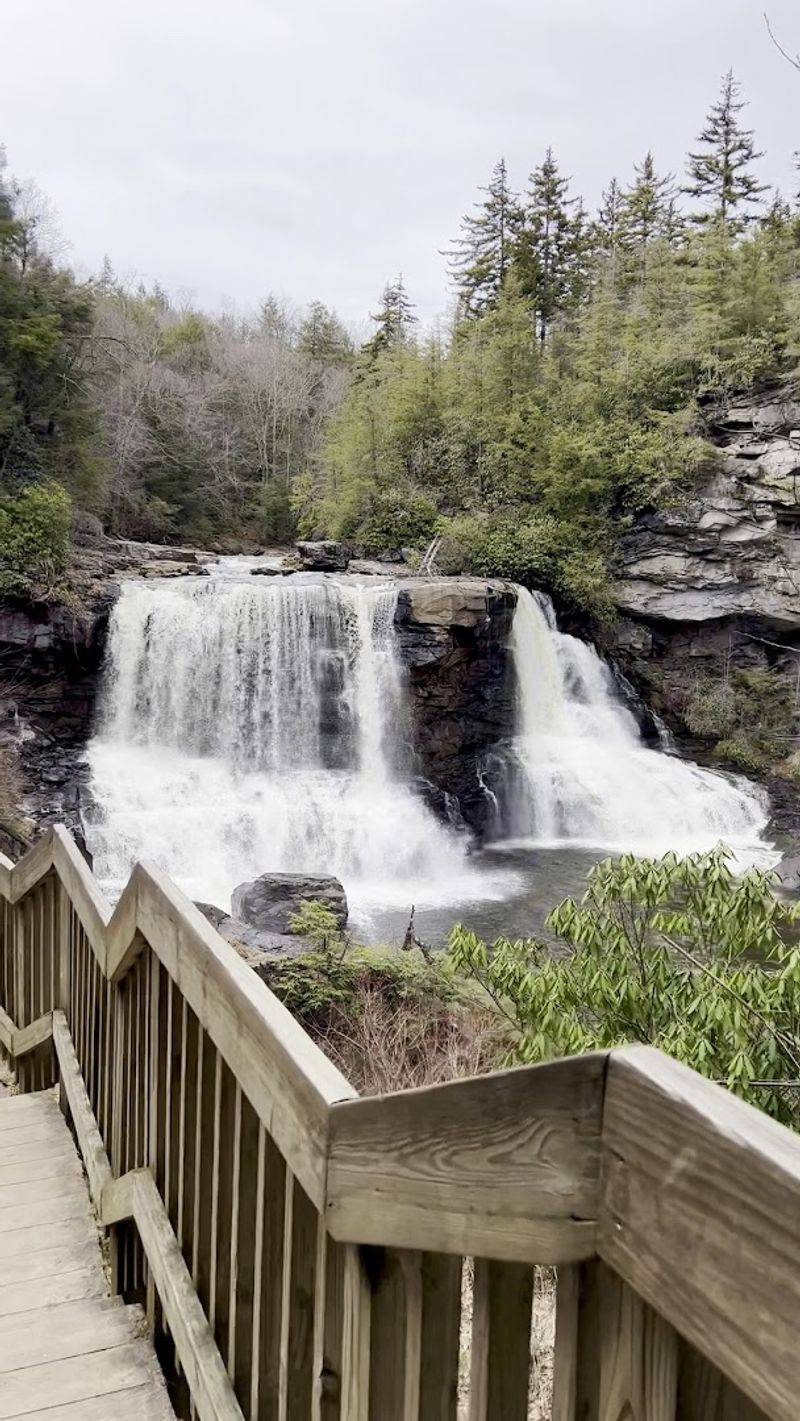
Few waterfalls in the eastern U.S. stop people dead in their tracks quite like this one. The amber-colored water tumbles five stories over ancient rocks, stained beautifully by tannins from fallen hemlock needles.
You smell the mist before you even see the falls.
A short set of stairs leads you right to the viewing platform. The view hits differently depending on the season.
Winter brings ice formations that look almost unreal, while fall turns the surrounding forest into a blaze of color.
The park at 1584 Blackwater Lodge Rd, Davis, WV 26260 offers cabins, camping, and trails for all skill levels. The Gentle Trail is fully accessible and worth every step.
Cross-country skiing is popular here when snow arrives.
Beyond the main falls, Elakala Falls and Lindy Point Overlook reward hikers who explore further. Each trail leads somewhere genuinely surprising.
This is one of those parks that feels bigger every time you visit, no matter how many times you return.
2. Dolly Sods Wilderness
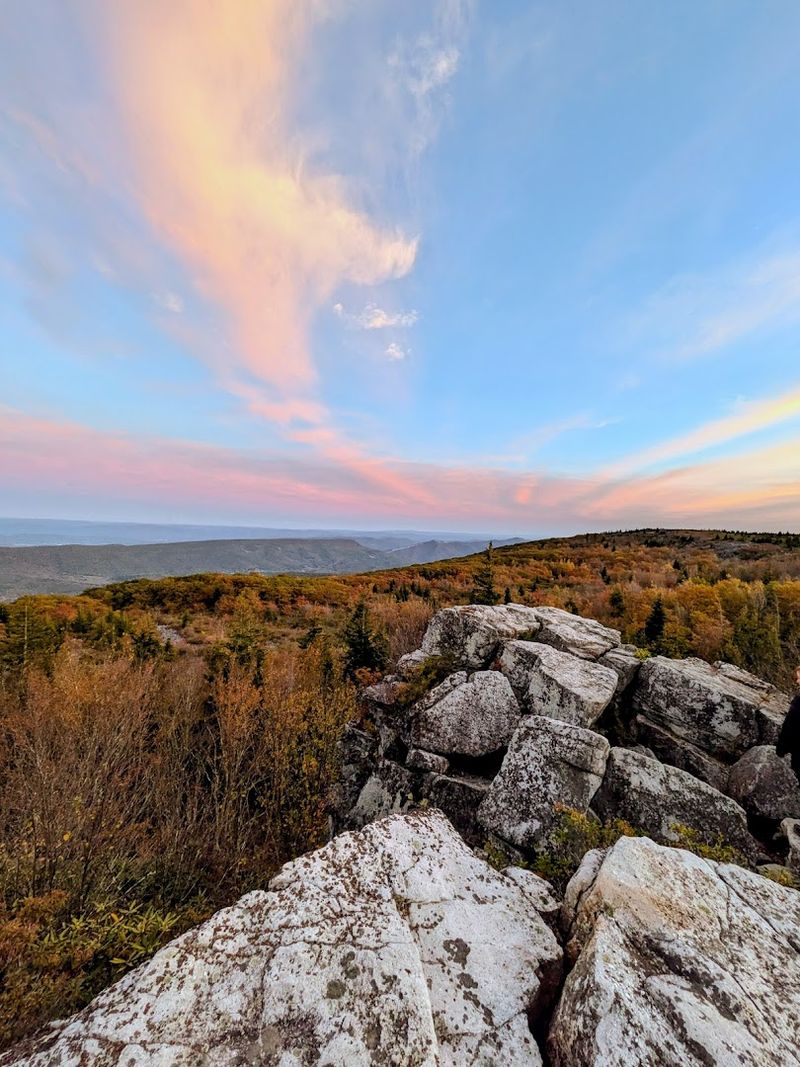
Standing on Dolly Sods feels more like standing in northern Canada than the mid-Atlantic. This high-elevation plateau sits above 4,000 feet and hosts ecosystems you would never expect this far south.
Wind sculpts the red spruce trees into wild, twisted shapes.
Carnivorous sundew plants grow in the boggy sections. Blueberries ripen along the open barrens in late summer.
Black bears wander freely through the area, so keeping a respectful distance is simply part of the experience.
The wilderness area is located off Forest Road 19 near the Canaan Valley. No facilities, no paved roads, just pure backcountry terrain.
Trails range from easy bog walks to rugged overnight routes that test even experienced hikers.
Fog rolls in fast up here, so always carry a map and a compass. Cell service is basically nonexistent.
The reward for navigating the challenge is an almost supernatural sense of solitude that very few places east of the Rockies can deliver. Dolly Sods is genuinely unlike anywhere else.
3. Seneca Rocks Discovery Center
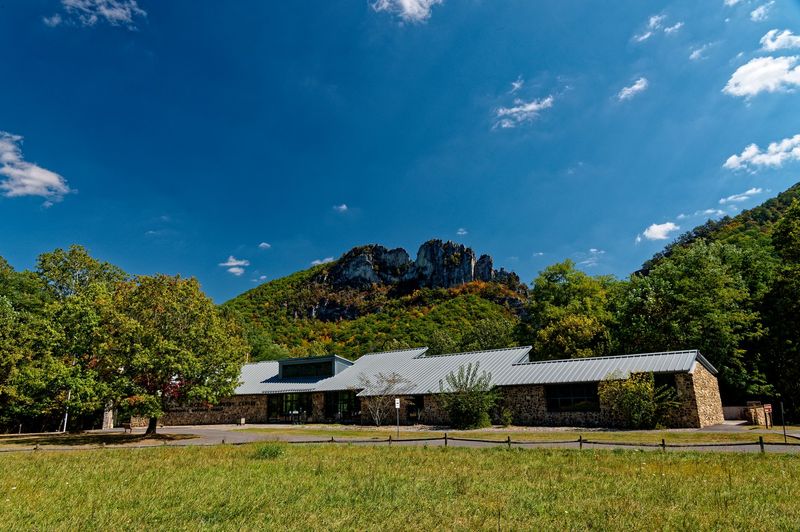
Those jagged fins of rock rising 900 feet straight out of the valley floor are not something your brain processes immediately. Seneca Rocks is one of the most dramatic natural formations on the entire East Coast.
Rock climbers travel from across the country just to attempt its faces.
The Discovery Center at WV-28, Seneca Rocks, WV 26884 is the perfect starting point. Exhibits inside explain the geology, local history, and the ecology of the surrounding mountains.
Rangers are genuinely enthusiastic and packed with useful trail advice.
A well-maintained trail climbs about 1.3 miles to a viewing platform near the summit. The views from the top stretch across multiple ridgelines and valleys.
On a clear morning, the light hits the rock face in a way that feels almost theatrical.
Birding is excellent here, especially during spring migration. The nearby North Fork River draws fly fishermen year-round.
Whether you come to climb, hike, or simply stare up in disbelief, this area consistently delivers something memorable worth the long drive to get here.
4. Cathedral State Park
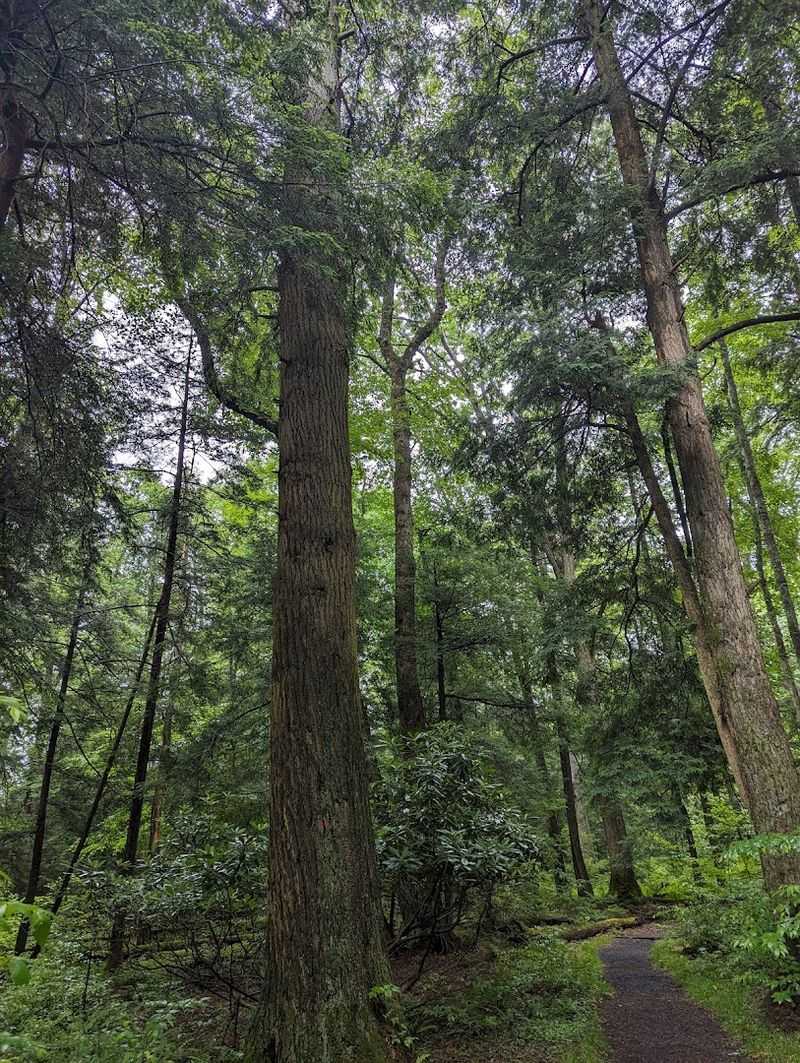
Walking through Cathedral State Park feels like stepping inside a living cathedral built over centuries. The old-growth hemlocks here are among the last remaining in the entire eastern United States.
Some trees stand over 90 feet tall with trunks you cannot wrap your arms around.
The park at 12 Cathedral Park Dr, Aurora, WV 26705 protects 133 acres of forest that has never been logged. That fact alone makes it extraordinary.
The canopy is so thick that even heavy rain barely reaches the mossy forest floor below.
Giant hemlocks, yellow birches, and tulip poplars create an almost otherworldly atmosphere. The park is quiet in a deep, absorbing way that is hard to describe until you experience it yourself.
Even children instinctively lower their voices when they enter.
A network of easy trails winds through the grove, making it accessible for almost everyone. Spring wildflowers carpet the forest floor before the canopy leafs out fully.
Cathedral State Park is a rare chance to walk through a forest that looks exactly as it did hundreds of years ago, unchanged and breathtaking.
5. Smoke Hole Caverns
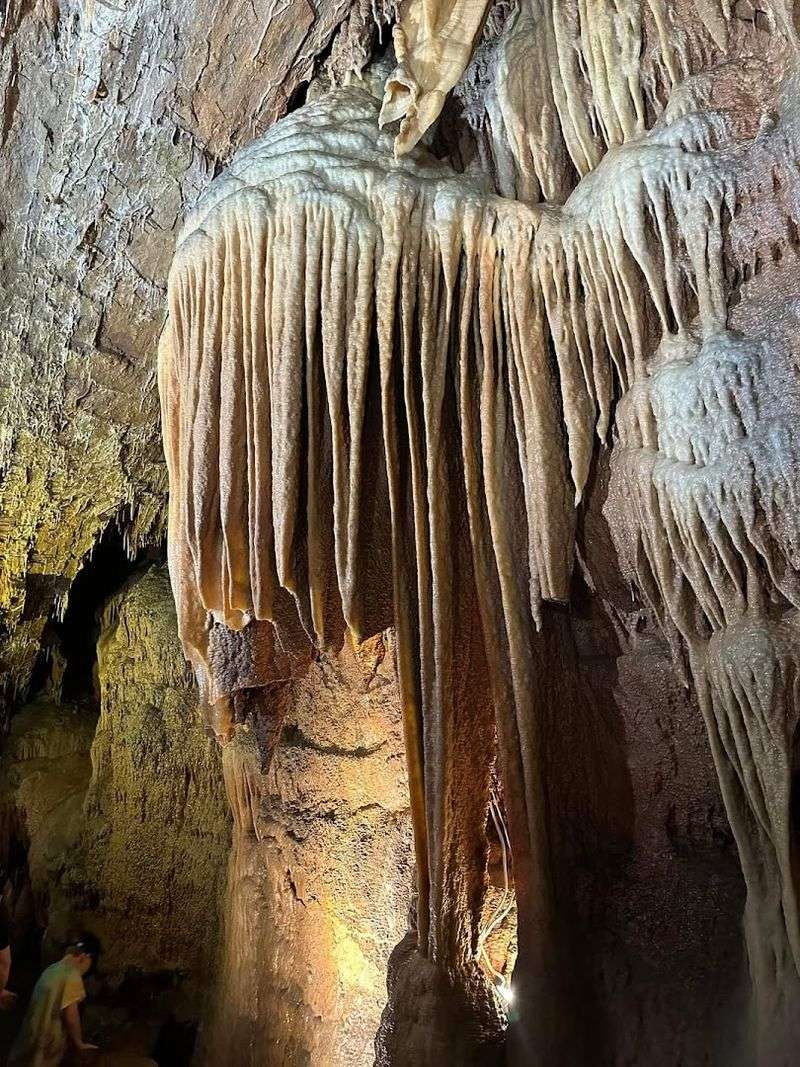
Smoke Hole Caverns earned its name from the smoke-like mist that once drifted from its entrance, used by Native Americans to smoke meat and cure hides. That history alone sets this cave apart from more generic tourist attractions.
The story of this place starts long before any tour guide picks up a lantern.
Located at 8290 N Fork Hwy, Cabins, WV 26855, the caverns hold what guides claim is the world’s longest ribbon stalactite. The cave maintains a steady 56 degrees year-round.
Bring a light jacket regardless of what the weather is doing outside.
The guided tours move through rooms filled with dramatic formations at every turn. The underground trout pond is a genuine surprise that catches most visitors completely off guard.
Crystal-clear water, living fish, and ancient rock formations sharing the same space feels almost surreal.
Above ground, the surrounding South Branch Potomac River Valley is stunning on its own. Cabins and camping are available nearby for those wanting to extend the stay.
Smoke Hole Caverns rewards curiosity in ways that most roadside attractions simply cannot match, underground or otherwise.
6. Spruce Knob-Seneca Rocks National Recreation Area
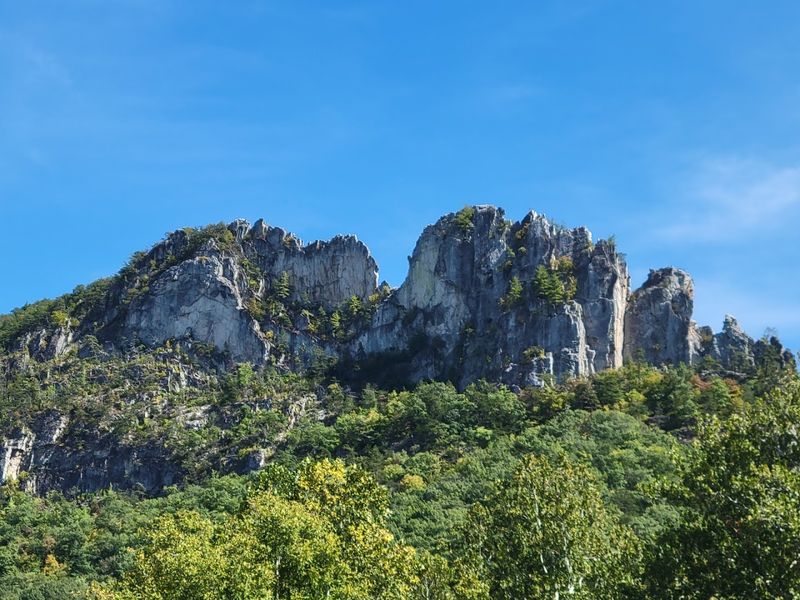
Standing on the highest point in West Virginia gives you a perspective that is genuinely hard to shake. Spruce Knob rises to 4,863 feet, and on a clear day the views extend beyond anything most people expect from this part of the country.
The Spruce Knob-Seneca Rocks National Recreation Area near Riverton, WV 26814 covers over 100,000 acres of mountain terrain. Hiking, backpacking, fishing, and horseback riding all have dedicated trails and access points.
It is one of West Virginia’s premier outdoor destinations, and the area is large enough that you rarely feel crowded even on busy weekends.
A short loop trail near the summit observation tower offers sweeping views in every direction. Red spruce trees here grow permanently bent from prevailing winds, creating a sculptural landscape unlike anything at lower elevations.
Sunsets from the tower are especially memorable on clear evenings.
The Seneca Creek backcountry area within the recreation zone draws serious backpackers seeking multi-day solitude. Trout fishing in the creek is excellent throughout the season.
This remarkable corner of West Virginia combines multiple natural wonders into one destination that is well worth the drive.
7. Cranberry Glades Botanical Area
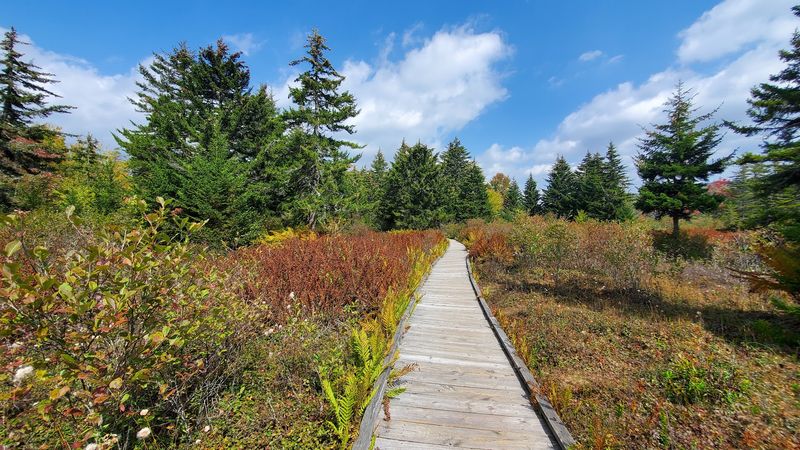
Bogs are not usually on most people’s travel bucket lists, but Cranberry Glades has a way of changing that forever. This is the largest bog complex in the state, and it looks nothing like the surrounding Appalachian landscape.
It genuinely feels like a different latitude entirely.
Located near Hillsboro, WV 24946 inside Monongahela National Forest, the glades cover about 750 acres of open peatland. Carnivorous sundew and pitcher plants grow right alongside wild cranberries.
The boardwalk trail is only half a mile long but packs in an enormous amount of botanical variety.
The bog ecosystem supports rare orchids and plants typically found hundreds of miles farther north. Temperatures here run noticeably cooler than surrounding areas, even in midsummer.
That coolness, combined with the eerie open landscape, gives the glades an atmosphere unlike any typical forest hike.
Early morning visits offer the best chance of spotting wildlife, including deer and various songbirds moving through the edges. Interpretive signs along the boardwalk explain the unusual ecology clearly and engagingly.
Cranberry Glades rewards the curious traveler with a natural spectacle that feels genuinely rare and quietly spectacular.
8. Lost World Caverns
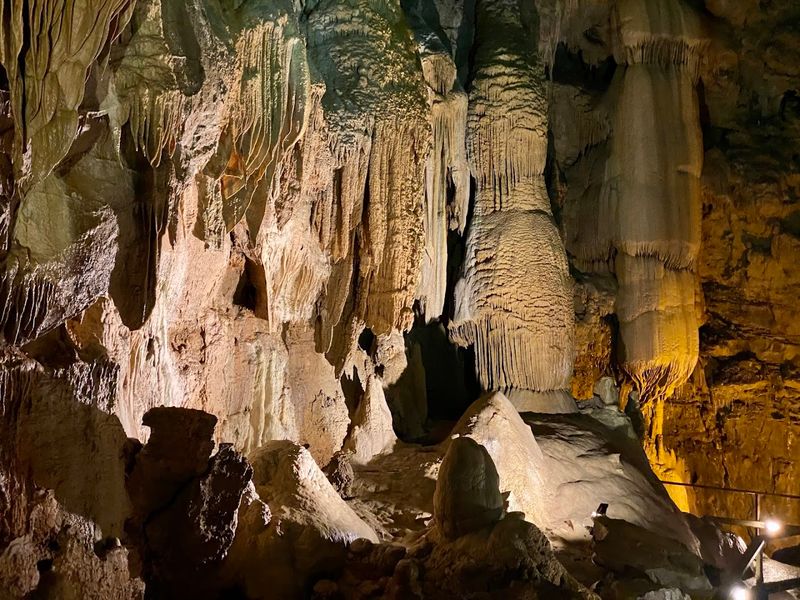
Dropping 120 feet below the Earth’s surface sounds like the beginning of an adventure novel, and honestly, Lost World Caverns delivers exactly that energy. The cavern was only discovered in 1942, which means it spent most of history completely unknown to the outside world.
That backstory alone makes every formation feel more dramatic.
Located at 907 Lost World Rd, Lewisburg, WV 24901, the cave maintains a cool 52 degrees year-round. One-hour guided tours lead visitors through chambers filled with formations that took millions of years to grow.
The Snowy Chandelier stalactite is a genuine showstopper that no photo fully captures.
Stalagmites here reach up to 80 feet tall, which is almost incomprehensible when you are standing next to one. The cave also offers a wild tour for those who want a more hands-on spelunking experience.
Helmets and kneepads are provided, and the adventure is completely worth the extra effort.
The nearby town of Lewisburg adds a great bonus to any visit. Walkable streets, local restaurants, and a vibrant arts scene make it easy to extend the trip into a full weekend.
Lost World Caverns earns its reputation as one of the most memorable underground destinations on the East Coast.
9. Sandstone Falls Recreation Area
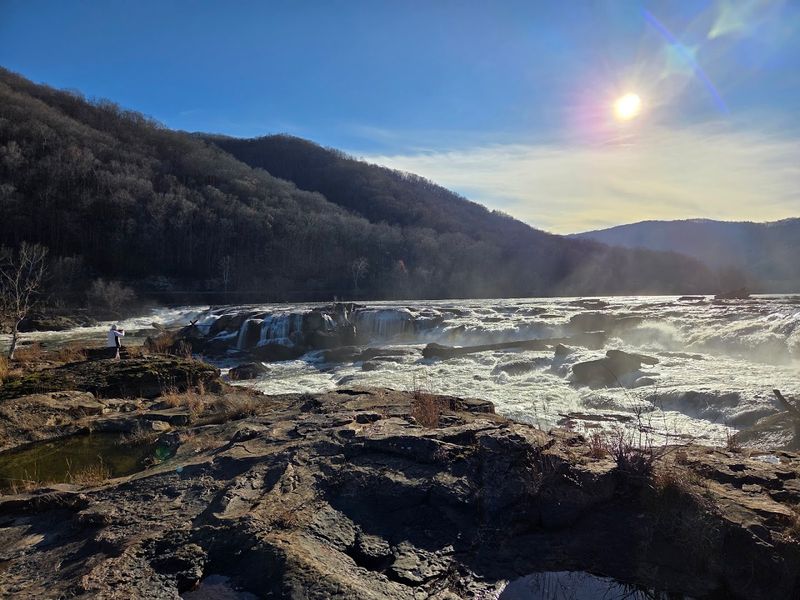
Most waterfalls go straight down, but Sandstone Falls spreads nearly 1,500 feet across the New River in one dramatic horizontal cascade. It is the widest waterfall in the entire state and one of the most photogenic natural features in the region.
The scale of it genuinely surprises first-time visitors.
Located off New River Rd near Shady Spring, WV 25918, the falls sit within the New River Gorge National Park system. A boardwalk and viewing platforms make the falls accessible without requiring serious hiking ability.
Rocky islands and small channels break up the flow into dozens of individual cascades.
Birdwatching here is exceptional, particularly for great blue herons and osprey that fish the shallows near the falls. Spring wildflowers line the trail leading to the main overlook.
The combination of water, rock, and forest creates a scene that photographs differently every single season of the year.
Fishing access along the riverbank draws anglers targeting smallmouth bass and catfish. Sunset visits paint the mist above the falls in remarkable shades of gold and orange.
Sandstone Falls is one of those places that rewards every single return visit with something new to notice and appreciate fully.
10. Hawks Nest State Park
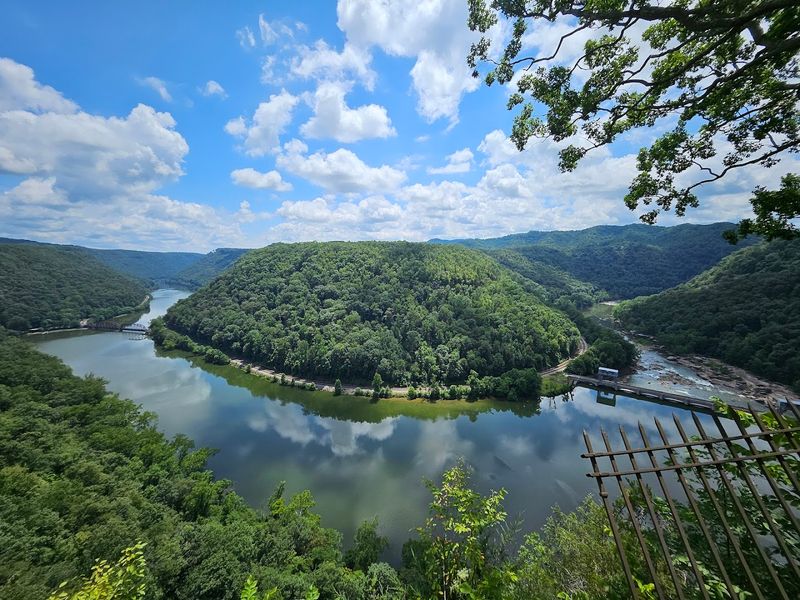
The overlook at Hawks Nest has been stopping road-trippers cold since the 1930s, and the view has not gotten any less spectacular with time. The New River carved this gorge over millions of years, and standing at the edge of it puts geological time in startling perspective.
Few overlooks in the eastern U.S. hit this hard.
Located at 49 Hawks Nest Marina, Ansted, WV 25812, the park offers an aerial tramway down to the river level. Jet boat tours run from the marina at the bottom of the gorge.
The combination of views from above and the river experience below makes this park genuinely two experiences in one visit.
The lodge and restaurant perched at the rim offer a comfortable base for exploring the surrounding trails. Hiking paths wind along the gorge edge with views that keep improving the farther you walk.
Whitewater rafting on the New River below is a popular addition for more adventurous visitors.
Fall foliage season transforms the gorge into something almost impossibly beautiful. The dense hardwood forest fills the canyon walls with deep reds, oranges, and yellows.
Hawks Nest State Park is the kind of place that reminds you why road trips through this part of the country are always worth the time.
11. Spruce Knob Lake
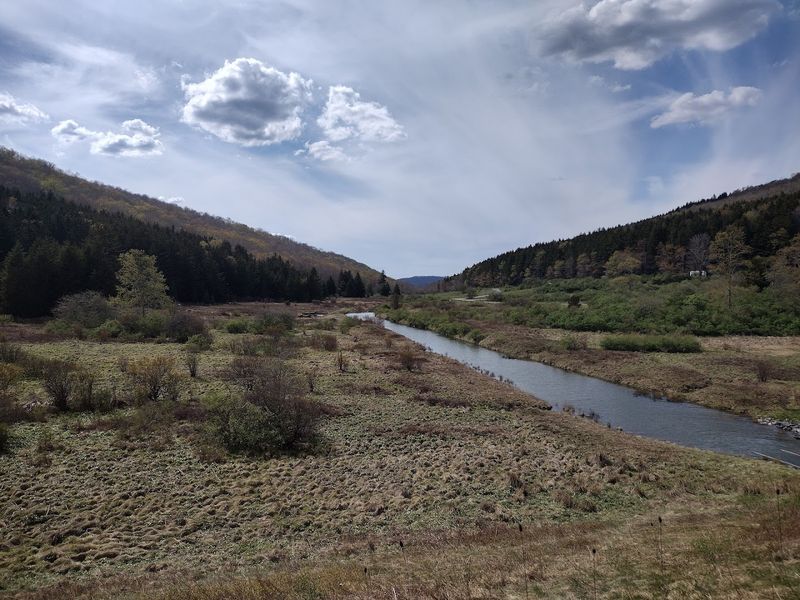
High-elevation lakes have a particular kind of stillness that lower lakes simply cannot replicate, and Spruce Knob Lake captures that quality perfectly. Sitting near the summit of the highest peak in the state, this 25-acre lake feels genuinely remote even though a forest road reaches it.
The silence up here is almost physical.
Found near Narrow Ridge, Whitmer, WV 26296, the lake sits inside Monongahela National Forest. Fishing is popular here, with brook trout stocked regularly throughout the season.
Non-motorized boats and electric trolling motors are permitted, which keeps the lake quieter than many larger boating spots.
Camping at the adjacent Spruce Knob Lake Campground puts you within easy walking distance of the water. Morning mist rises off the lake surface as the red spruce forest slowly lights up with the rising sun.
That particular combination of light, mist, and forest is something photographers and hikers remember for years.
Nearby trails connect to the broader Spruce Knob summit area and the Seneca Creek backcountry. Day hikers can combine a lake visit with a summit trip easily in a single afternoon.
Spruce Knob Lake rewards those willing to make the drive up the mountain with a calm, beautiful, and deeply memorable natural experience.