9 Oregon Day Trips Locals Swear Are Worth Your Time
Locals here guard their favorite drives closely. Ask around and you get vague answers. So the best routes stay quiet on purpose.
Waterfalls hide in deep, mossy gorges. The coast looks lifted from a painting. Oregon never stops surprising you around the curves. I still pull over to gawk every time.
These trips show why locals stay proud. They make you forget your phone exists. Road trips were invented for days like these. The state spoils a curious driver.
Cliffs drop into the surf. Ferns blanket the gorges. You pull over constantly. The air smells like cedar and rain.
Your phone will not be missed.
1. Columbia River Gorge & Multnomah Falls
I never would have guessed that a single waterfall could make a grown adult speechless. Yet here we are, and here you will be too.
The Columbia River Gorge in northern Oregon is one of the most dramatic natural corridors in the entire country.
Multnomah Falls drops a stunning 620 feet in two tiers. It is the tallest waterfall in Oregon and one of the most visited natural sites in the Pacific Northwest.
The mist hits your face before you even reach the famous Benson Bridge viewpoint.
The Historic Columbia River Highway winds through the gorge like a ribbon. Waterfalls appear around nearly every curve.
Crown Point Vista House offers sweeping views that stretch for miles in both directions.
Hiking trails range from easy paved paths to steep ridge climbs. The Larch Mountain Trail rewards the most determined walkers with panoramic views. Wildflowers bloom along the slopes in late spring, turning the trail edges pink and gold.
Early mornings are the sweet spot for avoiding crowds. Parking fills fast on weekends, so arriving before 9 a.m. makes a real difference. The Historic Highway is also a popular cycling route for those who prefer two wheels.
Fall foliage transforms the gorge into something almost unreal. Bigleaf maples turn bright orange and yellow in October.
No matter the season, this stretch of Oregon always delivers something worth stopping for.
2. Cannon Beach & Haystack Rock
Can you believe that one of the most photographed coastlines in America sits just 80 miles from Portland?
The drive alone through the Coast Range is worth the tank of gas. Cannon Beach in Clatsop County earns every bit of its fame.
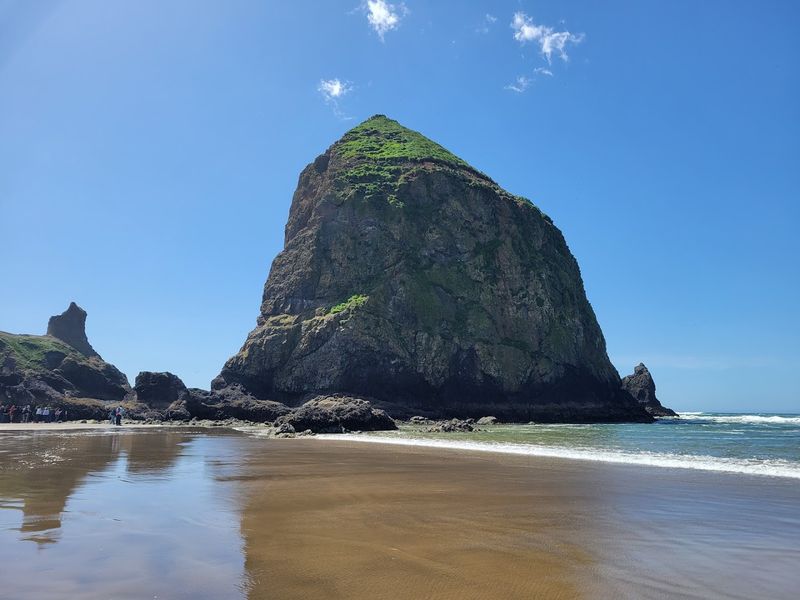
Haystack Rock rises 235 feet straight out of the Pacific. It is one of the largest coastal monoliths in the world.
Tufted puffins nest near the top during spring and summer, and watching them through binoculars is quietly addictive.
Low tide reveals a hidden world at the base of the rock. Tide pools brim with purple sea urchins, hermit crabs, and bright green anemones. Volunteer naturalists are often on hand to explain what you are looking at.
The town of Cannon Beach has a walkable main street lined with galleries and bakeries. Local artists have shaped this community for decades, giving it a creative, unhurried energy.
The smell of fresh pastries drifting from open doors does not hurt either.
Ecola State Park sits just north of town and offers some of the most dramatic coastal views in Oregon. Trails wind through old-growth Sitka spruce forest before opening to cliff-edge panoramas.
The park also has a small beach that feels tucked away from the world.
Sunset here has a particular quality of light that photographers chase year-round. Fog rolls in softly and turns the whole scene silver. Come once, and you will already be planning the next trip back.
3. Mount Hood & Timberline Lodge
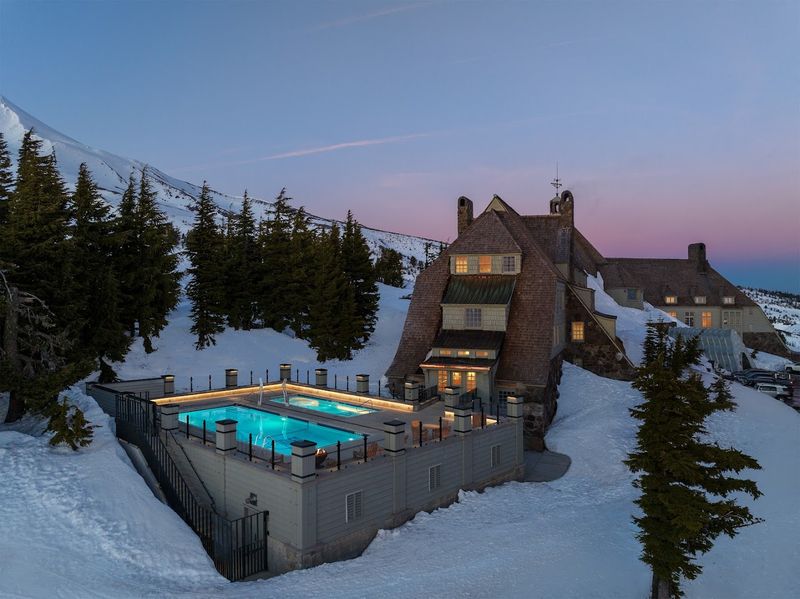
Believe me, standing at 6,000 feet and looking up at a snow-capped volcano changes your perspective fast.
Mount Hood is Oregon’s highest peak, topping out at 11,249 feet, and it is visible from Portland on clear days. The drive up Highway 26 is already a reward in itself.
Timberline Lodge sits partway up the mountain and is a true American landmark. Built by hand between 1936 and 1938 as a Works Progress Administration project, the craftsmanship inside is jaw-dropping.
Hand-carved wood, hand-woven textiles, and hand-forged iron fixtures fill every corner.
In summer, the lodge is a trailhead for the famous Timberline Trail. This route circles the entire mountain through meadows, glaciers, and river crossings.
Day hikers can tackle shorter sections without committing to the full loop.
The Magic Mile chairlift runs year-round, carrying riders up to 7,000 feet for panoramic views. Snow lingers on the upper slopes even in August. Skiing and snowboarding happen here nearly every month of the year.
Mirror Lake Trail offers one of the most iconic reflections in the state. On calm mornings, Mount Hood doubles itself perfectly in the still water. The 3.2-mile round trip is popular but manageable for most fitness levels.
Rhododendron blooms paint the lower forest pink in late spring. The mountain draws hikers, climbers, skiers, and photographers across every season.
4. Silver Falls State Park, Trail Of Ten Falls
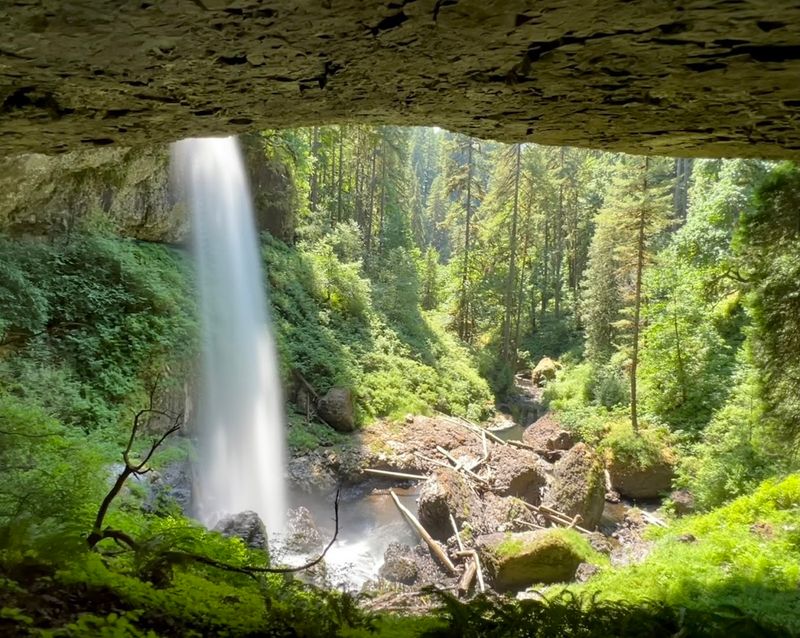
Trust me, walking behind a waterfall is exactly as magical as it sounds.
Silver Falls State Park in the Willamette Valley, about 26 miles east of Salem is home to one of the most extraordinary hiking loops in the Pacific Northwest. The Trail of Ten Falls earns its name honestly.
The full loop is about 7.2 miles and passes ten separate waterfalls. South Falls is the showstopper, dropping 177 feet into a wide canyon pool.
A trail carved into the basalt allows hikers to pass directly behind the falling water.
North Falls is another highlight, with a dramatic horseshoe shape that frames the forest beyond it. Double Falls, at 178 feet, technically edges out South Falls in height. Each waterfall has its own character, and the loop never lets you get bored.
The park covers over 9,000 acres, making it the largest state park in Oregon. Old-growth Douglas firs and big-leaf maples create a cathedral-like canopy overhead. Ferns and mosses coat every surface in deep, saturated green.
Fall is arguably the most beautiful time to hike here. Maple leaves turn gold and drift into the creek below the falls. The contrast of warm color against dark basalt and white water is something you will not forget easily.
Camping, picnicking, and horseback riding are all available in the park. The Silver Creek canyon stays cool even in summer. This loop has a way of making five miles feel like five minutes.
5. Tillamook & The Three Capes Scenic Route
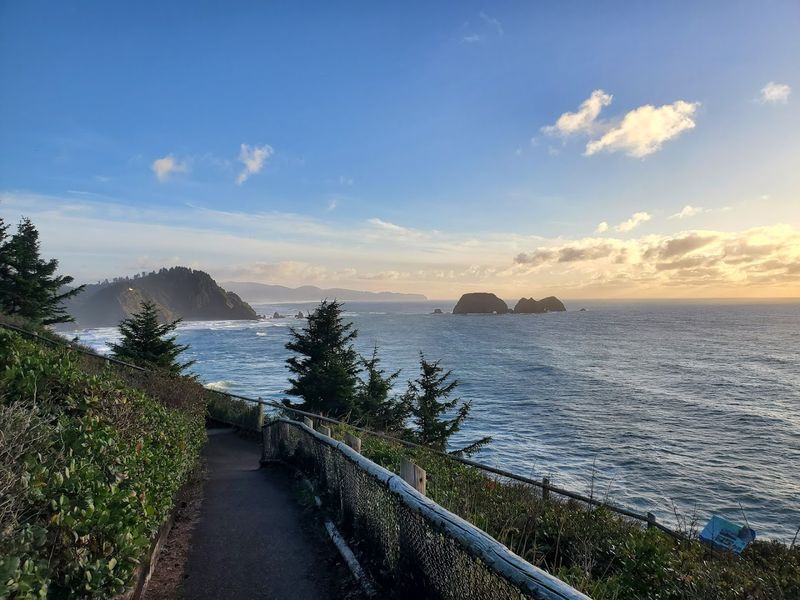
Who would have thought that a town best known for cheese could anchor one of Oregon’s most breathtaking coastal drives?
Tillamook sits in a wide green valley on the northern Oregon coast, about 75 miles west of Portland. The landscape here switches from dairy farmland to dramatic ocean cliffs within minutes.
The Three Capes Scenic Route stretches about 35 miles along the coast. Cape Meares, Cape Lookout, and Cape Kiwanda each offer something completely different.
Together they form a loop that showcases the wild, windswept personality of the Oregon coast.
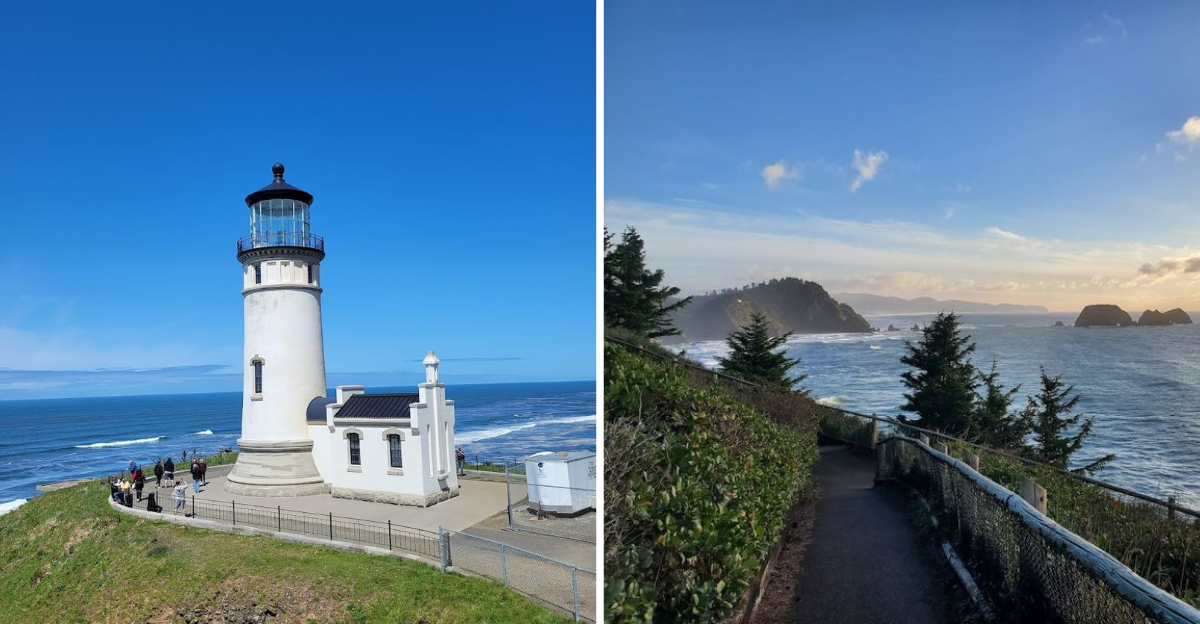
Cape Meares features a historic lighthouse and an ancient Sitka spruce called the Octopus Tree. Its branches twist horizontally in ways that seem almost deliberate.
The viewpoint above the lighthouse looks out over sea stacks and open Pacific swells.
Cape Lookout has a trail that juts out on a narrow peninsula above the ocean. Migrating gray whales pass close to shore in spring and late fall.
Standing at the tip with nothing but water on three sides is a quietly powerful experience.
Cape Kiwanda is the most dramatic of the three. Sandstone cliffs glow orange in afternoon light, and the dune above the cape is a favorite for sand sledding.
Dory fishing boats launch directly from the beach here, a tradition going back generations.
The Tillamook Creamery is worth a stop on the way out or in. Fresh cheese curds and ice cream make for a very satisfying end to a big day.
6. Hood River Fruit Loop

I must admit, a scenic drive where you can eat your way through it is my kind of day trip.
The Hood River Fruit Loop is a 35-mile agricultural route in Hood River County winding through orchards, farms, and u-pick operations in the shadow of Mount Hood. It is one of the most productive fruit-growing regions in the Pacific Northwest.
Apples, pears, cherries, peaches, and lavender all grow along the loop. The season shifts constantly, meaning every month brings something new to taste and bring home.
Harvest time in September and October is especially spectacular.
Farm stands dot the route with hand-painted signs pointing toward fresh cider, dried fruit, and seasonal jams. Many farms are family-run operations that have been growing here for generations.
Chatting with the growers adds a layer of connection that a grocery store never could.
The town of Hood River itself sits above the Columbia River and has a lively outdoor culture. Windsurfers and kiteboaders use the gorge winds to perform tricks that seem to defy gravity.
The waterfront park is a great spot to watch before heading back into the orchards.
Lavender farms along the loop bloom in July and smell absolutely incredible. Sunflower fields open for u-pick in late summer.
The visual variety on this loop makes it feel like four different seasons compressed into one afternoon.
Mount Hood looms over the entire scene from the south. The combination of volcanic peak, river gorge, and blooming farmland is uniquely Oregon.
7. Smith Rock State Park
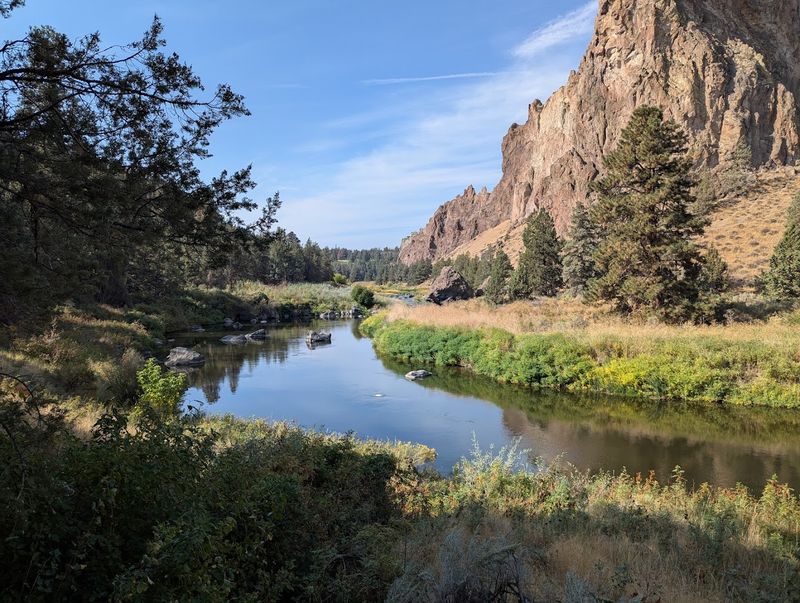
Doesn’t it seem wild that one of the world’s top rock climbing destinations is surrounded by high desert sagebrush?
Smith Rock State Park sits near Terrebonne in central Oregon, about 25 miles north of Bend. The park is widely credited with launching the sport of sport climbing in America during the 1980s.
Monkey Face is the park’s most iconic formation, a freestanding spire that climbers scramble up from multiple angles. The routes here range from beginner-friendly to some of the most technically demanding in the country.
Even non-climbers can hike to viewpoints that look directly at the action.
The Misery Ridge Trail is the classic hike for first-timers. It climbs steeply to the ridge above the Crooked River and delivers panoramic views of the rock formations below.
The total loop is about 3.5 miles and involves some real elevation gain.
Morning River Trail runs along the base of the canyon and stays mostly flat. It follows the Crooked River through the heart of the park. Eagles, osprey, and great blue herons regularly patrol this stretch of water.
Sunrise at Smith Rock is a photographer’s dream. The golden light hits the volcanic tuff and turns the cliffs from tan to deep amber. Arriving before dawn for this show is absolutely worth the alarm.
The park gets warm fast in summer, so early starts and plenty of water are essential. Spring and fall bring cooler temperatures and equally stunning light.
8. Astoria
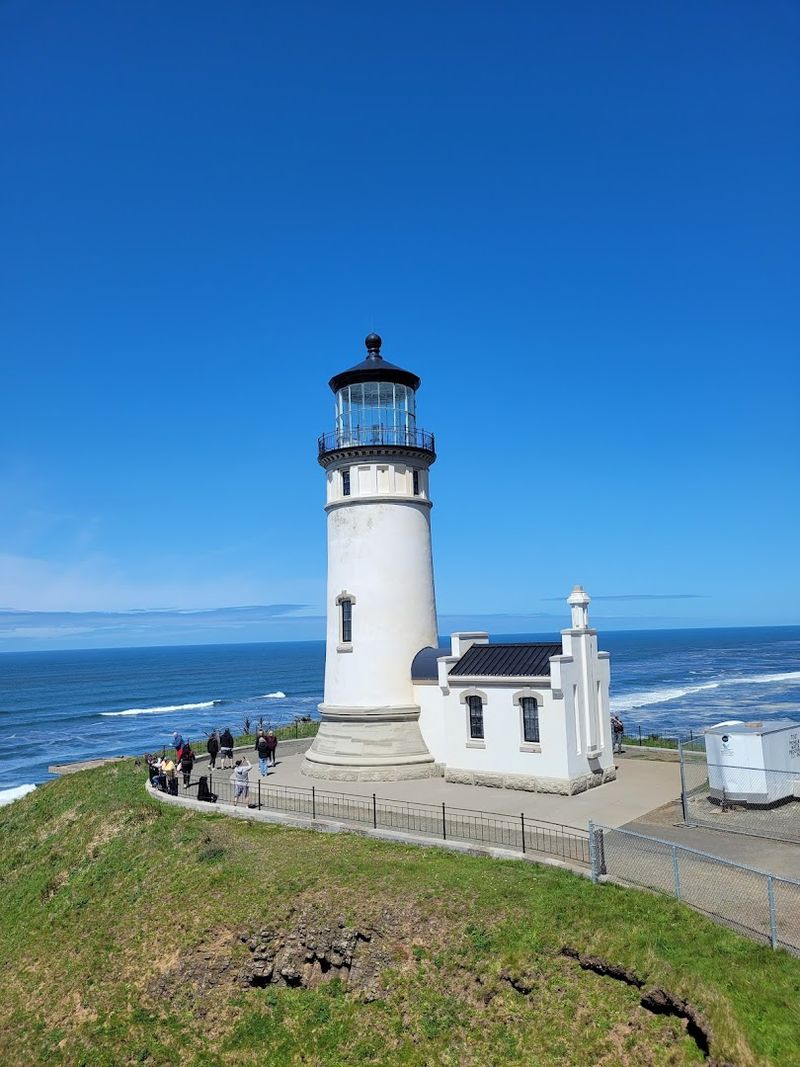
I know, a small city at the mouth of the Columbia River might not sound like an obvious day trip priority.
But Astoria, in Clatsop County on the northwestern tip of Oregon, has a personality that punches well above its size. It was the first American settlement west of the Rocky Mountains, established in 1811.
The Astoria Column rises 125 feet on top of Coxcomb Hill and is painted with a continuous spiral mural depicting regional history.
Climbing the 164 steps inside rewards you with a 360-degree view of the Columbia River, the Pacific Ocean, and the surrounding hills. Small balsa wood gliders sold at the top are a beloved local tradition.
Victorian homes cling to the hillsides in colorful rows, giving the city a storybook quality. The Heritage Museum and the Columbia River Maritime Museum both tell the story of this region in fascinating detail.
The maritime museum houses an actual lightship moored right outside its doors.
The Astoria-Megler Bridge stretches 4.1 miles across the Columbia River into Washington. Walking or cycling the Riverwalk below gives you a ground-level view of this impressive structure.
Harbor seals frequently haul out on the old pier pilings nearby.
The downtown area has a thriving arts and food scene for a city of its size. Local seafood chowder is a must-order at nearly any waterfront cafe.
Fog rolls through the streets in a way that feels cinematic rather than gloomy.
9. Cape Perpetua
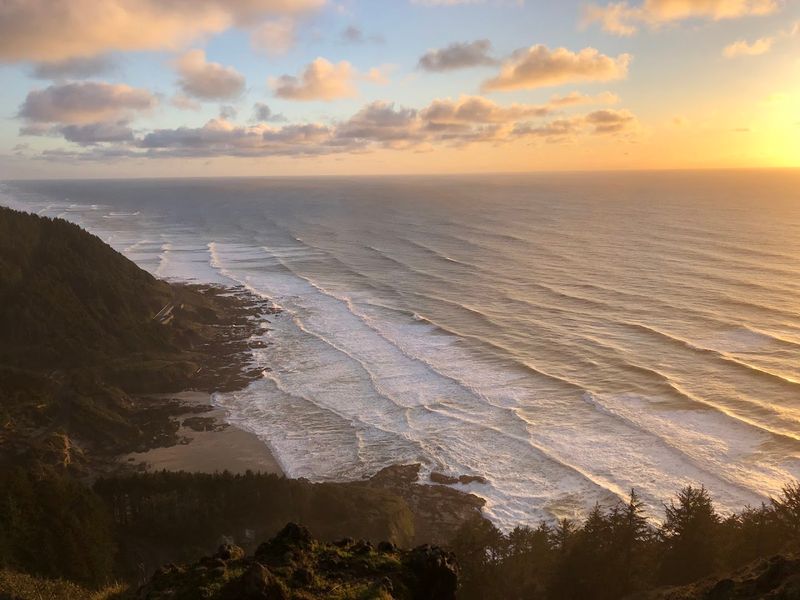
You might not believe me, but a hole in the ocean floor that appears to drain the Pacific is a real thing you can watch in person.
Cape Perpetua is located just south of Yachats on the central Oregon coast, about 23 miles north of Florence. It is one of the most geologically dramatic points on the entire Pacific Coast.
Thor’s Well is the star attraction, a collapsed sea cave that fills and empties with each wave surge. At high tide during a swell, water shoots upward in a geyser-like burst.
Timing your visit to the tide chart is essential for the full effect.
The Spouting Horn nearby shoots jets of water through a narrow basalt crack. The sound alone is worth standing near, a deep booming rush that you feel more than hear.
Both formations sit within easy walking distance of the parking area.
The Cape Perpetua Scenic Area covers over 2,700 acres of coastal forest and headland. The Captain Cook Trail leads to a tidal shelf covered in tide pools. Giant green anemones and purple urchins pack every crevice at low tide.
The Whispering Spruce Trail climbs to the highest viewpoint on the cape at 800 feet. A small stone shelter at the top was built by the Civilian Conservation Corps in the 1930s.
On clear days, the view stretches 37 miles north and south along the coast.
The central Oregon coast has a moody, untamed character here. Standing at the edge of Thor’s Well as a wave surges in is one of those moments that genuinely resets your sense of scale.