12 Nebraska Stops Where Open Sky Is The Real Attraction By Late Afternoon
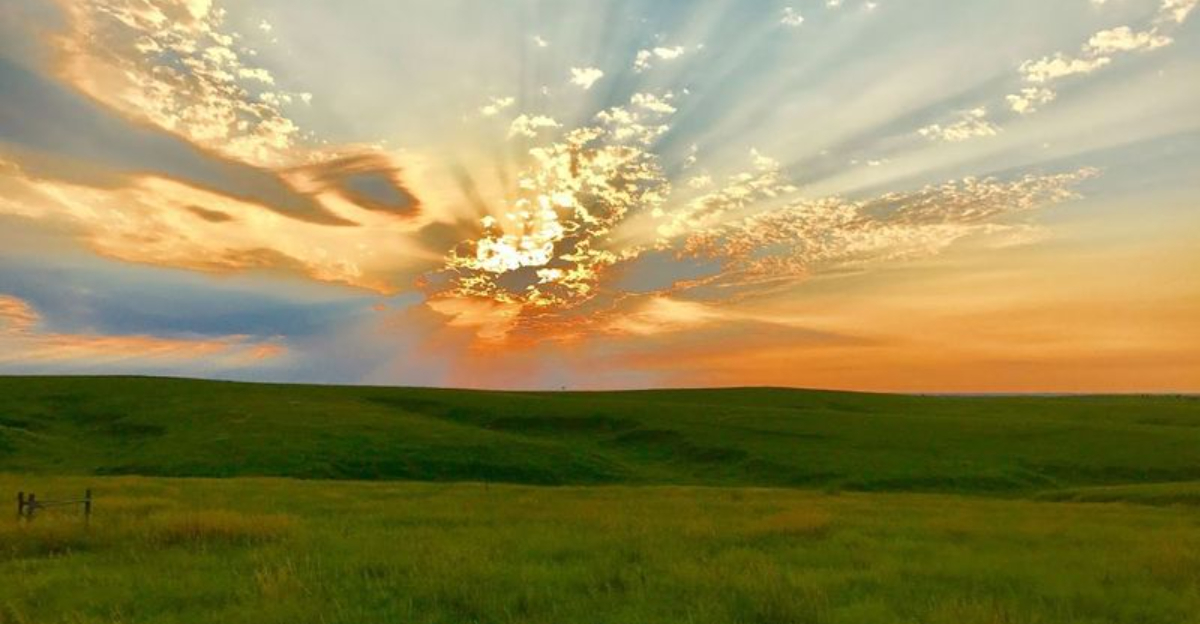
Late afternoon is when Nebraska starts showing off.
Not with some giant attraction demanding a ticket or a souvenir cup.
The sky simply changes, and the whole place feels bigger than it did an hour ago.
Clouds stretch out. Prairie grass catches the light. A quiet road or open field turn into the kind of view that makes people stop talking for a minute.
Nebraska understands wide-open drama better than most places.
The best part is how simple it feels.
You do not need a packed itinerary. You need the right stop and enough patience to let the light do what it came to do.
Late-day blue turns gold. Gold slides into pink. The horizon keeps getting wider.
1. Sandhills Journey National Scenic Byway, Highway 2
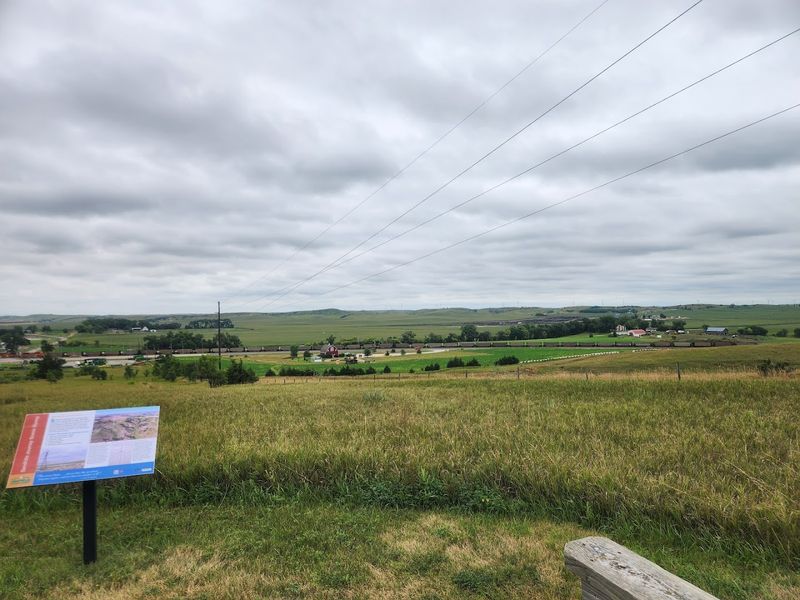
Stretching 272 miles across one of the world’s largest grass-stabilized dune systems, Highway 2 through the Nebraska Sandhills is the kind of road that makes the sky feel like the main event.
The route runs through remote ranchland where cell service fades and the only sounds are wind and meadowlarks. Late afternoon light turns the golden native grasses into something that almost glows.
The Sandhills region is often called Big Sky Country for good reason. Rolling dunes covered in native grasses create a gentle, wave-like landscape that never blocks the horizon.
Sunsets here tend to spread wide and low, painting the sky in layers of amber, rose, and deep violet.
Pulling over at any unmarked gravel turnout works just fine since there are no crowds competing for the view.
Travelers should fuel up before leaving towns like Thedford or Mullen because gas stations are spaced far apart along this byway.
The drive is best experienced on a weekday when traffic is nearly nonexistent and the sense of solitude feels complete.
2. Merritt Reservoir State Recreation Area, Southwest of Valentine
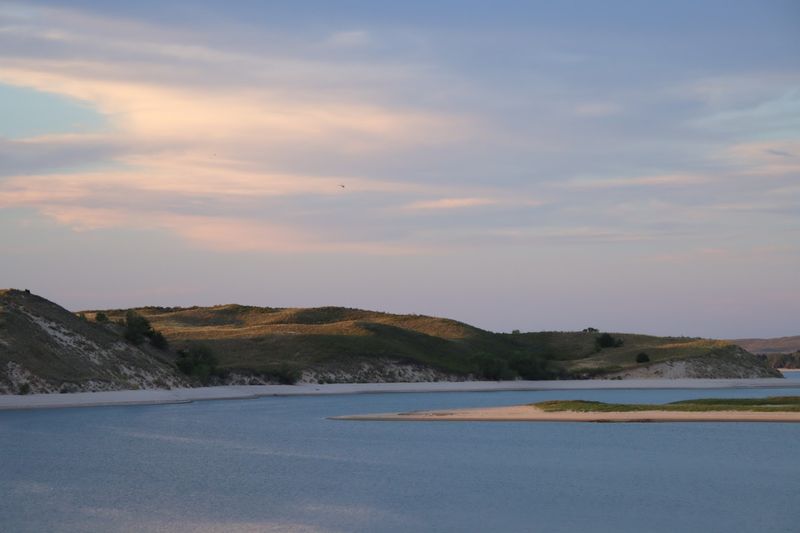
Sitting quietly in the heart of the Sandhills southwest of Valentine, Merritt Reservoir earned International Dark Sky Park designation in 2022 and hosts the annual Nebraska Star Party each summer.
But even before the stars appear, the late afternoon at Merritt is worth the trip on its own. The reservoir sits low in the dunes, surrounded by native grass with almost no artificial light in any direction.
By late afternoon, the water takes on a mirror quality that doubles the sky above it.
Colors that appear in the west reflect back from the surface, making the view feel layered and almost surreal without any exaggeration.
The Sandhills grass ripples in the breeze and catches the low-angle light in a way that shifts constantly.
Camping is available at the site, which means visitors can stay through the transition from sunset to full dark sky without rushing back to town.
The remote location near Valentine does require planning ahead since services are limited nearby.
Arriving a couple of hours before sunset allows time to settle in and absorb the gradual change in light that makes Merritt feel so special.
3. Calamus Reservoir State Recreation Area, Near Burwell
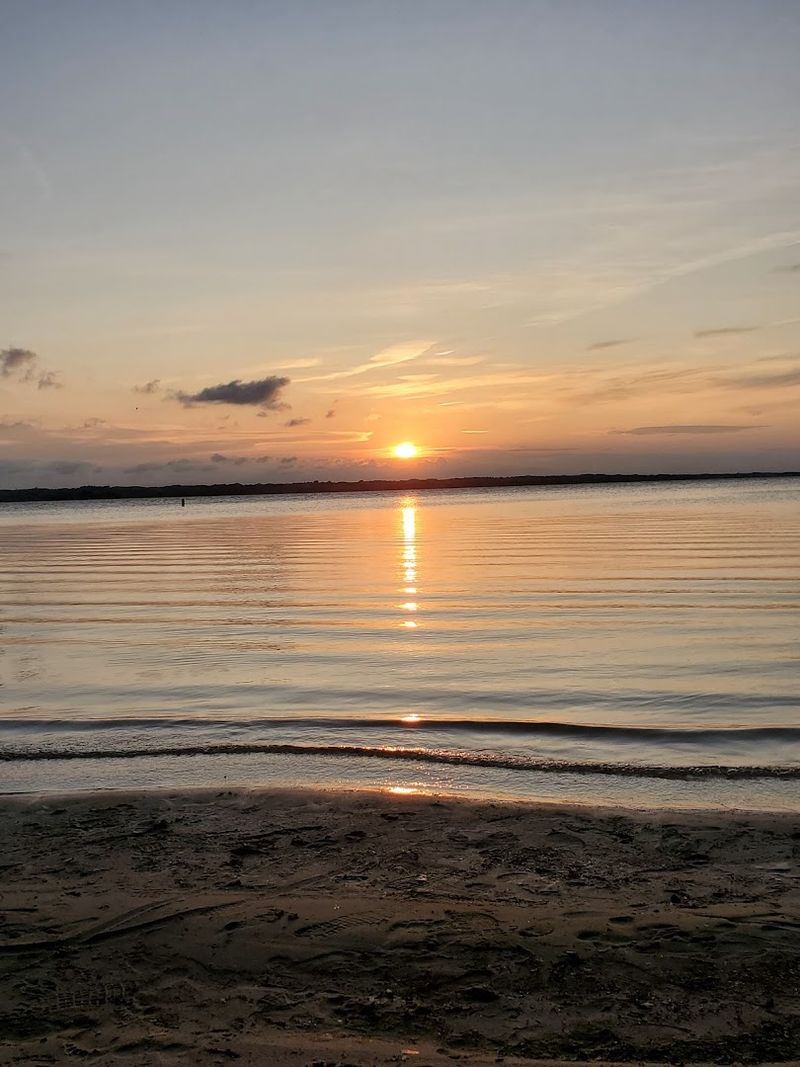
Covering 5,123 acres of open water surrounded by gently rolling native grassland, Calamus Reservoir near Burwell offers a late-afternoon experience that feels quietly dramatic.
The lake sits in a natural bowl of Sandhills terrain where the grass meets the water in soft, uninterrupted curves. There are no sharp ridgelines or tall trees to interrupt the view in most directions.
Late afternoon light hits the water at a low angle that creates long, shimmering reflections.
The colors shift gradually from pale gold to deep orange as the sun moves toward the horizon, and the surrounding grassland picks up those warm tones as well.
Photographers and casual visitors alike tend to find the combination of water and sky here unusually photogenic.
Hiking trails along the shoreline offer changing perspectives of the lake and sky as the light evolves.
The area is generally uncrowded on weekdays, which adds to the calm atmosphere that makes this stop feel restorative.
Burwell is a small Nebraska town that provides basic services before heading out to the reservoir, so stocking up on supplies before arrival is a practical move for anyone planning a longer stay.
4. Lake McConaughy State Recreation Area, Near Ogallala
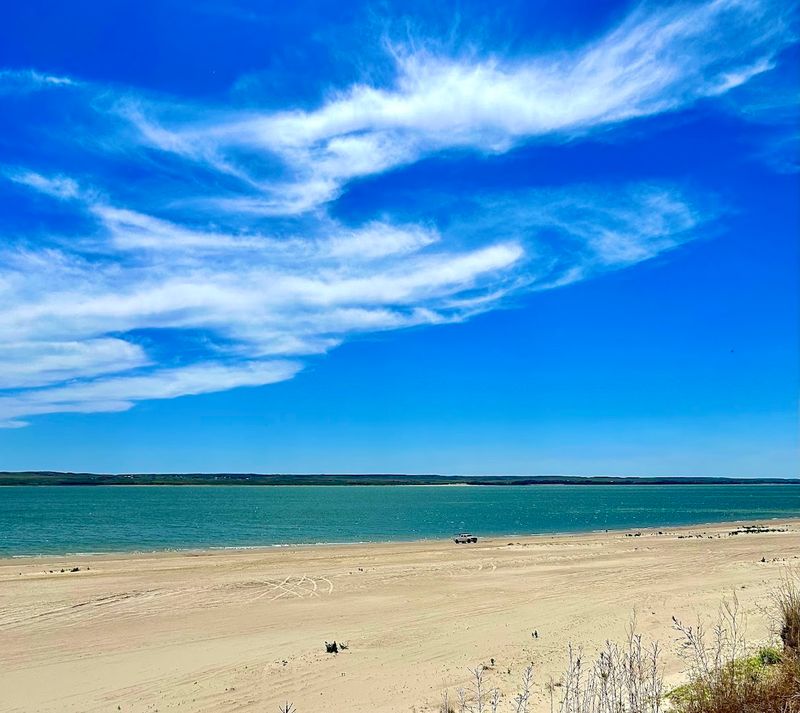
Nebraska’s largest reservoir stretches nearly 35,000 acres with roughly 100 miles of shoreline near Ogallala, and the scale of it genuinely catches visitors off guard.
White sand beaches line the northern shore, and the absence of trees or significant hills in most directions means the sky dominates the scene completely.
By late afternoon, the open water turns the entire horizon into a canvas.
Lake McConaughy is known locally as Lake Mac, and the nickname carries a certain affection that reflects how much the place means to the region.
The broad, flat shoreline means the sun sets over water with nothing in the way, and the reflection it casts across the surface stretches for what feels like miles.
Wind tends to pick up in the afternoon, which adds texture to the water and movement to the scene.
Access roads lead to multiple beach areas around the lake, and the state recreation area charges a daily vehicle fee.
Weekends in summer bring larger crowds to the beaches, while late afternoon on a weekday tends to offer more space and quiet.
Facilities including restrooms and camping areas are available at several access points around the lake.
5. Lake Minatare State Recreation Area, Near Scottsbluff
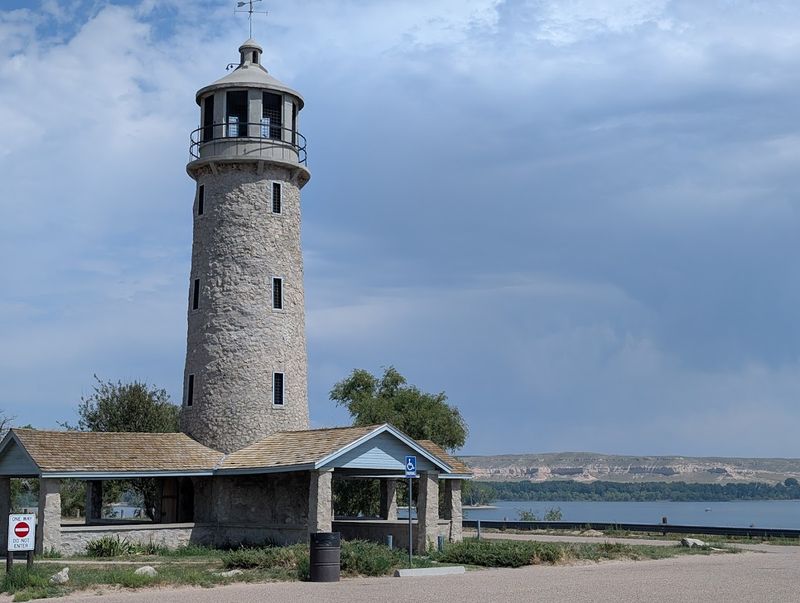
Western Nebraska has its own quiet character, and Lake Minatare near Scottsbluff captures it well on a late afternoon.
The reservoir sits in open terrain where the sky spreads wide and the light comes in at a long, warm angle.
What sets this spot apart from others in the state is the presence of the historic Plains Lighthouse standing near the shoreline.
Built in the 1930s, the lighthouse is not a navigational aid in the traditional sense but rather a distinctive landmark that adds an unexpected focal point to the late-day scene.
Birds gather around the water in the afternoon hours, and the combination of wildlife, water, and that unusual tower creates a layered view that feels genuinely unique in the Great Plains.
The surrounding terrain is open enough that the horizon stays wide and unobstructed.
The recreation area offers camping, fishing, and basic facilities for day visitors.
Crowds tend to be lighter here than at more well-known destinations, which makes it a good choice for those who prefer a quieter late-afternoon experience.
Scottsbluff is close enough to provide food and fuel before heading out to the lake for the day.
6. Scotts Bluff National Monument, Gering
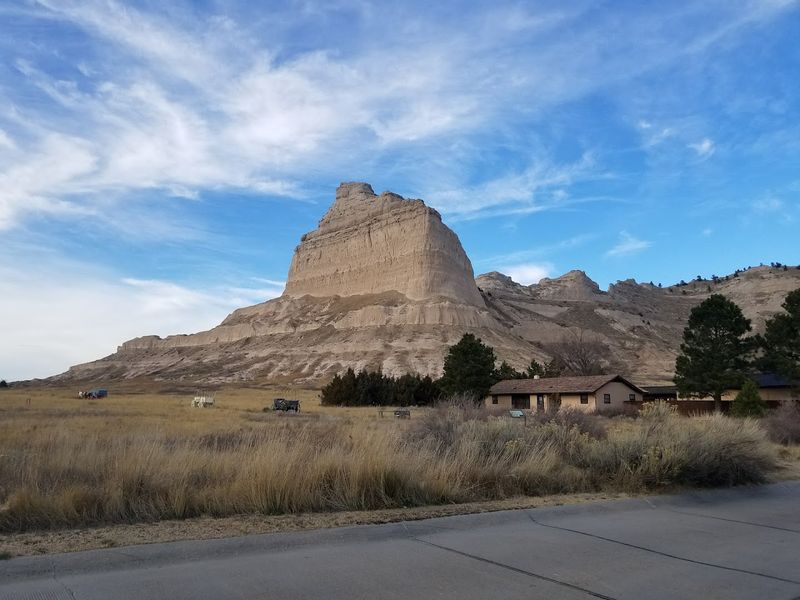
Rising about 800 feet above the North Platte River Valley, Scotts Bluff National Monument creates one of the most dramatic silhouettes in the Great Plains as the afternoon light shifts toward evening.
The monument is located in Gering, Nebraska and the summit road leads to overlook points where the valley spreads out below in every direction.
Late afternoon is when the sandstone faces of the bluffs catch the warmest light of the day.
The rock formations glow in shades of amber and rust as the sun drops lower, and the valley floor below takes on a softer, hazy quality.
Visitors can drive to the top or hike the Saddle Rock Trail for a more gradual approach to the summit views.
The trail passes through tunnels carved into the bluff and opens onto a ridge where the wind is usually present and the sky feels enormous.
The monument is managed by the National Park Service and charges an entry fee.
Late afternoon visits on weekdays tend to be quieter than weekend mornings, and the changing light makes the final hour before sunset the most visually rewarding time to be at the summit overlooks.
7. Toadstool Geologic Park, Near Crawford
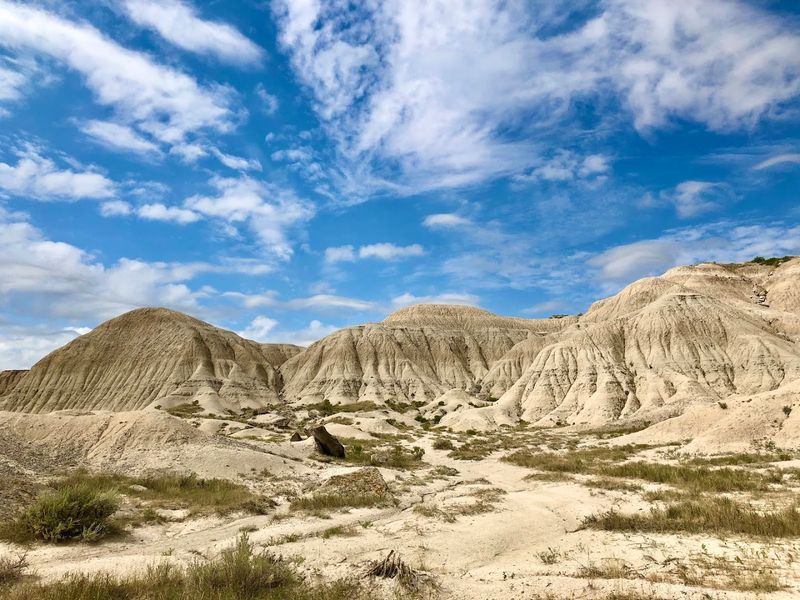
Few landscapes in Nebraska feel as otherworldly as Toadstool Geologic Park near Crawford, where erosion has sculpted cream-colored rock into unusual mushroom-shaped formations scattered across a badlands terrain.
By late afternoon, the low-angle sun catches the pale rock and turns it a peachy-pink color that makes the whole area glow in a way that photographs rarely capture fully.
The terrain is dry, open, and almost entirely treeless.
The formations sit within the Oglala National Grassland managed by the U.S. Forest Service, and the area is known for fossil-rich terrain that has yielded significant paleontological finds over the years.
Walking among the toadstool shapes in the late afternoon feels like stepping into a landscape from another era entirely.
The sky above the open badlands is wide and uninterrupted, making it an excellent spot for watching the transition from daylight to dusk.
A short loop trail leads through the main formation area and takes roughly 45 minutes to an hour at a relaxed pace.
The site is remote and has minimal facilities, so bringing water and snacks is essential.
Crawford is the nearest town for fuel and supplies before making the drive out to the park on the unpaved access road.
8. Chadron State Park, South of Chadron
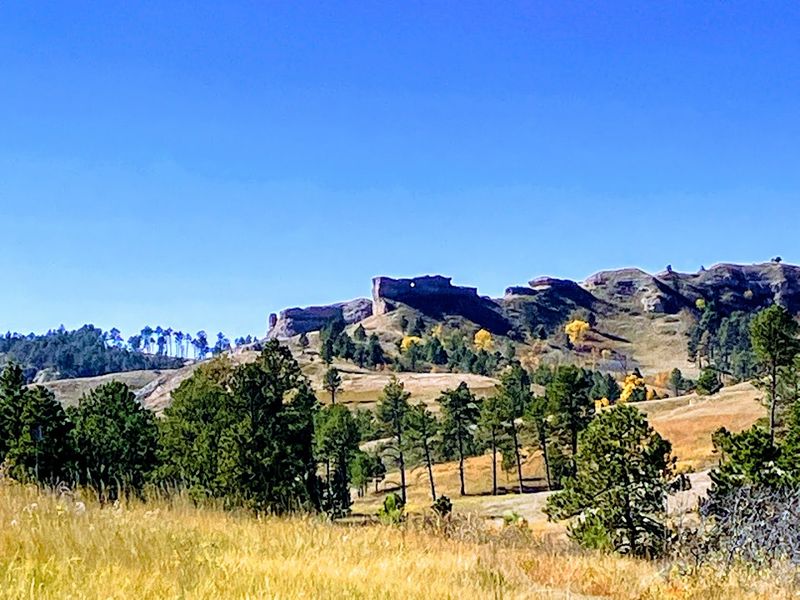
Nebraska’s oldest state park sits in the Pine Ridge region south of Chadron, where ponderosa pines and rugged buttes create a landscape that feels more like the northern Rocky Mountain foothills than the typical Great Plains.
Late afternoon light filters through the pines and casts long shadows across the ridges, giving the park a layered, textured quality that changes noticeably by the hour.
The surrounding hills naturally block distant artificial light sources, which contributes to impressively dark skies after sunset.
A nearby overlook gives views across the Pine Ridge and out toward the South Dakota Black Hills on clear days, which adds a sense of geographic scale that is hard to find at lower-elevation Nebraska stops.
The combination of elevation, open ridgeline, and minimal development makes this one of the more dramatic sky-viewing locations in the state.
Mule deer and wild turkey are commonly seen in the late afternoon hours near the park roads.
Camping cabins and tent sites are available within the park, and the facilities are generally well-maintained.
The drive from Chadron takes only about 15 minutes, making it an easy addition to a western Nebraska road trip. Weekday visits tend to offer more solitude on the trails and overlooks.
9. Ash Hollow State Historical Park, Near Lewellen
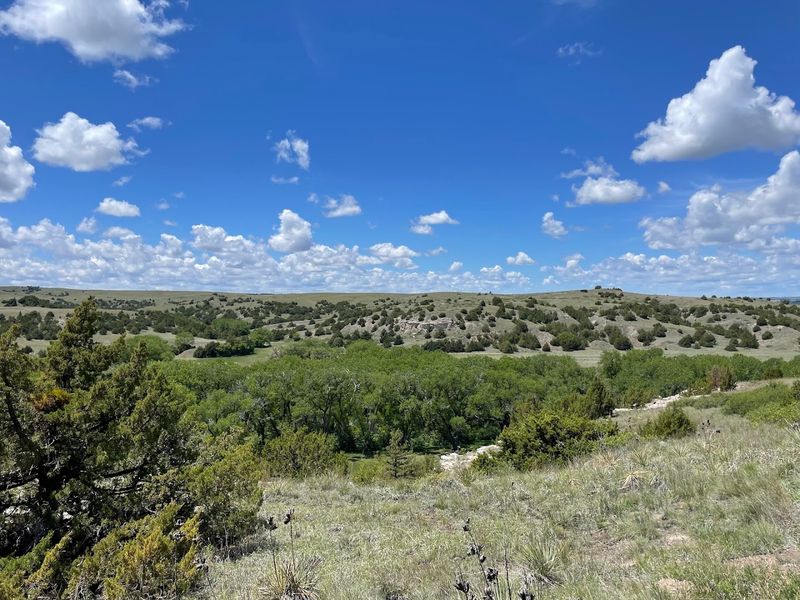
Standing on Windlass Hill at Ash Hollow State Historical Park near Lewellen means standing on the same ground where thousands of westward-bound travelers once paused to look out over the North Platte River Valley below.
The wagon swales carved by Oregon-California Trail travelers are still visible on the hillside, which adds a layer of historical weight to what is already a striking landscape.
Late afternoon light stretches across the valley in long, soft bands.
The bluffs above the river give a natural elevation that opens the view in a way flat terrain cannot.
The valley floor below is wide and agricultural, and the river catches the late light in glints and flashes depending on the angle.
It is the kind of place where the combination of history and landscape makes the late afternoon feel genuinely meaningful rather than just scenic.
The historical park includes a visitor center with exhibits about the Oregon Trail and the natural history of the area.
The site is managed by Nebraska Game and Parks and charges a standard vehicle entry fee.
Lewellen is a small community nearby that provides limited services, so planning ahead for fuel and food before visiting is a practical step.
10. Willa Cather Memorial Prairie, Near Red Cloud
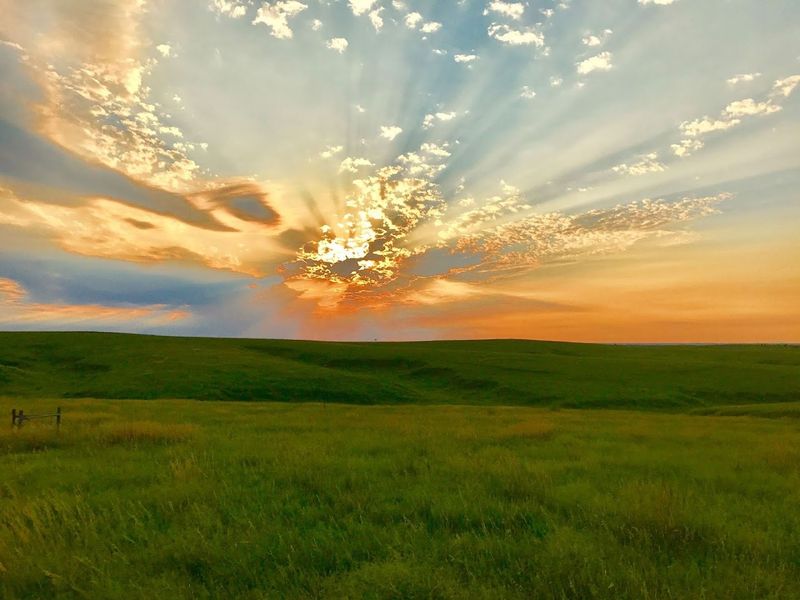
Never-plowed native prairie is increasingly rare in Nebraska, and the 612-acre Willa Cather Memorial Prairie near Red Cloud is one of the best surviving examples in the state.
The land looks much as it did before European settlement, with native grasses, wildflowers, and rolling terrain that has never been broken by a plow.
Late afternoon light hits the grass at an angle that makes individual seed heads catch and glow.
The prairie is managed by the Nature Conservancy and is open to visitors who want to walk through a landscape that feels genuinely untouched.
There are no formal developed trails, which means the experience is more immersive and less structured than a typical park visit.
The sky above an open native prairie like this one feels especially wide because there are no fences, buildings, or trees to interrupt the view in most directions.
Fall is a particularly rewarding time to visit when the grasses shift to warm copper and rust tones that complement the late-afternoon light.
Red Cloud is a small Nebraska town nearby that offers basic services and is also known for its connection to the author Willa Cather.
Visiting on a calm afternoon when the wind is light makes it easier to hear the natural sounds of the prairie.
11. Niobrara State Park, Niobrara
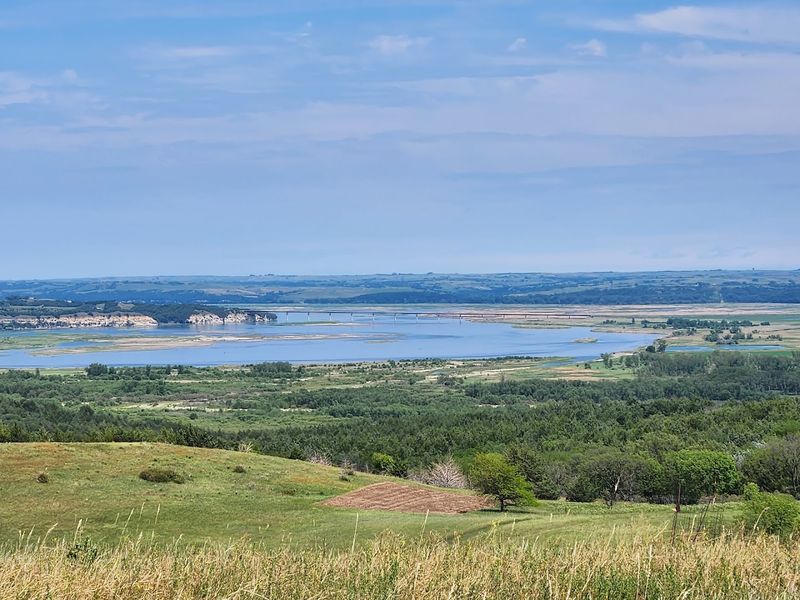
Positioned at the confluence of the Niobrara and Missouri rivers, Niobrara State Park offers a sky-viewing experience shaped by water, bluffs, and broad river valley views.
The elevated terrain above the Missouri River gives visitors a perspective that is harder to find in flatter parts of the state.
Late afternoon light moves across the river surface and the surrounding valley in ways that shift quickly as the sun descends.
The park sits in a transitional zone where eastern deciduous forest meets western grassland, creating a diverse landscape that includes wooded bluffs, open meadows, and river bottom terrain.
Observation points along the bluff edge offer unobstructed views of the Missouri River and the hills of South Dakota across the water.
The combination of moving water, wide sky, and elevated vantage point makes this one of the more layered late-afternoon stops in the state.
Camping, cabin rentals, and a swimming pool are available within the park, making it a viable destination for an overnight stay.
The town of Niobrara is just minutes away and provides basic services for visitors.
Late afternoon on a weekday tends to be the quietest time on the bluff overlooks, which are the best spots for watching the sky change color.
12. Branched Oak State Recreation Area, Near Raymond
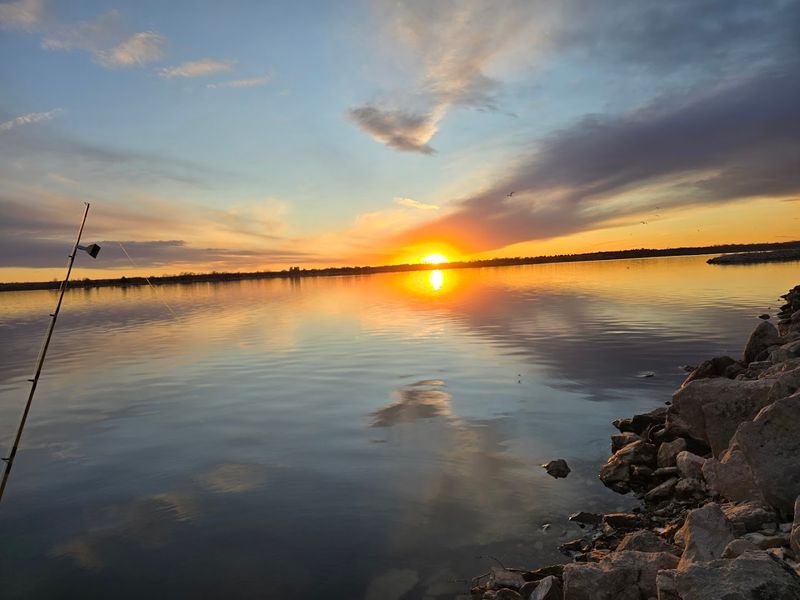
Just northwest of Lincoln, Branched Oak State Recreation Area offers one of the most accessible open-sky experiences in eastern Nebraska without requiring a long drive into the Sandhills or western part of the state.
Trails along the southern side of the lake pass through open native grassland where the terrain stays low and the sky stays wide.
Late afternoon light spreads across the water and the surrounding fields in a way that feels genuinely calming.
The lake covers a substantial area and the southern shoreline in particular offers unobstructed views across the water toward the west, which makes it well-suited for watching the sun move toward the horizon.
Grasses along the trail edge catch the warm light and sway in the afternoon breeze, adding movement and texture to the scene.
The combination of accessible trails, open water, and minimal development keeps the experience grounded and low-key.
Branched Oak is a popular destination for Lincoln-area residents, so weekend afternoons can bring more visitors to the parking areas and trails.
Arriving by mid-afternoon on a weekday offers a noticeably quieter experience.
The recreation area charges a vehicle entry fee and has restrooms and picnic areas available at several access points around the lake.