This New York Forest Is One Of The Rare Places On Earth Where You Can See 400-Year-Old Ancient Trees
There are trees standing in New York right now that were already old when this country was founded. That fact hit me harder than I expected.
I stood at the base of one, craned my neck back, and felt genuinely small in the best possible way. Four hundred years of storms, seasons, and silence, all held inside a single trunk.
New York moves fast and tears things down faster, which makes this place feel almost impossible. Ancient forests belong in the Pacific Northwest or some remote mountain range, not here.
But here it is, wild and patient and completely unbothered by everything happening just beyond its edges. This state still holds surprises that stop you mid-sentence.
This is one of the best ones.
A Forest That Has Never Been Logged
Some forests get a second chance. This one never needed one.
The Thain Family Forest is the largest remaining tract of old-growth forest in New York City, and it has remained largely undisturbed for centuries.
No logger has ever taken an axe to these trees. That fact alone makes this place extraordinary.
Most forests in the northeastern United States were cleared for farming or development long ago.
This 50-acre forest inside the New York Botanical Garden at Bronx Park Rd, Bronx, NY 10458 survived simply because the land was set aside before anyone could touch it. The forest’s enduring beauty was a primary reason the site was chosen for the Botanical Garden back in 1895.
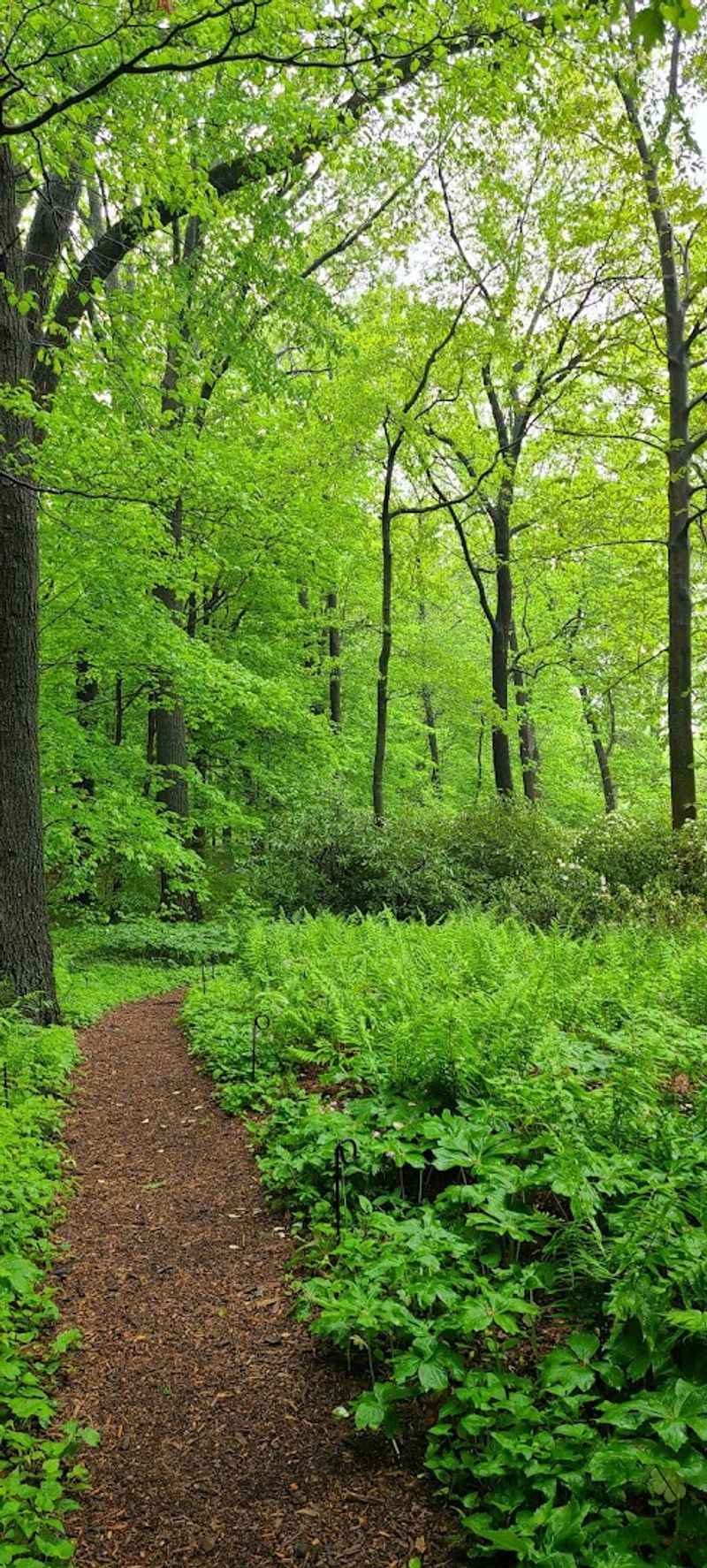
Walking through here feels different from any park you have visited before. The trees are massive, the canopy is thick, and the air carries a cool, earthy stillness.
You can hear birds calling from branches you cannot even see.
It is the kind of place that makes you stop mid-step and just look up. Most visitors say two hours is the minimum time you need to truly appreciate it.
The Mother Tree That Stands Over 135 Feet Tall
There is one tree here that earns its nickname without any argument. The tulip tree known as the mother tree soars over 135 feet into the Bronx sky.
That is roughly the height of a 13-story building.
Tulip trees are naturally tall, but this one is exceptional. Its trunk rises clean and straight before exploding into a wide crown of branches.
In spring, the upper branches bloom with yellow-green flowers that most visitors never notice because they are so far above eye level.
This tree has been standing long enough to have watched the entire neighborhood around it transform from forest to farmland to city. Yet here it stands, completely unbothered by all of it.
Ecologically, old trees like this one serve as anchors for the entire forest. They provide nesting sites for birds, shelter for insects, and nutrients for the soil as their leaves fall each autumn.
They are the infrastructure of the ecosystem.
Visiting during late spring means you might catch those high-up flowers in bloom. Bring binoculars if you want to see the details.
Your neck will thank you for the effort, and the view is absolutely worth it.
Trails That Follow Ancient Lenape Paths
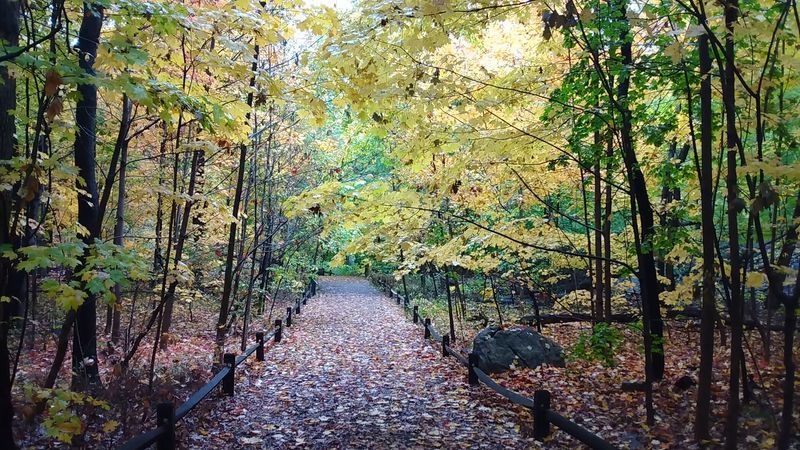
Long before this land became a botanical garden, the Lenape people walked these same paths. Some of the trails follow routes long associated with the Lenape people, who traveled through this landscape long before the botanical garden was established.
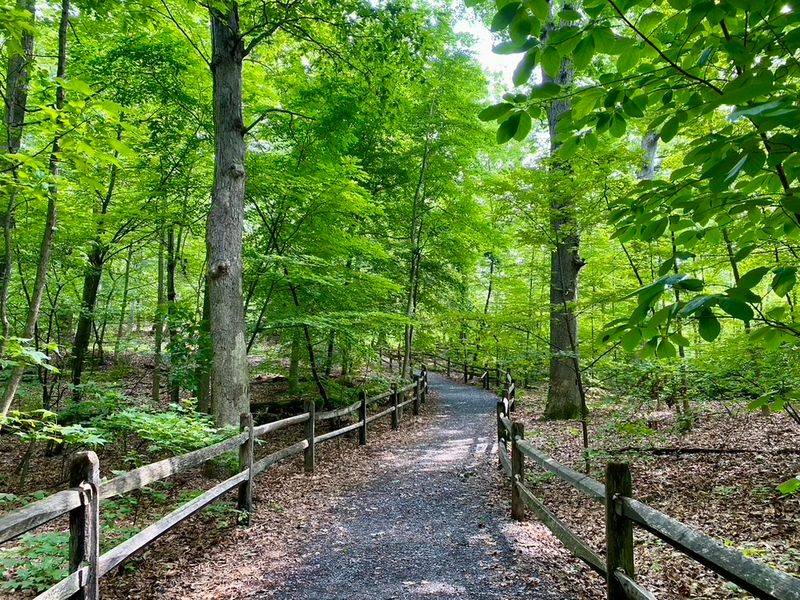
That history is embedded in the ground beneath your feet. The trail network is well-maintained and clearly marked, but it still feels genuinely wild.
Placards placed throughout the forest give historical context about specific trees and areas.
Some trails are wheelchair accessible, which makes this ancient woodland reachable for more visitors than you might expect. The forest does not ask you to be an athlete to enjoy it.
It just asks you to show up.
The Spicebush Trail is one of the most popular routes. Along this path, a notable red oak estimated between 150 and 200 years old stands close enough to the trail that you can lay your hand flat against its bark.
Most people do exactly that.
Allow yourself to move slowly here. Rushing through this forest would be like skimming the last chapter of a great book.
Every bend in the trail reveals something new, whether it is a massive boulder, a fallen giant, or a hidden stream.
A Stream And Waterfall Hidden Inside The City
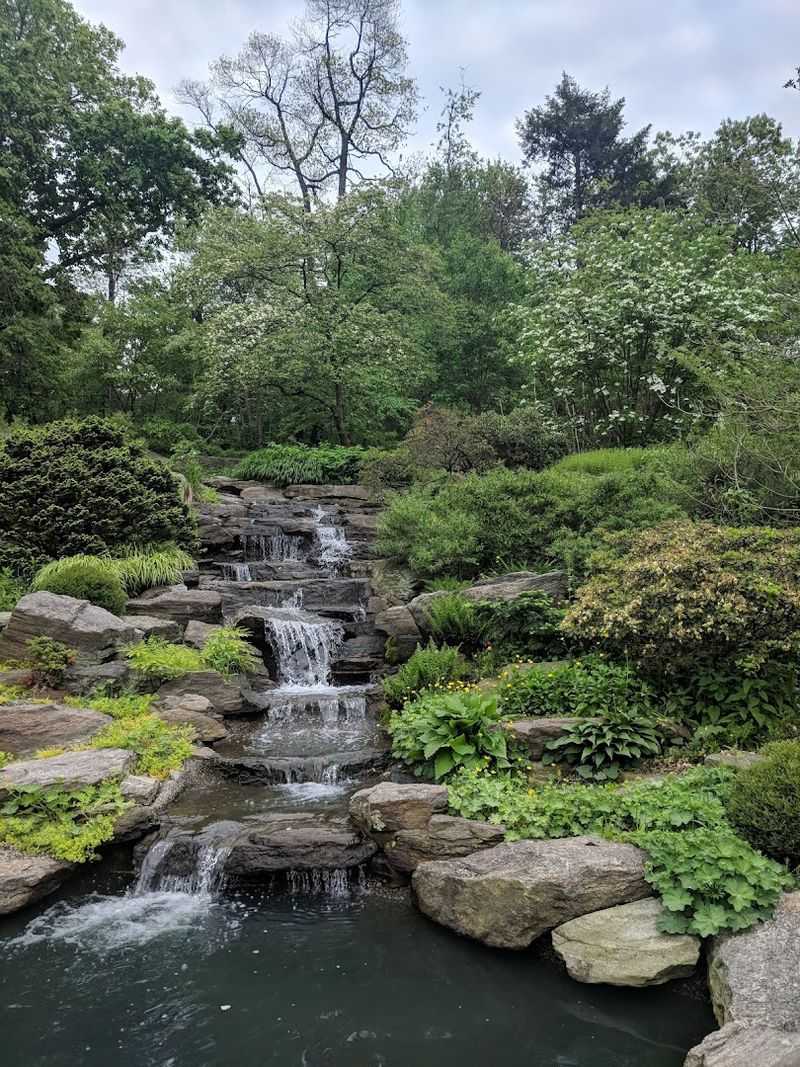
Nobody expects a waterfall in the Bronx. That is exactly what makes finding one here so satisfying.
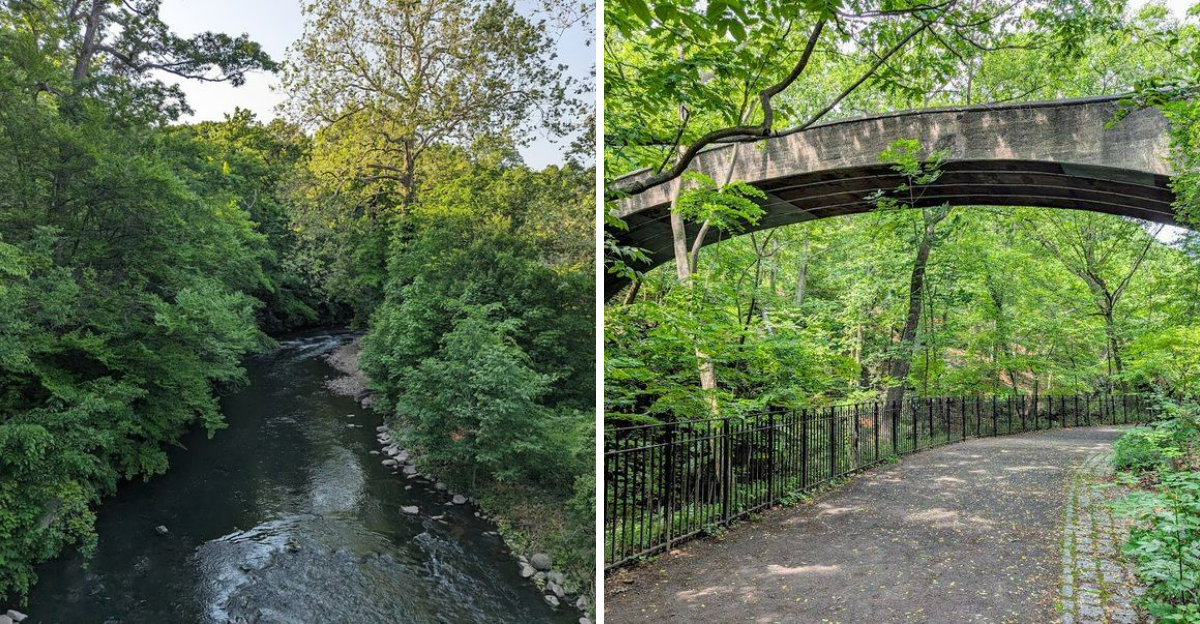
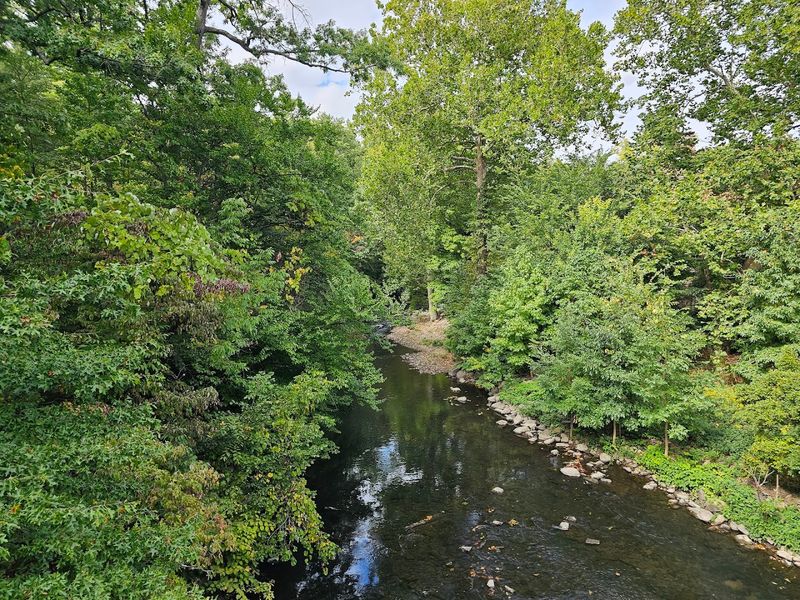
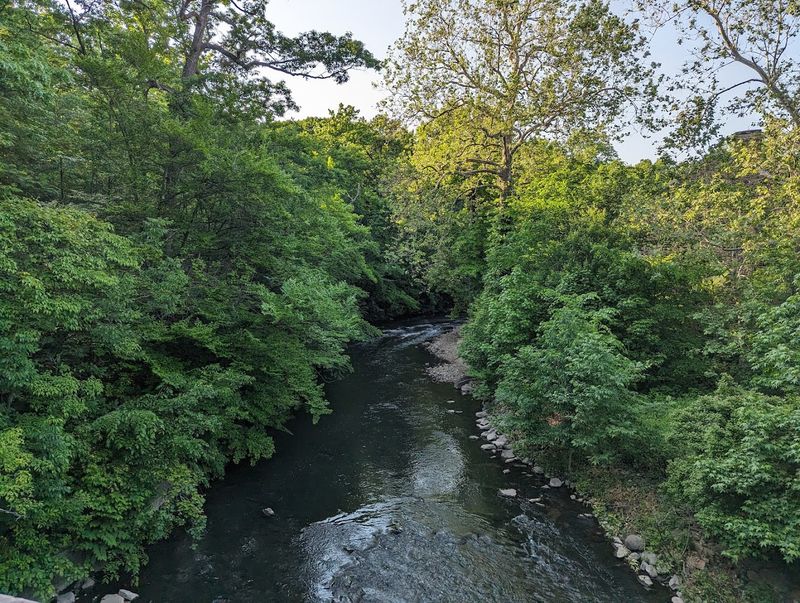
The Bronx River runs along the edge of the forest, and within the forest itself, a small stream and waterfall add a soundtrack that drowns out any city noise.
The sound of moving water changes the entire atmosphere of a place. Standing near the stream, you genuinely forget that one of the world’s busiest cities is just outside the tree line.
It feels like a completely different world.
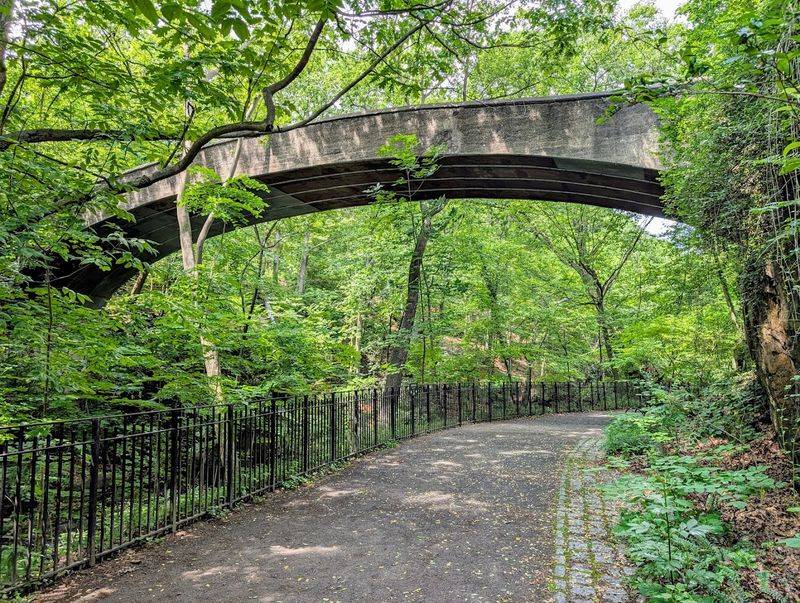
Hester Bridge crosses the Bronx River within the forest and offers a view upstream toward the falls. The bridge itself is a worthwhile stop.
From it, you can see the water moving over rocks that have been sitting in the same spot for centuries.
The Bronx River floodplain creates a diverse terrain inside the forest. Rocky ridges rise up from the flat areas near the water, giving the landscape a layered, dramatic quality that surprises most first-time visitors.
Early morning visits offer the best experience near the water. The light filters through the canopy at a low angle, the birds are most active, and the stream catches the glow in a way that looks almost too beautiful to be real.
Over 50 Acres Of Pure Old-Growth Woodland
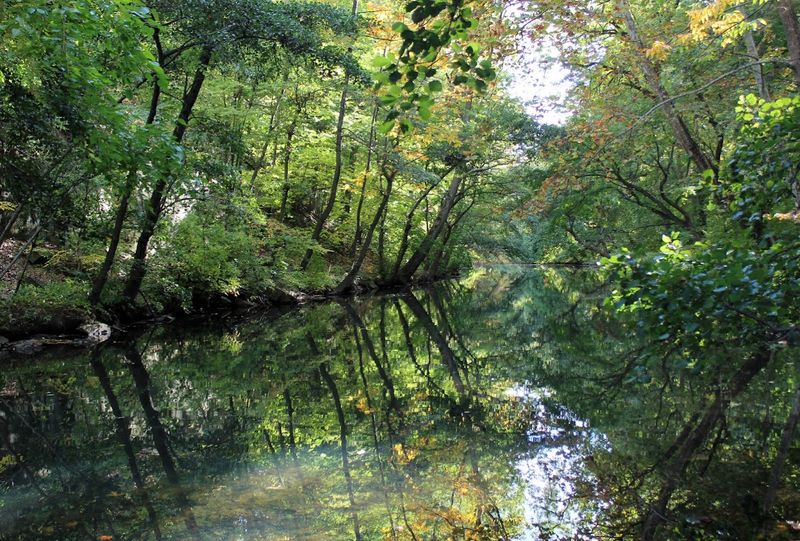
Fifty acres sounds like a number until you are actually standing inside it. This forest is large enough that the city completely disappears.
You cannot hear traffic. You cannot see buildings.
For stretches of the trail, you cannot see anything except trees in every direction.
The canopy overhead is a mix of oaks, tulip trees, sweetgums, and maples. Each species has a different texture, color, and shape.
In autumn, the combination turns the forest into something that looks almost painted.
Wildlife fills this space in ways that surprise urban visitors. Chipmunks dart across the trail without hesitation.
Birds call from high branches, and fungi spread across fallen logs in patterns that look architectural rather than natural.
The forest floor itself tells a story. Glacial marks left on boulders from the last ice age are visible along certain sections of the trail.
Those scratches in the rock are older than any tree in the forest. That detail tends to stop people in their tracks.
The Thain Family Forest is accessible during the New York Botanical Garden’s regular operating hours, which are typically 10 AM to 6 PM, Tuesday through Sunday (hours may vary for special events and holidays).
A Living Classroom For Birds And Wildlife
Birdwatchers treat this forest like a treasure map with new surprises every visit. The dense canopy and varied terrain create ideal habitat for dozens of bird species throughout the year.
Bring binoculars and patience, and you will be rewarded.
Chipmunks are practically the unofficial greeters of the trail. They appear constantly along the Spicebush Trail and the forest floor, completely unbothered by visitors.
Watching them work through the leaf litter is genuinely entertaining.
Fungi deserve special attention here. The fallen trunks throughout the forest are covered in remarkable mushroom formations that break down the wood and return nutrients to the soil.
It is a slow, beautiful process happening right in front of you.
The ecological value of this forest goes far beyond aesthetics. Old-growth forests like this one support biodiversity that younger, replanted forests simply cannot replicate.
The age and continuity of this ecosystem is what makes it scientifically significant.
Educational placards placed throughout the forest explain the ecological relationships between species in plain, accessible language. Children and adults both find them genuinely interesting rather than dry or academic.
The forest teaches without making it feel like a lesson, and that balance is rare and impressive.
The Story Behind The Forest’s Name And Restoration
Every great place has a story behind its name. This forest was named after John and Carmen Thain, whose support funded a major restoration effort completed in 2011.
That restoration helped protect and preserve the forest for future generations.
Before the restoration, some areas of the forest had been impacted by invasive plant species. The work involved carefully removing those invasives and allowing the native understory to recover.
The results are now visible throughout the forest.
Visiting is straightforward. The forest is part of the New York Botanical Garden, and New York City residents can access the garden free on Wednesdays.
The website at nybg.org provides updated trail information and seasonal event details. Planning ahead makes the visit smoother, especially during peak autumn weekends when the forest draws larger crowds.
Arriving right at the 11 AM opening gives you the quietest and most peaceful experience of the trails.
Why This Forest Feels Unlike Anywhere Else In New York
Most city parks feel designed. This one feels discovered.
The difference is palpable from the moment you step off the maintained path and into the shade of a 300-year-old canopy. Something shifts in your chest and you slow down without deciding to.
Few places in New York City offer the opportunity to stand beside trees that were already centuries old as the city developed around them. That fact is not just interesting.
It is genuinely moving when you experience it in person.
The forest has a coolness to it even on hot summer days. The thick canopy blocks direct sunlight and the stream adds humidity that keeps temperatures noticeably lower than the surrounding neighborhood.
That physical comfort makes longer visits easy.
Visitors consistently describe the experience as serene and surprisingly emotional. There is something about being in the presence of something ancient and unhurried that recalibrates your sense of time.
The city’s pace simply does not reach this place.
Old-growth forest anywhere on Earth is precious. Old-growth forest inside a major city is nothing short of extraordinary.