12 Hidden Natural Wonders In New Mexico You Need To See At Least Once
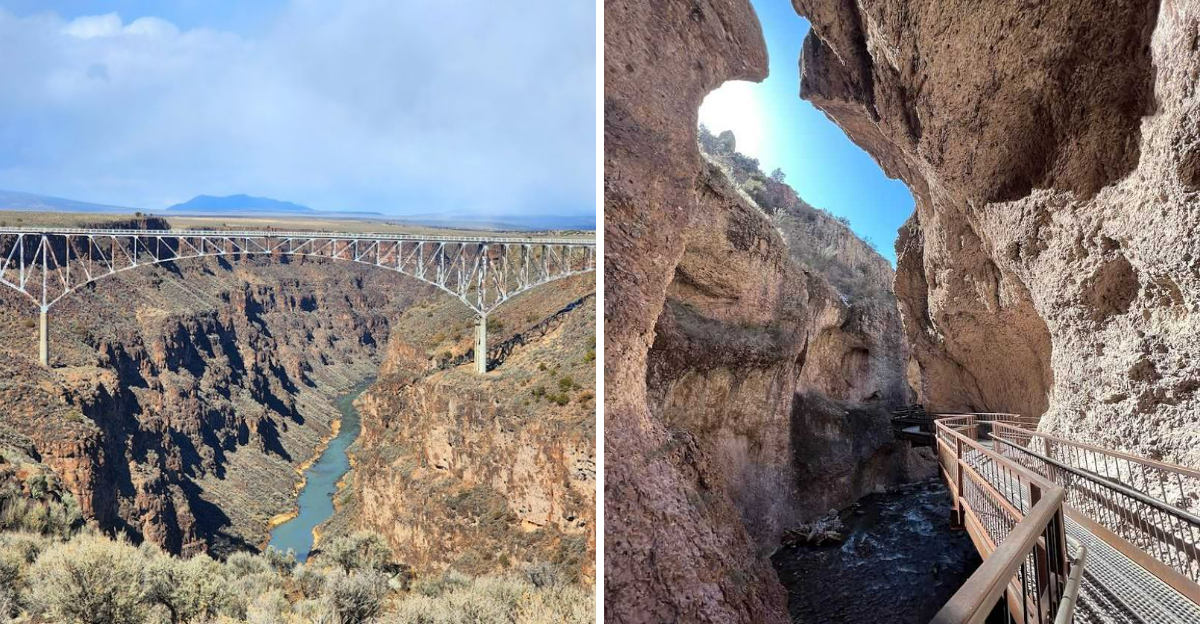
I have stood at the edge of landscapes in New Mexico that made me genuinely question whether I was still on the same planet. That is not an exaggeration.
This state operates on a different visual scale than almost anywhere else in the country. The colors hit harder.
The silence runs deeper. The formations look like something an architect dreamed up after a very long and creative night.
Most people drive through New Mexico thinking they already know what it looks like. They are wrong.
The real surprises are the ones that do not show up on the most shared travel lists. Ancient, remote, and almost impossibly beautiful, they have been out there the whole time.
This state rewards the people who go looking, and what they find tends to stay with them for a very long time.
1. White Sands National Park
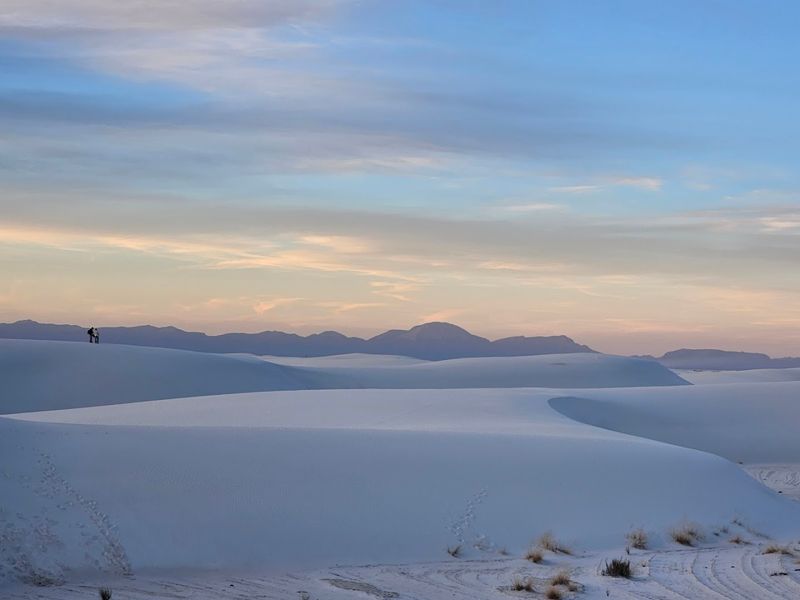
Picture the whitest sand you have ever seen, then multiply it by 275 square miles. White Sands National Park, located at 19955 US-70, Alamogordo, NM 88310, holds the largest gypsum dune field on Earth.
What makes this place truly wild is that gypsum sand does not absorb heat. You can walk barefoot across these dunes in the middle of summer without burning your feet.
The dunes shift and change shape constantly, moved by desert winds. Every visit looks slightly different from the last one you made.
Hiking trails wind through the white landscape like paths through a snowy world. Rangers lead evening programs that explain how this surreal environment formed over thousands of years.
Dune sledding is a real activity here, and it is every bit as fun as it sounds. Rent a sled at the visitor center and launch yourself down a soft white slope.
Sunsets here turn the dunes shades of pink and gold that feel almost too pretty to be real. Arrive at least an hour before sunset to find a good spot before the crowds do.
2. Carlsbad Caverns National Park
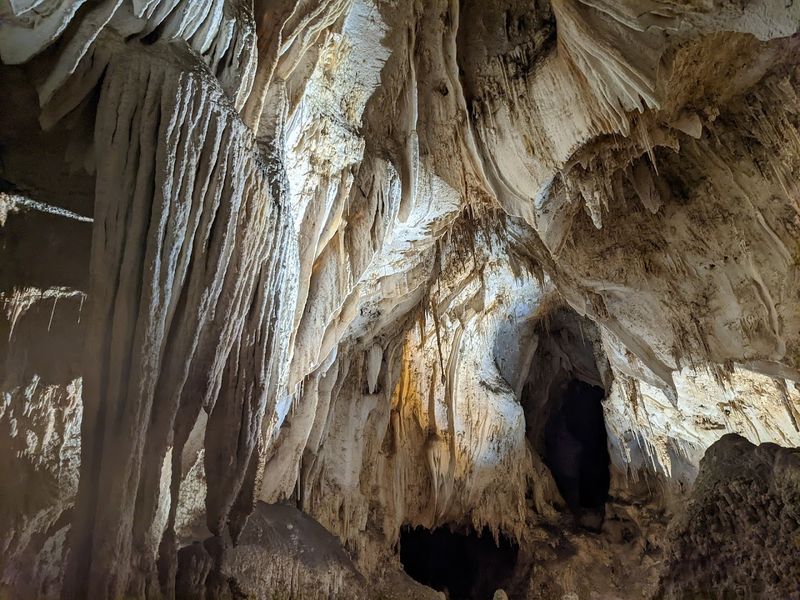
Going underground has never felt this dramatic. Carlsbad Caverns National Park, at 727 Carlsbad Cavern Hwy, Carlsbad, NM 88220, contains one of the largest cave chambers in North America.
The Big Room stretches 4,000 feet long and 625 feet wide. Standing inside it feels like being swallowed by the earth in the best possible way.
Stalactites hang from the ceiling like stone icicles. Stalagmites rise from the floor like ancient sculptures nobody commissioned but everyone admires.
You can hike down the natural entrance trail, a winding path carved into the cave wall. The temperature inside stays around 56 degrees Fahrenheit, so pack a light jacket even in summer.
Every evening from spring through fall, hundreds of thousands of Brazilian free-tailed bats spiral out of the cave entrance at dusk. It is one of the most spectacular natural shows you will ever witness for free.
The self-guided audio tour gives solid context without slowing you down. Budget at least two hours to explore the main loop properly and soak in the scale of this underground world.
3. Kasha-Katuwe Tent Rocks National Monument
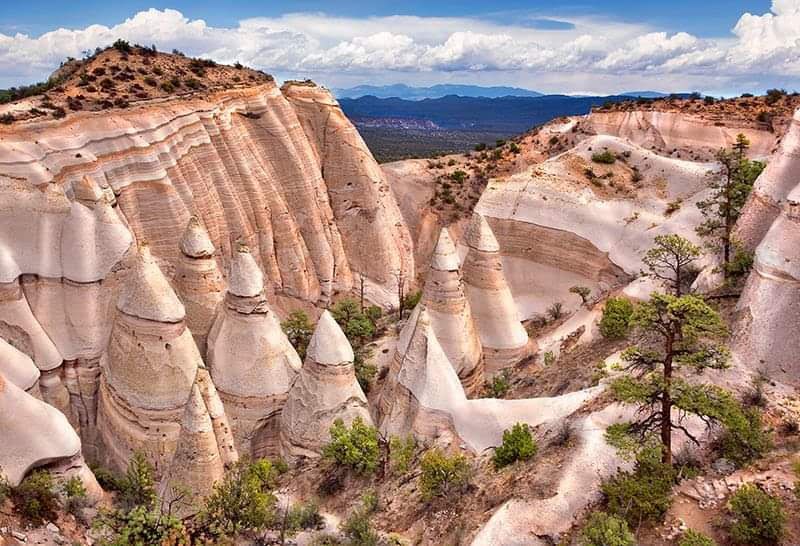
Most people drive straight past this place without a second glance. That is honestly their loss, because Kasha-Katuwe Tent Rocks National Monument, on NM-22 in Cochiti Pueblo, NM 87072, is one of the most visually striking hikes in the entire Southwest.
Volcanic eruptions millions of years ago left behind cone-shaped formations called tent rocks. Wind and water spent centuries carving them into the pointed shapes you see today.
The Canyon Trail is about three miles round trip and winds through a slot canyon barely wide enough for two people. You squeeze between towering walls of pale pumice and tuff before emerging on a ridge with sweeping views.
The color palette here is something else entirely. Creamy whites, soft pinks, and dusty oranges layer together like a geological birthday cake nobody asked for but everyone appreciates.
Bring plenty of water because shade is scarce once you climb above the canyon. Morning visits are cooler and the light hits the rocks at a beautiful low angle perfect for photos.
Permits are required for entry, so check the official monument website before heading out. Planning ahead saves a lot of frustration at the gate.
4. Valles Caldera National Preserve
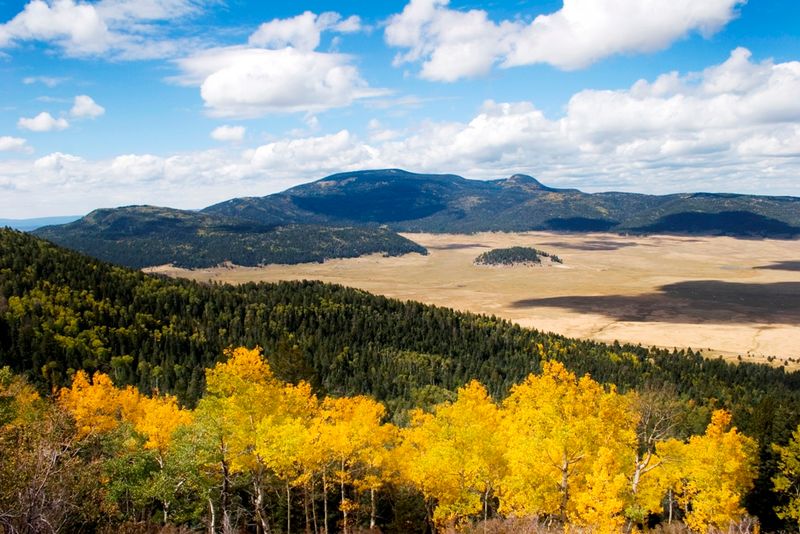
Imagine a volcano so enormous that when it collapsed, it created a valley 13 miles wide. Valles Caldera National Preserve, at 39201 NM-4, Jemez Springs, NM 87025, is exactly that kind of place.
The caldera formed about 1.25 million years ago after a massive volcanic eruption. What remains today is a stunning bowl of green meadows, forested ridges, and crystal-clear streams.
Elk herds roam the valley floor in large numbers, especially in the early morning hours. Spotting a herd of several hundred elk against that backdrop is a moment that sticks with you for years.
Hiking, fishing, snowshoeing, and cross-country skiing are all available depending on the season. The preserve manages visitor numbers carefully, which keeps the experience peaceful and uncrowded.
The Valle Grande meadow at the center of the caldera is visible right from the highway. Even a quick stop to take it all in from the roadside is worthwhile.
Ranger-led programs run throughout the year and cover everything from geology to wildlife ecology. Booking a guided hike gives you access to areas of the preserve not open to independent visitors.
5. Bandelier National Monument
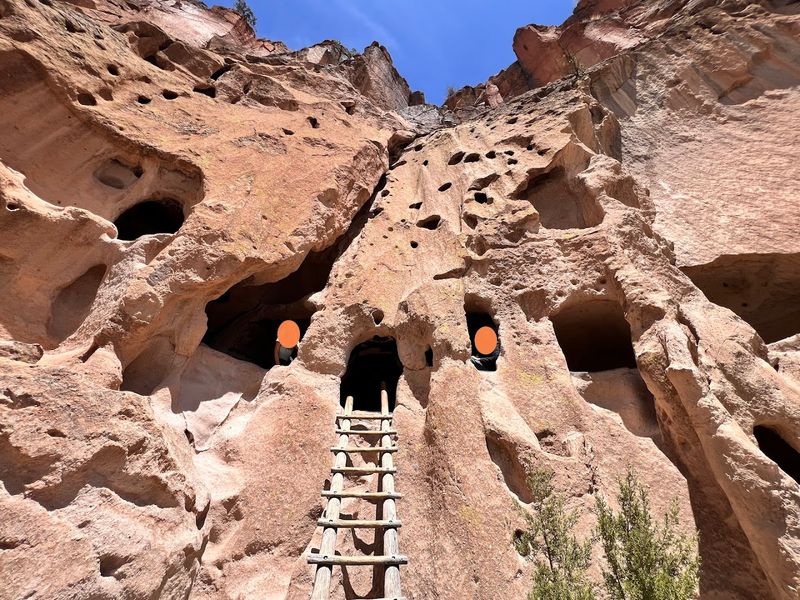
Climbing a wooden ladder into a 700-year-old cliff dwelling is not something you forget easily. Bandelier National Monument, at 15 Entrance Rd, Los Alamos, NM 87544, preserves the homes of the Ancestral Puebloan people who carved entire rooms into the soft volcanic canyon walls.
The main loop trail follows the base of Frijoles Canyon past dozens of carved cave rooms and ceremonial spaces. Some rooms are accessible by ladder, giving you a real sense of how people actually lived here.
The canyon walls are made of compressed volcanic ash called tuff, soft enough to carve with stone tools. Ancient hand and foot holds are still visible in the rock face after centuries of weathering.
Over 33,000 acres of backcountry surround the main ruins area. Serious hikers can spend multiple days exploring remote mesa tops and canyon floors with very few other people around.
The visitor center does a genuinely good job explaining the history without dumbing it down. Pick up a trail map there and note which areas require permits for backcountry access.
Mornings are ideal for visiting before the canyon heats up. The golden light in the canyon during the first hour after sunrise is almost unreasonably photogenic.
6. Bisti/De-Na-Zin Wilderness
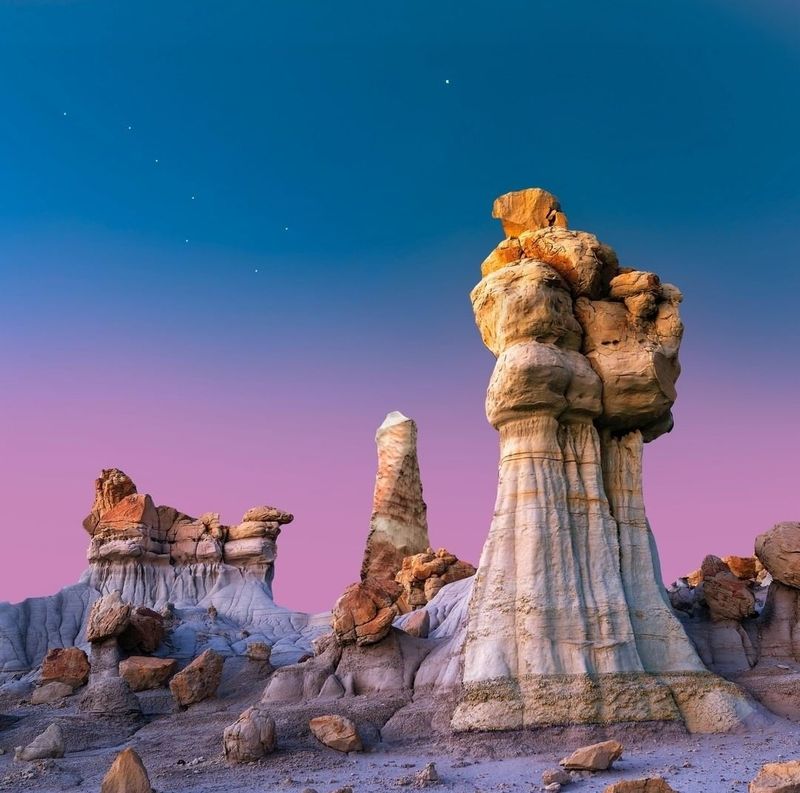
Nothing quite prepares you for the Bisti Badlands. Bisti/De-Na-Zin Wilderness, off County Road 7297 near Bloomfield, NM 87413, looks like a film set for a science fiction movie, except it is completely real.
The wilderness spans about 45,000 acres of eroded badlands filled with hoodoos, petrified wood, and strange sculptural formations. It was once the floor of an ancient inland sea, and fossils still surface from the cracked earth.
There are no marked trails here. You navigate using a downloaded map or GPS, which makes exploration feel genuinely adventurous rather than scripted.
Named formations include Hoodoo City, the Stone Wings, and the King of Wings. Each one requires some searching to find, which makes stumbling across them feel like a personal discovery.
Entry is completely free, and the area sees far fewer visitors than most national parks in the region. Solitude out here is real and easy to find even on weekends.
Sunrise and sunset visits produce the most dramatic lighting across the formations. Bring extra water, a charged phone, and a backup map because cell service is essentially nonexistent once you leave the road.
7. Rio Grande Del Norte National Monument
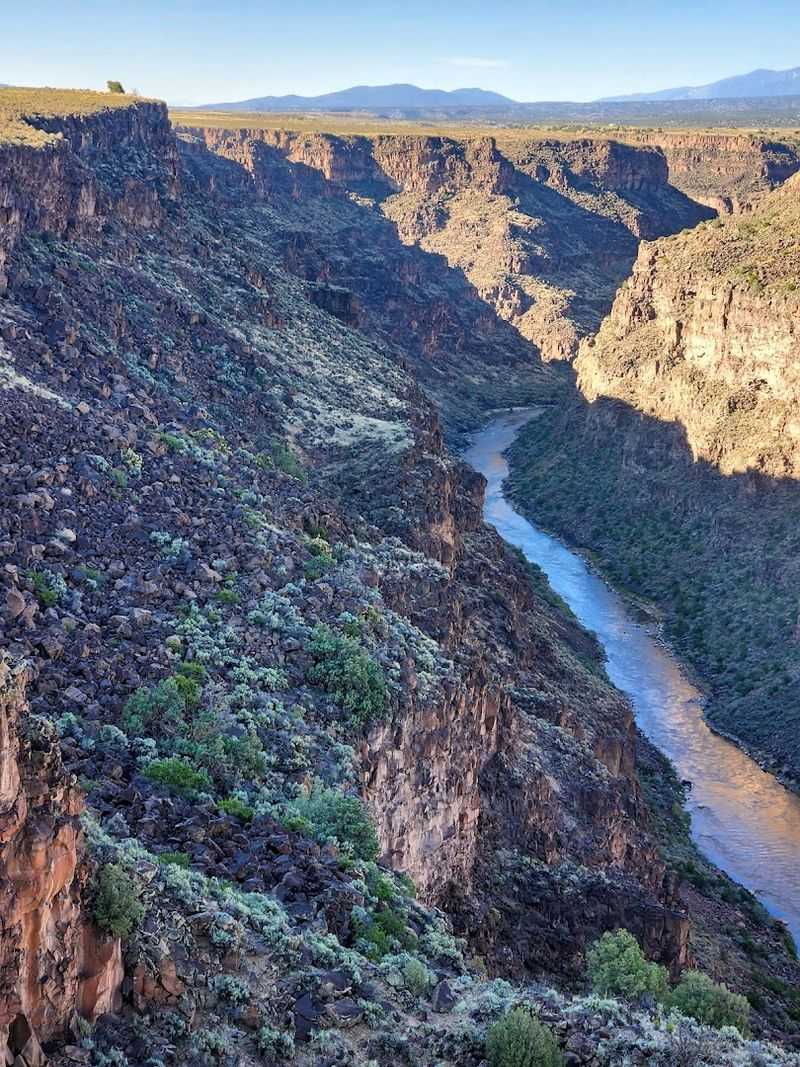
A river cutting 800 feet through solid volcanic rock is not a subtle sight. Rio Grande del Norte National Monument, along NM-68 near Embudo, NM 87531, protects a dramatic stretch of gorge where the Rio Grande has spent millions of years doing exactly that.
The monument covers nearly 243,000 acres of high desert plateau, volcanic cones, and deep river canyon. Wildlife here includes golden eagles, mule deer, pronghorn, and river otters spotted along the water’s edge.
Hiking trails run along both the canyon rim and the river itself. The rim trails offer vertiginous views straight down into the gorge, while river-level trails put you right beside the rushing water.
Fishing in this stretch of the Rio Grande is considered some of the best in the Southwest. Brown and rainbow trout thrive in the cold, clear water below the basalt walls.
The volcanic landscape above the canyon is dotted with cinder cones you can hike to the top of. Views from those summits stretch across the entire Taos Plateau on clear days.
Camping is available in several spots throughout the monument. Sleeping under a sky this dark and wide, far from city lights, is a genuinely memorable experience.
8. Rio Grande Gorge Bridge
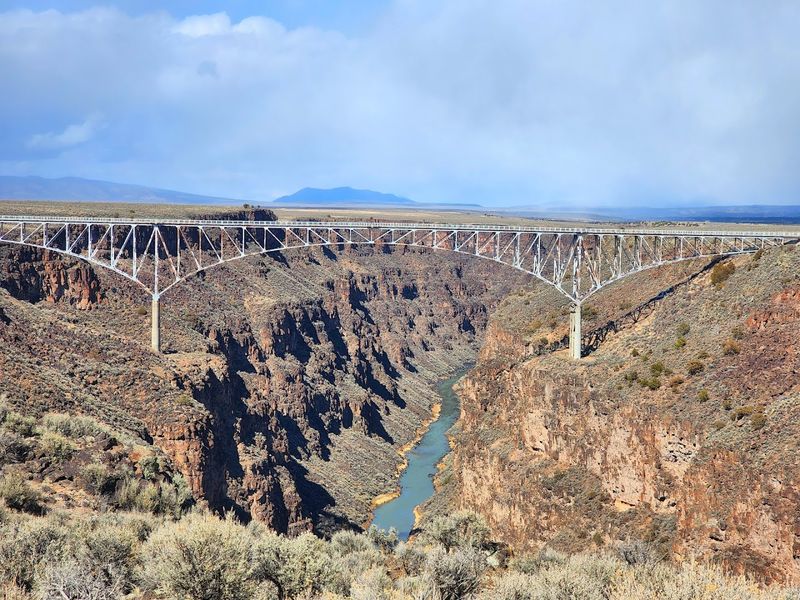
Standing on a bridge 650 feet above a river requires a moment to collect yourself. The Rio Grande Gorge Bridge, on US-64 near Taos, NM 87529, is one of the highest bridges in the United States and the view from its pedestrian walkway is genuinely jaw-dropping.
The bridge spans 1,280 feet across the gorge and was completed in 1965. Looking straight down through the metal grating beneath your feet at the river far below is an experience that tests your nerves in a fun way.
A small rest area on the west side of the bridge has parking and interpretive signs explaining the geology of the gorge. It is a free stop that takes about 20 minutes but leaves a lasting impression.
Sunrise visits are particularly rewarding when the gorge fills with golden light and the surrounding plateau glows warm orange. Photographers show up early for exactly this reason.
Wind along the gorge rim can be surprisingly strong, especially in spring. Hold onto hats and loose items when leaning over the railing for a look down.
The drive out to the bridge from Taos crosses wide open sagebrush plateau. That sudden drop into the gorge appearing out of nowhere makes the approach feel almost theatrical.
9. Jemez Soda Dam
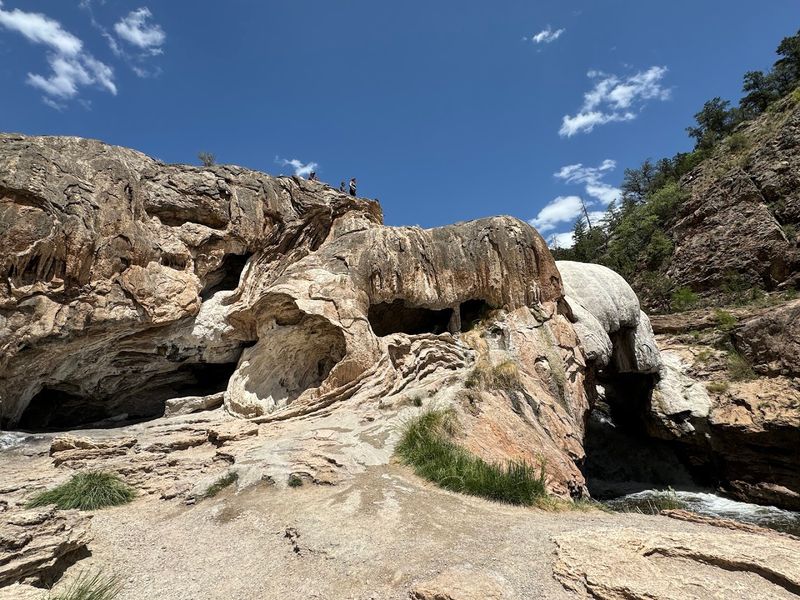
A natural dam built entirely by minerals sounds like something from a geology textbook. The Jemez Soda Dam, at 19219 NM-4, Jemez Springs, NM 87025, is a real calcium carbonate formation that has been slowly growing for about 7,000 years.
Hot spring water rich in dissolved minerals bubbles up along a fault line and deposits calcium carbonate as it cools. Layer by layer, over thousands of years, that process built the massive curved formation you see today.
The dam spans the Jemez River and creates a small pool of warm, mineral-rich water on the upstream side. The colors in the rock range from creamy tan to deep rust depending on the mineral content.
Parking is available right off the highway, making this one of the more accessible natural wonders on this list. You can see the main structure clearly from the road, but walking down for a closer look is worth the short scramble.
The surrounding Jemez Mountains area is loaded with other natural attractions nearby. Spence Hot Springs and Valles Caldera are both within a short drive of this spot.
Visiting in the morning before tour groups arrive gives you a quieter, more personal experience. The light hitting the mineral formations early in the day brings out their full color range beautifully.
10. Spence Hot Springs
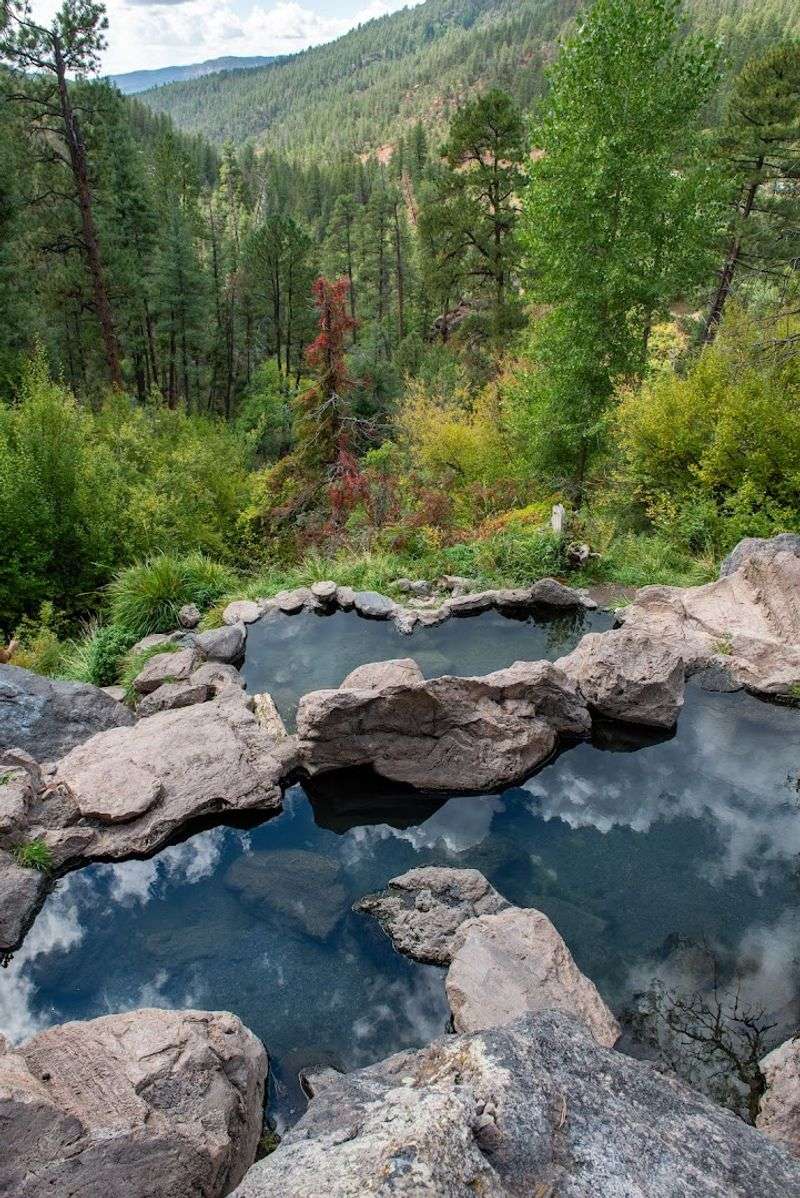
Few things feel better than soaking in a natural hot spring after a hike through a mountain forest. Spence Hot Springs, at 25976 NM-4 in Jemez Springs, NM 87025, sits on a hillside above the Jemez River and delivers exactly that kind of reward.
The springs feed a series of small natural pools carved into the rock face. Water temperatures vary by pool, ranging from comfortably warm to genuinely hot depending on how close you sit to the source.
Getting there requires a short but moderately steep hike of about half a mile from the roadside parking area. The trail climbs through ponderosa pine forest before opening up to the spring pools and their canyon views.
The setting is beautiful in every season. Fall color in the surrounding forest makes the hike in particularly scenic between late September and early October.
Arrive early on weekends because the pools fill up fast with visitors from Albuquerque and Santa Fe. Weekday mornings are the best time to find a quiet spot and actually relax.
Leave no trace principles are taken seriously here by regular visitors. Pack out everything you bring in and keep the water clean for the people who come after you.
11. Catwalk Recreation Area
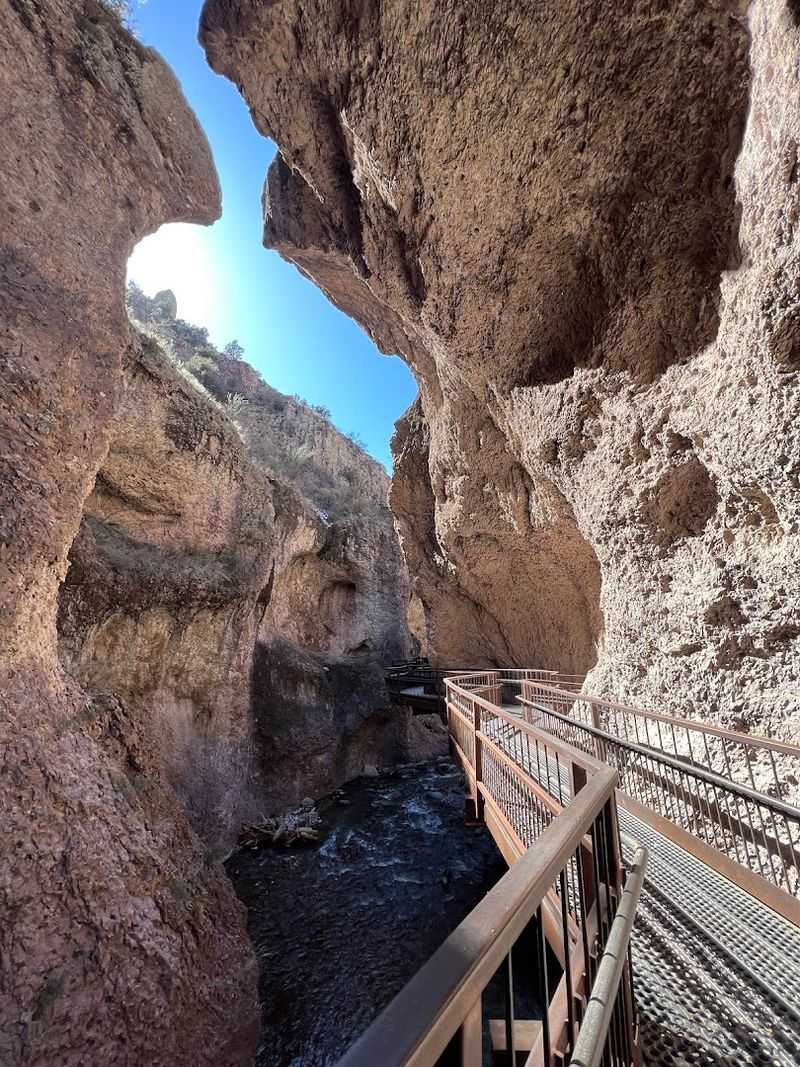
A metal walkway bolted directly into canyon walls above a rushing mountain stream sounds like something an engineer dreamed up on a very good day.
The Catwalk Recreation Area, on Catwalk Road near Glenwood, NM 88039, is exactly that, and it delivers a hiking experience unlike anything else in the Southwest.
The original catwalk was built in the 1890s to carry a water pipeline through Whitewater Canyon to a nearby mining operation. The modern steel walkway follows the same route through the narrow gorge.
Whitewater Creek runs directly below the walkway in spots, churning through boulders and carving deep clear pools. The sound of the water echoing off the canyon walls adds a whole extra layer to the experience.
The main trail is about 1.8 miles round trip and suitable for most fitness levels. Side trails continue further into the canyon for those wanting a longer and more rugged adventure.
Wildflowers bloom along the canyon walls in spring and early summer. The combination of rushing water, blooming plants, and sheer rock walls makes this one of the most photogenic hikes in the region.
The Catwalk sits within Gila National Forest, so a forest service day-use fee applies. Check current conditions before visiting since flash flooding can occasionally close the trail temporarily.
12. Gila National Forest
Over three million acres of wilderness, and most people have never heard of it.
Gila National Forest, headquartered at 3005 E Camino del Bosque, Silver City, NM 88061, is one of the largest national forests in the country and the site of the first designated wilderness area in U.S. history.
The Gila Wilderness was protected in 1924, decades before the federal Wilderness Act even existed. That history alone makes this forest worth understanding before you set foot on any trail.
Deep canyons, rugged mountain ranges, and clear streams define the landscape throughout the forest. Elk, black bear, mountain lion, and Gila trout all share this terrain in genuine wilderness conditions.
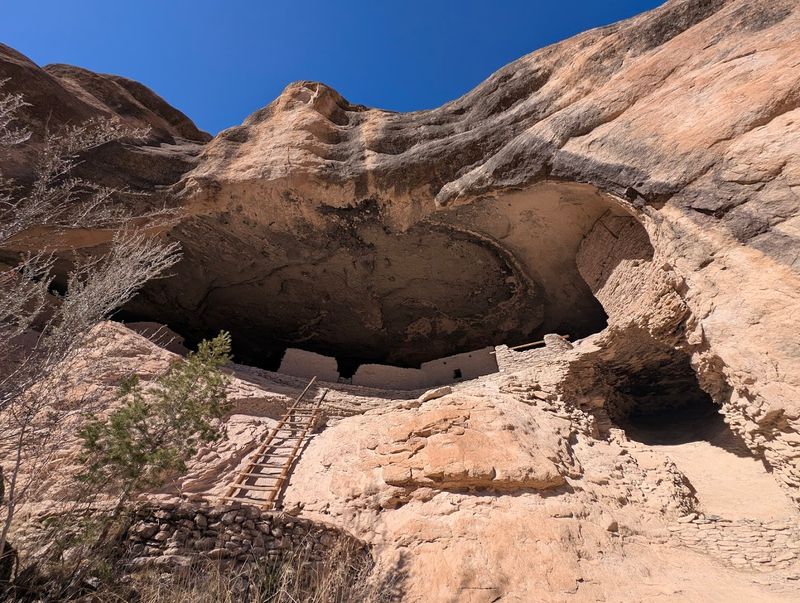
The Gila Cliff Dwellings National Monument sits within the forest and preserves cave rooms built by the Mogollon people around 1280 CE. Hiking to them takes about an hour round trip and feels like stepping into a completely different era.
Jordan Hot Springs is accessible via a challenging 15-mile out-and-back hike from the cliff dwellings trailhead. The reward at the end is a series of natural hot spring pools in one of the most remote settings in the region.
Plan multiple days if you want to experience even a fraction of what this forest offers. One visit is rarely enough once you realize how much is out here.