Nebraska Has A Huge Old-Time Museum And It’s Every Bit As Fascinating As You’d Hope
Some museums feel like they were built by one person with a hobby.
This one feels like someone tried to save an entire century before it could disappear.
Out in central Nebraska, a massive old-time collection turns a regular history stop into a sprawling walk through everyday objects from another era.
It is the kind of place where one room leads to another before the quick visit becomes a full-on expedition.
Nebraska can make the past feel wonderfully oversized.
Part of the draw is the sheer scale. Old cars sit beside vintage signs. Pioneer-era pieces share space with inventions, trains, and odd little details that make people stop and point.
Nothing feels too polished or distant. The appeal comes from seeing how much life and strangeness fits under one roof.
The Sheer Size Of The Place
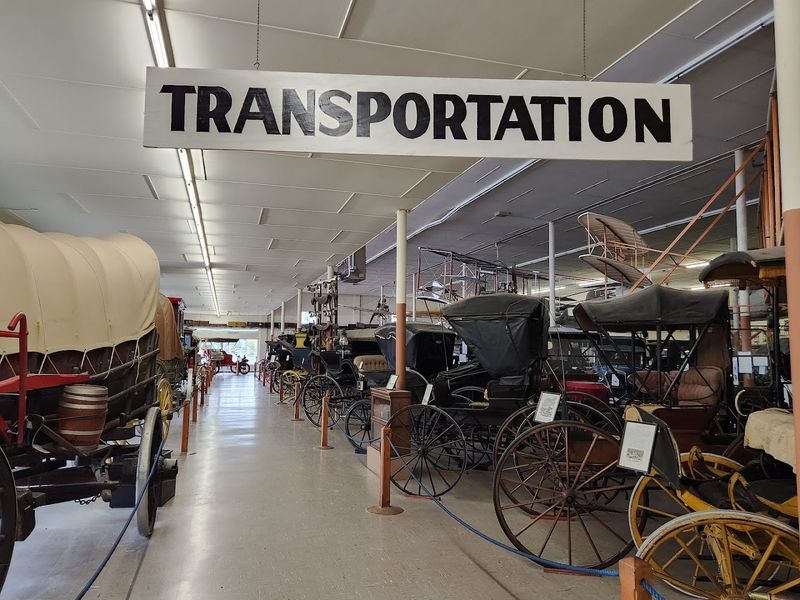
Few museums anywhere in the country can match the raw scale of what Harold Warp assembled in Minden, Nebraska.
The complex spans 20 acres and includes 28 buildings that hold more than 50,000 historical items, all restored to operating condition and none of them duplicates of each other.
That last detail is worth pausing on. Every single object in the collection is unique, which means there is no filler here and no repeated displays padded out to fill space.
The variety stretches from covered wagons to steam locomotives to vintage kitchen appliances, and the sheer density of objects can feel genuinely overwhelming in the best possible way.
Planning a visit without underestimating the footprint is the smartest thing a first-time visitor can do.
Comfortable shoes are a practical necessity because the grounds require real walking between buildings.
Located at 138 US-6, Minden, NE 68959, the museum is open year-round except on Thanksgiving and Christmas Day, which makes it accessible for most travel schedules throughout the year.
Follow American History In Chronological Order
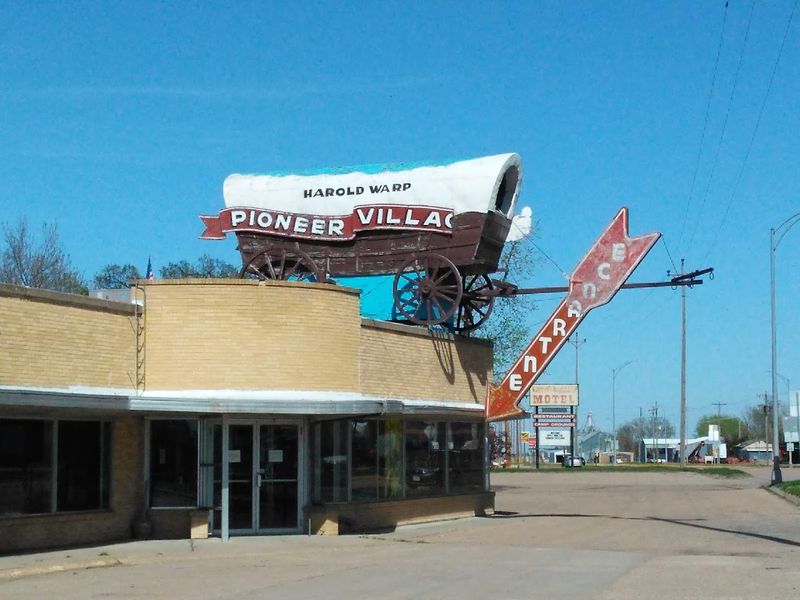
One of the most thoughtful design choices at Pioneer Village is the decision to arrange displays in chronological order rather than grouping objects by category alone.
Visitors essentially walk through time, watching how tools, furniture, transportation, and household technology evolved decade by decade from 1830 through the mid-1980s.
That structure gives the museum a narrative momentum that most collections lack.
Instead of wandering between random antiques, visitors can trace a clear arc of American ingenuity and daily life, noticing how each generation solved problems and improved on what came before.
The progression from hand tools to early machines to modern conveniences feels almost cinematic when laid out this way.
Full-sized room vignettes show how American kitchens and living spaces changed across different eras, complete with period-accurate furniture and household items.
Seeing a 1900s kitchen next to a 1940s kitchen next to a 1960s kitchen makes the pace of change feel surprisingly fast and genuinely fascinating.
The chronological format is especially useful for younger visitors who may find history easier to absorb when it has a clear beginning, middle, and direction.
Walk Around Historic Buildings On The Green
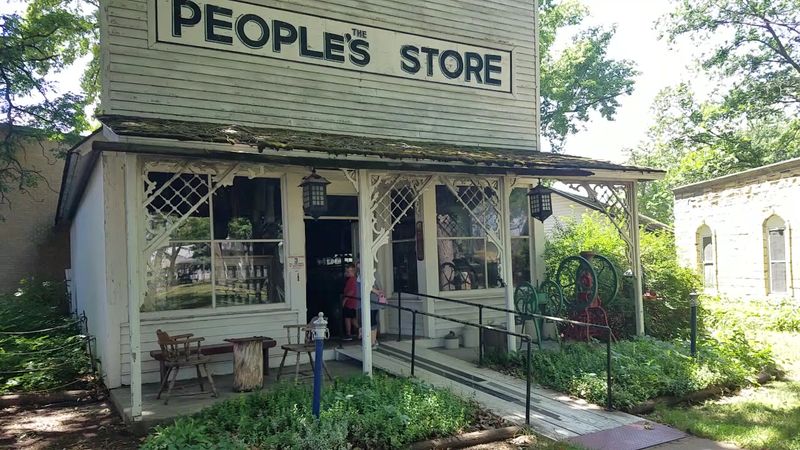
Walking the village green at Pioneer Village feels different from any standard indoor museum experience.
Original historic structures have been relocated to the site and arranged around a circular green, creating the atmosphere of a real frontier settlement rather than a climate-controlled exhibit hall.
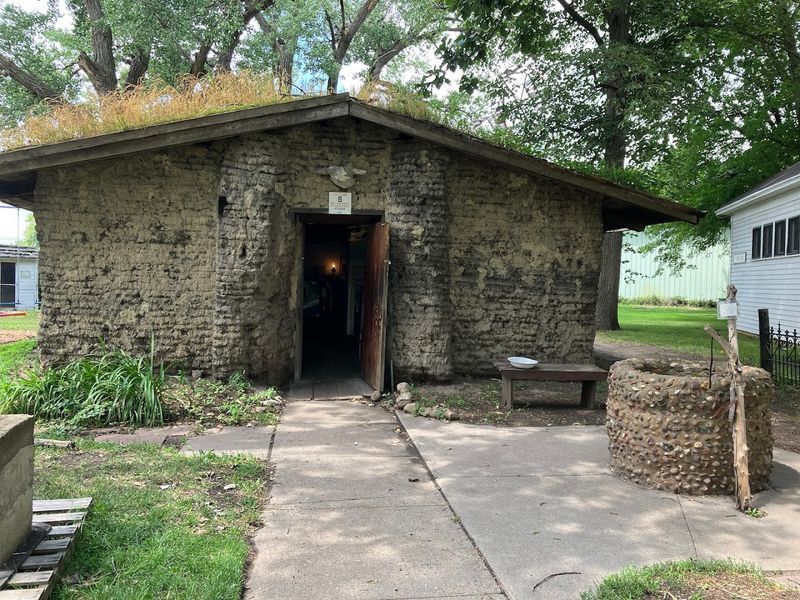
Among the buildings gathered on the grounds are a frontier fort, a Pony Express Station, a replica of Harold Warp’s sod house birthplace, Minden’s first church, a country schoolhouse, a general store, and a railroad depot.
Each structure has its own interior displays and period details that make stepping inside feel like a small time warp.
The sod house is particularly striking because it connects directly to the museum’s origin story.
Warp was born in a sod house near Minden in 1903, and the replica honors that humble starting point in a way that feels personal rather than performative.
Moving from building to building across the green on a clear day can be genuinely pleasant, especially when the pace stays relaxed enough to read the signage and absorb what each structure represents.
See Why The Collection Feels Almost Endless
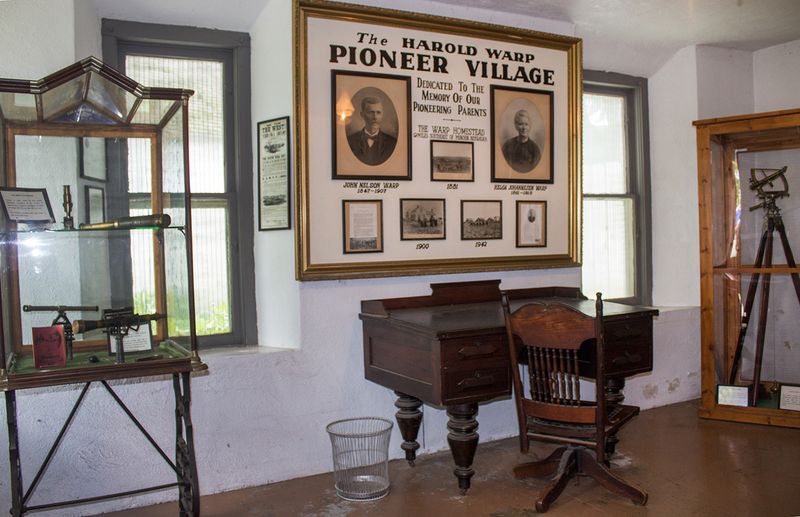
Describing Pioneer Village as comprehensive barely scratches the surface of what the collection actually contains.
With more than 50,000 unique items packed into 28 buildings, the museum covers everyday Americana from farming equipment and medical tools to print shop machinery, barbershop furniture, and musical instruments.
Thematic displays recreate historic workplaces and domestic spaces in full-size detail, so visitors can peer into a period doctor’s office or a vintage print shop and see the actual tools of those trades.
The density of objects in each building rewards slow, attentive visitors who are willing to read the labels and follow the stories attached to individual pieces.
A notable highlight within the collection is an original art section featuring Currier and Ives prints, Jackson paintings, and a significant gathering of Rogers statues.
Seasonal demonstrations of traditional crafts such as yarn spinning, weaving, and broom making bring the collection to life in a hands-on way that static displays cannot replicate.
Visitors who try to rush through tend to leave feeling like they missed the best parts hidden deeper in each building.
Make Time For The Antique Cars
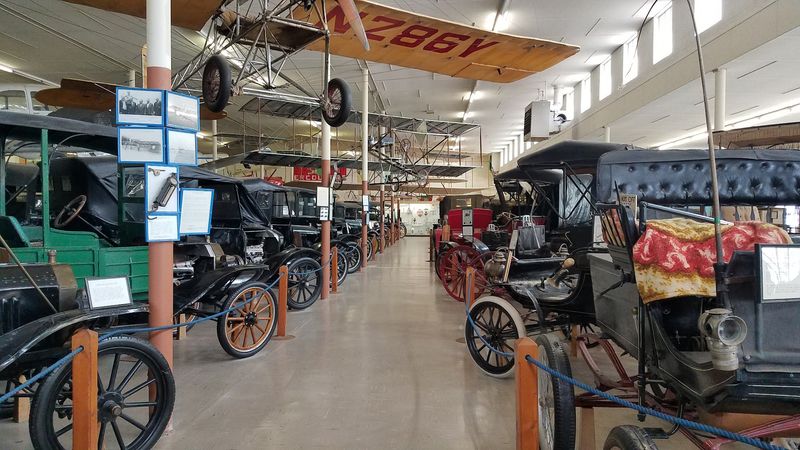
Car enthusiasts have a compelling reason to make Pioneer Village a dedicated stop rather than a casual detour.
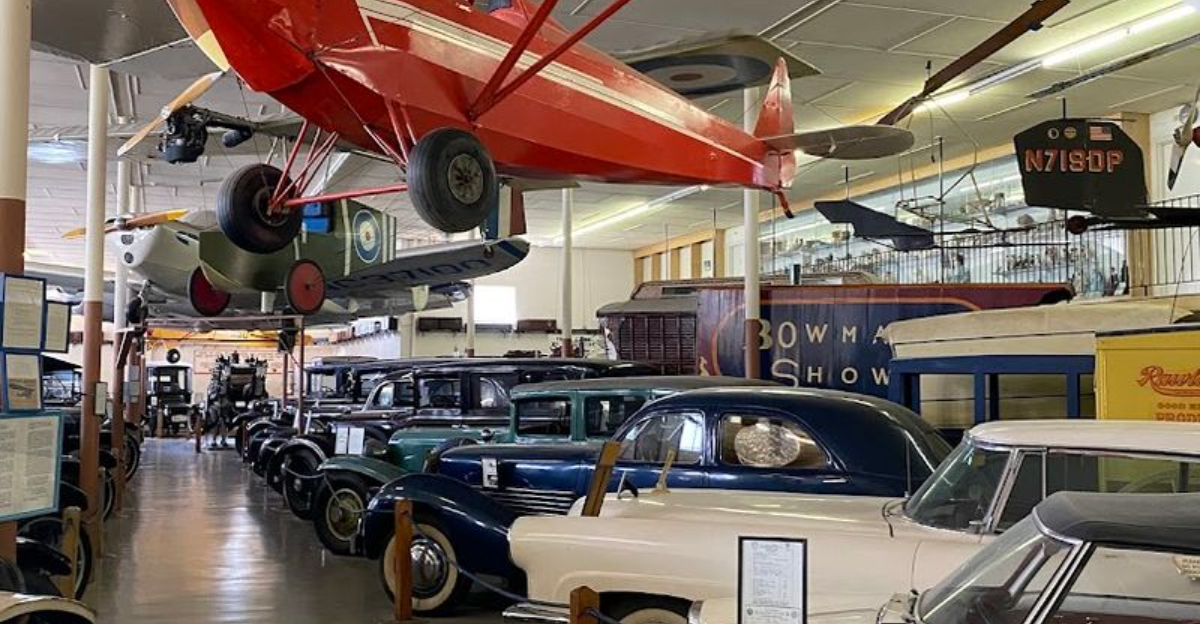
The automobile collection includes around 350 antique cars.
Among them are genuinely rare examples such as the world’s oldest surviving Buick, a 1902 Cadillac, and a 1903 Ford that together represent the earliest days of American automotive history.
Most of the vehicles are displayed in original or restored condition, which means visitors can see the actual materials, proportions, and mechanical details of early cars rather than reproductions.
The progression from horse-drawn carriages to early motorized vehicles to mid-century automobiles is laid out in a way that makes the speed of automotive development feel remarkable.
Beyond the cars themselves, the surrounding context of buggies and early transportation equipment helps visitors understand what people were giving up and what they were gaining as motorized travel became more common.
Spending an hour in just the vehicle exhibits alone is entirely reasonable for anyone with even a passing interest in mechanical history.
The scale of the collection means that even repeat visitors tend to notice something they overlooked on a previous trip through the automotive displays.
Look For Trains, Tractors, And Flying Machines
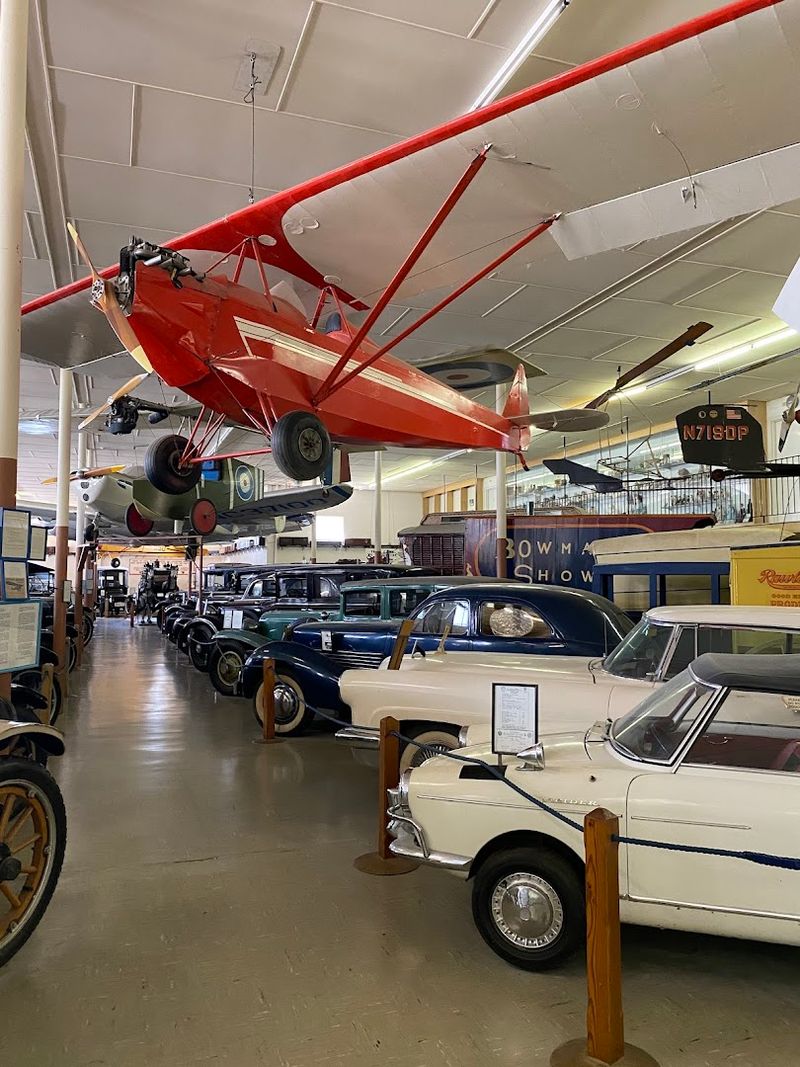
Transportation history at Pioneer Village extends well beyond the automobile collection.
The museum holds more than 100 antique tractors in what is considered one of the largest such collections in the world, along with 17 historic flying machines that trace the early development of aviation.
Three steam locomotives are also part of the collection, giving the transportation exhibits a sweep that covers land, air, and rail in a single visit.
Seeing all of these modes of transport gathered in one place creates a vivid picture of how dramatically American movement changed between the mid-1800s and the mid-1900s in just a few generations.
The tractor collection is especially meaningful in a region where agriculture shaped the landscape and the economy for more than a century.
Alongside the tractors, visitors can find early sod cutters, harvesting equipment, and rare corn harvesting devices that connect directly to the kind of farming that defined Great Plains life.
The aviation displays add an unexpected layer of excitement to the visit, particularly for younger visitors who may not expect to find historic aircraft inside a museum that also houses a frontier fort and a sod house.
Appreciate The Harold Warp Backstory
The story behind Pioneer Village is just as interesting as the collection itself.
Harold Warp was born in 1903 in a sod house near Minden, Nebraska, and went on to become a successful entrepreneur before channeling his resources into preserving the everyday objects of American life.
The project began in 1948 when Warp purchased his own childhood one-room schoolhouse to prevent it from being demolished.
That single act of preservation turned into a decades-long mission to collect, restore, and display the tools, vehicles, furniture, and structures that told the story of how ordinary Americans lived and worked from 1830 onward.
By 1953, the museum opened to the public, and in 1983 it transitioned into a 501(c)(3) nonprofit foundation while remaining family-operated.
The personal motivation behind the collection gives Pioneer Village a warmth that corporate or government-funded museums sometimes lack.
Warp was not an academic institution building a curated exhibit for scholars.
He was a Nebraska kid who grew up in a sod house and wanted to make sure future generations could see exactly where the country came from and how far it had traveled in a remarkably short span of time.
Expect Americana More Than Oddities
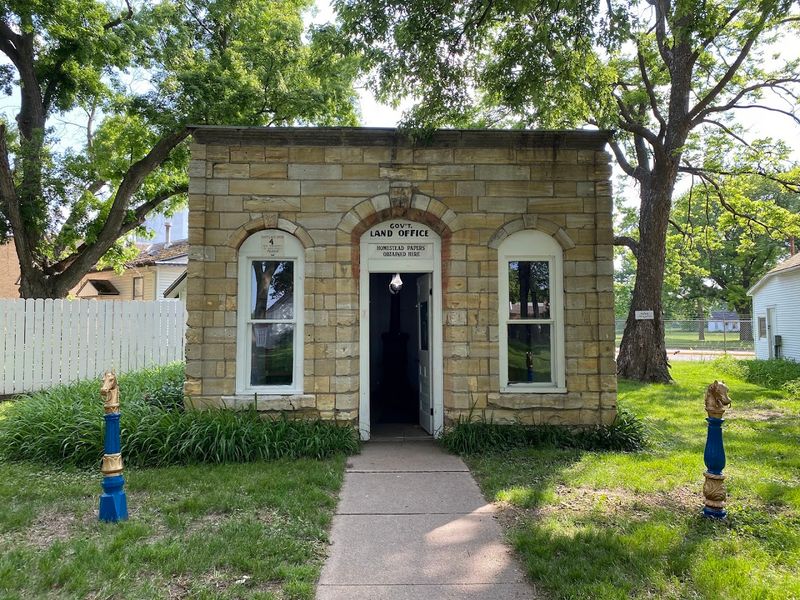
Pioneer Village is unusual not because it contains strange or shocking objects but because of the extraordinary breadth and depth of its Americana.
The museum’s mission statement describes its purpose as showing “How America Grew,” and that framing captures the experience accurately.
Full-sized room recreations of American homes across different decades sit alongside working blacksmith shops, vintage barbershops, and period medical offices, all filled with authentic objects from the eras they represent.
The effect is less like looking at relics behind glass and more like wandering through a carefully preserved slice of daily life that most people’s grandparents or great-grandparents would immediately recognize.
A steam-operated carousel is part of the collection as well, adding a touch of playfulness to the otherwise educational atmosphere.
The museum also holds the world’s oldest internal combustion engine from 1876, which puts the entire industrial and mechanical story into sharp perspective.
Visitors who arrive expecting a quirky roadside attraction tend to leave realizing they spent hours inside one of the most serious and genuinely impressive collections of American material culture assembled anywhere outside of Washington, D.C.