History And Nature Lovers Will Find Plenty To Do On These 9 Virginia Adventures
History and wild scenery rarely share one trip. Here they do, and it never gets old. Smoky ridges roll along the western edge.
Wild beaches stretch along the shore. Virginia packs an unreal range into one compact state. I have explored it for years and still get surprised.
Centuries of stories hide in the forests and riverbanks. These adventures mix the past with the outdoors. You learn something and breathe deep at the same time.
The variety keeps every trip fresh. Pick a few and plan a long weekend. Ridges greet you at dawn. History waits by noon.
You will talk about it for months.
1. Shenandoah National Park, Luray And Front Royal
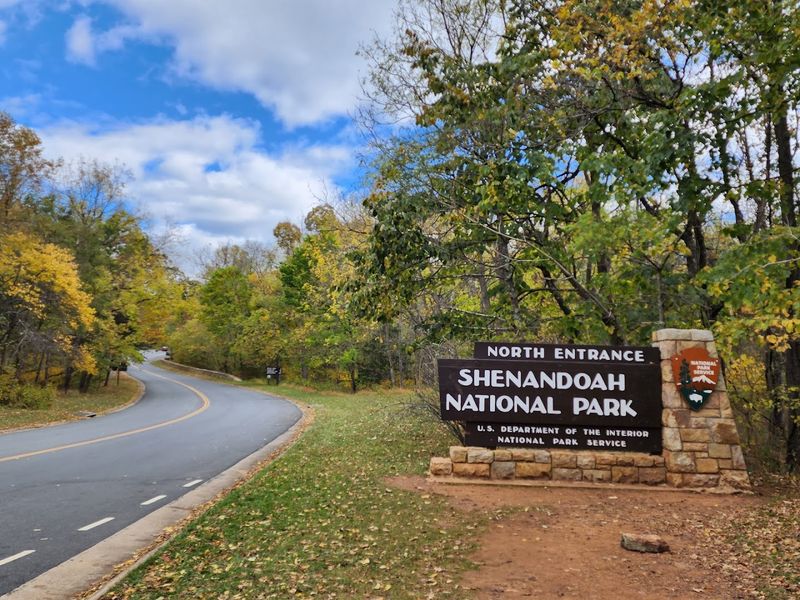
Believe me, few roads in America reward a slow drive the way this one does.
Skyline Drive stretches 105 miles along the crest of the Blue Ridge Mountains in Shenandoah National Park. Every overlook reveals a sweeping valley below, and the light shifts constantly throughout the day.
The park carries deep history from the Civilian Conservation Corps, or CCC. Young workers built trails, shelters, and stone walls here during the 1930s.
Their craftsmanship blends so naturally into the landscape that it almost looks ancient.
Hiking options range from flat, easy strolls to serious ridge climbs. Old Rag Mountain is one of the most beloved hikes on the East Coast.
The rocky scramble near the summit makes it unforgettable for anyone who tackles it.
Deer graze roadside at dusk like it is completely normal. Black bears occasionally wander across the drive, which always gets hearts racing.
Bring binoculars, because the wildlife here is genuinely spectacular. The best times to come are spring for wildflowers and fall for foliage.
Summer weekends get crowded near the popular overlooks. Arriving early on any day almost always guarantees a quieter, richer experience.
Luray and Front Royal serve as the main gateway towns on either end. Both offer lodging, restaurants, and easy park access.
Luray Caverns nearby is a worthy bonus stop that adds a subterranean twist to your mountain adventure.
2. Colonial Williamsburg And Historic Jamestowne, Williamsburg
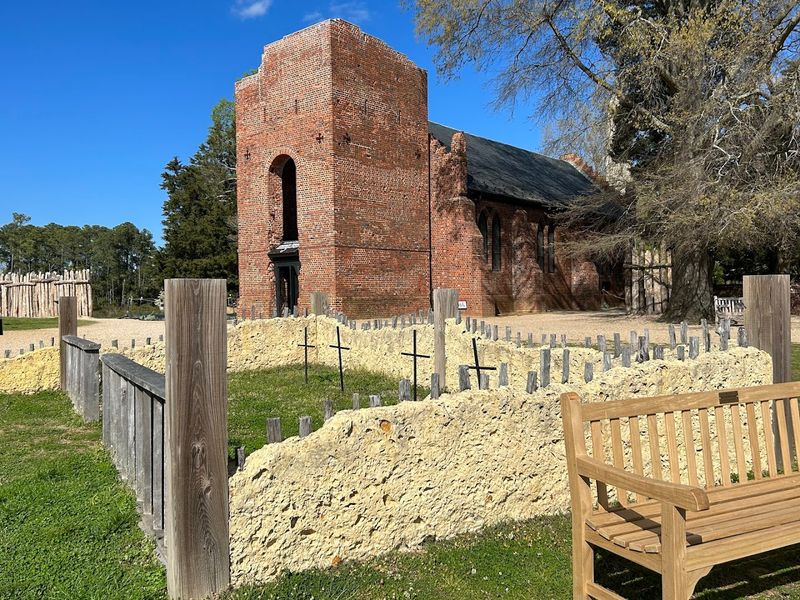
Can you believe that an entire colonial city was essentially brought back to life here?
Colonial Williamsburg and Historic Jamestowne sit in the heart of the Virginia Peninsula, near the James River in Williamsburg. Together they form one of the richest living history corridors in the United States.
Colonial Williamsburg covers 301 acres of restored 18th-century buildings. Costumed interpreters carry out colonial trades, debates, and daily routines throughout the grounds.
Walking the Duke of Gloucester Street feels like flipping through a history textbook in the best possible way.
Just a short drive away, Historic Jamestowne marks the site of the first permanent English settlement in America, founded in 1607. Ongoing archaeological digs continue to uncover artifacts from the earliest colonial era.
Watching real excavations happen in real time adds an electric layer of discovery to any tour.
The James River setting gives both locations a moody, atmospheric quality.
Marshlands and ancient trees frame the original fort site beautifully. Sunset over the river from the Jamestowne waterfront is genuinely hard to beat.
Kids and adults both tend to get hooked here, which is rarer than you might think. Interactive programs make history tangible rather than textbook-dry. Plan at least two full days to do both areas proper justice.
Spring and fall are the most comfortable seasons for exploring on foot. Summer brings more events and programs but also more crowds. Either way, this corner of Virginia earns its reputation every single time.
3. Mount Vernon, Fairfax County
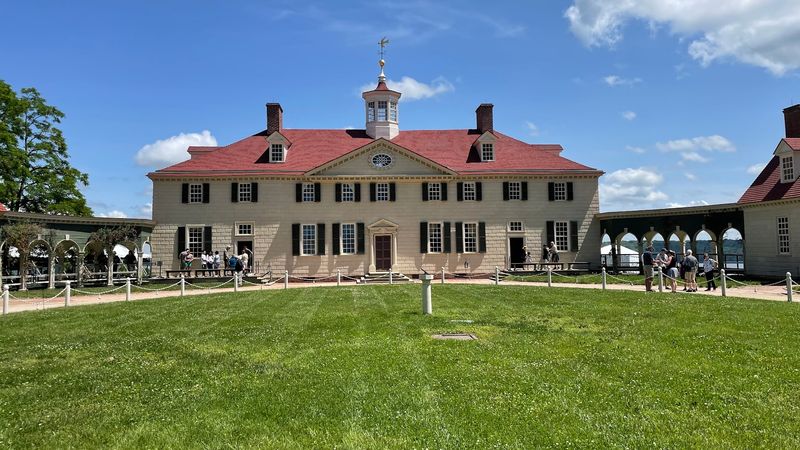
Who would have thought that a working farm could feel this grand and this grounded at the same time?
Mount Vernon sits on a sweeping bend of the Potomac River in Fairfax County, about 16 miles south of Washington, D.C. The estate was home to George Washington for most of his adult life.
The mansion itself is an elegant 21-room structure with a distinctive red roof and a long piazza facing the river.
Washington designed many of the architectural details himself over decades of renovations. Standing on that piazza with the Potomac glittering below is one of those quietly powerful moments.
The property spans about 500 acres and includes working gardens, a greenhouse, a gristmill, and a distillery. Seasonal gardens bloom in spectacular waves from early spring through late fall.
The kitchen garden alone offers a fascinating window into 18th-century agricultural life.
The museum and education center on the grounds houses thousands of original artifacts. Washington’s personal belongings, military equipment, and correspondence are displayed with impressive context.
The attention to historical accuracy throughout the estate is genuinely commendable.
A riverside trail connects the mansion area to the wharf and a small beach along the Potomac. Boat tours from the wharf offer a completely different perspective on the estate.
Seeing Mount Vernon from the water the way Washington himself would have seen it is a special experience.
The address is 3200 Mount Vernon Memorial Highway, Mount Vernon. Year-round access makes this one of Virginia’s most consistently rewarding historical outings.
4. Monticello, Charlottesville
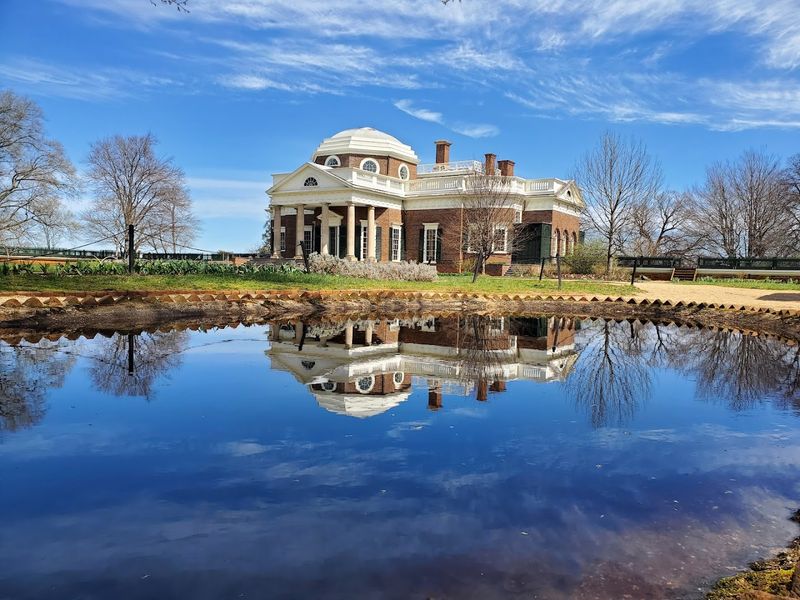
I must admit, no building in Virginia has made me stop and stare quite the way Monticello does.
Perched on a hilltop in the Blue Ridge foothills near Charlottesville, Monticello was the lifelong architectural obsession of Thomas Jefferson. He spent 40 years designing, building, and redesigning it.
The house is instantly recognizable thanks to its iconic dome and neoclassical symmetry. Jefferson drew inspiration from European architecture he encountered during his time in France.
The result is unlike anything else in early American design.
Beyond the architecture, Monticello tells a layered and sometimes complicated story. The Mountaintop Project has worked to more fully interpret the lives of the enslaved people who built and maintained the estate.
These additions to the tour experience make Monticello more honest and more meaningful than ever before.
The gardens are genuinely worth a long, slow wander. Jefferson was a passionate botanist who experimented with hundreds of plant varieties on the property.
His vegetable terrace garden stretches 1,000 feet along the mountainside in a dramatic, organized sweep.
Views of the surrounding countryside from the hilltop are quietly stunning. The Blue Ridge Mountains frame the horizon in every direction.
On a clear morning, the mist hanging in the valleys below creates an almost painterly scene.
Monticello is located at 931 Thomas Jefferson Parkway, Charlottesville. Guided tours fill up quickly, especially in spring and summer, so booking ahead is a very smart move.
5. Appomattox Court House National Historical Park, Appomattox
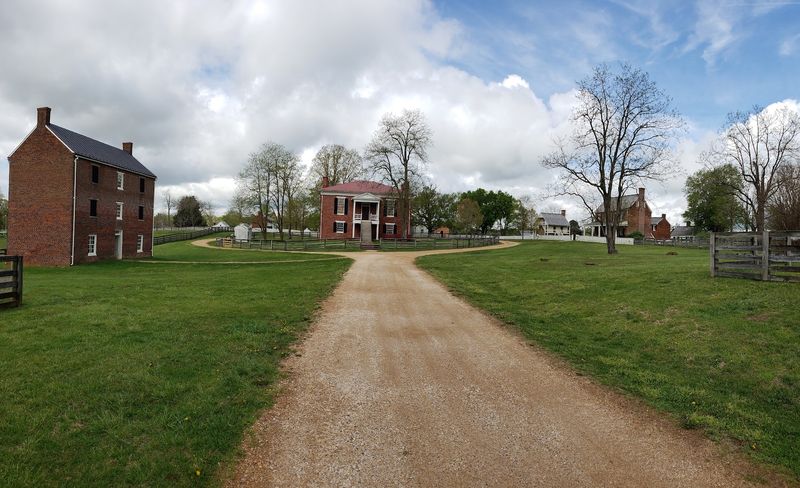
Trust me, standing in this small, quiet village hits differently than reading about it in any history class.
Appomattox Court House National Historical Park preserves the site in Appomattox, where General Robert E. Lee surrendered to General Ulysses S.Grant in April 1865. That moment effectively ended the Civil War in America.
The park has restored the historic village to its 1865 appearance with remarkable care. The McLean House, where the surrender took place, is the centerpiece of the site.
Walking through those rooms creates a strange, weighty silence that is hard to shake.
More than 25 historic structures are preserved or reconstructed across the grounds. Ranger-led programs bring the events of those final days to life with excellent detail.
The park staff here are among the most knowledgeable and passionate in the National Park System.
Rural trails wind through the surrounding countryside beyond the village core. Wildflowers line the paths in spring, and the rolling hills turn golden in autumn.
The peaceful landscape makes the weight of what happened here feel even more profound.
History aside, this is genuinely beautiful Virginia countryside. Red-tailed hawks circle overhead, and the fields around the village feel untouched by time. It is the kind of quiet that encourages real reflection.
The park is located at 111 National Park Drive, Appomattox. Admission is free, and the park is open year-round, making it an easy addition to any central Virginia road trip.
6. Natural Bridge State Park, Rockbridge County
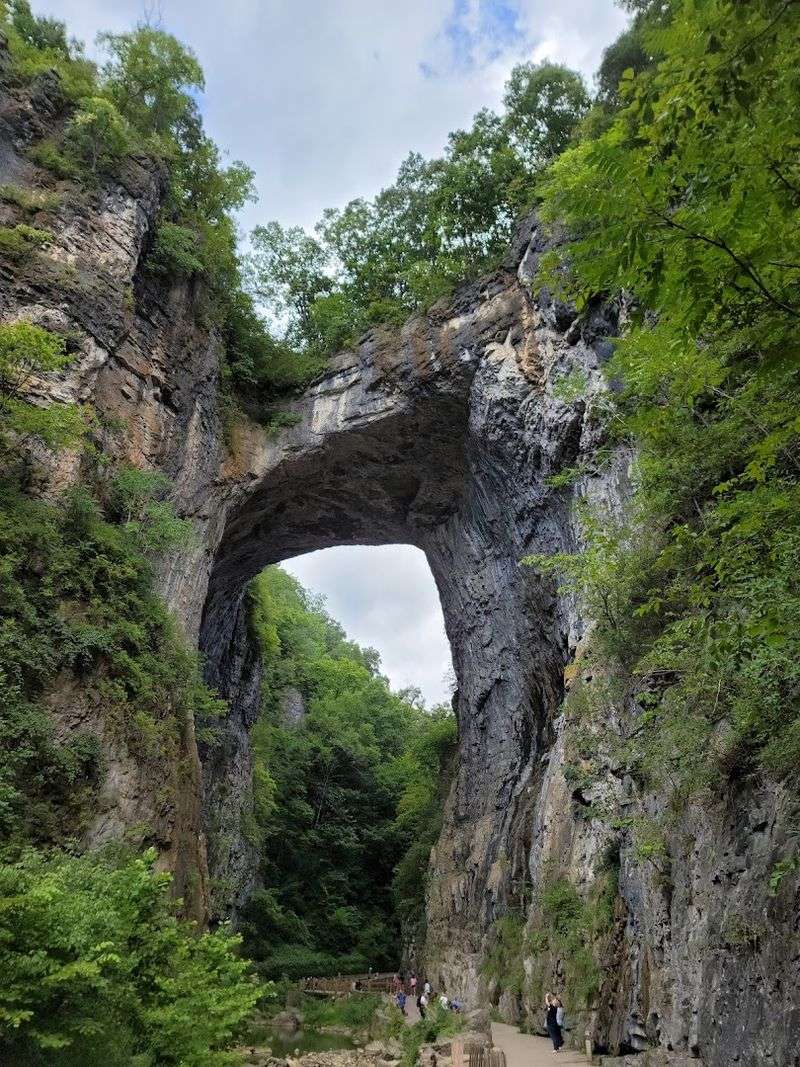
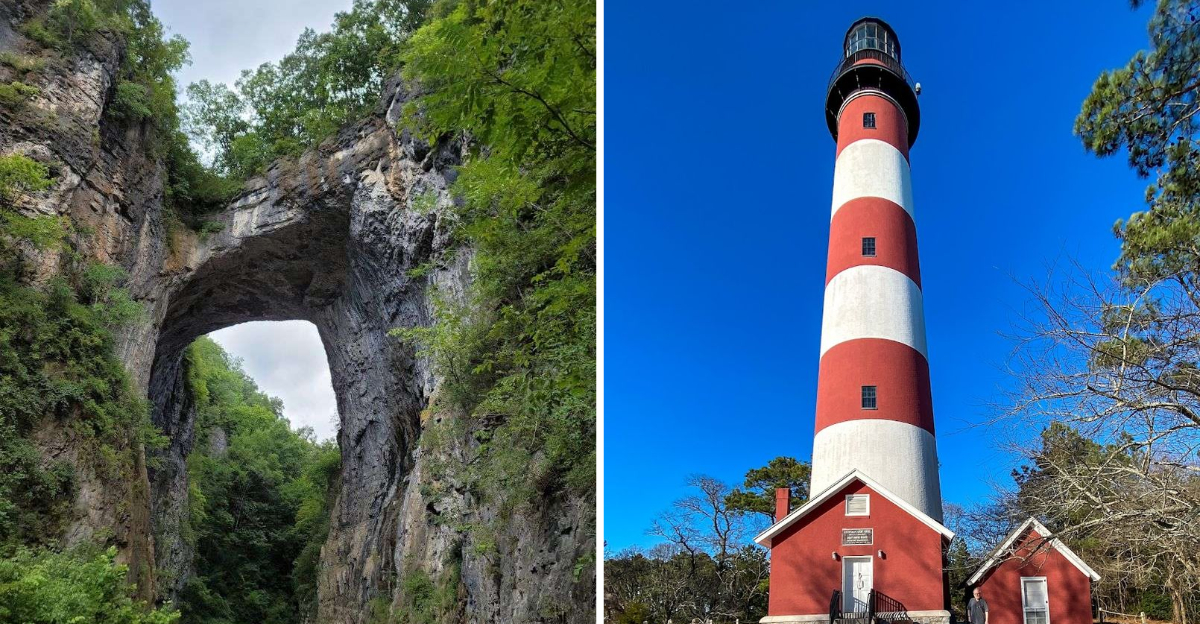
You might not believe me, but a 215-foot limestone arch rising from the forest floor is somehow even more impressive in person than in photographs.
Natural Bridge State Park in Rockbridge County, protects one of the most remarkable geological formations in the eastern United States. Cedar Creek runs quietly beneath the arch, carving the gorge deeper over thousands of years.
The bridge itself was once surveyed by a young George Washington, who reportedly carved his initials into the rock. Thomas Jefferson later purchased the arch and surrounding land, calling it one of the most sublime natural wonders he had ever encountered.
The Monacan Indian Nation has called this area home for centuries. The park now includes a living history exhibit honoring Monacan culture and heritage.
Learning that layer of the story makes the experience feel far richer and more complete.
A paved trail follows Cedar Creek beneath the arch and continues into a forested gorge. The walk is relatively easy and accessible for most visitors.
Moody lighting in the gorge during early morning makes for some genuinely beautiful photography.
The park also features a short trail to Lace Waterfalls, a delicate cascade tucked into the forest. Combining both trails makes for a satisfying half-day outing.
The park address is 15 Appledore Lane, Natural Bridge, and it is open year-round.
7. Chincoteague National Wildlife Refuge And Assateague Island, Chincoteague
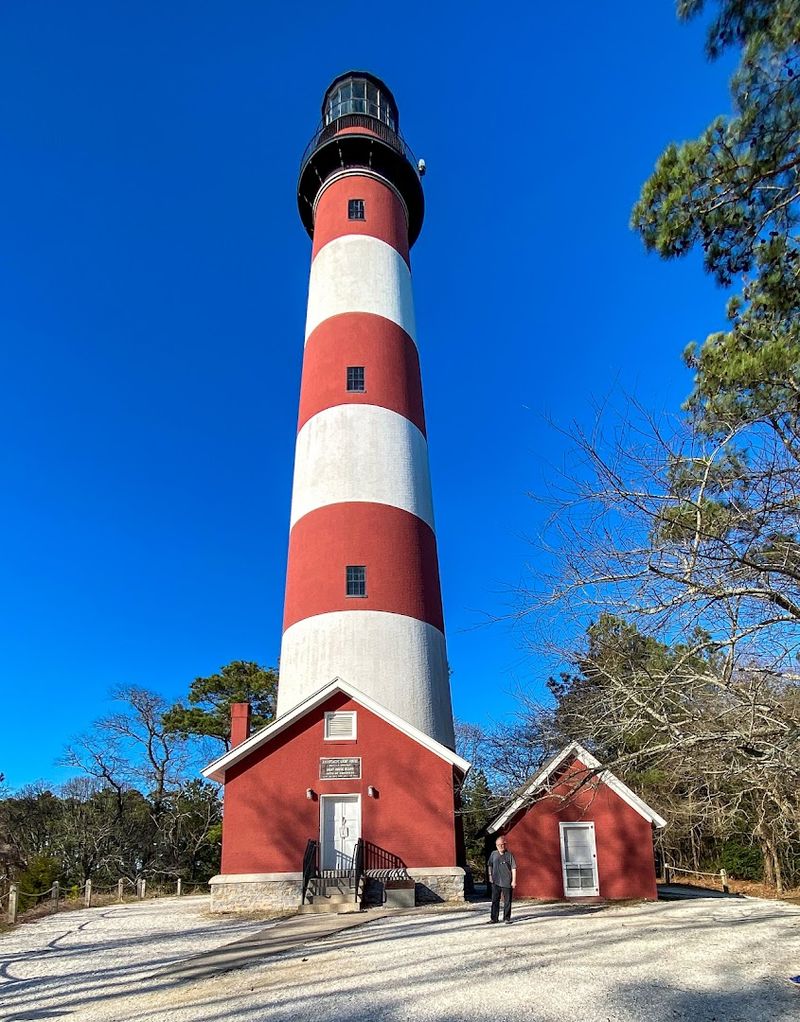
I never would have guessed that wild ponies, a working lighthouse, and some of the most pristine beaches on the East Coast could share the same barrier island.
Chincoteague National Wildlife Refuge and Assateague Island lie just off the Eastern Shore near Chincoteague. The refuge protects more than 14,000 acres of beach, marsh, and maritime forest.
The famous Chincoteague ponies are the undisputed stars of the refuge. These small, sturdy horses have roamed Assateague Island for centuries, living entirely on their own terms.
Spotting a group of them grazing near the dunes is the kind of moment that makes you forget what day it is.
Assateague Lighthouse, a striking red-and-white striped tower built in 1867, stands tall near the southern end of the island.
The lighthouse is open for climbing during certain seasons, rewarding the effort with panoramic views of the Atlantic and the surrounding marsh. Historic displays inside explain the light station’s long role in maritime safety.
Miles of undeveloped beach stretch along the Atlantic side of the island. Swimming, shelling, and surf fishing are all popular activities during the warmer months.
Even in winter, the empty shoreline has a raw, windswept beauty that is hard to resist.
Wildlife watching goes well beyond the ponies here. The refuge hosts hundreds of bird species throughout the year, making it a top birding location on the East Coast.
Spring and fall migrations bring spectacular concentrations of shorebirds and waterfowl to the marshes.
8. Cumberland Gap National Historical Park, Lee County
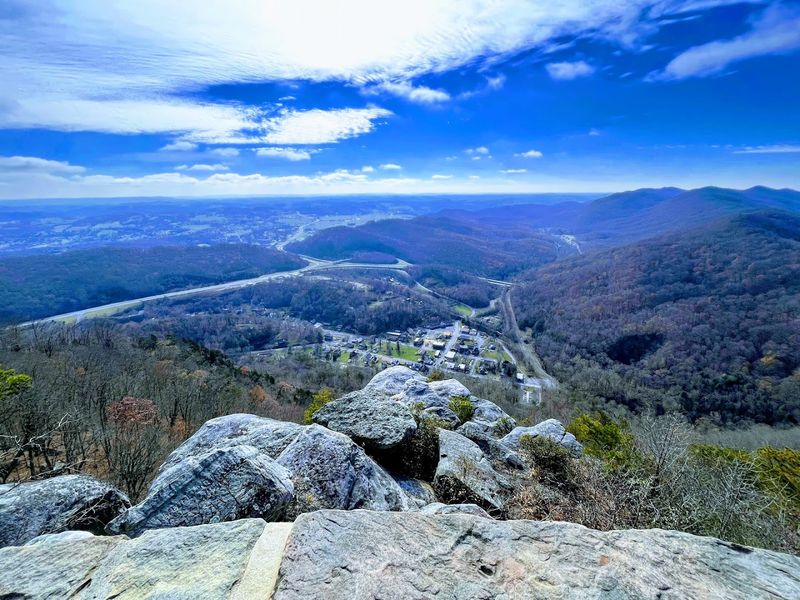
Doesn’t it seem almost impossible that a single mountain pass could reshape the entire history of a continent?
Cumberland Gap National Historical Park straddles the borders of Virginia, Kentucky, and Tennessee, with its Virginia section located in Lee County.
This natural break in the Appalachian Mountains was the gateway through which hundreds of thousands of pioneers moved westward in the late 1700s and early 1800s.
Daniel Boone helped blaze the Wilderness Road through this gap in 1775. That trail eventually carried more settlers into the American interior than any other route of its era.
Walking sections of the original road today carries a powerful, almost electric sense of connection to that movement.
The park covers more than 24,000 acres of rugged mountain terrain. Hiking trails climb to ridge-top overlooks with sweeping three-state views that stretch for miles on clear days.
The Pinnacle Overlook trail is a particular favorite for the sheer scale of the panorama it delivers.
History and ecology intertwine constantly throughout the park. Rare species of plants and salamanders thrive in the old-growth hollows below the ridgelines. The forest here feels genuinely ancient and largely undisturbed.
Hensley Settlement, a restored early 20th-century mountain community within the park, adds another fascinating layer to the story.
Ranger tours of the settlement bring the self-sufficient mountain lifestyle to life in vivid detail. The park entrance is located near U.S.Route 58 in Lee County, and admission is free year-round.
9. Virginia Creeper Trail, Abingdon To Damascus
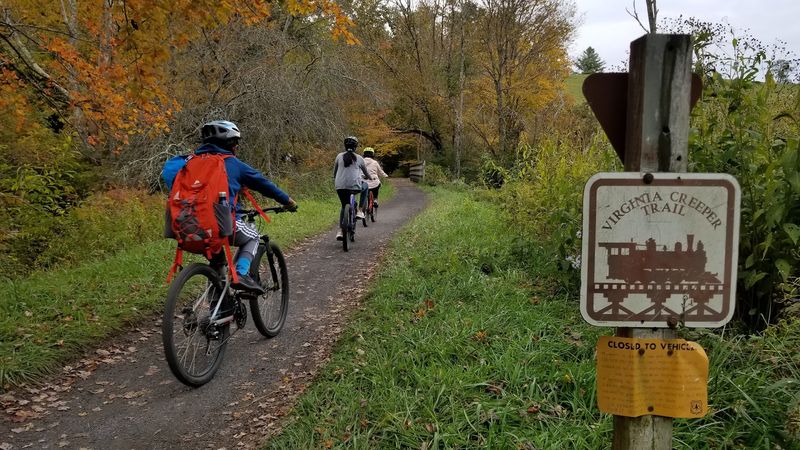
I know, a converted railroad corridor becoming one of the most beloved multi-use trails in the entire Southeast is a pretty remarkable second act.
The Virginia Creeper Trail runs 34 miles through the mountains of southwest Virginia, connecting Abingdon to Damascus and continuing to the North Carolina border.
The trail follows the former route of the Virginia-Carolina Railway, which operated from the early 1900s until 1977.
The railway earned its nickname from the slow, creeping pace of trains climbing the steep mountain grades.
Today that same grade makes the trail a dream for cyclists, especially on the downhill run from Whitetop Station toward Damascus. Shuttle services in the area make it easy to ride one way and skip the uphill climb entirely.
Trestle bridges are one of the trail’s most photographed features. More than 47 bridges and trestles cross the Whitetop Laurel Creek and its tributaries along the route.
Rolling across a wooden trestle above a rushing mountain stream is a legitimately thrilling experience, even at a casual pace.
Wildflowers carpet the trailside in spring, and the hardwood canopy blazes with color every October. Trout fishermen wade the creek alongside hikers and cyclists throughout the warmer seasons.
The trail passes through the town of Damascus, a well-known waypoint on the Appalachian Trail, adding a fun layer of trail culture to the experience.
The Abingdon trailhead is located near the Virginia Creeper Trail Bike Shop on Green Spring Road. The trail is free to use and open year-round, making it a perfect anchor for a southwest Virginia road trip.