8 Idaho Lake Beaches Where Smooth Colorful Shore Finds Can Turn Up Along The Water
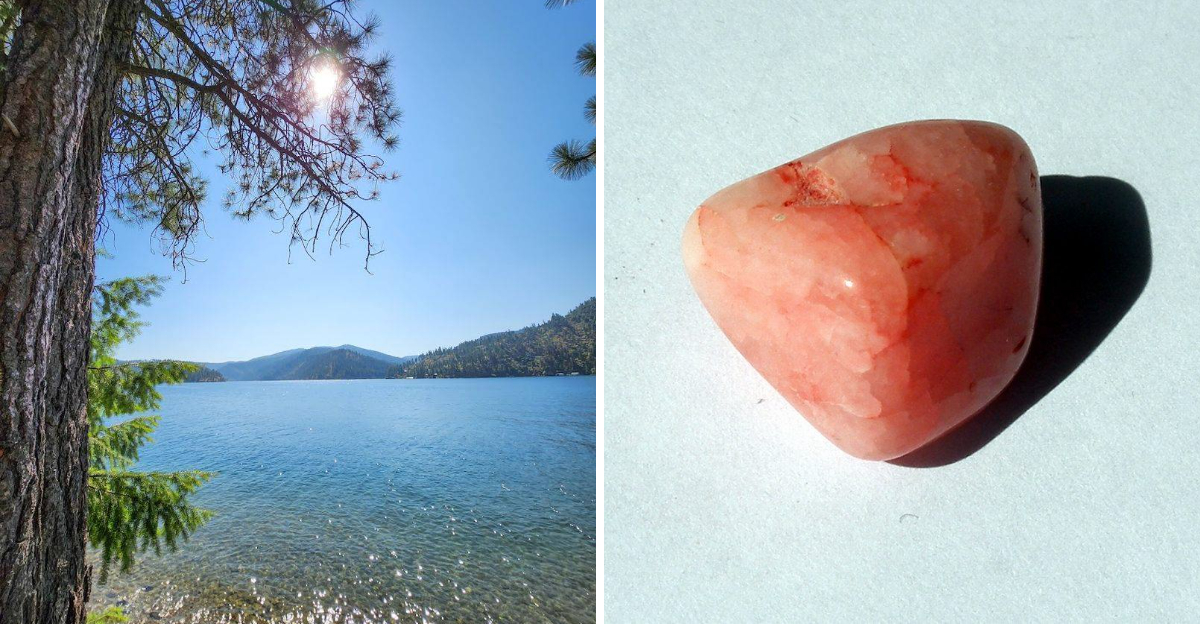
A lake day already feels like a win, but the shoreline has a sneaky way of stealing the whole afternoon.
Smooth stones near the water can turn a casual walk into a treasure hunt before anyone admits they are fully invested.
That is the funny part. You show up thinking about swimming, relaxing, and maybe finding a decent place to sit.
Then one colorful little rock catches the light, and suddenly the beach has assigned you a side quest.
In Idaho, these lake beaches reward the people who slow down, look closer, and do not mind leaving with pockets heavier than planned.
No one has to be a serious rockhound to enjoy the search.
The appeal is simple once the water starts making every small color look brighter.
For anyone who likes calm beaches, easy wandering, and tiny finds that feel weirdly exciting, these shores make a summer afternoon feel richer than expected.
1. Sandpoint City Beach On Lake Pend Oreille
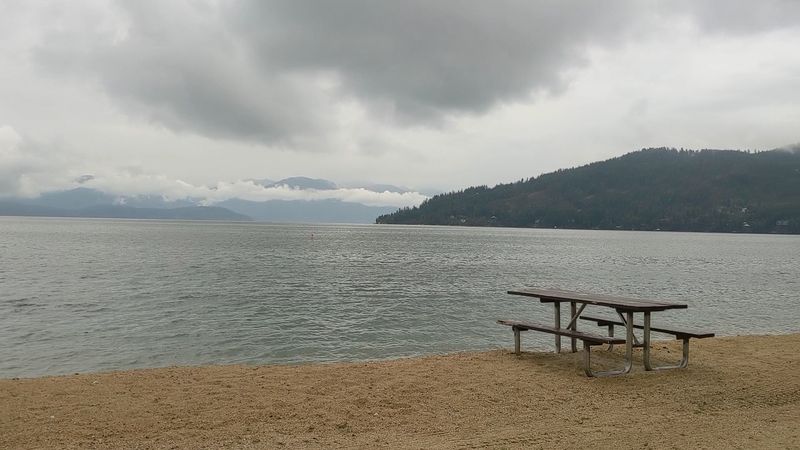
Downtown access makes this Lake Pend Oreille beach one of Idaho’s easiest places to pair swimming, scenery, and slow shoreline searching.
Sandpoint City Beach is officially listed at the end of 102 Bridge Street in Sandpoint, with lakefront lawns, sandy beach space, picnic areas, recreation features, and wide views across Idaho’s largest lake.
The original address line sometimes gets confused with nearby streets, so using City Beach or 102 Bridge Street is the safer way to navigate. Pebbles and small stones can appear along edges where sand meets water, especially after waves rearrange the shoreline.
Visitors should think of this as a casual looking spot rather than a serious rockhounding destination. Quartz-like light stones, darker rounded pebbles, and mixed lakebed fragments may catch the eye, but any claims about rare finds should be treated carefully.
The real pleasure comes from the setting. Mountains rise beyond the lake, downtown sits close enough for coffee or lunch afterward, and the beach invites an unhurried pace.
A morning walk before crowds arrive gives the best chance to notice small color changes along the wet shoreline. Smooth stones feel like a bonus beside water this dramatic.
2. Indian Creek Unit At Priest Lake State Park
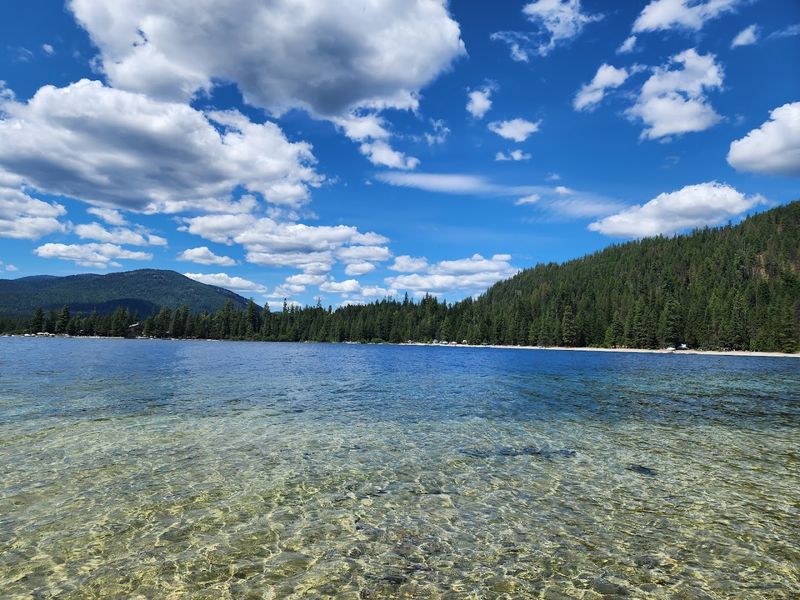
Clear water and forest shade give the Indian Creek Unit a calmer kind of shoreline appeal.
At Priest Lake State Park, the official contact address is 314 Indian Creek Park Road in Coolin, ID 83821. Indian Creek is one of the most accessible areas in the park, with swimming, camping, boating, and relaxed beach time.
Along the waterline, sand gives way to small pebbles in places, creating a natural zone for slow looking. Rounded stones, pale mineral pieces, and mixed granitic fragments may turn up because the broader Priest Lake landscape is shaped by rugged mountain terrain.
Still, this is a state park, so visitors should check current Idaho Parks and Recreation rules before removing natural objects. The best approach is simple: walk, look, photograph, and collect only where allowed.
Pine trees, cold clear water, and Selkirk Mountain scenery do most of the mood-setting. The beach feels especially rewarding in the morning, when the lake is calmer and submerged stones are easier to spot through the shallows.
A pocket-sized find may be satisfying, but the quiet North Idaho setting is the real keeper here.
3. Black Canyon Reservoir Beach Area
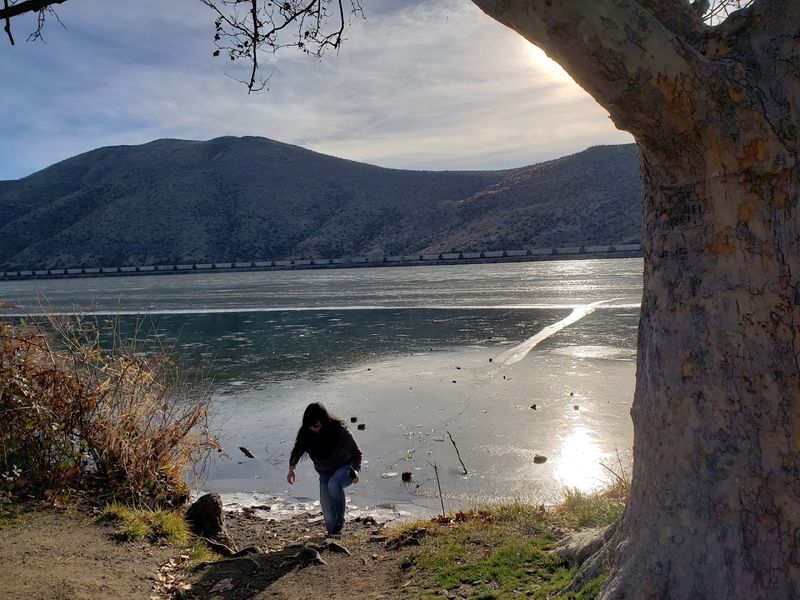
Southwestern Idaho brings a different shoreline mood at Black Canyon Reservoir, where water, gravel bars, dry hills, and Payette River influence create a more rugged searching experience.
The Bureau of Reclamation describes Black Canyon parks as sitting off State Highway 52, about five miles northeast of Emmett, with several recreation areas near the reservoir and river corridor.
Instead of one polished resort-style beach, visitors find a mix of park access points, gravelly edges, sandy patches, boating areas, and picnic spots.
Local rockhounding chatter often connects the Emmett and Payette River area with agate and jasper-style finds, but casual visitors should avoid overclaiming what any one trip will produce.
Water-worn stones in warm reds, browns, creams, grays, and darker tones can turn up along gravelly stretches, especially after shifting water levels expose fresh material.
Because land ownership and collecting rules can vary, check posted signs and agency guidance before keeping stones.
Sturdy shoes help more than sandals here. Summer heat can also be serious, so bring water, sun protection, and patience.
A careful search may reward you with color, texture, and a very different Idaho beach experience.
4. Pebble Beach On Lake Coeur d’Alene
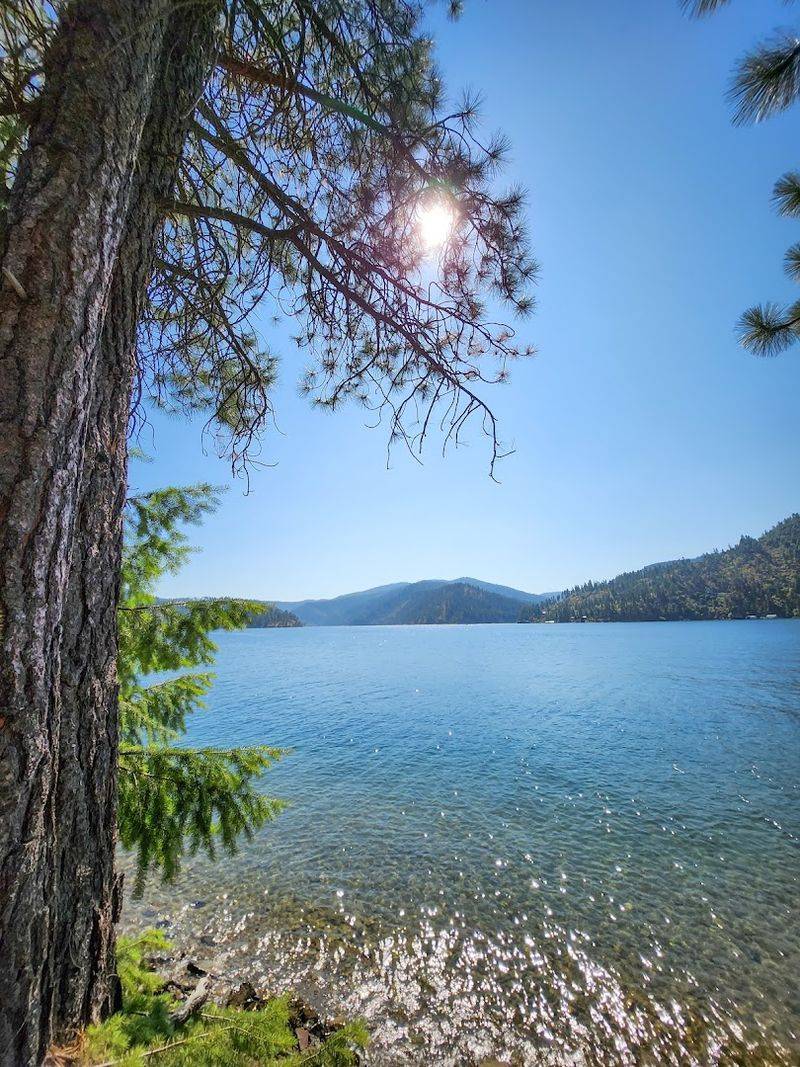
Pebbly shoreline is the whole point near this quieter side of Lake Coeur d’Alene. Pebble Beach is generally described as a small cove near the Mineral Ridge area on the lake’s east side, and it is better treated as a boat, kayak, or paddle-access shoreline rather than a guaranteed drive-up beach.
That access detail matters. Nearby Mineral Ridge Scenic Area and National Recreation Trail is a developed BLM site with parking, picnic facilities, drinking water, toilets, and sweeping views of Lake Coeur d’Alene, but the trailhead itself is not the same as the beach.
For paddlers who reach the cove, smooth rounded stones in gray, white, tan, amber, and darker shades can make the waterline fun to scan. Clear lake water helps small pieces stand out below the surface, especially when sunlight hits from the right angle.
Since access and shoreline rules can vary, visitors should confirm whether collecting is allowed before taking anything home. Even without keeping a single stone, this spot fits the title beautifully.
It offers pebbles, clear water, forested slopes, and that satisfying quiet that comes from reaching a place most beach crowds skip.
5. Lake Cascade State Park
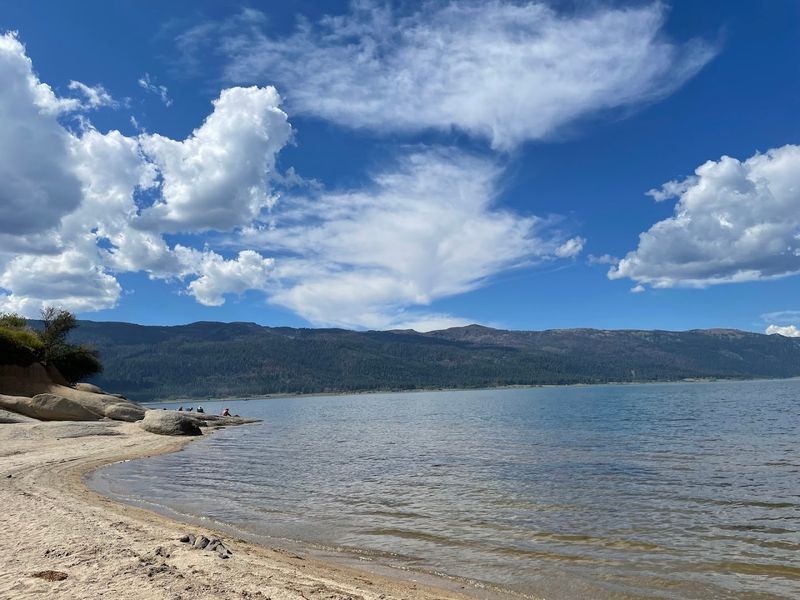
High-elevation space gives Lake Cascade State Park plenty of room for shoreline wandering.
The park office at 100 Kelly’s Parkway in Cascade, ID 83611 is listed by Idaho Parks and Recreation. The system spans multiple campgrounds, boat launches, swimming areas, paddlesports, and wide sections of lake access.
With many developed units around the reservoir, beach conditions can vary dramatically from one stop to another. Some areas feel sandy and family-friendly, while others reveal gravel lines, exposed banks, or pebbly edges when water levels shift.
Shorelines may reveal smooth quartz-like stones, darker rounded pebbles, and scattered warmer-colored fragments. The activity fits casual beachcombing rather than any serious or destination-level collecting.
Seasonal drawdowns and waves can expose new patches, so the same area may look different later in summer than it did in June.
Van Wyck, Crown Point, and other day-use zones can work well for scenery and relaxed searching when open and accessible. Check park updates before going, because seasonal closures, water levels, and construction can affect access.
A morning paddle followed by a slow shoreline walk makes this Cascade stop especially satisfying.
6. Redfish Lake North Shore And Sandy Beach Area
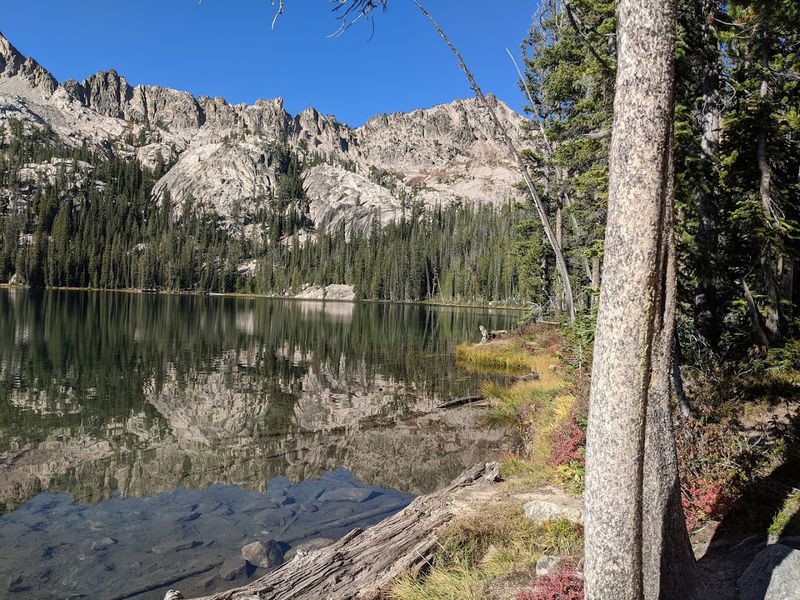
Sawtooth scenery steals attention first at Redfish Lake, but the shoreline deserves its own slow look. Redfish Lake Lodge is listed at 401 Redfish Lodge Road, Stanley, ID 83278, and sits on the sandy north shore of a famously clear alpine lake below the Sawtooth Mountains.
Older references sometimes use simplified lake-road wording, but the lodge road address is the cleaner detail to use.
Soft beach areas near the lodge make swimming and lounging easy, while pebbly patches closer to edges, inlets, and less-traveled shoreline sections can reveal smooth stones shaped by cold water and mountain weather.
Clear shallows help visitors spot colors without stirring up much sediment. Expect subtle beauty rather than flashy gemstone hunting: pale pieces, gray pebbles, rust-toned fragments, and small mixed stones can catch the eye when sunlight reaches the lakebed.
Because Redfish Lake sits within the Sawtooth National Recreation Area, collecting should be minimal, respectful, and guided by current Forest Service rules. Many visitors will be happiest photographing finds and leaving the shoreline intact.
With blue-green water, sandy access, and the Sawtooths rising behind it, even ordinary pebbles feel elevated here.
7. Alturas Lake Picnic Area
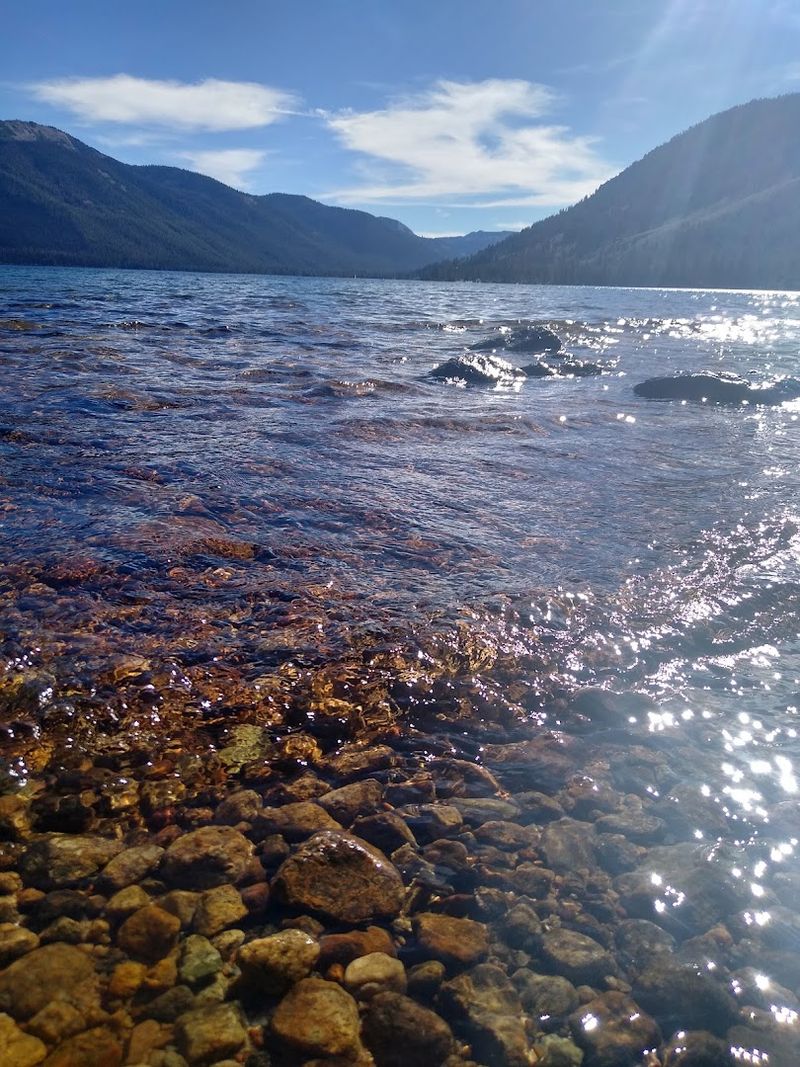
Quieter alpine energy makes Alturas Lake a strong choice for visitors who prefer less crowd noise with their shoreline exploring.
Recreation.gov directions place the Alturas Lake Picnic Area south of Stanley off State Highway 75, then west on Alturas Creek Road, also signed as Forest Road 205, for about 2.6 miles.
Blaine County describes Alturas Lake as a glacier-formed lake in the Sawtooth National Recreation Area, with alpine forest and sandy beaches. That mix creates a shoreline where soft beach sections can give way to gravel, pebbles, and clear shallow water.
Smooth cream, gray, rust, charcoal, and pale greenish stones may appear along the wet edge, especially where waves sort the smaller pieces.
Claims about specific minerals should stay cautious, because most casual visitors are noticing color and texture rather than identifying specimens with certainty.
The lake’s cold clarity makes wading tempting on warm days, but water shoes are useful around sharper gravel. Bring a picnic, follow posted rules, and avoid disturbing fragile shoreline areas.
Alturas rewards patience more than speed. Its best finds may be tiny, but the surrounding quiet makes the search feel bigger.
8. North Beach At Bear Lake State Park
Turquoise water gives North Beach its first big wow, but the long, shallow shoreline also invites careful looking.
Idaho Parks and Recreation lists North Beach at 4772 North Beach Road, St. Charles, ID 83272, with day-use hours from 7 a.m. to 10 p.m. and more than a mile of beach at the north end of Bear Lake.
Fine sand dominates much of the experience, yet scattered shell-like fragments, pale stones, and water-smoothed bits can appear along the edges where waves sort material.
Bear Lake’s famous blue color comes from suspended calcium carbonate particles, so the setting feels unlike most Idaho beaches before you even start scanning the shore.
Rockhounding claims around the broader Bear Lake region should be handled carefully, since park rules and public-land boundaries matter. Inside the state park, treat the beach as a place for light observation unless current rules clearly allow otherwise.
Shallow water extends far from shore, making wading comfortable and family-friendly during warm weather. The best “find” may simply be noticing how the pale lakebed, blue water, and small shoreline pieces all work together to make the beach glow.
Disclaimer: Shoreline searching should be approached as a casual outdoor activity, not as a guaranteed collecting trip. Lake beaches change constantly.
Water levels rise and fall. Wind pushes material into new places.
Waves uncover some pieces and bury others. Seasonal drawdowns, storms, runoff, and heavy foot traffic can all affect what appears along the shore.
The stones, pebbles, shells, fragments, and mineral-looking pieces described in this article are general possibilities. They are not guaranteed finds.
They are also not confirmed rare specimens unless verified by a qualified source. Color, smoothness, shine, or unusual shape does not automatically mean a stone is valuable, uncommon, or legally collectible.
Many of the most interesting beach finds are simply ordinary natural materials made beautiful by water, light, and setting.
Rules matter at every stop. Idaho’s lake beaches may fall under city, county, state, federal, tribal, or private management.
Each place can have different regulations. Some areas may allow limited surface collecting.
Others may restrict or prohibit removing rocks, plants, shells, fossils, artifacts, driftwood, or other natural materials. Regulations can also change by season, site, habitat, or land designation.
Before taking anything home, check posted signs, official park pages, ranger stations, land manager guidance, and current agency rules.
Respect should come before collecting. Do not dig into banks.
Do not disturb dunes, wetlands, vegetation, nesting areas, archaeological sites, cultural sites, or fragile shoreline zones. Do not chip, pry, break, or remove material from cliffs, outcrops, trails, structures, or protected features.
Do not trespass across private property to reach a beach. Do not enter closed areas.
Do not assume that a public-looking shoreline is open for collecting.