The Stunning 72-Mile Drive In Florida You’ll Never Forget
Most road trips make you choose between history and a good beach day.
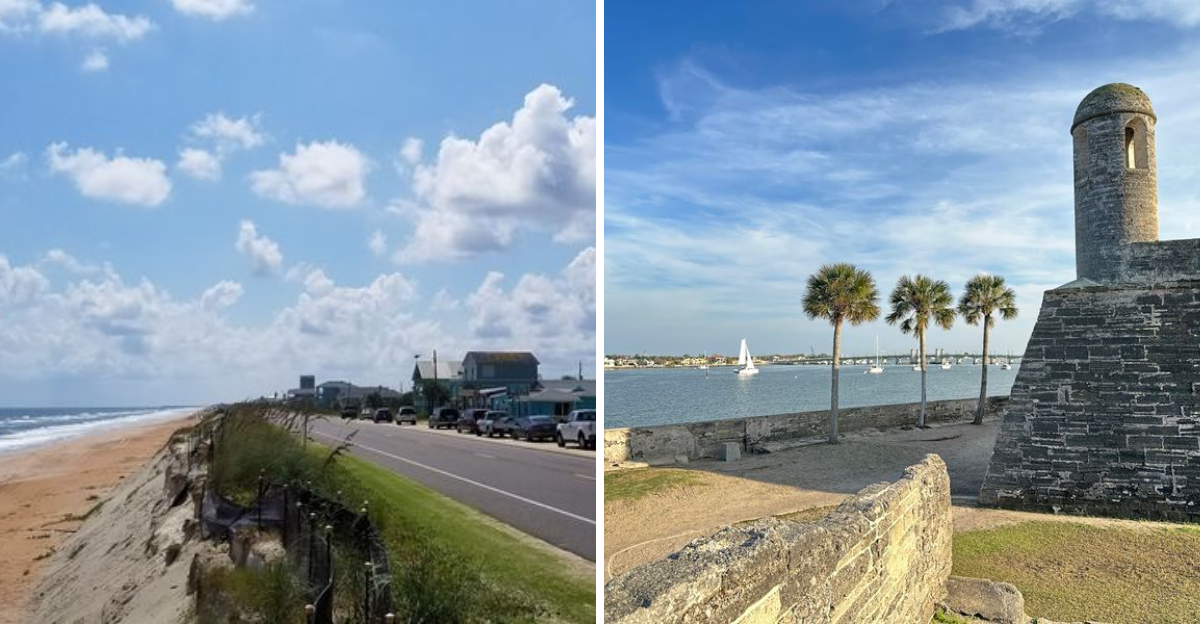
This one in Florida flatly refuses to pick. In seventy-two miles you get crashing Atlantic surf, wild dunes, and the oldest city in the entire country.
Yes, older than the pilgrims by a comfortable margin. One minute you are staring at a centuries-old fort.
The next you are watching pelicans dive-bomb the waves.
The road runs right along the coast, so the ocean is basically your co-pilot. Roll the windows down and let the salt air fix your mood.
You will pass sleepy beach towns that beg you to stop for lunch. You should listen to them.
There are lighthouses, sea oats, and sunrises worth setting an alarm for.
Rushing this route would be rude to it. Give it a full day and let it show off.
This is the kind of drive that ruins other drives for you.
The Byway Which Rewards The Curious Traveler
The A1A Scenic and Historic Coastal Byway is not just a road. It is a 72-mile journey that runs along Florida’s northeastern Atlantic coast, officially recognized as one of America’s All-American Roads.
That is the highest honor a scenic byway can receive, and one look at this stretch of pavement tells you exactly why.
Starting near the Flagler Beach area and winding through historic St. Augustine, Anastasia Island, and Ponte Vedra Beach, this route packs an incredible variety into a single drive.
You get ocean views, marshlands, state parks, and charming coastal towns all within a few miles of each other. The road itself hugs the coastline closely enough that you can smell the salt air with your windows cracked.
Plan on spending a full day if you want to stop and explore properly. Rushing through it would be like skimming a great novel.
The byway rewards the curious traveler who pulls over, steps out, and actually takes it all in. This is not a commute.
It is a celebration of everything that makes Florida’s coast genuinely worth the trip.
Where The Drive Begins
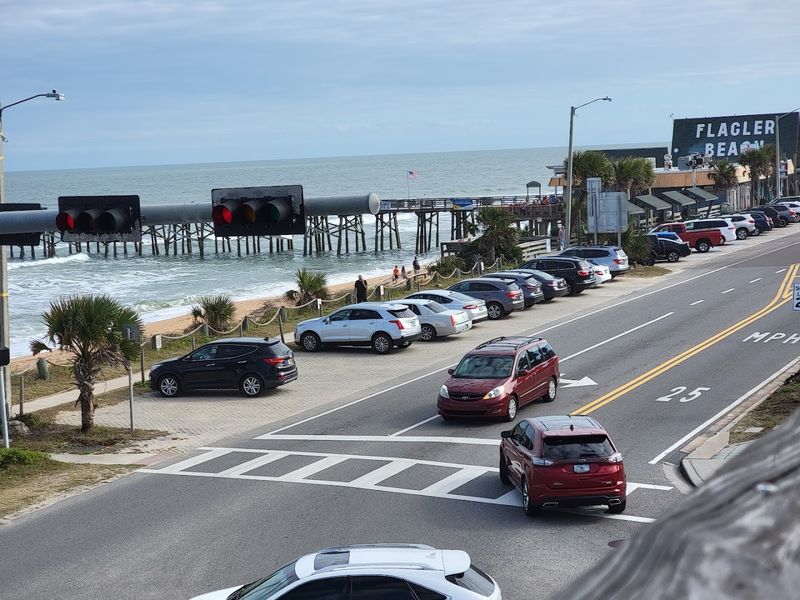
Flagler Beach hits different when you arrive for the first time.
The pier stretches confidently into the Atlantic like it has been there forever, which it basically has, and the beach itself is wide, clean, and refreshingly uncrowded compared to Florida’s more famous shorelines.
This small town of around 5,000 residents operates at a pace that feels genuinely unhurried. There are no massive resort towers blocking your ocean view.
Instead, you get low-rise buildings, local surf shops, and a main street that still has personality. The Flagler Beach Pier is a great first stop, giving you a panoramic view back toward the coast that is honestly hard to beat.
Grab breakfast at one of the local diners before you hit the road. The town has a handful of spots that serve big, honest meals without the tourist markup.
Starting your A1A journey here gives you a soft, scenic warm-up before the route gets even more spectacular further south.
Flagler Beach sets the tone perfectly: relaxed, beautiful, and completely real. It is the kind of town you plan to spend an hour in and end up staying three.
Washington Oaks Gardens State Park
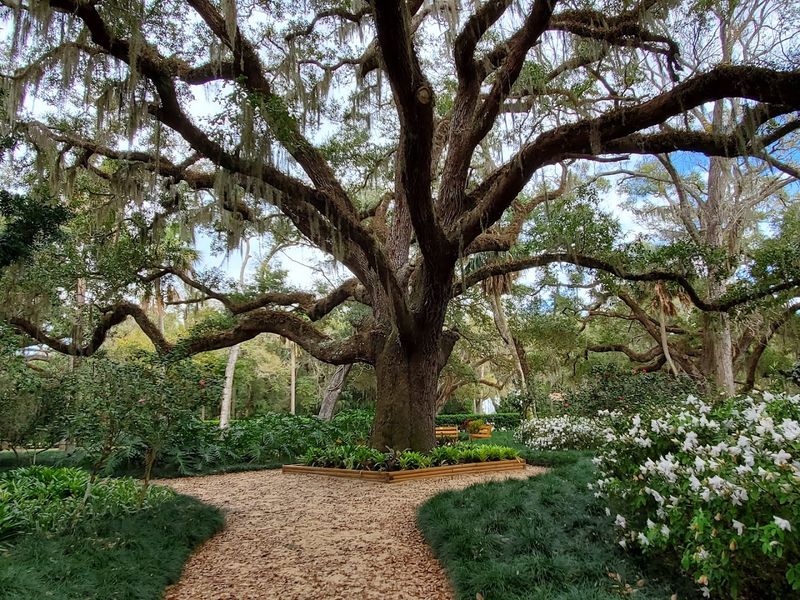
Most people drive right past Washington Oaks Gardens State Park without realizing what they are missing. That is a genuine shame, because this place has one of the most unusual shorelines in all of Florida.
The beach here is lined with coquina rock formations that look like they belong in a geology textbook, jagged and sculpted by centuries of wave action.
The park covers over 400 acres and includes both oceanfront and riverfront environments.
On the Matanzas River side, you will find formal gardens originally planted in the 1930s by the Owen family, who owned the property as a winter retreat.
Rose gardens, bird-of-paradise plants, and ancient oaks draped in Spanish moss create a scene that feels more like a botanical dream than a state park.
Entry fees are modest, and the park is rarely overcrowded, which makes it a peaceful stop along the byway. Bring a camera, because the rock formations at low tide are genuinely photogenic.
Washington Oaks is the kind of place that makes you slow down and actually look around. It is a highlight of the A1A drive that earns its reputation without any hype needed.
Fort Matanzas National Monument
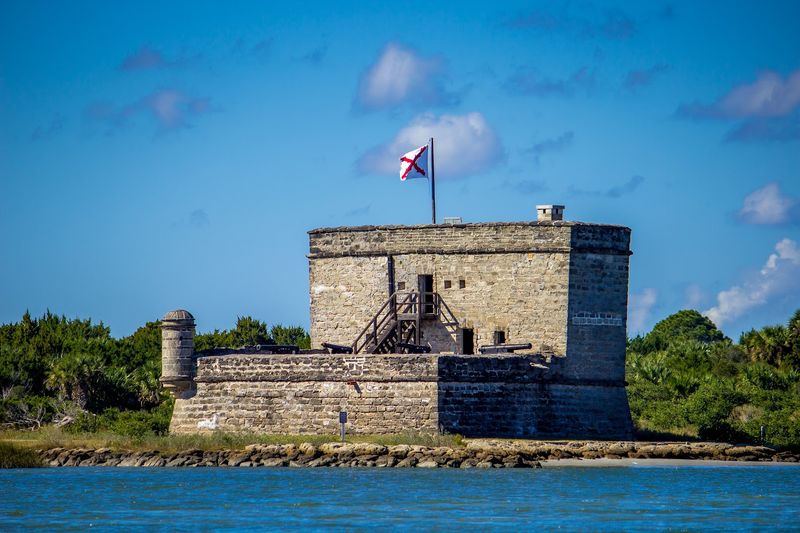
Fort Matanzas National Monument is the kind of history lesson that actually sticks.
Built by the Spanish between 1740 and 1742, this small stone watchtower sits on Rattlesnake Island in the Matanzas River, accessible only by a free ferry that runs from the visitor center on A1A. Yes, a free ferry.
That alone makes it worth the stop.
The fort was constructed to protect St. Augustine’s southern flank from British naval attacks.
It is compact but remarkably well-preserved, and the National Park Service rangers who lead tours do an excellent job of bringing the history to life without making it feel like a school field trip.
The surrounding salt marsh is stunning on its own, with herons and egrets wading through the shallows like they own the place.
The whole experience takes about two hours and costs absolutely nothing, which makes it one of the best value stops on the entire 72-mile route.
Kids love the ferry ride, and adults appreciate the genuine historical context behind the structure. Fort Matanzas is proof that the A1A byway is not just about ocean views.
Sometimes the most memorable stops are the ones you almost skipped.
Anastasia State Park
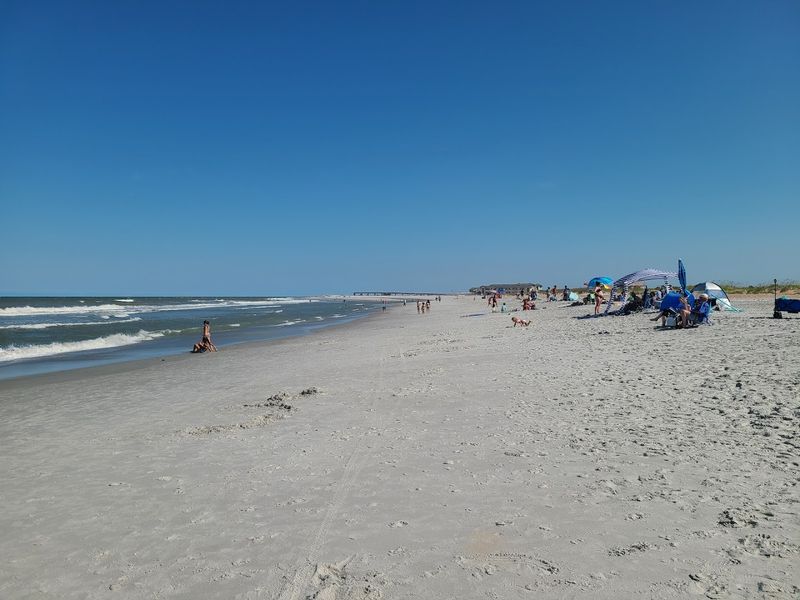
Anastasia State Park earns its reputation every single day. Sitting just across the Bridge of Lions from historic St.
Augustine, this 1,600-acre park offers four miles of Atlantic beach that rank among the most beautiful in Florida.
The dunes are tall, the water is clear, and the crowds are manageable even during peak season because the park limits entry when capacity is reached.
Beyond the beach, Anastasia offers kayaking through tidal creeks, birdwatching in maritime hammocks, and camping under a canopy of ancient oaks.
The Ancient Dunes Nature Trail winds through a rare coastal scrub ecosystem that most visitors never bother to explore, which means you often have it almost entirely to yourself. That trail alone is worth the entry fee.
Surfers favor the northern end of the beach, where the breaks are consistent and the vibe is laid-back. Families tend to cluster near the main beach access, where picnic tables and facilities make life easier.
Anastasia State Park is one of those places that rewards repeat visits because it looks different every season.
Catching a sunrise here, with pelicans gliding low over the water, is an experience that genuinely earns the word unforgettable.
Historic St. Augustine
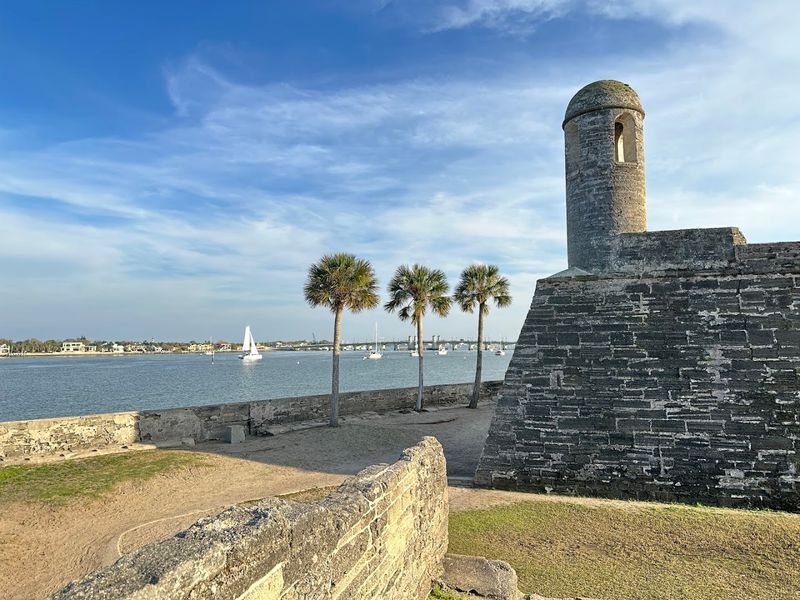
St. Augustine does not need an introduction, but it always delivers a surprise.
Founded in 1565 by Spanish explorer Pedro Menendez de Aviles, it is the oldest continuously occupied European-established settlement in the continental United States.
That is not a small claim, and the city wears that distinction with a confidence that never tips into arrogance.
Walking the historic district feels like moving through layers of time.
Castillo de San Marcos, the massive coquina stone fort overlooking Matanzas Bay, is the centerpiece of the city’s history and one of the best-preserved Spanish colonial fortifications anywhere in North America.
St. George Street, closed to vehicles, is lined with shops, restaurants, and buildings that date back centuries. The architecture alone justifies stopping the car and walking for a few hours.
The Lightner Museum, housed in the old Alcazar Hotel built in 1888, offers an unexpected collection of Victorian-era art and oddities that is genuinely fascinating.
St. Augustine rewards slow exploration more than any other stop on the A1A byway. Give it at least half a day, ideally a full day if your schedule allows.
The city has depth, character, and stories that most Florida destinations simply cannot match.
Ponte Vedra Beach
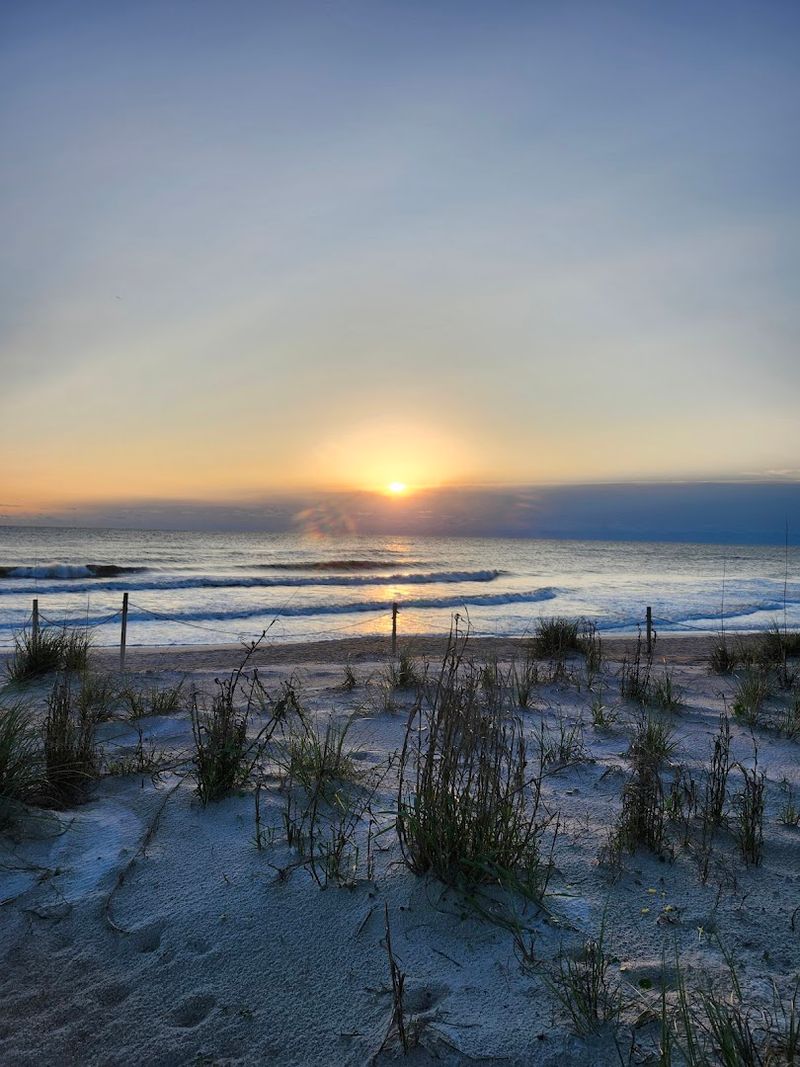
Ponte Vedra Beach has a reputation for being exclusive, and that reputation is not entirely wrong.
But the beach itself is open, beautiful, and free to enjoy, which means anyone driving the A1A byway gets access to one of the most pristine stretches of coastline in northeastern Florida.
The sand here is notably white and fine, different in texture from the beaches further south on the route.
The area is best known internationally as the home of TPC Sawgrass, the golf course that hosts The Players Championship each spring.
Even if golf is not your thing, the landscape around Ponte Vedra is genuinely lovely.
The intercoastal waterways, marshes, and mature tree canopy give the area a quiet, unhurried character that feels like a reward after the busier sections of the drive.
Public beach access points along A1A are easy to find and offer parking for a small fee. Sunset from the Ponte Vedra shoreline is worth timing your drive around.
The light turns the water a shade of gold that photographs beautifully and looks even better in person. Ponte Vedra is a fitting final chapter to the A1A experience, elegant without being stuffy, and scenic without trying too hard.
Practical Tips For Driving
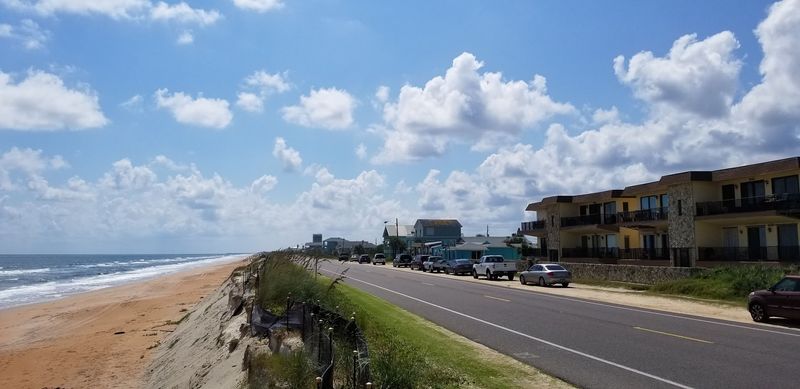
Driving the A1A Scenic and Historic Coastal Byway is simple, but a little planning goes a long way.
The route runs roughly from Flagler Beach north to Ponte Vedra Beach, and Google Maps handles the navigation without any issues.
Allow a full day minimum, and consider an overnight stay in St. Augustine if you want to explore the city properly rather than rushing through it.
Traffic on A1A can get congested during summer weekends and major holidays, particularly near St. Augustine.
Starting early, before 9 a.m., helps you beat the worst of it and gives you softer morning light for photos along the coast.
Many of the state parks and monuments along the route have limited parking, so arriving early is genuinely practical advice rather than just a suggestion.
Pack sunscreen, a reusable water bottle, and comfortable walking shoes. Several of the best stops involve short hikes or walks on uneven surfaces.
Cell service is reliable for most of the route, but download offline maps just in case. The byway has no toll charges, and most attractions are either free or very affordable.
The A1A drive is one of the most rewarding road trips in Florida, and it costs far less than you might expect.