Inside The Massachusetts Museum Where European, Asian And American Art Meet
One woman built a palace entirely on her own terms. Forget white walls and hushed tour groups.
This is a living, theatrical home packed with treasures. Massachusetts holds plenty of landmarks, but this one obeys no rules.
European grandeur, Asian artistry, and American work all blur together. The collection feels deeply personal, like a private diary.
You wander rooms staged for a grand party. I lost all track of time up on the top floor. A full century later, it still leaves most people speechless.
It makes you feel less a student, more a guest. How often does a museum feel like a private invitation?
A Palace Born From One Woman’s Vision
Not every museum starts with a single person’s obsession, but this one absolutely did.
The Isabella Stewart Gardner Museum was built to reflect the personal taste, passion, and bold personality of one collector who refused to let anyone else decide what great art looked like.
The whole building was designed to resemble a 15th-century Venetian palace, which is already a pretty audacious move for Boston.
The moment you arrive, something feels different. The exterior hints at what waits inside, but nothing fully prepares you for the scale of it.
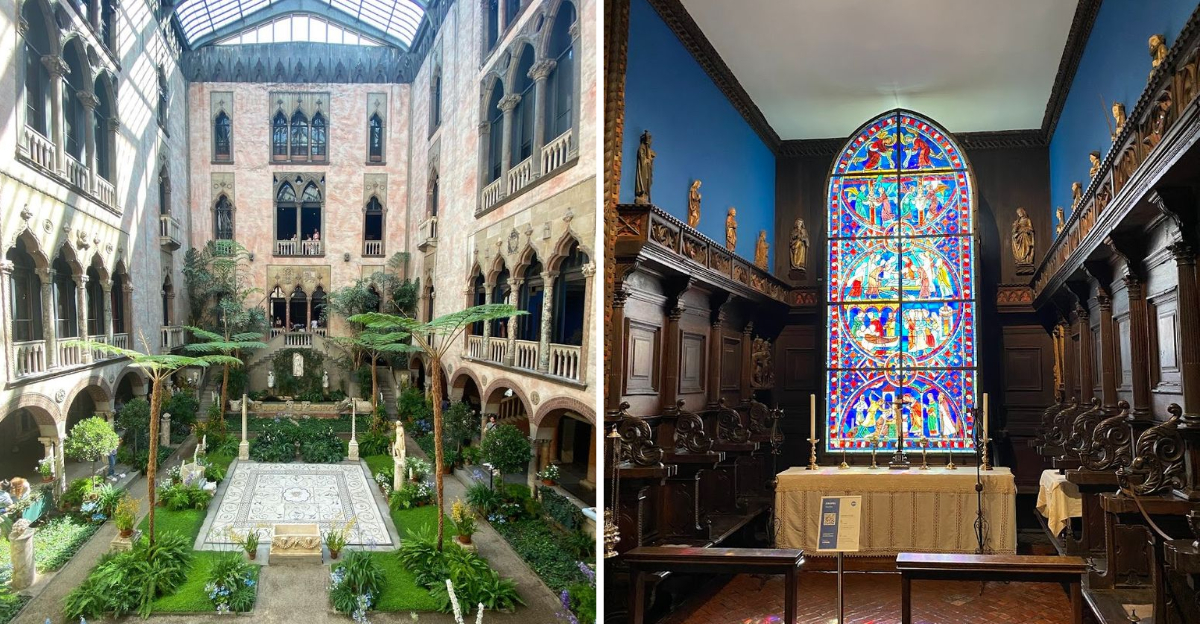
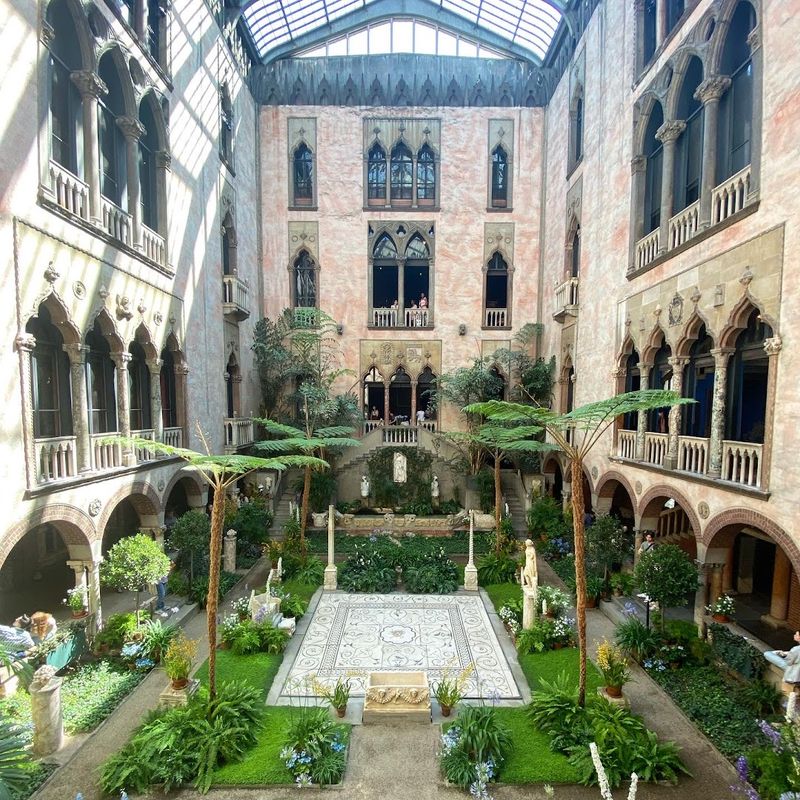
Three floors of galleries spiral around a breathtaking central courtyard, and the whole structure has a warmth that modern museums rarely manage to capture. Every archway, every tile, every carved detail was chosen with intention.
I remember pausing just inside the entrance and thinking this does not look like any museum I have ever visited.
The Courtyard That Steals The Show
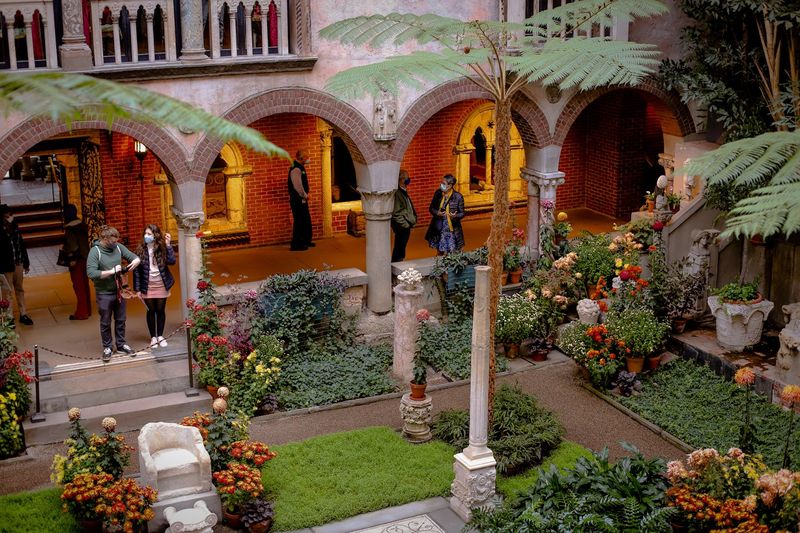
There is a moment when you first see the central courtyard at 25 Evans Way in Boston that is genuinely hard to describe without sounding dramatic.
It is like the building exhales. Natural light pours down from a glass ceiling onto a garden packed with seasonal flowers, ancient Roman sculptures, and mosaic floors that look like they were lifted straight from a Mediterranean villa.
The courtyard changes with the seasons, which means no two visits are ever quite the same. In spring, flowering nasturtiums cascade dramatically from upper-floor balconies, and the whole space takes on this almost theatrical quality.
People slow down here. You can hear the hush settle over the crowd as they round the corner and suddenly see it for the first time.
I noticed a few visitors just standing still, phones lowered, actually looking. That is rarer than you might think in a busy museum.
The courtyard is visible from multiple vantage points on each floor, so the garden keeps reappearing as you move through the galleries.
European Masterworks That Will Drop Your Jaw
The European collection at the Isabella Stewart Gardner Museum is not just impressive.
It is the kind of thing that makes you quietly question how one person managed to acquire so much extraordinary art in a single lifetime.
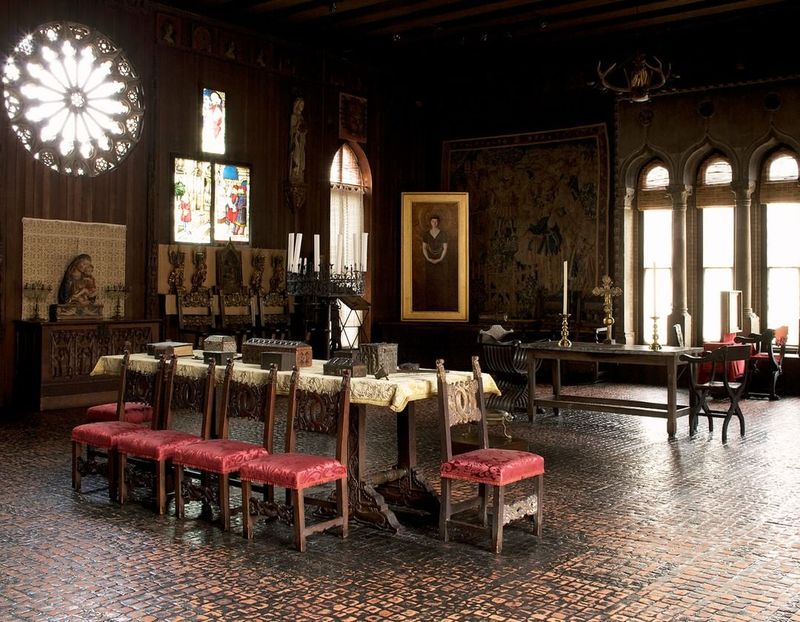
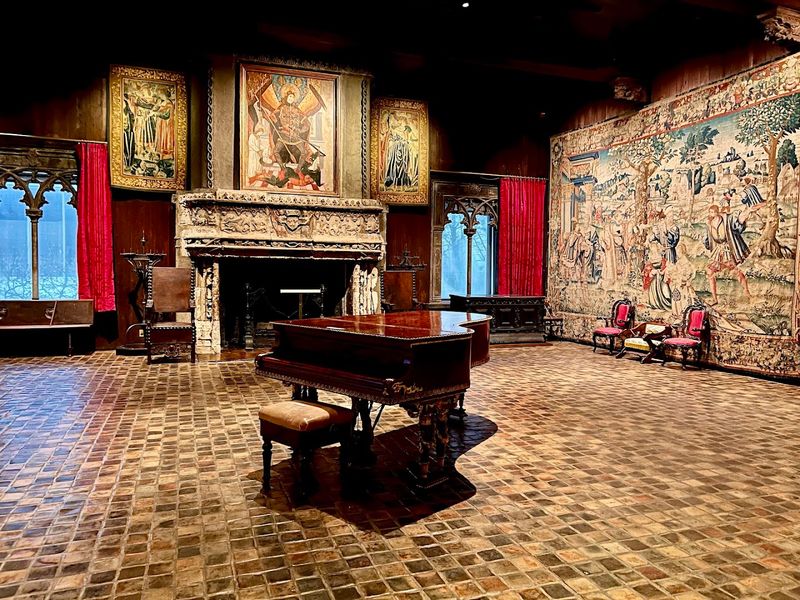
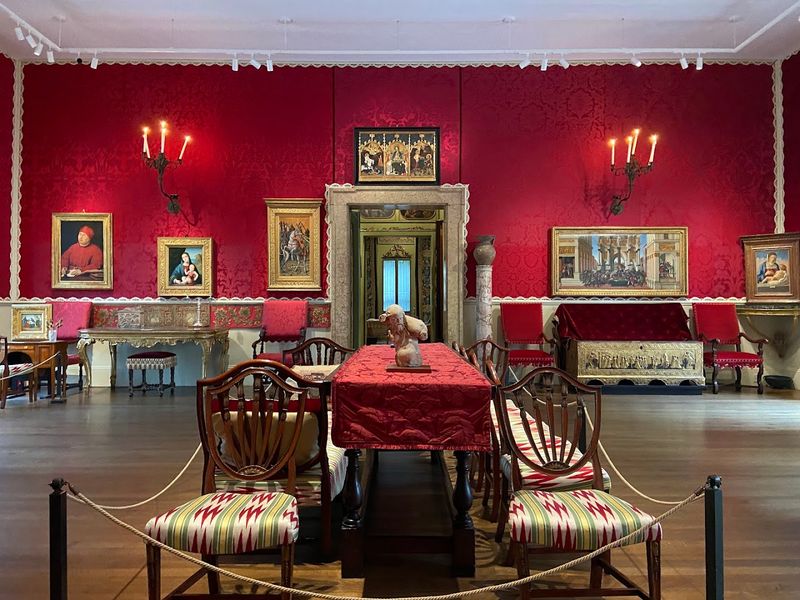
Works by Rembrandt, Botticelli, Titian, and Rubens share space across richly decorated rooms that feel more like private chambers than public galleries.
The Dutch Room is particularly striking. A self-portrait by Rembrandt hangs there, and the intimacy of the room makes the experience feel almost uncomfortably personal, like you stumbled into someone’s private study.
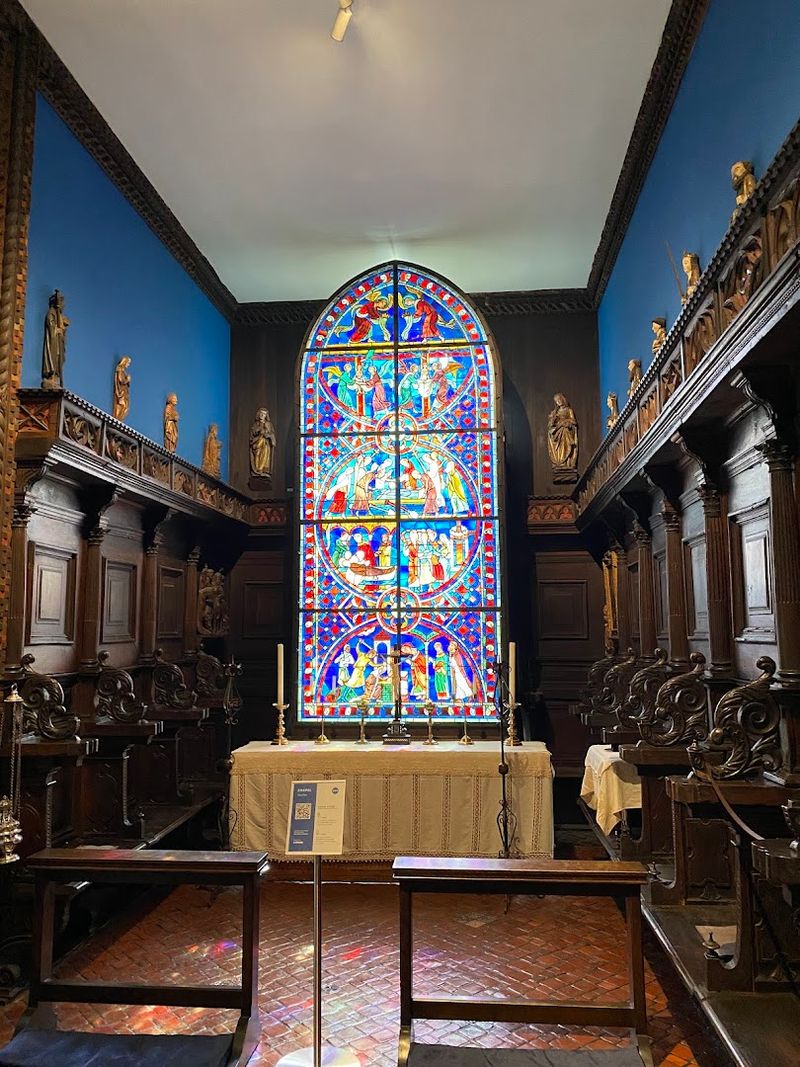
Original French stained glass from a 12th-century church adds an entirely different kind of light to the space. Gobelin tapestries that once decorated Italian palaces line entire walls.
What makes this collection feel different from a standard European art museum is the lack of rigid chronological organization.
Pieces from different periods and countries sit side by side because that is how the original collector arranged them, and the result is surprisingly compelling. You end up drawing your own connections rather than following a prescribed path.
Asian Art Treasures Worth Discovering
Most people walk into the Isabella Stewart Gardner Museum expecting European paintings and come out talking about the Japanese collection.
It is one of those pleasant surprises that shifts the whole tone of a visit.
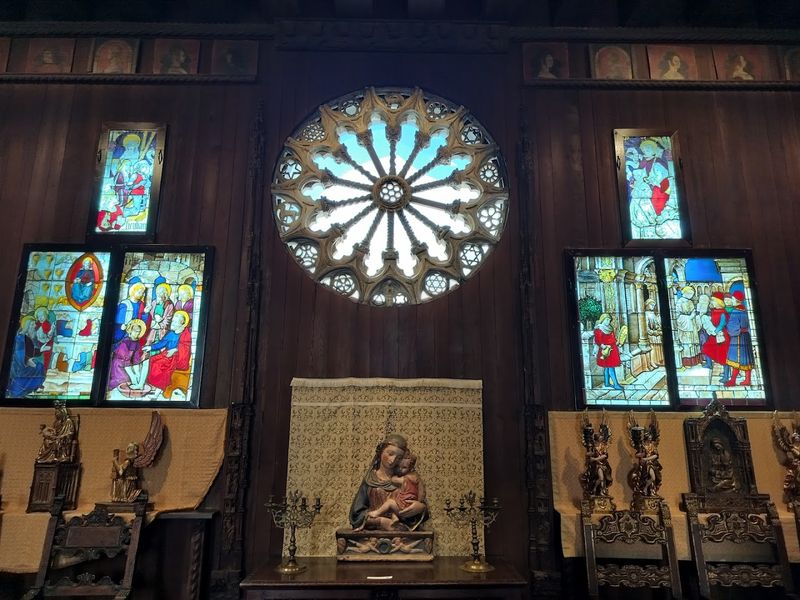
The Asian holdings span multiple cultures and centuries, bringing together Buddhist statues, Japanese swords, painted screens, and decorative objects that carry centuries of craft and meaning.
The Japanese screens are particularly worth slowing down for.
The detail in the brushwork is extraordinary, and the way they interact with the surrounding architecture creates a visual conversation across cultures that you do not expect to work as well as it does. It genuinely does work.
The placement of these pieces throughout the museum reflects the original collector’s instinct for creating dialogue between objects rather than isolating them by geography or era.
There is something quietly powerful about seeing a Buddhist sculpture positioned near a Renaissance painting. It challenges the usual categories art museums rely on.
The Art Heist That Still Haunts The Walls
In 1990, thieves pulled off the largest art theft in recorded history right here in Massachusetts.
Thirteen works were stolen from the Isabella Stewart Gardner Museum in a single night, with a total value estimated at around 500 million dollars.
The stolen pieces included works attributed to Rembrandt, Vermeer, and Degas, among others, and none of them have been recovered.
Here is the part that makes the hair on your arms stand up. The empty frames are still hanging exactly where the paintings used to be.
Museum policy, honoring the original collector’s rule that nothing be moved, means those hollow rectangles on the wall stay in place as a kind of permanent memorial to what was taken. Standing in front of them is genuinely eerie.
I spent longer than expected in the room with the empty frames, just staring at the ornate gold borders surrounding nothing. There is something about that emptiness that communicates loss more powerfully than any label could.
American Art And The Gardner’s Local Roots
The American collection at the Isabella Stewart Gardner Museum tends to get overshadowed by the European heavyweights, which is honestly a shame.
There are works here that deserve far more attention than they typically receive, and a few pieces that are simply stunning on their own terms.
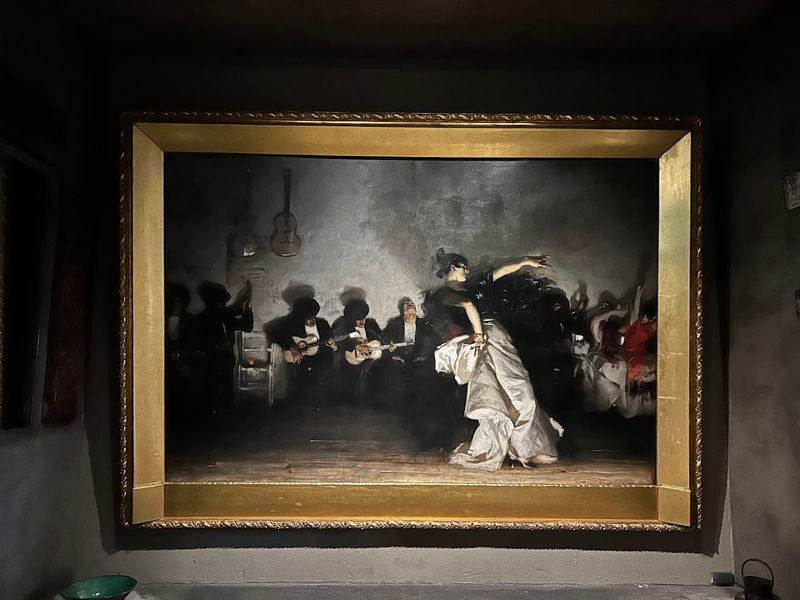
The massive painting known as El Jaleo measures roughly seven feet tall and eleven feet wide, making it one of the most physically commanding works in the entire building.
Standing in front of it, the scale hits you before the detail does. Then the detail hits you, and you end up standing there much longer than planned.
American art in the Gardner’s collection reflects the collector’s personal relationships with artists of her era, which gives the holdings a biographical quality that purely acquisitive collections rarely achieve.
The museum also has strong ties to the Boston arts community that stretch back well over a century.
Massachusetts has always had a vibrant artistic culture, and the Gardner played a meaningful role in shaping how American collectors thought about art at the turn of the twentieth century.
Practical Tips Before You Visit
Getting the most out of the Isabella Stewart Gardner Museum takes a little planning, and a few small decisions can make a real difference to the experience.
Booking tickets in advance is genuinely worth the effort, especially for popular time slots. Thursday evenings are extended until 9 PM, which gives the visit a completely different atmosphere compared to a midday crowd.
Starting from the top floor and working downward is a tip worth taking seriously. The upper galleries tend to be quieter early in the day, and you get those stunning courtyard views from above before the rooms fill up.
The coat check is free and helpful, since bags larger than a small backpack need to be checked before you explore.
QR codes are available throughout the galleries for audio guides if you want more context on specific pieces. The gift shop is genuinely good, with books, music boxes, and collectibles that go well beyond the usual museum merchandise.
Plan for at least two hours, though three is better if you want to absorb the full collection across all four floors and the newer building.
Why This Museum Stays With You
Most museums fade from memory within a few days. The Isabella Stewart Gardner Museum does not work that way.
Something about the personal curation, the unconventional layout, and the sheer variety of what is on display keeps pulling images back to the surface long after you have left.
The experience is immersive in a way that feels organic rather than engineered. There are no cold, clinical galleries here pushing you through a prescribed sequence.
You wander, double back, find a corner you missed, and then suddenly stumble across something extraordinary in a room you almost skipped. That sense of discovery is rare and genuinely valuable.
Massachusetts has plenty of world-class cultural institutions, but the Gardner occupies a category entirely its own. It is personal, eccentric, and deeply committed to a vision that never compromised for the sake of conventional museum logic.
Visiting the Isabella Stewart Gardner Museum is less like attending an exhibition and more like being let in on a very long-running, magnificently assembled secret.