This Hilltop California Monastery Looks Like Old Europe Landed In Orange County
Orange County is not usually where people expect to find a hilltop scene that feels pulled from old European countryside.
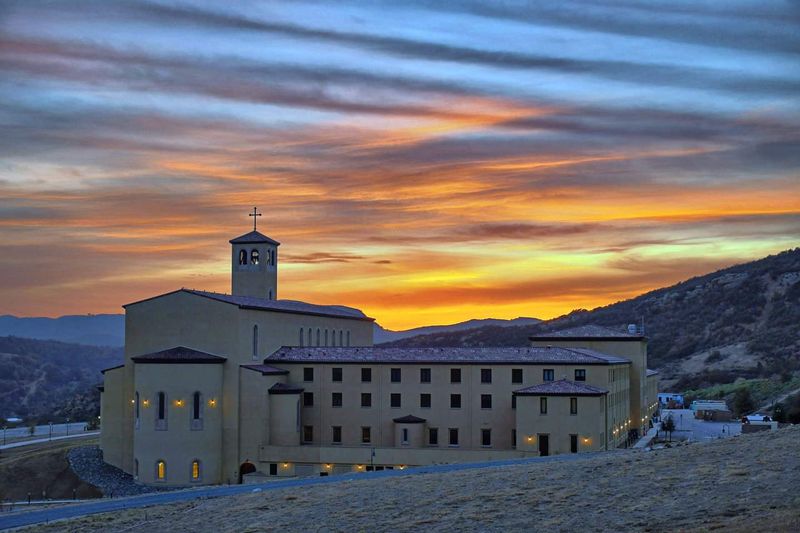
Then the road climbs, the views open up, and the buildings start doing that rare thing architecture can do when it has real presence.
Arches, towers, stonework, courtyards, and quiet grounds make the whole place feel removed from the usual rush below.
A California hill can hide a surprising amount of old-world grandeur.
The setting is the first thing people notice, but the calm is what makes the visit linger.
This is not a loud attraction built for quick photos and fast exits. It asks for a slower pace.
Look at the details. Take in the symmetry. Notice how the landscape frames the abbey instead of competing with it.
There is something striking about finding this kind of monastery in a place better known for beaches and polished suburban sprawl. The contrast works in its favor.
Let The Canyon Do Half The Work
Before the abbey even comes into view, the drive through Silverado Canyon has already begun doing something to the mood.
The abbey is located at 27977 Silverado Canyon Rd, Silverado, CA 92676, and the road leading there peels away from the suburban grid of Orange County in a way that feels almost deliberate.
Chaparral-covered hillsides rise on either side, and the air carries a dry, earthy quality that is noticeably different from the coastal breeze most visitors associate with Southern California.
The canyon sets a tone of gradual removal, easing the mind away from traffic and notifications before a single arch or tower appears.
That slow transition matters more than it might seem, because arriving at the abbey already feeling quieter makes the first glimpse of the building genuinely striking.
The drive is not long, but it is purposeful, and the landscape does real work in preparing visitors for what waits at the top.
Parking can fill up quickly on weekends, so arriving a bit earlier than planned tends to help. The approach alone makes the trip feel like more than a typical Southern California outing.
Start With The Bell Tower
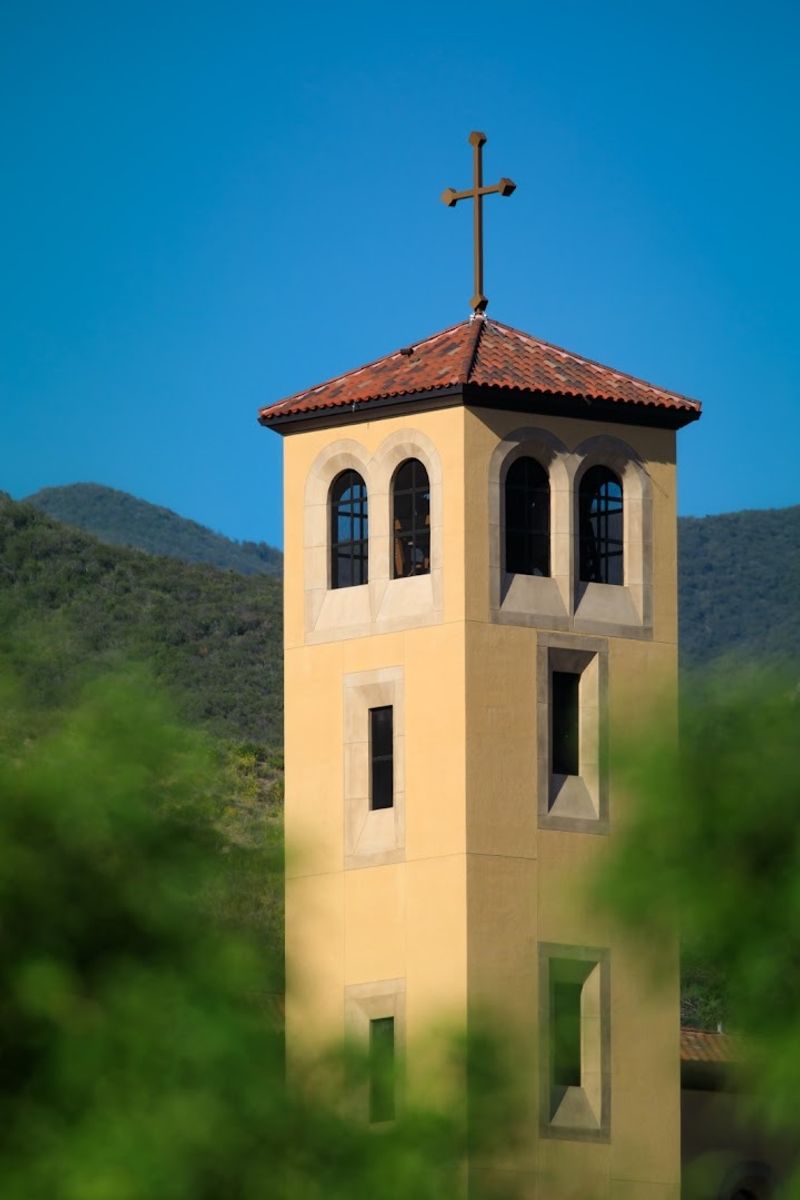
Few architectural features announce a building’s intentions quite like a 108-foot bell tower rising above a canyon ridge in Southern California.
The church at St. Michael’s Abbey was designed in a Romanesque style, featuring rounded arches, soaring radiused ceilings, and a golden-toned integral color plaster exterior that catches light differently depending on the hour of day.
French architect Jean-Louis Pagès worked alongside Hyndman and Hyndman Architecture to draw inspiration from a 12th-century Provençal monastery.
Stonework details and the deliberate proportions of the tower contribute to an aesthetic that feels borrowed from another century rather than constructed in one.
Standing at the base and looking upward, the scale of the structure communicates something that photographs tend to compress out of existence.
The bell tower functions as a landmark visible from the canyon road below, giving first-time visitors a clear visual anchor long before they reach the parking area.
Romanesque architecture was chosen with intention, and every rounded arch and thick wall reinforces the sense that this building was built to last well beyond any single generation.
The design earns its European comparison honestly.
Time It Around A Public Service
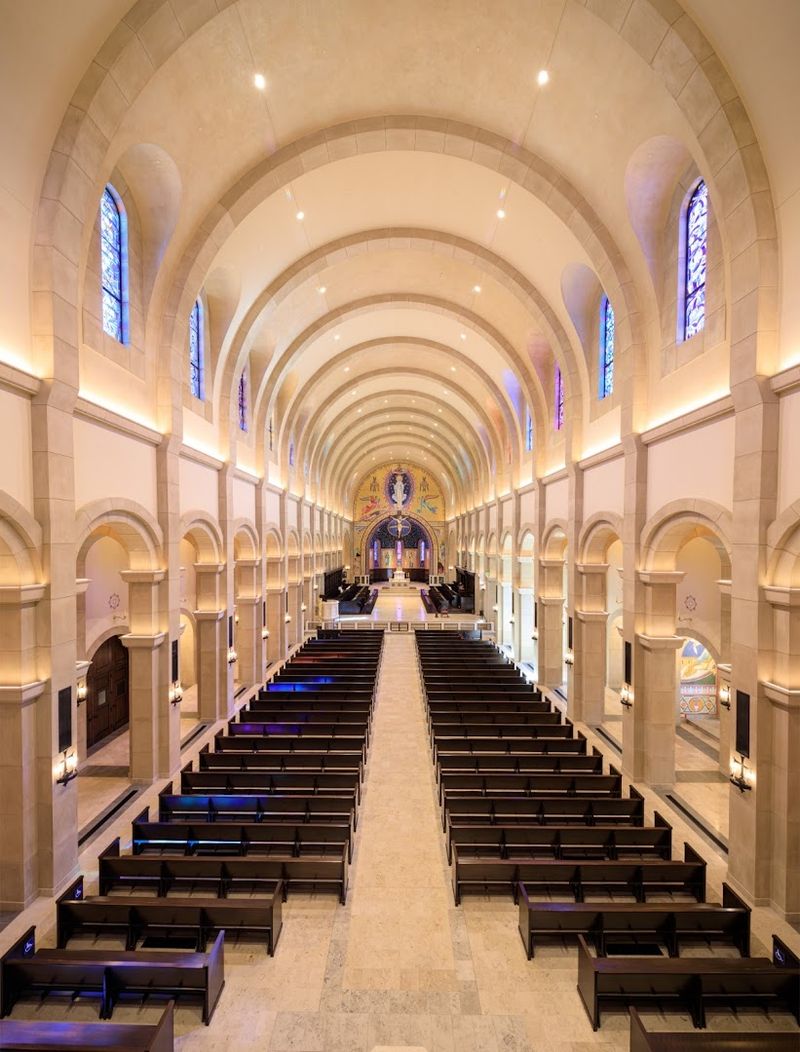
Attending one of the daily services transforms a visit from a sightseeing trip into something closer to participation.
Mass and the Liturgy of the Hours are held in the church every day and remain open to the public without reservation.
The daily schedule begins with Matins and Lauds at 5:45 a.m. and continues through Conventual Mass at 9:00 a.m., the Norbertine Rite Solemn High Latin Mass at noon, afternoon prayers, Vespers at 5:00 p.m., and Compline closing the day at 8:30 p.m.
Confessions are available Monday through Saturday from 1:00 p.m. to 4:00 p.m., which draws a steady stream of visitors on weekend afternoons.
Hearing the community chant together inside the church is an experience that the architecture amplifies considerably, with the acoustics of the vaulted ceiling carrying sound in ways that feel almost physical.
Non-Catholic visitors are welcome to attend services and observe, and the atmosphere during Mass tends to be one of focused quiet rather than performance.
Checking the abbey’s website before visiting is worth the extra step, since schedules can shift around feast days or special community events.
Timing a visit around a service adds a layer of meaning that a solo walkthrough simply cannot replicate.
Catch The Saturday Tour
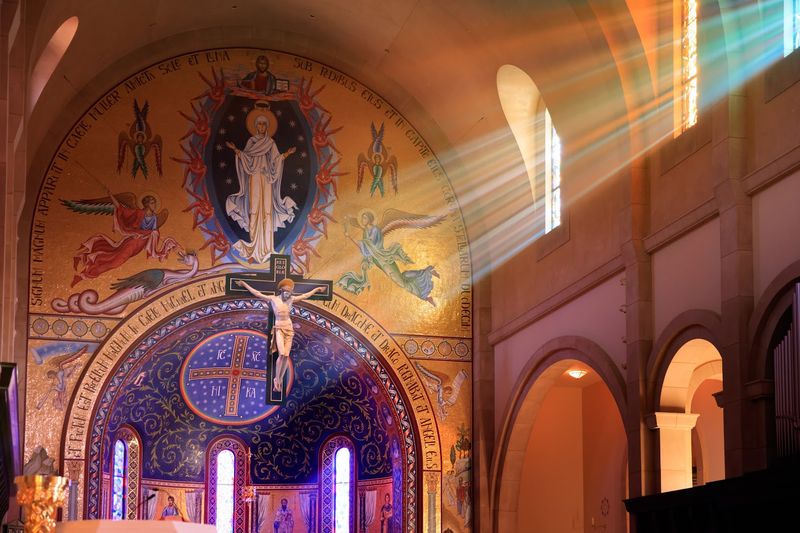
Saturday visits come with a built-in advantage that weekday trips do not: a guided tour of the abbey church scheduled at 12:20 p.m., beginning right after Midday Prayer concludes.
The tour starts in the front pews inside the church itself, which means participants get to experience the space from the inside before moving through its architectural highlights with a knowledgeable guide.
Groups of up to around 100 visitors have been accommodated during these tours, and the guides tend to be generous with historical context, architectural detail, and stories about the community’s life and mission.
For larger groups of 40 or more, calling the front office in advance to make a reservation is necessary rather than optional.
Tours can be canceled when special abbey events take priority, so confirming availability through the abbey’s website before making the drive is a practical step worth taking.
Arriving a few minutes before 12:20 p.m. allows time to settle into the pews and absorb the atmosphere before the guide begins.
The tour runs at a relaxed pace and tends to leave participants with a much clearer understanding of both the building’s design choices and the community that calls it home.
Look For The Old-Europe Details
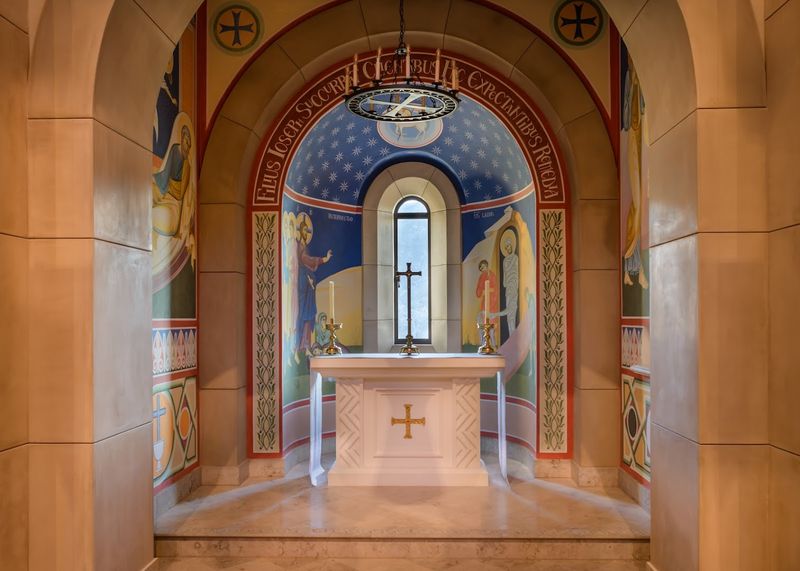
Spending time with the specific visual elements of the abbey reveals just how carefully each detail contributes to the overall effect.
Rounded arches frame doorways and windows throughout the complex, a hallmark of Romanesque design that communicates weight and permanence rather than the vertical lightness of Gothic cathedrals.
The pale, golden-toned exterior plaster shifts in color depending on the angle of sunlight, appearing almost amber in the late afternoon and closer to cream in the morning hours.
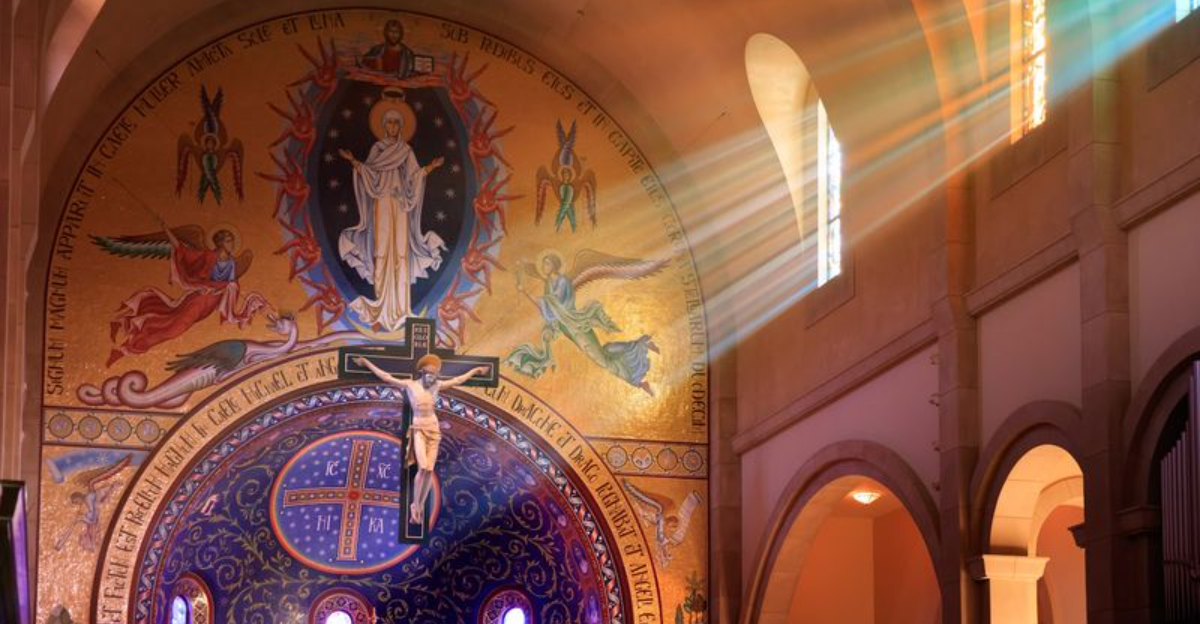
Stained glass windows run along the upper portions of the side walls inside the church, casting colored light across the interior during services.
The stonework at the base of the bell tower and around key structural points adds texture that photographs tend to flatten but that becomes very apparent when standing close enough to reach out and touch it.
The canyon backdrop completes the picture in a way that no purely urban setting could.
Dry hills covered in chaparral stretch behind the pale walls, creating a visual contrast that somehow reinforces rather than undermines the European quality of the architecture.
The combination of deliberate design choices and an unexpected natural setting is exactly what makes the abbey feel genuinely transplanted rather than merely themed. Each detail rewards a slow, unhurried look.
Respect The Sacred-Space Rules
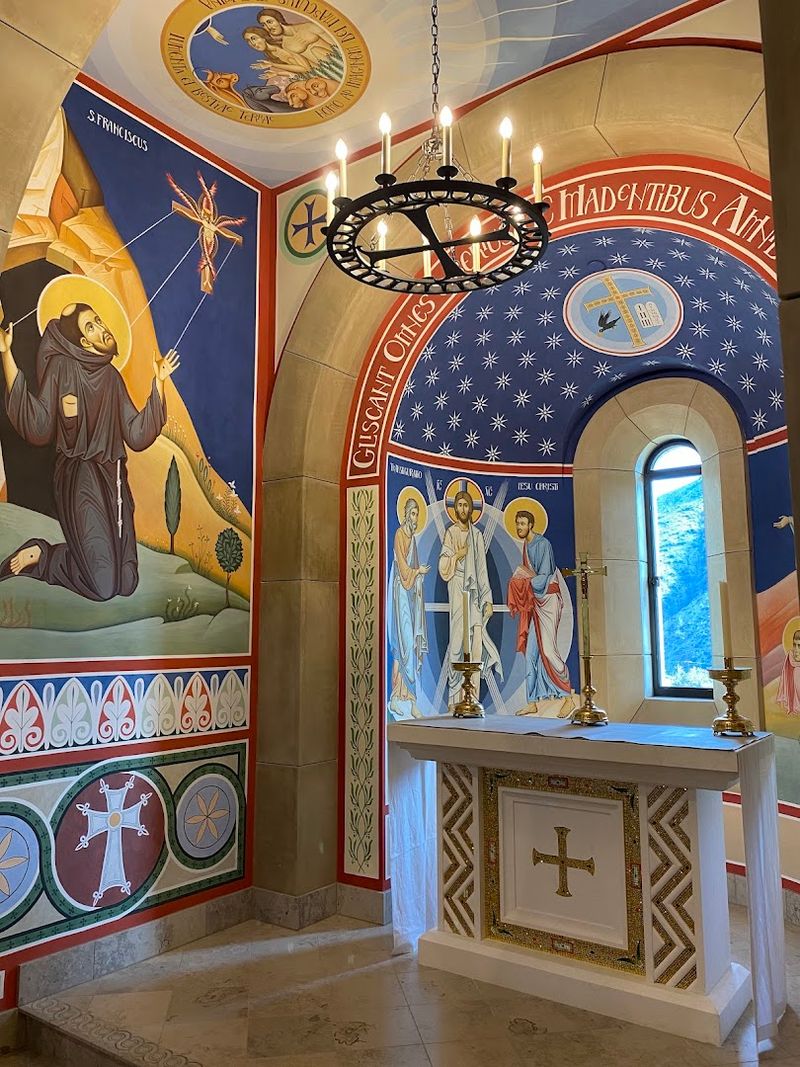
Visiting a working monastery carries different expectations than visiting a museum or a park, and the abbey communicates those expectations clearly before guests enter the church.
Dress should be dignified and appropriate for a place of active prayer, which in practical terms means avoiding tank tops, muscle shirts, shorts, and athletic or yoga-style pants.
Tattoos that could be considered offensive to other visitors are asked to be covered during the visit.
These guidelines are not meant to be exclusionary but rather to preserve an atmosphere where people of all backgrounds can pray or reflect without distraction.
The abbey serves an active religious community alongside the visiting public, and the two coexist most comfortably when guests approach the space with the same care they might bring to any sacred site.
Reading the guidelines on the abbey’s website before arriving saves the awkwardness of realizing mid-drive that a wardrobe adjustment is needed.
The requests are straightforward and easy to plan around with minimal effort.
Visitors who come prepared tend to settle into the atmosphere much more quickly, and the quiet, unhurried pace of the abbey becomes accessible almost immediately upon entering the church.
Respecting the space is less a restriction than an invitation to engage with it more fully.
Remember People Live Here
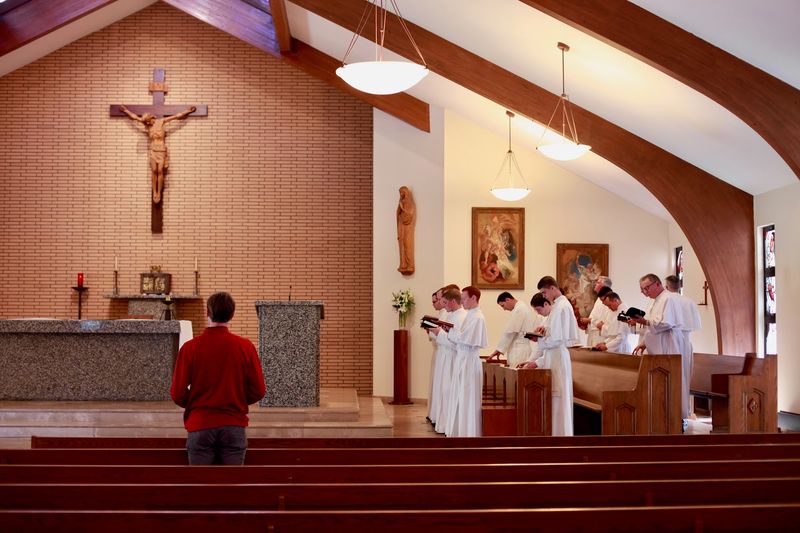
Beyond the architecture and the visitor schedule, St. Michael’s Abbey is first and foremost a home.
More than sixty priests and over forty seminarians live within the community, following the 900-year tradition of the Norbertine Order in a rhythm of liturgical prayer and pastoral service.
The community’s daily life revolves around the same schedule of prayers and Masses that visitors are welcome to attend, meaning the public experience and the community’s private life overlap in the church several times each day.
The Norbertine charism centers on praising God through communal prayer and caring for souls through active ministry, a combination that gives the abbey a dual identity as both contemplative monastery and active apostolate.
Seminarians are in various stages of formation, meaning the community includes young men discerning a vocation alongside ordained priests with years of ministry behind them.
Encountering a member of the community on the grounds is possible but not guaranteed, and the monks are not obligated to engage with visitors outside of formal contexts like confession or spiritual guidance.
Understanding that residents live and work within the same spaces tourists walk through encourages a different quality of attention, one that is more considerate and less transactional.
Do Not Wander Everywhere
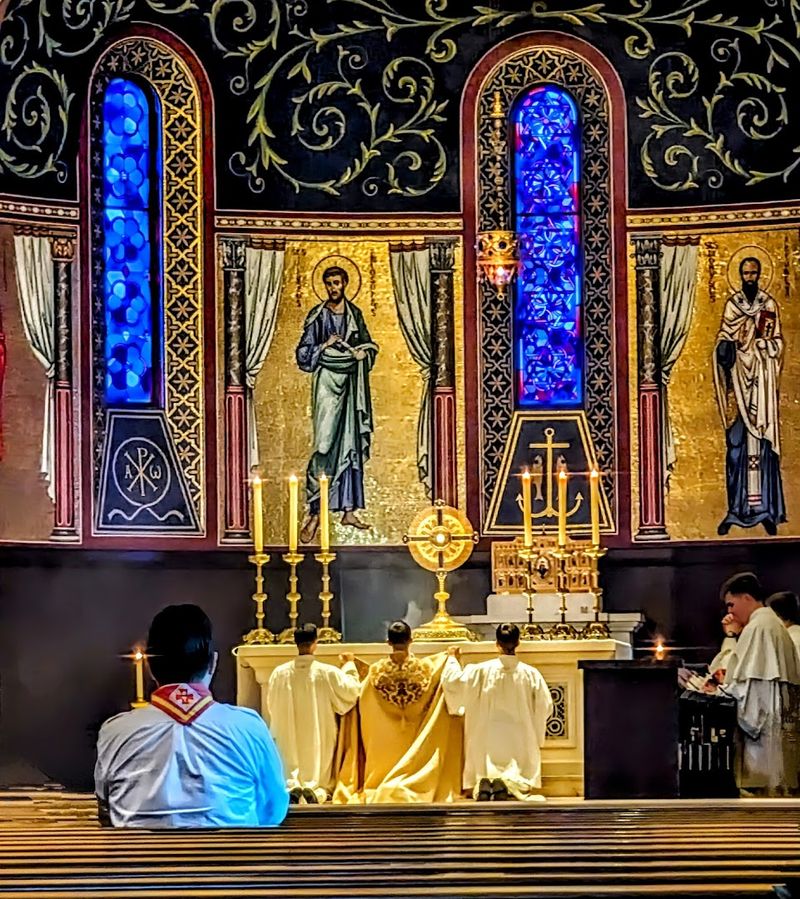
Not every corner of the abbey campus is open to public exploration, and understanding those boundaries makes for a more respectful and comfortable visit.
Certain areas are reserved exclusively for the Norbertine community, and the abbey cemetery is one space specifically noted as not open for public visits, including for burial observances.
Posted property rules throughout the grounds designate which areas guests may move through freely and which require them to turn back.
The distinction between public and private space at St. Michael’s Abbey is not meant to feel unwelcoming but rather to protect the privacy of a community that has chosen a specific way of life.
Monastic schedules require periods of silence and recollection that cannot easily accommodate unannounced foot traffic in residential or formation areas of the campus.
Staying within clearly designated public zones, including the church, the grounds immediately surrounding it, and areas indicated as visitor-accessible, ensures that the visit remains both enjoyable and appropriate.
Curiosity is natural in a setting this visually rich, but the most meaningful access the abbey offers is already available in the public spaces: the church interior, the architecture, the services, and the Saturday tour.