Cross This Century-Old Idaho Railroad Bridge For A Low-Cost Trip Back In Time
Old railroad bridges should not be this good at stealing a day trip.
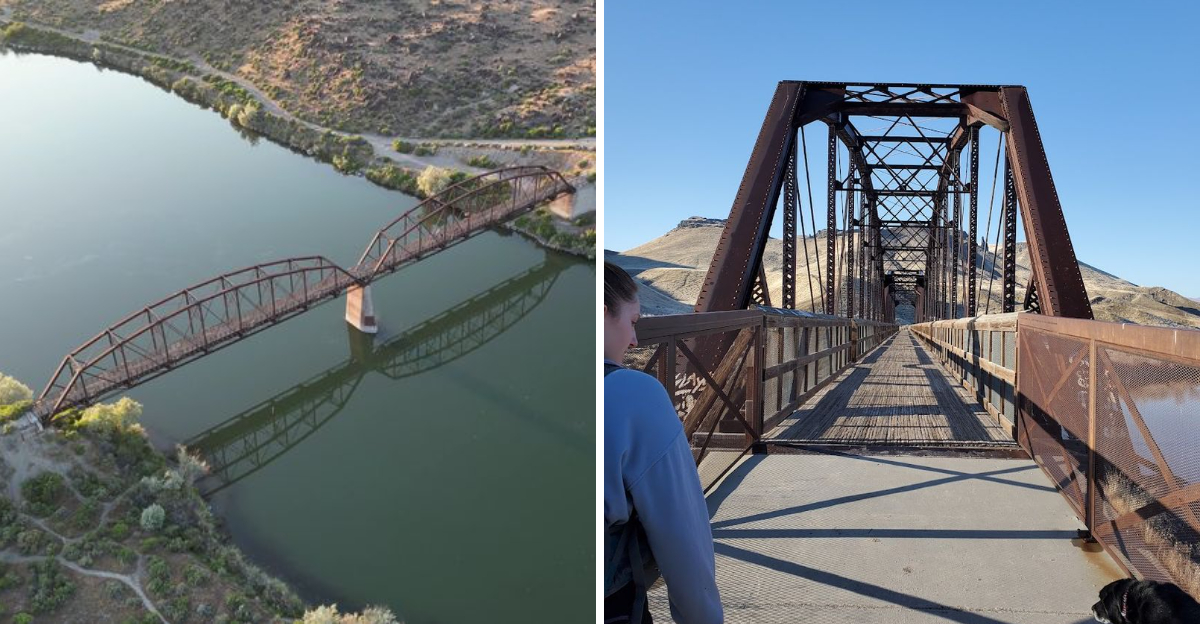
Just south of Nampa, a steel giant still stretches over the Snake River like it has no plans to retire quietly.
Built in 1897, this Idaho landmark once carried heavy ore through canyon country, back when the whole place had more grit than a miner’s lunchbox.
Now the trains are gone, but the drama stayed behind.
Crossing it on foot feels a little bold, a little historic, and just shaky enough in spirit to make everyone walk more respectfully.
The river moves below. The canyon does its best movie-scene impression.
Suddenly, a cheap outdoor stop feels like a much bigger adventure than expected.
No fancy ticket is needed here.
Just curiosity, decent shoes, and the willingness to let an old bridge make the afternoon way more interesting.
Start At Celebration Park Before The Bridge Steals The Whole Visit
Starting with the park gives the bridge more meaning before the steelwork steals every bit of attention.
Celebration Park sits along the Snake River near Melba and is Idaho’s only archaeological park. Established in 1989, it protects petroglyphs, Bonneville Flood geology, river history, and evidence of early human presence.
The park address is commonly listed near 5000 Victory Lane, Melba, ID 83641, making it a manageable day trip from Nampa, Boise, Caldwell, or Kuna.
Restrooms, picnic areas, camping options, interpretive programs, and a visitor center help turn the stop into more than a quick bridge photo.
Checking current hours before visiting is smart, especially if the visitor center or guided programming is part of the plan.
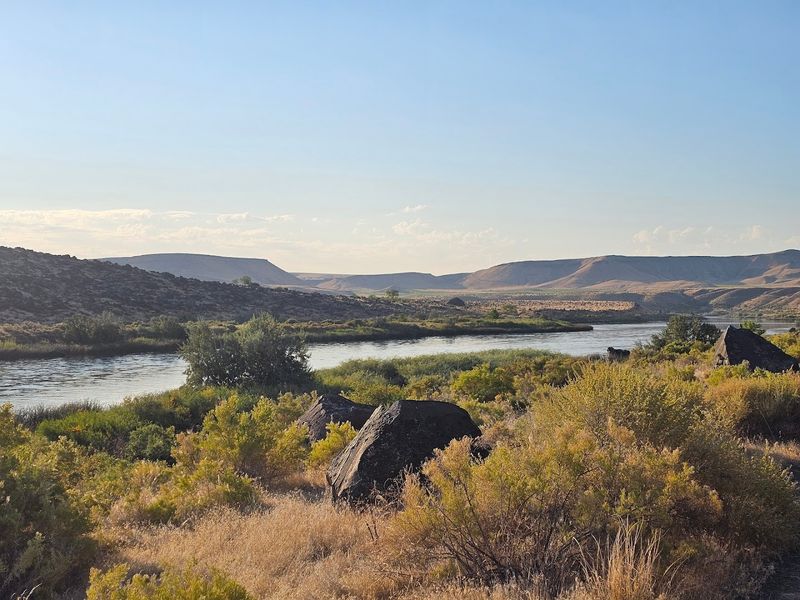
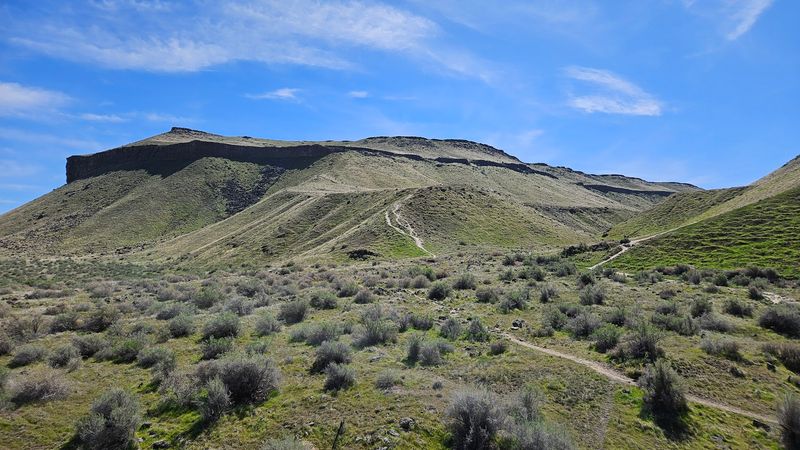
The landscape itself feels wide open and rugged, with basalt boulders, sagebrush, river views, and canyon walls creating a setting that already feels older than the road that brought you there.
Beginning here lets visitors understand the place before walking toward Guffey Bridge. Once the history, geology, and petroglyphs are in your head, the bridge stops feeling like a random crossing and starts feeling like one more chapter in a much longer Idaho story.
Cross The Snake River On A Railroad Relic From 1897
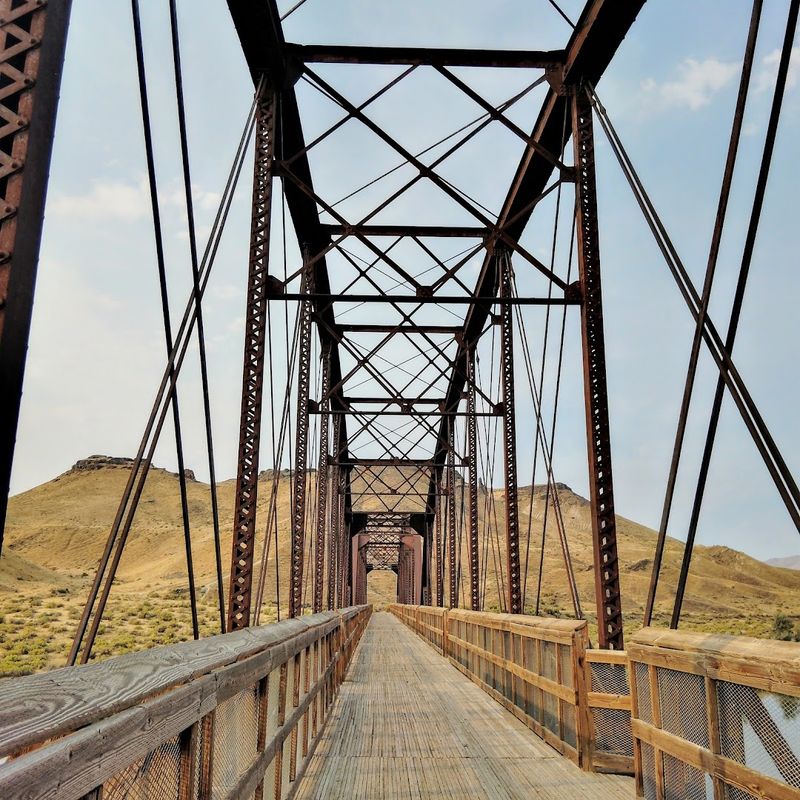
Few short walks in southwest Idaho come with this much railroad history underfoot.
Guffey Railroad Bridge was built in 1897 to carry ore from the Silver City mining region to Nampa for smelting. It linked the rugged Owyhee country with the transportation network that helped power the region’s economy.
The bridge now carries pedestrians and horseback riders instead of trains, but the industrial purpose still feels visible in the heavy steel trusses, long span, and direct crossing over the Snake River.
It connects Canyon County and Owyhee County, giving visitors a physical sense of how ambitious the railroad project once was.
The bridge later served agricultural and livestock needs after mining declined, before rail use eventually ended. Today, its restored non-motorized role makes it feel both preserved and useful, not just frozen behind a fence.
Walking across a 19th-century railroad bridge is different from looking at one from a distance. The deck, railings, rivets, beams, and canyon air all work together.
You are not only seeing Idaho history. For a few minutes, you are moving through it at human speed, with the Snake River below and the old railroad corridor stretching into the surrounding landscape.
Look Down Before The Canyon View Starts Messing With Your Nerves
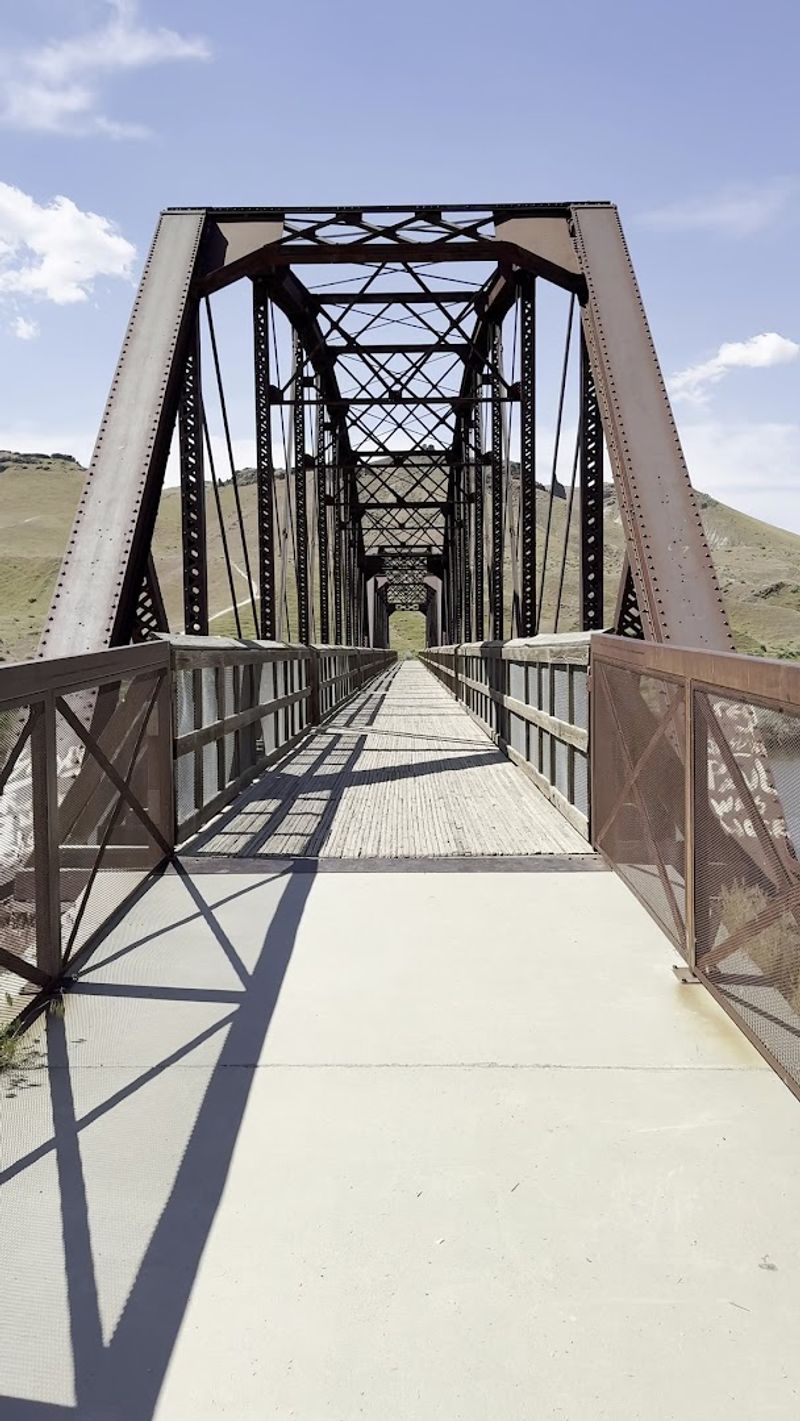
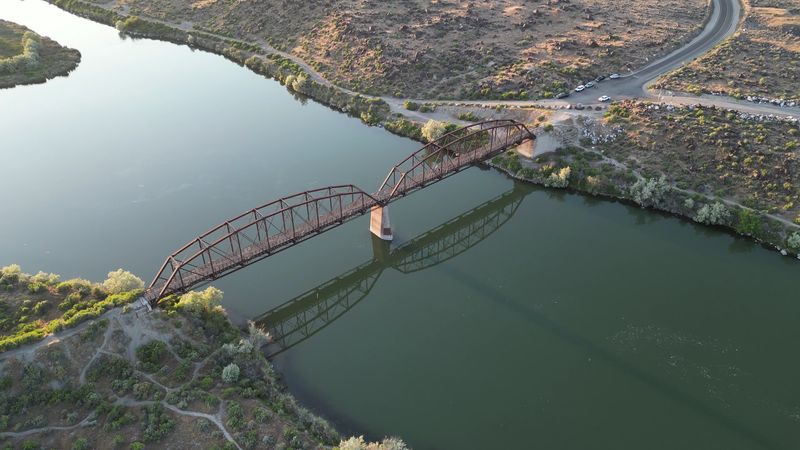
Height becomes real once the river appears between the bridge and your shoes. Guffey Bridge spans about 500 feet across the Snake River and rises roughly 70 feet above the water, enough to make the crossing exciting without requiring a major hike or extreme adventure mindset.
The view downward can feel dramatic, especially for anyone who gets nervous on open bridges, but the restored pedestrian surface and railings help make the experience approachable. The canyon around the bridge adds most of the drama.
Basalt, river current, open sky, and long southern Idaho light create a scene that feels bigger than the short walk suggests. Some visitors stop in the middle for photos.
Others keep moving while pretending they are not thinking about the drop. Both approaches are valid.
The best part is how quickly the view changes from ordinary park walk to full canyon moment. One minute you are near picnic tables and interpretive signs, and soon after the Snake River is sliding below a century-old railroad span.
The bridge gives just enough thrill to make the crossing memorable, while the canyon makes the whole thing feel like a reward.
Follow The Short Rail Trail For A Quick Walk With Big Payoff
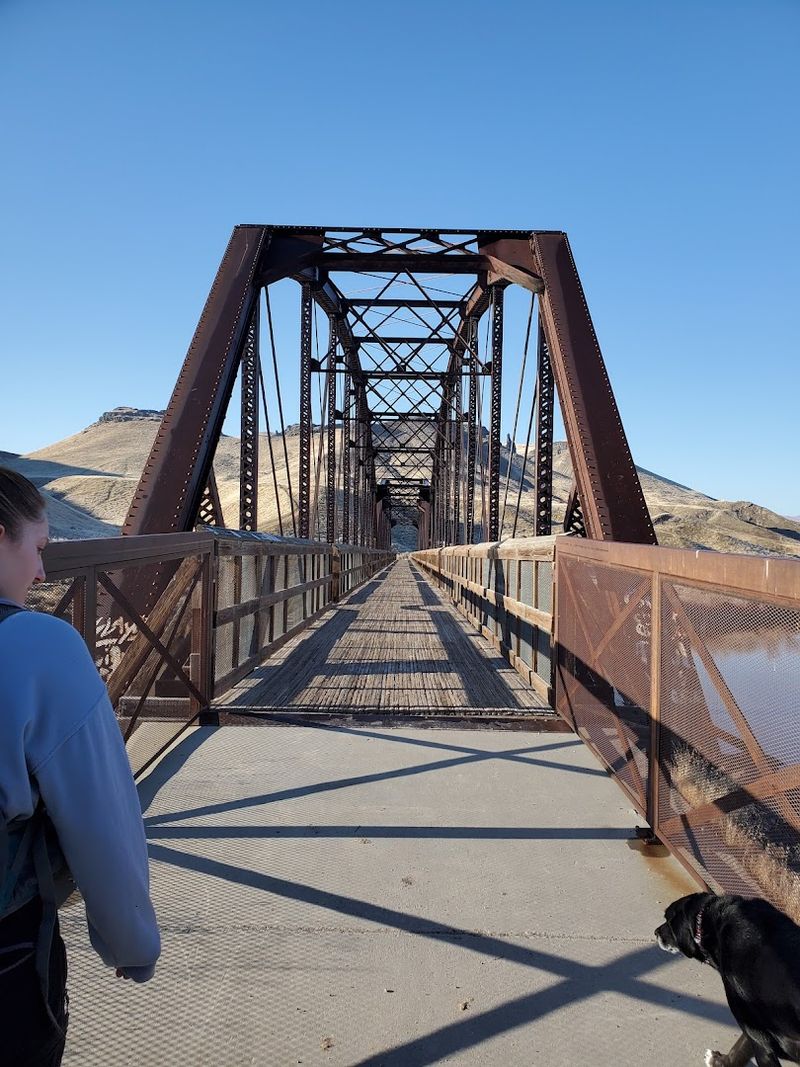
Nobody has to train for weeks to enjoy this piece of Idaho history.
The Guffey Railroad Bridge Trail is short and easy to explore. It’s a great stop for families, casual walkers, photographers, and road-trippers looking for a quick but memorable hike.
The bridge itself provides the main payoff, but the surrounding trail connections add flexibility for visitors who want more time outside. From Celebration Park, walkers can reach the bridge, cross the Snake River, and continue onto primitive non-motorized routes on the Owyhee County side.
Other trails in the broader area lead along the river corridor and toward Halverson Lake or farther upstream for more ambitious hikers.
Conditions can be hot, exposed, dusty, or uneven depending on the season, so water, sun protection, and sturdy shoes are still good ideas even for a short visit.
The landscape changes quickly from park grounds to river edge to bridge crossing, which keeps the walk feeling fuller than the mileage suggests. That is the real charm.
A low-effort trail delivers steel-bridge history, canyon views, river scenery, and a sense of adventure without asking visitors to give up the whole day.
Read The Signs Before The Mining History Slips Past You
Interpretive signs do the quiet work of turning a scenic crossing into a story visitors can actually follow. Without context, Guffey Bridge is impressive because it is old, high, and photogenic.
With context, it becomes part of Idaho’s mining, railroad, agricultural, and preservation history.
The bridge was designed to help move gold and silver ore from the Silver City area toward Nampa, where smelting and rail connections made the mining economy more practical.
That purpose explains the size, ambition, and location of the structure. Later, as mining declined and regional needs changed, the railroad corridor helped support livestock and agricultural movement before rail operations ended.
Celebration Park’s signs and programs connect those chapters to the surrounding canyon landscape, making it easier to understand why a massive steel bridge ended up in such a rugged spot.
Pausing to read before and after the crossing is worth the time, especially for visitors who like knowing what they are walking on.
Southwest Idaho history can hide in plain sight because the scenery is so distracting. The signs bring the human ambition back into focus: mines, rail lines, workers, money, farms, and the long effort to make difficult terrain useful.
Notice The Steelwork That Somehow Still Feels Built For Trains
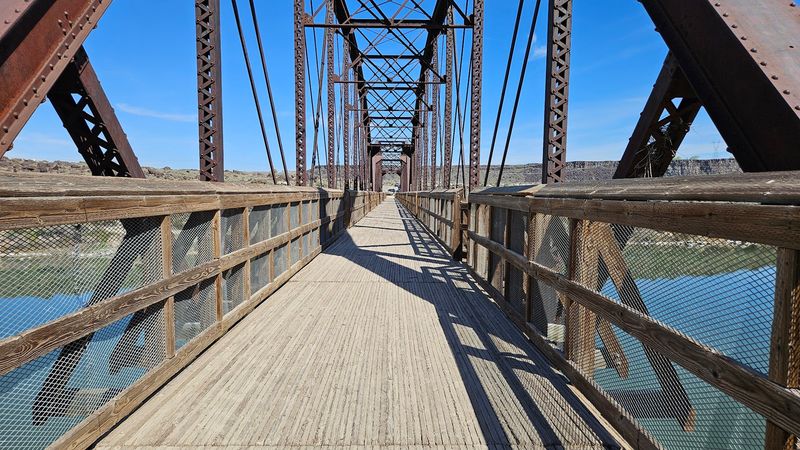
Steel this heavy does not look retired, even after the trains are long gone. Guffey Bridge is a 450-ton structure and the only Parker-through-truss railroad bridge in Idaho, a detail that makes the crossing significant beyond its pretty setting.
The truss design surrounds walkers with a tunnel-like frame of beams, angles, rivets, and shadows, giving the bridge a powerful industrial presence. Carnegie Steel fabricated the structure in the late 1890s, and the engineering still feels serious when you stand inside it.
The bridge was listed on the National Register of Historic Places in 1978, later restored, and rededicated in 1991 after preservation efforts saved it from a much less interesting fate.
That survival matters because plenty of old railroad infrastructure disappears once it stops serving its original purpose.
Here, the opposite happened. The bridge gained a second life as a pedestrian and equestrian crossing, letting people experience the scale of the original railroad project directly.
Look closely at the beams and connections while crossing. The craftsmanship feels practical, not decorative, which makes it even more compelling.
Guffey Bridge was built to work hard, and more than a century later, it still looks ready.
Bring A Camera Because The Snake River Does Half The Work
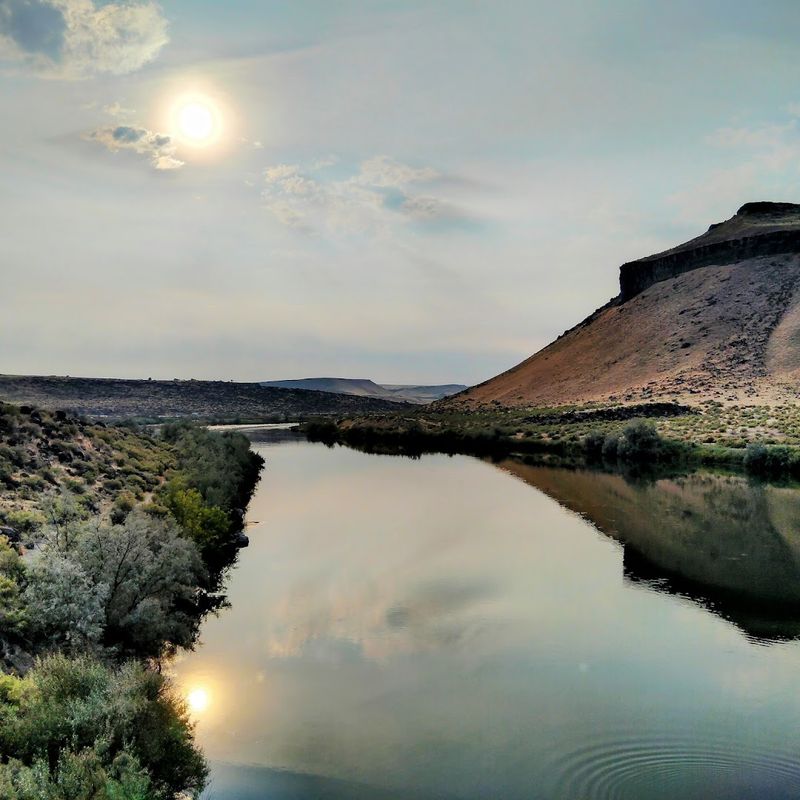
Good photos are almost unfairly easy here. Guffey Bridge brings the structure, the Snake River brings the movement, and the canyon light takes care of the mood.
Early morning can soften the basalt and water, while late afternoon often warms the steel and throws stronger shadows through the trusses. The bridge itself creates strong lines for photos, especially when framed from the deck, riverbank, or nearby trails.
From the middle, visitors can capture the Snake River below, the canyon walls beyond, and the old railroad bones surrounding the shot.
Celebration Park also lies within the broader landscape of the Morley Nelson Snake River Birds of Prey National Conservation Area. Raptors can often be spotted soaring above the canyon, depending on the season.
A phone camera can handle plenty here, but anyone interested in wildlife or long scenic shots may appreciate a better lens. The trick is not rushing.
Walk the bridge, turn around, look downriver, look upriver, and notice how the light changes from one side to the other. This is one of those Idaho stops where the best photo may not happen at the first viewpoint.
The river keeps improving the frame.
Add The Petroglyph Area If You Want More History Nearby
Ancient rock art gives the bridge visit a much deeper timeline. Celebration Park protects basalt melon gravels left by the Bonneville Flood, and many of those dark boulders carry petroglyphs that date from roughly 100 to 10,000 years old.
That means visitors can start with evidence of Indigenous presence and ancient lifeways, then walk toward a 19th-century railroad bridge built for mining and transportation. Few quick outings stack Idaho history quite like that.
The petroglyph area is one of the reasons Celebration Park matters so much beyond the bridge, and it deserves time instead of being treated as a side note.
Visitors should stay on designated routes, avoid touching or climbing on rock art, and respect the site as a protected archaeological landscape rather than an outdoor doodle gallery.
Interpretive programs may include demonstrations such as atlatl throwing, helping connect the landscape to older ways of living and hunting. Adding the petroglyph area turns the trip into more than a bridge walk.
It becomes a compact timeline of human presence, geology, transportation, and preservation along the Snake River. The bridge is impressive, but the older stories nearby make the whole park feel even more remarkable.