This Connecticut Library Is Unlike Any Other Place You’ve Ever Seen
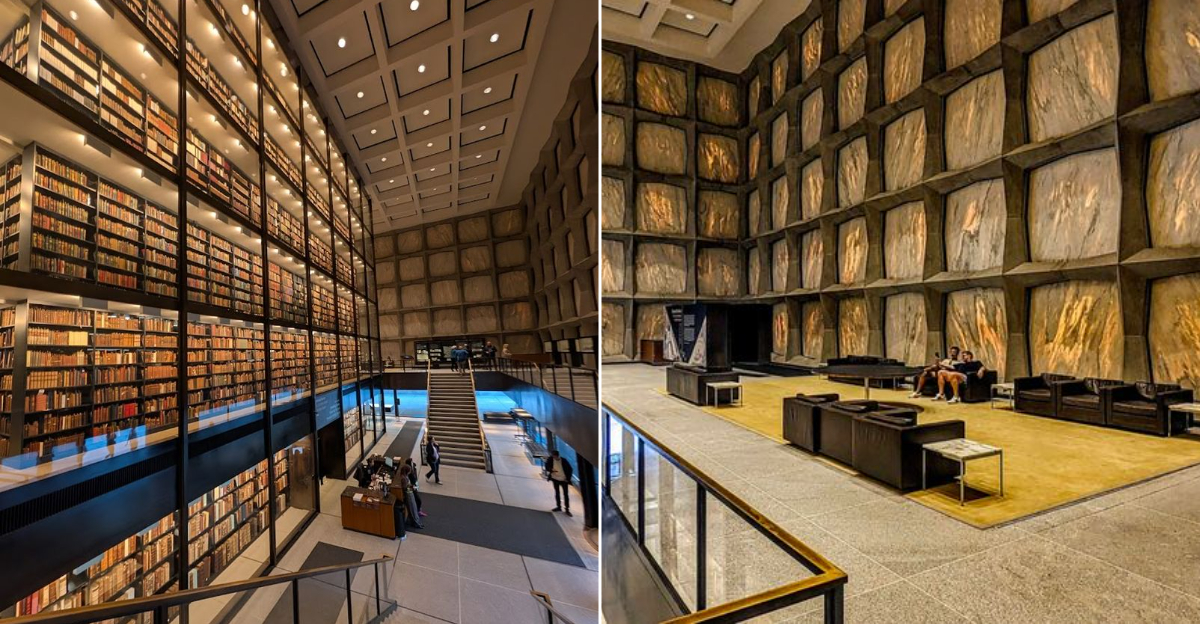
Libraries do not usually stop people in their tracks but this one does it before you have even made it through the entrance. The building itself is genuinely extraordinary.
A architectural marvel that feels more like a work of art than a place to store books and the interior only deepens that impression once you are actually inside looking around properly.
The rare books and manuscripts housed here carry a weight of history that is immediately obvious and completely humbling in the best possible way.
Honestly nothing in Connecticut quite prepares you for a library this unlike anything else you have ever seen and that reaction is consistent across every single person who visits for the first time.
Book lovers lose themselves completely and people who never thought libraries could be this compelling leave with a completely different opinion.
A place this extraordinary existing this accessibly is one of those quietly remarkable things worth appreciating properly.
1. The Building Looks Like A Secret Vault
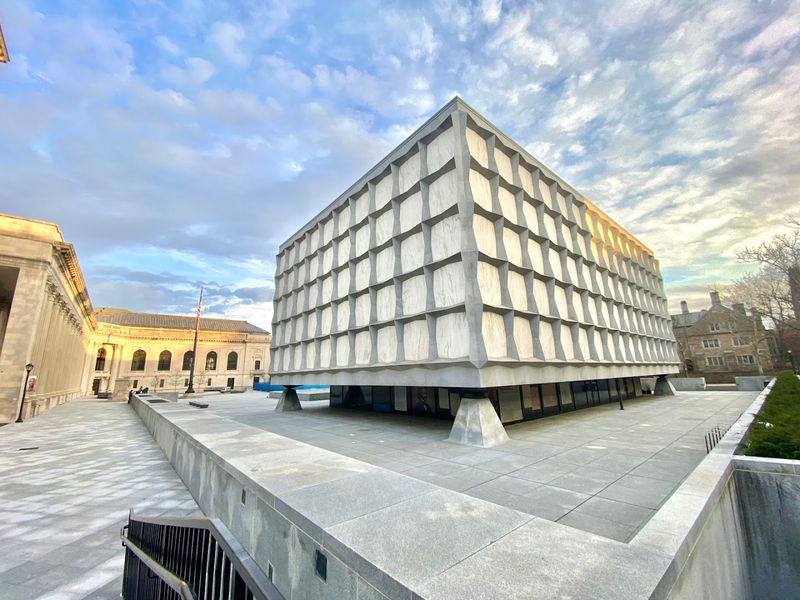
From the outside, this Yale landmark looks less like a library and more like a mysterious stone vault built to protect human knowledge forever.
The Beinecke Rare Book and Manuscript Library has a striking presence, thanks to its huge grid of translucent Vermont marble panels, each cut to about 1¼ inches thick.
Instead of regular windows, the marble filters daylight, helping protect the rare materials inside while giving the building its unforgettable glow.
Completed in 1963, the library was designed by Gordon Bunshaft of Skidmore, Owings & Merrill and remains a standout example of modern architecture on campus.
Four massive corner columns support the structure, while the exterior combines gray granite and steel trusses for a look that feels both ancient and futuristic.
The library’s address, 121 Wall St in New Haven, places it among Yale’s older neo-Classical and neo-Gothic buildings, making the contrast even more dramatic. The entrance is easy to miss at first, but that only adds to the building’s strange magic.
Architecture fans could easily spend a while admiring the exterior before heading inside.
2. Rare Books Feel Magical In Person
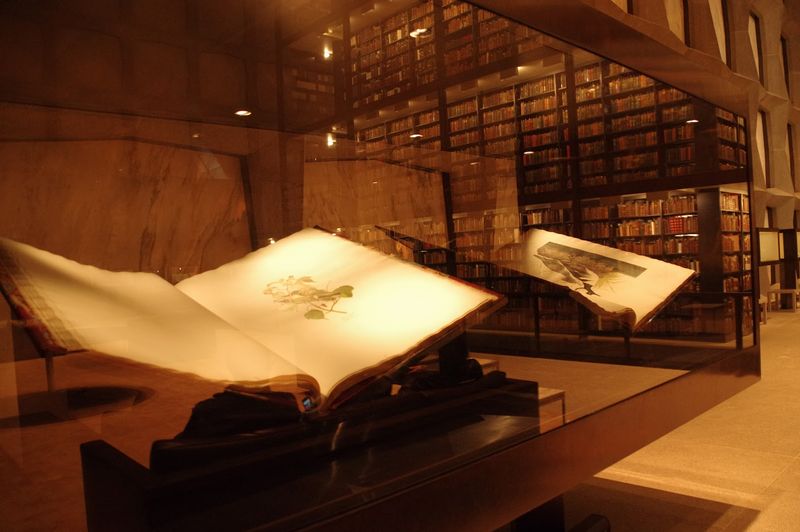
Seeing a Gutenberg Bible in person has a completely different kind of pull than scrolling past an image of one.
Inside the Beinecke Rare Book and Manuscript Library, visitors can view one of the surviving copies on permanent public display, no appointment or scholar’s pass required during regular exhibition hours.
Another showstopper is John James Audubon’s Birds of America, whose enormous pages and fine detail tend to make people pause longer than expected. But the famous pieces are only the beginning.
The holdings reach across ancient papyri, medieval manuscripts, early printed books, and major literary archives connected with names such as William Shakespeare, James Joyce, Mark Twain, and Langston Hughes.
The mysterious Voynich Manuscript also belongs to the collection, adding a bit of unsolved intrigue to the library’s reputation. Because exhibitions rotate through the year, a return visit can feel surprisingly fresh.
What makes the experience linger is the quiet impact of being near objects that carried human ideas across centuries. Even visitors who do not arrive as book lovers often leave feeling unexpectedly moved by the beauty, scale, and strangeness of what they have just seen up close.
It turns a campus stop into something unforgettable for almost everyone.
3. The Marble Walls Create A Dreamy Glow
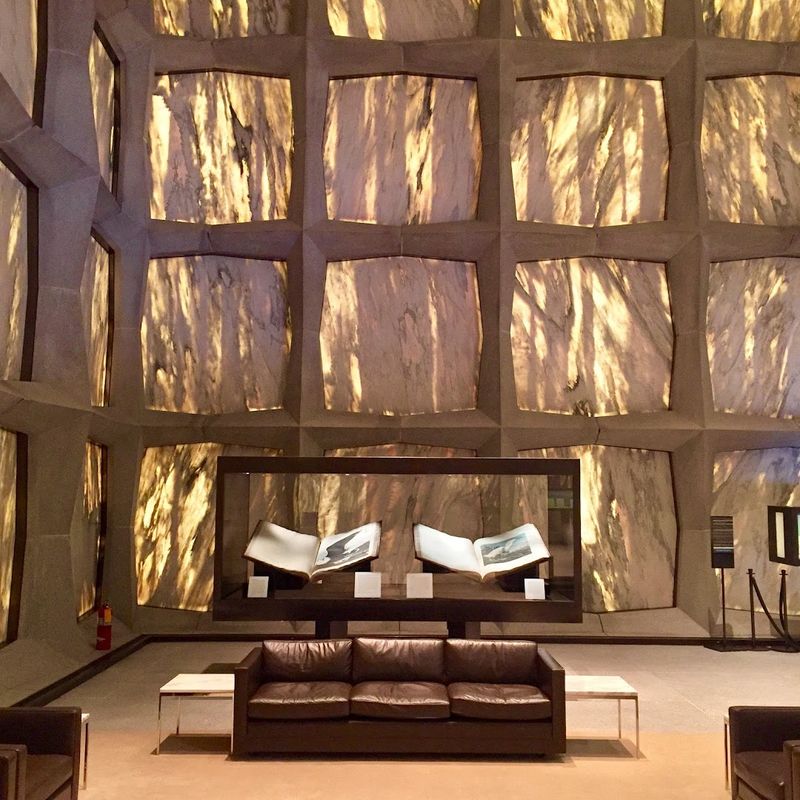
The first look inside can catch people completely off guard, because the room does not feel like any ordinary library.
Instead of flat office light or harsh sunshine, the Beinecke Rare Book and Manuscript Library glows in a warm amber wash that makes the whole space feel quiet, dramatic, and almost unreal.
That unforgettable effect comes from thin Vermont Danby marble panels built into the walls. Each panel is cut to about 1¼ inches, allowing daylight to pass through softly rather than stream directly into the room.
The design is not just beautiful, either. Rare books, manuscripts, and fragile materials need protection from damaging direct sunlight, so the marble works like a natural filter, warming and diffusing the light before it reaches the interior.
The atmosphere changes gently throughout the day. Morning can feel especially calm and golden, while afternoon light pulls out different tones in the stone.
That subtle shift makes repeat visits feel a little different each time. Even without opening a single book, anyone who loves texture, mood, architecture, or memorable spaces could find the marble walls reason enough to visit.
The glow stays with you long after leaving.
4. It Turns A Library Visit Into An Event
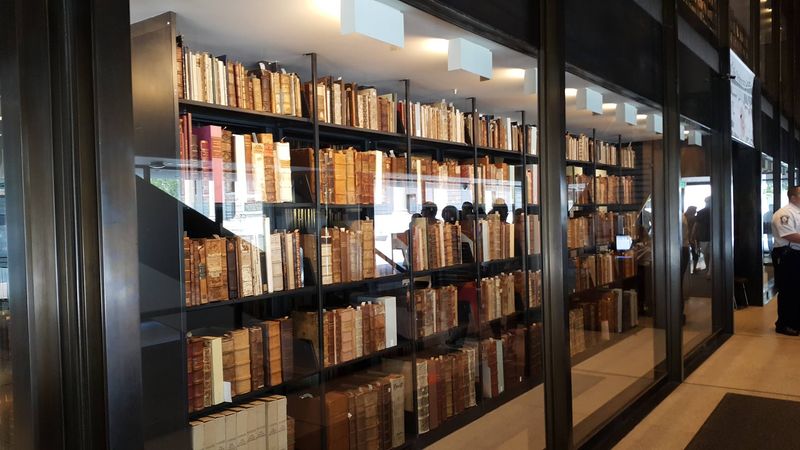
Most library visits follow a familiar rhythm: browse, borrow, leave. A visit to the Beinecke follows no such pattern.
The public exhibition hall spans both the ground floor and the mezzanine level, and the combination of permanent displays and rotating exhibits gives the space a curatorial energy that feels closer to a world-class museum than a place to return overdue books.
Staff-led introductory tours are offered on Saturdays at 1:30 PM, and they provide context that genuinely deepens the experience. Even without a tour, the space is easy to navigate at a comfortable, unhurried pace.
The library has made deliberate efforts in recent years to welcome a broader audience beyond credentialed scholars, which means the exhibits are presented in ways that feel accessible and engaging rather than intimidating or overly academic.
Hours vary by day, with the exhibition hall open Monday through Thursday until 7:00 PM, Friday until 5:00 PM, and on weekends from noon to 5:00 PM. Admission is free, which makes it one of the more remarkable cultural stops in the state without requiring any planning around a ticket budget.
Visitors should note that food, drinks, and bags are not permitted inside, and lockers are available for storage.
5. The Glass Tower Is Impossible To Ignore
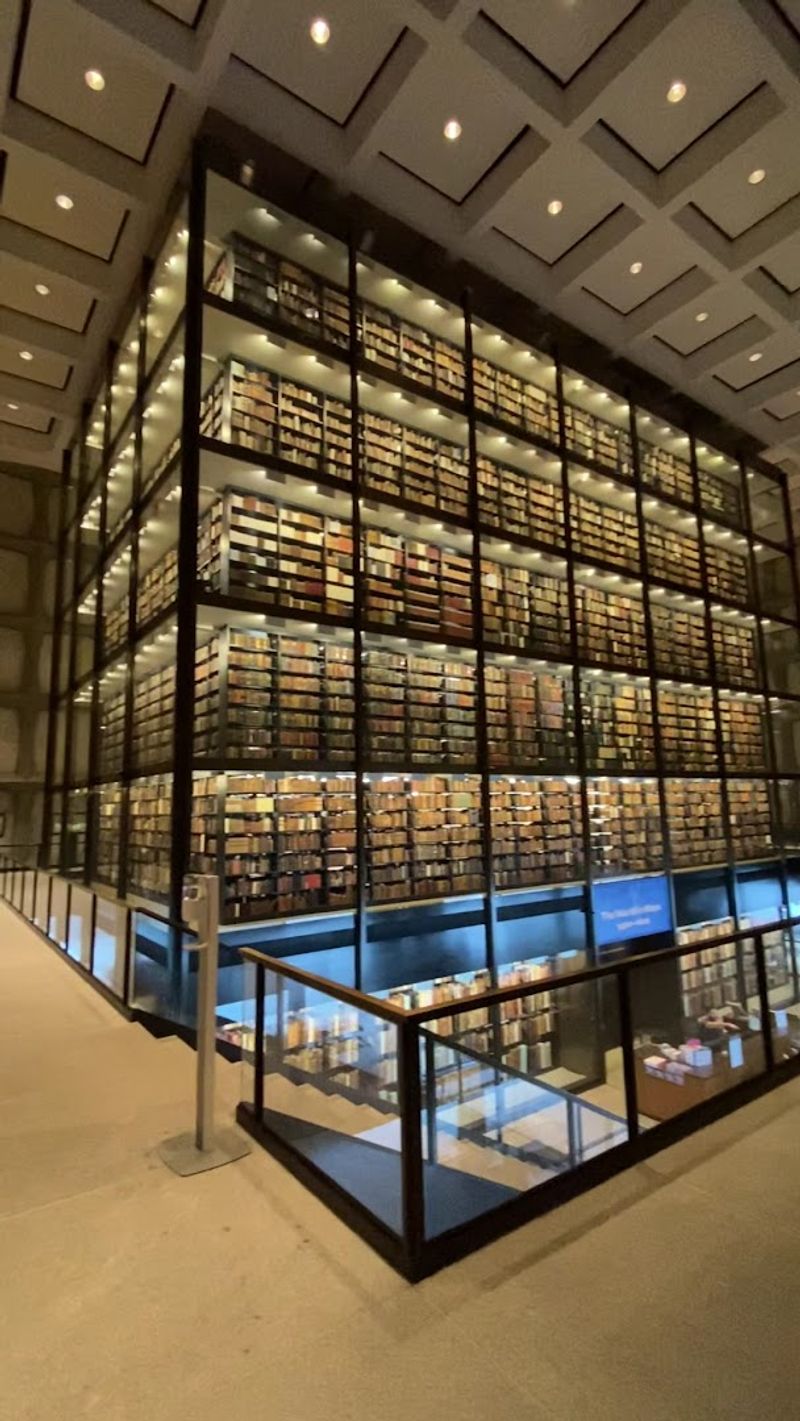
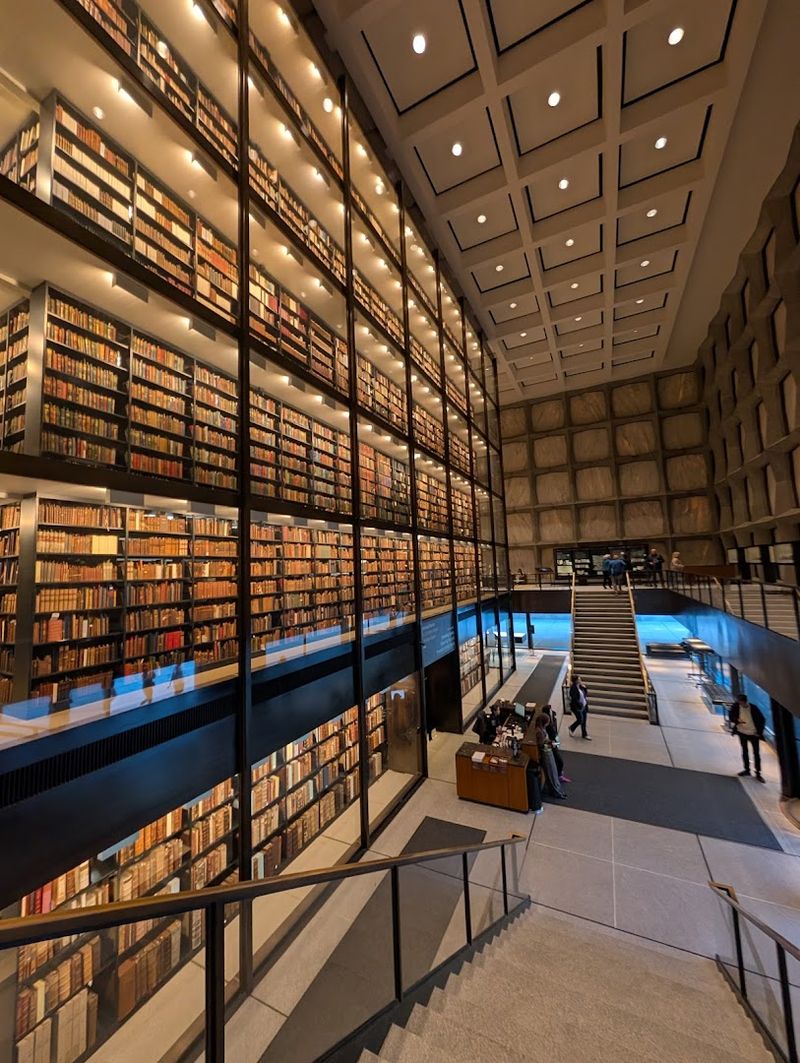
The moment someone steps into the main exhibition hall, the glass tower commands every bit of attention in the room.
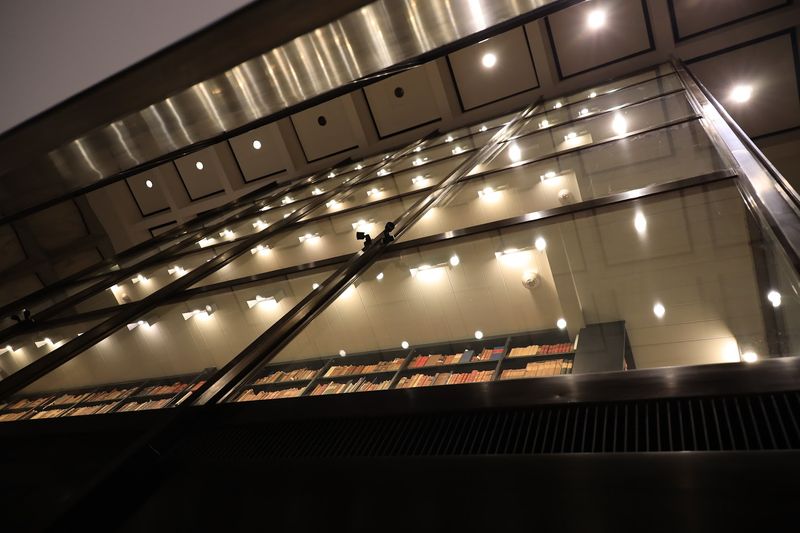
Rising six stories from floor to ceiling, the climate-controlled tower holds approximately 180,000 volumes, all visible through its glass walls but accessible only to authorized researchers and library staff.
The tower is kept at a carefully controlled temperature and humidity level to preserve the rare materials stored inside, which means the glass creates both a visual and a literal barrier between visitors and the collection.
Looking up through all six floors of stacked volumes produces a feeling that is hard to describe but easy to remember.
The scale of it, combined with the amber glow of the marble walls surrounding it, creates a visual experience that photographers and architecture enthusiasts tend to find particularly compelling.
Non-flash photography using a handheld camera is permitted for personal use, so capturing the tower is absolutely allowed as long as tripods, selfie sticks, and flash are left out of the equation.
The tower has been described by many visitors as the centerpiece of the entire building, and it is easy to understand why.
Standing in front of it and looking upward through all that glass and history is a genuinely singular moment.
6. History Feels Surprisingly Alive Here
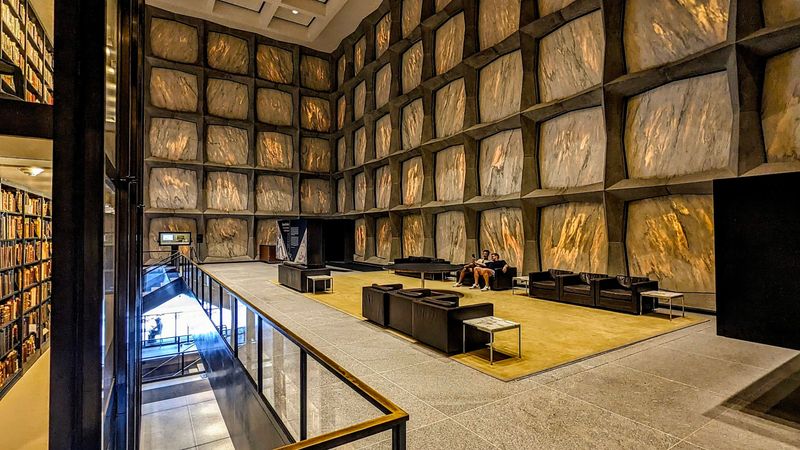
There is a particular kind of quiet that comes from being in a room with objects that are hundreds of years old.
The Beinecke collections include ancient papyri, medieval manuscripts, and early printed books, but also pieces tied to specific moments in American history that tend to resonate with visitors in unexpected ways.
Among the holdings are field maps from the Lewis and Clark expedition and William Clark’s manuscript map of the American West, which offer a direct physical connection to a pivotal chapter in the country’s story.
Seeing the actual paper, the actual handwriting, and the actual marks made by people navigating an unmapped continent carries a weight that no reproduction can match.
These are not replicas or teaching aids but original documents that have survived centuries of handling, travel, and time.
The collections also span literary history in meaningful ways, with materials connected to authors whose work shaped entire generations of readers and thinkers. The breadth of what is held here, from ancient civilizations to twentieth-century literature, means that almost anyone can find a connection to something on display.
History at the Beinecke does not feel distant or dusty. It feels close, specific, and genuinely present in a way that tends to catch visitors off guard.
7. A Quiet Stop With Serious Wow Factor
The Beinecke operates at a volume that suits its contents, meaning the atmosphere inside is genuinely quiet, measured, and unhurried.
There are a few seating areas inside the exhibition hall, and outside the building there are chairs and small tables where visitors can sit and take in the unusual exterior after spending time with the collections.
The combination of the translucent marble walls, the towering glass book vault, and the carefully curated displays creates a layered visual experience that rewards attention rather than rushing.
Visitors who spend time moving slowly through the space tend to notice details that a quick walk-through would miss entirely, including the way the light shifts across different parts of the room and the variety of materials and time periods represented in the exhibits.
The building sits on the Yale campus in a spot that is walkable from other New Haven attractions, making it a natural stop on a broader day of exploring the area.
Street parking can be found nearby, and the library itself is accessible for visitors with mobility challenges, with elevator access to the mezzanine available with staff assistance.
For a free stop with an outsized impression, few places in Connecticut come close to matching what the Beinecke quietly delivers.
8. Even Non-Readers Will Be Impressed
Even visitors who arrive with zero rare-book enthusiasm can end up completely won over here, because the building does half the storytelling before the collections even enter the picture.
The Beinecke Rare Book and Manuscript Library feels bold from the first glance, with marble panels, granite trusses, massive corner supports, and a windowless exterior that gives it the presence of a modern treasure vault.
Inside, the mood shifts in the best way. Daylight filters through the thin stone, and the glass book tower rises through the center like something from a movie.
Before heading in, pause at Isamu Noguchi’s sunken stone garden out front, where abstract forms bring an artistic counterpoint to the building’s sharp geometry and make the plaza feel like part of the experience.
For travelers exploring Yale or spending the day around New Haven, this stop often becomes a surprise favorite rather than a quick campus detour. The visit is free, self-paced, and easy to enjoy whether you love architecture, books, art, or just unusual spaces.
It is the sort of place where people look up, fall quiet for a moment, and keep noticing new details. Very few no-cost experiences in the state offer this much atmosphere, visual drama, and food for thought in one memorable place.