10 Enchanting Nebraska Places That Feel Straight Out Of A Fairytale
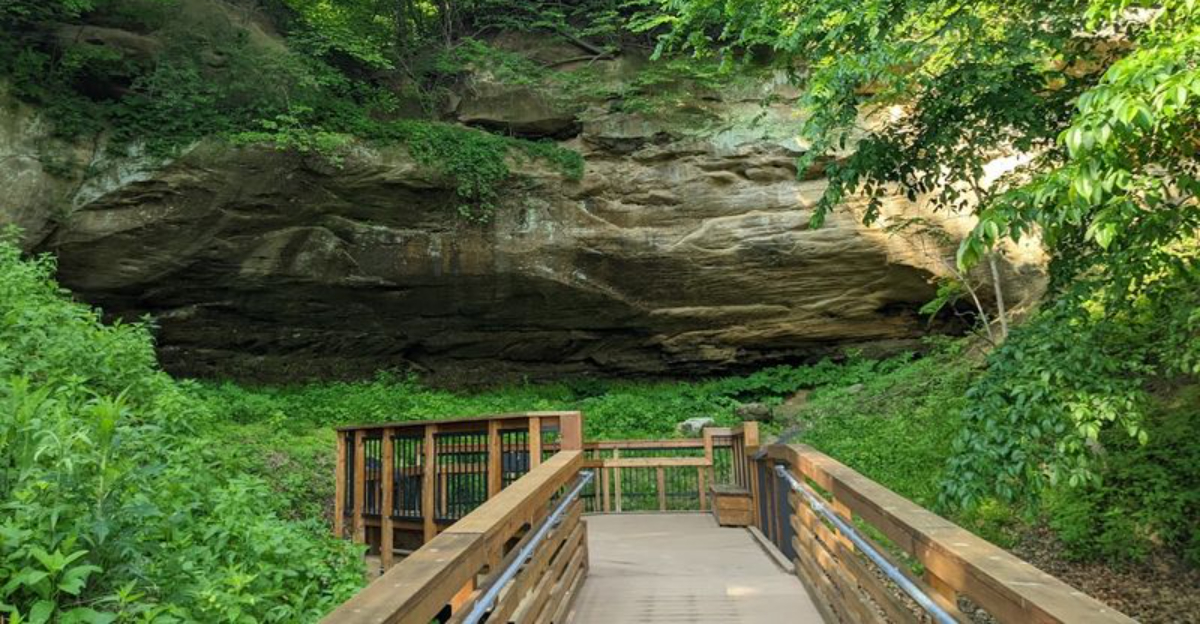
Fairytale places do not always need castles and fog machines. Sometimes the magic is quieter.
A garden path that feels a little too pretty. A tower rising where the plains expected something practical. A wooded trail with storybook shadows.
A historic village, a glowing conservatory, or a river bluff that makes the view feel borrowed from an illustrated page.
Nebraska can sneak a surprising amount of whimsy into places people thought they already understood.
These enchanting spots work because they break the usual rhythm of a trip.
They invite wandering, camera pauses, slow turns, and that small “wait, this is here?” reaction that makes a place stick.
The scenery may be natural, historic, floral, architectural, or just wonderfully odd, but each stop has a little spark that makes ordinary sightseeing feel softer around the edges.
Nobody needs a royal backstory to enjoy them. Comfortable shoes and a willingness to let Nebraska get a little fanciful should do the trick.
1. Toadstool Geologic Park, Crawford, Nebraska
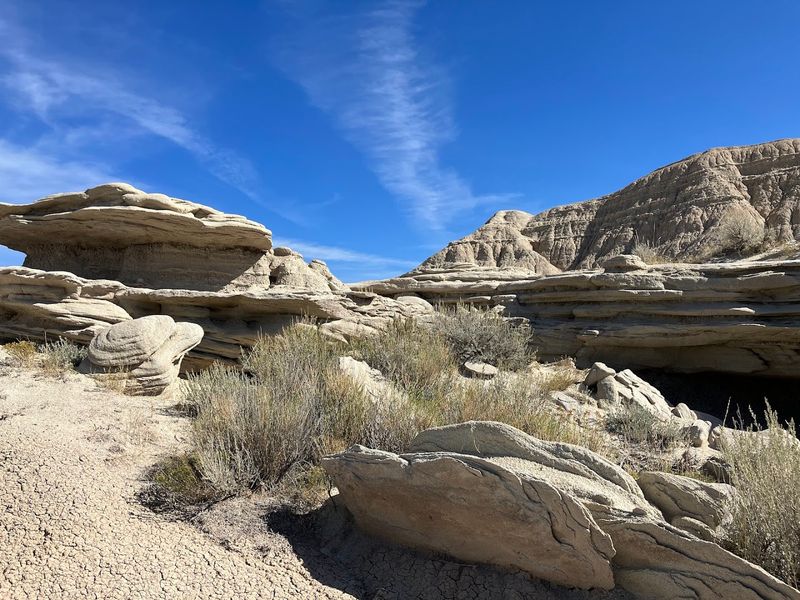
Toadstool Geologic Park feels like stepping onto another planet entirely.
The landscape earns its nickname as the badlands of Nebraska, featuring narrow clay pedestals topped with wide sandstone caps that look like oversized mushrooms frozen in time.
Scientists have found fossil footprints and remnants of extinct creatures here, including ancient tortoises, rhinos, and saber-toothed cats.
A one-mile loop trail guides visitors past many of these formations, and an interpretive brochure available at the trailhead explains the geology and paleontology behind what visitors are seeing.
The Bison Trail extends the adventure to three miles, connecting to the Hudson-Meng Education and Research Center for those wanting more historical context.
A five-mile loop is also available for experienced hikers seeking a longer challenge.
Camping and picnic areas are on-site, and accessible vault toilets are provided at the campground. A small day-use fee of three dollars per vehicle applies from Memorial Day through Labor Day.
Potable water is not available at the park, so bringing enough for the full visit is essential. Road conditions within the Oglala National Grassland can vary, so checking ahead before the trip is a smart move.
2. Sunken Gardens, Lincoln, Nebraska
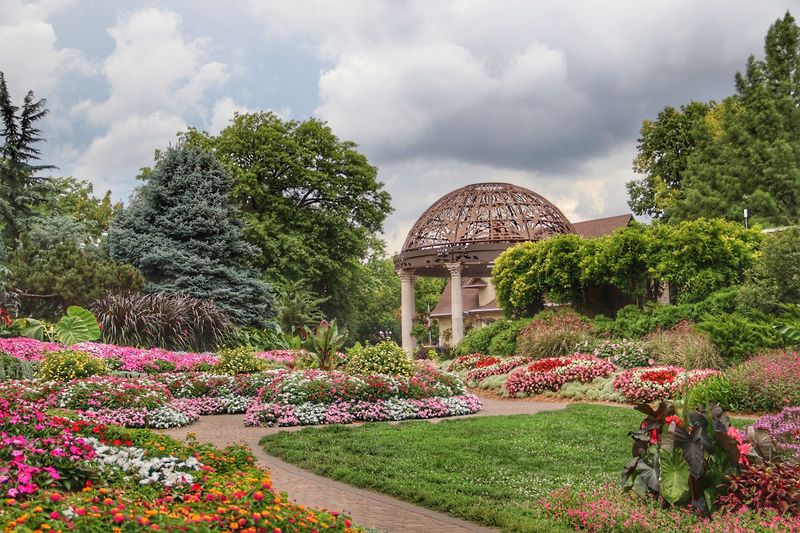
Few urban green spaces in the country carry the kind of quiet charm found at Sunken Gardens in Lincoln.
Located at 2600 D Street, Lincoln, NE 68502, this 1.5-acre terraced garden was transformed from a neighborhood dumpsite starting in 1930.
It has since earned a spot in National Geographic’s guide to the 300 best public gardens in the United States and Canada.
That recognition alone says a great deal about how special this place truly is.
Every year, garden artists design a completely new floral scheme, planting over 30,000 annuals in arrangements that shift with each season.
Two lily ponds filled with colorful koi, hardy water lilies, and lotus plants anchor the space visually.
A cascading waterfall adds a gentle sound that makes the whole garden feel removed from the surrounding city.
Distinct areas within the garden include a Healing Garden known as the White Garden, a Perennial Garden, and an Annual Garden, each with its own personality.
Public art installations are scattered throughout, adding creative touches between the blooms.
Admission is free, restrooms are available from April through October between 9 AM and 8 PM, and the garden is accessible thanks to renovations completed in 2005 that added wheelchair-friendly entrances and walkways.
3. Smith Falls State Park, Valentine, Nebraska
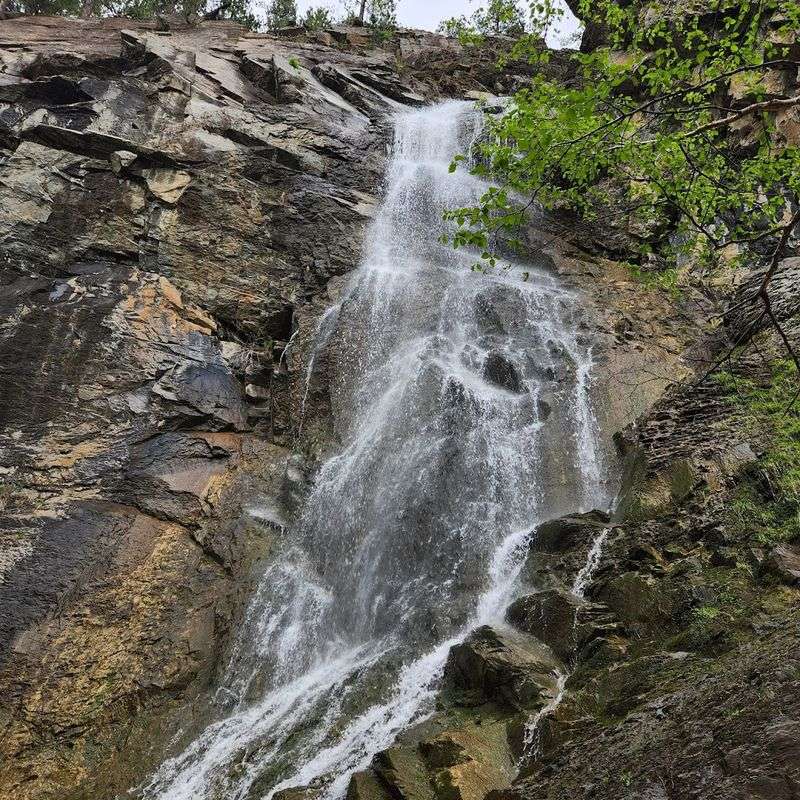
Nebraska’s tallest waterfall does not announce itself loudly, but the payoff of finding it tucked inside Smith Falls State Park near Valentine is genuinely rewarding.
The falls drop gracefully over mossy rock into a clear pool below, framed by dense forest that feels surprisingly lush for a state better known for open grasslands.
Reaching the waterfall involves a short walk across a footbridge over the Niobrara River, which adds to the sense of discovery.
Beyond the falls, the park opens up into a full outdoor recreation destination.
Camping is available on-site, and the nearby Niobrara River draws visitors for canoeing, kayaking, and tubing throughout the warmer months.
Spring and fall tend to offer clearer water and fewer crowds than the busy summer weekends, making those seasons particularly appealing for a more relaxed visit.
Weekdays and Sundays during summer are generally calmer than Saturdays, when the river corridor can get lively with tubing groups.
The surrounding landscape shifts beautifully with the seasons, from spring green to fall gold, offering different visual rewards depending on when a visit happens.
Bringing layers for the walk to the falls is wise since the forested trail tends to stay cooler than the open areas nearby.
4. Indian Cave State Park, Shubert, Nebraska
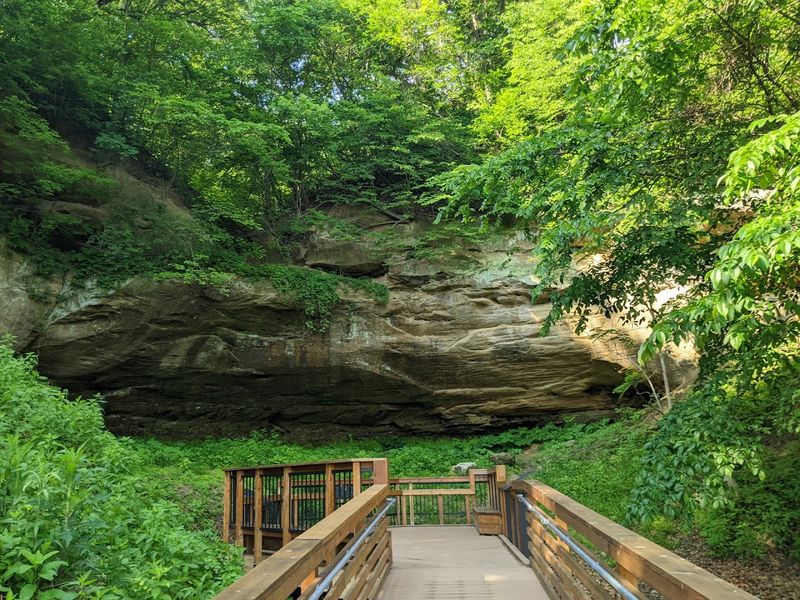
There is something quietly humbling about standing in front of rock carvings made by people who lived in this landscape thousands of years ago.
Indian Cave State Park near Shubert preserves a large sandstone cave filled with prehistoric petroglyphs that connect modern visitors to ancient cultures in a tangible and moving way.
The Missouri River stretches out below the bluffs surrounding the cave, adding a dramatic natural backdrop to an already significant site.
Extensive hiking and equestrian trails wind through mature forests and along the bluff edges, offering views that reward the effort of the climb.
White-tailed deer and wild turkeys are commonly spotted along the trails, making the park a quiet favorite for wildlife observation.
A reconstructed 1880s village within the park gives a secondary layer of history, showing what pioneer life looked like in this corner of Nebraska.
Primitive and electric campsites are available for overnight stays, allowing visitors to experience the park’s atmosphere after the day crowds thin out.
The park stays open year-round, though specific facilities may operate on seasonal schedules.
Checking directly with the park before a visit helps confirm trail conditions and facility availability, particularly during winter months when some areas may have limited access.
5. Scotts Bluff National Monument, Gering, Nebraska
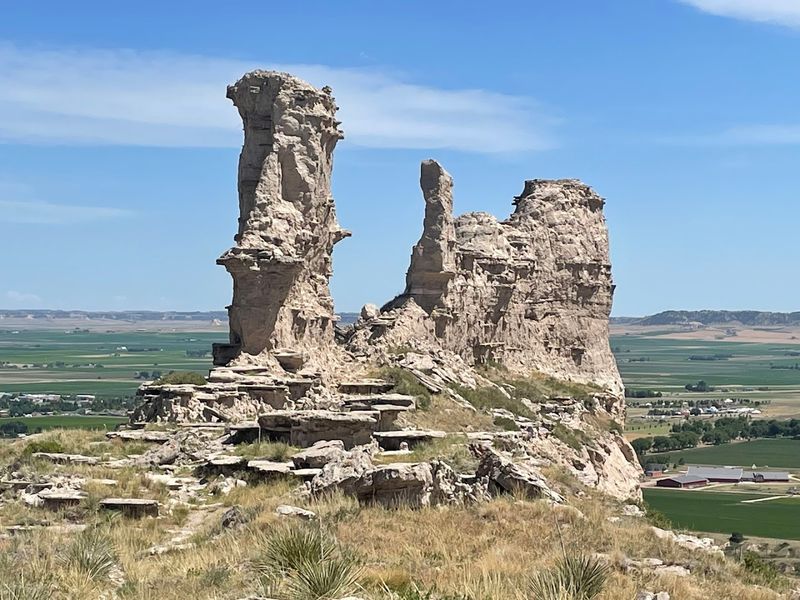
Rising 800 feet above the North Platte River, Scotts Bluff is the kind of landmark that early Oregon Trail travelers could spot from miles away, and it still commands that same sense of awe today.
The visitor center serves as the ideal starting point for any visit.
Inside, exhibits trace the history of the Oregon, California, and Pony Express Trails, and a museum holds the largest known collection of original works by William Henry Jackson, a celebrated artist of the American West.
The historic Summit Road, a 1.6-mile drive that passes through three narrow tunnels, leads to overlooks with sweeping views across the valley.
Vehicles longer than 25 feet or taller than 11 feet 7 inches cannot use the Summit Road due to tunnel restrictions, so planning ahead for larger vehicles is necessary.
Hikers can also take the Saddle Rock Trail up to the summit, a route that follows portions of the original wagon trail and passes visible ruts left behind by pioneer wagons.
No entrance fees or park passes are required to visit.
Grounds and trails are open daily from sunrise to sunset year-round, while the visitor center maintains daily hours with closures on major holidays.
Rattlesnakes are present in the area, so staying on marked trails and watching footing carefully is recommended throughout the warmer months.
6. Merritt Reservoir and Snake River Falls Area, Valentine, Nebraska
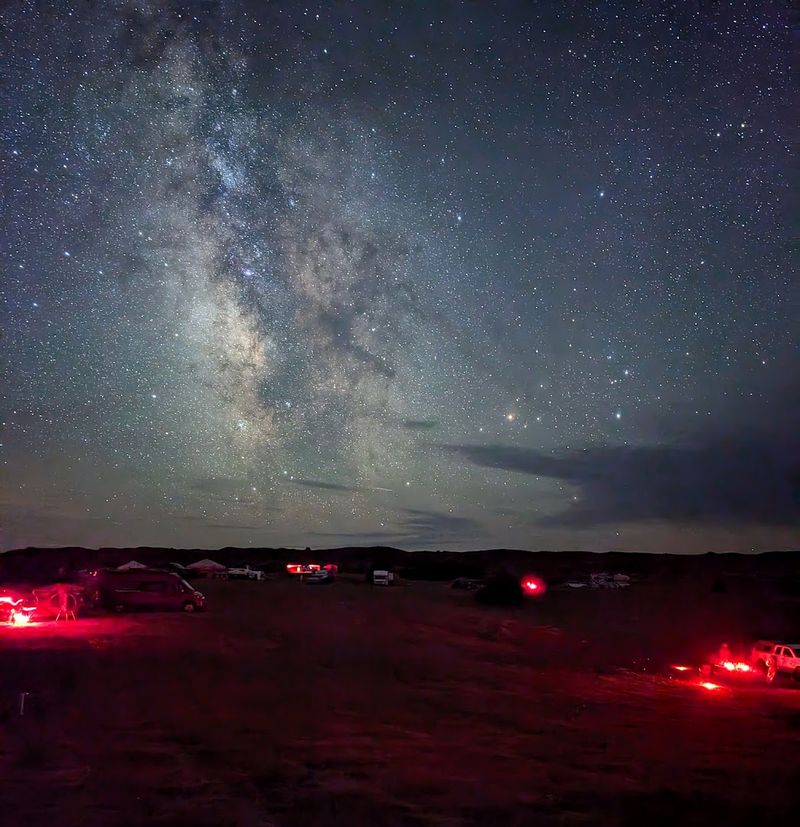
After dark, Merritt Reservoir near Valentine becomes one of the most extraordinary places in Nebraska, and possibly in the entire country.
The area sits within the Sandhills, far from city light pollution, which makes its night skies some of the darkest and most star-dense found anywhere in the Great Plains.
The annual Nebraska Star Party draws astronomy enthusiasts from across the region specifically to this location for that reason.
During daylight hours, the reservoir offers boating, fishing, and swimming in clear, calm water surrounded by rolling Sandhills prairie.
The sense of quiet solitude here is genuine rather than manufactured, with long stretches of open landscape that create a calming, unhurried pace.
Camping is available around the reservoir, ranging from primitive sites to spots with additional amenities for those who prefer a bit more comfort.
Just a short distance from the reservoir, Snake River Falls drops over a picturesque rock formation with a soothing sound that carries through the surrounding grassland.
Reaching some viewing points at the falls may involve walking on uneven terrain, so sturdy footwear is a practical choice.
Weekdays tend to be quieter than summer weekends, making them ideal for visitors who prefer a more solitary experience at both the reservoir and the falls.
7. Arbor Lodge State Historical Park, Nebraska City, Nebraska
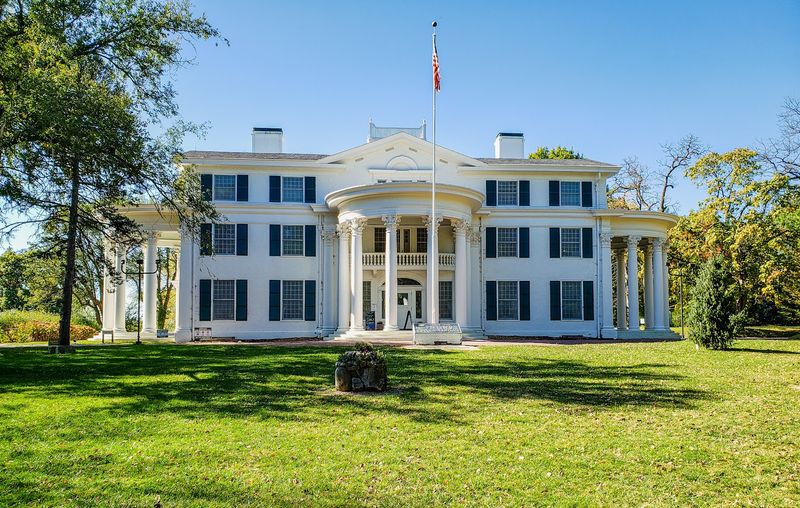
Arbor Day has roots right here in Nebraska, and the estate where that tradition was born still stands in remarkable condition.
Arbor Lodge State Historical Park in Nebraska City preserves the original home of J. Sterling Morton, the man who founded Arbor Day in 1872.
What began as a modest four-room house in 1855 eventually grew into a 52-room neo-colonial mansion through a series of expansions and remodelings over the decades.
Inside the mansion, Victorian and Empire furnishings fill the rooms, and a Tiffany skylight in the sun parlor casts soft, colorful light across the space.
The building now functions as a museum open to visitors who want to see how one of Nebraska’s most historically significant families lived.
Surrounding the mansion, an arboretum stretches across 72 acres and features 270 varieties of trees and shrubs collected from across the country and beyond.
Various gardens dot the grounds, offering peaceful walking routes through different plantings depending on the season.
Spring tends to bring the most vibrant blooms, but the arboretum holds visual interest well into autumn as the tree canopy shifts color.
Checking the park’s seasonal hours before visiting is recommended since facility access and guided tour availability can vary throughout the year.
8. Ashfall Fossil Beds State Historical Park, Royal, Nebraska
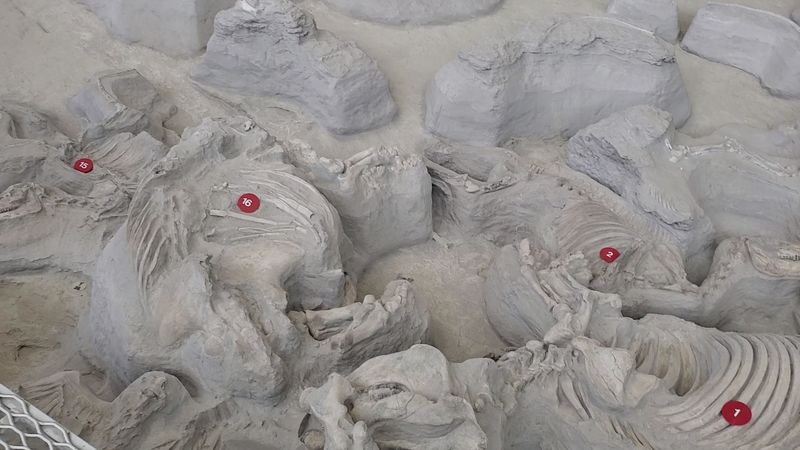
Twelve million years ago, a massive volcanic eruption buried a watering hole in what is now northeastern Nebraska under a deep blanket of ash.
The animals that gathered there were preserved exactly where they fell, and today that ancient scene is visible to visitors at Ashfall Fossil Beds State Historical Park near Royal.
The centerpiece of the park is the Hubbard Rhino Barn, a large enclosed structure built directly over the excavation site so that fossils remain in their original positions.
Walking through the barn, visitors can look down at articulated skeletons of barrel-bodied rhinos, three-toed horses, camels, and other creatures that once roamed the Great Plains.
Paleontologists continue working the site during the open season, so catching active excavation in progress is a real possibility during a summer visit.
The experience of watching science happen in real time adds a layer of engagement that few other places can offer.
An outdoor trail system connects additional points of interest across the park grounds.
The visitor center provides context through exhibits that explain the volcanic event and the ecology of the ancient landscape.
The park operates seasonally, so confirming current hours and admission details before the trip helps avoid any surprises.
The site is genuinely one of the most scientifically significant paleontological parks in the entire country.
9. Niobrara State Park, Niobrara, Nebraska
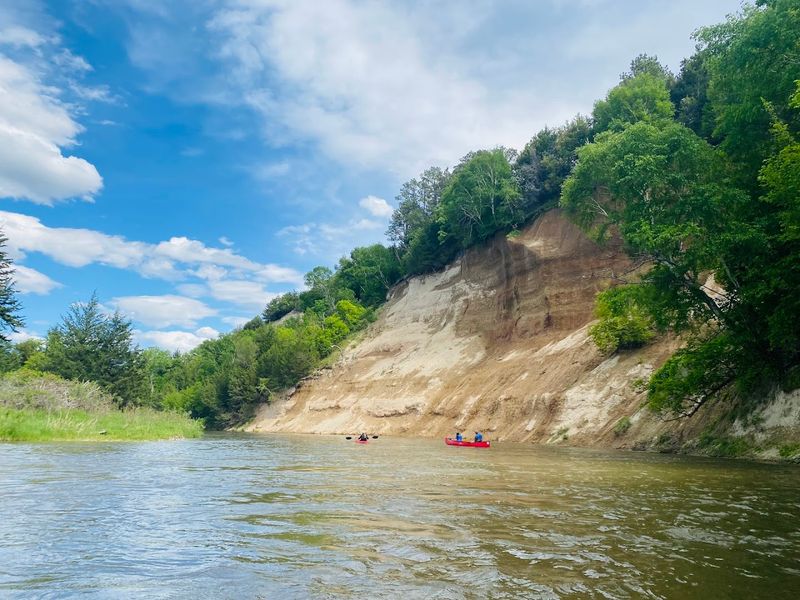
Sitting at the meeting point of two rivers, Niobrara State Park offers a landscape that feels more layered and dramatic than most people expect from Nebraska.
The park sits at the confluence of the Niobrara and Missouri Rivers, a geographic junction that shaped both the land and the history of this region for centuries.
Forested bluffs, open meadows, and river valley views combine here in a way that creates a constantly shifting visual experience as visitors move through the park.
Horseback riding is one of the more distinctive activities available at Niobrara, with trail systems designed to accommodate riders across different skill levels.
Hiking trails wind through the same terrain on foot, passing through sections of woodland that feel surprisingly dense and sheltered.
Camping is available at the park in multiple formats, from tent sites to cabins, making it a flexible option for overnight visits.
The park also includes a swimming pool that operates during the summer season, giving families with younger visitors an additional reason to linger.
Wildlife sightings are common throughout the park, with deer, wild turkeys, and various bird species frequently spotted along the trails.
Visiting in early fall rewards travelers with changing foliage across the bluffs, adding warm color to an already scenic setting that feels genuinely off the beaten path.
10. Carhenge, Alliance, Nebraska
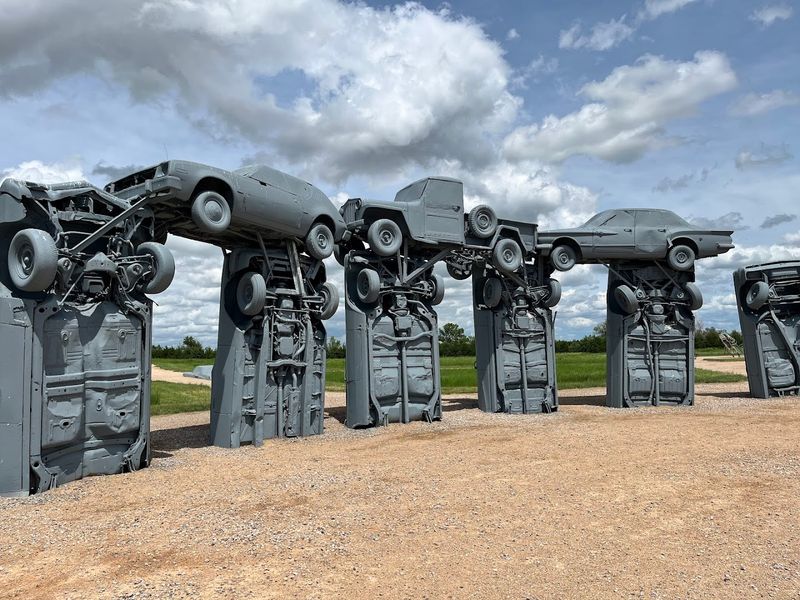
Built from 38 vintage American automobiles arranged to mirror the exact dimensions of Stonehenge in England, Carhenge near Alliance is one of the most genuinely strange and delightful roadside attractions in the country.
The cars are planted hood-down in the ground or stacked and welded into arches, all painted a uniform grey to mimic the look of the ancient stone circle.
Artist Jim Reinders created the installation in 1987 as a tribute to his father, and it has drawn curious visitors ever since.
Standing at the center of the circle and looking outward at the flat Nebraska horizon gives a surprisingly similar spatial feeling to the real Stonehenge, which is part of what makes the place so oddly compelling.
The surrounding Car Art Reserve adds additional sculptures made from salvaged vehicle parts, giving the whole site a quirky outdoor gallery atmosphere.
Admission is free and the site is open year-round, making it an easy addition to a road trip through the western part of the state.
Sunrise and sunset visits are particularly atmospheric, when the low-angle light casts long shadows through the car arches and the wide sky shifts color dramatically.
No facilities are on-site, so planning accordingly before arriving is wise.
The sheer commitment and creativity behind Carhenge makes it feel less like a novelty and more like a genuine piece of folk art worth seeking out.