10 Hidden Nebraska Places Even Lifelong Locals Rarely Find
Hidden Nebraska is not always hiding behind locked gates or dramatic legends.
Sometimes it sits down a gravel road, inside a quiet preserve, beside a river bend, or in a tiny town people keep meaning to explore and never do.
The state rewards curiosity in a very specific way. It does not always shout. It waits for someone to slow down enough to notice.
The best Nebraska surprises usually come without a billboard doing all the bragging.
These places are easy to miss because they do not behave like obvious attractions.
A strange landmark, a peaceful trail, an overlooked museum, a historic ruin, or a backroad viewpoint can feel almost private when the timing is right.
Even longtime locals can drive past the clues for years before realizing something memorable was nearby.
That is what makes the hunt worth it. Hidden places give a trip a little spark.
They make familiar counties feel fresh again, and remind travelers that Nebraska has corners capable of catching people off guard.
1. Agate Fossil Beds National Monument, Harrison, Nebraska
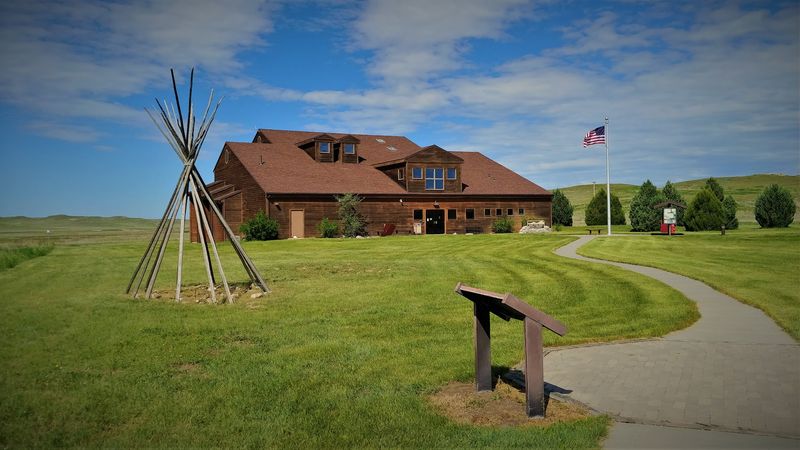
In the panhandle of Nebraska near the small town of Harrison, this national monument holds one of the most significant collections of Miocene epoch mammal fossils found anywhere on the planet.
The bones of creatures like Dinohyus, a massive pig-like animal, and Menoceras, a small rhinoceros, were discovered here in remarkable condition.
The monument sits where the Niobrara River moves quietly through a blend of mixed-grass prairie and unexpected wetland habitat.
Two main hiking trails offer different experiences.
The one-mile Daemonelix Trail features in-situ fossil exhibits of ancient spiral burrows, while the 2.8-mile Fossil Hills Trail leads to historical dig sites with paved sections that are partially wheelchair accessible.
A 12-minute orientation film at the visitor center helps set the scene before heading outside.
Beyond the fossils, the James H. Cook Collection of Lakota artifacts adds a deeply human layer to the visit.
The collection reflects a genuine friendship between a local rancher and Chief Red Cloud, and seeing it in context makes the history feel personal rather than distant.
The visitor center is closed only on Thanksgiving, Christmas, and New Year’s Day, with summer hours running 9 a.m. to 5 p.m.
2. Indian Cave State Park, Shubert, Nebraska
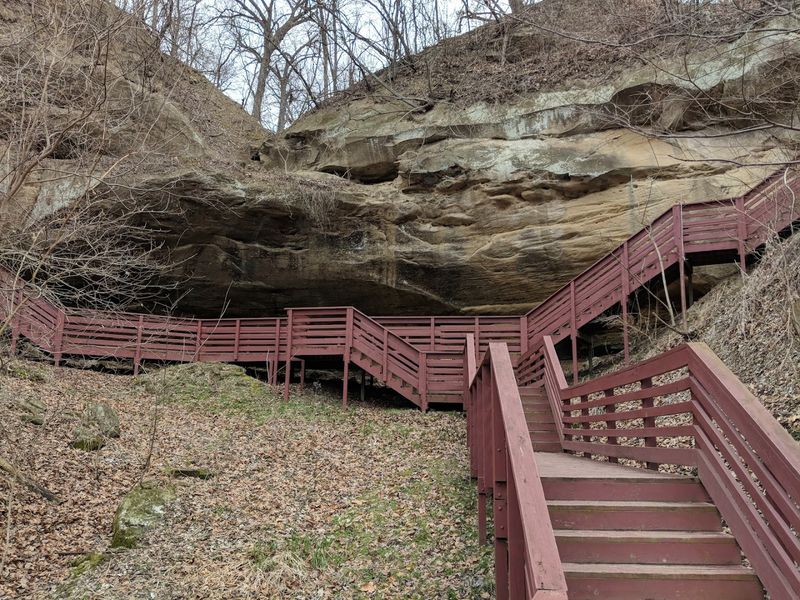
Sandstone bluffs, dense hardwood forest, and the wide Missouri River combine to give this state park a character that feels more like the Ozarks than the Great Plains.
The park covers 3,052 rugged acres, and its namesake cave contains prehistoric Native American petroglyphs accessible via an elevated boardwalk.
The official address is 65296 720 Rd, Shubert, NE 68437, placing it in the far southeastern corner of the state near the Missouri border.
Twenty-two miles of hiking and biking trails range from easy riverside walks to steeper ridge climbs with sweeping views of the river valley below.
Seasonal horseback trail rides are available, and fishing is permitted along the riverbank with a boat ramp providing access for those launching watercraft.
From May through October on weekends, living history demonstrations bring frontier crafts like blacksmithing and quilting to life.
The park also preserves the restored river town of St. Deroin, complete with a one-room schoolhouse and a general store that feel genuinely frozen in time.
Camping options range from primitive sites to RV hookups with showers, restrooms, and laundry.
Annual events like “Haunted Hollow” in October draw visitors who might otherwise never make the drive to this tucked-away corner of Nebraska.
3. Monowi, Boyd County, Nebraska
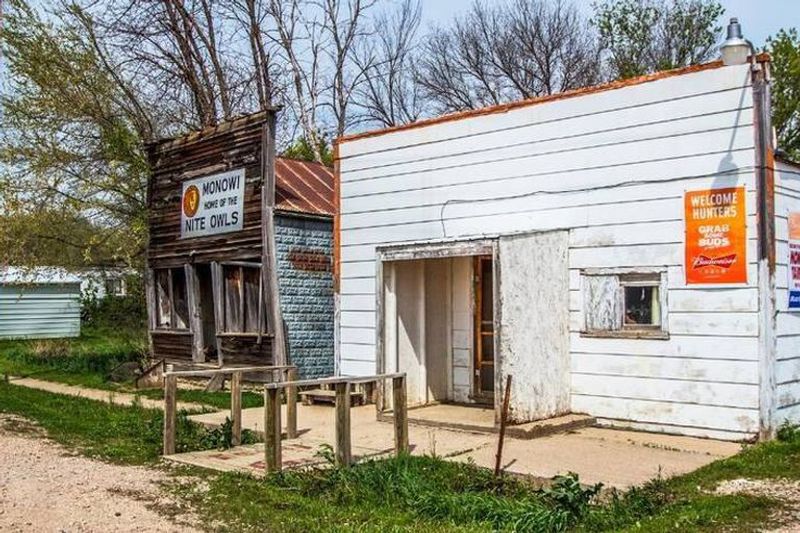
There is exactly one person living in Monowi, Nebraska, making it the smallest incorporated town in the entire United States.
That one resident serves as the mayor, the bartender, and the librarian all at once, keeping a community alive through sheer determination and warmth.
The Monowi Tavern has been a gathering place since 1903, drawing in travelers from across the country who have heard the story and want to see it for themselves.
The tavern has a genuinely nostalgic feel, with classic American comfort food like burgers on the menu and conversations that tend to flow easily between strangers sharing the same curiosity.
Every visitor seems to leave with a story, and the atmosphere has none of the self-conscious quirkiness that tourist traps often carry. It feels lived-in and real, because it is.
Just outside the tavern sits Rudy’s Library, a collection of around 5,000 books maintained on an honor system in memory of a late husband.
Visitors can browse the shelves freely, and the whole setup runs on trust rather than rules.
Hours can be flexible, especially during winter months, so calling ahead before making the trip is a practical step worth taking.
4. Bessey Ranger District, Halsey, Nebraska
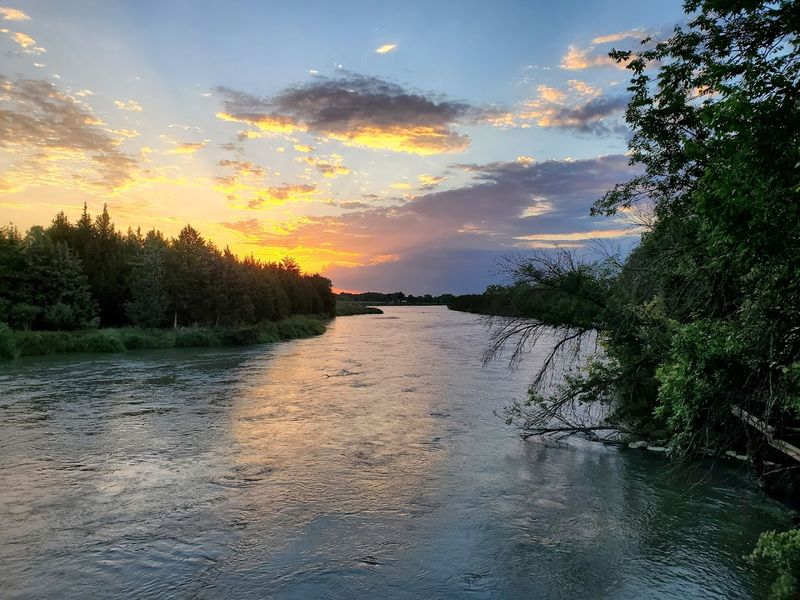
Planting an entire forest by hand sounds like the kind of story that gets exaggerated over time, but the Nebraska National Forest near Halsey is exactly that.
Established in 1902, it holds the distinction of being the largest hand-planted forest in the Western Hemisphere, covering more than 90,000 acres of public land within the Nebraska Sandhills.
The Bessey Ranger District office serves as the starting point for anyone wanting to understand the scale of what was accomplished here.
Wildlife moves through the area in impressive variety, including prairie chickens, sharp-tailed grouse, pronghorn antelope, and eagles.
The Middle Loup River runs through the district and is popular for tubing and canoeing when conditions allow. A seven-acre pond stocked for fishing adds another reason to linger longer than originally planned.
Camping at the Bessey Recreation Complex accommodates tents, trailers, and RVs, with picnic tables, campfire rings, seasonal flush toilets, drinking water, and some electric hookups available.
OHV riding and hunting are also permitted in designated areas. The ranger station doubles as a visitor center with informational materials and items available for purchase.
5. Ashfall Fossil Beds State Historical Park, Royal, Nebraska
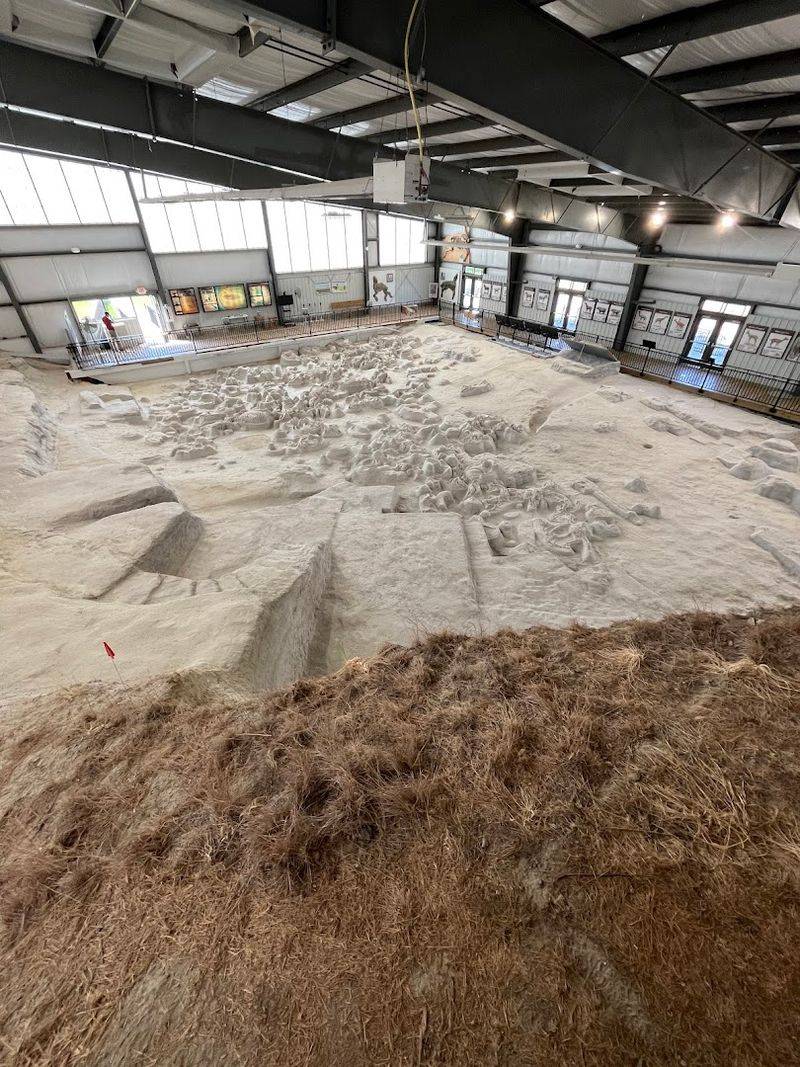
Roughly 12 million years ago, a volcanic eruption blanketed a watering hole in northeastern Nebraska with a thick layer of ash, preserving the animals that gathered there in extraordinary detail.
Rhinos, camels, and horses died together and remained buried until paleontologists began uncovering them, finding skeletons so intact and so numerous that the site earned the nickname “Pompeii of prehistoric animals.”
The park has been designated a National Natural Landmark because of that remarkable preservation.
Unlike many fossil sites where bones are removed and displayed in glass cases, this one leaves the skeletons exactly where they were found.
Visitors walk through the Hubbard Rhino Barn and look down at articulated skeletons still lying in the volcanic ash, with researchers sometimes actively working nearby.
Interactive exhibits in the visitor center help explain how the eruption unfolded and what the landscape would have looked like before the ash cloud arrived.
Seasonal hours mean the park is not open year-round in the same capacity, so checking the schedule before visiting saves a wasted trip.
The visitor center, Rhino Barn, and picnic pavilion are designed to be wheelchair accessible.
An admission fee and a Nebraska Park Entry Permit are both required for entry, and pets on a six-foot leash are welcome in outdoor areas.
6. Toadstool Geologic Park, Crawford, Nebraska
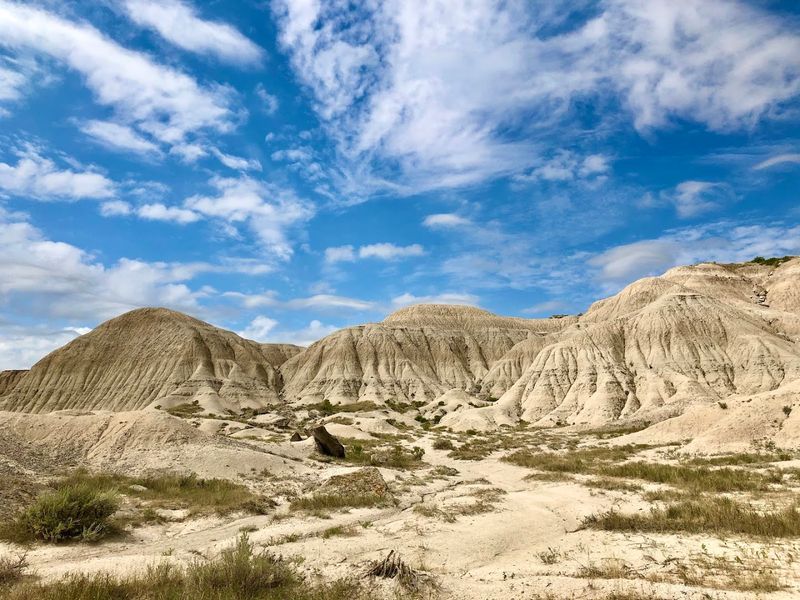
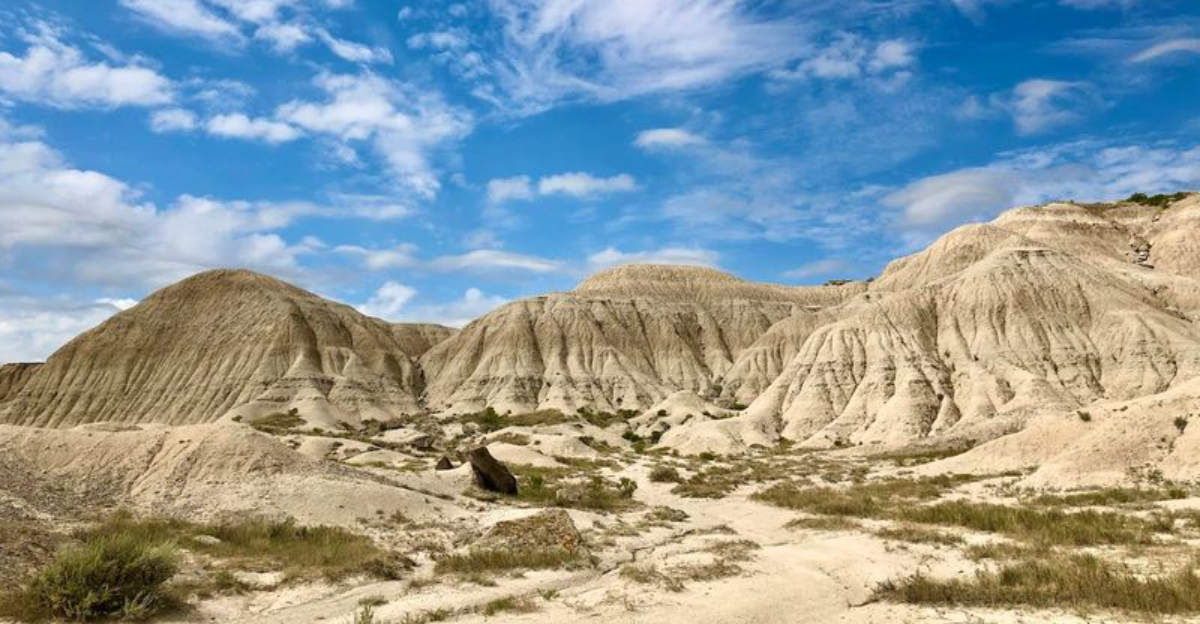
Few landscapes in the Midwest look quite as otherworldly as the rock formations scattered across this remote corner of northwestern Nebraska.
Locals sometimes call it the “badlands of Nebraska” or the “desert of the Pine Ridge,” and the comparison feels accurate the moment the terrain comes into view.
Mushroom-shaped pillars of siltstone, sandstone, and clay rise from the earth in shapes that seem almost sculpted by hand.
A one-mile loop trail winds through the formations and comes with an interpretive brochure explaining the geology and paleontology of the area.
For those wanting more ground to cover, the three-mile Bison Trail leads out toward the Hudson-Meng Education and Research Center.
Fossil discoveries here have included footprints and skeletal remains of prehistoric animals like rhinos, saber-toothed cats, and early three-toed horses, though collecting anything is strictly prohibited.
There is a reconstructed sod house on site that offers a quiet nod to homesteader life.
A $3 day-use fee per vehicle applies from Memorial Day through Labor Day, with camping available at $15 per night. Potable water is not on site, so arriving prepared matters.
Gravel roads leading in can become impassable after heavy rain, so checking conditions beforehand is a smart move.
7. Robber’s Cave, Lincoln
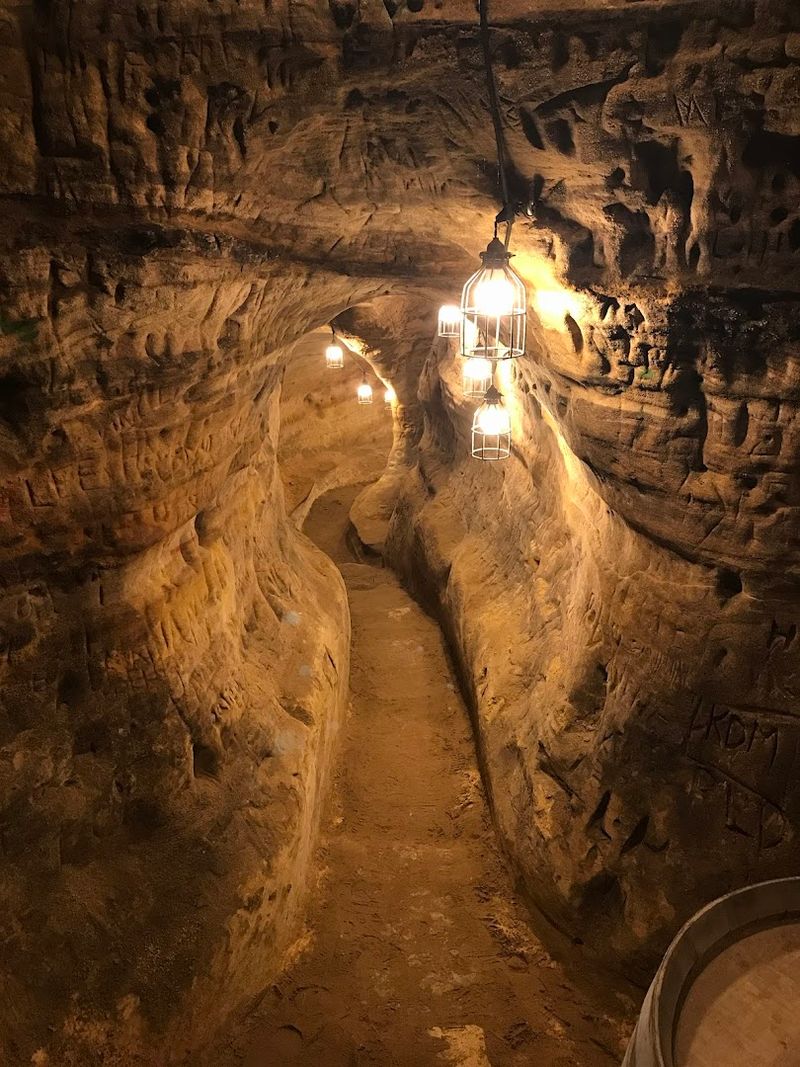
Underneath the streets of Lincoln, Nebraska, 5,600 square feet of sandstone tunnels hold more than a century of layered history.
The cave served as the city’s first brewery in the 1800s and later became a gathering spot with a reputation colorful enough to earn its name.
Walls throughout the tunnels are covered in historical names, initials, and symbols left by generations of visitors, giving the space a texture that no museum exhibit could replicate.
Robber’s Cave is the only subterranean attraction in the city and has been listed on the National Register of Historic Places.
Guided tours run year-round seven days a week, though advance booking is required since group sizes are managed carefully.
Tours typically last between 45 and 60 minutes, moving through naturally formed chambers and passages while a guide explains the cave’s shifting roles across different eras.
The cave holds a steady temperature of around 55 degrees Fahrenheit regardless of the season outside, so bringing a light jacket is always a sensible idea.
Terrain inside is uneven, and visitors should wear comfortable, closed-toe shoes.
8. Happy Jack Chalk Mine, Scotia, Nebraska
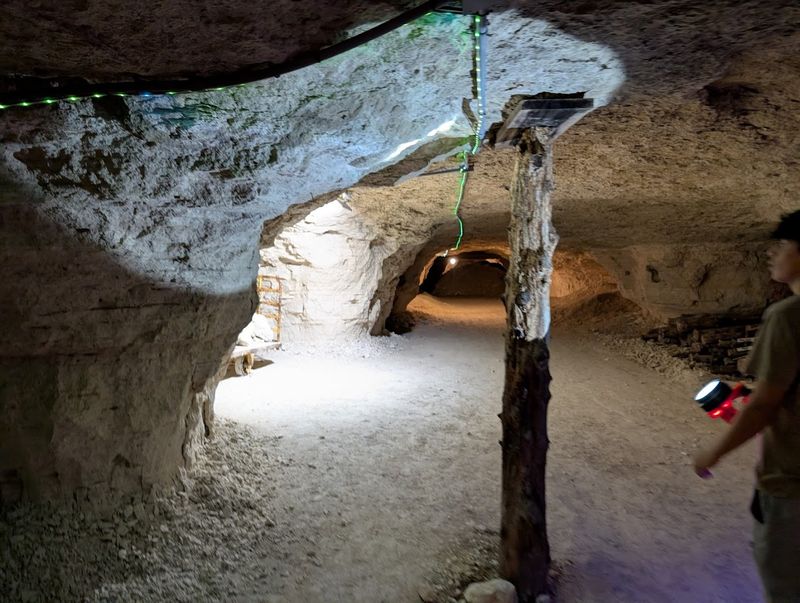
Nowhere else in North America can the public walk through a room-and-pillar chalk mine, which makes the Happy Jack Chalk Mine near Scotia genuinely one of a kind.
More than 6,000 feet of honeycombed caverns were carved out of diatomite, a chalky mineral formed from ancient microscopic sea life, starting back in 1877 and continuing until the mid-1900s.
Inside the walls, fossilized imprints of that ancient sea life and old rodent burrows are visible up close.
The mine operates seasonally from Memorial Day Weekend through Labor Day, with the grounds open dawn to dusk and off-season tours available by appointment.
Exploration is exclusively through guided tours, which keeps group sizes manageable and ensures visitors get real context for what they are seeing rather than just wandering through dim passages alone.
The interior temperature stays in the mid-60s Fahrenheit, which feels refreshing on a warm summer day but can feel chilly if the visit runs long.
Closed-toe shoes are strongly recommended since the flooring is uneven and the lighting is low.
Adjacent to the mine, Happy Jack Peak offers a wide, open view of the North Loup River Valley that provides a striking contrast to the cool darkness of the tunnels just explored.
9. Fort Hartsuff State Historical Park, Burwell, Nebraska
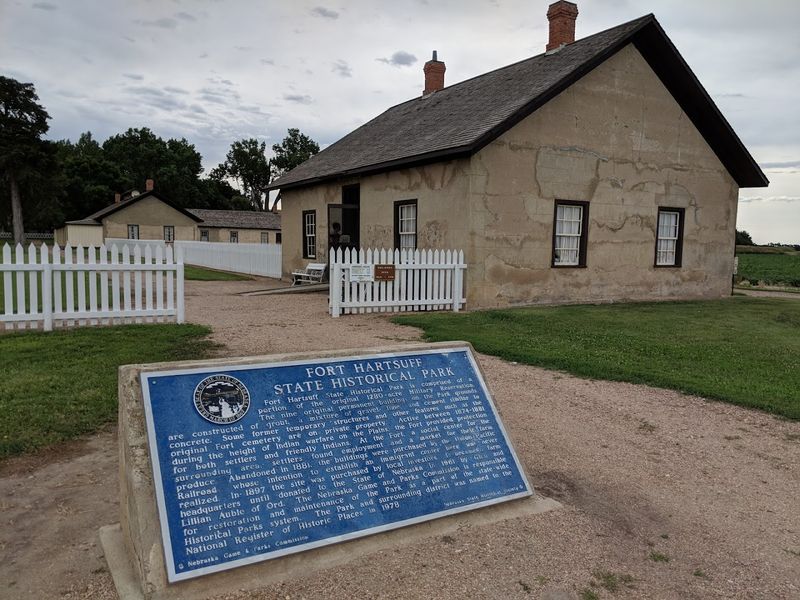
Built in the 1870s using a distinctive lime and concrete mixture that helped the original structures survive far longer than typical frontier construction.
The fort is considered one of the most complete examples of a frontier military outpost remaining on the Great Plains.
The buildings arranged around the parade ground include the post headquarters, enlisted barracks, officers’ quarters, and a hospital.
The park keeps its grounds open daily from 8 a.m. to dusk year-round, with the historical buildings and gift shop open seasonally from May through September and by appointment during the rest of the year.
The fort originally served to protect both settlers and the Pawnee tribe during the conflicts of the Plains Indian Wars, a dual mission that adds complexity to the history presented inside.
Interiors are furnished to reflect daily soldier life during the fort’s active years, and the level of detail in each room makes it easy to linger.
Occasional living history events and stargazing gatherings bring the site to life in different ways throughout the season.
Sturdy footwear is recommended since the terrain around the parade ground is uneven gravel. A park entry permit and a nominal admission fee for the interpretive center are both required.
10. World’s Largest Ball of Stamps, Boys Town, Nebraska

A golf ball started it all back in 1953, when a stamp collecting club at Boys Town began wrapping canceled postage stamps around it layer by layer.
Decades later, that golf ball core is buried somewhere inside a 32-inch diameter sphere weighing 600 pounds and estimated to contain 4.65 million stamps.
The World Record Academy has officially recognized it as the world’s largest stamp ball, and seeing it in person makes the sheer volume of the project genuinely hard to wrap one’s mind around.
The ball is housed inside the Leon Myers Stamp Center which is part of the Boys Town Visitors Center.
Hours run Monday through Friday from 8 a.m. to 4:30 p.m., with the center closed on weekends.
Visitors are welcome to touch the ball and look closely at the stamps pressed into its surface, though adding or removing stamps is not permitted.
Beyond the main attraction, the stamp center features themed stamp displays and a distinctive mural composed entirely of stamps that covers a considerable amount of wall space.
Accessible parking and barrier-free entry make the visit straightforward for visitors with mobility considerations.
The whole stop tends to take less than an hour, making it an easy addition to a broader Boys Town visit without requiring a full afternoon.